
General News
When 5 oranges become mangoes – Teacher’s viral classroom moment sparks fresh debate over teachers’ grievances

A viral 30-second classroom video showing a Ghanaian teacher mistakenly referring to oranges as mangoes while teaching addition has triggered a wider conversation about the pressures facing pre-tertiary teachers in Ghana.
The video, which has been circulating widely on teachers’ WhatsApp platforms, shows a young lower-primary teacher standing before her pupils with nine circles drawn on a whiteboard.
She explains that Ama has five oranges and Akua has four, and asks the pupils to determine how many fruits they have altogether.
However, instead of asking for the number of oranges, she accidentally asks the pupils how many mangoes they have.
The pupils respond with different answers, including 10, 11 and 8, prompting the teacher to pause, place her hand on her chest and sigh before attempting to explain the addition again.
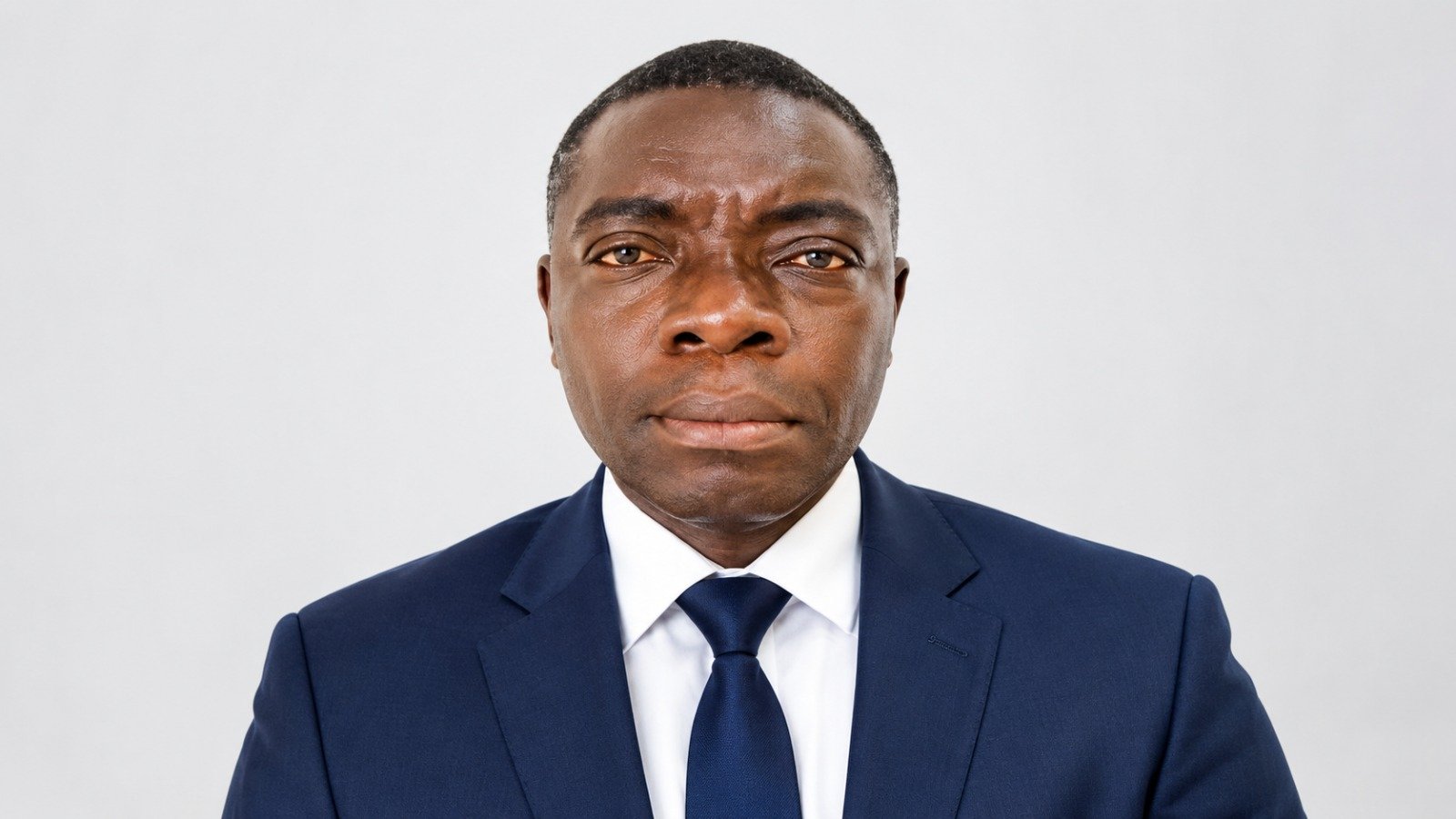
According to a commentary by Seth Afum A. Dankwah of J. G. Knol Technical Institute, Adukrom-Akuapem in the Eastern Region, the seemingly harmless slip of the tongue reflects deeper frustrations within Ghana’s pre-tertiary education system.
Mr Dankwah argues that while the teacher’s mistake may appear funny, it should also prompt reflection on the circumstances under which many teachers work.
He describes the incident as symbolic of teachers being expected to “add oranges and produce mangoes” — a reference to what he says are increasing demands being placed on teachers despite unresolved challenges affecting their working conditions.
He points to issues including inadequate teaching materials, overcrowded classrooms, teachers using portions of their salaries to print learning materials, unpaid allowances and delays in implementing promotions.
According to the commentary, some teachers are required to teach large numbers of pupils in classrooms designed for significantly fewer learners.
It also raises concerns about teachers working in deprived communities without receiving the 20% Deprived Area Allowance, which the writer describes as recognition of the difficult conditions under which such teachers work.
A major focus of the commentary is the teacher’s attempt to help the pupils arrive at the correct answer.
The teacher reportedly points to the first five circles and counts them aloud before counting the second group of four.
She then sweeps across all nine circles and counts from one through nine in front of the pupils.
Despite this demonstration, some pupils continue to shout answers such as 10, 11 and 8.
For Mr Dankwah, the teacher’s sigh and gesture of placing her hand on her chest represent more than frustration with a mathematics exercise.
He interprets the moment as symbolic of teachers who repeatedly explain lessons, provide support and work under difficult circumstances but continue to face challenges beyond the classroom.
The commentary acknowledges that despite their frustrations, teachers remain committed to their pupils.
Mr Dankwah argues that the teacher in the video is likely to return to the classroom because she cannot simply abandon the children entrusted to her.
However, he questions the condition in which teachers return to work when their concerns remain unresolved.
He argues that financial difficulties, delayed payments and workplace challenges can affect a teacher’s peace of mind and ultimately create additional pressure while teaching.
The commentary also draws attention to the unresolved Collective Agreement governing teachers’ employment conditions.
It claims that the agreement expired two years ago and remains unsigned.
Using the teacher’s slip from oranges to mangoes as an analogy, Mr Dankwah says teachers are expected to teach pupils correct language and concepts while their own professional relationship with their employer remains affected by unresolved agreements.
He also raises concerns about teachers who were promoted but allegedly continue waiting for their new salaries and arrears to be processed.
The commentary specifically refers to teachers who may have been promoted in 2025 but, by September 2026, were still waiting for their new salary placement and arrears.
Another major concern raised is the 20% Deprived Area Allowance.
Mr Dankwah argues that teachers working in deprived communities face conditions that can include inadequate infrastructure, limited access to electricity and potable water, and poor road networks.
He says the allowance should not simply be viewed as an additional benefit but as recognition of the difficult environments in which some teachers perform their duties.
The commentary argues that when such payments are delayed or unavailable, teachers may feel that their sacrifices are not being adequately recognised.
The commentary comes against the backdrop of the nationwide strike declared by the Ghana National Association of Teachers (GNAT), National Association of Graduate Teachers (NAGRAT) and Pre-Tertiary Teachers Association of Ghana (PRETAG) on Friday, September 25, 2026.
The three teacher unions announced the strike over unresolved concerns relating to their conditions of service, promotion and deprived-area allowance.
The writer uses the viral classroom video to provide a human-interest perspective on the issues that led to the industrial action.
Rather than viewing the teacher’s mistake simply as a humorous classroom incident, the commentary encourages the public to consider the pressures that teachers may be facing outside the classroom.
Mr Dankwah is calling on the Ministry of Education to use Monday, September 28, to provide concrete commitments to teachers rather than limiting engagement to meetings and photographs with union leaders.
He specifically calls for two signed documents.
The first, he says, should be a time-bound memorandum setting out when outstanding 2025 promotion arrears will be paid through the Controller and Accountant-General’s Department.
The second should provide a definitive date for the signing of the new Collective Agreement, including provisions relating to the Deprived Area Allowance.
According to him, such commitments would help give teachers greater certainty and allow them to return to their classrooms with fewer financial and professional concerns.
The commentary concludes by returning to the central metaphor of the viral video.
Mr Dankwah argues that if Ghana wants teachers to remain focused on teaching, their legitimate concerns must be addressed.
He says the teacher should be able to stand before her pupils with a clear mind and confidently teach that five oranges plus four oranges equals nine oranges.
For him, the repeated confusion of 10, 8 and 11 among the pupils, and the teacher’s accidental reference to mangoes, offer an opportunity to look beyond the humour and examine the wider conditions confronting Ghanaian teachers.
The commentary was signed by Seth Afum A. Dankwah, of J. G. Knol Technical Institute, Adukrom-Akuapem, Eastern Region, and dated September 28, 2026.

videocredit@abhenakristy3








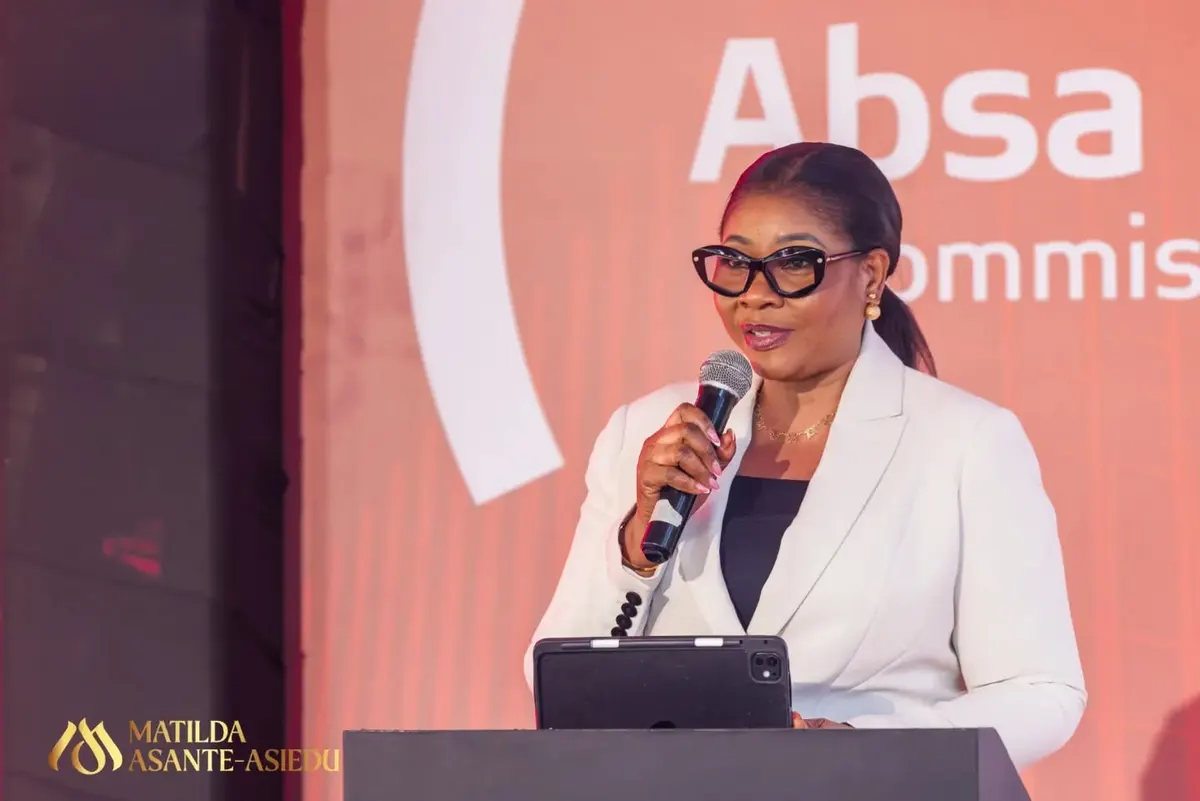
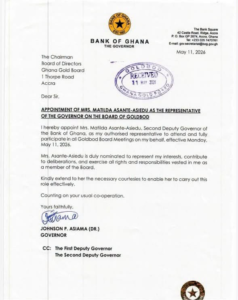
Bank of Ghana (BoG) Governor, Dr Johnson Pandit Asiama, has appointed the central bank’s Second Deputy Governor, Mrs Matilda Asante-Asiedu, as his authorised representative on the Board of Directors of the Ghana Gold Board (GoldBod).
The appointment took effect on Monday, May 11, 2026, according to a letter signed by Dr Asiama and addressed to the Chairman of the GoldBod Board.
Dr Asiama authorised Mrs Asante-Asiedu to attend and fully participate in all GoldBod Board meetings on his behalf.
“I hereby appoint Mrs Matilda Asante-Asiedu, Second Deputy Governor of the Bank of Ghana, as my authorised representative to attend and fully participate in all GoldBod Board Meetings on my behalf, effective Monday, May 11, 2026,” he stated.
Dr Asiama further indicated that Mrs Asante-Asiedu had been nominated to represent his interests, contribute to Board deliberations and exercise the rights and responsibilities vested in him as a member of the Board.
He also requested that the necessary courtesies be extended to her to enable her to effectively perform the role.
The appointment means Dr Asiama ceased to personally serve on the GoldBod Board from May 11, 2026, while the Bank of Ghana maintained its representation through Mrs Asante-Asiedu.
The central bank has confirmed that Dr Asiama has not participated in GoldBod meetings or activities since that date.
The clarification follows comments made by Dr Asiama at the Bank of Ghana’s Monetary Policy Committee engagement on September 24, 2026, when he disclosed that he had left the GoldBod Board about five months earlier and was no longer attending its meetings.
The arrangement is provided for under Section 4 of the Ghana Gold Board Act, 2025 (Act 1140).
The law provides for the GoldBod Board to include the Governor of the Bank of Ghana or a representative of the Governor who is not below the rank of Director and is nominated by the Governor.
The Bank of Ghana has therefore maintained that the appointment of Mrs Asante-Asiedu fulfils the statutory requirement for the central bank to be represented on the GoldBod Board.
Mrs Asante-Asiedu, in her capacity as Second Deputy Governor, has since assumed the role and represents the Bank of Ghana on the Board.
GoldBod has rejected suggestions that Dr Asiama’s departure from the Board signals disagreement between the central bank and the gold trading institution.
GoldBod’s Media Relations Officer, Prince Kwame Minkah, said the Governor initially chose to serve personally on the Board after GoldBod was established but later nominated Mrs Asante-Asiedu because of his busy schedule.
According to Mr Minkah, the development should be viewed as a change in representation rather than a withdrawal of the Bank of Ghana from the GoldBod Board.
He said the arrangement is permitted under the GoldBod Act and is not unique to the Bank of Ghana.
GoldBod cited similar arrangements involving other members of the Board, including the Finance Minister, Dr Cassiel Ato Forson, who nominated Deputy Finance Minister Thomas Nyarko Ampem as his representative.
The Minister for Lands and Natural Resources, Emmanuel Armah-Kofi Buah, also initially served personally on the Board before nominating the Ministry’s Chief Director, Marcus Haligah, to represent him in January 2026 because of his schedule.
GoldBod has consequently maintained that Dr Asiama’s decision to nominate his deputy should not be interpreted as evidence of a dispute between the two institutions.
With Mrs Asante-Asiedu now representing the central bank, the Bank of Ghana continues to have a seat on the GoldBod Board even though Dr Asiama no longer personally participates in its meetings.
The development has drawn attention because of the broader relationship between the Bank of Ghana and GoldBod, particularly their involvement in the country’s gold purchasing and foreign exchange arrangements.
The latest position from the central bank is that its representation on the GoldBod Board remains intact through Mrs Asante-Asiedu, in accordance with the Ghana Gold Board Act, 2025.

The Ghana Gold Board (GoldBod) has rejected suggestions that Bank of Ghana (BoG) Governor Dr Johnson Pandit Asiama’s decision to stop personally attending its board meetings is a sign of disagreement between the two institutions.
GoldBod said the Governor’s decision to nominate Second Deputy Governor Mrs Matilda Asante-Asiedu to represent him on the board was primarily due to his demanding schedule.
According to the institution, Dr Asiama’s decision should not be interpreted as evidence of tension, disagreement or any internal problems involving GoldBod and the central bank.
In a Facebook post published on Monday, September 28, GoldBod said a wrong impression was being created following comments by Dr Asiama at the Bank of Ghana’s latest Monetary Policy Committee meeting.
At the meeting, the Governor disclosed that he had resigned from the GoldBod board approximately five months earlier.
GoldBod explained that the decision was consistent with the provisions of the Ghana Gold Board Act, 2025 (Act 1140), which gives the BoG Governor the option of serving on the GoldBod board personally or appointing a representative.
Section 4(e) of Act 1140 states that the GoldBod Board shall include:
“The Governor of the Bank of Ghana or a representative of the Governor of the Bank of Ghana not below the rank of a Director nominated by the Governor of the Bank of Ghana.”
GoldBod said Dr Asiama initially chose to serve on the board himself when the institution was established in 2025.
However, it explained that his official responsibilities and schedule subsequently made it necessary for him to nominate a representative.
According to GoldBod, Dr Asiama formally wrote to the board on May 11, 2026, nominating Second Deputy Governor Mrs Matilda Asante-Asiedu to represent him.
The institution stressed that such an arrangement was not unusual and had also been adopted by other government officials serving on the GoldBod board.
GoldBod cited the example of Finance Minister Dr Cassiel Ato Forson, who nominated Deputy Finance Minister Thomas Nyarko Ampem to represent him on the board from the beginning because of his schedule.
It also pointed to the Minister for Lands and Natural Resources, Emmanuel Armah-Kofi Buah, who initially served personally on the board before nominating the Ministry’s Chief Director, Marcus Haligah, to represent him in January 2026.
GoldBod therefore dismissed claims that Dr Asiama’s decision to stop attending its board meetings personally was linked to a disagreement between the central bank and the gold-trading institution.
“So you see, the fact that Dr Asiamah no longer sits on the Board of the GoldBod does not mean that there is any ongoing rot at the GoldBod. Neither is there any fight between the BoG and the GoldBod,” the institution stated.
GoldBod maintained that the BoG Governor had simply exercised a power expressly provided for under the Gold Board Act by nominating a qualified representative.
The institution further stressed that the change in board representation had not affected its working relationship with the central bank.
GoldBod said it continues to engage closely with the Bank of Ghana, particularly because of its role in Ghana’s foreign exchange market.
“GoldBod is currently the main anchor of foreign exchange generation for Ghana; thus, it works very closely with the Bank of Ghana on a day-to-day basis,” it said.
Source: Onlinetimes
General News
GHATOF Calls for AI Adoption and Stronger Partnerships to Transform Ghana’s Tourism Industry
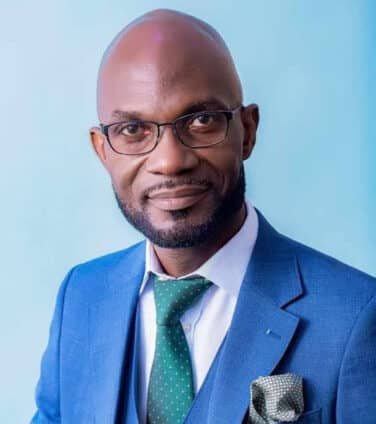
The Ghana Tourism Federation (GHATOF) has urged stakeholders in Ghana’s tourism and hospitality industry to embrace digitalisation and artificial intelligence (AI) while strengthening collaboration to build a more competitive and sustainable tourism sector.
The call was made by Seth Ocran, President of the Ghana Tourism Federation, in a message issued to commemorate World Tourism Day 2026, observed on September 27 under the theme “Digital Agenda and Artificial Intelligence to Redesign Tourism.”
Mr Ocran said technology was rapidly changing the tourism industry globally, influencing how destinations are marketed, visitor behaviour is analysed, services are delivered, and new tourism experiences are created.
He stressed that Ghana must position itself to benefit from these developments rather than remain on the sidelines.
“Ghana must not simply watch this transformation; we must actively participate in it.”
According to the GHATOF President, digital technologies and artificial intelligence are increasingly becoming important tools for businesses seeking to improve their operations and remain competitive.
He encouraged tourism operators and other stakeholders to explore practical ways of incorporating technology into their businesses, while ensuring that the human element remains at the heart of tourism.
He noted that technology should complement the work of tourism professionals and help businesses better understand and respond to the changing needs of visitors.
Mr Ocran also commended workers across Ghana’s tourism and hospitality industry for their resilience, creativity and contribution to the growth of the sector.
He recognised the efforts of hoteliers, tour operators, drivers, chefs, tour guides, travel professionals, food vendors and attraction managers, among others.
He said these professionals remain essential to presenting Ghana to visitors and keeping the tourism industry operational.
The GHATOF President further commended the organisers of the Eastern Expo, describing the initiative as an important platform that brings together business, culture, tourism and enterprise.
He encouraged organisers and tourism authorities to explore stronger connections between the Expo and some of Ghana’s major festivals and cultural events.
He said linking such events could help create a more coordinated national tourism calendar, attract visitors to different parts of the country and generate increased economic activity for local businesses and communities.
Mr Ocran also acknowledged the work of the Minister of Tourism, Culture and Creative Arts, Abla Dzifa Gomashie, praising her leadership and commitment to the development of Ghana’s tourism sector.
He called on industry players to continue supporting the Ministry as it works towards developing a tourism economy capable of creating opportunities for businesses, workers and communities.
A significant part of Mr Ocran’s message focused on the relationship between the Ghana Tourism Authority (GTA) and private-sector tourism associations.
While recognising the importance of regulation, he said effective regulation should be supported by regular engagement, consultation and cooperation with businesses within the industry.
He believes a closer relationship between the regulator and organised private sector would help create a more coordinated and competitive tourism environment.
“A stronger relationship between the regulator and the organised private sector will help us build a more coordinated, competitive and sustainable tourism industry.”
Mr Ocran also cautioned against viewing technology as the only solution to the challenges facing Ghana’s tourism industry.
He said people, partnerships and a shared sense of purpose must remain central to the sector’s development.
He challenged industry stakeholders to look beyond their individual businesses and organisations and consider what could be achieved through collective action.
“What can we do together that none of us can achieve alone?”
According to him, stronger collaboration could support efforts to improve industry standards, develop tourism professionals, adopt new technologies, promote Ghana more effectively and strengthen tourism businesses.
He added that greater cooperation could also create more opportunities for communities that depend on tourism-related activities.
The World Tourism Day message placed strong emphasis on collaboration and collective responsibility within Ghana’s tourism and hospitality industry.
Mr Ocran thanked industry players for their resilience, sacrifices and continued commitment to the development of tourism in Ghana.
He maintained that the strength of the sector should not be measured only by what individual businesses and organisations can accomplish, but also by what they can achieve when they work together.
The GHATOF President called on stakeholders to collaborate to improve standards, develop people, promote Ghana, embrace technology and create a tourism industry capable of delivering greater opportunities for communities and the wider economy.
“Our strength is not in what each of us can do alone, but in what all of us can achieve together.”
The World Tourism Day 2026 message was signed by Seth Ocran, President of the Ghana Tourism Federation (GHATOF).
General News
Government Announces Contra-Flow Arrangement for Ayalolo BRT on Major Corridors to Accra CBD

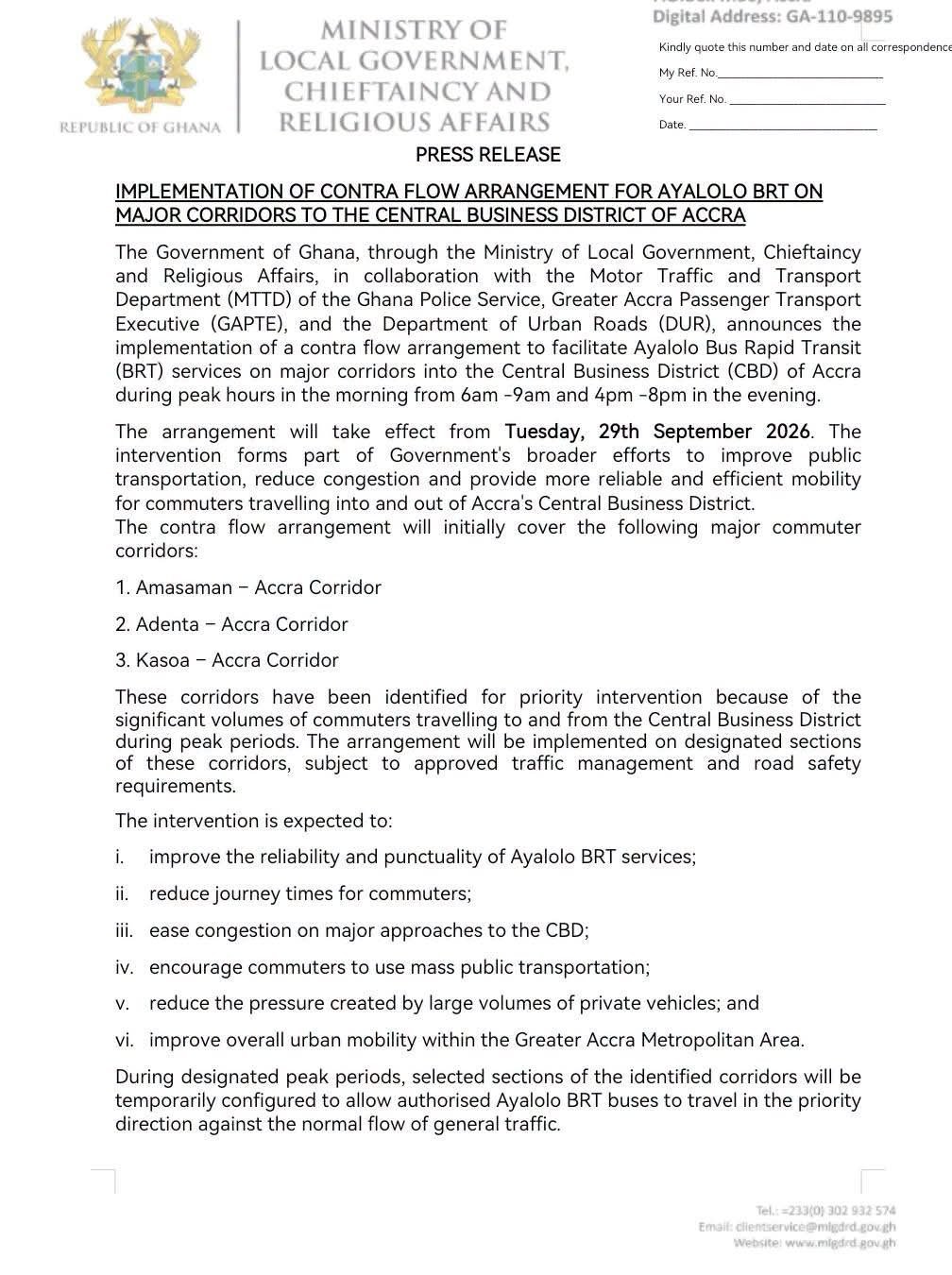
The Ministry of Local Government, Chieftaincy and Religious Affairs has announced the implementation of a contra-flow arrangement for Ayalolo Bus Rapid Transit (BRT) services on major corridors leading to the Central Business District (CBD) of Accra.
The arrangement is intended to improve the movement of Ayalolo buses and support more efficient public transportation along some of the city’s busiest routes.
Under the contra-flow system, designated lanes or portions of the road will be managed to allow Ayalolo BRT buses to travel in a direction that differs from the normal traffic flow during specified periods.
The measure forms part of efforts to improve public transport operations and ease movement within Accra, particularly along major corridors connecting commuters to the Central Business District.
Motorists and other road users are expected to pay close attention to traffic signs, road markings and instructions from traffic management personnel as the arrangement is implemented.
The Ministry is also expected to work with relevant transport and security agencies to ensure that the new traffic arrangement is properly managed and that road users are adequately guided.
Commuters who rely on Ayalolo services could benefit from smoother movement and improved access to the CBD, while motorists may need to adjust to the revised traffic arrangements along affected routes.
The implementation marks another step toward strengthening public transportation and managing traffic congestion on Accra’s major corridors.
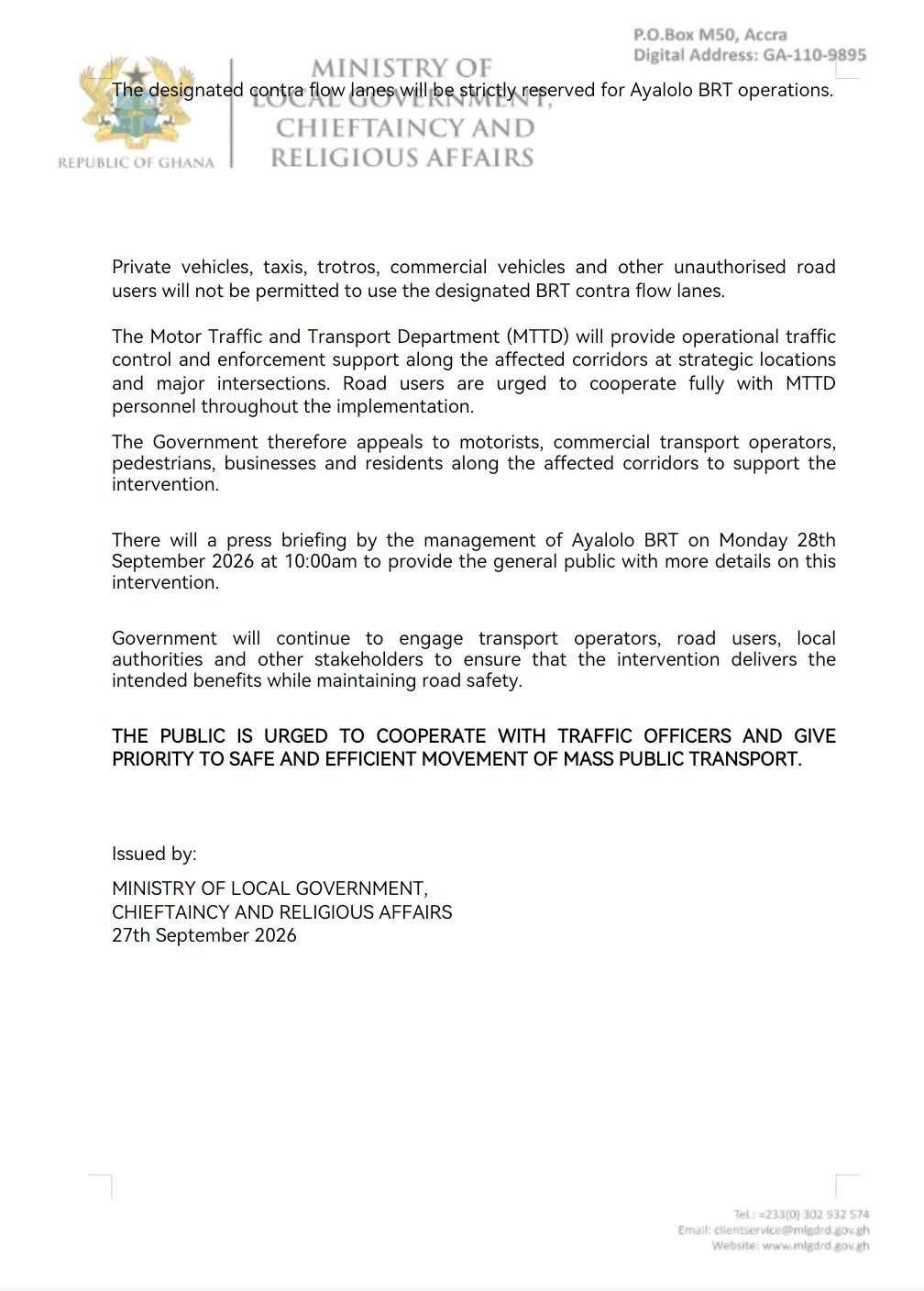
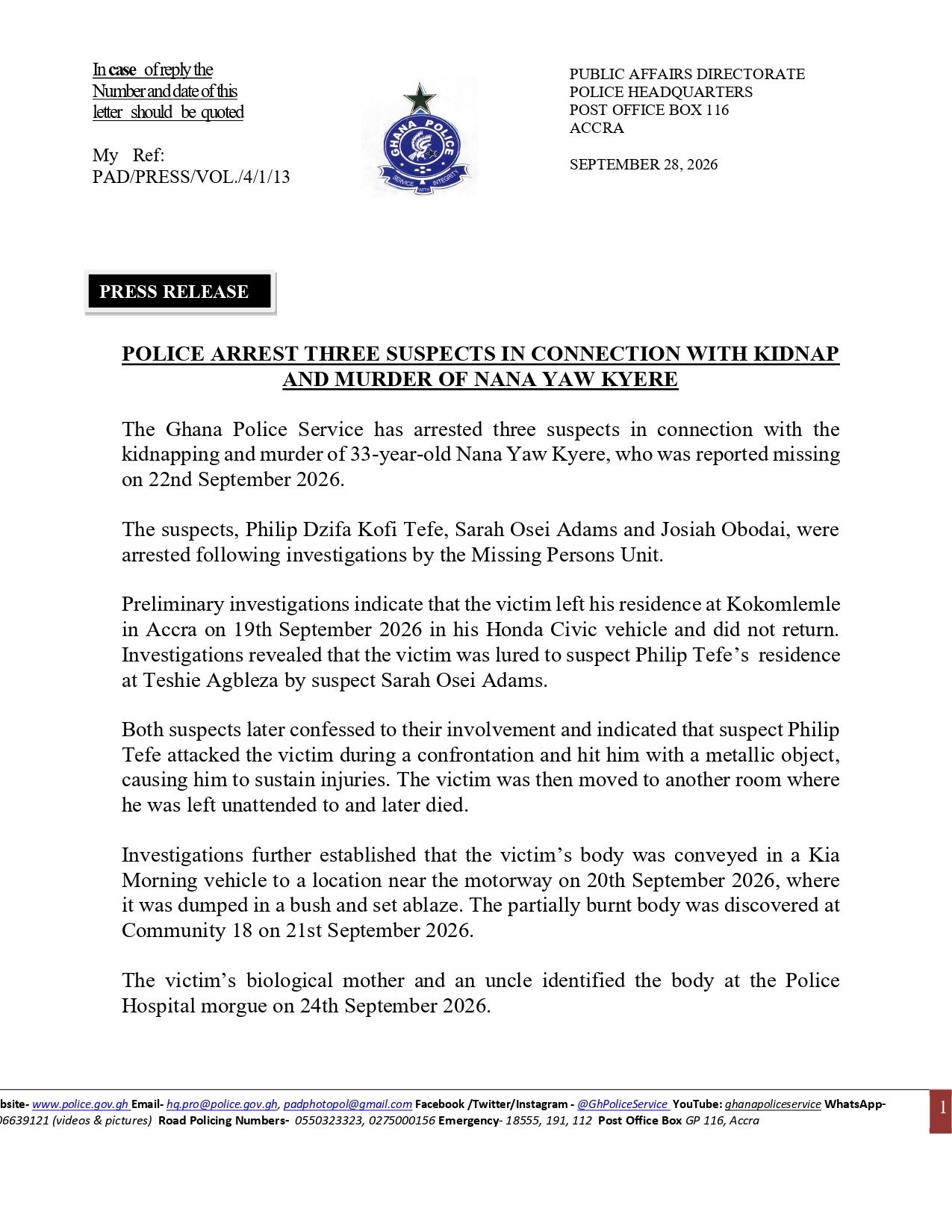
The Ghana Police Service has arrested three suspects in connection with the alleged kidnapping and murder of 33-year-old phone dealer Nana Yaw Kyere, whose disappearance had sparked concern among his family, friends and colleagues in Accra.
The suspects have been identified as Philip Dzifa Kofi Tefe, Sarah Osei Adams and Josiah Obodai. Their arrests followed investigations by the Police Missing Persons Unit.
How the Incident Unfolded
According to preliminary police investigations, Nana Yaw Kyere left his residence at Kokomlemle in Accra on September 19, 2026, in his Honda Civic but did not return.
Police investigations indicate that he was allegedly lured to the residence of Philip Tefe at Teshie Agbleza by Sarah Osei Adams.
The Police said the two suspects subsequently confessed to their involvement and told investigators that Tefe allegedly attacked Kyere during a confrontation, striking him with a metallic object and causing injuries.
Kyere was reportedly moved to another room and left unattended, where he later died, according to the police account.
Body Allegedly Burnt
Investigators say Kyere’s body was subsequently transported in a Kia Morning vehicle on September 20 to a location near the motorway.
The body was allegedly dumped in a bush and set ablaze in an apparent attempt to conceal the crime.
A partially burnt body was discovered at Community 18 on September 21. Kyere’s biological mother and an uncle later identified the remains at the Police Hospital morgue on September 24.
Phone Allegedly Sold for GH¢100
The investigation has also led to the recovery of Kyere’s iPhone 12, which police allege was sold by Tefe for GH¢100.
The alleged buyer, identified as Sunday Omeje, has been cautioned and detained on suspicion of dishonestly receiving the phone.
Further investigations led to the arrest of Josiah Obodai over his alleged involvement in disposing of the body. Police have also impounded his father’s Kia Morning, which investigators believe was used to transport the remains.
Three Suspects in Police Custody
The three suspects remain in police custody and are expected to be put before the court as investigations continue.
Police say efforts are also underway to identify and arrest any other persons who may have been involved in the alleged kidnapping and murder.
The case has sent shockwaves through Accra’s phone-dealing community, where Kyere was known as a mobile phone dealer around Kwame Nkrumah Circle.
As the investigation continues, police are working to establish the full circumstances surrounding his death and determine whether additional suspects were involved.

If She Strips Naked, I’ll Run – Tic Tac Reveals His Unusual Reaction to Women

Free Speech Is Not a Licence to Abuse– Shatta Wale Tells Mahama
I’ll Tell You If I Know I Can’t Marry You: Tic Tac



-

 General News1 week ago
Two political parties, one lesson: Afuntummireku and Tikro Nkɔ Agyina for Ghana
-

 Culinary1 week ago
Kofi Brokeman: The Simple Ghanaian Snack That Has Stood the Test of Time
-

 General News6 days ago
Free Speech, False Publication and Presidential Criticism in Ghana: Where Does the Law Draw the Line?
-
 General News6 days ago
Rev. Dr. Christian Kwetey Kweitsu Set for International Recognition at 100 Most Influential Persons Awards in Kigali
-
 General News2 weeks ago
Bost Energies Made GH¢684 Million Profit: Why Use The NPA Bill, 2026 To Weaken Its Operations?
-

 Entertainment1 week ago
Can’t Anything Good Come Out of Ghana? – Ras Caleb Appiah-Levi Fires Back at Critics
-

 General News6 days ago
Don’t Expect Concerts When People Can’t Afford Food – Rex Omar on Black Star Experience
-
 Entertainment2 weeks ago
Nana Kwame Ampadu: The Extraordinary Life, Music and History of Ghana’s Highlife Legend