
General News
World Tourism Day to Highlight Tourism’s Role in Ghana’s Development


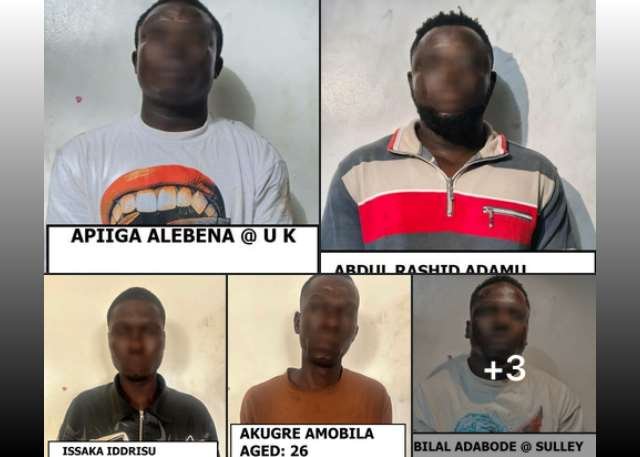
The Upper East Regional Police Command has arrested seven suspects allegedly linked to a robbery network operating across Zebilla, Garu and Binduri, following an intelligence-led operation in the region.
The suspects, aged between 20 and 41, are Issaka Iddrisu, 20; Ali Tamimu, 21; Akugre Amobila, 26; Banabas Apiiga, 41; Abdul-Rashid Adamu, 38; Apiiga Alebena, 21; and Bilal Adabodee, 31.
According to the Police, the arrests were carried out through a joint intelligence operation involving the Police Intelligence and Professional Standards Bureau (PID), the newly formed Black Cobra Unit and the Zebilla Neighbourhood Watch Community.
Suspects allegedly linked to wider robbery network
The Police said the suspects have reportedly confessed to being members of a wider network of gangs involved in armed robbery activities within the three communities.
Investigators are also pursuing information provided by the suspects about an alleged weapons supplier believed to be operating from Bawku.
The Police said the identity of the alleged supplier has been withheld as efforts continue to locate and arrest the person.
Victims identify two suspects
The case took a significant turn after two victims reported to the Police following the arrests.
The victims allegedly identified two of the suspects as members of a three-man armed robbery gang that attacked them at gunpoint.
According to the Police, the robbers made away with two Yamaha scooter motorbikes valued at GH¢30,000 and GH¢32,000 respectively.
The victims also told investigators that the attackers threatened to kill them if they reported the incident to the authorities.
The Police said the two suspects subsequently admitted to taking part in the robbery and provided information about the alleged source of the weapons used during the operation.
Police raid houses, recover cash and motorbikes
Searches conducted at the residences of Abdul-Rashid Adamu, Apiiga Alebena and Bilal Adabodee reportedly yielded several items of interest to investigators.
The Police said they recovered two unregistered motorbikes, quantities of suspected hard drugs and GH¢29,550 in cash.
The cash is believed by investigators to be proceeds from criminal activities, although the circumstances surrounding the items will form part of the ongoing investigation.
Seven suspects remanded
Following their arrests, all seven suspects were brought before the Bolgatanga Circuit Court.
The court has since remanded them into Police custody.
They are expected to reappear on September 23, 2026, as investigations continue.
Police intensify hunt for alleged weapons supplier
With the seven suspects now in custody, the Police have intensified efforts to identify and apprehend the person they allegedly named as their source of weapons.
The development is expected to help investigators determine whether the arrests have uncovered a broader organised robbery network operating across communities in the Upper East Region.
The Police Command says the operation forms part of ongoing efforts to clamp down on robbery activities and improve security in Zebilla, Garu, Binduri and surrounding areas.
For now, seven suspects are behind bars, while investigators continue the hunt for other persons allegedly connected to the robbery network.
General News
Graphic Business/Stanbic Bank breakfast meeting to tackle cross-border payment challenges


Businesses, regulators and financial sector players are set to converge in Accra as the Graphic Business/Stanbic Bank Breakfast Meeting turns the spotlight on one of the biggest challenges facing companies engaged in international trade — moving money across borders efficiently.
The upcoming breakfast meeting, scheduled for Tuesday, September 22, 2026, at the Labadi Beach Hotel in Accra, will bring together regulators, financial institutions, traders and business leaders to explore practical solutions to the challenges surrounding cross-border payments.
The meeting is being held under the theme: “Moving Money. Moving Trade. Moving Ghana. – Making It Easier to Buy, Sell and Pay Across Borders.”
High payment costs, delays put businesses under pressure
Head of Brand and Marketing at Stanbic Bank Ghana, Chidinma Braye-Yankee, said efficient cross-border payment systems have become increasingly important as Ghanaian businesses expand their trading relationships across Africa, China and other international markets.
She identified delays, high transaction costs, multiple intermediaries, foreign exchange challenges and limited payment transparency as some of the difficulties confronting businesses involved in international trade.
According to her, businesses need payment systems that can move funds faster, more cheaply and more reliably.
She stressed that efficient cross-border payments should no longer be viewed merely as a banking concern, but as an important part of supporting trade and economic growth.
China-Ghana trade takes centre stage
A major focus of the discussions will be how Ghanaian businesses can make payments to Chinese suppliers more efficiently.
Stanbic Bank Ghana recently introduced direct access to China’s Cross-Border Interbank Payment System (CIPS), allowing eligible customers to settle transactions denominated in Chinese Yuan directly through the bank.
The service is expected to reduce reliance on intermediary banks and help address some of the delays associated with traditional international payment channels.
The development is particularly relevant to Ghanaian importers, given China’s importance as a trading partner.
PAPSS, SWIFT and CIPS in the spotlight
The breakfast meeting will also examine payment infrastructure supporting international and regional transactions.
Among the systems expected to feature in the conversation are the Pan-African Payment and Settlement System (PAPSS), SWIFT, and Stanbic Bank’s capabilities under CIPS.
PAPSS was developed to facilitate faster and more efficient cross-border payments for intra-African trade, while CIPS provides infrastructure for cross-border transactions denominated in Renminbi.
For businesses, the broader objective is to make international transactions less complicated while improving transparency, security and reliability.
Top business voices to join the discussion
The meeting will feature a panel involving key players from the banking and business sectors.
The panellists include Mush Abdallah, Head of Corporate and Investment Banking at Stanbic Bank Ghana; Dr Paa Kwesi Eduaful Abaidoo, Sustainability Manager at Miniplast Ltd; and Dr Nana Kwesi Amoako, Sales Director, Business to Business West Africa at Kasapreko PLC.
Their discussions are expected to provide practical perspectives on the challenges businesses face when buying, selling and making payments across international borders.
Security cannot be ignored
While faster payment systems can make international trade easier, Stanbic Bank has stressed that efficiency must go hand in hand with security.
According to Braye-Yankee, the growing reliance on digital payment channels makes it increasingly important for businesses to have systems that are not only fast but also secure and trusted.
The issue of digital fraud has featured prominently in previous Graphic Business/Stanbic Bank Breakfast Meetings, with stakeholders highlighting the need for stronger public awareness and vigilance alongside investments in technology and security systems.
Making cross-border trade easier
The September 22 meeting comes at a time when Ghanaian businesses are increasingly looking beyond the domestic market for suppliers, customers and investment opportunities.
For importers and exporters, the ability to move money quickly and securely can directly affect transaction costs, delivery timelines and overall competitiveness.
Stanbic Bank’s Africa-China trade solutions also include trade financing and payment and collection services aimed at helping businesses manage the risks associated with cross-border transactions.
The upcoming Graphic Business/Stanbic Bank Breakfast Meeting is therefore expected to provide a platform for stakeholders to examine how Ghana can strengthen its payment infrastructure and make cross-border commerce more efficient.
At the heart of the discussion will be a simple but increasingly important question: how can Ghana make it easier for businesses to buy, sell and pay across borders while keeping transactions affordable, secure and reliable?
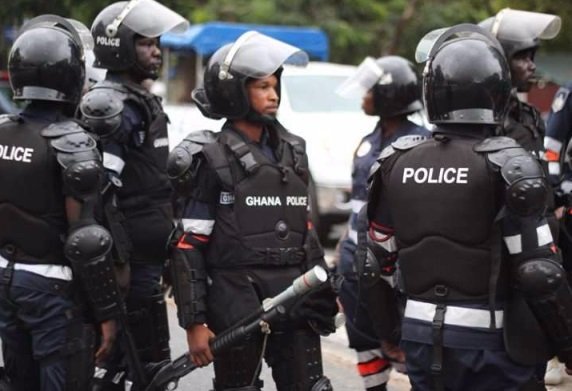
The Ghana Police Service has arrested 36 suspects following the mob attack that resulted in the death of General Constable Redeemer Owusu at Gindabour in the Savannah Region.
The arrests come barely a day after the deadly incident, which occurred on Wednesday, September 16, 2026, along the Gindabour-Kenkyen community road in the Sawla District.
According to the Police, General Constable Owusu and his colleagues were conducting highway patrol duties when they encountered a motorbike rider who allegedly diverted into the bush after spotting their patrol vehicle.
How the incident unfolded
Preliminary investigations indicate that the officers became suspicious of the rider’s actions and decided to follow up from another direction.
They subsequently found the rider unconscious on a bush road.
The officers reportedly picked him up and began transporting him to a hospital for medical attention. However, the rider died while being conveyed to the facility.
It was after news of the rider’s death spread through the community that tensions reportedly escalated.
Mob attack turns deadly
The Police said a mob from the community subsequently attacked the officers.
During the attack, General Constable Redeemer Owusu was killed, while other members of the patrol team sustained injuries of varying degrees.
The Police vehicle was also damaged during the incident.
The circumstances surrounding the rider’s death and the subsequent attack remain subject to ongoing investigations.
36 suspects in custody
In the aftermath of the incident, the Ghana Police Service launched an operation to identify and apprehend persons suspected of being involved.
A total of 36 suspects have so far been arrested and are currently in Police custody assisting with investigations.
The suspects are expected to be put before the court once the investigations are completed.
The arrests represent a major step in the Police response to the incident, as investigators work to establish exactly what happened and identify those responsible for the attack on the officers.
IGP deploys investigators, intelligence officers
The Inspector-General of Police has deployed a team of investigators and intelligence officers to Gindabour to assist with the probe.
Additional reinforcement teams from Damongo, Bole, Sawla, Tuna and Kalba, together with the Regional Intelligence Team, have also been deployed to the area.
The Police said the deployment is intended to strengthen security, maintain law and order and support efforts to bring those responsible to justice.
Two bodies sent for autopsy
The remains of General Constable Owusu and the motorbike rider have both been conveyed to the Damongo Morgue for preservation and autopsy.
The post-mortem examinations are expected to form part of efforts to establish the circumstances surrounding the deaths.
Police vow to pursue perpetrators
The Savannah Regional Police Command has strongly condemned the attack on its officers and assured the public that persons found culpable will face the law.
The Command said it would ensure that the perpetrators are made to face the “full rigours of the law.”
With 36 suspects already in custody and security personnel deployed to the area, attention is now focused on the ongoing investigation and the circumstances that led from the discovery of an unconscious motorbike rider to the fatal mob attack on the police patrol team.
The Police have urged calm as investigations continue.
General News
GRA fights GH¢79.65m Servestar judgment debt — commends director for rejecting excess award

The Ghana Revenue Authority (GRA) has launched an appeal against a GH¢79.65 million judgment debt awarded to Servestar Minwax (WA) Limited, arguing that the amount requires urgent forensic reconciliation before any payment is made from public funds.
The extraordinary dispute has taken another twist after Servestar director Henry Manly-Spain reportedly told the GRA that the amount he considers legitimately due to his company is significantly lower than the GH¢79.65 million awarded by the court. The GRA has praised him for what it described as exceptional honesty, integrity and patriotism.
From less than GH¢1m to GH¢79.65m
At the heart of the dispute is a case dating back to 2009, when Servestar Minwax claimed it had overpaid import duties by an amount of less than GH¢1 million.
The company subsequently pursued the matter through the courts and obtained judgment in its favour.
However, the amount now being enforced has grown dramatically to GH¢79,651,132, with the GRA attributing a significant portion of the increase to the application of 35% daily compound interest.
The massive difference between the original dispute and the current judgment sum has become the central point of the GRA’s challenge.
High Court orders payment from GRA account
On July 22, 2026, the High Court’s Commercial Division 3 issued a Garnishee Order directing the Bank of Ghana to release GH¢79.65 million from the GRA’s Tax Refund Account to Servestar Minwax and its director, Henry Manly-Spain.
But the GRA has strongly contested the amount and the manner in which the funds were to be obtained.
The Authority has filed a Notice of Appeal against the entirety of the High Court’s ruling and has also applied to have the Garnishee Order Absolute set aside.
GRA demands forensic reconciliation
The revenue authority wants an independent examination of the judgment debt before any money is released.
The High Court on August 20, 2026, granted the GRA’s request for a forensic reconciliation and allowed an independent auditor to review the amount being claimed.
The GRA says the exercise is necessary to determine the accurate amount legitimately owed and resolve what it considers material discrepancies in the certified judgment debt.
The Commissioner-General has also ordered an internal audit of the reconciliation and litigation processes surrounding the case to determine whether any lapses occurred and strengthen the Authority’s internal controls.
The unusual twist: beneficiary rejects the money
Perhaps the most striking development is the position taken by Henry Manly-Spain himself.
According to the GRA, documents submitted through his solicitor indicate that the amount he believes is legitimately due for overpaid duties and the value of containers sold since 2009 is far below the GH¢79.65 million judgment sum.
Earlier reports quoted Manly-Spain as saying his company’s legitimate claim was about GH¢8.95 million, although the GRA’s latest statement describes his position more generally as being significantly lower than the court-awarded amount.
That unusual position has prompted the GRA to publicly commend him.
‘Exceptional honesty, integrity and patriotism’
The GRA described Manly-Spain’s decision to question the amount awarded to his own company as an extraordinary act of honesty.
The Authority said it had received his petition asking that the judgment amount not be disbursed, and that his position had been formally brought before the court as part of the proceedings to set aside the garnishee order and reconcile the debt.
The development has added an unusual dimension to what began as a conventional dispute between a taxpayer and the revenue authority.
GRA challenges attachment of Tax Refund Account
The Authority is also challenging the attachment of the account from which the payment was ordered.
The GRA maintains that its Tax Refund Account at the Bank of Ghana is statutorily protected under Section 69 of the Revenue Administration Act, 2016 (Act 915) and is specifically intended to facilitate legitimate refunds to taxpayers who have overpaid taxes.
It therefore argues that the account should not be attached in the manner directed by the High Court.
Stay of execution battle continues
The GRA said its earlier application for a stay of execution was unsuccessful.
However, it intends to renew its application before the Court of Appeal at the commencement of the new legal year.
The Authority insists that its legal action is aimed at protecting public funds while still respecting lawful court decisions.
“The GRA will not permit unvalidated judgment debts to be paid from tax revenue,” the Authority said.
A judgment debt now under intense scrutiny
The Servestar case has therefore moved into a new phase.
On one side is a court order directing the payment of GH¢79.65 million. On the other is the GRA’s appeal, its demand for forensic reconciliation, an internal audit and the extraordinary position of the beneficiary himself that the amount awarded is significantly higher than what he believes is legitimately due.
For now, the money remains at the centre of a legal and financial battle that could have significant implications for the public purse.
What began in 2009 as a dispute involving less than GH¢1 million has now grown into a GH¢79.65 million judgment-debt controversy — with even the man entitled to the award questioning whether the staggering figure is truly his to take.

By Angel No Lie | KPD Online | September 17, 2026
KATHMANDU — Nepal is expected to use new scientific evidence linking climate change to the conditions behind last month’s catastrophic mountain collapse and floods as it pursues financial support from the United Nations’ Fund for Responding to Loss and Damage.
Nepal has already submitted an initial request for $20 million from the fund. The new analysis by the international research group World Weather Attribution (WWA) strengthens the scientific case that human-driven warming contributed to the conditions that preceded the disaster, although researchers stress that climate change was not the sole cause.

HIGHLIGHTS | 157 killed, over 750 missing in Nepal flash floods; India sends first tranche of aid
A disaster that began high in the Himalayas
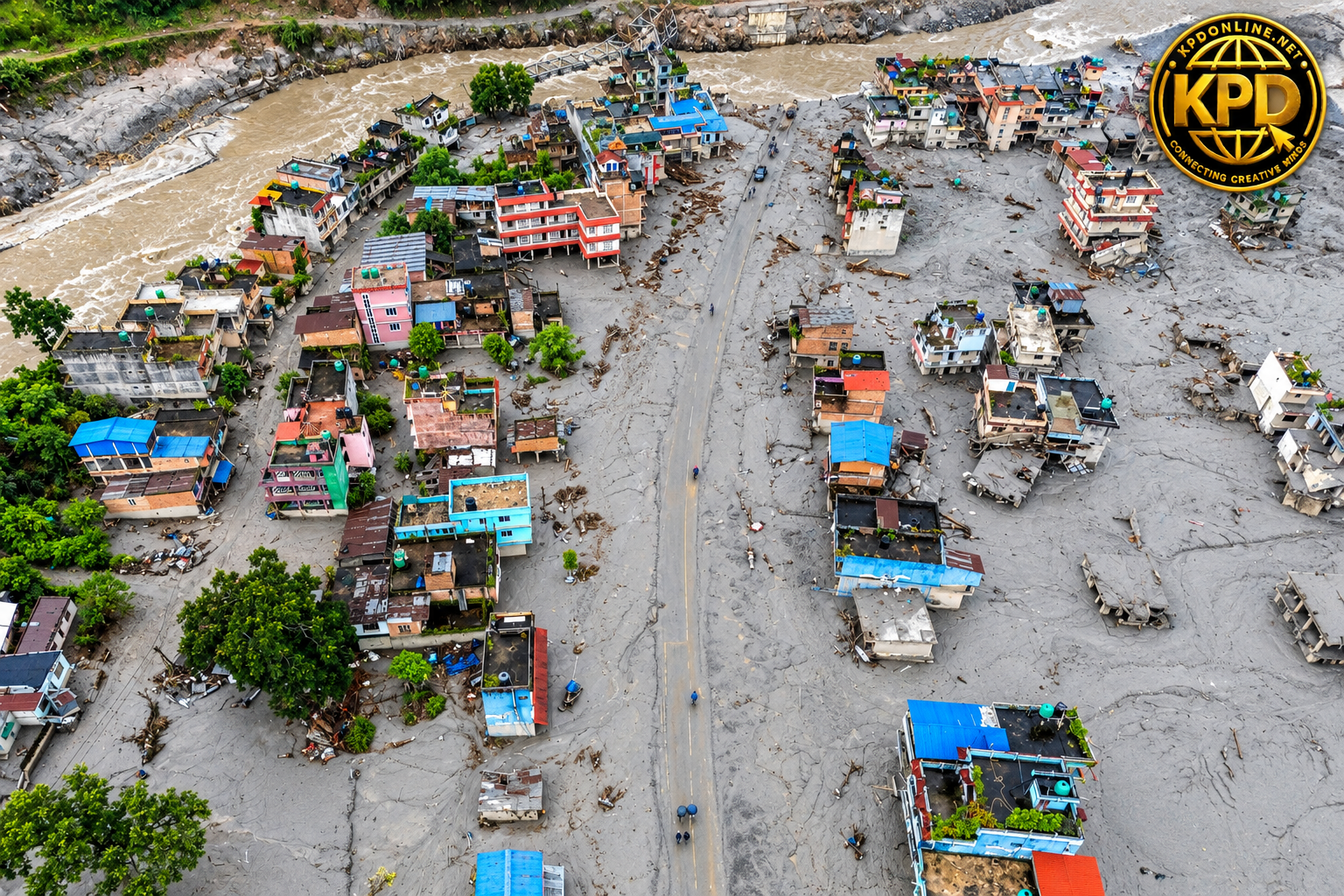
The catastrophe began on August 26, when a massive section of rock and glacier collapsed from the Langtang Lirung mountain near Nepal’s border with China.
According to the WWA analysis, approximately 2 square kilometres of rock and glacier ice collapsed from the mountainside. The material then transformed into a rapidly moving debris and water flood that travelled downstream through the Himalayan valleys.
More than 1,300 people have been confirmed dead, while more than 5,000 remained missing in the latest scientific and official assessments cited by researchers.
The destruction affected homes, roads, bridges and other infrastructure, leaving communities along the affected river system struggling to recover.

Langtang Lirung Nepal Guide 2026: Base Camp Trek, Climbing History & Travel Tips – Trek me Nepal
What the new study found
The WWA report describes the disaster as a “compound crisis” rather than a single extreme-weather event.
Researchers examined satellite observations, climate records, glacier changes and geological evidence to reconstruct what happened.
Their findings point to several interacting factors.
Long-term warming has caused glaciers to retreat and mountain permafrost to thaw. Both processes can weaken the physical structures holding steep Himalayan slopes together.
The researchers also found that the region experienced unusually high temperatures immediately before the collapse. July and August 2026 were exceptionally warm, while the broader Himalayan region has experienced significant long-term warming.
The study says the effects of warming likely helped destabilise the mountain, but it does not conclude that climate change alone caused the collapse.
A major 2015 earthquake may also have weakened the mountain over time, although the researchers said the precise contribution of that earthquake could not be established with certainty.

Photos show aftermath of flash floods in Nepal
Why the study matters to Nepal’s funding request
For Nepal, establishing the climate-related component of the disaster has significance beyond science.
The country’s government has asked the UN’s Fund for Responding to Loss and Damage to provide financial assistance following the disaster.
Nepal’s finance and environment ministers submitted a letter requesting support, with Foreign Minister Shishir Khanal subsequently confirming that the country had made an initial $20 million claim. He said the amount could be reassessed after a fuller evaluation of the damage.
The new WWA study provides scientific evidence that warming contributed to the environmental conditions surrounding the catastrophe.
That could become an important part of Nepal’s argument as the international community considers whether the disaster qualifies for support from the loss-and-damage mechanism.
Nepal’s losses are far greater than the initial request
The $20 million being sought from the UN fund represents only a small portion of the estimated economic damage.
Different assessments have placed the overall cost of recovery and reconstruction in the billions of dollars.
One estimate cited by researchers puts direct damage from the disaster at about $2.6 billion, with reconstruction and recovery potentially reaching $4 billion to $5 billion or more. Other estimates have placed the broader economic losses as high as $4 billion-$7 billion.
Nepal’s foreign minister has also acknowledged that the $20 million request is nowhere near enough to cover the country’s losses.
The initial claim should therefore be understood as an application to an international climate-finance mechanism, rather than a complete compensation request for the disaster.
A young fund facing enormous demand
Nepal’s application is also becoming a test for the UN’s relatively new loss-and-damage system.
The Fund for Responding to Loss and Damage was created following years of negotiations over how vulnerable countries could receive financial assistance for climate-related losses that cannot be prevented through adaptation alone.
But the fund’s resources remain limited.
As of its latest board discussions, countries had submitted requests worth approximately $2.8 billion, while only a fraction of that amount was available for potential disbursement. The fund had not yet developed a fully operational rapid-response system capable of immediately meeting disasters on the scale of Nepal’s catastrophe.
That gap has raised questions about whether the mechanism can respond quickly when a major disaster strikes.

Nepal Flash Flood Leaves Hundreds Dead And Thousands Missing in Himalayan Border District
Climate attribution is important — but complicated
Scientists caution against interpreting the new study as proof that global warming directly caused every aspect of the disaster.
The WWA researchers instead describe climate change as a factor that altered the mountain environment and increased instability.
The distinction matters because the disaster involved several processes: glacier retreat, permafrost thaw, unusual heat, meltwater, geological instability and the possible legacy of the 2015 earthquake.
The scientific conclusion is therefore more nuanced than simply saying that climate change “caused” the flood.
Researchers say the evidence shows that warming has changed the conditions under which high-altitude mountain failures can occur.

NEPAL-DISASTER-FLOOD
A wider warning for the Himalayas
The implications extend beyond Nepal.
The Hindu Kush Himalaya contains glaciers and frozen mountain systems that supply water to major river basins across South Asia. Scientists have increasingly warned that warming is altering glaciers, snow cover and permafrost, potentially increasing the risk of cascading hazards.
The Nepal disaster demonstrates how an event beginning thousands of metres above sea level can rapidly become a major humanitarian crisis downstream.
The WWA analysis warns that some emerging mountain hazards may exceed the capabilities of existing adaptation and early-warning systems.

NEPAL-DISASTER-FLOOD
What happens next?
Nepal’s $20 million request still has to go through the UN fund’s decision-making process. The scientific study does not automatically guarantee funding.
The fund itself is under pressure because requests already exceed the resources available.
Nepal’s case could therefore become an important test of whether the international loss-and-damage mechanism can translate scientific evidence and climate-vulnerability arguments into actual financial support.
For Nepal, the issue is immediate: rebuilding communities and infrastructure after one of the country’s most devastating recent disasters.
For the international climate-finance system, the case presents a broader question — whether a fund created to help vulnerable countries respond to climate-related loss and damage can deliver meaningful assistance when a catastrophe arrives.
The $20 million is a request, not an award, and the final amount — if any — will depend on the UN fund’s decision-making process.
Sources: World Weather Attribution, Associated Press, National Geographic, Reuters, Newcastle University and reporting on Nepal’s submission to the UN Fund for Responding to Loss and Damage.

World Tourism Day to Highlight Tourism’s Role in Ghana’s Development

They Destroyed My Business Without Letting Me Pack My Things: Itz Tiffany

MzGee stunned by BECE aggregates at SHS placement centre



-

 Entertainment1 week ago
Mahama Is First President to Put GH¢40m Seed Money into Creative Arts Fund: Kojo Preko Dankwa
-

 Culinary1 week ago
The Green Heart of Ghanaian Cuisine: Celebrating Nkontomire and the Art of Abom
-
 General News2 weeks ago
Don’t Punish Them Retrospectively – Educationist Challenges New CSSPS Placement Rule
-

 General News2 weeks ago
OSP Opens Preliminary Investigation into Alleged GH¢70,000 Payment Linked to Parliament’s Vetting
-

 Entertainment1 week ago
Government Repatriates Musician Barosky from UK
-

 Entertainment1 week ago
Keche Supports Street Vendor with GH¢3,000 After She Struggles to Make Sales
-

 General News3 days ago
GTA’s Financial Strength Weakens Despite 2025 Tourism Activities
-

 General News1 week ago
TVET is not for the academically weak – Advocate calls for change in Ghana’s mindset