
Politics
Minority demands full account of GH¢58m World Cup expenditure

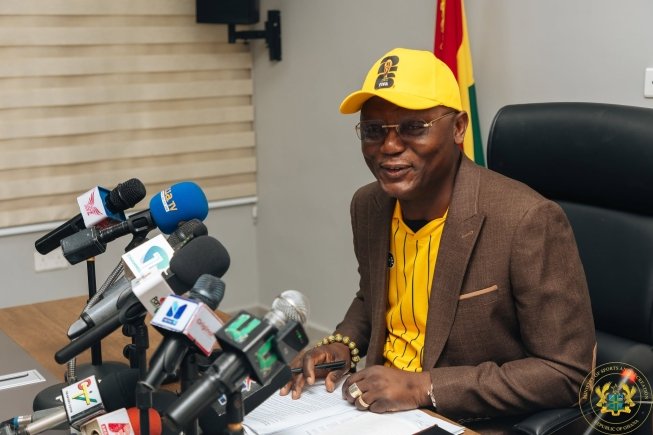
The Minority in Parliament has turned the spotlight on Ghana’s 2026 World Cup spending, demanding a detailed, line-by-line account of how the GH¢58 million advance released for the Black Stars’ campaign was utilised.
The demand follows a briefing by the Minister for Sports and Recreation, Kofi Adams, before Parliament’s Youth and Sports Committee on Thursday, September 17, 2026, on expenditure related to Ghana’s participation in the tournament.
The Minority says while some major payments have been explained, significant questions remain over operational expenses, including flights, accommodation, transportation, logistics, catering, security and tickets.
‘Where is the detailed breakdown?’
Ranking Member of Parliament’s Youth and Sports Committee, Vincent Ekow Assafuah, is leading the call for greater disclosure.
He wants the Ministry of Sports and Recreation, the Ghana Football Association (GFA) and other relevant institutions to publish a comprehensive breakdown showing exactly how the money was spent.
“Where is the detailed breakdown of the expenditure on flights, accommodation, internal transportation, laundry, training camps, logistics, catering, security, tickets and other operational expenses?” he asked.
According to the Minority, accounting for players’ appearance fees and officials’ allowances alone does not provide a complete picture of the entire World Cup expenditure.
$5m advance under scrutiny
The government released GH¢58.929 million, equivalent to US$5 million, as an advance to support preparations and Ghana’s participation in the group stages of the World Cup.
Assafuah said the Sports Minister had explained that Black Stars players received US$100,000 each as appearance fees, amounting to approximately US$2.6 million.
Payments to the technical team and other officials, including honoraria and per diems, reportedly brought expenditure to US$4,670,339 from the US$5 million advance.
But the Minority wants the remaining operational expenditure broken down in detail.
Laundry, transport and other costs questioned
The Minority has raised specific questions about figures contained in a reported GFA draft budget.
For instance, the draft reportedly allocated US$15,000 for laundry and US$38,000 for internal transportation.
Assafuah wants authorities to disclose what was actually spent, who provided the services, what contracts were signed, the applicable rates and the final amounts paid.
He stressed that the demand was not about questioning approved payments to players and technical staff.
Rather, the Minority wants the same level of transparency applied to every other expense incurred during the campaign.
3,000 World Cup tickets also under scrutiny
The Minority is also demanding a complete reconciliation of the World Cup tickets purchased for Ghana.
Assafuah called for details showing the number of tickets allocated, used, unused, transferred or resold, alongside an investigation into reported ticketing irregularities and allegations of resale.
The GFA reportedly purchased 2,922 tickets at a cost of about US$1.26 million, covering Ghana’s group-stage matches against Panama, England and Croatia.
According to reported details, 948 tickets were purchased for the Panama match, 1,000 for England and 974 for Croatia. The prices included a 10 per cent FIFA-approved administrative charge.
Minority demands account of millions in donations
The financial questions do not end with the government’s GH¢58 million advance.
The Minority is also demanding a complete reconciliation of financial contributions reportedly made by individuals and corporate organisations to support the Black Stars.
Among the contributions cited by Assafuah were US$2 million from Ibrahim Mahama of Engineers and Planners, US$100,000 from Shatta Wale, US$101,000 from Stonebwoy, GH¢5 million from Ghana Gas, GH¢5 million from GCB Bank, GH¢3 million from Ecobank Ghana and US$2 million from Gold Fields Ghana, among others.
Assafuah said the reported contributions and pledges amounted to US$7.516 million and GH¢33.08 million, with the reported corporate contributions in cedis amounting to GH¢115.756 million.
He is demanding details of when the funds were received, the accounts into which they were paid, who received them, how they were spent and whether any balances remain.
431 supporters and the cost of mobilisation
The Minority has also questioned the government’s facilitation of supporters travelling to the tournament.
Assafuah said the government had earlier indicated that it would not undertake mass transportation of supporters because a significant Ghanaian population was already living in the United States and Canada.
However, he said 431 supporters were eventually facilitated to travel, with expenses reportedly including some air tickets, match tickets, internal transportation, accommodation and stipends.
The Minority wants the Sports Ministry to publish the criteria used to select the supporters and the total amount spent on the exercise.
Minority calls for ‘accountability down to the last dollar’
The Minority’s central demand is for a comprehensive financial reconciliation rather than broad figures.
Assafuah said if government has been able to account for player appearance fees, honoraria and per diems, similar transparency should apply to every other expenditure.
The Minority also wants the Ministry of Sports and Recreation, the GFA and relevant institutions to account for funds received from FIFA in connection with the tournament, including money received for preparations and tournament-related activities.
The demand places Ghana’s World Cup finances under renewed public scrutiny, with the Minority insisting that every major payment should be traceable and properly documented.
For now, the political pressure is centred on one key question: how exactly was the GH¢58 million advance spent, and can every dollar and cedi be accounted for?
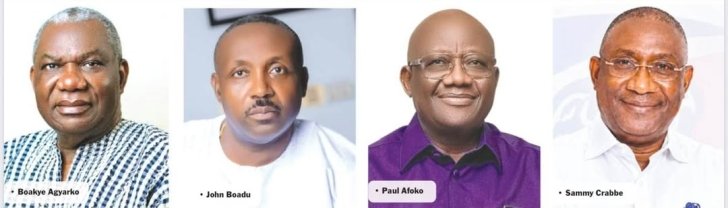
The race for the New Patriotic Party’s (NPP) National Chairmanship has entered a crucial phase, with John Boadu, Boakye Agyarko, Paul Afoko and Sammy Crabbe competing to lead the party through its next chapter and help rebuild its structures ahead of the 2028 general election.
The four contenders have now been confirmed for the October 3, 2026 national executive elections. Following the September 9 balloting, John Boadu occupies No. 1 on the ballot, Sammy Crabbe No. 2, Paul Afoko No. 3 and Boakye Agyarko No. 4.
With the NPP in opposition, the chairmanship contest has become a major internal battle over organisation, grassroots mobilisation, unity and the party’s strategy for 2028.
Four men, one powerful position
The chairmanship race brings together four figures with different political backgrounds and experiences.
John Boadu, a former General Secretary, is campaigning heavily on his extensive experience within the party’s structures. His political journey has taken him through grassroots, regional and national positions, and his campaign has placed considerable emphasis on rebuilding the party from the grassroots upward.
Boakye Agyarko, a former Energy Minister, brings ministerial and policy experience to the contest and has also positioned himself around the need for organisational renewal.
Paul Afoko, a former NPP National Chairman, is seeking a return to the position he previously occupied.
Sammy Crabbe, a former Second Vice Chairman of the party, completes the four-man contest.
The Boadu argument: experience and organisation
Boadu’s campaign has centred strongly on his long experience inside the NPP.
He has presented himself as someone who understands the party from the polling-station level through to the national headquarters, arguing that this experience can help repair and strengthen the organisation.
His supporters have highlighted his previous roles as National Organiser, Acting General Secretary and General Secretary, among others.
The campaign’s broader message is that the NPP needs a chairman who can reconnect national leadership with constituency executives and grassroots activists.
Agyarko pushes his own case
Boakye Agyarko enters the contest with his own record of national political and government experience.
The former Energy Minister has been engaging party members and presenting his vision for the NPP’s future, particularly at a time when the party is examining the reasons behind its recent electoral setbacks.
His campaign will have to persuade delegates that his experience and proposed reforms can help strengthen the party ahead of 2028.
Afoko seeks another chance at the top
Paul Afoko brings perhaps the clearest experience of the chairmanship itself.
The former National Chairman is returning to the contest with knowledge of the responsibilities and challenges that come with leading the party at the national level.
His candidacy adds another dimension to the race, particularly because delegates are being asked to choose between a former chairman, experienced former national officers and a former government minister.
Crabbe joins the four-way contest
Sammy Crabbe, a former Second Vice Chairman, is also seeking to convince delegates that he can provide the leadership required to rebuild the party.
His experience within the NPP’s national executive structure gives him familiarity with the party’s internal operations as he campaigns for the chairmanship.
With the race now narrowed to four candidates, the campaign period is expected to intensify as each aspirant attempts to distinguish his vision from the others.
Wontumi’s endorsement changes the conversation
One of the biggest developments in the race came on September 8, when former Ashanti Regional Chairman Bernard Antwi Boasiako, popularly known as Chairman Wontumi, endorsed John Boadu after withdrawing from the contest.
The Wontumi campaign said the decision followed consultations with grassroots supporters, constituency actors, party elders and other stakeholders.
It also called on members who previously organised for Wontumi to now support Boadu.
The endorsement has introduced another important factor into the contest: grassroots mobilisation.
Unity has become a major campaign theme
Regardless of who eventually takes the chairmanship, one issue has become unavoidable — the need for internal unity.
The NPP’s national elections committee has repeatedly urged aspirants and their supporters to conduct the campaign in a manner that protects the unity and integrity of the party.
The four candidates are therefore competing fiercely for the position while simultaneously needing to convince party members that the contest will not deepen existing divisions.
The chairmanship campaign is consequently about more than individual ambition. It is also about how the NPP intends to reorganise itself after its electoral setbacks and prepare for the next national contest.
The 2028 challenge
The new chairman will inherit a party facing the difficult task of rebuilding its electoral machinery.
Among the issues likely to dominate the next phase of the NPP’s internal work are:
- Reconnecting with grassroots members.
- Strengthening constituency and regional structures.
- Improving internal communication.
- Mobilising young people.
- Rebuilding public confidence.
- Preparing an effective campaign structure for 2028.
- Maintaining unity after the national executive elections.
The candidates may differ in their approaches, but the pressure on whoever emerges chairman will be immediate.
The ballot is set — the decision awaits
With the ballot order now established — Boadu 1, Crabbe 2, Afoko 3 and Agyarko 4 — the four campaigns have entered the final stretch toward October 3.
There is no established election result yet, so the question of who will win remains for the NPP’s delegates to decide.
What is already clear, however, is that the chairmanship election will determine more than the occupant of one national executive position.
Politics
Government Is Sleeping on the Job – Palgrave Boakye-Danquah Raises Alarm Over Cocaine Trafficking

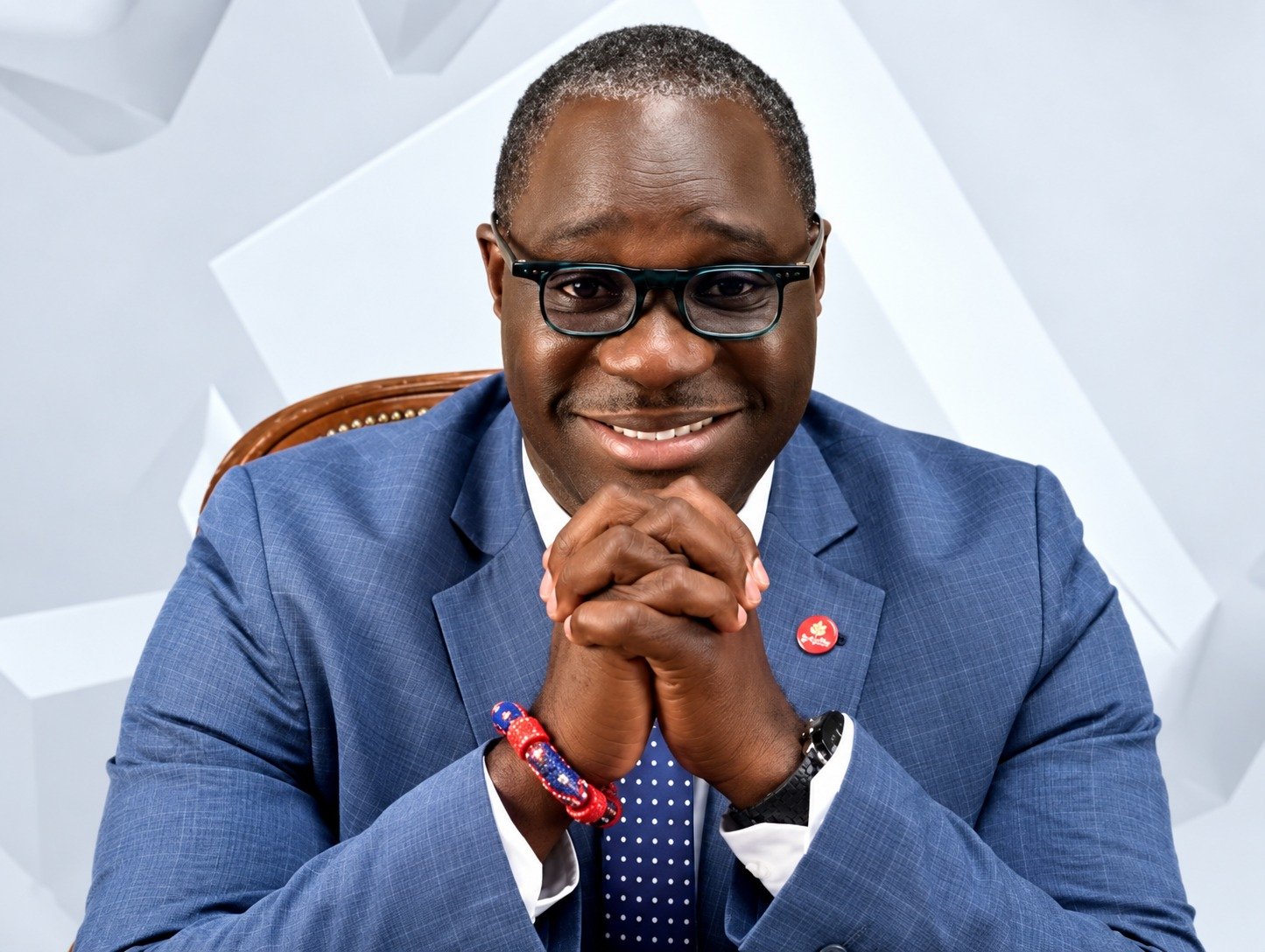
Former government spokesperson on security, Dr Palgrave Boakye-Danquah, has raised concerns over Ghana’s handling of the growing cocaine trafficking problem, accusing the government of failing to act decisively enough to protect the country’s security and international reputation.
In a zoom meeting with Kojo Preko Dankwa on Kessben Maakye show in Accra, Dr Boakye-Danquah asserted, he has lost confidence in the government, alleging that authorities are “sleeping on the job” while Ghana increasingly becomes a transit point for illicit drugs.
He criticised the government’s proposed meeting to address drug trafficking, arguing that the initiative came too late and should have been undertaken much earlier.
Dr Boakye-Danquah also questioned the effectiveness of Ghana’s security agencies in dealing with the situation.
His concerns come amid allegations that some government officials could be connected to cocaine-related activities. He cited comments attributed to the Interior Minister, Mohammed Muntaka Mubarak, in Parliament that government officials were allegedly involved in cocaine deals.
He further raised questions over the movement of containers from Ghana’s port to France before they were reportedly impounded, arguing that such developments raise serious concerns about the country’s security and border-control systems.
The former security spokesperson also questioned why the President would announce a proposed security meeting publicly without even involving the Interior Minister.
According to him, Ghana has recorded significant cocaine seizures in April, August and September 2026, with the value of the seized consignments estimated at about $800 million.
Dr Boakye-Danquah called on the government to provide clearer answers on the alleged involvement of public officials in the drug trade.
“The government must give us better answers,” he said, while questioning which government officials may be involved in the alleged cocaine dealings.
His comments add to growing public debate over Ghana’s fight against drug trafficking and the effectiveness of the country’s security and law-enforcement institutions.
By Maurice Otoo
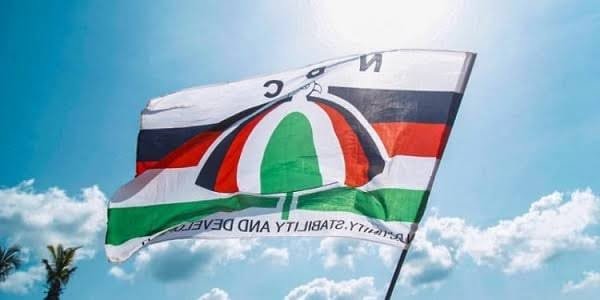
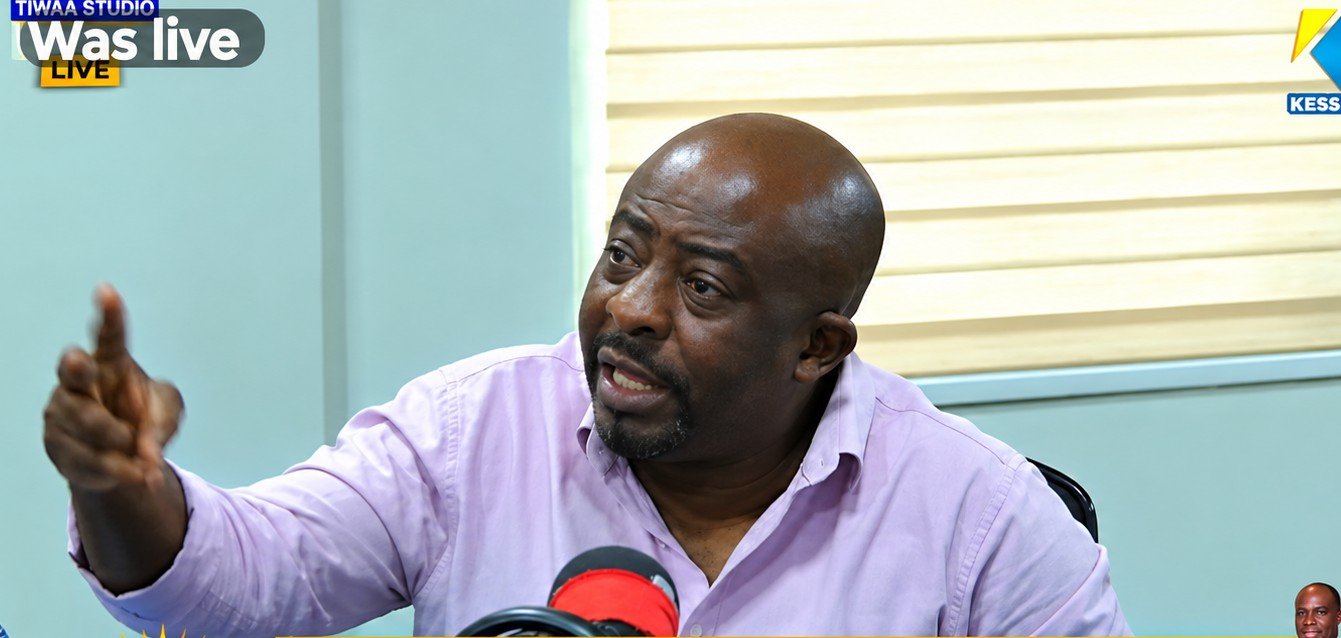
Lawyer Dennis Ofori Asiedu, a member of the NDC Communications Team, has cautioned Ghanaians against assuming that drug trafficking is carried out only by easily identifiable criminals, stressing that a drug merchant “may be anybody’s neighbour.”
Speaking of national security and the fight against drug trafficking on Kessben Maakye show in Accra, Ofori Asiedu said protecting Ghana’s borders remains extremely challenging, particularly because farms and communities stretch along parts of the country’s boundaries.
He argued that security agencies cannot win the fight alone and urged citizens to provide useful information to the authorities. According to him, without public cooperation, the work of security agencies becomes “extremely difficult.”
Ofori Asiedu further noted that traffickers may use transit routes without necessarily transporting drugs through the country’s ports, making detection more complicated.
While expressing confidence that Ghana’s security agencies are doing their best to safeguard the country, he acknowledged that lapses can occur.
Turning to recent criticism involving Chief Justice Paul Baffoe-Bonnie, the lawyer stated, the Ghana Bar Association has become a Chop Bar, questioning what he described as selective outrage from the Ghana Bar Association. He argued that previous Chief Justices had also publicly commended government initiatives, citing comments attributed to former Chief Justices Sophia Akuffo stating that Free SHS is good and will help Ghanaian children therefore parents must commend Nana Akufo Addo.
Additionally he referenced Justice Anin Yeboah once commended COCOBOD for suppling fertilizer to the cocoa farmers knowing it was being sold to them.
He queried “What has Justice Baffoe Bonnie’s comment got to do with the Bar Association launching at CJ for his comment?” he questioned, suggesting that the current criticism is inconsistent with reactions to similar remarks
Politics
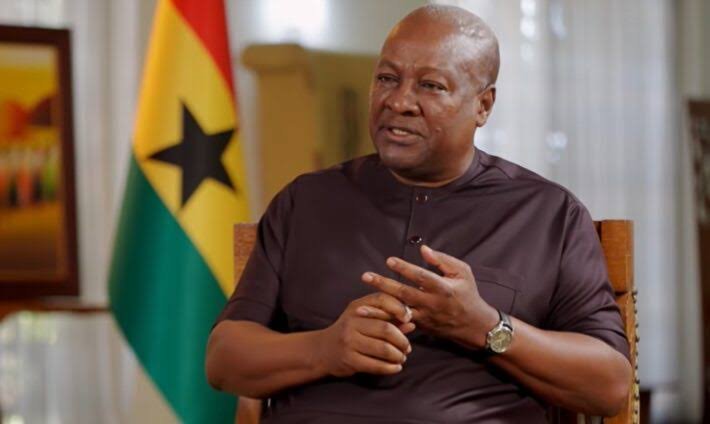
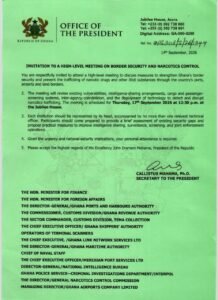
Mahama summons top officials to Jubilee House over border security and narcotics trafficking

British Ghanaian Rapper Sway DaSafo Dies at 44

Students Loan Trust disburses GH¢600m this year — CEO

Bawumia visits Asantehemaa, seeks blessings for presidential vision



-
 Entertainment2 weeks ago
Mahama Is First President to Put GH¢40m Seed Money into Creative Arts Fund: Kojo Preko Dankwa
-
 Culinary2 weeks ago
The Green Heart of Ghanaian Cuisine: Celebrating Nkontomire and the Art of Abom
-
 General News2 weeks ago
OSP Opens Preliminary Investigation into Alleged GH¢70,000 Payment Linked to Parliament’s Vetting
-
 Entertainment1 week ago
Government Repatriates Musician Barosky from UK
-
 General News4 days ago
GTA’s Financial Strength Weakens Despite 2025 Tourism Activities
-
 Entertainment1 week ago
Keche Supports Street Vendor with GH¢3,000 After She Struggles to Make Sales
-
 General News1 week ago
TVET is not for the academically weak – Advocate calls for change in Ghana’s mindset
-
 General News4 days ago
GTA Cash Reserves Halve to GH¢640,000 Despite Improved Liquidity Ratio