
Entertainment
Ras Caleb Appiah-Levi Honoured for Pan-African Cultural Leadership and Creative Legacy

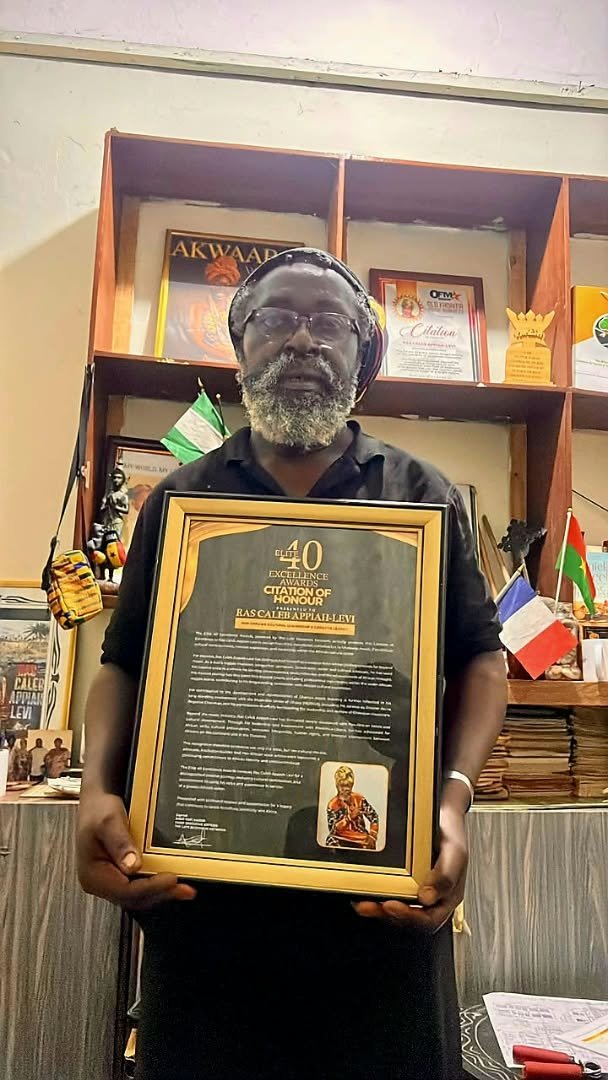
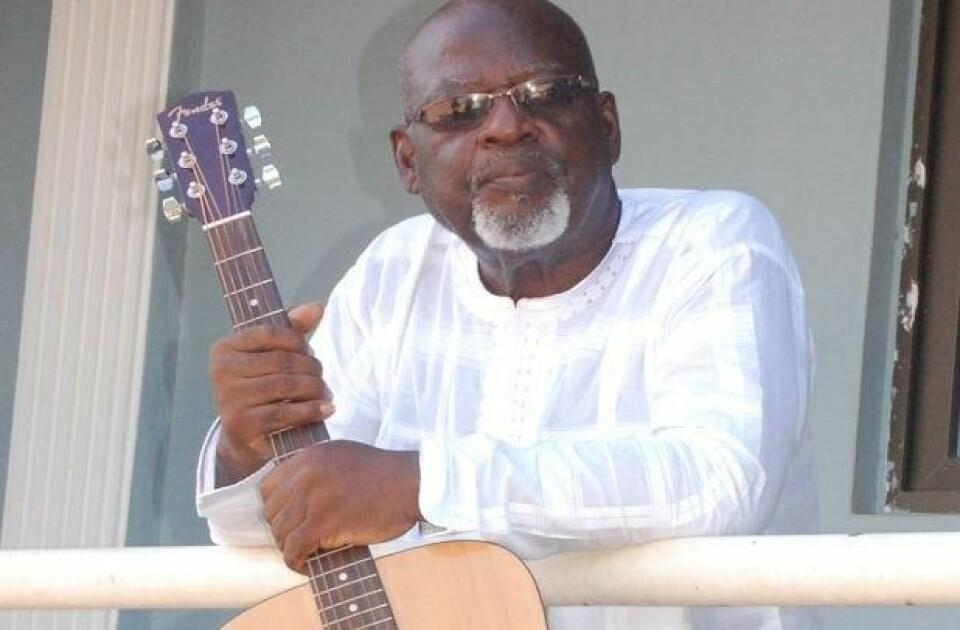
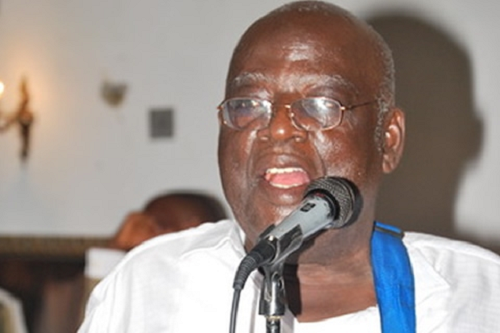
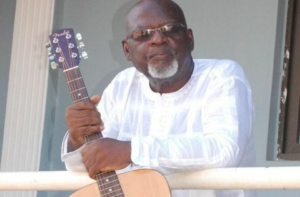
Ghanaian roots reggae musician, songwriter, composer, broadcaster, writer and cultural advocate, Ras Caleb Appiah-Levi, has been honoured by the Elite 40 Excellence Awards, powered by The Late Bloomers Network, for his contribution to Ghanaian music, Pan-African cultural consciousness and creative development.
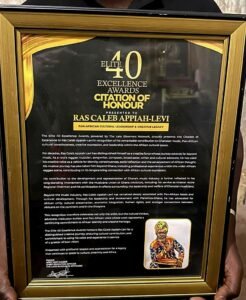
The veteran creative received a Citation of Honour under the category “Pan-African Cultural Leadership & Creative Legacy” at a ceremony recognising individuals whose careers and contributions have made a significant impact in their respective fields.
The citation, dated September 22, 2026, was signed by Andy Kofi Kaiser, Chief Executive Officer of The Late Bloomers Network.
According to the citation, the recognition celebrates Ras Caleb Appiah-Levi’s remarkable contribution to Ghanaian music, Pan-African cultural consciousness, creative expression, and leadership within the African cultural space.
For decades, Ras Caleb Appiah-Levi has built a career that extends beyond his work as a musician.
The citation describes him as a creative force who has used music and other forms of creative expression to promote identity, consciousness, social reflection and African thought.
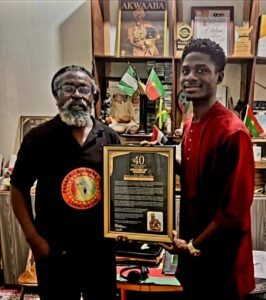
As a roots reggae musician, songwriter and composer, his artistic journey has also taken him beyond Ghana, including professional experiences within the wider African reggae scene.
These experiences, according to the citation, have strengthened his longstanding connection with African cultural expression and Pan-African ideals.
Ras Caleb Appiah-Levi’s contribution to Ghana’s music industry has also included long-standing involvement with the Musicians Union of Ghana (MUSIGA).
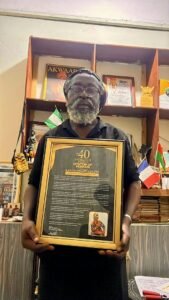
His service includes his tenure as Greater Accra Regional Chairman of MUSIGA, where he participated in efforts relating to the leadership and welfare of Ghanaian musicians.
His involvement with the musicians’ union forms part of a broader career in which he has combined creative work with advocacy for the development and representation of Ghana’s music industry.
Beyond the music industry, Ras Caleb Appiah-Levi has remained closely associated with Pan-African cultural development.
Through his leadership and involvement with PanAfrica-Ghana, he has advocated for issues including African unity, cultural preservation, economic integration, human rights and stronger connections between Africans on the continent and those in the Diaspora.
His work in this area has positioned him not only as a musician and creative practitioner but also as a cultural advocate and voice on issues concerning Africa’s identity and development.
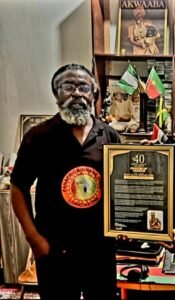
The Elite 40 Excellence Awards citation emphasised that the honour was not solely for Ras Caleb Appiah-Levi’s achievements as an artist.
It described him as a cultural thinker, advocate, institution builder and Pan-African voice, highlighting his continued commitment to African identity and creative heritage.
The organisers said the award celebrates his “distinguished creative journey, enduring cultural contribution” and commitment to using his voice and experience in service of a broader African vision.
The citation concluded by expressing profound respect and appreciation for a legacy that continues to speak to culture, creativity and Africa.
The honour adds another recognition to Ras Caleb Appiah-Levi’s longstanding involvement in Ghana’s creative and cultural landscape, particularly his work connecting music, cultural consciousness and Pan-African advocacy.
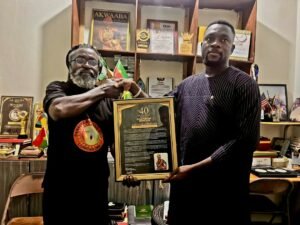
The Citation of Honour was formally presented by Andy Kofi Kaiser, CEO of The Late Bloomers Network, on September 22, 2026.
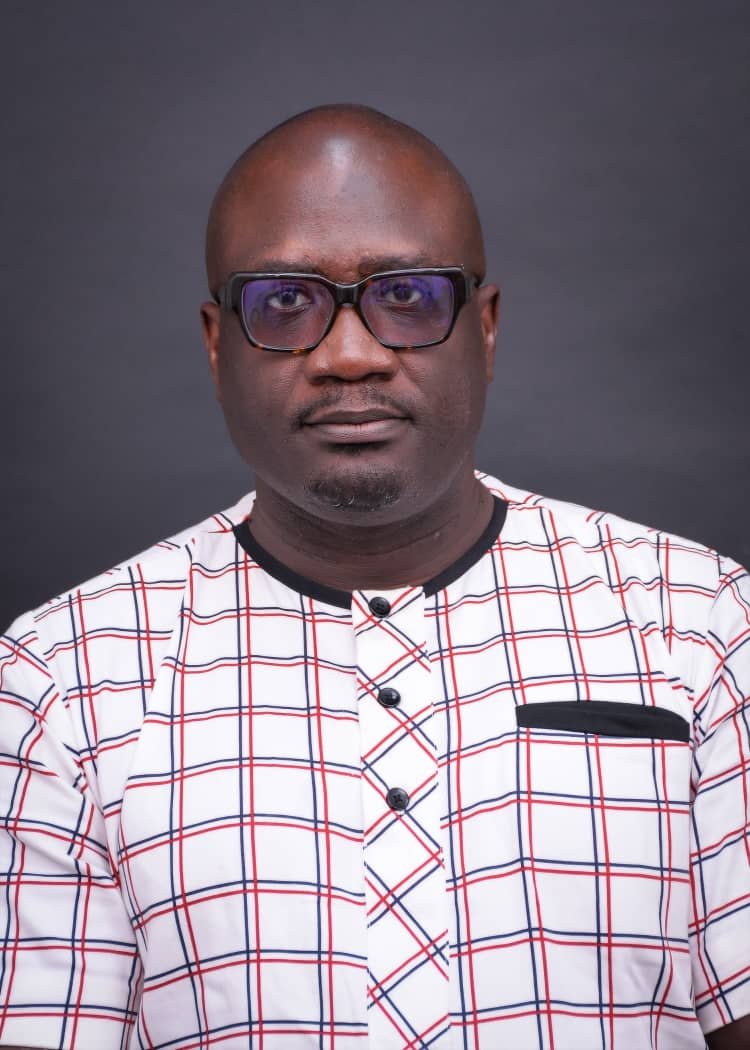
President of the Foundation of Concerned Arts Professionals (FOCAP), Kojo Preko Dankwa, has called for a thorough investigation into the affairs of the Ghana Tourism Authority (GTA) in connection with arrangements made for Ghanaians who travelled to watch the Black Stars during the World Cup.
In an interview with kpdonline, Dankwa is demanding that an investigation or committee be established to assess how the GTA managed its allocation and arrangements for supporters expected to attend Ghana’s matches.
“I am asking for that investigation or a committee to look into how they dealt with the World Cup in terms of getting people to go watch the Black Stars during the World Cup,” he said.
His call follows what he described as videos and reports concerning alleged visa-related scandals involving some individuals who sought to travel to watch the tournament.
“I have watched some videos talking about some scandals that really happened during the getting of visas and getting visas to go watch the matches,” Kojo Preko Dankwa stated.
He also raised questions about Bright Asempa, whom he identified as a former Corporate Affairs Manager of the Ghana Tourism Authority, saying the official’s name had allegedly surfaced in discussions surrounding the visa controversies.
“I have heard a name who I hear is the Corporate Affairs Manager of the Ghana Tourism Authority, and now he is not there. The CEO has sacked him without telling the general public why he was sacked or removed. That we need to know,” he said.
“His name is Bright Asempa, and his name has appeared in scandals that are happening within the visa connections and visa racketeering when it comes to the World Cup.”
However, the allegations raised by Kojo Preko Dankwa have not, on the information available here, been independently established as fact.
He argued that the Ghana Tourism Authority must clarify its position if its name continues to feature in allegations surrounding the World Cup visa arrangements.
“I have heard his name mentioned and I have also heard about GTA name dragged into the mud with other stories that are connected to the same World Cup,” he said.
Kojo Preko Dankwa further questioned what happened to spaces allegedly allocated to the GTA to facilitate the attendance of Ghanaians at Black Stars matches.
“Because we were told that they had a certain number of slots that they needed to use to take people to go watch the Black Stars during the World Cup, specifically the Black Stars matches.”
He subsequently asked whether those spaces were sold or otherwise accounted for.
“Because if they had a number of slots that they were supposed to deal with, did they sell it? And if they did not sell it, why is their former or current Corporate Affairs Manager Bright Asempa’s name flying in and out of these scandals coming from National Sports Council?”
He also referred to videos which he said had raised questions about possible GTA involvement in the alleged Black Stars visa controversy.
“And videos also talking about GTA involvement in the Black Stars visa scandals,” he added.
Kojo Preko Dankwa is therefore calling for a comprehensive investigation to establish what happened and determine whether any individual or institution breached the law or applicable procedures.
“We want a thorough investigation done into the same World Cup Black Stars visa issues where GTA had a certain number of slots to take Ghanaians to go watch the Black Stars’ matches at the World Cup.”
The FOCAP president also referenced previous visa-related controversies involving a former Deputy Sports Minister, saying Ghanaians should not have to deal with similar allegations again.
“Because what was done to a certain previous government where we saw, or we heard, the former Deputy Sports Minister also in connection with this Australia Visa racketeering,” he said.
“We do not want to hear any other stories again when it comes to some of these things.”
According to him, an investigation would also help establish whether the Ghana Tourism Authority had any involvement in the alleged visa-related activities and protect the credibility of the institution.
“And if Ghana Tourism Authority’s name is being dragged into it because of their former Corporate Affairs Director Bright Asempa’s name being involved, then we need to get the credibility of GTA up for us to know whether they were involved in all these things that are happening,” Kojo Preko Dankwa said.
He further questioned the circumstances surrounding Bright Asempa’s reported departure from the Authority.
“What actually even made GTA CEO Mame sack or remove Bright Asempa, we need to know,” he said.
“Because I am told he is not there. And if he is not there, what made him go or get sacked?”
Kojo Preko Dankwa also recalled an earlier disagreement over Bright Asempa’s communication role at the Authority.
“Once upon a time, this same Bright Asempa issued statements here and there telling everybody that he is the one who is supposed to tell us who speaks for Ghana Tourism Authority,” he said.
“That issue, we raised it. CEO Mame told us she was going to come back to it. It never happened.”
He said the renewed mention of Bright Asempa’s name in the World Cup-related allegations makes the need for clarification even more pressing.
“Today, we are hearing his name again, Bright Asempa again, in all these scandals that are coming in,” he stated.
“We want to know why he was sacked. We want a thorough investigation done on this same World Cup Black Star visa issue where GTA had a certain number of slots to take Ghanaians to go watch the Black Star match at the World Cup.”
Kojo Preko Dankwa maintained that the matter should be investigated rather than allowed to generate further speculation.
“That we need to know. Because we cannot sit and see corruption. We cannot sit and see other things that are done to make the whole GTA look bad in the eyes of the people.”
“We need to investigate. We need to understand what is really happening,” he concluded.
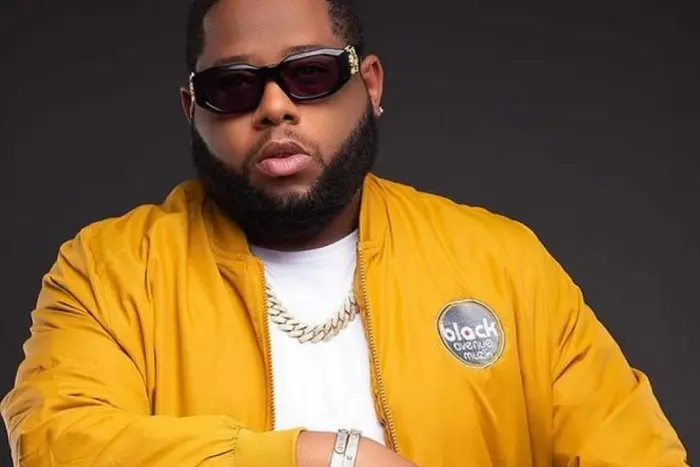
Ghanaian musician and entrepreneur D-Black has raised concerns over the reported decision by Antoine Semenyo and Inaki Williams to withdraw from the Black Stars squad ahead of Ghana’s upcoming 2027 Africa Cup of Nations (AFCON) qualifying matches.
The rapper questioned the circumstances surrounding the players’ absence, suggesting that the development could point to deeper concerns within the Ghana Football Association (GFA).
In a post shared on X on September 22, 2026, D-Black reacted to reports of the withdrawals, expressing surprise that key players were becoming unavailable for the national team at this stage of the AFCON qualification campaign.
“Inaki Williams, now Semenyo, withdrawing from playing for Black Stars for AFCON… Something must be very wrong up there.”
Semenyo has reportedly requested to be excused from the squad for the September/October international window.
His reported absence comes after Inaki Williams was also said to have withdrawn from the team, raising further questions among some followers of the national team.
Black Stars head coach Carlos Queiroz is also expected to be without another important attacking option, Mohammed Kudus, who is reportedly unavailable because of an ankle injury.
Kudus’ reported injury comes after the Manchester City forward scored twice in his club’s 5-3 Premier League victory over Sunderland, a result that reportedly helped City move to the top of the league table.
The withdrawals come at a crucial period for Ghana as the Black Stars prepare for two AFCON qualifying fixtures.
Ghana are scheduled to travel to Bouaké to face Côte d’Ivoire on September 24, 2026, before hosting The Gambia in Accra on September 29.
The Black Stars will then round off the international break with a friendly against Morocco on October 4, 2026.
With several notable players potentially unavailable, Queiroz will have to assess his options and reorganise his squad ahead of the important fixtures.
Ghana will be seeking strong results from the qualifying matches as the team continues its campaign for a place at the 2027 AFCON tournament.
Source: Pulse




:format(jpeg):mode_rgb():quality(40)/discogs-images/A-98707-1473955827-9001.jpeg.jpg)


Entertainment
Paramount Reaches Deal With 12 States, Removing Major Hurdle to Warner Bros. Acquisition

By Angel No Lie | KPD Online | September 22, 2026
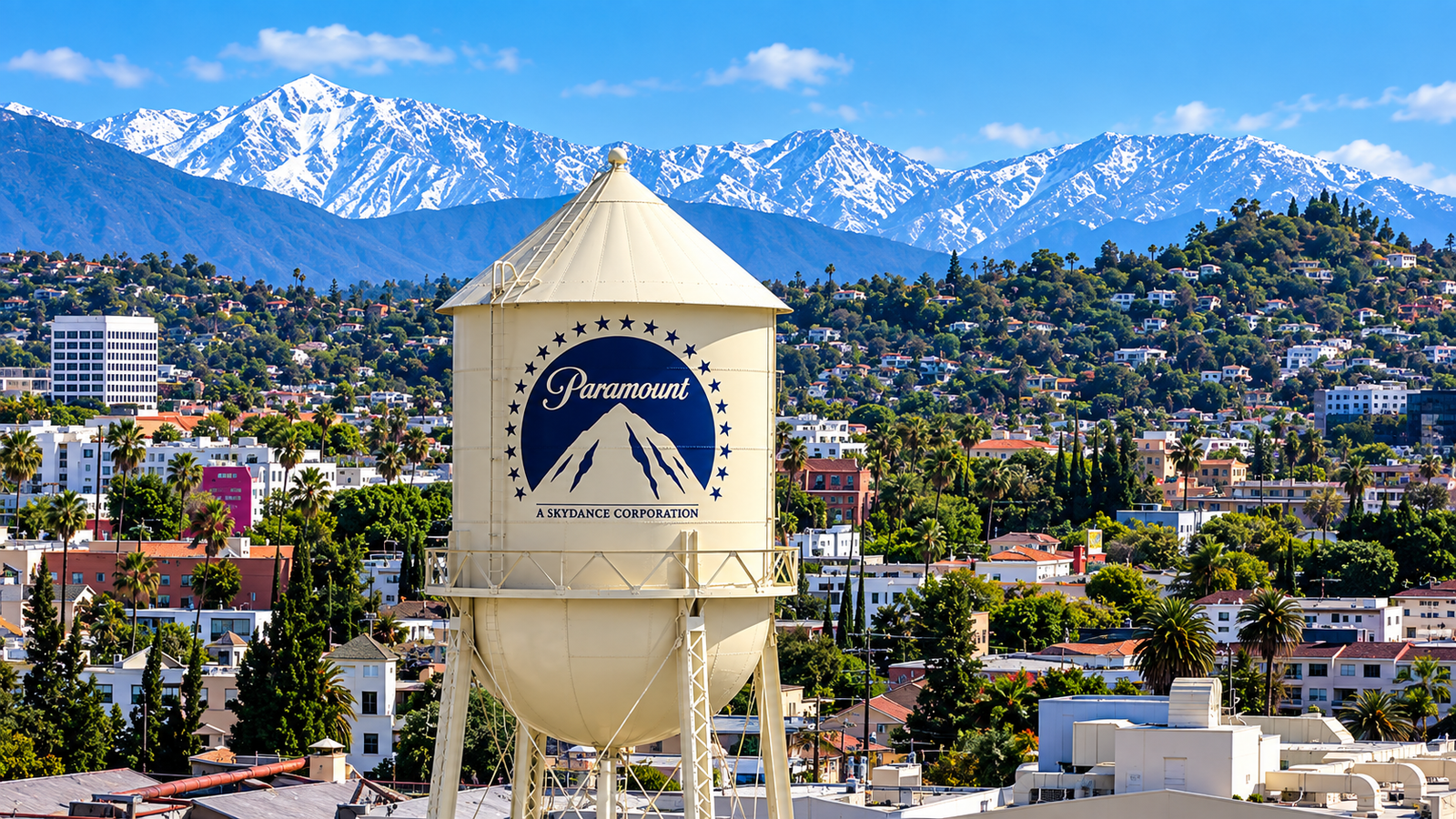
LOS ANGELES — September 22, 2026 — Paramount Skydance has reached a settlement with California and 11 other U.S. states, resolving a major legal challenge to its proposed acquisition of Warner Bros. Discovery and clearing a key obstacle to the roughly $110 billion transaction.
The agreement ends an antitrust lawsuit filed in July by a coalition of state attorneys general. The states had argued that combining Paramount and Warner Bros. Discovery could reduce competition across movie production, television, streaming and cable markets.
Conditions attached to the settlement
Under the agreement, the combined company will face several court-enforceable commitments over a period of up to five years.
Among the most significant provisions is a requirement to maintain a minimum level of theatrical movie production. The company must release at least 30 films annually during the first two years, rising to 32 films a year for the following three years. Financial penalties can apply if the commitments are not met.
Paramount has also committed to spending an additional $300 million annually on domestic film production, representing at least $1.5 billion in additional investment over five years. The settlement also establishes a $47.5 million fund for workers affected by the transaction.
The agreement includes provisions concerning cable negotiations and establishes measures intended to protect editorial independence at CBS News and CNN, two major news organizations that would come under the same corporate ownership following the transaction.
A major change for Hollywood
If completed, the acquisition would combine Paramount and Warner Bros. Discovery’s extensive entertainment operations, including the Paramount and Warner Bros. film studios, CBS and CNN, and streaming services Paramount+ and HBO Max.
The Justice Department had previously cleared the transaction, while the lawsuit by the 12 states became a significant remaining obstacle. The settlement is subject to court approval.
California Attorney General Rob Bonta, whose office led the states’ legal challenge, said the settlement should not be interpreted as an endorsement of the merger. The states had originally sought to prevent the transaction, arguing that it could affect competition and consumers.
Paramount CEO David Ellison has described the merger as beneficial to consumers and the entertainment industry. The company is now moving toward completion of the acquisition, although the settlement’s court approval remains an important procedural step.
The proposed transaction would mark one of the largest consolidations in the modern U.S. entertainment industry, bringing two major Hollywood studios and their television, streaming and news operations under a single corporate structure.
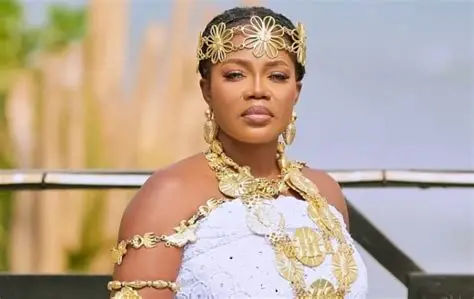
Ghanaian musician and entrepreneur MzBel has opened up about the personal and professional setbacks she says followed her decision to publicly identify with the National Democratic Congress (NDC).
According to the musician, her decision to openly campaign for and defend the NDC resulted in the loss of fans, performances and business opportunities, particularly from individuals associated with the New Patriotic Party (NPP).
Speaking in an interview with Kafui Dey, MzBel said she previously enjoyed support from people across the political divide before making her political affiliation public.
She explained that once she became more vocal about her support for the NDC, some of her NPP-affiliated followers stopped supporting her.
“Before I came out fully as an NDC member, showed my face as an NDC member, I had followers and fans from NPP. But then I boldly came out and started talking for my party. So automatically I’ll lose all those people,” she said.
MzBel further disclosed that she was excluded from some events she had regularly performed at because the organisers were connected to the NPP.
She said the situation became more difficult when the NPP returned to power, as she lost several business deals she had previously benefited from.
“I was blacklisted from some events that I used to get every year. They were organised by NPP people. And even when NPP came to power, I lost a lot of their deals,” she stated.
The musician also recounted an occasion when she was taken off the programme of an event just days before she was scheduled to perform.
According to her, organisers told her that the decision was linked to the political identity of the event’s guest of honour.
“I remember there was a show at Mervyn Peak I was supposed to perform. A few days before the show, they called me and said their guest of honour is one big NDC woman, an NPP woman. And because of her, they had to take me off the show,” she recounted.
MzBel said her political stance also affected some international performances, claiming that organisers sometimes cancelled her appearances after she had already helped publicise the events.
She said such experiences made her believe that she could have avoided many of the setbacks if she had chosen not to publicly declare her political allegiance.
“Not just that, even shows outside Ghana. They will cancel me later after I’ve posted the flyer. So if I didn’t come out to say that I am NDC, defending my party and all of that, I would have been doing well,” she said.
Beyond losing professional opportunities, MzBel said her political involvement also affected her relationship with sections of the public and even some members of the party she supported.
“I lost half of my fans. I lost half of my fan base. And the party I followed too, well, it didn’t do me any good,” she stated.
She also alleged that she faced hostility from some people within the NDC, including verbal abuse, social media attacks and threats of physical violence.
“People in the party physically and verbally attacked me, insulted me, called me out on social media, threatened to beat me and all of that,” she disclosed.
Explaining why she became passionate about the NDC in the first place, MzBel traced her political connection to her upbringing in Jamestown and her admiration for the late former President Jerry John Rawlings.
She said her environment and the influence of Rawlings played a major role in shaping her political identity.
“It was Rawlings and Jamestown. It’s all about Rawlings and NDC. It became like a religion for us,” she said.
However, MzBel now says she has moved away from partisan politics and does not intend to identify herself with either of Ghana’s two major political parties.
She described her experience as a lesson that has changed her perspective on political affiliation.
“It’s not even about the party, but it’s a lesson I was supposed to learn. And I have learned that lesson,” she stated.
MzBel ultimately declared that she now sees herself simply as a Ghanaian rather than as a supporter of either the NDC or NPP.
“I’m not NDC. I’m not NPP. I’m not. I’m nothing. I’m just a Ghanaian. And I decide whether I want to vote or not,” she said.

Gunmen Attack KwaMakhutha Gathering, Leaving 11 Dead and Three Injured

US Refugee Policy Shifts Toward Afrikaner Resettlement Under New Trump Proposal

NPP Has No Moral Right to Lecture NDC on Narcotics — Alexander Ackuako



-
 General News1 week ago
GTA’s Financial Strength Weakens Despite 2025 Tourism Activities
-

 General News1 week ago
GTA Cash Reserves Halve to GH¢640,000 Despite Improved Liquidity Ratio
-

 General News2 weeks ago
TVET is not for the academically weak – Advocate calls for change in Ghana’s mindset
-
 General News1 week ago
Creative Arts Agency Records GH¢2.01m Revenue in FY2025 Despite Financial Reporting Gaps
-
 Business2 weeks ago
Bank Profits Slide to GH¢7.1bn as Low Interest Rates Squeeze Earnings
-

 General News2 weeks ago
Police Launch Manhunt for Missing Assin Fosu Man as Captors Demand GH¢49,500 Ransom
-

 Culinary1 week ago
Oranges: More Than Just Juice — The Nutritious Fruit Adding Flavour to Ghanaian Life
-
 General News1 week ago
National Theatre balances cultural mandate with commercial survival