
Entertainment
Kojo Preko Dankwa Writes: Misconception by Kwame Dadzie on the Relevance of CAFOG


I have read with keen interest the article by Kwame Dadzie titled “Why the Creative Arts Federation of Ghana is a Needless Formation.” While I respect your right to express an opinion, I must firmly state that your arguments are flawed and misrepresent the purpose and significance of the Creative Arts Federation of Ghana (CAFOG).
1. On the So-Called Duplication of Mandates
The notion that CAFOG is a duplication of existing bodies like the Ghana Culture Forum (GCF) is misplaced. Just as there are multiple political parties with shared objectives but different ideologies and methods, associations within the creative space may share common interests but operate with unique mandates and focus areas.
For example, the Ghana Tourism Federation (GHATOF) focuses on the tourism domain. Similarly, CAFOG is established to unify and represent the interests of creative arts associations, not cultural or tourism-focused institutions. It complements existing structures, not competes with them.
2. Differentiating CAFOG and GCF
GCF has played a valuable role in the past. However, it is fundamentally a civil society consultative forum, not a federation of creative arts associations. It serves as a platform for dialogue and advocacy, but does not speak directly for the diverse associations within the creative arts industry in a structured and federated manner.
Moreover, you mentioned executives within GCF and their sectoral representation as though this validates GCF’s claim to sole representation. Many of those individuals were appointed by GCF, not elected or nominated by their sector associations. That distinction matters greatly when we talk about legitimate representation.
3. Why CAFOG Matters: Representation Under Act 1048
Act 1048, which established the Creative Arts Agency, clearly mandates creative sector representation on its board. The law doesn’t call for individual associations to be represented—it calls for the sector to have a voice. CAFOG offers a solution to this requirement by forming a unified body capable of nominating qualified representatives through a legitimate and broad-based structure.
Who else, if not CAFOG, can take up this role? Who should speak for creatives on this legally mandated board? Fragmented associations with no collective voice, or a federation structured to coordinate and lead?
Let us not be distracted by personal preferences or rivalries. The sector needs unity, not division disguised as critique.
4. The GCF Silence and Selective Outrage
Kwame, I must ask: how many times has GCF spoken against the irregularities involving the Creative Arts Agency under Gyankroma Akufo-Addo’s leadership? Where was the loud advocacy when Act 1048 was being rendered ineffective? GCF’s silence in the face of political interference and agency stagnation was loud and telling.
You accuse CAFOG of redundancy, yet you ignore the existence of overlapping associations like the Art Writers Association, Bloggers Association of Ghana, and the New Media Association—all operating in similar spheres with shared membership. If CAFOG is a duplication, then by that logic, these associations are too.
Even Minister Dzifa Gomashie’s recent inauguration of the Culture and Creative Arts Committee—headed by Nanahemaa Adwoa Awindor—shows another layer of representation. Was this committee formation not a duplication? Were all associations consulted? Why was there no public outcry?
5. Clarifying the Misleading Claims of Dissociation
It is especially disappointing to see names like Mr. Bessa Simons disassociating themselves from CAFOG after having formally accepted roles within its interim leadership. If indeed he was not consulted, why submit an acceptance letter? These contradictions only feed confusion and suspicion within the industry.
6. Support the Vision, Not the Personalities
This is not about who leads. It is about building a viable, united front for the creative arts sector in Ghana. The CAFOG leadership is interim; there will be room for elections, reorganisation, and collective decision-making. But it begins with support and belief in the purpose, not sabotage driven by personal biases.
Let’s stop tearing down what we refuse to understand. Let’s build together for the future of Ghana’s creative arts industry.
Kojo Preko Dankwa
Communications Officer
Creative Arts Federation of Ghana (CAFOG)
📞 0550077040 / 0575655656














Ghanaian musician Sista Afia has opened up about her fears surrounding motherhood, revealing that she is more concerned about raising a child alone than motherhood itself.
In a post shared on her X page, the singer said the increasing number of single mothers in the current generation has made her reflect deeply on the kind of family she wants to build.
Sista Afia stressed that she is not afraid of becoming a mother, but fears finding herself in a situation where she has to raise a child without the love, commitment and family structure she has always envisioned.
“Seeing how many single mothers there are in this generation honestly scares me,” she wrote.
According to her, her concern is not simply about having a child, but about becoming a “single mother” or “baby mama” without the kind of committed relationship and family she desires.
“I’m not afraid of motherhood, but I’m afraid of becoming a single mother or just a ‘baby mama’ without the love, commitment, and family I always envisioned,” she added.
The musician said her ultimate desire is to build a home and a family, rather than simply have a child.
“I want to build a home, not just have a child,” Sista Afia stated.
She admitted that the thought of ending up in such a situation frightens her deeply, highlighting the importance she places on love, commitment and family when it comes to motherhood.
“And honestly, that fear scares the hell out of me,” she concluded.


By Angel No Lie | KPD Online | September 14, 2026
Few television medical dramas have received the kind of endorsement that The Pitt has earned from the people who actually work in emergency rooms.
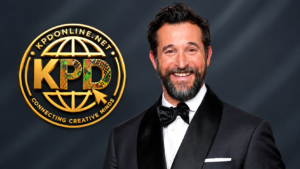
Noah Wyle poses in the press room during night two of the Creative Arts Emmy Awards on Sunday, Sept. 6, 2026, in Los Angeles. (AP Photo/Chris Pizzello)
But beyond Hollywood’s awards race, The Pitt has developed an unusually enthusiastic audience among emergency physicians and other healthcare professionals — largely because many of them say the fictional hospital looks remarkably close to the reality of their working lives.
A medical drama that feels different

Focused Medical Team in Protective Gear. Gerran Howell, left, Amielynn Abellera, Noah Wyle, Sepideh Moafi and Supriyah Ganesh in a scene from Season 2 of “The Pitt.” (Warrick Page/HBO Max)
Set in the emergency department of the fictional Pittsburgh Trauma Medical Center, The Pitt follows doctors, nurses and patients through the pressure of a busy hospital.
Each episode covers part of a working shift, allowing the series to focus not only on dramatic medical emergencies but also on the less glamorous realities of emergency medicine: overcrowding, long waits, difficult patients, exhausted staff, limited resources and the emotional consequences of making rapid decisions.
That attention to detail has caught the attention of doctors.

Show host Mariska Hargitay poses for photographs during a press preview for the 78th Primetime Emmy Awards on Thursday, Sept. 10, 2026, in Los Angeles. (Photo by Caroline Brehman/Invision/AP)
Dr. Steven A. Valassis, an emergency physician at Hartford HealthCare St. Vincent Medical Center, described the series as a “strikingly authentic portrayal of emergency medicine”, particularly its depiction of what happens inside a busy emergency department.
Other emergency physicians have made similar observations. Harvard’s review of the programme spoke with four doctors about its accuracy, examining everything from patient volume and emergency-room culture to the notorious waiting room.
Why doctors see themselves in the show

This combination of images shows, from left to right on the top row: Macaulay Culkin, Alan Cumming, Jon Hamm, Marcello Hernández, and Dan Levy. On the bottom row, from left to right: Niecy Nash-Betts, Keke Palmer, Amy Poehler, Florence Pugh, and Zendaya. (AP Photo)
For many healthcare workers, the attraction isn’t simply the medical procedures.
It is the environment.
Real emergency departments frequently involve simultaneous emergencies, overcrowding and difficult decisions about which patient needs attention first. Doctors and nurses must balance speed with safety while dealing with patients and families who may be frightened, angry or confused.
Those pressures are central to The Pitt.
A 2026 analysis by emergency-medicine expert Jesse M. Pines noted that the series captures issues such as staffing shortages, emergency-department crowding and the practice of keeping admitted patients in emergency departments because hospital beds are unavailable.
That realism can be reassuring for medical professionals — but it can also be uncomfortable.
Some emergency workers have said the programme is so close to their professional experience that watching it after work can feel like returning for another shift. Others have recommended it to relatives as a way of helping them understand what working in emergency medicine is actually like.
The realism starts behind the cameras
The authenticity is not accidental.

The team from “Widow’s Bay” poses in the press room with the award for outstanding sound mixing for a comedy or drama series (half-hour) and animation during night two of the Creative Arts Emmy Awards on Sunday, Sept. 6, 2026, in Los Angeles. (AP Photo/Chris Pizzello)
The production has relied on practicing medical professionals to help actors understand how emergency departments operate and how medical procedures are performed.
UCLA Health emergency physician Dr. Jacob Lentz, for example, has served as a medical consultant on the series. He and other real emergency doctors helped train members of the cast in skills including suturing, using stethoscopes, putting on sterile gloves and applying other clinical techniques.
The series also has medical expertise within its production team. Executive producer Joe Sachs is himself a practicing emergency physician, bringing first-hand knowledge of the profession into the show’s development.
The result is a production where small details matter — from how doctors move around a patient to the way staff communicate during a crisis.
Not everything is completely real
Doctors are not claiming that The Pitt is a documentary.
Television still has to tell stories, and that means compressing events, increasing drama and occasionally taking creative liberties.
But the distinction is important: medical professionals appear to value the show precisely because its departures from reality occur within a setting that otherwise feels familiar.
As Dr. Pines observed, The Pitt is still television, but many of its emergency cases and the operational pressures surrounding them resemble real-life emergency medicine far more closely than many earlier medical dramas.
From critical success to Emmy favourite
The show’s realism has been accompanied by major awards recognition.
The Pitt won Outstanding Drama Series at the 2025 Emmys, while Noah Wyle won Outstanding Lead Actor for his portrayal of Dr. Michael “Robby” Robinavitch. The series subsequently returned with an even larger Emmy presence in 2026.
This year, the series leads all Emmy nominees with 25 nominations. Wyle is again nominated for lead actor, while Katherine LaNasa, Taylor Dearden, Fiona Dourif and Sepideh Moafi are among the performers recognised in supporting actress categories. Patrick Ball, Gerran Howell and Shawn Hatosy are among the supporting-actor nominees.
The Television Academy’s records show that The Pitt has accumulated 38 nominations and nine Emmy wins across its two seasons.
The ultimate compliment may come from the hospital floor
For a television drama, Emmy nominations are an important measure of success.
But for The Pitt, perhaps an even more meaningful achievement is that people who actually work in emergency departments are watching it and recognising their profession.
The series does not portray emergency medicine as a succession of miraculous diagnoses and heroic saves. Instead, it shows a demanding workplace where exhaustion, uncertainty, overcrowding, teamwork and difficult human decisions are part of the job.
That may explain why the programme has connected so strongly with doctors.
Hollywood may be handing out the trophies, but some of The Pitt‘s most important critics are the doctors watching from the emergency room.

Ghanaian musician Choirmaster, real name Eugene Baah and a member of the Praye music group, has opened up about the pain of losing his late wife, actress Beverly Afaglo.
In a heartfelt Instagram post shared on September 10, 2026, Choirmaster said life has felt as though it came to a standstill since Beverly’s passing.
He said he deeply misses her voice, smile, presence and the everyday moments they shared.
Reflecting on their life together, Choirmaster admitted that he regrets not appreciating some of those moments enough while she was alive.
“It’s been a month already since you left us, and somehow the world has continued moving even though mine feels like it stopped,” he wrote.
Choirmaster also reflected on the difficult nature of grief, describing it as “love with nowhere to go.” He said the love he has for Beverly would remain with him.
He expressed gratitude for the life they shared, the memories they created and the love she gave him, adding that Beverly would continue to remain part of who he is.
He further said he would honour her memory by carrying her in his heart every day.

Nigerian singer Adekunle Gold has revealed that he resorted to legal action after a man circulated false information online claiming that his family had lost their daughter, Adejare Kosoko.
The singer made the revelation during an appearance on the One 54 Podcast, where he spoke about the growing challenge of misinformation on social media.
Adekunle Gold said he has accepted that public scrutiny comes with being a celebrity and does not usually concern himself with comments or stories directed at him. However, he said his daughter is not part of that bargain and would not be dragged into false narratives.
According to him, rather than confronting the individual or taking matters into his own hands, he reported the incident to the appropriate authorities.
The matter was subsequently taken to court, where the man was sentenced to two years in prison or given the option of paying a fine, the singer said.
“Somebody had put out fake news about my family losing our daughter. I can take anything. Talking about me all day, I’m cool. I signed up for this, not my daughter,” Adekunle Gold said.
He explained that he deliberately followed the legal process instead of seeking personal revenge.
“I did the right thing, reported it to the authorities, and then they took it to court. The court sentenced him to, I think, two years’ imprisonment or he should pay a fine,” he added.
Adekunle Gold said the incident generated significant reactions online, with many people discussing the court action and the false report.
He stressed that he could have chosen to personally confront the man but decided against such an approach.
“I followed the right channels. I didn’t even do what other people would do, you know, find the boy, beat him up and all of that. I didn’t do all of that. I just went to the right channels, and it was dealt with,” he said.
The musician also expressed concern about the volume of unverified information circulating online, saying social media users can sometimes encounter stories about themselves that leave them questioning whether the events actually happened.
He called for some form of regulation to address the spread of false information on social media.
“It’s crazy what’s happening on social media now. Sometimes you see news about yourself, and even you will be wondering, like, ‘Oh, did this happen?’” he said.
Adekunle Gold added that the amount of misleading information being circulated online makes some form of regulation necessary.
Source:NiajaNews.com

Nigerian singer Adekunle Gold has disclosed that genotype compatibility was one of the major considerations before he married his wife, singer Simi.
Speaking on the One 54 podcast, Adekunle Gold stressed the importance of knowing one’s genotype before entering a serious relationship or making decisions about having children.
The singer, who has spoken openly about his personal experiences with sickle cell disease, said he and Simi took genotype tests when they first met to establish whether they were medically compatible.
According to him, the test showed that Simi is AA, a result he said gave them confidence about their compatibility as they pursued their relationship.
“There is so much awareness to be done, and that is what we do. People need to understand that if you have sickle cell, forget about love; you can’t be with someone with sickle cell too. It makes no sense to bring a child into the world who will be sickly,” he said.
When asked what he would have done if Simi had been SS, Adekunle Gold said he would not have proceeded with the marriage.
“There’s no way I would have married my wife Simi if she was sickle cell. The first thing we did when we met was a genotype test to know if we matched. If we didn’t, I wouldn’t have married her. She is AA,” he stated.
The singer further disclosed that he would also not have married Simi if she had been AS, citing his concerns about the possibility of their children inheriting sickle cell disease.
“I wouldn’t have married my wife Simi if she were SS or AS. She’s AA. I don’t think it makes sense to bring a child into this world and make them go through all that,” he added.
Adekunle Gold has previously shared details about the sickle cell crises he experienced while growing up, including periods when his condition was severe enough to make him uncertain about living into adulthood.
His personal experiences, he explained, have shaped the way he views genotype compatibility, relationships and decisions about starting a family.
He also emphasised the need for greater public education on genotype testing, particularly among young people who are entering relationships and considering marriage.
Source:NaijaNews.com

Mahama petitioned over alleged PURC tariff irregularities, governance concerns and AKSA Power deal

Mahama tasks GAF Engineers to join Accra-Kumasi Expressway construction

$2 billion secured for Accra-Kumasi Expressway – Mahama



-

 Entertainment1 week ago
Mahama Is First President to Put GH¢40m Seed Money into Creative Arts Fund: Kojo Preko Dankwa
-

 General News2 weeks ago
COCOBOD Settles GH¢2.3 Billion DDEP Bond Obligations for 2026
-

 General News1 week ago
Don’t Punish Them Retrospectively – Educationist Challenges New CSSPS Placement Rule
-

 Culinary1 week ago
The Green Heart of Ghanaian Cuisine: Celebrating Nkontomire and the Art of Abom
-
 Entertainment6 days ago
Government Repatriates Musician Barosky from UK
-

 Culinary2 weeks ago
Pineapple: The Spiky Tropical Fruit Packed With Sweetness and Nutrients
-

 General News1 week ago
OSP Opens Preliminary Investigation into Alleged GH¢70,000 Payment Linked to Parliament’s Vetting
-

 Business2 weeks ago
TOR & GOIL Explore Further Opportunities for Strategic Collaboration