
Entertainment
Court Halts Daddy Lumba’s Burial Plans; Orders Fresh Stakeholder Meeting

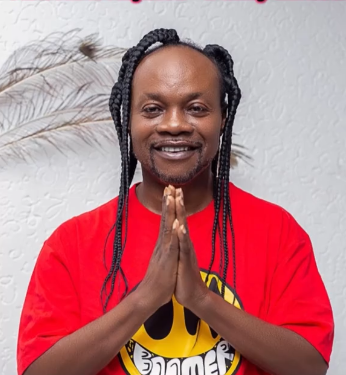
The Accra High Court has issued an injunction stopping the maternal family of the late musician, Charles Kwadwo Fosu, widely known as Daddy Lumba, from proceeding with his burial. The order restrains the first respondent, Kofi Owusu, the family head, from organising any funeral activities until the case is settled.
This ruling follows rising tension over the musician’s death and funeral arrangements. Relatives have dragged key figures to court, accusing them of secrecy, mismanagement, and attempts to take control of the memorial plans without proper involvement of the immediate family.
The court also barred Transitions Funeral Home from releasing the body until a final decision is made.
In its ruling, the court observed that the immediate family appeared to have been sidelined in the planning process. Although postponing the burial may increase costs, the judge stressed that proper consultation and due process must be followed.
While acknowledging that the family head holds traditional authority over funeral matters, the court stated that such authority must be exercised in consultation with the immediate family. It further directed the first respondent to convene a stakeholder meeting within three weeks to agree on a new burial date.
The court also instructed that all funds raised for the funeral be kept separate from accounts belonging to the Daddy Lumba Memorial Foundation. The applicants were ordered to file an affidavit with the court registrar.
This development comes on the heels of a recent ruling by the Kumasi High Court in a high profile case involving two women claiming to be the late musician’s spouses. The decision, which appeared to question the validity of a marriage certificate reportedly issued in Germany to the recognised wife, Akosua Serwaa, while seemingly favouring claims by the alleged partner, Odo Broni, has sparked wider legal and social debate.













Entertainment
Nana Kwame Ampadu: The Extraordinary Life, Music and History of Ghana’s Highlife Legend

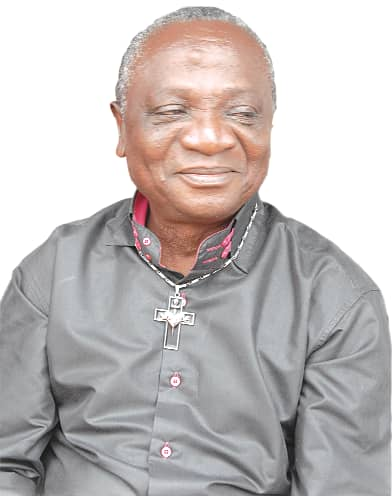
Long before Ghanaian musicians were chasing YouTube views, Spotify streams, TikTok trends and international collaborations, there was a generation of artistes who built their careers with guitars, live bands, vinyl records, cassettes and an extraordinary ability to tell stories.
One of the most important names from that generation was Nana Kwame Ampadu.
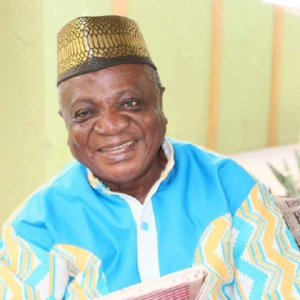
For more than five decades, Ampadu remained one of the most prolific figures in Ghanaian highlife music. He wrote and recorded songs about love, marriage, money, poverty, death, morality, politics, family, religion, road safety, social inequality and everyday life.
His music was so extensive that remembering him through only one or two songs would barely scratch the surface of his contribution.
He is widely credited with composing more than 800 songs, while the African Brothers Band’s catalogue alone contained hundreds of recordings.
Yet for many young Ghanaians today, the man behind these songs is becoming increasingly distant.
This is the story of the musician who became known as Odwontofoohene — the Chief or King of Singers.
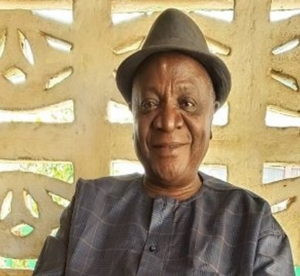
The boy from Obo Kwahu
Nana Kwame Ampadu was born on March 31, 1945, at Obo Kwahu in Ghana’s Eastern Region.
His parents were Opanin Kwame Ampadu, who was associated with the Asona Clan of Obo Kwahu, and Mercy Afua Ntiriwaa, a Presbyterian.
Music became part of his life at a very young age.
According to his official biography, young Kwame had a naturally captivating singing voice. At school, teachers noticed his musical ability and frequently selected him to lead songs and musical activities.
He was not simply interested in music as a hobby.
It was already becoming part of his identity.
His education
Ampadu began his education at Obo Roman Catholic Primary School, where he studied between 1950 and 1952.
His parents later moved to Adeemmra near Aboam in the Afram Plains, where he continued his education.
He completed his primary education in 1955.
From 1956 to 1959, he attended Obo Anglican Middle Boys School.
There, his musical talent became even more obvious.
School authorities reportedly recognised both his academic ability and his singing talent. He served as a chorister and became involved in musical activities at the school.
He passed the Common Entrance Examination in 1957 and gained admission to Abuakwa State College with a partial scholarship.
However, his family faced financial difficulties, and his father could not afford to support his continued education.
That changed the direction of his life.
Instead of continuing his formal education, the young Ampadu moved toward employment—and eventually toward music.
His first journey to Accra
In 1960, Ampadu moved to Accra in search of work.
At the time, he was young and physically small, and finding employment was not easy.
He eventually secured work as a messenger with the Ministry of Agriculture at Kwahu Mpraeso, through arrangements involving his father.
But employment did not extinguish his passion for music.
Even when he did not have musical instruments available, Ampadu would compose songs in his head and entertain friends and colleagues by singing.
He was already developing the songwriting habit that would later define his career.
Ampadu eventually left his employment and returned to Accra after encouragement from a schoolmate named Noah, a guitarist who had hopes of forming a musical group.
The plan did not immediately work out.
Noah later moved to Agogo, but Ampadu remained committed to music.
He stayed with his elder brother, Rover Amo Ampadu, who would later become an important figure in the management of the African Brothers Band.
Ampadu also had early contact with established musicians.
He was introduced to P.K. Yamoah, founder of Yamoah’s Band, and was accepted as a treble singer.
However, when the band planned to move to Kumasi, Ampadu’s relatives would not allow the young musician to travel with them.
His journey was delayed, but his ambition was not.
Ampadu worked with the United Ghana Farmers Council Corporation, initially as a messenger and later as a canteen supervisor.
He also worked briefly at Faith Drug Store in Okaishie, Accra.
But music remained his real passion.
By the early 1960s, he was moving closer to the career that would eventually make him one of Ghana’s most celebrated musicians.
In 1963, Ampadu and a group of young musicians formed what became the African Brothers Band.
The official inauguration took place at the Park Cinema Theatre in Adabraka, Accra.
Among the early members were Ampadu, his brother Rover Amo, Eddie Donkor, Kwame Anim, Yaw Asante and Kwadwo Ofori, with other musicians joining later.
One of the important things about the group was the age of its members.
They were remarkably young.
At a time when established musicians were generally older, these teenagers were trying to establish themselves in Ghana’s competitive music scene.
They performed at funerals, Muslim wedding ceremonies known as Sunna, beer bars and other social gatherings.
The name African Brothers Band was not chosen randomly.
The group formed during a period when African unity was an important political and cultural idea.
Ghana had gained independence in 1957 under Kwame Nkrumah, and the wider movement for African unity was strongly present in public life.
The band’s name reflected that atmosphere.
It represented an idea of African brotherhood and unity.
That political and cultural consciousness would later appear repeatedly in Ampadu’s music.
The African Brothers Band initially struggled like many young groups.
Then came the recording that changed their fortunes.
On November 14, 1966, the band recorded its first 45 RPM singles at the Ghana Film Industries Corporation through Philips West Africa Ltd.
The recordings were: Agyanka Dabere and Suminaso Ntonko
They were released in December 1966 and became successful.
The recordings gave the young band national attention and helped establish Ampadu as a serious songwriter and bandleader.
If there is one song that transformed Nana Kwame Ampadu into a national phenomenon, it is “Ebi Te Yie.”
Released in 1967, the song became a breakthrough for the African Brothers Band.
Ebi Te Yie can be understood as Some Are Sitting Well or, in a broader interpretation, a reflection on how some people are doing well while others struggle.
The song addressed the growing divide between comfortable people and those facing hardship.
The song became so significant that it was later adapted into a stage play.
It also attracted political interpretation.
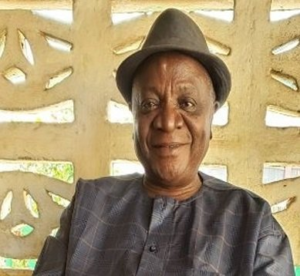
Some listeners viewed it as criticism of the government of the time, and the song reportedly disappeared from the airwaves during military rule before returning later.
Ampadu, however, rejected the suggestion that the song was intended as a direct political attack.
This episode demonstrated something important about his music: people did not simply listen to Ampadu’s songs; they interpreted them.
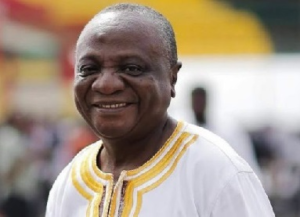
The songwriter who sang about everything
Nana Kwame Ampadu’s catalogue was enormous.
He wrote about practically every aspect of Ghanaian life.
His songs addressed: Love, Marriage, Money, Poverty, Death, Religion, Friendship, Family, Politics, Good citizenship, Greed, Drunkenness, Parenting, Road safety, Social inequality.
This was one of the reasons his music connected so strongly with ordinary people.
You did not have to be a music critic to understand Ampadu.
You only needed to understand life.
His catalogue was enormous, but songs associated with Nana Kwame Ampadu and the African Brothers Band include: Ebi Te Yie, Obra, O man Bo Adwo, Kofi Nkrabea, Y aw Berko, A gartha, Aku Sika, M other, Mentumi Ngyae Wo, A ye Se Ye Do Wo, O biaa Ba Nnye, W oyoo Woyoo, Anibere Nnye, D rivers / Driver Adwuma, Kwaata, Agyanka Dabere, Suminaso Ntonko.
These are only a selection from a much larger body of work. Contemporary sources describe his overall songwriting output as running into hundreds of songs, with some accounts putting it at more than 800 compositions.
“Obra” and Ghanaian television
Another important part of Ampadu’s legacy was Obra.
The song became associated with the popular Ghanaian television drama series Obra.
This demonstrated how far his music had travelled beyond the dance floor.
His songs were entering homes through television and becoming part of the emotional soundtrack of Ghanaian life.
“Obra” itself reflected one of his recurring interests: human existence, its difficulties and the lessons people learn as they move through life.
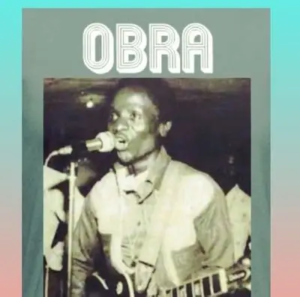
Ampadu’s songwriting ability also took him into national campaigns.
He composed the theme song for Ghana’s Operation Feed Yourself programme in 1974.
The campaign, introduced during the National Redemption Council era, encouraged Ghanaians to increase domestic food production.
For Ampadu to contribute music to such a national campaign showed how influential musicians could be in communicating public messages.
His songs were not limited to entertainment venues.
They could become tools for national communication.
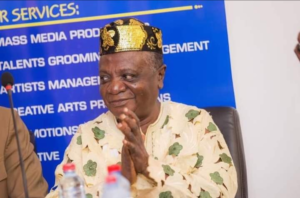
A band that changed highlife
The African Brothers Band did not simply produce popular songs.
The group experimented with the highlife form.
The band became known for innovations including longer recordings and songs released in Part 1 and Part 2 formats.
They also developed and popularised rhythmic styles described as Afro-Hili, while later incorporating reggae and other influences into their music.
One music archive notes that between 1968 and 1978, the group released about 400 single tracks.
That is an extraordinary volume of recorded music.
The African Brothers Band eventually moved beyond Ghana.
Their growing popularity opened opportunities for international performances.
They toured countries including Britain, the United States, Canada, France, Germany, Belgium, and the Netherlands.
Sources differ on the exact years and sequence of some tours, but the band’s international reach is well documented.
A music-history archive records a 1976 tour of the United States and Canada, while the band’s own historical account also records international tours beginning with Britain in 1970.
This was significant because Ghanaian musicians were taking highlife directly to audiences outside Africa decades before the current global Afrobeats boom.
In 1973, the group officially added International to its name.
It became the African Brothers Band International.
That name reflected the group’s growing reach outside Ghana.
By this point, Ampadu had become one of the country’s leading highlife figures.
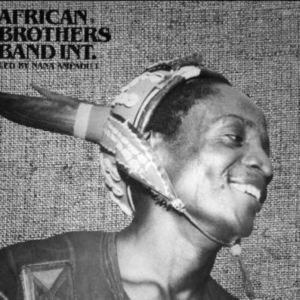
Ampadu became “Nnwontofohene”
In 1973, another major honour came.
The Arts Council of Ghana conferred on him the title:
“Nnwontofohene Nana Kwame Ampadu I.”
The title is associated with the idea of a Chief/King of Singers.
It was a recognition of his contribution to Ghanaian music.
He had moved from being a young guitarist struggling to find opportunities in Accra to becoming a nationally recognised musical authority.
The band also became a drama group.
One of the lesser-known aspects of Ampadu’s career was his involvement in theatre.
The African Brothers Band developed a drama troupe, and Ampadu wrote plays for the group.
Among the productions associated with the troupe were: Abotion, Abusua, Kwaata, Aku Sika, Ntwatoso, Dea Onyame Ahyira No, Awaregyae Bi Ye Mmusuo
The group eventually commercialised some of its stage productions on audiocassette.
According to the band’s official history, its stage recordings had sold more than 200,000 copies by 2001.
This reveals another side of Ampadu that is sometimes overlooked.
He was not only a musician.
He was also involved in theatre, storytelling and cultural production.
The African Brothers Band became something of a training ground for musicians.
Several musicians who passed through the group later developed careers of their own.
They included figures such as: Eddie Donkor, Teacher Boateng, Oppong Kyekyeku, Joe Dee, Anthony Scorpion, Prince Osei Kofi, Nanaba Amoako, Kwame Seth, Paa Alex Obeng, Captain Newman, Akosua Agyapong.
This means Ampadu’s influence was not limited to the songs he personally recorded.
The band also helped develop other musicians.
Before becoming a star in his own right, Ampadu also interacted with established musicians.
One important figure was Jerry Hansen, founder of the Ramblers Dance Band.
Ampadu reportedly gave Hansen songs including Ntoboase, Afutusem, Scholarship, and Me Nsoromma Bepue.
The success of these songs helped draw attention to Ampadu’s songwriting ability.
Hansen later helped introduce him to Phillips West Africa, creating the opportunity that eventually led to the African Brothers Band recording its first singles.
One reason Ampadu’s songs remain historically valuable is that they provide a picture of Ghanaian society.
He could discuss the pressures created by money.
He could question greed.
He could talk about family.
He could warn people about irresponsible behaviour.
He could discuss relationships.
He could reflect on death.
He could comment on national issues.
This was the traditional strength of highlife: entertainment and commentary could exist in the same song.
Ampadu mastered that combination.
Ampadu’s influence eventually extended beyond performing.
He became active in the Musicians Union of Ghana (MUSIGA).
He served as First Vice President of MUSIGA from 1984 to 1991 and later served as General Secretary in 1992, according to his official biography.
He also served on the Ghana Folklore Board of Trustees and participated in other music-related committees.
This was important because his contribution was no longer simply about producing songs.
He was also involved in discussions about the welfare and development of musicians.
Ampadu also entered public service.
He served as a government appointee to the Kwahu South District Assembly from 1993 to 2000.
His career therefore moved between entertainment, cultural leadership and public service.
It was an unusual journey for a musician who had started life as a young man struggling to find work in Accra.
Awards and recognition
Ampadu received several awards and honours during his lifetime.
Among the notable recognitions associated with him were:
Winner of the National Dance Band Competition in 1972
The Nnwontofohene title in 1973
Various recognitions from institutions including ECRAG, COSGA and ACRAG
The State Grand Medal, awarded in 1997 by President Jerry John Rawlings
The State Grand Medal was particularly significant because it represented national recognition of his contribution to Ghana.
Despite his enormous public career, Ampadu’s life was not entirely lived on stage.
He married several times and had eight children, according to his official biography.
His family life existed alongside a career that demanded constant travel, rehearsals, recordings and performances.
Like many musicians of his generation, his life was closely tied to the changing Ghanaian entertainment industry.
Even after decades in music, Ampadu continued to be associated with highlife.
His music did not disappear simply because newer genres emerged.
Older Ghanaians continued to listen to his recordings, while musicians and researchers continued to revisit his catalogue.
His work also became increasingly valuable to people interested in the history of Ghanaian music.
The African Brothers Band’s recordings have continued to be reissued and preserved, including releases made available digitally in more recent years.
His final chapter
Nana Kwame Ampadu died on September 28, 2021, in Accra at the age of 76.
His death brought to an end the life of one of the most prolific figures in Ghanaian highlife.
But it did not end his music.
His recordings remain.
His songwriting remains.
His stories remain.
And the musicians he influenced remain part of the larger history of Ghanaian music.
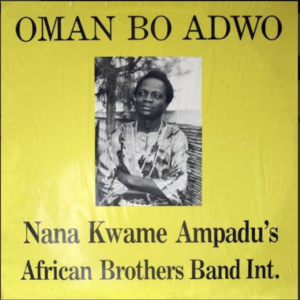
Why Nana Kwame Ampadu’s story matters today
There is a temptation to describe older musicians simply as legends and move on.
But Ampadu’s career deserves more than a title.
He represents an entire period in Ghana’s history.
He grew up in a Ghana where traditional culture and modern popular music were constantly interacting.
He moved to Accra as a young man looking for work.
He formed a band with other young musicians.
He recorded songs when the industry was still built around physical records.
He became a star through live performances and word of mouth.
He travelled internationally with Ghanaian highlife.
He entered theatre.
He participated in national campaigns.
He became involved in musicians’ leadership.
He served in public office.
And throughout it all, he continued writing songs.
Perhaps the most astonishing part of Ampadu’s legacy is the sheer quantity of his work.
He is widely credited with composing more than 800 songs.
The African Brothers Band itself recorded hundreds of singles during its most productive period.
That means there are potentially many songs from his career that younger Ghanaians have never heard.
This is why remembering him through Ebi Te Yie alone does not tell the full story.
There is an enormous musical archive behind that one song.
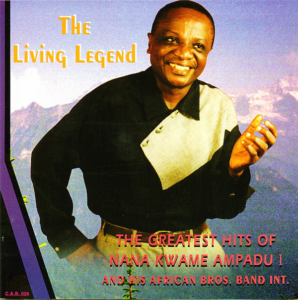
Why young Ghanaians should listen to Nana Kwame Ampadu
For a young listener accustomed to Afrobeats, hip-hop, drill and contemporary highlife, Ampadu’s music may initially sound very different.
But listen closely, and the similarities become obvious.
He told stories.
Modern musicians tell stories too.
He addressed relationships.
Modern musicians do the same.
He talked about money, hardship and social pressure.
Those subjects remain relevant.
He used music to comment on society.
That tradition continues today.
The difference is the sound and the era.
His legacy can be divided into several parts.
As a songwriter, he produced an enormous catalogue.
As a singer, he developed a distinctive voice.
As a bandleader, he created and sustained the African Brothers Band.
As a cultural figure, he preserved Ghanaian stories and expressions through music.
As a social commentator, he addressed issues affecting ordinary people.
As a theatre practitioner, he helped turn music and storytelling into stage productions.
As a music leader, he participated in MUSIGA and other industry institutions.
As a public figure, he served in local government.
That is why his place in Ghana’s history goes far beyond entertainment.
The music that should not be forgotten
When people talk about the history of Ghanaian music, attention often goes to the biggest names of the current generation.
But before the international success of today’s artistes, there were musicians who spent decades developing Ghana’s musical identity.
Nana Kwame Ampadu was one of them.
From Ebi Te Yie to Obra, Oman Bo Adwo, Kofi Nkrabea, Yaw Berko, Agartha, Aku Sika, Mother, Mentumi Ngyae Wo, Aye Se Ye Do Wo, Obiaa Ba Nnye, Woyoo Woyoo, Anibere Nnye, Driver Adwuma, and many others, his music created a soundtrack for generations of Ghanaians.
His catalogue is not merely a collection of old songs.
It is a record of Ghanaian life.
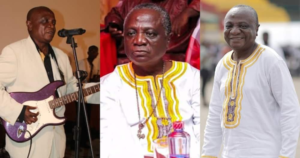
The forgotten question?
Perhaps the question today is not whether Nana Kwame Ampadu was important.
The historical record shows the scale of his contribution.
The more important question is:
A country that celebrates its contemporary musical exports also has a responsibility to preserve the musicians who built the foundation.
Ampadu’s story should therefore not remain confined to memories of older generations.
His songs can be digitised.
His albums can be reissued.
His interviews can be archived.
His lyrics can be studied.
His life can be taught.
And his music can be introduced to a new generation.
Because Nana Kwame Ampadu did not merely sing about Ghana.
He helped Ghana sing about itself.

Ghanaian musician Black Sherif has continued to strengthen his presence on the African music scene, with his latest EP, Sun Sherif, climbing to No. 3 on the Nigerian music albums chart.
The achievement highlights the growing reception of the project in Nigeria, one of Africa’s largest and most influential music markets, and adds another milestone to Black Sherif’s expanding catalogue of regional and international successes.
Released as a six-track project, Sun Sherif has attracted attention from listeners across the continent, with the songs generating impressive streams and contributing to the artiste’s increasing visibility outside Ghana.
The EP’s performance in Nigeria comes shortly after two songs from the project made their debut on the Billboard U.S. Afrobeats Songs chart, giving Black Sherif another major international achievement.
His song “Love Again,” featuring Full Blown, debuted at No. 31, while “Forever,” featuring Arathejay, entered the chart at No. 42.
The Billboard appearances further underline the international reach of Sun Sherif, as the Ghanaian artiste continues to find audiences beyond the country and across key Afrobeats markets.
Musically, Sun Sherif combines elements of highlife, drill and Afrobeats, while maintaining Black Sherif’s characteristic focus on personal experiences, emotions and introspective storytelling.
The project also includes collaborations designed to broaden its musical appeal, with the featured artistes adding different sounds and perspectives to the six-track body of work.
Black Sherif, known for his distinctive delivery and ability to blend Ghanaian musical influences with contemporary African sounds, has in recent years built a reputation that extends well beyond Ghana.
His growing international profile has been supported by performances, major live shows, streaming milestones and releases that have connected with audiences across Africa and other parts of the world.
The latest chart performance of Sun Sherif in Nigeria, together with the Billboard debut of “Love Again” and “Forever”, adds to a series of milestones reflecting the artiste’s continued expansion into international markets.
With the EP gaining traction in Nigeria and receiving recognition on the Billboard U.S. Afrobeats Songs chart, Black Sherif continues to position himself as one of Ghana’s prominent voices in the contemporary African music space.
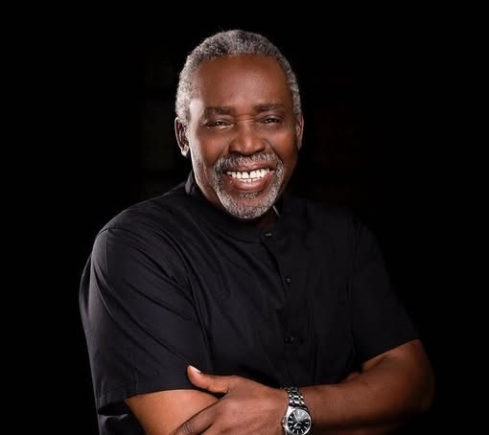
The Nigerian entertainment industry has lost one of its most respected figures, Oludotun Baiyewu Jacobs, popularly known as Olu Jacobs, who died at the age of 84.
Jacobs, whose career stretched across theatre, television, film, production and arts education, was more than a familiar face on Nigerian screens. He belonged to a generation of performers who carried professional theatre traditions into the emerging Nigerian film industry and helped establish acting as a serious and respected profession.
His journey was remarkable in its range. It began in Kano, where a young Jacobs developed an interest in drama, continued to London, where he trained at the prestigious Royal Academy of Dramatic Art (RADA), and took him through British television, international cinema, Nigerian theatre and eventually the rapidly expanding world of Nollywood.
For more than five decades, Jacobs built a reputation for powerful performances, commanding dialogue delivery and an ability to inhabit characters of authority.
His death therefore represents not simply the passing of an actor, but the end of a remarkable chapter in the history of Nigerian entertainment.
Olu Jacobs was born Oludotun Baiyewu Jacobs on July 11, 1942.
Although his family had roots in Egba Alake in present-day Ogun State, Jacobs spent a significant part of his childhood in Kano, far from the southwestern Nigerian environment with which his ancestral background was associated.
It was in Kano that some of the foundations of his future career were laid.
As a student at Holy Trinity School, he became involved in extracurricular activities, particularly the school’s debating and drama societies.
The experience gave him an early opportunity to develop the qualities that would later become central to his acting — confidence, public speaking, timing, voice control and the ability to hold an audience’s attention.
But one particular experience would change the direction of his life.
As a young man in Kano, Jacobs attended one of the performances staged by legendary Nigerian theatre practitioner Hubert Ogunde.
Ogunde was one of the pioneers of modern Nigerian theatre and had developed a travelling theatre tradition that took dramatic performances to audiences across the country.
Jacobs watched Ogunde’s concert party perform at the Colonial Hotel in Kano.
The experience left a lasting impression on him.
Rather than simply admiring the performance, Jacobs began to see acting as a possible career.
That encounter became an important turning point. The young man who had participated in school drama and debating activities now had a clearer idea of where his interests could lead.
He eventually travelled to England to pursue formal training.
Jacobs’ decision to study acting abroad was significant because professional theatrical training was still developing in Nigeria at the time.
He gained admission to the Royal Academy of Dramatic Art in London, widely known as RADA.
The institution has trained generations of prominent actors and theatre practitioners, giving Jacobs exposure to rigorous professional theatre training.
At RADA, he studied the craft of acting in an environment that emphasised discipline, voice, movement, character development and stage performance.
The training would prove important throughout his career.
Unlike performers whose careers developed primarily through the Nigerian film industry, Jacobs entered Nollywood after already acquiring years of professional theatre and television experience abroad.
That background would become one of the defining features of his acting style.
After completing his training, Jacobs began establishing himself professionally in Britain.
His early work included stage performances, and in 1972 he appeared as The Boy in A Taste of Honey at the newly opened Crucible Theatre in Sheffield.
The stage provided Jacobs with an environment in which he could sharpen his performance technique and gain experience working with established theatre practitioners.
His career soon expanded beyond theatre.
British television began giving him opportunities to appear in different productions, exposing him to a wider audience.
During the 1970s, Jacobs appeared in a number of British television productions.
Among the programmes associated with his early television career were The Goodies, Till Death Us Do Part, Barlow at Large, The Venturers, Angels, 1990, The Tomorrow People and The Professionals.
The significance of this period in his career is often overlooked when his Nollywood achievements are discussed.
By working in British television, Jacobs acquired experience in a highly competitive professional environment and demonstrated that an African actor could build a career within the British entertainment industry.
His television work also exposed him to different genres and acting styles.
Jacobs’ professional growth in Britain eventually took him to London’s West End.
In 1978, he played President Mageeba in Tom Stoppard’s Night and Day.
The production was an important stage credit in his career and further established him as an actor capable of working at an international level.
His work during this period also demonstrated the breadth of his ambitions.
He was not simply seeking appearances in African productions; he was developing himself as a professional actor within the international theatre and television industry.
From Britain to international cinema
Jacobs’ career also extended into international film.
He appeared in productions including The Dogs of War, Ashanti and Pirates, among other international projects.
These appearances helped broaden his experience in screen acting and exposed him to different production systems.
When he eventually became a major figure in Nigeria’s film industry, he brought with him a combination of theatre training, television experience and international screen exposure.
That background distinguished him from many actors who entered the industry without formal professional training.
Returning to Nigeria
Jacobs eventually returned to Nigeria at a time when the country’s entertainment industry was undergoing significant transformation.
The Nigerian film industry was moving through different phases, from television productions and celluloid films to the video-film era that would eventually become associated with Nollywood.
Jacobs became one of the established actors who helped give the emerging industry a stronger professional identity.
His experience in theatre and television meant that he approached roles with a level of preparation and discipline that audiences quickly recognised.
He became particularly known for portraying characters such as traditional rulers, fathers, elders, politicians, businessmen and other figures of authority.
However, his range extended far beyond such roles.
Becoming one of Nollywood’s most recognisable faces
As Nollywood expanded during the 1990s and 2000s, Jacobs became a household name.
His deep voice, distinctive delivery and ability to command attention made him particularly suited to dramatic roles.
He could play intimidating characters without relying solely on physical aggression. In many performances, his voice, expression and controlled movements were enough to establish a character’s authority.
This became one of his trademarks.
For audiences across Nigeria and beyond, the appearance of Olu Jacobs in a film often carried a particular expectation of quality and gravitas.
He became part of the generation of actors who transformed Nigerian video films from a local entertainment phenomenon into a major component of Africa’s global screen culture.
Over the years, Jacobs appeared in a large number of Nigerian films and television productions.
His credits include films such as Adesuwa, Dry, Oloibiri, The Antique, Potomanto, The Royal Hibiscus Hotel and Victims.
He also appeared in numerous productions during the formative years of Nollywood, working alongside some of the industry’s most prominent performers.
His ability to move between serious drama, family stories, traditional narratives and contemporary productions helped him remain relevant across generations.
For younger audiences, he became an instantly recognisable symbol of the veteran generation of Nigerian actors.
The “godfather” of Nollywood
Jacobs was frequently described alongside fellow veteran actor Pete Edochie as one of the “godfathers” or elder statesmen of Nollywood.
The description reflected his longevity, influence and status within the industry.
His career began long before Nollywood became a globally recognised brand.
He had already spent years working in theatre and television when Nigeria’s film industry began undergoing its dramatic expansion.
As Nollywood matured, actors such as Jacobs provided a link between earlier Nigerian theatre traditions and the modern film industry.
His career therefore spans several generations of Nigerian entertainment.
Away from the screen, Jacobs’ life was closely connected to another major name in Nigerian theatre and film — Joke Silva.
Silva is herself an accomplished actress and theatre practitioner, and together they became one of Nigeria’s best-known entertainment couples.
The two reportedly met in 1981 at the National Theatre in Lagos during activities marking Nigeria’s 21st Independence anniversary.
Their professional relationship eventually developed into marriage.
They married in 1989 and built a family while simultaneously developing careers in the Nigerian creative industry.
Their partnership became significant not only because both were celebrated actors, but because they collaborated in theatre, production, business and arts education.
Building the Lufodo Group
Jacobs and Silva eventually established the Lufodo Group, extending their involvement in the creative sector beyond acting.
The organisation became involved in areas including film production, distribution and the performing arts.
The couple also established the Lufodo Academy of Performing Arts, creating an avenue through which young Nigerians could receive professional training in theatre and film.
This part of Jacobs’ career is particularly important because it demonstrates that his contribution to the industry did not end with his own performances.
He also participated in building structures through which future performers could develop their skills.
For an actor who had benefited from professional training at RADA and decades of experience in theatre and film, investing in training was a natural extension of Jacobs’ career.
Through Lufodo and its academy, the family became involved in developing young creative professionals.
The approach reflected a wider understanding of the challenges facing Nigeria’s entertainment industry: producing films requires not only actors, but trained directors, writers, producers, stage managers, technicians and other professionals.
Jacobs’ legacy therefore includes both the characters he played and the institutions associated with his name.
National honour and major awards
Jacobs received several major honours during his career.
In 2007, he won the Africa Movie Academy Award for Best Actor in a Leading Role.
His contribution to Nigerian culture was further recognised in 2011, when former President Goodluck Jonathan conferred on him the national honour of Member of the Order of the Federal Republic (MFR).
He also received the Industry Merit Award at the Africa Magic Viewers’ Choice Awards.
Another significant recognition came through the Africa International Film Festival, where he received a Lifetime Achievement Award.
The awards reflected the breadth of his contribution across theatre, television and film.
One of the remarkable aspects of Jacobs’ career was his ability to remain relevant as Nigeria’s entertainment industry changed.
He began during an era when theatre was one of the most important platforms for professional actors.
He then moved through British television, international cinema and Nigerian film.
He remained active as Nollywood developed from the early video-film era into the sophisticated, internationally distributed industry it is today.
This longevity allowed Jacobs to work alongside several generations of performers.
He acted with veterans who helped establish Nigerian theatre and cinema and later appeared alongside younger actors who grew up watching his performances.
His distinctive acting style
Jacobs’ performances were often defined by control rather than exaggeration.
His voice was one of his most recognisable assets.
He could deliver a short line and give it considerable weight through tone, pacing and facial expression.
His theatre background was also evident in his command of dialogue.
Even when portraying powerful or intimidating characters, he often relied on subtle changes in expression and delivery rather than excessive movement.
That approach made him particularly effective in roles involving authority, conflict and family relationships.
Although primarily associated with Nigeria, Jacobs’ influence extended beyond Nollywood.
Nigerian films became increasingly popular across Africa, and actors such as Jacobs became familiar faces to audiences in countries far beyond Nigeria.
The growth of satellite television, home video and later digital streaming platforms allowed Nollywood performers to reach international audiences on an unprecedented scale.
Jacobs’ career developed alongside that expansion.
He became one of the actors whose name was recognisable even to viewers who were not familiar with the broader history of Nigerian cinema.
The emergence of Nollywood created a new generation of Nigerian actors, many of whom entered an industry shaped partly by performers from Jacobs’ generation.
For younger actors, Jacobs represented a connection to formal theatre training and the traditions of stage performance.
His career demonstrated that Nigerian actors could move between theatre, television and film without being confined to a single medium.
His involvement in professional training through Lufodo further extended that influence.
His family and private life
Despite being one of Nigeria’s most recognisable actors, Jacobs and his family generally maintained a degree of privacy around their personal lives.
His marriage to Joke Silva lasted for decades, and the couple raised children while maintaining demanding careers in entertainment.
Their son, Olusoji Jacobs, also became involved in the family’s creative business.
The family maintained its connection to Lufodo and the wider performing arts sector, creating what has become an important entertainment legacy across generations.
Jacobs’ later years were marked by increasing concern about his health.
His wife, Joke Silva, previously spoke publicly about his battle with dementia with Lewy bodies, a neurological condition.
As his public appearances became less frequent, fans and colleagues periodically expressed concern about his well-being.
There were also false reports of his death before his eventual passing, prompting members of his family and associates to clarify his status at the time.
His family has now confirmed his death.
His final chapter
On September 16, 2026, Jacobs’ son, Olusoji Jacobs, announced his father’s death.
In the family statement, he described the late actor as a beloved husband, father, grandfather and uncle.
He also referred to Jacobs as The Lion of Lufodo, a description that connected the actor’s personal identity with the creative institution he helped build alongside Joke Silva.
The family asked bloggers and social media influencers to respect their privacy during the mourning period.
No further details surrounding his death were provided in the family’s announcement.
A legacy beyond the screen
Olu Jacobs’ career cannot be measured simply by the number of films in which he appeared.
His life represents several important chapters in the development of African entertainment.
He was a young boy in Kano who became fascinated by Hubert Ogunde’s theatre.
He became a professionally trained actor in London.
He worked on British television and the West End stage.
He appeared in international films.
He returned to Nigeria and became one of the defining actors of the country’s film industry.
He built a family partnership with Joke Silva that extended into production and professional training.
And he became a mentor figure to generations of performers who followed.
Perhaps the most striking part of Jacobs’ story is how far his journey travelled from the moment he watched Ogunde perform in Kano.
That experience introduced him to the possibility of a life in theatre.
Decades later, he had become one of the most recognisable actors in Africa.
The young boy who once watched a travelling theatre company perform eventually became an actor whose own performances were watched by millions.
His career crossed borders, languages, generations and entertainment formats.
From the stage to television, from international cinema to Nollywood, and from acting to arts education, Jacobs continually expanded the meaning of his work.
For Nigerian cinema, his death marks the departure of one of its most enduring veteran figures.
For theatre, he leaves behind the legacy of an actor whose professional foundation was built on stagecraft.
For Nollywood, he leaves behind decades of performances that helped define the image of the Nigerian screen actor.
And for the younger generation of creatives, his involvement in training and institution-building provides another dimension to his contribution.
Olu Jacobs’ journey began in Kano, took him to one of Britain’s most respected drama schools, carried him through British television and international film, and eventually returned him to Nigeria, where he became one of the most familiar faces in African cinema.
His final bow came on September 16, 2026, at the age of 84.
But the characters he portrayed, the performances he delivered and the creative institutions he helped establish ensure that his name remains firmly embedded in the history of Nigerian theatre and film.
Veteran Nigerian actor and film executive Oludotun Baiyewu Jacobs, popularly known as Olu Jacobs, has died at the age of 84.
His son, Olusoji Jacobs, announced his death in an Instagram post on Wednesday.
In the statement, Olusoji described his father as The Lion of Lufodo and said the family was grateful to God for his life and legacy.
“It is with gratitude to God for a life well lived and fought that we announce the passing of our dear husband, father, grandfather and uncle. The Lion of Lufodo,” he wrote.
He also appealed to bloggers and social media influencers to respect the family’s privacy as they mourn the veteran actor.
Olu Jacobs was one of Nigeria’s most prominent actors, with a career spanning theatre, television and film.
He trained at the Royal Academy of Dramatic Arts (RADA) in London and began his acting career in British television before appearing in several international productions.
He later returned to Nigeria, where he established himself as one of the country’s most recognisable actors and became a major figure in the Nigerian film industry.
Throughout his career, Jacobs featured in numerous Nigerian films and became known for his commanding screen presence and performances in a wide range of roles.
His contribution to the African film industry earned him several honours, including the Industry Merit Award at the Africa Magic Viewers’ Choice Awards (AMVCA) and a Lifetime Achievement Award at the Africa International Film Festival (AFRIFF).
Beyond acting, Jacobs was also involved in the business and development of Nigeria’s performing arts industry.
Together with his wife, veteran actress Joke Silva, he was involved in the Lufodo Group, a company associated with film, theatre and other creative arts activities.
His career and contribution to the Nigerian entertainment industry spanned several decades, making him one of the veteran figures whose work helped shape the country’s modern film and theatre landscape.
Source: GRAPHIC ONLINE


By Angel No Lie | KPD Online
Published: September 15, 2026
The ceremony was held on September 14, 2026, at the Peacock Theater in Los Angeles and hosted by actress Mariska Hargitay. The Television Academy says the 78th Emmys recognized television programming and individual achievements from the 2025–26 season.
Widow’s Bay dominated the comedy field, ultimately collecting 14 Emmy Awards, a record for a comedy series in a single year. The Pitt, meanwhile, won Outstanding Drama Series for a second consecutive year.


The biggest moments of the night
One of the evening’s most historic performances came from Matthew Rhys, who won Outstanding Lead Actor in a Comedy Series for Widow’s Bay and Outstanding Lead Actor in a Limited or Anthology Series or Movie for The Beast in Me.
The double victory makes Rhys the first male performer to win lead acting Emmys across comedy, drama and limited-series categories.
Jean Smart also made Emmy history. She won Outstanding Lead Actress in a Comedy Series for Hacks for the fifth consecutive time, becoming the first woman to win the acting award for every season of a series. Her career total reached eight acting Emmys, tying her with Julia Louis-Dreyfus and Cloris Leachman.
For drama, Noah Wyle won Lead Actor for The Pitt, while Rhea Seehorn collected her first Emmy for Lead Actress in a Drama Series for Pluribus.
Full Winners and Nominees
Outstanding Drama Series
Winner: The Pitt
Nominees:
- The Diplomat
- The Gilded Age
- A Knight of the Seven Kingdoms
- Paradise
- The Pitt — WINNER
- Pluribus
- Slow Horses
- Your Friends & Neighbors
Outstanding Comedy Series
Winner: Widow’s Bay
Nominees:
- Abbott Elementary
- The Bear
- Hacks
- Margo’s Got Money Troubles
- Nobody Wants This
- Only Murders in the Building
- Shrinking
- Widow’s Bay — WINNER
Outstanding Lead Actor in a Drama Series
Winner: Noah Wyle — The Pitt
Nominees:
- Sterling K. Brown — Paradise
- Gary Oldman — Slow Horses
- Mark Ruffalo — Task
- Rufus Sewell — The Diplomat
- Noah Wyle — The Pitt — WINNER
Outstanding Lead Actress in a Drama Series
Winner: Rhea Seehorn — Pluribus
Nominees:
- Carrie Coon — The Gilded Age
- Chase Infiniti — The Testaments
- Keri Russell — The Diplomat
- Rhea Seehorn — Pluribus — WINNER
- Zendaya — Euphoria
Outstanding Supporting Actor in a Drama Series
Winner: Tom Pelphrey — Task
Nominees:
- Patrick Ball — The Pitt
- Billy Crudup — The Morning Show
- Shawn Hatosy — The Pitt
- Gerran Howell — The Pitt
- Jack Lowden — Slow Horses
- Tom Pelphrey — Task — WINNER
- Carlos-Manuel Vesga — Pluribus
Outstanding Supporting Actress in a Drama Series
Winner: Allison Janney — The Diplomat
Nominees:
- Taylor Dearden — The Pitt
- Fiona Dourif — The Pitt
- Allison Janney — The Diplomat — WINNER
- Katherine LaNasa — The Pitt
- Sepideh Moafi — The Pitt
- Julianne Nicholson — Paradise
- Karolina Wydra — Pluribus
Comedy Categories


Outstanding Lead Actor in a Comedy Series
Winner: Matthew Rhys — Widow’s Bay
Nominees:
- Yahya Abdul-Mateen II — Wonder Man
- Steve Carell — Rooster
- Matthew Rhys — Widow’s Bay — WINNER
- Jason Segel — Shrinking
- Martin Short — Only Murders in the Building
Outstanding Lead Actress in a Comedy Series
Winner: Jean Smart — Hacks
Nominees:
- Quinta Brunson — Abbott Elementary
- Ayo Edebiri — The Bear
- Elle Fanning — Margo’s Got Money Troubles
- Lisa Kudrow — The Comeback
- Jean Smart — Hacks — WINNER
Outstanding Supporting Actor in a Comedy Series
Winner: Stephen Root — Widow’s Bay
Nominees:
- Colman Domingo — The Four Seasons
- Paul W. Downs — Hacks
- Harrison Ford — Shrinking
- Nick Offerman — Margo’s Got Money Troubles
- Stephen Root — Widow’s Bay — WINNER
- Michael Urie — Shrinking
- Tyler James Williams — Abbott Elementary
Outstanding Supporting Actress in a Comedy Series
Winner: Kate O’Flynn — Widow’s Bay
Nominees:
- Dale Dickey — Widow’s Bay
- Hannah Einbinder — Hacks
- Janelle James — Abbott Elementary
- Kate O’Flynn — Widow’s Bay — WINNER
- Michelle Pfeiffer — Margo’s Got Money Troubles
- Megan Stalter — Hacks
- Jessica Williams — Shrinking
Limited or Anthology Series
Outstanding Limited or Anthology Series
Winner: DTF St. Louis
Nominees:
- All Her Fault
- The Beast in Me
- Beef
- DTF St. Louis — WINNER
- Love Story: John F. Kennedy Jr. & Carolyn Bessette
Outstanding Lead Actor in a Limited or Anthology Series or Movie
Winner: Matthew Rhys — The Beast in Me
Nominees:
- Riz Ahmed — Bait
- Jason Bateman — Black Rabbit
- Charlie Hunnam — Monster: The Ed Gein Story
- Oscar Isaac — Beef
- Matthew Rhys — The Beast in Me — WINNER
Outstanding Lead Actress in a Limited or Anthology Series or Movie
Winner: Sally Field — Remarkably Bright Creatures
Nominees:
- Claire Danes — The Beast in Me
- Sally Field — Remarkably Bright Creatures — WINNER
- Carey Mulligan — Beef
- Sarah Pidgeon — Love Story: John F. Kennedy Jr. & Carolyn Bessette
- Sarah Snook — All Her Fault
Supporting Actor in a Limited or Anthology Series or Movie
Winner: David Harbour — DTF St. Louis
Nominees:
- Jason Bateman — DTF St. Louis
- Richard Gadd — Half Man
- David Harbour — DTF St. Louis — WINNER
- Richard Jenkins — DTF St. Louis
- Charles Melton — Beef
- Nick Offerman — Death by Lightning
Supporting Actress in a Limited or Anthology Series or Movie
Winner: Linda Cardellini — DTF St. Louis
Nominees:
- Linda Cardellini — DTF St. Louis — WINNER
- Dakota Fanning — All Her Fault
- Laurie Metcalf — Monster: The Ed Gein Story
- Joy Sunday — DTF St. Louis
- Youn Yuh-jung — Beef
- Constance Zimmer — Love Story: John F. Kennedy Jr. & Carolyn Bessette
Directing and Writing
Outstanding Directing for a Drama Series
Winner: Saul Metzstein — Slow Horses
Nominees:
- Salli Richardson Whitfield — The Gilded Age
- Hanelle M. Culpepper — Paradise
- Noah Wyle — The Pitt
- Vince Gilligan — Pluribus
- Saul Metzstein — Slow Horses — WINNER
- Salli Richardson-Whitfield — Task
Outstanding Directing for a Comedy Series
Winner: Hiro Murai — Widow’s Bay
Nominees:
- Randall Einhorn — Abbott Elementary
- Christopher Storer — The Bear
- Andrew DeYoung — The Chair Company
- Lucia Aniello — Hacks
- Mary Lou Belli — The Ms. Pat Show
- Hiro Murai — Widow’s Bay — WINNER
Outstanding Writing for a Drama Series
Winner: Vince Gilligan — Pluribus
Nominees:
- Peter Ackerman & Debora Cahn — The Diplomat
- Valerie Chu — The Pitt
- Kirsten Pierre-Geyfman & R. Scott Gemmill — The Pitt
- Vince Gilligan — Pluribus — WINNER
- Will Smith — Slow Horses
- Brad Ingelsby — Task
Outstanding Writing for a Comedy Series
Winner: Katie Dippold — Widow’s Bay
Nominees:
- Quinta Brunson — Abbott Elementary
- Tim Robinson & Zach Kanin — The Chair Company
- Michael Patrick King & Lisa Kudrow — The Comeback
- Lucia Aniello, Paul W. Downs & Jen Statsky — Hacks
- Anthony King — Jury Duty Presents: Company Retreat
- Katie Dippold — Widow’s Bay — WINNER
Reality, Variety and Other Major Awards
Outstanding Reality Competition Program
Winner: The Traitors
Nominees:
- Dancing with the Stars
- RuPaul’s Drag Race
- Survivor
- Top Chef
- The Traitors — WINNER
Outstanding Variety Series
Winner: The Late Show with Stephen Colbert
Nominees:
- The Daily Show
- Jimmy Kimmel Live!
- Last Week Tonight with John Oliver
- The Late Show with Stephen Colbert — WINNER
- Saturday Night Live
Outstanding Television Movie
Winner: Remarkably Bright Creatures
Nominees:
- Heads of State
- Miss You, Love You
- People We Meet on Vacation
- Remarkably Bright Creatures — WINNER
- Tom Clancy’s Jack Ryan: Ghost War
Outstanding Animated Program
Winner: South Park
Nominees:
- Bob’s Burgers
- Rick and Morty
- The Simpsons
- Smiling Friends
- South Park — WINNER
- Star Wars: Visions
Outstanding Live Variety Special
Winner: The Apple Music Super Bowl LX Halftime Show Starring Bad Bunny
Other nominees:
- 83rd Annual Golden Globes
- 68th Annual Grammy Awards
- 97th Academy Awards
- 78th Annual Tony Awards
Outstanding Pre-Recorded Variety Special
Winner: The Muppet Show
Nominees:
- Dave Chappelle: The Unstoppable …
- The Muppet Show — WINNER
- Nikki Glaser: Good Girl
- Taylor Swift | The Eras Tour | The Final Show
- Wicked: One Wonderful Night
Guest Acting Winners
Guest Actress, Drama: Shailene Woodley — Paradise
Guest Actor, Drama: Ernest Harden Jr. — The Pitt
Guest Actress, Comedy: Betty Gilpin — Widow’s Bay
Guest Actor, Comedy: Rob Reiner — The Bear
The Creative Arts Emmys also recognized numerous technical and behind-the-scenes achievements across television. The Television Academy held the Creative Arts ceremonies on September 5 and 6, ahead of the September 14 Primetime telecast.
The Night’s Biggest Winners

Widow’s Bay
The Apple TV+ series was the undisputed breakout winner, taking 14 awards, including Outstanding Comedy Series, Lead Actor for Matthew Rhys, Supporting Actor for Stephen Root, Supporting Actress for Kate O’Flynn, Writing for Katie Dippold and Directing for Hiro Murai.
The Pitt
The medical drama successfully defended its Outstanding Drama Series title. Noah Wyle also repeated his Lead Actor victory, giving the series another major Emmy night.
Jean Smart
Smart’s fifth consecutive comedy-actress Emmy for Hacks was among the ceremony’s most significant records. She became the first woman to win the acting award for every season of a series.
Matthew Rhys
Rhys had perhaps the most extraordinary individual night, taking home two lead acting awards for two different productions. His wins came for Widow’s Bay and The Beast in Me.
DTF St. Louis
The HBO limited series captured the top limited-series prize and several acting and creative awards, including wins for David Harbour and Linda Cardellini.
A changing television landscape
The 2026 Emmys reflected a television industry increasingly dominated by streaming platforms alongside traditional broadcasters. Established productions such as Hacks, The Pitt and The Late Show with Stephen Colbert shared the spotlight with newer titles such as Widow’s Bay and Pluribus.
The evening also provided recognition for television veterans while creating new milestones for performers including Rhys, Smart, Seehorn and Wyle. Michael J. Fox received the Bob Hope Humanitarian Award for his philanthropic work.
The complete official 2026 Emmy nominees-and-winners database is maintained by the Television Academy.
Editor’s note: This report is independently written and organized for news-portal publication. Award results have been cross-checked against the Television Academy and multiple contemporaneous reports, including AP and The Guardian.
Image note: Images shown above are sourced from current 2026 Emmy coverage/search results. Publication should use properly licensed editorial photographs before commercial reuse.

Nkatenkwan: The Timeless Ghanaian Peanut Soup That Brings Every Meal to Life

Eight Children Among 21 Killed After War-Damaged Gaza Building Collapses

U.S. Accuses Russia of Plotting Killings of Ukrainian Allies Overseas



-

 Entertainment1 week ago
Mahama Is First President to Put GH¢40m Seed Money into Creative Arts Fund: Kojo Preko Dankwa
-

 Culinary1 week ago
The Green Heart of Ghanaian Cuisine: Celebrating Nkontomire and the Art of Abom
-
 General News2 weeks ago
Don’t Punish Them Retrospectively – Educationist Challenges New CSSPS Placement Rule
-
 General News2 weeks ago
OSP Opens Preliminary Investigation into Alleged GH¢70,000 Payment Linked to Parliament’s Vetting
-

 Entertainment1 week ago
Government Repatriates Musician Barosky from UK
-
 Business2 weeks ago
TOR & GOIL Explore Further Opportunities for Strategic Collaboration
-

 Entertainment1 week ago
Keche Supports Street Vendor with GH¢3,000 After She Struggles to Make Sales
-

 General News2 days ago
GTA’s Financial Strength Weakens Despite 2025 Tourism Activities