
Business
Diesel Price Reduction Ghana: NPA Cuts Diesel Price Floor by GH¢2 for August Pricing Window

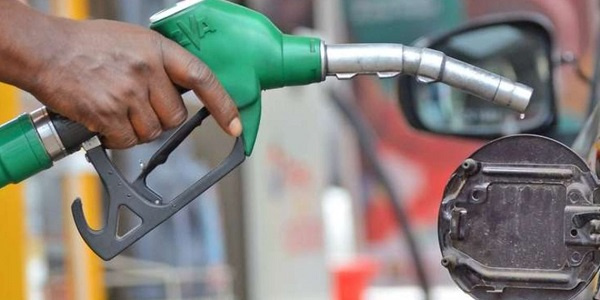
The Diesel Price Reduction Ghana initiative has taken effect after the National Petroleum Authority (NPA) announced new ex-pump price floors for the second pricing window of August 2026, covering 4 August to 15 August 2026.
The adjustment follows a directive from President John Dramani Mahama, with diesel receiving a GH¢2.00 per litre reduction to provide temporary relief to consumers and businesses facing rising fuel costs.
While diesel prices have been lowered, the NPA kept the benchmark price floors for petrol and Liquefied Petroleum Gas (LPG) unchanged during the pricing period.
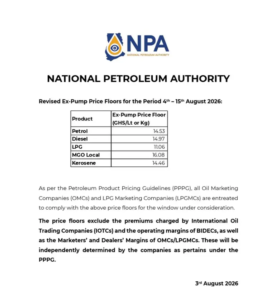
Under the revised pricing schedule, petrol remains at GH¢14.53 per litre, while diesel has been reduced from GH¢16.97 to GH¢14.97 per litre. LPG also remains unchanged at GH¢11.06 per kilogram.
The authority also announced benchmark price floors of GH¢16.08 per litre for Marine Gas Oil (MGO) Local and GH¢14.46 per litre for kerosene.
According to the NPA, the revised benchmarks will remain in force from 4 August to 15 August 2026, although the actual prices motorists pay at filling stations may differ depending on the pricing decisions of individual Oil Marketing Companies (OMCs).
The diesel reduction comes after President Mahama directed a temporary reduction in the regulatory margin on diesel for one month beginning 4 August 2026.
A statement issued by Government Communications Minister and Presidential Spokesperson Felix Kwakye Ofosu said Cabinet approved the intervention to lessen the impact of increasing fuel costs on households and businesses.
Government explained that the measure is intended to cushion consumers against higher transport costs, help contain inflationary pressures, and reduce the impact of fuel price increases on the overall cost of living.
Officials also indicated that developments in the international petroleum market will continue to be monitored, with additional policy interventions to be considered where necessary to support Ghana’s economic recovery and protect consumers.
The latest diesel relief package follows a similar intervention introduced in April 2026, when government temporarily reduced regulatory margins on diesel and petrol to moderate the impact of rising global crude oil prices.
Unlike diesel, the NPA determined that prevailing market conditions did not justify adjustments to petrol and LPG prices during the current pricing window, leaving both products unchanged.
The authority stressed that the published figures represent minimum ex-pump price floors under the Petroleum Product Pricing Guidelines (PPPG) and should not be interpreted as the final retail prices at filling stations.
Actual pump prices may vary because Oil Marketing Companies and LPG Marketing Companies are permitted to apply their own operating margins. The published benchmark prices also exclude International Oil Trading Company (IOTC) premiums and Bulk Import, Distribution and Export Company (BIDEC) charges.
The NPA will reassess market conditions after 15 August 2026 to determine price floors for the next pricing window.
Industry observers expect the diesel reduction to lower operating costs for commercial transport operators, logistics companies, farmers, manufacturers and other businesses that rely heavily on diesel-powered equipment. Consumers will also be watching closely to see whether the lower benchmark results in reduced pump prices and eventually eases pressure on transport fares.
Technology
Inside the Italian Apple Store Walkout: Workers Challenge Conditions as iPhone 18 Pro Arrives

By Angel No Lie | KPD Online | Technology & Business Report
A launch day marked by a labor dispute
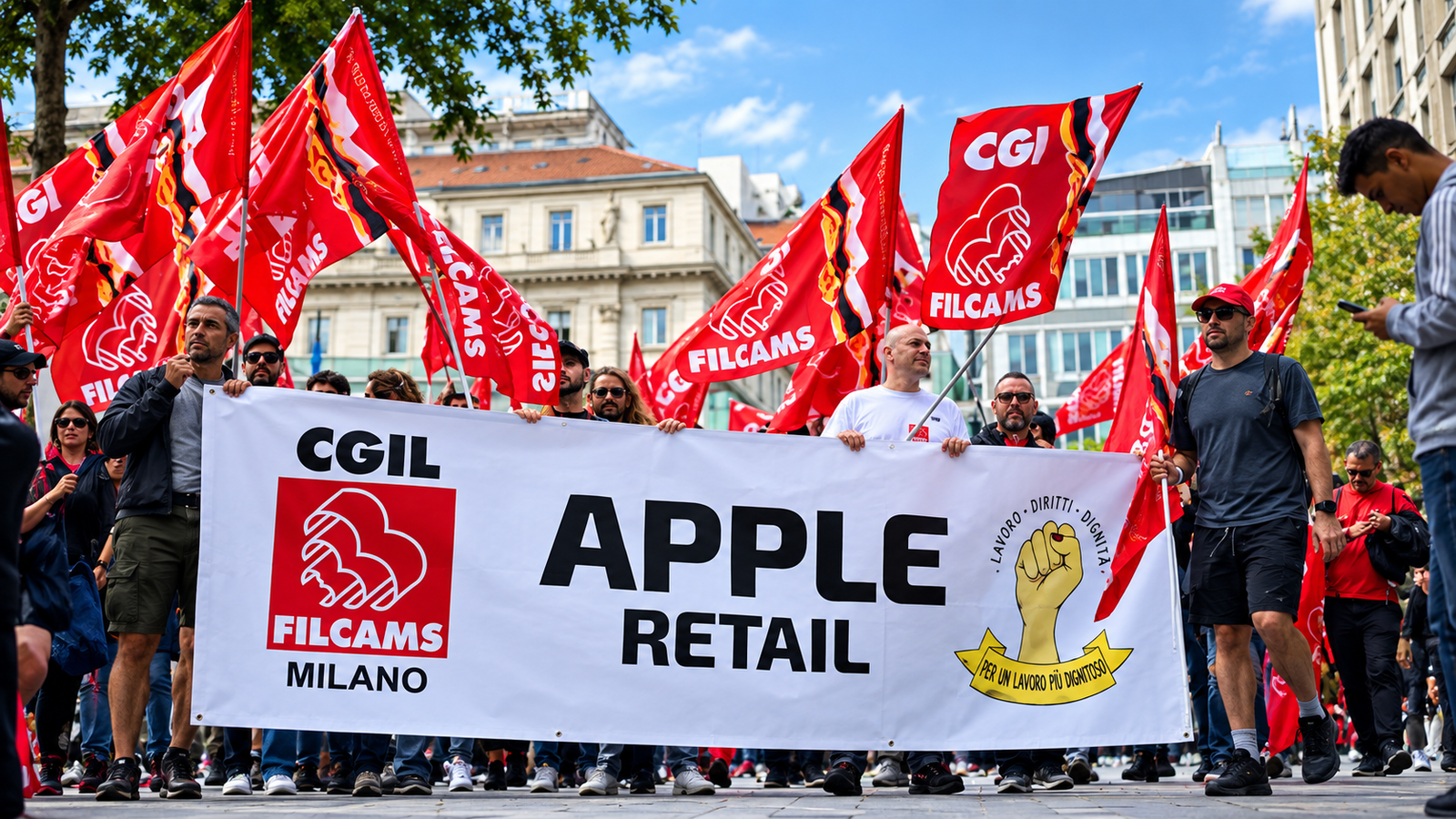
Apple’s latest iPhone launch in Italy coincided with a nationwide walkout by Apple retail employees, putting a labor dispute alongside one of the company’s biggest annual retail events.
On 18 September 2026, workers at Apple Retail Italia stores staged a full-shift strike over working conditions. The action was organized by Filcams CGIL, Fisascat CISL and Uiltucs and coincided with the Italian launch of the iPhone 18 Pro and iPhone 18 Pro Max. Reuters reported that the action concerned more than 1,600 employees across 17 Apple stores.
What workers are asking for
The unions say the dispute centers primarily on staffing, workloads and employment arrangements.
Among their demands are:
- Additional permanent hiring
- Conversion of some fixed-term contracts into permanent positions
- The opportunity for part-time employees to voluntarily increase their working hours
- Adequate staffing levels for individual stores
- Changes to working arrangements and job responsibilities
Union representatives have also complained about increasing workloads and what they describe as greater overlap between employees’ responsibilities. According to the unions, new procedures and productivity requirements have added pressure to store personnel.
Fisascat CISL reported an average strike participation rate of 70%, with some locations reaching higher levels. That figure is a union-reported estimate rather than an independently verified participation figure.

Aperto l’Apple Store a Milano, centinaia in fila – Corriere.it
Why launch day was significant
The timing was deliberate.
The iPhone 18 Pro went on sale worldwide on 18 September, generating queues at Apple stores in several countries. In Milan, however, customers arriving for the new device encountered demonstrations by Apple retail workers outside the company’s prominent glass-cube store.
Reuters footage showed employees using flags, whistles and rattlers during the demonstration while customers queued nearby. A union representative told Reuters that the iPhone launch was chosen because of its importance to Apple’s public image.
The result was an unusual contrast: customers arriving to celebrate a major technology launch while employees were using the same event to highlight an unresolved workplace dispute.

Neuer Apple-Flagship-Store in Mailand: Springbrunnen-Eingang und verändertes Innen-Layout | News | MacTechNews.de
Apple’s response
Apple said its Italian retail and online stores remained open during the strike and that it was prepared to welcome customers.
The company also defended its employee compensation and benefits, pointing to medical, dental and vision coverage as well as mental-health and wellness support.
This provides an important distinction in the dispute: the unions’ assessment of working conditions and Apple’s description of its employment package are different perspectives, and neither should be treated as an independently established conclusion about the overall quality of employment without further evidence.

El éxito supera a la producción: más de un mes de espera para conseguir el nuevo iPhone
What happened inside the stores?
Available reporting indicates that the stores continued operating despite the industrial action. Reuters reported that Apple said its outlets would operate normally. At the same time, pickets were organized outside selected stores, including Apple’s flagship location in central Milan.
The strike therefore did not amount to a nationwide closure of Apple’s Italian retail network. Rather, employees withheld their labor while Apple maintained retail operations.
The dispute goes beyond the iPhone
The disagreement is part of a broader negotiation between Apple Retail Italia and employee representatives.
According to Fisascat CISL, discussions have included staffing levels, contract arrangements, working hours and the organization of store duties. The union says an earlier meeting on 29 July 2026 did not produce agreement on its proposed structural staffing measures.
ANSA likewise reported union concerns about staffing shortages, heavier workloads and pressure surrounding hourly productivity.
The commercial backdrop
The labor dispute occurred as Apple launched its latest premium iPhone generation.
Reuters reported that the iPhone 18 Pro starts at €1,489 in Italy. The launch also comes ahead of Apple’s planned release of its Duo foldable smartphone, scheduled for 23 October, which unions say could create another period of heightened activity for retail employees.
The bigger picture
The Italian walkout illustrates how major product launches can become important moments in labor negotiations. For Apple, launch day is designed around customer attention, retail activity and global publicity. For the unions, the same visibility provided an opportunity to put employment concerns before the public.
The immediate effect appears to have been limited: Apple’s stores remained open, while demonstrations took place outside several locations. But the underlying negotiations remain unresolved, according to the unions, and further industrial action could follow.
Bottom line: The 18 September walkout was not a protest against the iPhone 18 Pro itself. It was a labor dispute involving Apple retail employees, centered on staffing, contracts, working hours and workload, and deliberately timed to coincide with one of Apple’s highest-profile retail days of the year.
Fuel prices in Ghana could remain elevated even if some of the geopolitical tensions affecting the international oil market subside, the Executive Director of the Chamber of Petroleum Consumers (COPEC), Duncan Amoah, has warned.
Mr Amoah said the factors influencing fuel prices extend beyond geopolitical developments, pointing to rising global demand, increased premiums and high logistics costs as key pressures that could keep prices at the pumps high.
His comments follow another increase in petroleum prices in Ghana under the latest pricing window, which took effect on Wednesday, September 16, 2026.
The National Petroleum Authority (NPA) subsequently set the minimum price of petrol at GH¢16.00 per litre, while diesel was priced at GH¢16.77 per litre.
Speaking on JoyNews, Duncan Amoah explained that Ghana’s fuel pricing situation was being influenced by several international market factors.
He said even if geopolitical tensions ease, consumers could still experience high prices because of the rising cost of premiums and logistics involved in bringing petroleum products into the country.
He also warned that increased demand for diesel during the winter period could add further pressure to the international petroleum market.
According to him, this combination of factors means fuel prices may not fall immediately simply because geopolitical tensions begin to ease.
Mr Amoah has meanwhile called for greater attention to domestic refining as a means of reducing some of the costs associated with importing refined petroleum products.
He argued that increased local refining could help Ghana avoid some of the additional costs incurred when finished petroleum products are imported at higher premiums.
He said strengthening the country’s domestic refining capacity would also reduce Ghana’s exposure to some of the costs associated with purchasing refined petroleum products from the international market.
His comments come as motorists and other consumers continue to face changes in fuel prices linked to developments in both the domestic and international petroleum markets.
By Angel No Lie | KPD Online | 17 September 2026 | Independent Markets Report
Gold prices moved higher on Thursday as investors assessed the U.S. Federal Reserve’s latest interest-rate decision, while easing concerns over Middle East oil supplies took some momentum out of the recent crude rally.
Spot gold was initially up more than 1% in Asian trading, reaching about $4,310.49 per ounce at 0149 GMT, according to Reuters. Later in the session, the gain had moderated to 0.8%, at $4,295.26, showing how quickly prices were adjusting after the Fed decision.

Gold price prediction: Meltdown as prices fall by Rs 900/10 gram amid profit booking. Can bulls stage a comeback? – The Economic Times
Fed raises rates by 25 basis points
The Federal Reserve raised its benchmark federal funds target range by 25 basis points to 3.75%-4.00% on Wednesday.
The decision was approved unanimously by the Federal Open Market Committee. The Fed said economic activity was expanding at a solid pace but that inflation remained elevated.
The accompanying projections indicated that the rate increase may not be the final move this year. Reuters reported that 16 of 18 Fed policymakers expected at least one additional quarter-percentage-point increase before the end of 2026.
That creates a complicated environment for gold.
Gold does not pay interest, so higher interest rates can make yield-bearing assets comparatively more attractive. At the same time, expectations surrounding inflation, currencies, geopolitical risks and investor demand for defensive assets can support bullion.

Dollar-Obsessed Argentines Have a Newfound Love for Buying Gold – Bloomberg
Gold’s move came after a sharp pullback
The rise followed a weaker session in which gold had reached a near six-week low.
Reuters reported that technical factors were contributing to Thursday’s rebound, while the Fed’s more hawkish message had already been largely reflected in market pricing.
U.S. gold futures did not mirror the initial spot-market gain. December futures were reported down roughly 1.2% at $4,333.90 in later trading.
That divergence is important: the headline rise in spot gold does not necessarily indicate a broad-based bullish move across all gold contracts.

Oil rally loses momentum
The other major part of the market story is oil.
Brent crude futures fell 1.2% to $104.59 a barrel, while U.S. West Texas Intermediate declined 1.1% to $101.29 in early Thursday trading. Both contracts had fallen by roughly $3 on Wednesday.
The decline followed reports that Saudi Arabia was offering additional crude cargoes to Asian buyers through ship-to-ship transfers off Sohar, Oman.
The alternative export route is helping reduce immediate concerns about supply disruptions following attacks on Saudi Arabia’s East-West pipeline and disruption at the Red Sea export hub of Yanbu.
Commodity snapshot
| Asset | Latest reported move |
|---|---|
| Spot gold | $4,295.26/oz, +0.8% |
| Spot gold earlier | $4,310.49/oz, +1.1% |
| U.S. gold futures | $4,333.90/oz, -1.2% |
| Brent crude | $104.59/bbl, -1.2% |
| WTI crude | $101.29/bbl, -1.1% |
| Silver | $63.73/oz, +1.2% |
| Platinum | $1,783.56/oz, +1.7% |
| Palladium | $1,296.70/oz, +2.2% |
Figures reflect different points in Thursday’s trading and therefore should not be interpreted as simultaneous closing prices.
Why oil matters for gold
Oil and gold are responding to several of the same macroeconomic forces, but in different ways.
Higher oil prices can intensify inflation concerns because energy is an important input into transportation, manufacturing and household costs. Persistent energy inflation can, in turn, make central banks more reluctant to cut interest rates.
Conversely, a sustained decline in oil prices could reduce some inflation pressure. Reuters quoted OANDA analyst Kelvin Wong as saying continued oil weakness could provide additional support for gold over the medium term.
For now, however, the oil market remains exposed to developments in the Middle East. Reuters reported that the East-West pipeline disruption has not been fully resolved and that uncertainty remains over repairs.
The bigger picture
The market is therefore dealing with two competing forces.
For gold:
- renewed safe-haven demand;
- geopolitical uncertainty;
- expectations surrounding inflation;
- technical buying after the recent decline;
- but also pressure from relatively high U.S. interest rates.
For oil:
- continuing geopolitical and transportation risks;
- disruption affecting Saudi export infrastructure;
- alternative shipment arrangements through Oman;
- and signs that some immediate supply fears are easing.
Independent assessment
Thursday’s market action does not point to a single, straightforward trend.
Gold’s initial more-than-1% rise was significant, but the subsequent moderation shows that investors remain sensitive to the Fed’s higher-for-longer interest-rate signal. Meanwhile, oil’s retreat suggests that alternative Saudi export arrangements have reduced some of the immediate supply anxiety, although the underlying Middle East risks remain.
The key question for markets is whether oil prices continue to fall as supply routes normalize, or whether renewed disruptions push energy prices higher again. That outcome could materially influence inflation expectations, interest-rate expectations and, consequently, gold.
In short: gold is being supported by defensive and technical factors, while oil is losing some of its geopolitical risk premium—but neither move should yet be interpreted as a settled new market direction.
Sources: Reuters; U.S. Federal Reserve.

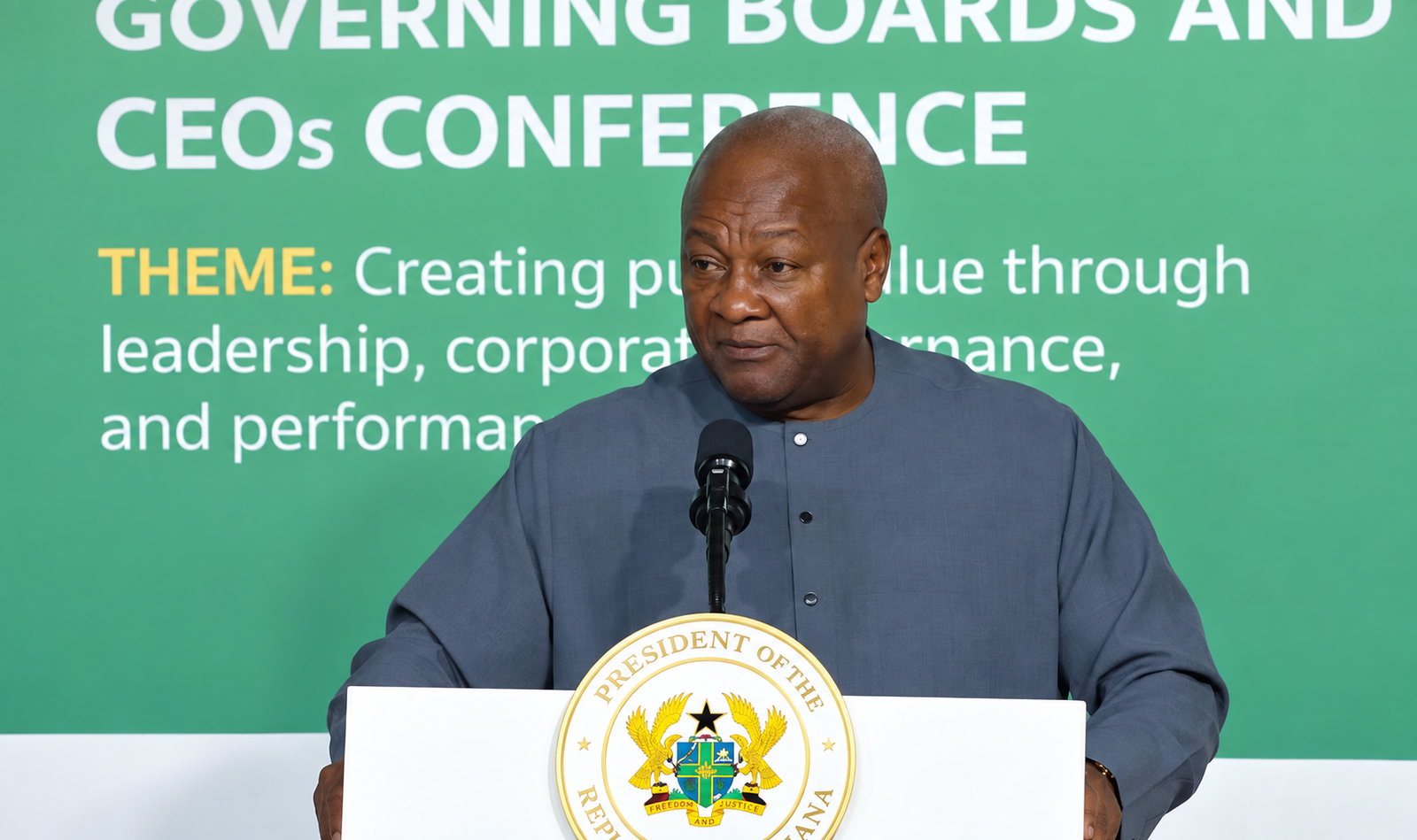
Tema Oil Refinery (TOR) has recorded a remarkable financial turnaround, moving from a net loss of approximately GH¢745 million to a net profit of GH¢1.09 billion.
The development has been highlighted among the significant turnarounds recorded by Ghana’s state-owned enterprises, with President John Dramani Mahama acknowledging the refinery’s improved performance during the SIGA Boards and Chief Executive Officers conference.
The latest figures represent a dramatic shift in TOR’s financial fortunes and mark what has been described as the refinery’s first net profit in almost a decade.
The turnaround is being seen as a significant achievement for an institution that has faced years of financial and operational challenges.
President Mahama, in recognising the performance of TOR and other state-owned enterprises, stressed the need for state institutions to pursue higher standards of performance, stronger governance and greater value creation for the country.
He urged boards and chief executives of state-owned enterprises to build on the progress made and continue delivering results that benefit the Ghanaian taxpayer.
The President’s recognition of TOR’s performance comes as renewed efforts are being made to reposition the refinery as a key player in Ghana’s petroleum industry.
The refinery’s improved financial position is expected to strengthen confidence in its operations and support ongoing efforts to restore its full operational capacity.
By Maurice Otoo
Gold prices moved higher on Thursday as a softer U.S. dollar supported demand for the precious metal, while investors turned their attention to fresh U.S. inflation data that could influence the Federal Reserve’s next interest-rate decision.
Spot gold rose about 0.3% to $4,414.28 an ounce, while U.S. gold futures for December delivery were little changed, slipping around 0.1% to $4,457.20. The modest gains came as the dollar remained under pressure despite elevated U.S. Treasury yields.
Weaker dollar supports gold
Gold is priced in U.S. dollars, meaning a weaker greenback generally makes bullion cheaper for investors holding other currencies. The dollar has recently fallen to multi-month lows, providing an important source of support for gold even as markets reassess the outlook for U.S. interest rates.
The latest move highlights the competing forces currently shaping the gold market. On one side, a weaker dollar and persistent geopolitical uncertainty are encouraging demand for the metal. On the other, rising bond yields and the possibility of tighter monetary policy could limit further gains.
Inflation data takes centre stage
Investors are now waiting for the latest U.S. inflation readings, with the Producer Price Index due Thursday and consumer inflation data scheduled for Friday.
The reports could provide important clues about how Federal Reserve policymakers may approach interest rates at their upcoming meeting. Markets have recently increased expectations of a possible rate hike, with the CME FedWatch tool indicating roughly a 60% probability of an increase this month.
A stronger-than-expected inflation reading could reinforce expectations for higher interest rates, potentially strengthening the dollar and Treasury yields while putting pressure on gold. Conversely, softer inflation could reduce those expectations and provide additional support for bullion.
Oil prices add another layer of uncertainty
The inflation outlook has become more complicated as crude oil prices surge amid escalating tensions in the Middle East.
Brent crude has moved above $100 a barrel, raising concerns that higher energy costs could feed into consumer prices and make it more difficult for central banks to bring inflation under control.
The energy shock is creating a difficult environment for policymakers. Higher oil prices can increase inflation expectations at the same time that geopolitical uncertainty encourages investors to seek traditional safe-haven assets such as gold.
Gold remains supported by broader market risks
Beyond short-term currency and interest-rate movements, gold continues to benefit from broader concerns about fiscal risks, geopolitical instability and central-bank demand.
The World Gold Council reported that gold gained 13% in August, making it the metal’s third-strongest monthly performance in a quarter century. The organisation attributed much of the rally to investment flows, including ETF buying, futures activity and a weaker U.S. dollar.
Central-bank purchases are also providing longer-term support. Recent market reports noted that China’s central bank added around 20 tonnes of gold in August, reinforcing expectations that official-sector demand remains an important factor in the market.
What investors are watching
The immediate direction of gold is likely to depend heavily on the inflation figures and their impact on expectations for Federal Reserve policy.
If inflation proves persistent, higher interest-rate expectations could strengthen the dollar and increase the opportunity cost of holding gold, which does not pay interest. But if price pressures show signs of easing, investors could become more confident that monetary policy will not need to tighten further.
With geopolitical tensions simultaneously driving oil prices higher, gold could remain highly sensitive to developments across both financial and global political markets.
For now, the combination of a weaker dollar, geopolitical uncertainty and expectations surrounding U.S. inflation is keeping gold firmly in focus as investors position for the Federal Reserve’s next policy decision.

Tricycle rider jailed for smuggling four Nigeriens into Ghana

NPP cannot win cocaine debate in Ghana — Dafeamekpor fires back

Sammy Gyamfi raises alarm over Ghana ports after drug bust, backs Mahama’s new measures



-

 General News1 week ago
GTA’s Financial Strength Weakens Despite 2025 Tourism Activities
-

 General News1 week ago
GTA Cash Reserves Halve to GH¢640,000 Despite Improved Liquidity Ratio
-

 Entertainment2 weeks ago
Keche Supports Street Vendor with GH¢3,000 After She Struggles to Make Sales
-

 Entertainment2 weeks ago
Government Repatriates Musician Barosky from UK
-

 General News2 weeks ago
TVET is not for the academically weak – Advocate calls for change in Ghana’s mindset
-

 General News2 weeks ago
Techiman Assembly, Zoomlion Undertake Fumigation Exercise to Prevent Disease Outbreaks
-

 General News2 weeks ago
Police Launch Manhunt for Missing Assin Fosu Man as Captors Demand GH¢49,500 Ransom
-

 General News1 week ago
Creative Arts Agency Records GH¢2.01m Revenue in FY2025 Despite Financial Reporting Gaps