
General News
GRA Explains New Digital VAT Collection System, Says No Additional 20% Tax Will Be Imposed

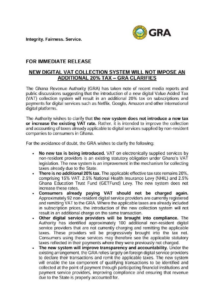
In a press release issued on Wednesday, October 14, 2026, the Authority clarified that the new system will not introduce a new tax or increase the existing tax rates. Instead, it is intended to improve the collection and accounting of taxes already applicable to digital services supplied by non-resident companies to consumers in Ghana.
The clarification follows recent media reports and public discussions claiming that the new digital VAT collection mechanism would result in an additional 20 per cent charge on users of international digital platforms.
According to the GRA, these reports have created the impression that consumers will be required to pay an extra 20 per cent tax on top of their existing subscription fees. However, the Authority stressed that this is not the purpose of the new system.
“The new system does not introduce a new tax or increase the existing VAT rate,” the Authority explained, adding that its primary objective is to strengthen compliance and ensure that taxes already required by law are properly collected and accounted for.
Existing 20% Effective Tax Rate Remains Unchanged
The GRA emphasised that no additional 20 per cent tax is being introduced under the new collection arrangement.
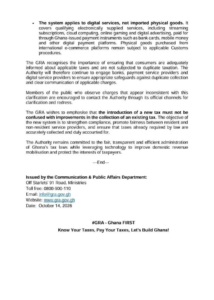
It explained that the existing effective tax rate remains at 20 per cent, comprising 15 per cent Value Added Tax (VAT), 2.5 per cent National Health Insurance Levy (NHIL) and 2.5 per cent Ghana Education Trust Fund (GETFund) Levy.
The Authority noted that VAT on electronically supplied services provided by non-resident companies is already an existing statutory obligation under Ghana’s VAT legislation.
Consequently, the new collection system represents an improvement in the mechanism used to collect taxes that are already due to the State, rather than the introduction of an additional tax burden on consumers.
The GRA said the public should distinguish between the introduction of a new tax and improvements in the collection of an existing tax.
The Authority has assured consumers that those already paying the applicable taxes should not be charged again on the same transaction.
According to the GRA, approximately 92 non-resident digital service providers are currently registered and remitting VAT to the Authority.
Where the applicable taxes are already included in subscription prices, the introduction of the new collection system should not result in an additional charge on the same transaction.
The clarification is expected to address concerns among consumers who use international digital platforms for entertainment, communication, business and other online services.
The GRA maintained that the new arrangement is designed to improve the collection of existing taxes without creating duplicate charges for transactions on which the applicable taxes have already been paid.
The GRA has also disclosed that it has identified approximately 100 additional non-resident digital service providers that are not currently charging and remitting the applicable taxes.
The Authority said these providers will progressively be brought into the tax system to ensure compliance with Ghana’s tax laws.
As a result, consumers using services from providers that have previously failed to charge the applicable statutory taxes may begin to see those taxes reflected in their payments.
The GRA explained that such changes would not represent the introduction of a new tax. Rather, they would reflect the enforcement and collection of taxes that are already required by law.
The Authority said the initiative would promote fairness between resident and non-resident service providers by ensuring that businesses operating in the digital economy meet their existing tax obligations.
The Authority explained that, under the existing arrangement, it relies largely on foreign digital service providers to declare their transactions and remit the applicable taxes.
However, the new system will enable the tax component of qualifying transactions to be identified and collected at the point of payment through participating financial institutions and payment service providers.
The GRA believes the mechanism will improve tax compliance, strengthen accountability and ensure that revenue due to the State is properly collected.
By using participating financial institutions and payment service providers, the Authority expects to improve the identification of taxable digital transactions and reduce the possibility of taxes going uncollected.
The system is therefore intended to strengthen the administration of Ghana’s tax laws in response to the growing use of international digital services by consumers and businesses in the country.
The GRA clarified that the new system applies to qualifying electronically supplied services rather than imported physical goods.
The services covered include streaming subscriptions, cloud computing, online gaming and digital advertising.
Payments for these services may be made through Ghana-issued payment instruments, including bank cards, mobile money and other digital payment platforms.
The Authority explained that physical goods purchased from international e-commerce platforms will continue to be subject to the applicable Customs procedures.
This means the new digital VAT collection mechanism should not be confused with the taxes and procedures that apply to the importation of physical products into Ghana.
The Authority acknowledged the importance of ensuring that consumers are adequately informed about applicable taxes and are protected against duplicate taxation.
It said it would continue engaging banks, payment service providers and digital service providers to establish appropriate safeguards against duplicate tax collection.
The engagement will also seek to ensure that consumers receive clear information about applicable charges and understand the taxes reflected in their digital service payments.
The GRA maintained that transparency in tax collection is important to building public confidence and ensuring that consumers are treated fairly under the existing tax framework.
The GRA has encouraged members of the public who notice charges that appear inconsistent with its clarification to contact the Authority through its official channels for further clarification and redress.
Consumers are advised to seek clarification where they believe they have been charged the applicable taxes more than once on the same transaction.
The Authority reiterated that the objective of the new collection system is to strengthen compliance, promote fairness between resident and non-resident service providers, and ensure that taxes already required by law are accurately collected and accounted for.
It further assured the public of its commitment to the fair, transparent and efficient administration of Ghana’s tax laws.
The GRA said it would continue leveraging technology to improve domestic revenue mobilisation while protecting the interests of taxpayers.
The press release was issued by the Communication and Public Affairs Department of the Ghana Revenue Authority.








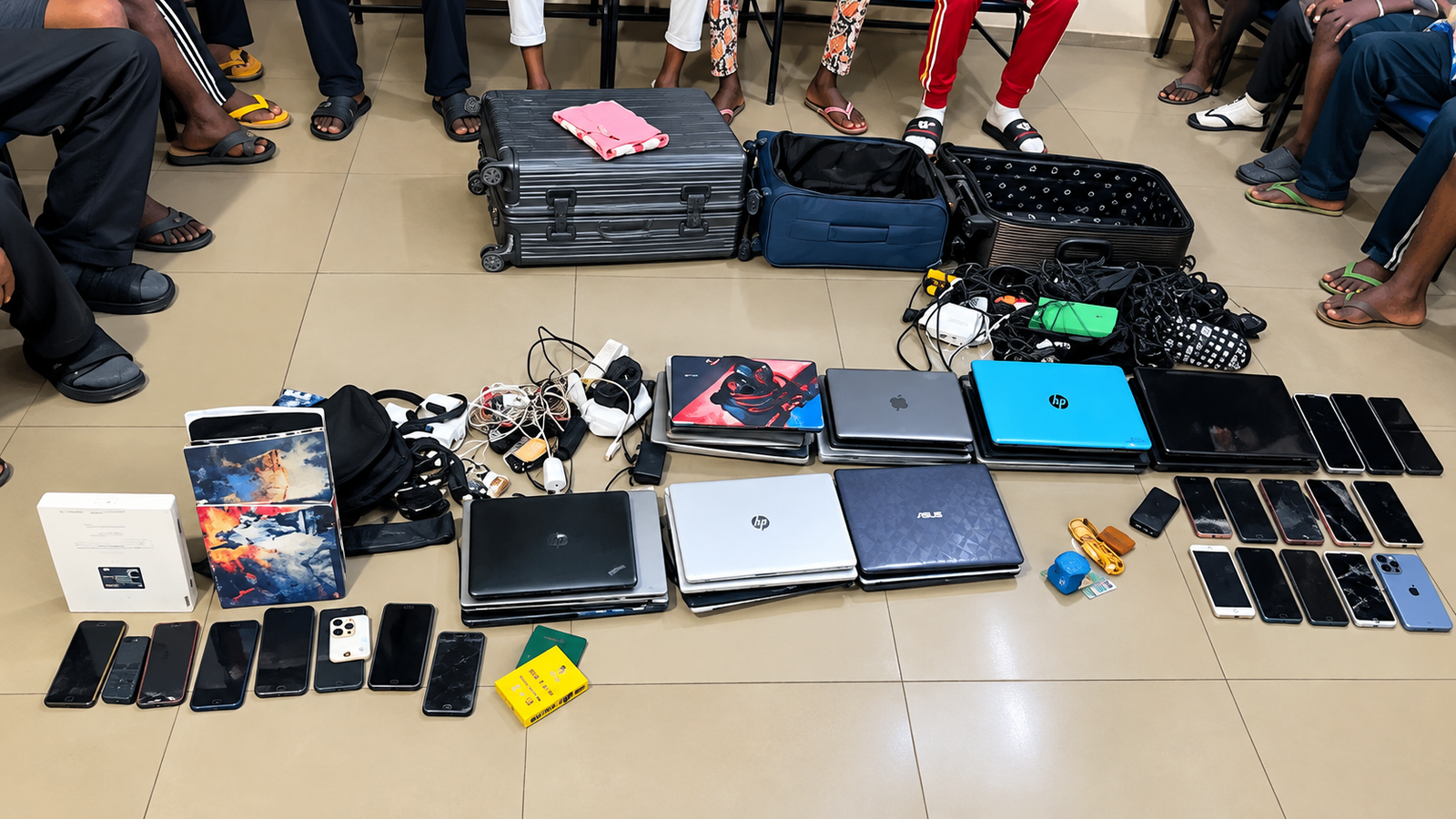
Meta has removed more than 3.7 million accounts, pages and groups from Facebook and Instagram as part of a major international operation targeting online fraud networks operating in West Africa and targeting victims in the United States, the United Kingdom and other countries.
The coordinated crackdown, announced on October 13, 2026, brought together major technology companies and law enforcement agencies from several countries to disrupt criminal networks involved in online scams.
According to announcements by Meta and the United States Department of Justice, the operation targeted suspected scam centres and associated digital infrastructure in West African countries, including Ghana and Nigeria. Microsoft and other technology companies also took action against suspected fraudulent activity.
The operation involved cooperation between the UK’s National Crime Agency, the FBI, the US Department of Justice and other law enforcement partners, alongside private-sector technology and financial intelligence firms.
Arrests and Victims Rescued
Authorities reported that 28 individuals had been arrested and 117 people who had been trafficked and held at scam centres were rescued. The rescued individuals were found in Ghana, where investigators said criminal groups had forced victims to work in scam operations.
The operation also generated investigative leads concerning more than 30 suspected scam centres. Information shared among participating companies and law enforcement agencies is expected to support further investigations into the networks and the people directing them.
The findings highlight the complex nature of organised online fraud, in which people forced to carry out scams may themselves be victims of trafficking and coercion.
Different Types of Online Fraud Identified
Investigators identified several forms of suspected fraud linked to the networks, including fraudulent investment schemes, cryptocurrency scams, fake job and task offers, romance scams and schemes involving individuals impersonating police officers, government officials or military personnel.
In some cases, fraudsters reportedly created false online identities to establish trust with their targets before persuading them to transfer money. Other schemes involved fake online shops, goods that were never delivered and offers to recover money previously lost to scams.
These tactics can exploit victims’ trust, financial pressures and desire for investment opportunities or employment.
Technology Companies and Police Coordinate Efforts
The operation, which began during the week of October 6, involved the exchange of intelligence across digital platforms, financial systems and national borders.
Participating companies used information gathered through their own investigations and information shared by law enforcement agencies to identify suspected accounts and related criminal infrastructure. Meta said the removal of more than 3.7 million accounts, pages and groups was part of a broader effort to disrupt the networks rather than simply remove individual pieces of content.
The US Department of Justice also reported that private-sector partners identified more than US$11 million in funds that could potentially be frozen. Cryptocurrency-related intelligence and other financial leads were among the information generated during the operation.
Implications for Ghana and West Africa
The crackdown places renewed attention on the regional impact of organised online fraud. Although victims may live thousands of kilometres from the people running the schemes, the activities can damage public confidence in digital services, expose individuals to substantial financial losses and create serious risks for people recruited or trafficked into scam centres.
For Ghana, the reported rescue of 117 trafficked individuals also underscores the importance of distinguishing between people organising criminal operations and those allegedly forced to participate in them.
Authorities and technology companies face the continuing challenge of identifying networks that can move between countries, change accounts quickly and exploit legitimate communication and payment services.
Public Advised to Remain Vigilant
Users are encouraged to be cautious about unsolicited investment offers, online relationships that quickly lead to requests for money, job opportunities requiring upfront payments and messages from people claiming to represent law enforcement agencies.
People should verify investment firms and recruiters independently, avoid sharing financial credentials and report suspicious accounts through the relevant platform. Anyone who suspects they have been defrauded should contact their financial institution and appropriate law enforcement authorities as soon as possible.
The latest operation demonstrates the scale of international cooperation required to disrupt online fraud. However, the removal of millions of accounts does not mean the threat has disappeared, and continued coordination, victim support and public awareness will remain essential.
Sources: Meta Newsroom and the US Department of Justice, October 13, 2026.


Lawyers for Ghana Gold Board (GoldBod) Chief Executive Officer Sammy Gyamfi have successfully challenged the legal validity of a GH¢15 million defamation suit filed against him by Minority Leader Alexander Afenyo-Markin, resulting in the High Court striking out the case.
The High Court’s General Jurisdiction 1 division ruled on Wednesday, October 14, 2026, that the writ of summons filed by Mr Afenyo-Markin was defective because it failed to meet mandatory procedural requirements governing defamation actions.
The dispute arose from public exchanges between the two over reported losses of US$1.7 billion associated with the Bank of Ghana’s Domestic Gold Purchase Programme in 2025. Mr Gyamfi had accused the Minority Leader of attempted extortion, allegations Mr Afenyo-Markin rejected before initiating the GH¢15 million lawsuit.
According to the legal arguments advanced by Mr Gyamfi’s lawyers, the writ did not contain sufficient particulars of the allegedly defamatory publication as required under Order 57 Rule 2 of the High Court (Civil Procedure) Rules, 2004 (C.I. 47).
The court agreed that the requirement was mandatory and not merely a technical formality. It held that the particulars must be clearly endorsed on the writ to enable the allegedly defamatory publication to be identified.
The judge also rejected the argument that details contained in the statement of claim could remedy the defect. In distinguishing an earlier case, Owusu Domena v Amoh, the court noted that Mr Gyamfi’s lawyers had promptly challenged the writ rather than proceeding with the case without objection.
The court subsequently set aside the writ of summons and statement of claim filed on August 24, 2026, with no order as to costs.
However, the ruling does not establish whether the statements at the centre of the dispute were defamatory. Rather, it addresses the procedural validity of the lawsuit.
The decision brings the proceedings under the defective writ to an end, while leaving the substantive allegations unresolved.

Former Managing Director of the Precious Minerals Marketing Company (PMMC), Nana Akwasi Awuah, has defended his record following concerns over the auditing of the company’s accounts for the period between 2020 and 2024, insisting that he formally requested a multi-year audit in September 2024.
In a press release dated Tuesday, October 13, 2026, Mr Awuah said claims that the audit process was initiated only in 2025 did not accurately reflect the steps taken during his tenure as managing director.
His response follows a report from Parliament’s Public Accounts Committee engagement with the Ghana Gold Board (GOLDBOD), which indicated that PMMC’s books and accounts for the five-year period had not been audited and that the new management requested a financial audit in 2025.
Mr Awuah stated that on September 2, 2024, he wrote to the Auditor-General requesting a multi-year audit of PMMC’s accounts covering 2020 to 2024.
According to him, the delay in conducting the audits was not attributable to management but rather to bureaucratic challenges associated with appointing a new external auditor through the Ghana Audit Service.
He also disclosed that during his tenure, PMMC underwent a performance audit conducted by the Auditor-General in 2023, describing it as the first of its kind in approximately two decades.
The former managing director further indicated that Parliament’s Select Committee on State Enterprises had written to the Auditor-General in support of his request for the multi-year audits.
He said a team was subsequently assembled in September 2024 to commence the exercise, with the final audit reports for 2020 to 2024 completed, signed and submitted in April and June 2025, respectively.
Mr Awuah added that the reports portrayed PMMC as a struggling institution that had been turned around by the end of 2024, laying the foundation for the establishment of its successor, GOLDBOD.
His statement seeks to clarify the timeline of the audit process as scrutiny of the institution’s financial records continues.
TRIPOLI, LIBYA — October 14, 2026
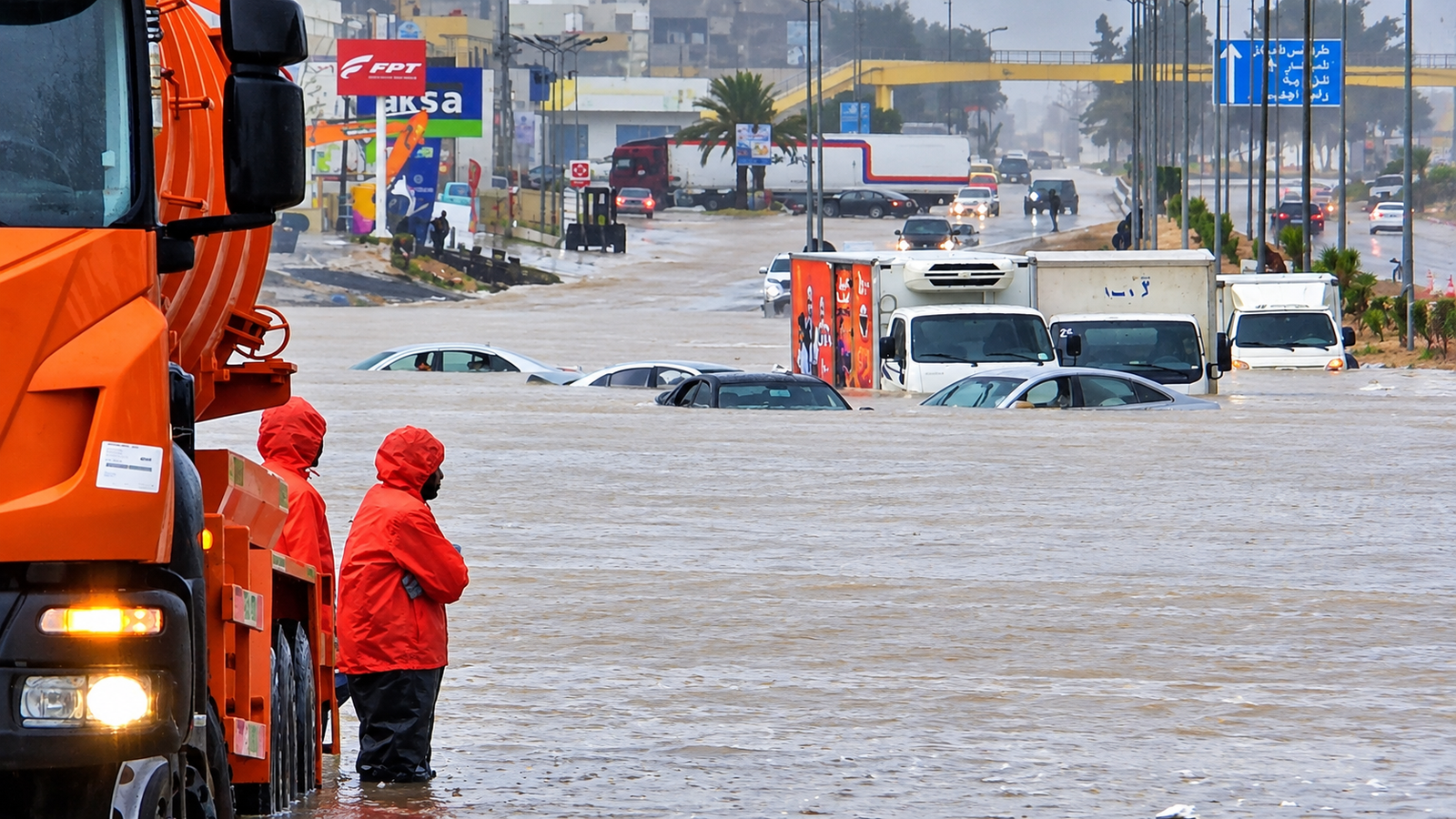
At least two people have died after torrential rainfall triggered widespread flooding in Tripoli, the Libyan capital, disrupting movement across parts of the city and prompting precautionary electricity cuts in affected areas.
The heavy downpours struck on Tuesday, October 13, with local authorities and emergency responders reporting fatalities linked to the flooding. The incident has renewed concerns about the city’s ability to cope with sudden, intense rainfall.
According to reports from authorities and local media, one of the victims was an employee of Jumhouria Bank who died following an electric shock. The Tripoli branch of the Libyan Red Crescent said it recovered his body during the flooding.
Rescue teams also recovered the body of another man from a vehicle submerged in floodwater, according to local television reports.
Floodwaters disrupt transport and threaten homes
The rainfall lasted approximately two and a half hours, according to Fadel Abu Arqoub, the mayor of Central Tripoli, who described the situation as catastrophic.
Floodwater inundated roads and submerged numerous vehicles, leaving parts of the city struggling with the effects of the sudden downpour. Eyewitness accounts described extensive water accumulation across streets and other urban areas.
The state-owned electricity company said it had cut power in some locations as a precaution after rising water reached residential properties. The measure was intended to reduce risks associated with electricity in flooded areas.
Emergency response activated
The flooding has placed pressure on local services responsible for drainage, public safety and emergency assistance. Clearing accumulated rainwater and restoring access to affected roads are among the immediate priorities following the downpour.
The two confirmed deaths also highlight the dangers associated with severe urban flooding, particularly when water comes into contact with electrical infrastructure or traps people inside submerged vehicles.
Questions over urban flood preparedness
The latest incident raises questions about drainage capacity and emergency preparedness in Libya’s capital as intense rainfall overwhelms parts of the urban environment.
The scale of the disruption demonstrates how quickly heavy rain can become a public-safety emergency, affecting transport, residential areas and essential services within a short period.
Further official information would be needed to establish the full extent of the damage, the number of neighbourhoods affected and whether additional casualties or injuries were reported.
By Angel No Lie | KPDOnline| WASHINGTON, October 14, 2026 | US Politics and Media
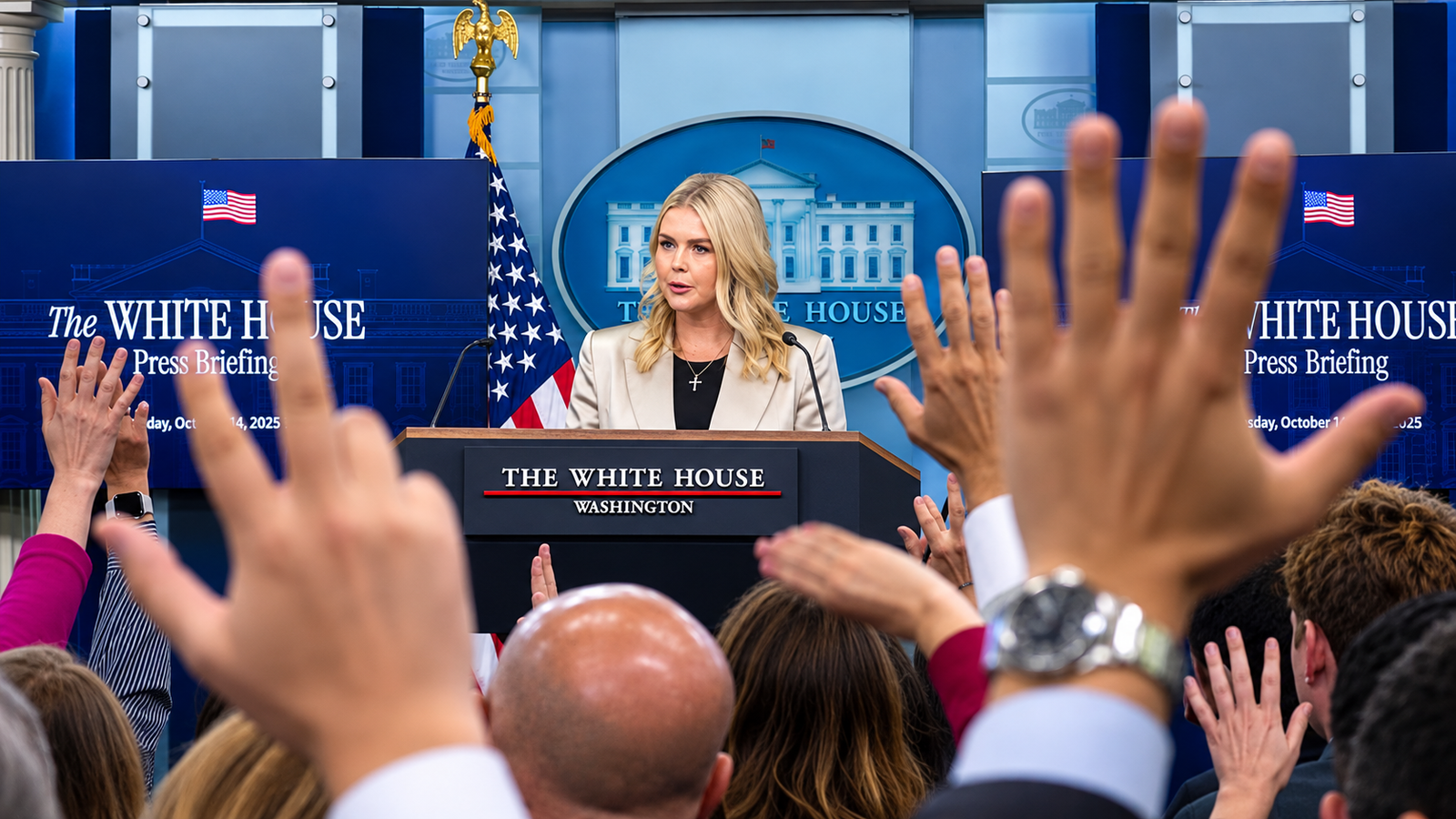
A federal judge has extended protections allowing journalists from CNN, MS NOW and Politico to retain access to the White House while their legal challenge against the Trump administration continues.
US District Judge Timothy Kelly issued a preliminary injunction on Tuesday, October 13, finding that the three news organisations were likely to succeed in arguing that the administration’s decision to revoke their press credentials violated constitutional protections. The order prevents the administration from enforcing the ban while the case proceeds, unless it is overturned on appeal.
Dispute began with White House press restrictions
The dispute began on September 18, when President Donald Trump announced that the three outlets would be barred from the White House, accusing them of publishing inaccurate reporting.
The affected news organisations subsequently challenged the decision in court, arguing that the restrictions amounted to retaliation for their journalism and discrimination based on their editorial viewpoints.
They also contended that the administration had violated their constitutional rights by revoking their press credentials without providing adequate notice or an opportunity to challenge the decision.
Judge questions the administration’s justification
Judge Kelly had previously intervened on September 24, temporarily restoring the journalists’ access while the lawsuit continued.
His latest ruling provides more durable protection than the earlier temporary order. The preliminary injunction is intended to remain in effect during the litigation unless a higher court intervenes or the judge issues a final decision.
The administration had defended its actions by raising concerns about reporting accuracy and national security. However, the judge found that the news organisations had presented a strong preliminary case that the ban was unlawful. The ruling does not constitute a final judgment on the entire dispute.
Wider implications for press freedom
The case has renewed debate about the relationship between government officials and journalists covering the presidency.
White House access gives reporters opportunities to question administration officials, cover official announcements and inform the public about government decisions. Restrictions on that access can therefore raise concerns about transparency and the public’s ability to receive information.
At the same time, the administration maintains that it has legitimate concerns about reporting practices and the handling of sensitive information. The legal proceedings will help determine the extent to which those concerns can justify restricting journalists’ access to government premises.
The case also highlights the importance of procedural fairness when government authorities make decisions affecting press credentials and access.
What happens next?
The lawsuit remains unresolved, and the preliminary injunction does not settle every question about journalists’ access to presidential activities. Further court proceedings could determine whether the administration’s actions violated the First and Fifth Amendments to the US Constitution.
The outcome could have implications beyond the three organisations involved, particularly for the rules governing press access and the ability of journalists to report independently on the executive branch.

Meta Removes 3.7 Million Accounts in Major West African Fraud Crackdown

CAF Raises Annual Funding for 54 Member Associations to $700,000

Kofi Adams Rejects Calls for Dismissal as World Cup Visa Controversy Deepens

IRAWMA 2025: Shatta Wale Wins 3 Major Awards Including Best Music Video

Samini Secures Promotional Deal with Audiomack for Upcoming Album “THE ORIGIN8A”

AirtelTigo losing GH₵20m monthly; total debts exceed $200million – Sam George


-

 Politics2 weeks ago
Asiedu Nketiah to Chair Launch of Six NDC Historiographies on Ghana’s Political Journey
-

 General News1 week ago
World Cup Visa Storm: Kojo’s GTA Questions Resurface as Minority Demands Action
-

 General News2 weeks ago
SSNIT Unveils Big Plans to Transform Labadi, La Palm Beachfront into Tourism Hub
-

 General News2 weeks ago
Can TVET Teachers Join the September GES Strike? Legal Questions Emerge
-

 General News2 weeks ago
NEIP to Support 10,000 Young Entrepreneurs Annually Under Adwumawura Programme
-

 Sports2 weeks ago
“I Leave With Respect, Gratitude and Pride” – Carlos Queiroz Bids Farewell to Ghana
-

 Sports2 weeks ago
Real Madrid Send Major Dossier to UEFA Over Barcelona Payments Case
-

 Entertainment2 weeks ago
Rick Ross Arrested in Miami Beach on Domestic Violence-Related Charges