
General News
Mahama Calls for Monthly National Clean-Up to Tackle Flooding and Poor Sanitation

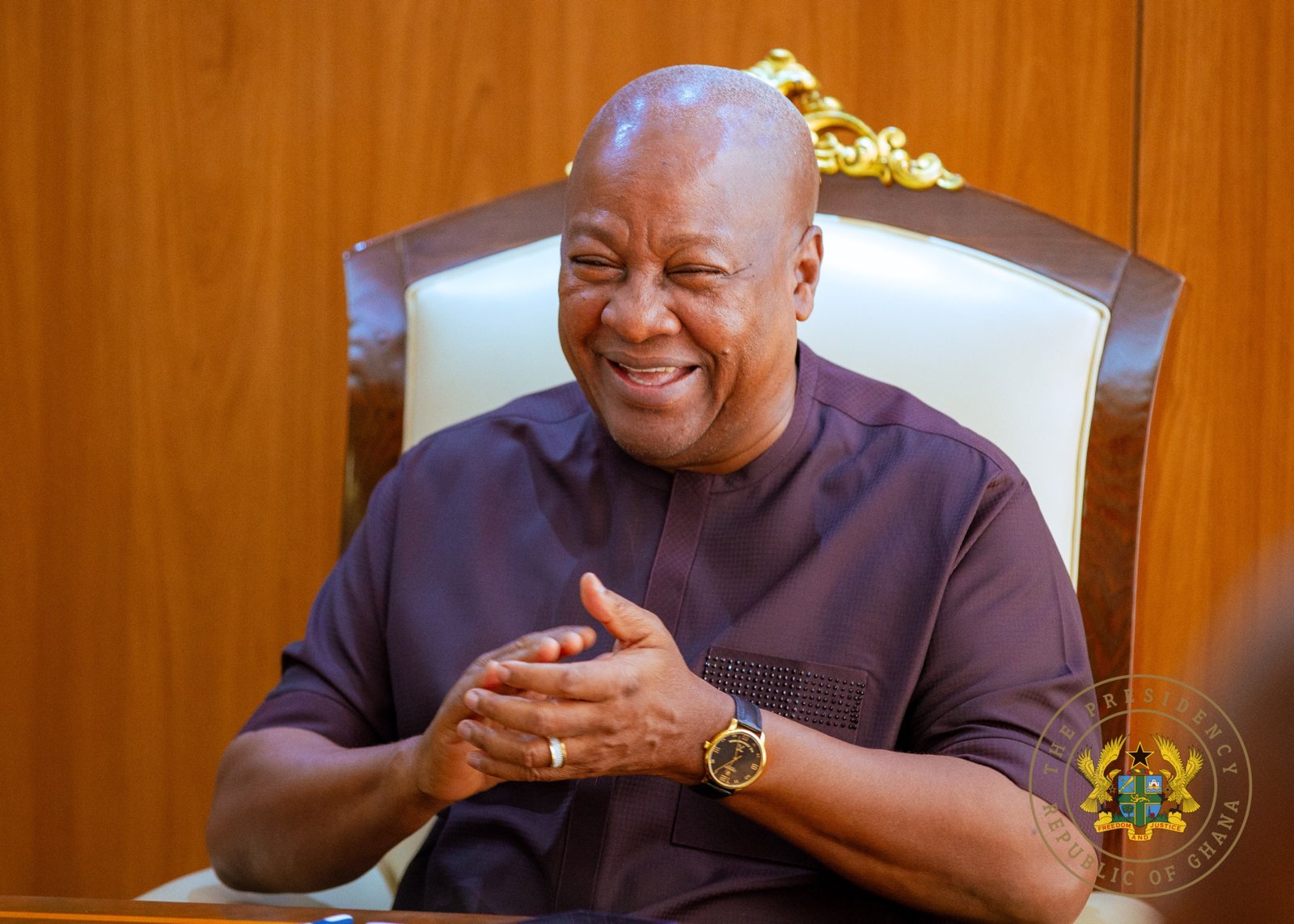
President John Dramani Mahama has called for a sustained national commitment to environmental sanitation, urging Ghanaians to dedicate at least one day every month to cleaning their communities to help prevent flooding.
Speaking during the nationwide clean-up exercise in Accra on Friday, July 10, the President said the country’s persistent flooding is largely caused by plastic waste and years of silt accumulation in drains.
According to him, the exercise revealed the extent of the sanitation challenge, with large amounts of plastic waste and silt being removed from drainage systems that had not been properly desilted for years.
“Barely we can see what the cause of our problem is. We’ve just desilted this, and look at the plastics that we are taking out of it. The sand clearly did not happen in one year. It means this has been silted for so many years, reducing the capacity of the drain to carry water,” President Mahama said.
He stressed that authorities must ensure the silt removed from drains is properly transported and disposed of, warning that leaving it by the roadside only allows rainwater to wash it back into the drains.
“Let’s make sure that after we take all this silt out, we bring enough capacity to transport it and dump it somewhere appropriate. If we’re able to do this, these drains will have enough capacity to carry water for the next year or two,” he added.
President Mahama commended the large turnout of residents who participated in the exercise, describing it as encouraging.
He also announced that the Ghana Armed Forces and other security services would continue dredging major waterways to improve water flow and reduce the risk of flooding across the capital.
The President emphasized that the clean-up campaign should not be a one-off event but a continuous national effort.
“At least once a month, let’s set aside one day and all of us come out and clean the city. With the help of the waste management companies, we’ll be able to keep this city clean and also free of flooding.”
The nationwide clean-up exercise forms part of government efforts to improve sanitation and reduce the impact of flooding following recent heavy rains that affected several parts of the country.













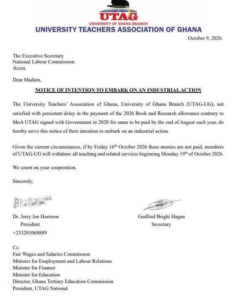
The University of Ghana branch of the University Teachers Association of Ghana (UTAG-UG) has threatened to suspend teaching and related academic services from Monday, October 19, 2026, if the government fails to pay its members their 2026 Book and Research Allowance by Friday, October 16.
In a notice dated Friday, October 9, 2026, and sent to the National Labour Commission (NLC), the association expressed concern over what it described as continued delays in the payment of the allowance.
According to UTAG-UG, the delay amounts to a breach of the 2020 Memorandum of Agreement (MoA) between the association and the government. The agreement requires the allowance to be paid by the end of August each year.
The association has therefore given the government until October 16 to settle the outstanding payments, warning that failure to meet the deadline will compel its members to withdraw their teaching and other related services from the following Monday.
The notice was signed by UTAG-UG President, Dr Jerry Joe Harrison, and copied to the Fair Wages and Salaries Commission, the Ministers responsible for Employment and Labour Relations, Finance, and Education, as well as the Ghana Tertiary Education Commission and the national leadership of UTAG.
The planned industrial action could affect lectures and other academic activities at the University of Ghana if the government fails to pay the allowance within the stipulated period.
General News
Ghana Records 1.3 Million International Arrivals in 2025 as Domestic Tourism Grows by 7%
Ghana recorded 1,306,962 international visitor arrivals in 2025, representing a 1.4% increase over the previous year, while domestic visits to tourist sites rose by 7%, according to the Ghana Tourism Report 2025.
The report, produced by the Research, Monitoring and Evaluation Department of the Ghana Tourism Authority (GTA), provides an assessment of the country’s tourism performance, covering international and domestic tourism, visitor expenditure, tourism enterprises, regional development, visitor satisfaction and special tourism events.
The report, themed “Resilience and Sustainable Growth,” highlights the sector’s gradual progress while identifying challenges that require attention to ensure tourism contributes more significantly to Ghana’s economic development.
It emphasises the need to move beyond increasing visitor numbers towards improving tourism experiences, attracting higher-spending visitors, supporting local communities and protecting the country’s natural and cultural heritage.
International Arrivals Increase Despite Decline in Visitor Spending
Ghana recorded 1,306,962 international arrivals in 2025, marking a 1.4% increase compared with the previous year.
International visitors stayed in the country for an average of approximately 13 nights, while business affairs emerged as the leading purpose of travel, accounting for 31% of arrivals.
The figures underline Ghana’s position as a destination for business and commercial activities within the West African region.
However, the report identifies a decline in average international visitor expenditure as a concern for the sector.
Average expenditure fell from US$3,742.98 in 2024 to US$3,319.90 in 2025, suggesting that the increase in visitor numbers did not translate into higher average spending per visitor.
The report consequently highlights the importance of attracting higher-value visitors and developing premium tourism experiences capable of generating greater economic returns.
Domestic Tourism Records 7% Growth
Domestic tourism emerged as one of the strongest-performing areas of Ghana’s tourism sector in 2025.
According to the report, the country recorded 1,793,797 visits to 55 tourist sites, up from 1,681,985 visits in 2024, representing a 7% increase.
Residents accounted for 84% of the visits, making Ghanaians the largest group visiting the attractions covered by the report.
The growth highlights the importance of domestic tourism in sustaining the industry, supporting businesses and creating economic opportunities in communities across the country.
Domestic visitors contribute to local economies through spending on transportation, accommodation, food, entrance fees, souvenirs, entertainment and other tourism-related services.
The report therefore identifies domestic tourism as an important pillar of resilience, particularly because it can help sustain tourism businesses while spreading economic benefits to destinations beyond the country’s main international tourism centres.
Top 10 Tourist Sites Account for 77% of Visits
Despite the growth recorded in domestic tourism, visitor activity remains concentrated in a relatively small number of destinations.
The report indicates that the top 10 tourist sites recorded 1,377,588 visits, representing approximately 77% of total visitation to the 55 sites covered.
The Kwame Nkrumah Memorial Park emerged as the most visited attraction, recording 302,523 visits in 2025.
Other leading attractions included Kakum National Park, Bunso Arboretum, Cape Coast Castle, Manhyia Palace Museum, Kumasi Zoo, Accra Zoo, Elmina Castle, Shai Hills Resource Reserve and Aburi Botanical Garden.
The concentration of visits in major destinations, particularly in Greater Accra, Central, Ashanti and Eastern Regions, points to opportunities for expanding tourism in less-visited parts of Ghana.
Differences in infrastructure, accessibility, destination visibility and visitor demand are identified as factors that may contribute to the uneven distribution of tourism activity.
Expanding tourism infrastructure and promoting lesser-known attractions could help create new tourism destinations, increase regional participation and distribute the benefits of the industry more widely.
Tourism Businesses Increase to 7,109
The formal tourism business sector also recorded growth in 2025.
The number of licensed tourism enterprises increased from 6,702 in 2024 to 7,109 in 2025, reflecting an expansion in the businesses operating within the sector.
The enterprises include accommodation facilities, food, beverage and entertainment businesses, as well as travel-trade establishments.
Travel-trade enterprises recorded particularly strong growth of 18.6%, while the entertainment and conference segment expanded by 14.3%.
The increase points to growing private-sector participation in tourism and the expanding range of services available to visitors.
Tourism enterprises also play an important role in employment and income generation, particularly for people working in hospitality, transportation, tour operations, entertainment and related services.
Festivals and Special Events Boost Tourism
The Ghana Tourism Report 2025 also highlights the contribution of special events to visitor numbers and economic activity.
Among the events covered are the Kwahu Easter Paragliding Festival, PANAFEST and Emancipation celebrations, and December in GH.
The Kwahu Easter Paragliding Festival attracted visitors, including young people, and contributed to activity in accommodation and other hospitality businesses in the Eastern Region.
PANAFEST and Emancipation celebrations also attracted Ghanaian residents and international visitors, reinforcing the role of heritage and cultural events in promoting Ghana as a destination for cultural tourism.
December in GH recorded strong participation and positive visitor experiences, demonstrating the importance of seasonal events in attracting visitors and stimulating economic activity.
The report’s findings underscore the potential of festivals and cultural programmes to support businesses, promote Ghanaian heritage and create opportunities for tourism development in host communities.
Ghana Records 18 Cruise Ship Calls
Cruise tourism remained a smaller but potentially significant segment of the industry in 2025.
Ghana recorded 18 cruise ship calls involving 5,488 passengers, with vessels arriving through the ports of Takoradi and Tema.
Although the numbers remain modest compared with the country’s total international arrivals, cruise tourism presents opportunities to introduce visitors to Ghanaian heritage sites, cultural experiences, local crafts and coastal attractions.
Developing this segment could create additional opportunities for tour operators, transport providers, craft sellers and businesses located near major attractions and ports.
Visitor Satisfaction Remains High
The report also highlights positive international visitor perceptions of Ghana.
Ghanaian friendliness received a satisfaction rating of 99%, while airport facilities and airport formalities each recorded 98%.
These findings point to hospitality and the airport experience as important strengths of the country’s tourism offering.
Maintaining high service standards across the tourism value chain will be important for encouraging repeat visits, strengthening Ghana’s international reputation and improving the overall experience of travellers.
The report also suggests that tourism development must continue to prioritise service quality alongside efforts to attract more visitors.
Sustainable tourism development is another key focus of the report.
It highlights the importance of ecotourism, community-based tourism and the preservation of Ghana’s cultural and heritage assets.
The approach recognises that tourism must generate economic and social benefits without damaging the natural environment and cultural resources that attract visitors.
Community-based tourism can also provide opportunities for residents to participate directly in tourism activities and benefit from the income generated by visitors.
Protecting heritage sites, natural attractions and local traditions is therefore essential to ensuring that tourism growth remains beneficial in the long term.
Overall, the Ghana Tourism Report 2025 presents a sector recording growth in domestic visits, international arrivals and licensed tourism enterprises, alongside high visitor satisfaction.
However, the decline in average international visitor expenditure and the concentration of visits in a limited number of tourist sites remain important concerns.
The findings point to the need for improved tourism infrastructure, greater accessibility to emerging destinations, stronger promotion of lesser-known attractions and the development of experiences that encourage visitors to spend more.
Expanding domestic tourism and supporting businesses in local communities could also help distribute the sector’s economic benefits more evenly across the country.
The report ultimately places emphasis on a tourism development approach that prioritises not only visitor numbers but also employment creation, private-sector growth, community participation, cultural preservation and environmental protection.
The overview was prepared by Worklatsi John Edem, an intern at the Corporate Affairs Department of the Ghana Tourism Authority.

The first six names and their corresponding identification numbers have been identified from the document being examined by Kpdonline.net as part of its ongoing checks into the list of media personnel linked to the controversy.
The names are:
- Antwi-Otoo Timothy – N02936904
- Winston Kofi Amoah – G5185961
- Anyetei Philip Nii Nai – G4233096
- Titi Regina – G3358459
- Mawuli Innocent – G445299
- Amoh Andrew Akwasi – G4077941
The identification of these six individuals adds to the ongoing examination of the document, which Kpdonline.net says indicates that the list covers more than the two media personnel previously mentioned by the Ministry.
Kpdonline.net is continuing its checks on the remaining names in the document to establish their professional affiliations and determine whether they work in traditional media, digital content creation, blogging or other areas of online content production.
Further details are expected as the checks continue.

Ghanaian media personality and disc jockey Andy Dosty has denied involvement in an alleged visa fraud scandal linked to the submission of media personnel names to the United States Embassy ahead of the 2026 FIFA World Cup.
Speaking in a phone interview on Asempa FM, Andy Dosty questioned how his name appeared on a list of 50 individuals reportedly submitted by the Ghana Tourism Authority (GTA) as media personnel expected to participate in activities related to the tournament.
He maintained that he was not part of the World Cup delegation and had no dealings with the Ghana Tourism Authority or the National Sports Authority (NSA) regarding a visa for the competition.
The development follows concerns raised by the Minority in Parliament over the list submitted to the US Embassy. According to the Minority, only two of the 50 individuals were verified as professional media practitioners, while the remaining 48 allegedly lacked demonstrable professional media backgrounds.
The Ranking Member of Parliament’s Select Committee on Sports, Vincent Asafuah, said the issue emerged after the US Embassy’s Fraud Prevention Unit conducted due diligence and verification on the names submitted by the GTA.
“Of the 50 names submitted, only two persons, Philip Narh and Andy Dosty, both associated with Multimedia, were identified as media practitioners,” Asafuah stated.
Andy Dosty expressed surprise at his inclusion on the list, explaining that he had not participated in the preparations for the World Cup delegation.
He suggested that his name might have been included because of his relationship with Nana Gyimah, the Chief Executive Officer of Tribe Culture Fest, whose company has also been mentioned in connection with the controversy.
According to the broadcaster, Gyimah had been his friend for approximately four years and was the person he usually contacted whenever he needed assistance with renewing his visa for international travel.
Andy Dosty said he contacted Gyimah around March 2026 to renew his visa, but the process was delayed because Gyimah was working on the NSA’s list and had put his request aside.
“Somewhere around March, I asked him to renew my visa, but he delayed because he was working on the NSA’s list, so he had put mine aside. I kept waiting, but he did not attend to it for me,” he explained.
He further disclosed that months later, while he was in London, Gyimah asked him to contact the Chief Executive Officer of the Ghana Tourism Authority because the authority was compiling a list.
The request prompted him to question how his name could have appeared on the World Cup media list when he had not been involved in the preparations or been part of the delegation.
“I was somewhere in London when he asked me to call the CEO of the GTA. I asked him what was happening, and he explained that they were putting a list together. I then asked how I could have ended up on that list because I was not part of what they were doing. I was not part of the World Cup delegation,” he said.
Andy Dosty denied that his visa application was connected to the tournament and challenged anyone who doubted his account to verify the circumstances surrounding the issuance of his US visa directly with the American Embassy.
“Anybody can go to the US Embassy and verify how I obtained my US visa. It had nothing to do with the World Cup, the GTA or Tribe,” he stated.
The Minority in Parliament has questioned the process used to compile and submit the list, raising concerns about the professional backgrounds of the individuals reportedly presented as media personnel for activities surrounding the 2026 FIFA World Cup.
Vincent Asafuah’s concerns centre on the reported findings of the US Embassy’s Fraud Prevention Unit, which allegedly identified only Andy Dosty and Philip Narh, both associated with Multimedia, as professional media practitioners among the 50 names submitted by the GTA.

KPDOnline.net has obtained a document containing a list of journalists, bloggers and digital content creators, raising questions about the Minority’s claim that only two media personalities were involved in the matter under discussion.
The document in the possession of KPDOnline.net contains 50 numbered entries, alongside passport-number fields for the individuals listed.
KPDOnline.net can confirm that the document contains more than two entries for media personalities, contrary to the figure cited by the Minority.
The document, which includes personal identification details, is in the possession of KPDOnline.net and forms part of information being examined in connection with the ongoing controversy.
The development raises questions about the basis of the Minority’s claim and the number of media personalities captured in the document.
KPDOnline.net will continue to follow the issue and provide further information as more details emerge.
Stay tuned to KPDOnline.net for more details.

MAHAMA EMBARKS ON TWO-DAY AHAFO TOUR: PRESIDENT SETS SIGHTS ON REGIONAL DEVELOPMENT UNDER ‘RESETTING GHANA’ AGENDA

NDC ISSUES ULTIMATUM TO ASPIRANTS: REMOVE OVERSIZED CAMPAIGN POSTERS OR FACE SANCTIONS

UTAG-UG Threatens Strike Over Unpaid 2026 Book and Research Allowance

IRAWMA 2025: Shatta Wale Wins 3 Major Awards Including Best Music Video

Samini Secures Promotional Deal with Audiomack for Upcoming Album “THE ORIGIN8A”

AirtelTigo losing GH₵20m monthly; total debts exceed $200million – Sam George


-

 General News2 weeks ago
Fidelity Bank Chairman Named Ghana’s Topmost Transformational Board Chair 2026
-

 Politics1 week ago
Asiedu Nketiah to Chair Launch of Six NDC Historiographies on Ghana’s Political Journey
-

 Entertainment2 weeks ago
Ras Caleb Appiah-Levi Reflects on Death, Wealth and Equality: “Death Neither Knows Rich Nor Poor”
-

 General News2 weeks ago
500 widows receive support as Nhyiramma Foundation touches lives at Tutu-Akuapem
-

 General News2 weeks ago
When 5 oranges become mangoes – Teacher’s viral classroom moment sparks fresh debate over teachers’ grievances
-

 Business2 weeks ago
Rev. Dr. Christian Kwetey Kweitsu Honoured for Excellence in Audiology Practice in Kigali
-

 General News2 weeks ago
Ebola Outbreak in DR Congo Expands as Two More Health Zones Report Cases
-

 General News2 weeks ago
NDC Chairman hails Kevin Taylor, thanks his father for bringing him into the world