
General News
Mahama Hails Economic Reforms as Cement Prices Fall Sharply in Ghana

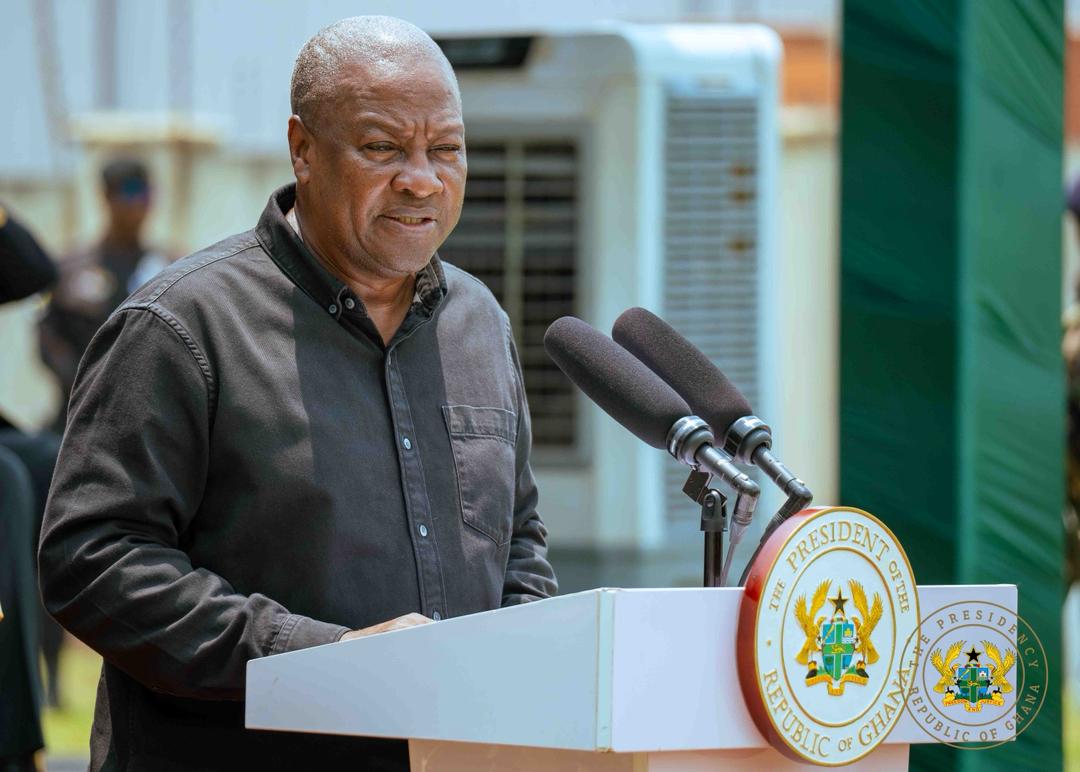
President John Dramani Mahama has hailed Ghana’s ongoing economic reforms and industrial investments after announcing a sharp reduction in cement prices across the country, bringing significant relief to the construction and housing sector.
According to the President, cement prices have fallen by about 20 percent following a combination of macroeconomic stabilisation policies, fiscal discipline, and sustained engagement with industry stakeholders.
Speaking during the commissioning of a new $110 million calcined clay cement manufacturing plant in Tema, President Mahama described the development as evidence that sound economic management and private sector collaboration are yielding positive results.
“Through a mix of macroeconomic stabilisation, fiscal discipline and constructive engagement with industry stakeholders, we have started to see positive results in the cement space,” President Mahama said.
He added that the price reduction is already benefiting builders, contractors, and households across the country who rely heavily on cement for construction activities.
Relief for Construction and Housing Sector
President Mahama explained that cement prices had surged in 2024, reaching approximately GH¢120 per bag for 42.5 grade cement and GH¢113 per bag for 32.5 grade cement.
However, he said government policy reforms helped reverse the upward price trend.
“By July 2025, cement prices had fallen by about 20 percent, providing relief to builders, contractors and the housing construction industry,” he stated.
The President further noted that construction inflation has also shown signs of stabilisation, declining to 3.9 percent year-on-year in January 2026, reflecting broader economic recovery.
“These developments demonstrate the impact of prudent economic management and a strengthening domestic currency,” he said.
Industrial Investment Driving Local Production
President Mahama linked the price reduction partly to new investments in Ghana’s cement manufacturing industry, including the newly commissioned calcined clay cement plant in Tema.
He said the facility will help increase domestic cement supply while reducing Ghana’s dependence on imported clinker, which has historically increased production costs.
“This investment demonstrates that when the policy environment is transparent, stable and supportive of enterprise, the private sector will respond by mobilising capital and undertaking projects of global significance,” he said.
The President explained that the new plant will reduce clinker imports by more than 10 percent, helping retain hundreds of millions of cedis within the domestic economy.
“This means lower production costs, reduced import dependency and more value retained within the Ghanaian economy,” he added.
Sustainable Manufacturing and Climate Action
The new plant utilises limestone calcined clay cement technology, which significantly reduces carbon emissions compared to traditional cement production methods.
President Mahama emphasised the importance of adopting environmentally friendly industrial practices to support global climate goals.
“Traditional clay-based cement production accounts for about 8 percent of global carbon dioxide emissions. By introducing this technology, we are advancing both industrial growth and environmental responsibility,” he said.
He added that Ghana remains committed to balancing industrial development with climate action in line with international environmental agreements.
Part of Broader Industrialisation Agenda
President Mahama said the project forms part of government’s broader industrialisation and infrastructure development agenda under the Big Push programme, which is investing over GH¢60 billion in national development projects.
He expressed optimism that continued dialogue between government and industry stakeholders will help sustain price stability in the long term.
“Dialogue between government and industry remains essential for ensuring stability and sustainable growth in this all-important sector,” he said.
Economic Outlook
Analysts have welcomed the development, noting that stable construction material prices could support housing development, infrastructure expansion, and job creation across the country.

President John Dramani Mahama has commissioned a $110 million *World’s Largest Calcined Clay Plant* at the Free Zones Enclave, in Tema describing the project as a major milestone in Ghana’s industrial and sustainable manufacturing drive.
The facility, which is described as the world’s largest calcined clay cement plant, is expected to produce 1.5 million tonnes of environmentally friendly cement annually, boosting local manufacturing capacity and strengthening Ghana’s industrial competitiveness.
Speaking at the commissioning ceremony, President Mahama said the investment demonstrates Ghana’s readiness to attract large-scale industrial capital when the policy environment is stable and business-friendly.
“This investment sends a strong signal to the international business community that Ghana is open to serious industrial investment. When the policy environment is transparent, stable and supportive of enterprise, the private sector will respond with confidence,” he said.
Sustainable Cement Production
The new plant introduces limestone calcined clay cement technology, which significantly reduces carbon emissions compared to traditional cement production methods.
President Mahama noted that traditional cement manufacturing is responsible for about 8 percent of global carbon dioxide emissions, making the sector one of the most environmentally sensitive industrial industries.
“By introducing limestone calcined clay cement technology, this facility significantly reduces carbon emissions while maintaining the strength and quality required for modern construction,” he stated.
The project also prioritises local content by using Ghanaian clay as a primary raw material, helping reduce the country’s dependence on imported clinker.
Government estimates suggest that this could reduce Ghana’s clinker import reliance by more than 10 percent, helping retain hundreds of millions of cedis within the domestic economy.
Price Stability in Cement Market
President Mahama also highlighted improvements in the cement market following macroeconomic stabilisation policies and stakeholder engagement with industry players.
He recalled that cement prices had risen sharply in 2024, reaching about GH¢120 per bag for 42.5 grade cement and GH¢113 per bag for 32.5 grade cement.
However, by July 2025, prices had fallen by about 20 percent, bringing relief to construction companies, builders and housing developers.
He also disclosed that construction inflation declined to 3.9 percent year-on-year in January 2026, attributing the development to prudent economic management and currency stability.
Job Creation and Industrial Growth
The project has created 109 direct jobs, including engineers, technicians and plant operators, while generating over 1,000 indirect jobs across supply chains, transportation and support services.
President Mahama encouraged workers at the facility to take pride in their role in national development.
“You are not just employees of a factory; you are architects of Ghana’s industrial future,” he told workers.
AfCFTA Export Potential
President Mahama said the cement produced at the plant meets African Continental Free Trade Area (AfCFTA) rules of origin standards, allowing Ghana to expand exports across African markets.
“Ghana is not only producing for domestic consumption. We are building industries capable of serving the entire African market,” he said.
Support for Infrastructure Expansion
The President linked the project to government’s Big Push infrastructure programme, under which more than GH¢60 billion is being invested in roads, drainage systems, and public infrastructure.
He noted that many construction projects across Ghana are now being built using locally produced cement.
Tema Industrial Zone Rehabilitation
Government also announced plans to rehabilitate the Tema Industrial Zone through public-private partnerships.
The rehabilitation will include road reconstruction, improved drainage systems, and modern waste treatment facilities to support industrial productivity.
Confidence in Ghana’s Industrial Future
President Mahama commended CBI Ghana and its investors for choosing Ghana for the landmark investment.
“This facility marks the beginning of a new chapter in Ghana’s industrial history — one where Ghana leads, Africa follows and the world takes notice,” he said.
He added that the project demonstrates that environmental sustainability and economic growth can coexist in modern industrial development.



The United States Embassy in Accra has announced the release of more than 2,000 additional visa interview appointments over the next two weeks for applicants seeking B1 and B2 visas.
According to the Embassy, the newly opened slots are intended to support individuals planning temporary travel to the United States for business, tourism, family visits, and participation in major international events. Among the anticipated events is the 2026 FIFA World Cup, scheduled to take place across North America.
In an official statement, the Embassy encouraged prospective applicants to secure interview dates as soon as possible due to sustained demand for B1 and B2 visas. These visa categories cover short-term travel for business purposes under B1 and tourism or family visits under B2.
Applicants who already have appointments scheduled later in the year are also advised to log into the visa scheduling system to check for earlier availability and, where suitable, reschedule their interviews.
The Embassy indicated that the additional appointment slots are expected to help reduce existing backlogs and provide greater flexibility for travelers with time-sensitive plans.
Further details on application procedures, requirements, and appointment scheduling are available on the Embassy’s official visa information page at: https://gh.usembassy.gov/visas/

Mahama Hails Economic Reforms as Cement Prices Fall Sharply in Ghana
Mahama Commissions $110m Calcined Clay Cement Plant in Tema

“I’m Not Dead” — Paa George Breaks Silence on Recurring Death Hoax



-

 Business1 week ago
ThirdWell launches Inclusive Business Centre to support Accredited Inclusive Businesses in Ghana
-

 Entertainment1 week ago
[EDITORIAL] Praised in Victory, Crucified in Defeat: The Ghanaian Fanbase Paradox
-

 Sports6 days ago
2026 FIFA World Cup: President Mahama tasks supporters to return immediately after the tournament
-

 Entertainment3 days ago
THE INSIDE STORY: Why President Mahama Revoked Gideon Nii Aryeequaye’s Appointment as Executive Secretary of the Creative Arts Agency
-

 Entertainment6 days ago
SONA: GH¢20m for Film Sector, GH¢20m for Creative Industries — Mahama Announces Major Investment
-

 Sports1 week ago
BREAKING: Salary Crisis hits Tension at Eleven Wonders Camp for the second time
-

 General News1 week ago
Police Arrest Two in Agona Swedru With 209 Slabs of Suspected Narcotics, Reject GH₵100,000 Bribe
-
 General News2 weeks ago
Mahama: We’ll increase efforts to clean polluted water bodies and reclaim mined lands