
Entertainment
Michael Blackson Blasts UGMC After Mother’s Death, Alleges Misdiagnosis and Negligence

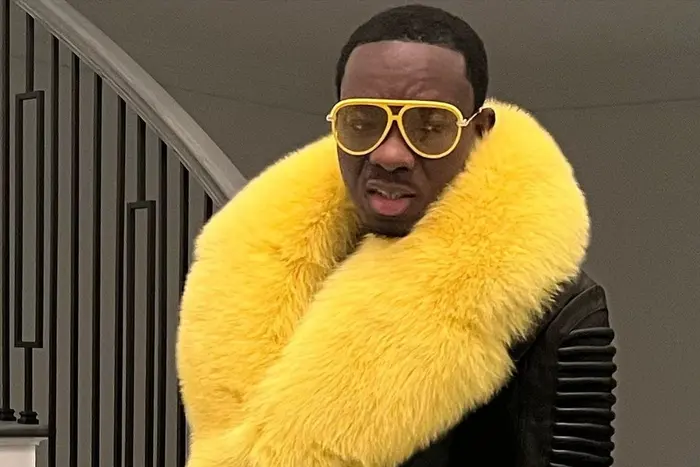
American-Ghanaian comedian Michael Blackson has publicly criticised the University of Ghana Medical Centre (UGMC) following the death of his mother, accusing the facility of misdiagnosis, poor patient care and placing financial interests above patients’ wellbeing.
In a post shared on X (formerly Twitter), the comedian described UGMC as “the worst hospital in Ghana,” alleging that doctors and nurses repeatedly failed to correctly diagnose his mother’s condition while recommending costly treatments.
“To the University of Ghana Medical Centre where my mom suffered the last month of her life, I’ll like to tell you in my opinion that you are the worst hospital in Ghana. Your staff, meaning nurses and doctors, have no clue what they are doing and the only thing your hospital cares about is collecting money,” he wrote.
Michael Blackson claimed the hospital misdiagnosed his mother several times and continued to recommend expensive medical procedures, which he believes significantly increased the family’s medical expenses.
“This University of Ghana Medical Centre misdiagnosed my mom so many times but also recommended the most expensive treatments to make sure they sucked enough money out of me,” he alleged.
He also criticised the attitude of some medical personnel, saying that despite the hospital’s modern appearance, he found the quality of care and compassion lacking.
“The University of Ghana Medical Centre is kinda new and looks beautiful from the outside, but inside are not the best medical personnel. In my opinion, the staff have no sympathy and don’t give a damn about the patients,” he stated.
The comedian further alleged that his sister was involved in a physical altercation with a male nurse at the hospital. According to him, the nurse later reported the incident to the police while the family was at the facility identifying his mother’s body.
Michael Blackson said that after informing others where his mother had died, several people allegedly shared similar experiences of losing loved ones at the same hospital.
“When I told a few people where she died, they all told me they lost their loved ones there. University of Ghana Medical Centre and all our African hospitals need to find a place in their hearts to put people’s lives ahead of money,” he wrote.
He also claimed that hospital officials contacted him promptly whenever payments were due but that doctors never called to provide updates on his mother’s medical condition.
“University of Ghana Medical Centre called me every time payment was due, but the doctors never once called me to tell me how my mom was doing,” he said.
According to Michael Blackson, his family spent approximately GH¢250,000 on his mother’s treatment over the course of one month before they were informed that she had contracted an infection and died.
“In one month they collected about 250k cedis and then told me she caught an infection and died. When she died they called me to tell me I had a balance I had to settle before they could tell me the cause of death,” he alleged.
He further claimed that after two weeks, the family considered transferring his mother to another medical facility. However, he said hospital staff advised against the move, explaining that she was experiencing breathing difficulties and required life-support tubes, making her condition too critical for transfer.
“I realised after two weeks at that hospital we wanted to take my mom out and as soon as we told them that and they knew they were about to miss out on some money, they told us she couldn’t breathe and she needed tubes installed in her so she can’t be moved,” he wrote.
Michael Blackson said he would have considered taking legal action over what he described as repeated missed diagnoses but expressed little confidence in Ghana’s judicial process.
“I could go on and on about the University of Ghana Medical Centre and would love to sue them for the few missed diagnoses, but it’s in Ghana so I’ll be wasting my time because by the time I see a judge I’m sure I’ll be in my early 90s.”
He also advised Ghanaians living abroad who intend to retire in Ghana to undergo their routine medical examinations in Europe or the United States.
“Our country is beautiful and all parents love to move back home after they retire abroad, but my best suggestion is for them to fly out to Europe or America at least once a year for their yearly medical check-up.”
Michael Blackson concluded by accusing the University of Ghana Medical Centre of prioritising revenue generation over quality healthcare and patient welfare.
At the time of publication, the University of Ghana Medical Centre had not publicly responded to the allegations.
Entertainment
“I Still Cry in Private”: Fameye Reflects on Lasting Pain of Growing Up Without Parents
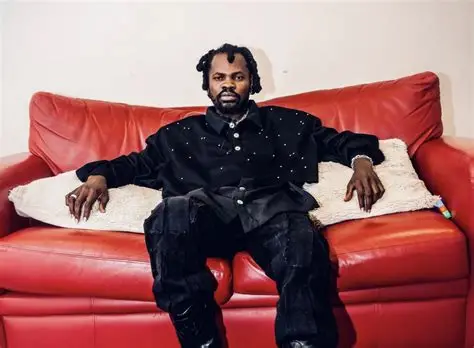
Ghanaian musician Fameye has opened up about the emotional burden of growing up without both parents, revealing that although the pain is no longer as evident in his music, he still cries in private as he continues to cope with the loss.
Speaking in an interview with Kobby Kyei on August 6, 2026, the award-winning singer shared how losing his parents at a young age has shaped his life, influenced his music, and affected many of the decisions he has made over the years.
According to Fameye, his early songs reflected the emotional struggles he experienced while growing up because they were inspired by the hardships he faced.
“At the beginning of my career, people could hear the pain in my music because I cried a lot. People usually said I was always sad whenever I was recording. These days, I don’t cry in my songs anymore, but I still cry behind closed doors,” he said.
The musician explained that growing up without parents also meant missing out on the guidance and protection that many people take for granted. He believes there are certain decisions he might have made differently if his parents had been alive to advise him.
Fameye recalled one of the most difficult moments in his career, saying he felt completely helpless during a dispute within the music industry because there was no parent to stand by him or defend him.
“Whenever something goes wrong, I have to deal with it on my own. One of my darkest moments came when I had a problem with someone in the industry. They threatened to take me somewhere and curse me. At that moment, I kept asking myself, ‘Where are my parents? Who is there to defend me?'”
He also admitted that he sometimes feels envious when he sees parents publicly supporting and defending their children, particularly on social media, because it reminds him of what he has missed throughout his life.
“Sometimes I see parents standing up for their children on social media, and I wish my parents could also defend me publicly. Unfortunately, that has never been my reality.”
Fameye further revealed that the birth of his first child brought back painful memories of losing his mother. He said becoming a father made him realize even more deeply the absence of the grandmother who would naturally have helped care for his newborn.
“When my first child arrived, I was heartbroken. I kept asking, ‘Where is my mother who would have bathed the baby and cared for her grandchild?’ In the end, my partner and I had to do everything ourselves.”
Entertainment
Rastafari Is News: Ras Caleb Appiah-Levi Highlights Truth, African Unity and Cultural Identity
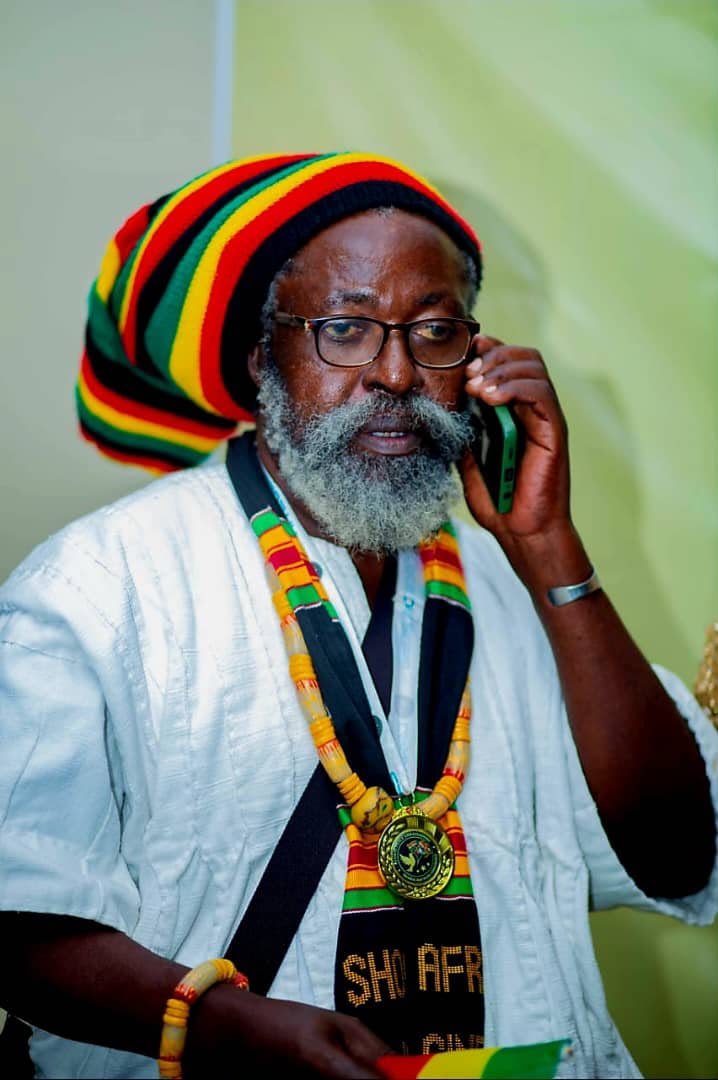
Musician and Pan-Africanist Ras Caleb Appiah-Levi has described Rastafari as “news”, arguing that the movement represents a message of truth, cultural identity, resistance and African unity in a rapidly changing world.
In a statement titled “Rastafari Is News,” Ras Caleb explained that while many people define news through politics, headlines and celebrity stories, the true meaning of news lies in what is new, relevant and necessary for society to hear.
According to him, Rastafari is news because it carries a message that inspires people to wake up, heal and build a better future.
“When they ask, ‘What is news?’ they point to headlines, politics, and celebrity gossip. But I say to you today: Rastafari is news,” he stated.
He noted that Rastafari continues to provide messages of self-worth, African identity, spirituality, love and unity at a time when many people are searching for purpose and direction.
Rastafari as Truth in a Time of Confusion
Ras Caleb Appiah-Levi said Rastafari remains relevant because it challenges narratives that promote division, greed and self-hate.
He explained that the movement carries a message reminding Africans and people of African descent that they have value, history and a connection to their roots.
According to him, Rastafari teaches:
- That people are kings and queens.
- That Africa is the ancestral home.
- That Jah lives.
- That humanity must embrace love, righteousness and unity.
He described these principles as a “breaking news” message for generations that have been made to feel disconnected from their history.
Rastafari as Resistance Against Oppression
The musician and Pan-Africanist also highlighted the role of Rastafari as a voice for the oppressed.
He said that from Ethiopia to Jamaica, Ghana and communities across the African Diaspora, Rastafari has represented resistance against injustice and systems that seek to suppress identity and freedom.
“Rastafari is the news that says: Babylon system is a lie. It is the news that says we will not bow, we will not sell out, and we will stand for justice,” he said.
He added that the movement’s commitment to freedom and truth has made it a powerful global force.
Preserving Culture in an Era of Imitation
Ras Caleb further argued that Rastafari has made significant contributions to global culture through music, food, fashion, language and spirituality.
He pointed to the influence of Reggae, Dub music, Ital living and conscious lyrics as cultural expressions that have carried Rastafari messages around the world.
Beyond entertainment and style, he said Rastafari represents a way of life known as “livity,” which promotes harmony with nature, community and the Creator.
“In a world chasing trends, Rastafari is news because it is rooted. It is ancient and it is now,” he stated.
Rastafari and Pan-African Unity
The Pan-Africanist emphasised the movement’s historic connection to African liberation and unity.
He referenced concepts such as “Abibitum” (Africans for Africans) and “Abibifahodie” (African Independence) as ideas that continue to influence conversations about African identity and empowerment.
According to Ras Caleb, Rastafari was among the early global movements that encouraged Africans at home and abroad to look towards Africa as a centre of identity and development.
He also highlighted the influence of figures such as Haile Selassie I and Marcus Mosiah Garvey, as well as the call for African repatriation.
He argued that the message remains relevant because Africa’s full unity and collaboration with the Diaspora are still ongoing goals.
Rastafari as a Vision for the Future
Ras Caleb Appiah-Levi said the younger generation is increasingly searching for meaning beyond popularity and social media trends.
He believes Rastafari provides a pathway centred on responsibility, sustainability and community.
He highlighted values such as:
- Growing and respecting food systems.
- Honouring elders.
- Protecting the environment.
- Speaking truth.
- Showing love and respect for others.
He said his organisation, PanAfrica-Ghana (PAG) – Living As One, is committed to promoting these ideals and creating a pathway towards a better future for African people.
“At PanAfrica-Ghana (PAG) – Living As One, we are living that news. We are driving the vehicle so that our people can ride to a better future,” he said.
“Rastafari Is the News the World Needs”
Concluding his message, Ras Caleb Appiah-Levi urged people to recognise Rastafari not only as a cultural or spiritual movement but as a continuing message of transformation.
He said:
“Rastafari is the news of self-love. It is the news of African unity. It is the news of spiritual awakening. It is the news the world did not expect, but the world desperately needs.”
He called on followers and supporters to become messengers of the movement’s values and to “live the headline.”
The statement ended with the message:
PAG – Living As One
Abibitum! Abibifahodie!
Jah Rastafari!
Entertainment
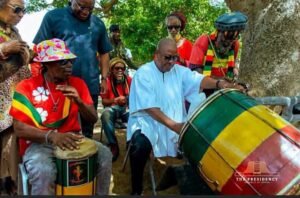
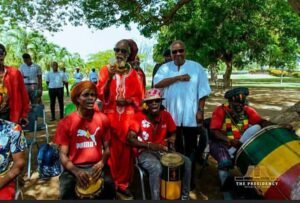
President Mahama’s Visit to Bob Marley Museum Exposes Ghana’s Failure to Honour Creative Legends –FOCAP President
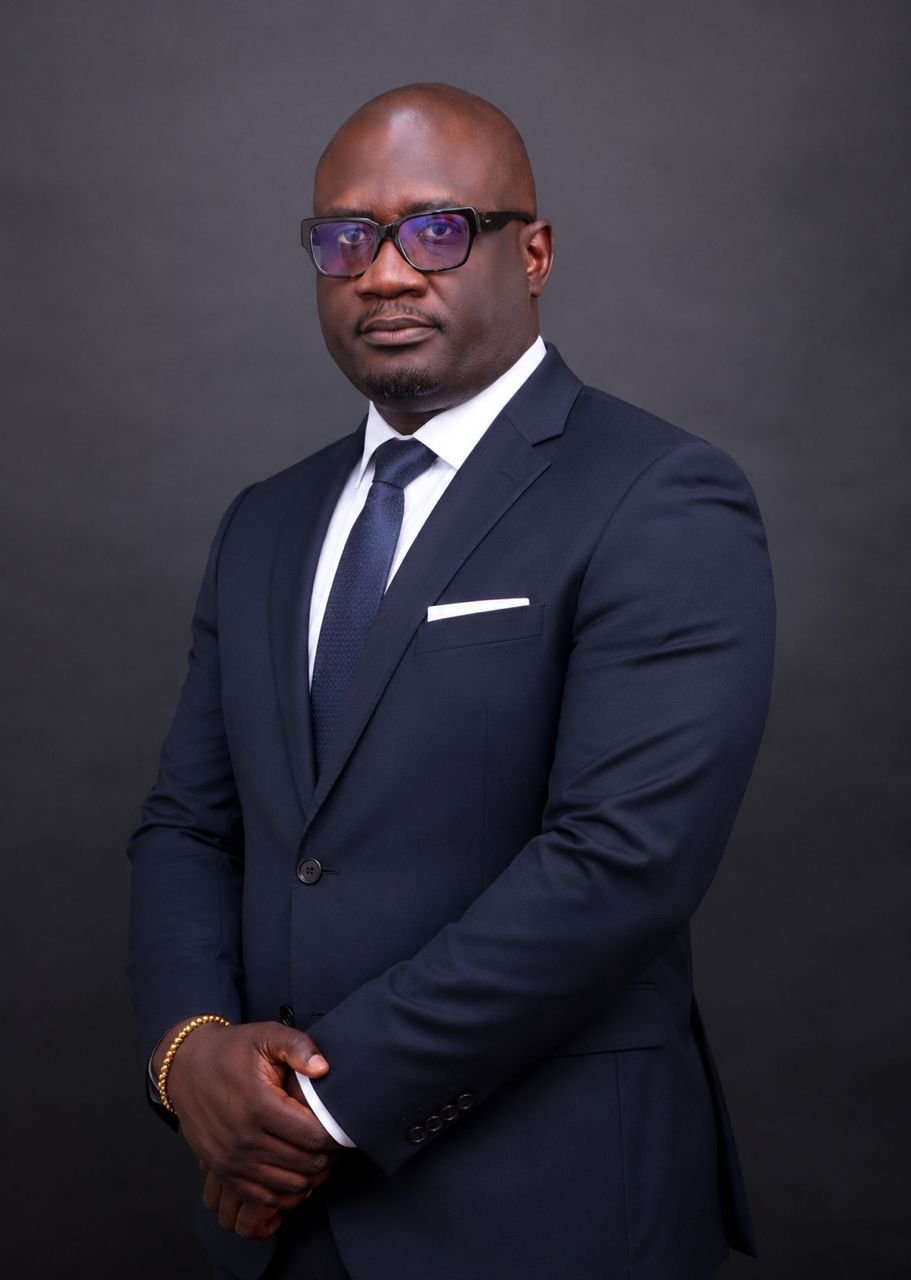
The President of the Foundation of Concerned Arts Professionals (FOCAP), Kojo Preko Dankwa, has said President John Dramani Mahama’s recent visit to the Bob Marley Museum in Jamaica has exposed Ghana’s long-standing failure to honour and preserve the legacy of its creative legends.
Speaking in an interview with kpdonline.com, Kojo Preko said the President’s tour of the museum dedicated to reggae legend Bob Nesta Marley should serve as a national wake-up call, urging successive governments, cultural institutions and industry stakeholders to rethink how Ghana celebrates the personalities who have shaped the country’s identity through music, film, literature, sculpture, sports and other creative disciplines.
According to him, Jamaica’s decision to include the Bob Marley Museum as part of President Mahama’s itinerary demonstrates the enormous value the Caribbean nation places on its cultural icons.
“It sends a signal to Ghana that clearly we have failed in honouring our heroes. We have failed in honouring people or creatives who have sold the Ghana brand to the international community, and we have equally failed to appreciate the work they have done in elevating Ghana’s image globally,” he said.
Kojo Preko argued that although President Mahama’s state visit could have included factories, educational institutions, industrial facilities or other economic projects, the fact that one of the highlights was a visit to Bob Marley’s museum speaks volumes about Jamaica’s priorities.
“If a whole President of another country is taken to the museum of Bob Nesta Marley, it tells you the value Jamaicans place on one of their heroes who sold Jamaica to the world through music,” he stated.
He said Jamaica has deliberately transformed Bob Marley’s legacy into a national heritage asset that attracts tourists from around the world while promoting Jamaican culture internationally.
Successive governments have failed Ghana’s creative legends
Kojo Preko insisted that the issue goes beyond the current administration, stressing that every government since independence shares responsibility for neglecting Ghana’s creative pioneers.
“For me, it is shameful—not just for this government, but for all previous governments that have failed to recognise the importance of honouring our heroes in the creative sector,” he said.
He lamented that Ghana continues to lose legendary musicians, actors, writers, sculptors and cultural icons without establishing permanent monuments, museums or educational programmes in their memory.
According to him, despite the enormous contribution of legendary highlife musician Nana Kwame Ampadu, there is no national lecture, annual remembrance programme or major institution bearing his name.
“We were here when one of our greatest heroes, Nana Ampadu, passed away. Ask yourself today, how do we remember Nana Ampadu? Does MUSIGA organise an annual lecture? Is there even a special day dedicated to celebrating his contribution? The answer is no.”
He also cited several other celebrated musicians who have passed away, including Paapa Yankson, A.B. Crentsil and C.K. Mann, saying Ghana has done little or nothing to immortalise their legacies.
“We have watched Paapa Yankson leave us. We have watched Papa Abu leave us. We have watched A.B. Crentsil leave us. We have watched C.K. Mann leave us. Many musicians, actors, sculptors and writers have left us, but we still do not honour them.”
He questioned why there are no iconic national monuments, museums, concert halls or public facilities named after such personalities.
“We don’t even have any iconic place named after Nana Ampadu. We don’t even have an edifice in the Western Region dedicated to Paapa Yankson, C.K. Mann and the others.”
Ghana waits until legends die
Kojo Preko expressed concern that Ghana often fails to appreciate its creative legends while they are alive.
He questioned whether the country intends to wait until current music stars such as Stonebwoy and Shatta Wale are gone before attempting to celebrate them.
“Are we waiting for heroes like Stonebwoy and Shatta Wale to leave the scene before we begin to honour them? Why don’t we celebrate people while they are alive?”
He added that the same neglect exists in sports.
“In football, we don’t celebrate our heroes enough. Other countries honour people like Cristiano Ronaldo and Lionel Messi because they understand their value to national identity and tourism.”
According to him, countries across the world increasingly recognise that culture, sports and entertainment generate enormous economic returns.
“The world has moved to a point where these sectors generate revenue. We don’t seem to understand that.”
Beyond Kwame Nkrumah Memorial Park
While acknowledging the recent renovation of the Kwame Nkrumah Memorial Park, Kojo Preko argued that Ghana has failed to replicate similar projects for other national icons.
“Beyond Kwame Nkrumah’s museum, what else have we done? The National Theatre has challenges. Our museums are not even up to international standards.”
He also questioned what local authorities in the Eastern Region have done to celebrate Nana Ampadu’s birthplace.
“We know where Nana Ampadu comes from. What has his own region done to celebrate him?”
Celebrate heroes across every sector
Kojo Preko called for a complete rethink of Ghana’s approach to recognising national achievers.
According to him, musicians, actors, writers, sports personalities, tourism pioneers and cultural practitioners should all be honoured through national monuments, museums, lecture series and annual celebrations.
He recalled President Mahama’s own remarks during the launch of the Black Star Experience, where the President stressed the need to celebrate Ghanaian legends while they are still alive.
Kojo Preko questioned what concrete actions have followed those remarks.
“He mentioned that we should honour people like Agya Koo Nimo while they are alive. What have we done? Do we have annual lectures? Do we have museums? Do we have anything substantial?”
He described the situation as deeply disappointing.
FOCAP’s Hall of Fame proposal
Kojo Preko revealed that FOCAP had years ago proposed the establishment of a National Hall of Fame to permanently honour outstanding Ghanaians in music, sports, literature, sculpture and other creative fields.
According to him, such a facility would preserve Ghana’s history while becoming a major tourist attraction capable of generating significant revenue.
“People from across the world would pay to visit these places and celebrate our heroes.”
He also mentioned internationally acclaimed artist Professor Ablade Glover, asking why Ghana has not created a permanent institution celebrating his contribution despite his global recognition.
National Commission on Culture criticised
The FOCAP President criticised the National Commission on Culture, MUSIGA and other agencies within the creative sector, accusing them of failing to champion the preservation of Ghana’s cultural heritage.
He questioned what lasting recognition had been given to personalities who played foundational roles in Ghana’s cultural institutions, including Mohammed Abdullah, whom he described as one of the pioneers of the National Commission on Culture.
“There are many heroes we have simply forgotten.”
Government honours statesmen but not creative icons
Kojo Preko noted that Ghana has demonstrated its ability to honour distinguished national leaders through official commemorations.
He pointed to Parliament’s decision to institute a state lecture in honour of former United Nations Secretary-General Kofi Annan, as well as recent commemorative activities organised in memory of former President Professor John Evans Atta Mills.
“If we can honour Kofi Annan and President Mills, why can’t the creative industry honour its own legends?”
Creativity is a powerful economic tool
Kojo Preko argued that Jamaica has successfully built a global tourism industry around Bob Marley, while countries such as Nigeria have used Nollywood and Afrobeats to transform international perceptions of their country.
According to him, the United States has also projected its influence worldwide through films, music and popular culture.
“It is creativity that helped make America what it is today. They intentionally projected their image through the creative arts.”
He added that Nigeria has used its film industry and music to reshape global perceptions despite past stereotypes.
“Nigeria deliberately used movies and music to reposition its image. Ghana has failed to do the same.”
‘We are erasing our own history’
Kojo Preko warned that Ghana risks losing its cultural identity if it continues neglecting the people who built the country’s artistic heritage.
He mentioned celebrated flautist Ephraim Amu, asking what permanent national recognition has been established in his honour.
“We are erasing history. We are not preserving history. We are failing to celebrate the people who gave this country an identity.”
He maintained that President Mahama’s visit to the Bob Marley Museum should encourage Ghana to place greater value on culture and creativity as drivers of tourism, national identity and economic development.
“For President Mahama to visit Bob Nesta Marley’s museum tells me that Jamaica understands the power of culture. Ghana has failed to honour its heroes, and that is not fair to them.”
Entertainment
Gabby Otchere-Darko Commends Shatta Wale’s Unity Message, Calls for End to Stonebwoy Rivalry
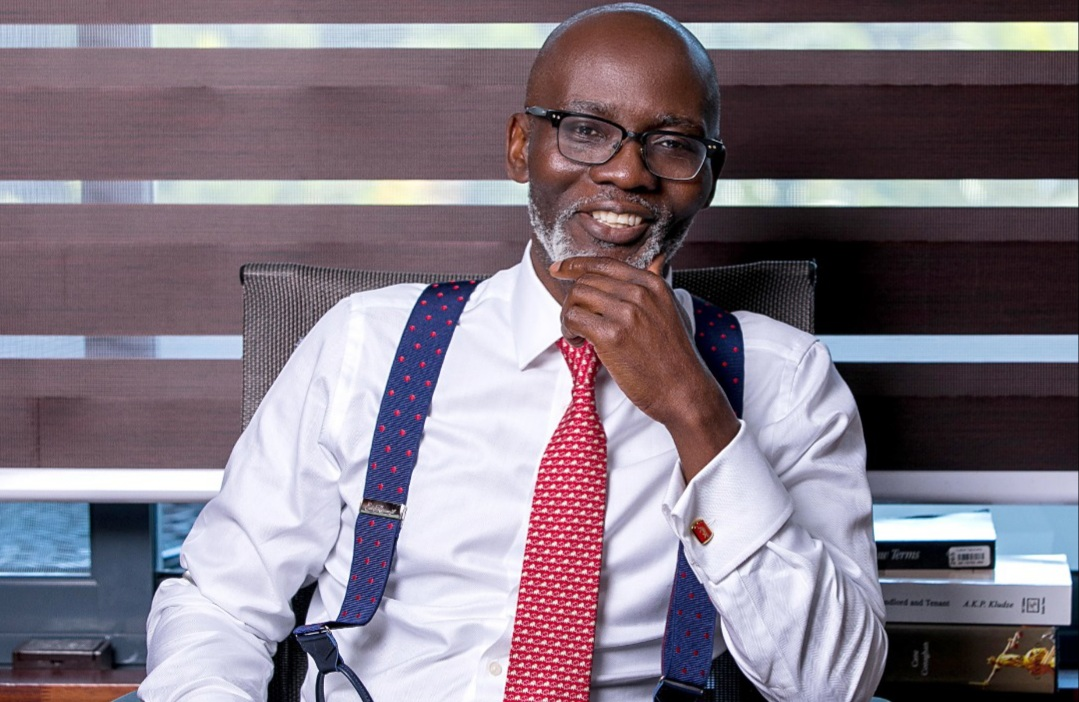
Gabby Otchere-Darko has applauded Ghanaian dancehall star Shatta Wale for his recent message promoting peace and unity with fellow musician Stonebwoy, describing the gesture as an act of maturity, class, and patriotism.
His comments followed remarks by Shatta Wale, who revealed that he had planned to publicly urge fans to stop fighting over him and Stonebwoy and instead support Stonebwoy’s event.
“Yesterday, it was my plan to tell people to stop fighting about Stonebwoy and me and go and support his show,” Shatta Wale said.
Reacting to the statement on his X (formerly Twitter) page, Gabby Otchere-Darko praised the award-winning musician for demonstrating leadership at a time when many fans continue to fuel rivalry between the two camps.
“This is class. This is maturity. This is patriotism,” he wrote.
Gabby also reminded fans that the spirit of support between the two artistes has been evident before. He recalled that when Shatta Fest UK was cancelled over crowd safety concerns, Stonebwoy publicly expressed solidarity with Shatta Wale rather than celebrating the setback.
According to Gabby, Ghanaian musicians should focus on competing on the global stage instead of against one another.
He argued that the real challenge lies beyond Ghana’s borders and stressed that if one Ghanaian artiste achieves international success on the level of Nigerian stars such as Davido or Burna Boy, the entire Ghanaian music industry would benefit.
“The real competition is out there, not between ourselves,” he stated.
Gabby further noted that the breakthrough of one globally successful Ghanaian artiste would create opportunities for many others by drawing greater international attention to Ghana’s music industry.
Calling for an end to the long-running rivalry between Shatta Wale and Stonebwoy, he described both musicians as outstanding ambassadors for Ghanaian music whose collaboration and mutual support would serve the country’s entertainment industry far better than division.
“When they win, Ghana wins. Let them move forward together,” he concluded.
Entertainment
Michelle Appeah: Miss Eco Ghana 2026 Driving Sustainability and Climate Action on the Global Stage
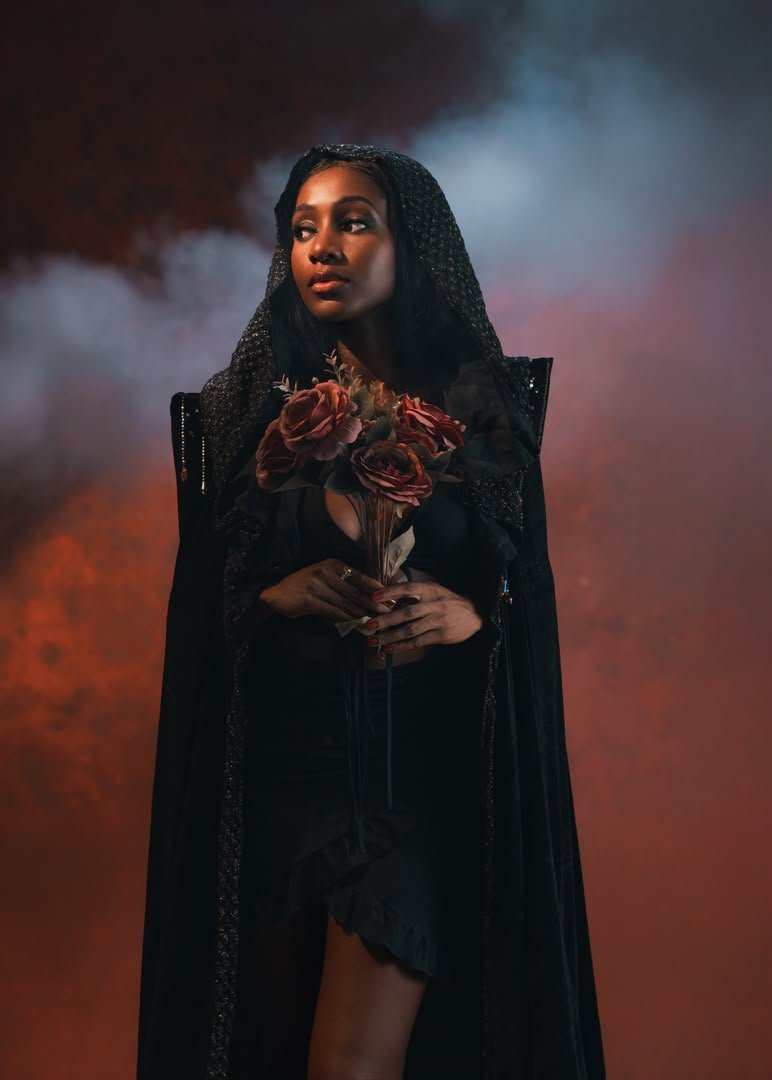
Michelle Appeah is establishing herself as one of Ghana’s prominent young voices in sustainability, combining environmental advocacy, creativity, and leadership to inspire positive change both locally and internationally.
Born in London and currently splitting her time between Japan, the United Kingdom, and Ghana, Michelle has dedicated her career to promoting sustainable development and environmental conservation. In the sustainability sector, she connects investors with nature restoration projects aimed at enhancing climate resilience while supporting sustainable economic growth and protecting natural ecosystems.

Her work goes beyond environmental initiatives. Michelle is an African Champion for the ONE Campaign, where she advocates for policies addressing poverty, improving healthcare, and promoting sustainable development across the continent. She also serves as a member of the Advisory Council for Solar Sister, supporting initiatives that expand clean energy access, empower women economically, and reduce poverty in underserved African communities.

In addition to her advocacy, Michelle has made a name for herself as a model and visual artist with an international presence. She has collaborated with renowned fashion brands and exhibited her artwork in Tokyo, Japan, showcasing her creativity on a global stage while blending art with meaningful social and environmental messages.
Her influence reached another milestone when she was crowned Miss Eco Ghana 2026, which granted her the opportunity to represent Ghana at the Miss Eco International 2026 pageant in Egypt. During the international competition, Michelle utilised her platform to raise awareness about environmental conservation, climate action, and sustainable development. She championed initiatives encouraging communities and young people to adopt environmentally responsible practices while emphasising the importance of protecting the planet for future generations.
Her outstanding performance also garnered international recognition when she was named Second Runner-Up for Best Talent, showcasing her artistic ability, creativity, and versatility beyond the pageant stage.
As Miss Eco Ghana 2026, Michelle continues to leverage her platform to bridge sustainability, advocacy, art, and fashion. Through her efforts, she aims to inspire individuals, businesses, and communities to embrace solutions that protect the environment while creating opportunities for inclusive and sustainable development.

With her unique blend of environmental leadership, creative expression, and international advocacy, Michelle Appeah is positioning herself as a powerful ambassador for Ghana and a passionate advocate for a greener, more resilient, and prosperous future.

“I Still Cry in Private”: Fameye Reflects on Lasting Pain of Growing Up Without Parents

Konongo Kaya Syndrome’: Joshua Sika Nartey Urges NPP to Rebuild Instead of Protesting

NPP Calls for Accountability One Year After Helicopter Tragedy, Urges Government to Account for Anti-Galamsey Fight



-
 General News4 days ago
Mahama orders GH¢2 per litre diesel price reduction
-
 Entertainment2 weeks ago
Ghana Secures $3.5 Million UNESCO Heritage Support During Tourism Minister’s South Korea Visit
-
 General News1 week ago
CLOSSAG Elections in Dambai: Tension Mounts Over Candidate Disqualifications
-

 Entertainment4 days ago
Kojo Preko Dankwa Criticises Tourism Minister Over Delayed Theatre and Amphitheatre Projects
-
 General News2 weeks ago
EOCO Declares Emmanuel Ababio Wanted Over Alleged Fraud
-

 Culinary3 days ago
A Taste of Bono: Where Every Meal Tells the Story of Ghana’s Bono Heritage
-

 Entertainment1 week ago
FOCAP Welcomes New Cultural Attachés, Hails Boost for Ghana’s Creative Diplomacy
-
 General News6 days ago
Ebo Taylor Funeral: Legendary Ghanaian Highlife Icon to Be Buried in Saltpond on August 2