
Politics
One Year On, Mahama Credits Ghana’s Stability to the Resilience of Its People and Strong Institutions


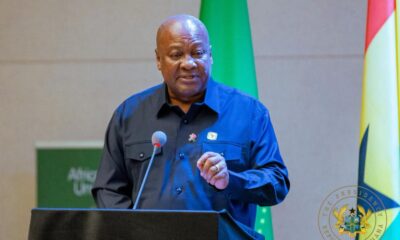
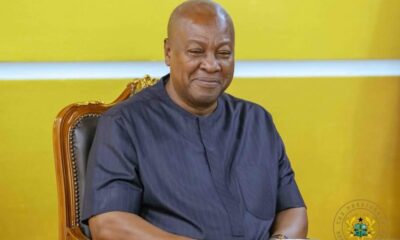
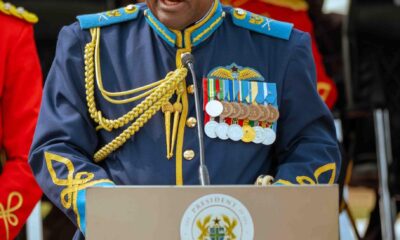
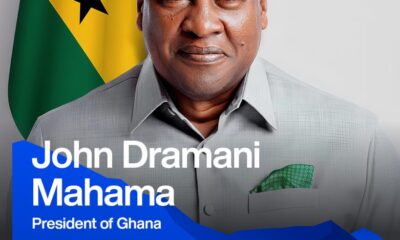
President John Dramani Mahama has called for renewed unity, humility and commitment to national service as Ghana marks one year since his administration assumed office. Speaking at a national, non-denominational Thanksgiving service, the President said the day was not a celebration of power, but a solemn moment of gratitude and reflection.
“As one people, united in gratitude, humility and reflection, today we gather to give thanks,” President Mahama declared. “Today is not a celebration of power. It is a moment of thanksgiving for the opportunity to serve the people of Ghana. Today is not a declaration of triumph. It is a reaffirmation of purpose.”
Reflecting on the past year, the President acknowledged the economic and social challenges facing the nation.
“Leadership is a privilege, but it’s also a load we are asked to carry, and over the past year, we have come face to face with the weight of that load economic hardship, social anxiety, global uncertainties, and of course, the legitimate expectations of our people,” he said.
Despite these difficulties, he expressed gratitude for the resilience of the Ghanaian people and the stability of the country’s democratic institutions.
“Our democracy has remained strong, our institutions have held their own, and our people have shown resilience, patience and faith in the future of our beloved nation. And so for all this, we are grateful, first and foremost, to the Almighty God.”
Appreciation to Citizens and Public Servants
President Mahama paid tribute to workers across all sectors, including farmers, teachers, health professionals, security services, traders and artisans. He also thanked traditional leaders, religious figures, Parliament, the Judiciary and Ghana’s international partners.
“Above all, we’re grateful to the people of Ghana for your trust, your constructive criticism when necessary, your encouragement and your enduring belief that our nation, Ghana, can and must do better,” he added.
He reserved special praise for Vice President Professor Naana Jane Opoku-Agyemang, describing her as “a woman of dignity and quiet strength… I could not have wished for a better assistant to help me bear the heavy load Ghanaians have entrusted to me.”
Thanksgiving Beyond Religion
The President stressed that the Thanksgiving service was deliberately inclusive.
“This Thanksgiving service is intentionally non-denominational, because gratitude transcends religious doctrine. It speaks to the shared values that unite us as a people.”
He emphasized that no government succeeds on effort alone.
“Wisdom cannot be manufactured. Strength is not infinite. Guidance is not automatic.”
Commitment to Reform
President Mahama said his administration had taken “difficult decisions” and undertaken reforms aimed at stabilizing the economy and restoring confidence.
“The work we have begun is far from finished, but today reminds us that progress is not measured only by numbers. It is also measured by hope restored, trust rebuilt and direction regained.”
He reaffirmed a commitment to ethical and compassionate governance.
“We recommit ourselves to governance anchored in integrity, competence and compassion… and to the unity of our nation, knowing that Ghana’s strength has always come from our ability to rise above division.”
Looking Ahead
The President cautioned that the coming year will test the nation’s resilience but also present opportunities.
“The year ahead will demand even more from us. It will test our resolve, our patience and our discipline, but it will also offer us opportunities to deepen the reforms we have started.”










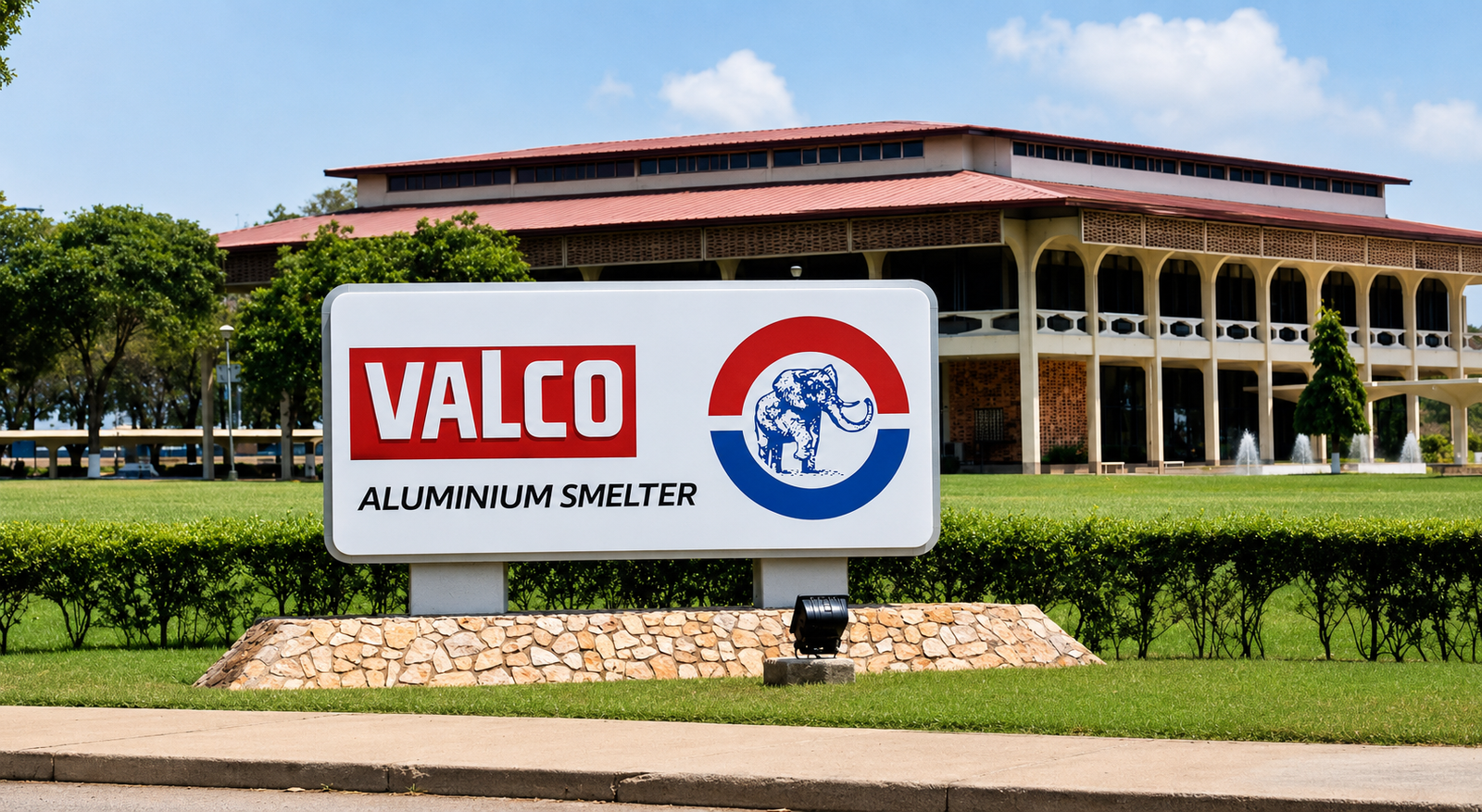
The Minority Caucus in Parliament has thrown its full support behind workers of the Volta Aluminium Company Limited (VALCO), describing their recent protest as a legitimate effort to protect one of Ghana’s most strategic national assets.
In a press statement issued on July 29, 2026, and signed by Hon. Kwaku Ampratwum-Sarpong, Ranking Member of Parliament’s Select Committee on Lands and Natural Resources, the Minority accused the government of pursuing a secretive process regarding what it describes as a “strategic equity capitalization” of VALCO.
According to the Minority, the concerns raised by VALCO workers should not be dismissed as political propaganda. Instead, they argued that the workers possess firsthand knowledge of the company’s operations and are best placed to identify potential threats to its future.
“These are the men and women who keep VALCO running every single day. They understand its operations and its future. Government must listen instead of hiding behind hurried press statements issued only after public outrage,” the statement said.
Questions Over Strategic Equity Capitalization
The Minority questioned the true meaning of the government’s proposed strategic equity capitalization, asking whether it could involve:
* Selling part of VALCO.
* Transferring ownership.
* Surrendering management control.
* Privatizing the company under another name.
The caucus argued that if the government believes the process serves Ghana’s national interest, it should openly present every detail to Parliament and the Ghanaian people instead of using corporate terminology that conceals public policy decisions.
Minority Cites VALCO’s Return to Profitability
The statement highlighted that the Chairman of the VALCO Board recently announced the company had recorded a profit of US$3.19 million during the first half of 2026, describing it as a remarkable turnaround after years of financial challenges.
According to the Minority, the government’s latest proposal appears contradictory.
“If VALCO is profitable and recovering, why is the government now pursuing a strategic equity capitalization?” the statement questioned.
The caucus further demanded explanations regarding the company’s financial position, balance sheet and what economic justification exists for restructuring ownership when the company has reportedly returned to profitability.
Warns Against State Capture
The Minority also expressed concern about what it described as a growing concentration of influence over Ghana’s aluminium industry.
It argued that when institutions responsible for policy formulation, regulation, approvals and management of strategic national assets are occupied by individuals with previous professional relationships linked to the same business interests, public confidence is undermined.
According to the statement, such circumstances create conditions that encourage state capture, favouritism and predetermined outcomes.
“VALCO Belongs to the People of Ghana”
The Minority stressed that VALCO is a strategic national asset central to Ghana’s Integrated Aluminium Industry and broader industrial transformation agenda.
The statement warned that after the loss of Black Volta and Damang, Ghanaians cannot afford to lose another strategic national asset through decisions made behind closed doors.
It insisted that VALCO’s ownership should not be altered through secrecy and that the company’s future should be determined transparently with the involvement of the Ghanaian people.
Minority’s Seven Demands
The Minority Caucus called on the government to immediately publish:
1. The complete framework governing the strategic equity capitalization process.
2. VALCO’s latest audited financial statements, including its balance sheet, income statement and cash flow position.
3. The independent valuation of VALCO.
4. The proposed equity structure.
5. The identities of all prospective strategic investors.
6. The criteria used in selecting any strategic investor.
7. Every Cabinet, Board and ministerial approval underpinning the process.
The caucus maintained that Ghanaians deserve facts rather than vague explanations regarding the future of a strategic national asset.
Minority Vows to Resist
The Minority warned that it would use every constitutional, legal and parliamentary mechanism available to resist any attempt to place VALCO under what it described as politically connected interests.
The caucus concluded that the concerns raised by VALCO workers reflect broader public interest and urged the government to provide full disclosure.
“The workers have spoken. The Ghanaian people are watching. Government must come clean,” the statement concluded.
Politics
Supreme Court: OSP Can Probe Corruption but Cannot Independently Prosecute Without Attorney-General’s Authority

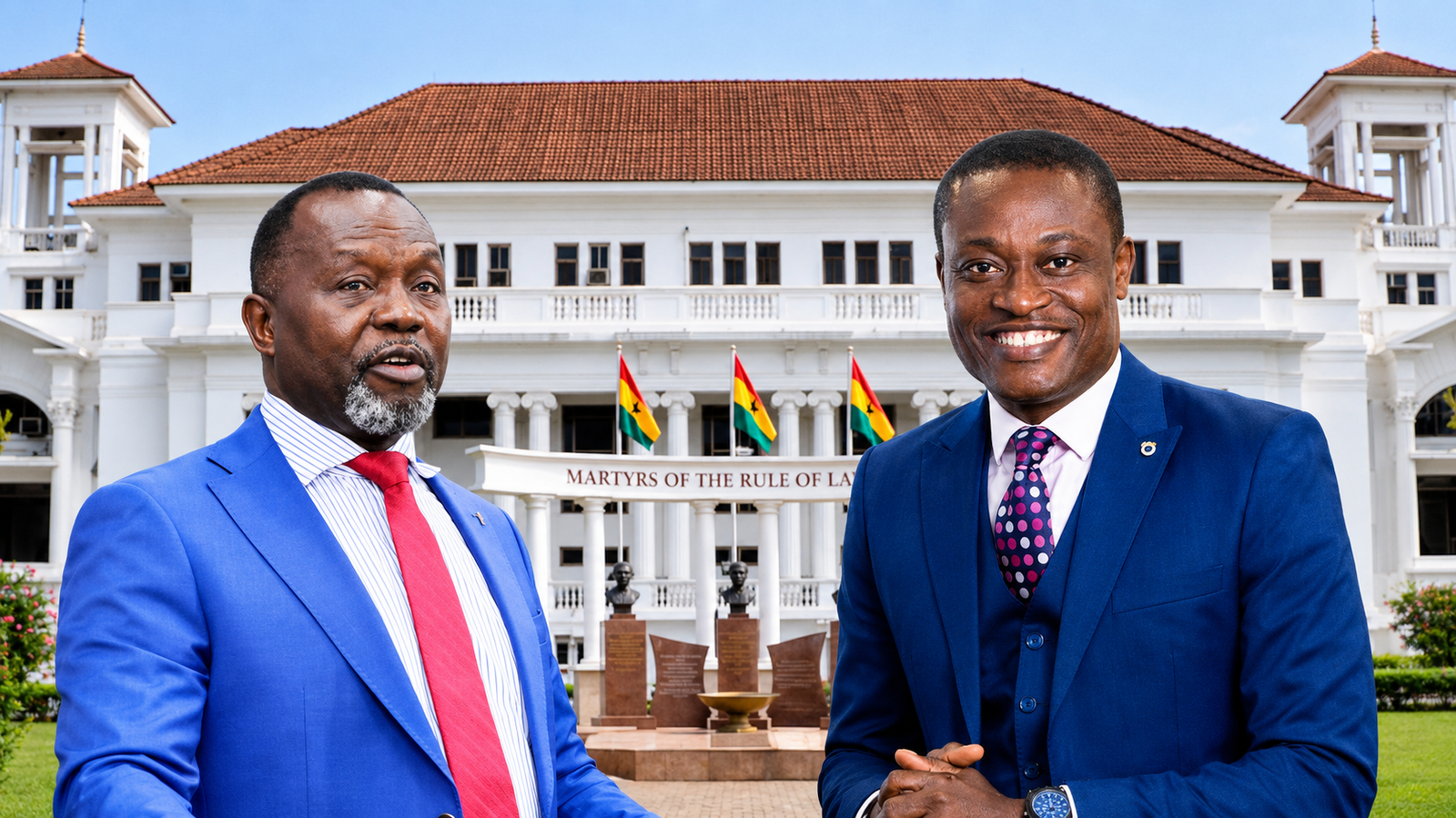
Ghana’s Supreme Court has ruled that the Office of the Special Prosecutor (OSP) does not have the constitutional authority to independently initiate criminal prosecutions, affirming that prosecutorial powers remain vested in the Attorney-General under Article 88 of the 1992 Constitution.
In its decision, the apex court held that the OSP’s prosecutorial functions do not violate the Constitution because they are exercised under authority delegated by the Attorney-General through the Office of the Special Prosecutor Regulations, 2018 (L.I. 2374).
The court explained that the Legislative Instrument provides the legal basis for the Attorney-General to delegate prosecutorial authority to the OSP, allowing the anti-corruption body to prosecute corruption and corruption-related offences.
However, the justices noted that while the OSP can investigate and prosecute cases under the delegated authority, the Attorney-General retains the constitutional power to discontinue any prosecution initiated by the OSP by entering a nolle prosequi.
The court further observed that although the existing Legislative Instrument should remain in force until Parliament amends the law, it does not confer an independent constitutional mandate on the OSP to commence prosecutions on its own.
Delivering the judgment, Presiding Judge Justice John Nyadu Nyante emphasized that the OSP is fully empowered to investigate corruption-related offences but lacks the constitutional authority to independently initiate criminal prosecutions without the Attorney-General’s delegated authority.
The ruling clarifies the constitutional relationship between the Attorney-General and the Office of the Special Prosecutor, reinforcing the Attorney-General’s exclusive prosecutorial powers while preserving the OSP’s role in fighting corruption through delegated authority.

General News
Ato Forson’s Vision Gives Ghanaians Fresh Hope — Joana Gyan Cudjoe Hails Finance Minister’s Economic Roadmap

The Member of Parliament for Amenfi Central, Hon. Joana Gyan Cudjoe, has lauded the Minister for Finance, Dr. Cassiel Ato Forson, describing his latest address as an inspiring and forward-looking statement that reinforces the government’s commitment to transforming Ghana’s economy.
According to the MP, the Finance Minister’s remarks demonstrated strong leadership, fiscal responsibility, and a clear roadmap for sustainable economic development, giving renewed confidence in the country’s economic future.
“It has been a great day. The inspiring statement delivered by the Hon. Finance Minister gives renewed hope and confidence in the government’s economic agenda. His vision and commitment to fiscal discipline, development, and inclusive growth deserve commendation,” Hon. Joana Gyan Cudjoe stated.
The legislator said the Minister’s address reflected a bold vision aimed at restoring economic stability, strengthening public finances, and creating opportunities that will improve the livelihoods of Ghanaians.
Hon. Joana Gyan Cudjoe further noted that the statement has renewed optimism among citizens and underscores the government’s determination to pursue policies that promote inclusive growth and long-term national development.
Reaffirming her unwavering support for the government’s economic agenda, the Amenfi Central MP expressed confidence that sound leadership, collaboration, and sustained reforms will place Ghana on a path of meaningful and sustainable economic progress.
She also called on all stakeholders to support initiatives aimed at strengthening the economy, stressing that collective effort is key to delivering lasting benefits for all Ghanaians.
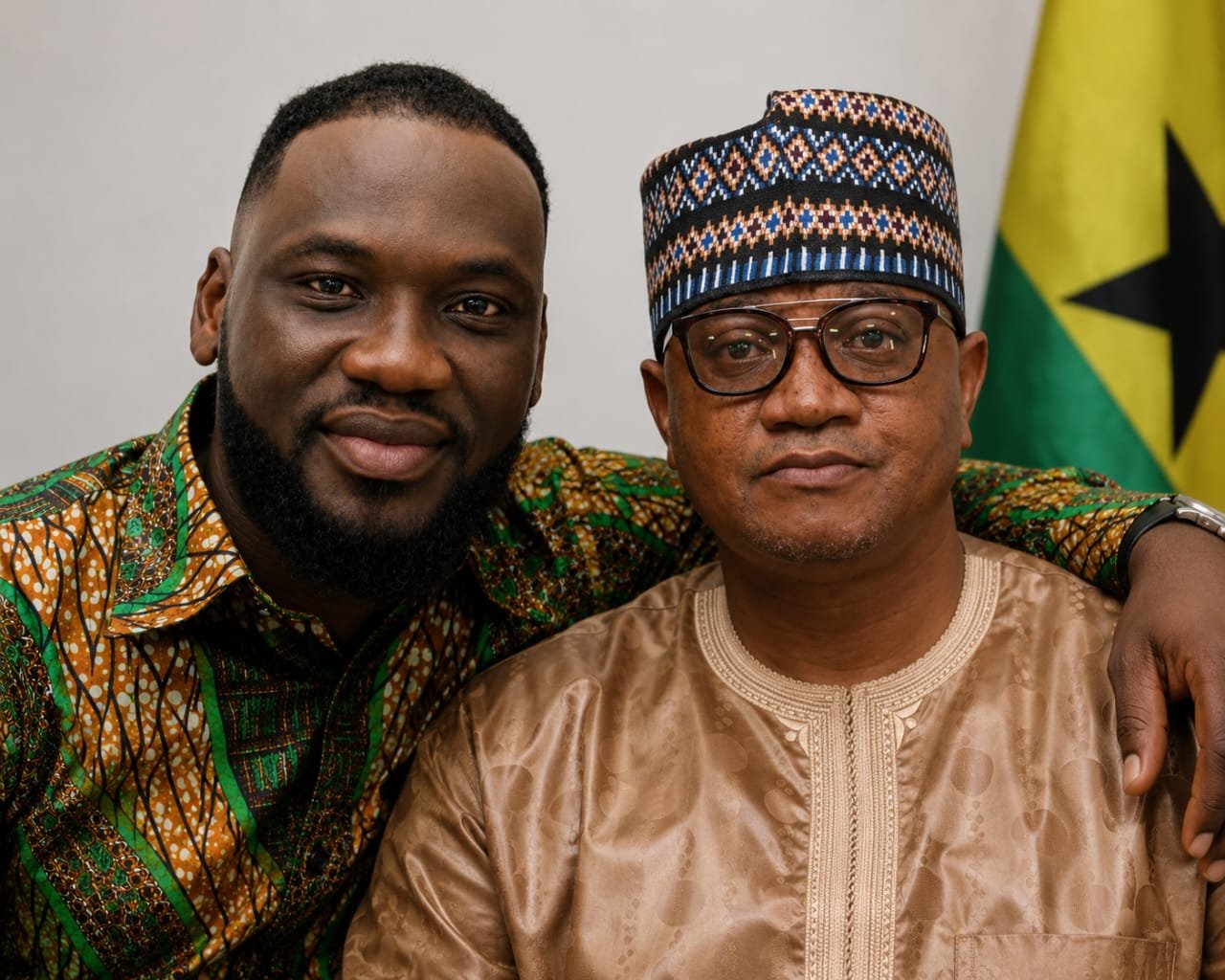
A constitutional lawyer, Ben Abdallah Banda, has clarified that the parliamentary seat of the Member of Parliament for Asante Akyem North, Ohene Kwame Frimpong cannot be declared vacant simply because of his arrest or prolonged absence from Parliament.
Speaking in a Zoom interview on Kessben TV’s Digest program, Mr. Banda said Article 97 of Ghana’s 1992 Constitution clearly sets out the conditions under which an MP can lose a seat.
According to him, a parliamentary seat may only become vacant if the MP is convicted of an offence that disqualifies them from serving, resigns from office, or is absent from Parliament for 15 sitting days without the Speaker’s permission and without a reasonable explanation.
He emphasized that even in cases of absenteeism, the Constitution requires due process. An MP who misses 15 sittings must first be referred to Parliament’s Privileges Committee, where they are given the opportunity to explain the absence before any recommendation can be made to the House.
Mr. Banda noted that although the Asante Akyem North MP has reportedly missed more than 15 sittings following his arrest, Parliament cannot automatically declare the seat vacant because the constitutional process has not yet been exhausted.
He added that the MP’s detention presents a unique challenge, making it difficult for him to appear before the Privileges Committee to account for his absence.
The constitutional lawyer further argued that the High Court has the exclusive authority to determine whether the parliamentary seat has become vacant. He added that where constitutional interpretation is required, the matter may ultimately be referred to the Supreme Court for a final determination.

2026 BECE Results Out; WAEC Takes Firm Action Against Examination Malpractice

VALCO Strategic Equity Capitalization: Minority Backs Workers, Demands Full Transparency

Supreme Court: OSP Can Probe Corruption but Cannot Independently Prosecute Without Attorney-General’s Authority



-
 Entertainment1 week ago
DJ K.A Apologises Over Viral Video, Says It Was Recorded Four Years Ago
-
 General News1 week ago
Dr. Charles Dwamena Sues Hubtel for GH¢5 Million Over Alleged Campaign USSD Sabotage
-

 General News2 weeks ago
Okatakyie Afrifa Granted GH¢100,000 Bail Over Alleged Disruption of NPP Constituency Elections
-

 Entertainment2 weeks ago
Ghanaians Question Akwaboah’s Advice to Save GH¢8,000 Monthly Before Marriage
-
 General News1 week ago
Chairman Wontumi Sentenced to 20 Years in Prison Over Illegal Mining
-
 Entertainment3 days ago
Ghana Secures $3.5 Million UNESCO Heritage Support During Tourism Minister’s South Korea Visit
-

 Entertainment1 week ago
“Hits Rule Everything Now” — Perez Musik Says Legends Like Bob Marley Would Face Challenges Today
-

 Entertainment1 week ago
Ramatu Gumah Named Chairperson and Head of Africa Diaspora Relations at Africa Development Council