
Entertainment
Stonebwoy Assures Top-Notch Security Ahead of BHIM Festival London 2026, Promises World-Class Experience

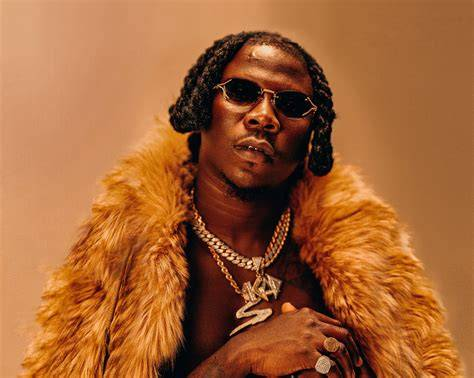
Ghanaian dancehall star Stonebwoy has assured fans that security at the upcoming BHIM Festival London will be of the highest standard, stressing that the event will mirror the safety, organisation, and premium experience that have become synonymous with his concerts in Ghana.
Speaking ahead of the highly anticipated festival scheduled for August 15, the award-winning musician said the safety of patrons remains a top priority, especially because his events regularly attract high-profile personalities, including government officials, traditional leaders, and dignitaries.
According to Stonebwoy, his concerts in Ghana have consistently hosted crowds of up to 50,000 people in a peaceful and well-organised environment, and he intends to replicate the same standards for the London edition.
“You’ve been to my festivals in Ghana, 50,000 people trooping and everything is clean, nice. They chill, they have fun. I’ve got people from the presidency at my show every time. MPs, high-caliber, high-class kings and queens, and security is top-notch,” he said.
The “Into the Future” hitmaker explained that the security arrangements for the London festival are being carefully planned to ensure attendees enjoy the event in a safe, comfortable, and enabling atmosphere.
He noted that the goal is to create an environment where music lovers can relax while experiencing an unforgettable festival.
“We’re going to implement the same qualities over here to make sure the people are safe and have a beautiful and enabling environment to enjoy themselves,” he added.
Beyond security, Stonebwoy promised fans a spectacular musical production, saying every aspect of the festival is being designed to meet the highest international standards.
He emphasised that he takes pride in delivering performances that reflect the dedication, hard work, and passion he invests in his craft.
According to him, while some artists simply perform their songs on stage, he strives to present music at the highest level of quality and representation.
“Some artists get on stage and deliver what they’ve got to deliver, but when you see the ones that put in the blood, sweat, tears and heart to beautify the craft, I choose to be one of those. The people deserve such quality acts, and that’s what I’m going to put up come the 15th of August.”
Stonebwoy also revealed that the Stonebwoy BHIM Festival London lineup will feature an unprecedented gathering of Ghanaian music legends alongside international reggae and dancehall acts.
He announced that celebrated Ghanaian musicians Kwabena Kwabena, Samini, and Ofori Amponsah will perform at the festival, describing the collaboration as a rare moment in Ghanaian music history.
In addition to the Ghanaian stars, Stonebwoy confirmed that Jamaican artistes Stylo G and Busy Signal will also perform.
He further disclosed that two additional Jamaican acts will be unveiled as surprise guests before the event.
The musician said the festival will celebrate the richness of Black music, bringing together different musical influences from Ghana and Jamaica in one unforgettable experience.
BHIM Festival London Set for August 15
The Stonebwoy BHIM Festival London is scheduled to take place on August 15 and is expected to attract fans from across the United Kingdom and beyond.
With assurances of world-class security, premium stage production, and a lineup featuring some of Ghana’s biggest music icons alongside internationally acclaimed Jamaican performers, the festival is shaping up to be one of the biggest African music events in London this year


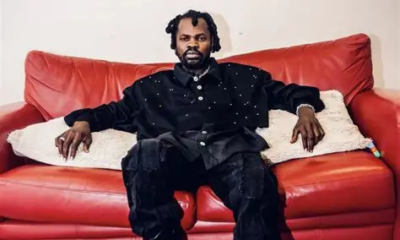













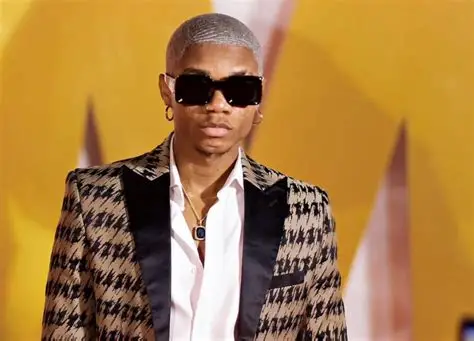
Award-winning Ghanaian musician KiDi has opened up about one of the most challenging periods of his life, revealing that he initially struggled with fear and uncertainty after learning he was going to become a father while still pursuing his university education.
Speaking on the Konnected Minds Podcast, the singer said the news came at a time when he was still trying to build his own future, making the responsibility of parenthood feel overwhelming.
“I was scared. I was in uni. I was scared. I was shaken,” KiDi admitted.
The “Touch It” hitmaker explained that the pregnancy affected his academic journey, as he had to prepare for his resit examinations while dealing with the emotional weight of becoming a father.
According to him, his biggest concern was how he would provide and care for a child when he was still trying to establish himself.
“So how to raise a child? I was still even raising myself. I was still trying to figure out my place in the world. So to come and add another human to that equation was such a scary concept.”
Despite those fears, KiDi said the unwavering support of his family, especially his mother, gave him the strength to push through the difficult period.
He recalled that knowing his family stood behind him kept him motivated to continue his education despite the challenges.
“One thing that kept me going was I always find a way. No matter how difficult it was. I knew I had my family. I knew I had those people behind me. My mom was always going to show up for me.”
The musician said that support ultimately enabled him to complete his studies and successfully sit for his resit examinations.
Reflecting on that period, he added humorously that he even relied on an energy boost to get through the exams.
“It helped me to finish my education. I even took some vim to go and write my resits.”
KiDi also disclosed that although he learned about the pregnancy early, he was unable to be actively involved throughout the pregnancy because he and the child’s mother were living in different countries.
As a result, he missed the antenatal appointments and only reunited with them after the baby was born.
“I wasn’t able to be there until he was actually born because we were in different countries,” he explained.

Award-winning Ghanaian gospel musician Diana Hamilton has celebrated 21 years of marriage with her husband, Dr. Joseph Hamilton, sharing a heartfelt tribute to mark the special occasion.
Diana Hamilton, renowned for hit gospel songs including Nyame Banbofo, Adom (Grace), and Mo Ne Yo, is one of Ghana’s most celebrated gospel artistes. Her music ministry has earned her numerous accolades and a loyal fan base across Ghana and beyond.
To mark their 21st wedding anniversary, the singer took to social media on August 6, 2026, sharing beautiful photos of the couple alongside an emotional message reflecting on their journey together.
“21 years with you feels like just 12 days. Thank you for loving me through every season of life. I’d choose you all over again, always, @drjosephhamilton. Happy 21st Anniversary to us!”
Reflecting on their journey together, Diana said the more than two decades they have spent as husband and wife have passed so quickly that they feel like only a few days.
In an earlier interview, the celebrated gospel artiste revealed that Dr. Joseph Hamilton is not only her husband but also the first and only man she has ever dated.
According to her, their relationship began during her final year at nursing school, laying the foundation for a lifelong partnership that eventually led to marriage.
She also disclosed that she had never been in a romantic relationship before meeting him and was a virgin when they first met.
“My husband is actually my first boyfriend. I’ve never been in a relationship with any other man before. There are no ex-boyfriends in my past; my husband is the only man I’ve known,” she said.
The touching post quickly drew congratulatory messages from fans, fellow musicians, and well-wishers, who praised the couple for their enduring love and wished them many more years of happiness.
Entertainment
“I Still Cry in Private”: Fameye Reflects on Lasting Pain of Growing Up Without Parents
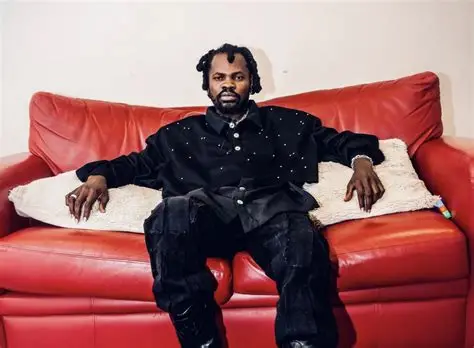
Ghanaian musician Fameye has opened up about the emotional burden of growing up without both parents, revealing that although the pain is no longer as evident in his music, he still cries in private as he continues to cope with the loss.
Speaking in an interview with Kobby Kyei on August 6, 2026, the award-winning singer shared how losing his parents at a young age has shaped his life, influenced his music, and affected many of the decisions he has made over the years.
According to Fameye, his early songs reflected the emotional struggles he experienced while growing up because they were inspired by the hardships he faced.
“At the beginning of my career, people could hear the pain in my music because I cried a lot. People usually said I was always sad whenever I was recording. These days, I don’t cry in my songs anymore, but I still cry behind closed doors,” he said.
The musician explained that growing up without parents also meant missing out on the guidance and protection that many people take for granted. He believes there are certain decisions he might have made differently if his parents had been alive to advise him.
Fameye recalled one of the most difficult moments in his career, saying he felt completely helpless during a dispute within the music industry because there was no parent to stand by him or defend him.
“Whenever something goes wrong, I have to deal with it on my own. One of my darkest moments came when I had a problem with someone in the industry. They threatened to take me somewhere and curse me. At that moment, I kept asking myself, ‘Where are my parents? Who is there to defend me?'”
He also admitted that he sometimes feels envious when he sees parents publicly supporting and defending their children, particularly on social media, because it reminds him of what he has missed throughout his life.
“Sometimes I see parents standing up for their children on social media, and I wish my parents could also defend me publicly. Unfortunately, that has never been my reality.”
Fameye further revealed that the birth of his first child brought back painful memories of losing his mother. He said becoming a father made him realize even more deeply the absence of the grandmother who would naturally have helped care for his newborn.
“When my first child arrived, I was heartbroken. I kept asking, ‘Where is my mother who would have bathed the baby and cared for her grandchild?’ In the end, my partner and I had to do everything ourselves.”
Entertainment
Rastafari Is News: Ras Caleb Appiah-Levi Highlights Truth, African Unity and Cultural Identity
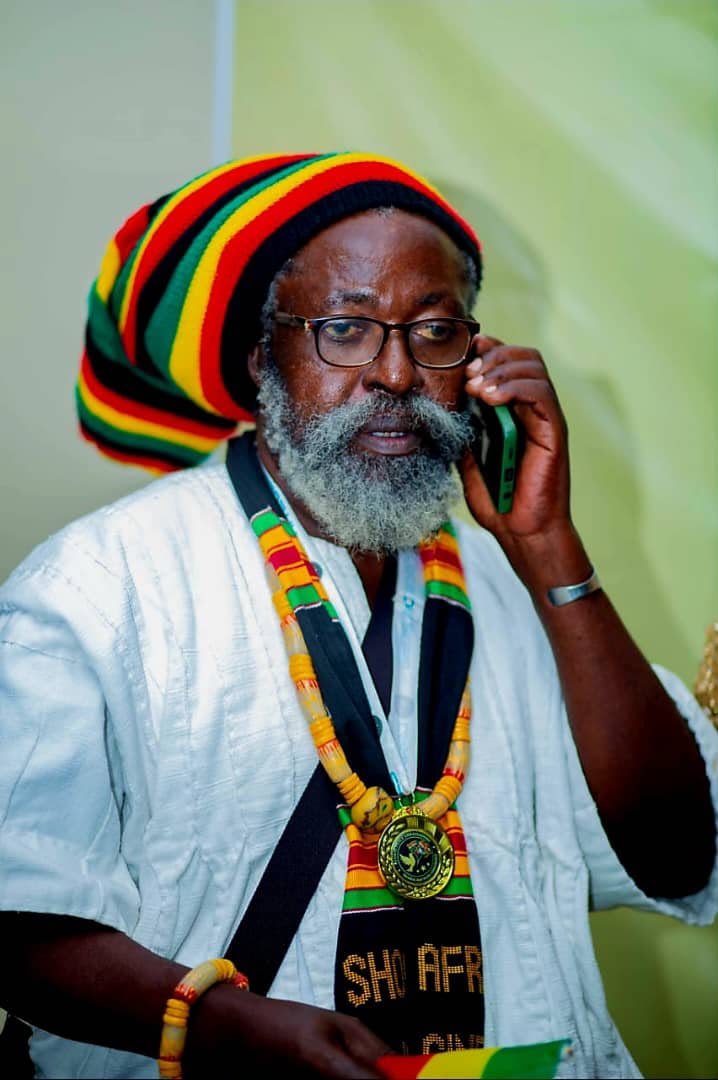
Musician and Pan-Africanist Ras Caleb Appiah-Levi has described Rastafari as “news”, arguing that the movement represents a message of truth, cultural identity, resistance and African unity in a rapidly changing world.
In a statement titled “Rastafari Is News,” Ras Caleb explained that while many people define news through politics, headlines and celebrity stories, the true meaning of news lies in what is new, relevant and necessary for society to hear.
According to him, Rastafari is news because it carries a message that inspires people to wake up, heal and build a better future.
“When they ask, ‘What is news?’ they point to headlines, politics, and celebrity gossip. But I say to you today: Rastafari is news,” he stated.
He noted that Rastafari continues to provide messages of self-worth, African identity, spirituality, love and unity at a time when many people are searching for purpose and direction.
Rastafari as Truth in a Time of Confusion
Ras Caleb Appiah-Levi said Rastafari remains relevant because it challenges narratives that promote division, greed and self-hate.
He explained that the movement carries a message reminding Africans and people of African descent that they have value, history and a connection to their roots.
According to him, Rastafari teaches:
- That people are kings and queens.
- That Africa is the ancestral home.
- That Jah lives.
- That humanity must embrace love, righteousness and unity.
He described these principles as a “breaking news” message for generations that have been made to feel disconnected from their history.
Rastafari as Resistance Against Oppression
The musician and Pan-Africanist also highlighted the role of Rastafari as a voice for the oppressed.
He said that from Ethiopia to Jamaica, Ghana and communities across the African Diaspora, Rastafari has represented resistance against injustice and systems that seek to suppress identity and freedom.
“Rastafari is the news that says: Babylon system is a lie. It is the news that says we will not bow, we will not sell out, and we will stand for justice,” he said.
He added that the movement’s commitment to freedom and truth has made it a powerful global force.
Preserving Culture in an Era of Imitation
Ras Caleb further argued that Rastafari has made significant contributions to global culture through music, food, fashion, language and spirituality.
He pointed to the influence of Reggae, Dub music, Ital living and conscious lyrics as cultural expressions that have carried Rastafari messages around the world.
Beyond entertainment and style, he said Rastafari represents a way of life known as “livity,” which promotes harmony with nature, community and the Creator.
“In a world chasing trends, Rastafari is news because it is rooted. It is ancient and it is now,” he stated.
Rastafari and Pan-African Unity
The Pan-Africanist emphasised the movement’s historic connection to African liberation and unity.
He referenced concepts such as “Abibitum” (Africans for Africans) and “Abibifahodie” (African Independence) as ideas that continue to influence conversations about African identity and empowerment.
According to Ras Caleb, Rastafari was among the early global movements that encouraged Africans at home and abroad to look towards Africa as a centre of identity and development.
He also highlighted the influence of figures such as Haile Selassie I and Marcus Mosiah Garvey, as well as the call for African repatriation.
He argued that the message remains relevant because Africa’s full unity and collaboration with the Diaspora are still ongoing goals.
Rastafari as a Vision for the Future
Ras Caleb Appiah-Levi said the younger generation is increasingly searching for meaning beyond popularity and social media trends.
He believes Rastafari provides a pathway centred on responsibility, sustainability and community.
He highlighted values such as:
- Growing and respecting food systems.
- Honouring elders.
- Protecting the environment.
- Speaking truth.
- Showing love and respect for others.
He said his organisation, PanAfrica-Ghana (PAG) – Living As One, is committed to promoting these ideals and creating a pathway towards a better future for African people.
“At PanAfrica-Ghana (PAG) – Living As One, we are living that news. We are driving the vehicle so that our people can ride to a better future,” he said.
“Rastafari Is the News the World Needs”
Concluding his message, Ras Caleb Appiah-Levi urged people to recognise Rastafari not only as a cultural or spiritual movement but as a continuing message of transformation.
He said:
“Rastafari is the news of self-love. It is the news of African unity. It is the news of spiritual awakening. It is the news the world did not expect, but the world desperately needs.”
He called on followers and supporters to become messengers of the movement’s values and to “live the headline.”
The statement ended with the message:
PAG – Living As One
Abibitum! Abibifahodie!
Jah Rastafari!




Prez. Mahama Reshuffles His Appointees

Experts Call for Better Planning, Waste Recovery and Sustainable Financing

NPP’s Democracy Under Attack Claim Is Hypocritical – Hawk Newspaper Editor Fires Back



-
 General News4 days ago
Mahama orders GH¢2 per litre diesel price reduction
-
 Entertainment2 weeks ago
Ghana Secures $3.5 Million UNESCO Heritage Support During Tourism Minister’s South Korea Visit
-
 General News1 week ago
CLOSSAG Elections in Dambai: Tension Mounts Over Candidate Disqualifications
-

 Culinary3 days ago
A Taste of Bono: Where Every Meal Tells the Story of Ghana’s Bono Heritage
-

 Entertainment4 days ago
Kojo Preko Dankwa Criticises Tourism Minister Over Delayed Theatre and Amphitheatre Projects
-
 General News2 weeks ago
EOCO Declares Emmanuel Ababio Wanted Over Alleged Fraud
-

 Entertainment1 week ago
FOCAP Welcomes New Cultural Attachés, Hails Boost for Ghana’s Creative Diplomacy
-

 General News4 days ago
Nearly Two Million Ghanaian Youth Are Out of School, Work or Training – GSS Raises Alarm