
Entertainment
The Disappearing Ghanaian Storyteller: When Did We Stop Gathering to Listen?

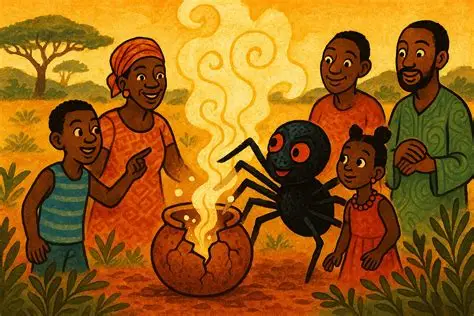
There was a time when bedtime did not always mean going straight to sleep. For some Ghanaian children, it meant gathering around a grandmother, grandfather or another older relative who had a story to tell.
The storyteller did not need a television, a projector or an internet connection. Sometimes, all that was needed was a quiet evening, a group of curious children and a story that had been passed down through generations.
There were tales about clever animals, foolish kings, wicked neighbours, brave children and people whose decisions changed their lives. Some stories entertained. Others warned against greed, dishonesty, disrespect and selfishness.
Children listened, laughed, interrupted with questions and begged for another story when the first one ended.
Today, that familiar scene is less visible in many households. Children have access to cartoons, films, online videos, games and social media. Older relatives may live far away, while busy family schedules leave little time for extended storytelling.
But as entertainment changes, an important question remains: Are Ghanaian communities losing the tradition of telling stories that once helped children understand their world?
In many Ghanaian communities, storytelling was an informal way of teaching children about life.
A story about a dishonest person could explain why trust mattered. A tale about an arrogant character might show how pride could lead to trouble. Stories involving animals could reveal human weaknesses without directly accusing anyone.
The storyteller could use humour to communicate a serious message, allowing children to learn while enjoying themselves.
Some stories also explained cultural beliefs, community practices and relationships between people. They helped children understand why certain behaviours were encouraged, and others discouraged.
The lessons were not always presented as direct instructions. Instead, children were expected to think about what the characters did and what happened as a result.
That process made storytelling a form of informal education.
Ananse: The trickster who taught through his mistakes
One of the most recognisable figures in Akan oral tradition is Ananse, the spider character known for cleverness, mischief and trickery.
In many stories, Ananse tries to outsmart others, gain something for himself or escape a difficult situation through cunning.
Sometimes his plans succeed. At other times, his greed or overconfidence creates problems.
The character is memorable because he is not a perfect hero. He can be intelligent and foolish, resourceful and selfish, entertaining and frustrating.
Through Ananse stories, listeners encounter questions about greed, wisdom, fairness, responsibility and the consequences of one’s actions.
Ananse stories have also travelled beyond Ghana and become part of wider African and Caribbean storytelling traditions.
Yet preserving these stories requires more than remembering the character’s name. The language, humour, performance style and different versions of the tales are also part of the heritage.
Every community had its own stories
Ghana’s storytelling traditions are not limited to Ananse.
Different communities have their own folktales, legends, historical narratives, praise traditions and stories associated with particular places or families.
Some stories explain the origin of a community. Others recount the actions of respected leaders, ancestors or extraordinary individuals.
There are stories about animals, rivers, forests, farming, marriage, friendship and conflict.
The details vary across cultures, and a story may have several versions depending on who tells it.
This diversity is important. Ghana’s oral heritage cannot be reduced to one character or one collection of tales.
When stories are documented, it is valuable to record the language in which they were told, the community they come from and the person sharing them.
Otherwise, a story may survive while the cultural context that gives it meaning is forgotten.
The decline of traditional storytelling cannot be blamed on one cause. Changes in family life, technology, language use and daily routines have all affected how stories are shared.
Television, smartphones and online platforms provide entertainment at any hour.
A child can watch a cartoon, listen to an audiobook or view a video without waiting for an older relative to become available.
Digital entertainment is not necessarily harmful. It can introduce children to literature, languages and different cultures.
The challenge is that traditional storytelling is interactive. The listener can ask questions, challenge a character’s behaviour or request that the storyteller repeat a favourite part.
A recorded video cannot always reproduce the personal connection created when an older relative tells a story from memory.
Work, school, commuting and other responsibilities can make it difficult for families to spend long periods together.
In some households, several generations no longer live under the same roof. Grandparents may reside in another town or village, making regular contact less frequent.
This does not mean families have stopped caring about their traditions. It means the opportunities to pass on certain practices may be fewer.
When storytelling is no longer part of an ordinary evening, it may be remembered mainly during festivals, cultural events or school activities.
Language can also influence whether traditional stories survive.
Some folktales rely on proverbs, wordplay, local expressions and cultural references that are difficult to translate fully into another language.
When a story is told in a language the listener does not understand well, its humour and deeper meaning may be lost.
Children who are not comfortable speaking the language of their parents or grandparents may struggle to follow long stories told in that language.
This does not mean stories should only be told in one language. They can be translated and explained. However, preserving the original language alongside translations helps retain expressions and meanings that might otherwise disappear.
Traditional storytellers carry knowledge that may never have been written down.
Some know several versions of a tale. Others remember the songs, sayings or responses that accompanied a performance.
If nobody records or learns from them, their knowledge may disappear when they are no longer able to tell the stories.
A written summary may preserve the plot but fail to capture the storyteller’s voice, gestures, timing and interaction with the audience.
That is why audio and video recordings, community archives and interviews with older people can be valuable.
What happens when the storyteller disappears?
When a traditional story is lost, the immediate effect may appear small. Children can still read books, watch films and learn from their teachers.
But the loss can be deeper than the disappearance of a single tale.
A story may contain expressions from a local language, references to a community’s history or lessons about relationships that have been discussed for generations.
It may also preserve an older way of understanding the environment, social responsibility or human behaviour.
When stories are no longer shared, children can lose an opportunity to learn about their cultural heritage directly from the people who know it.
The concern is not that every traditional story contains a lesson that must be followed today. Some stories reflect beliefs or social expectations that deserve critical examination.
Preservation does not mean accepting everything uncritically. It means keeping the stories available so that people can understand, discuss and interpret them.
Can schools bring storytelling back?
Schools could play an important role by giving oral storytelling a place alongside reading and writing.
Teachers could invite community elders, writers, linguists and storytellers to share stories with pupils.
Students could record folktales told by their parents or grandparents, write down different versions and discuss the lessons or questions raised by each story.
Cultural programmes could also include storytelling competitions in Ghanaian languages, encouraging young people to develop confidence in oral performance.
These activities could support language learning, listening skills, creativity and an appreciation of cultural diversity.
The goal should not be to turn every story into a rigid classroom lesson. Children should also have the freedom to enjoy the suspense, humour and imagination that make storytelling appealing.
Technology may have contributed to changes in storytelling, but it can also help preserve the tradition.
Content creators could produce short videos of Ghanaian folktales, with narrators telling stories in their original languages and providing subtitles.
Radio stations, podcasts and online publishers could develop storytelling programmes featuring older narrators and younger performers.
Libraries, cultural institutions and community organisations could build digital collections of stories, songs and oral histories.
Care is needed to ensure that the people and communities who share these stories are properly acknowledged. Where a story belongs to a particular cultural tradition, its origins should not be erased simply to make it more marketable.
With thoughtful documentation, a story once told to a handful of children could reach audiences far beyond the community where it originated.
One reason storytelling may be neglected is the belief that it requires someone who knows many traditional tales or has a special gift for narration.
But families can begin with simple steps.
Parents can ask grandparents to share stories from their childhood. They can tell children about how their community changed, how their parents grew up or how a family tradition began.
Children can also be encouraged to create their own stories inspired by what they hear.
The important thing is to create opportunities for conversation and imagination.
A story does not have to be perfect to be meaningful. Sometimes, the memory of sitting beside a grandparent and listening carefully becomes just as important as the story itself.
Not every old story should remain unchanged
As Ghanaian society changes, traditional stories may also need to be reconsidered.
Some tales contain stereotypes or reflect historical attitudes that modern audiences may question. Others may have different meanings in different communities.
These differences should be discussed rather than hidden.
Storytelling can be preserved while allowing new generations to ask questions, develop new versions and explore different interpretations.
That is how a living tradition remains relevant: it carries the past into the present without preventing people from thinking critically about it.
Ghana has made room for modern entertainment, digital learning and international culture. There is no need to reject those developments to preserve oral traditions.
But if children grow up knowing fictional characters from around the world while remaining unfamiliar with the stories their grandparents grew up hearing, it is worth asking what opportunities have been missed.
The answer is not to blame young people for preferring cartoons or accuse parents of abandoning their culture.
The more useful response is to create opportunities for stories to be heard again—in homes, schools, libraries, on radio and through digital platforms.
Older people should be encouraged to share their knowledge, while younger people should be given the tools to record and reinterpret it.
Because a story that is never told cannot be questioned, enjoyed or passed on.
And perhaps the greatest danger is not that Ghana’s traditional storytellers will stop speaking, but that the next generation will no longer gather to listen.















The Ghana Music Rights Organisation (GHAMRO) has named 16 radio and television stations it recognises as complying with music royalty payment obligations out of more than 700 broadcasters operating across the country.
The recognition highlights broadcasters GHAMRO says are meeting their copyright obligations by paying royalties for the use of music in their programmes.
In a post on X on Wednesday, October 14, 2026, the organisation commended the stations for respecting copyright laws and supporting Ghana’s creative industry.
“We celebrate and appreciate our Top Complying 2026 Broadcasting Channels for leading by example, respecting copyright laws, and directly championing the Ghanaian creative economy,” GHAMRO stated.
The stations recognised for complying with music royalty payment obligations are:
Joy FM
Hitz FM
Asempa FM
Adom TV
Adom FM
Luv FM
Nhyira FM
Joy Prime
Sporty FM
Pent Radio
Pent TV
Citi FM
Channel One TV
PCG TV
Hope FM
Lucky TV

The announcement comes amid GHAMRO’s efforts to improve royalty collection and encourage broadcasters and other commercial users of music to comply with copyright requirements.
Music royalties compensate musicians, composers, songwriters and other rights holders when their works are used for broadcasting and other commercial purposes.
By publicly recognising compliant stations, GHAMRO hopes to encourage more broadcasters to meet their obligations and support the sustainable growth of Ghana’s music and creative industries.


Netflix is planning to eliminate approximately 1,000 jobs worldwide in its largest workforce reduction since 2022, as the streaming company adjusts its operations amid intensifying competition for viewers and growing pressure to sustain business growth.
The planned cuts represent roughly 6% of Netflix’s global workforce. According to reports published on October 14, 2026, the reductions will primarily affect employees in the company’s product, technology, legal and human resources departments. The announcement was communicated to staff in an internal memo from co-chief executives Greg Peters and Ted Sarandos.
The executives said the company intended to direct its people and resources towards areas considered most important to improving its service and supporting future growth. They also maintained that Netflix’s business remained strong and that the company was on track to meet its full-year financial forecast.
Competition puts pressure on streaming businesses
The restructuring comes as Netflix competes with established entertainment companies and digital platforms such as YouTube for audiences’ time and attention. The growing availability of free online video and alternative entertainment services has increased the pressure on subscription-based platforms to keep viewers engaged.
Netflix has also been exploring additional revenue opportunities, including advertising-supported subscriptions, live programming and gaming, as it seeks to broaden its business beyond traditional on-demand streaming. However, investors remain concerned about the company’s growth prospects and its ability to turn new initiatives into sustainable sources of expansion.
Biggest cuts since 2022
The latest reductions mark a significant workforce change for a company that had approximately 16,000 full-time employees at the end of 2025. In 2022, Netflix cut around 450 jobs after reporting a subscriber decline that raised questions about its growth trajectory.
Despite the planned layoffs, Netflix says it will continue investing in areas it believes can improve the platform and support innovation. The changes illustrate the difficult decisions facing major streaming services as they balance staffing costs, content investments, competition and expectations from shareholders.
The long-term impact of the restructuring will depend on whether Netflix can maintain its financial performance while keeping viewers engaged and developing new sources of revenue.

By Angel No Lie | KPDOnline | ACCRA, Ghana
Ghanaian beauty queen Rumzia Sule has brought renewed attention to Ghana’s cultural identity, youth empowerment and environmental advocacy through her participation in the 2026 Miss World Festival.
Sule, who won the Miss Ghana 2026 crown, represented the country at the international pageant held in Vietnam. Her participation provided an opportunity to showcase Ghana beyond its traditional cultural attractions, with a focus on the creativity, innovation and potential of its people.
According to reports published, Sule views the Miss World platform as an opportunity to promote Ghanaian entrepreneurship, the arts, diplomacy and the achievements of young people. She has emphasised the importance of telling a broader story about Ghana’s contribution to the world.
Beyond beauty and the crown
Sule’s ambitions extend beyond the pageant industry. With a background in communications and studies in international relations and diplomacy, she has expressed an interest in leadership, public service and a future career in diplomacy.
She also champions youth development through initiatives intended to encourage mentorship, entrepreneurship and personal growth.
Her environmental advocacy has featured prominently in her Miss World journey. Through The Green Gateway, her environmental project promotes responsible environmental practices, including community clean-up activities, tree planting and environmental education for young people.
The initiative earned Sule a place among Africa’s six finalists in the Miss World Beauty With a Purpose category, highlighting the social impact dimension of her participation.
A platform for Ghanaian identity
Sule’s representation of Ghana illustrates how international beauty competitions can provide a platform for cultural diplomacy and community advocacy. Such opportunities allow contestants to introduce their countries to international audiences while drawing attention to causes that extend beyond the competition itself.
For Ghana, her participation offered a chance to highlight the country’s heritage, young talent and environmental priorities.
As the Miss Ghana 2026 titleholder, Sule’s journey demonstrates the potential of combining public representation with advocacy and community engagement.
Her experience also reinforces the idea that a beauty title can serve as a platform for broader conversations about national identity, youth opportunity and sustainable development.
KPDOnline.Net will continue to follow developments in Ghanaian pageantry, cultural representation and initiatives that promote positive social change.

Ghanaian Afrobeat musician Mr Drew has clarified that his recent outburst during an X Space discussion was directed at social media trolls who disrespected him, insisting that his comments were not intended for his loyal fans.
The singer explained that he was offended by the manner in which some participants addressed him during the online conversation, adding that his reaction had been misinterpreted and portrayed as an attack on his supporters.
According to Mr Drew, he loves and appreciates his fans but will not tolerate disrespect from people who interact with him on social media.
“It was for the trolls, for the people who were disrespecting me on the space, but right now, it is being changed into something else. You people know I appreciate my fans, so please, don’t let anybody change your mind. I love my fans so much, but we will not tolerate disrespect. It wasn’t for the fans; it was for the trolls who were in that space,” he clarified.
The controversy follows an incident on October 12, 2026, when Mr Drew clashed with some participants during an X Space he had organised to interact with his fans.
The discussion reportedly became heated after the musician took offence at the way some participants spoke to him. Although he had encouraged fans to communicate with him informally, he maintained that such interactions should be conducted with respect.
Tension reportedly began when one participant addressed him as chale, a popular Ghanaian expression often used to refer to a friend or peer.
Mr Drew objected to the manner in which he was addressed, arguing that some social media users mistake his accessibility for permission to speak to him disrespectfully.
“I am not your mate. A lot of people think I am their mate, but I am not your mate. A lot of the boys think they are my age mates. When it comes to money and age, I am not your mate, and you need to put that in your head,” he said.
The exchange escalated after the participant reportedly accused the musician of being arrogant and questioned his standing in the music industry.
Both parties continued to defend their positions, with Mr Drew eventually insulting the participant and threatening to block the account. The confrontation subsequently attracted criticism and sparked debate over the musician’s reaction.
Despite the backlash, Mr Drew has maintained that his frustration was directed at those who insulted him during the discussion, rather than the fans who continue to support his music career.
Entertainment
Ghanaian Tourism Entrepreneur Mary Nyamekye Asamoah Wins Africa Travel 100 Award in Nigeria
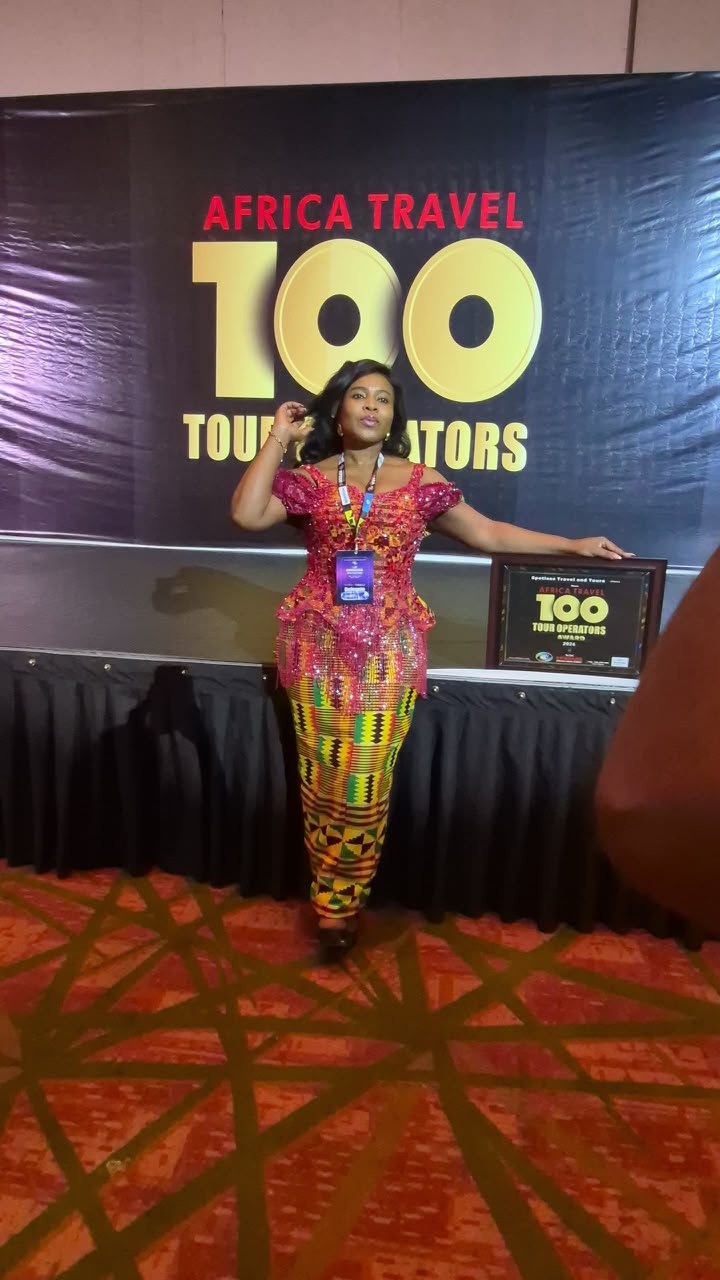
Ghanaian tourism and aviation entrepreneur Madame Mary Nyamekye Asamoah has been honoured with the Africa Travel 100 Tour Operators Award 2026 in recognition of her contributions to the travel and tourism industry.
The award was presented at the 22nd edition of the Akwaaba Travel Market in Nigeria, one of Africa’s major travel and tourism trade events, which brings together industry professionals, tourism organisations, destinations and businesses to promote collaboration and growth across the continent.
Madame Asamoah, Chief Executive Officer of Spotless Travel and Tours and Spotless Aviation and Professional Training Institute, was among a select group of tourism professionals from across Africa recognised for their contributions to the development of the continent’s travel and tourism sector.
Her recognition highlights years of work spanning aviation, tourism, travel services and professional training, with a particular focus on creating travel opportunities and equipping young people with the skills needed to pursue careers in the industry.
Madame Asamoah’s interest in aviation and tourism began at an early age, eventually leading her to pursue a career in the aviation industry.
She started her professional journey as a cabin crew member with Starbow Airline, where she gained valuable experience in aviation operations, hospitality and customer service.
Her time in the airline industry also deepened her interest in travel and tourism, laying the foundation for her transition into entrepreneurship.
She subsequently established Spotless Travel and Tours, a company through which she has organised tours for individuals and groups to destinations across Africa and beyond.
The tours have provided travellers with opportunities to explore different destinations, cultures and experiences while contributing to the promotion of tourism and cross-border travel.
Through the business, she has continued to pursue her interest in connecting people with new destinations and experiences, while building her presence in the tourism industry.
Beyond travel services, Madame Asamoah has extended her work into professional education and skills development through the establishment of Spotless Aviation and Professional Training Institute.
The institute was created to provide young people interested in aviation, hospitality and tourism with training and practical exposure to prepare them for careers in the sector.
One of the distinctive features of her training approach is the use of an aircraft as an office and learning environment, allowing students to gain a practical appreciation of the aviation industry.
The initiative is designed to help students understand the professional environment in which aviation personnel operate, complementing their training with exposure to the industry.
Her work in professional training reflects a broader commitment to developing the human resources needed to support the growth of aviation, hospitality and tourism in Ghana and across Africa.
By combining entrepreneurship with skills development, Madame Asamoah has positioned her businesses to contribute not only to travel services but also to the preparation of young people for employment and professional opportunities in the sector.
The Africa Travel 100 Tour Operators Award 2026 adds to Madame Asamoah’s profile as a Ghanaian entrepreneur working across travel, aviation and professional education.
Her recognition at the Akwaaba Travel Market places her among tourism professionals acknowledged for their contributions to Africa’s travel and tourism industry.
The award also draws attention to the role of tour operators and other private-sector players in promoting destinations, facilitating travel and creating opportunities for cooperation among tourism stakeholders.
Through Spotless Travel and Tours, Madame Asamoah has focused on organising travel experiences, while her training institute seeks to equip aspiring professionals with the knowledge and practical exposure required to enter the industry.
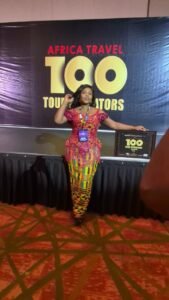
Her work brings together two areas of tourism development: the provision of travel services and the training of the people who will support the sector’s future growth.
Despite her achievements in travel, tourism and professional training, Madame Asamoah’s long-term ambition is to establish and operate her own airline.
The goal represents the next stage of her career in an industry in which she began as a cabin crew member before moving into tourism entrepreneurship and aviation education.
Her experience across these areas has provided a foundation for her continued pursuit of opportunities within the aviation and travel sectors.
Her journey from working with Starbow Airline to leading two businesses demonstrates her progression from aviation employment into entrepreneurship, with an emphasis on tourism development and youth empowerment.
As she continues to build her businesses, her ambition to operate an airline remains a central part of her long-term vision.

The Akwaaba Travel Market is a major travel and tourism trade event in Africa that brings together industry stakeholders, tour operators, travel professionals, tourism destinations and other businesses.
The event provides a platform for networking, business development, partnerships and the promotion of tourism opportunities across the African travel market.
The 22nd edition, held in Nigeria, provided the setting for the presentation of the Africa Travel 100 Tour Operators Award 2026 to Madame Mary Nyamekye Asamoah, bringing recognition to her work in tourism, aviation and professional training.

GHAMRO Names 16 Radio and TV Stations Paying Music Royalties Out of 700 Broadcasters

The Disappearing Ghanaian Storyteller: When Did We Stop Gathering to Listen?

GTA Regional Directors Raise Concerns Over CEO Maame Efua Houadjeto’s Leadership

IRAWMA 2025: Shatta Wale Wins 3 Major Awards Including Best Music Video

AirtelTigo losing GH₵20m monthly; total debts exceed $200million – Sam George

Samini Secures Promotional Deal with Audiomack for Upcoming Album “THE ORIGIN8A”


-
 Politics2 weeks ago
Asiedu Nketiah to Chair Launch of Six NDC Historiographies on Ghana’s Political Journey
-

 General News1 week ago
World Cup Visa Storm: Kojo’s GTA Questions Resurface as Minority Demands Action
-

 General News2 weeks ago
SSNIT Unveils Big Plans to Transform Labadi, La Palm Beachfront into Tourism Hub
-

 General News2 weeks ago
Can TVET Teachers Join the September GES Strike? Legal Questions Emerge
-
 Sports2 weeks ago
“I Leave With Respect, Gratitude and Pride” – Carlos Queiroz Bids Farewell to Ghana
-

 General News2 weeks ago
Putin Warns Russia Could Use Full Arsenal if Kaliningrad Is Attacked
-

 Sports2 weeks ago
Real Madrid Send Major Dossier to UEFA Over Barcelona Payments Case
-

 Entertainment2 weeks ago
“I need to get to a good place mentally” – Moliy postpones Europe and UK tour