
General News
These Nonsense Must Stop! – Seth Afum A. Dankwah Calls for End to Ghana’s Insult Politics

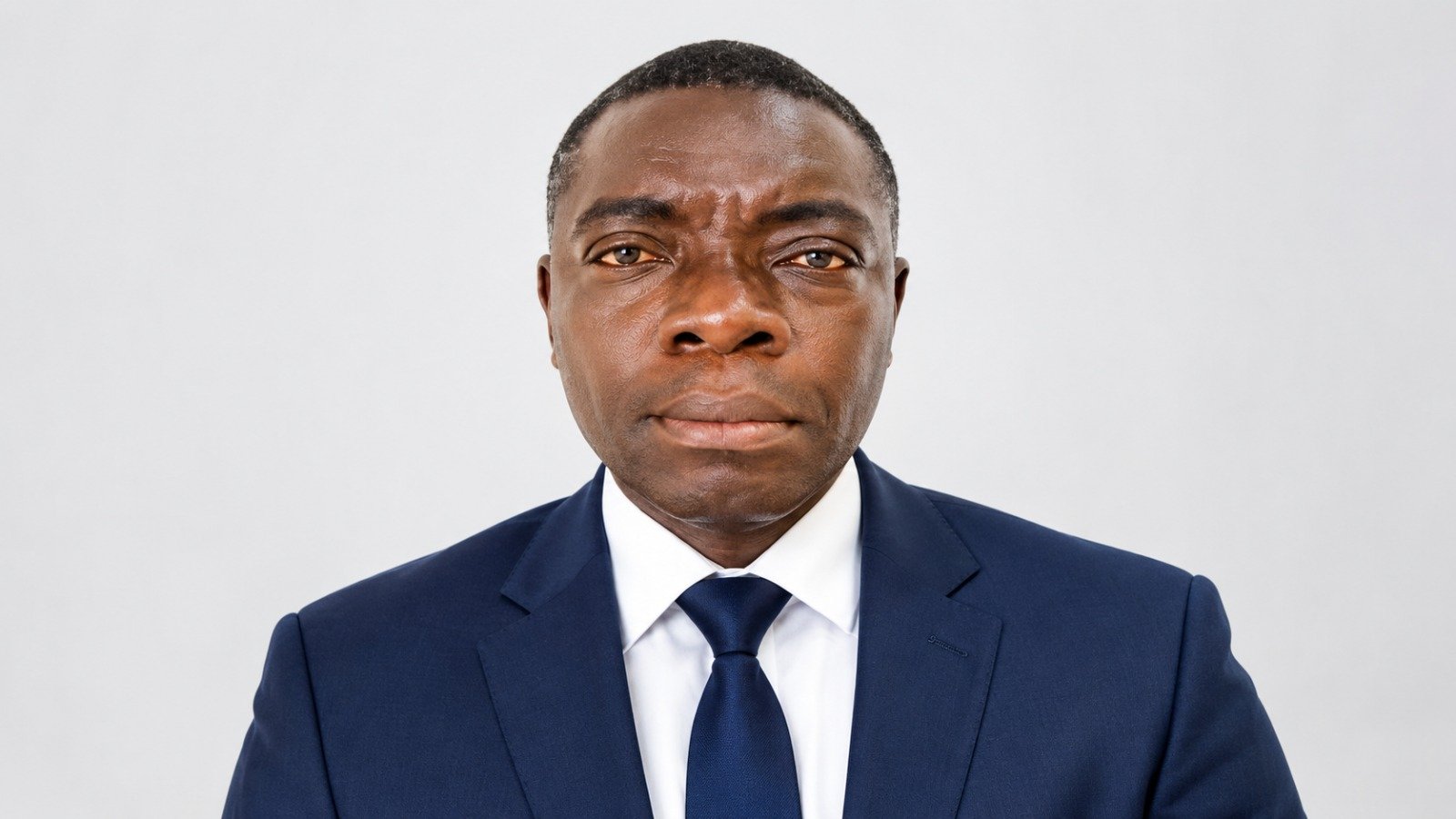
Seth Afum A. Dankwah calls for a national truce involving political parties, traditional authorities, religious leaders, security agencies and social media influencers to address political insults and concerns over selective justice.
President John Dramani Mahama has been urged to convene a national dialogue to address what has been described as Ghana’s growing culture of political insults, following the arrest and prosecution of individuals accused of making offensive comments about political leaders.
In an opinion article titled “These Nonsense Must Stop: Ghana’s Cycle of Insult Politics, and Why President Mahama Must Now Lead a National Truce,” Seth Afum A. Dankwah of J. G. Knol Technical Institute in Adukrom, Akuapem, Eastern Region, argues that the country needs a coordinated approach to political communication rather than relying primarily on arrests and prosecutions.
He believes the current situation raises questions about consistency in the application of the law, freedom of expression and the treatment of individuals accused of insulting public officials.
Dankwah maintains that criticism of government policies should remain permissible, even when strongly expressed, but argues that personal attacks against families, traditional leaders and religious figures should be addressed.
Ghana Jollof controversy
The author begins by highlighting the controversy surrounding a TikTok account known as Ghana Jollof, which he says has attracted more than 151,000 followers through videos and commentary targeting the President, his wife and members of his government.
According to Dankwah, the account has become a prominent feature of Ghana’s online political discussions, with security agencies reportedly searching for its operator.
He alleges that the content is motivated by political vengeance on behalf of the New Patriotic Party (NPP), although he does not provide evidence establishing that claim.
The article then recounts the arrest of Salomey Awity Baffoe, a 40-year-old Senior Nursing Officer and mother of three, in Hansua, Techiman.
Dankwah states that at approximately 11:30 p.m. on September 13, 2026, three men who identified themselves as National Security personnel arrived at a residence and took her away.
He claims that when her family attempted to locate her, the Bono East Police and the regional National Security office initially said they had no records of her arrest.
Two days later, according to the account, Baffoe appeared before the Adenta Circuit Court in Accra, where she was remanded for two weeks over a charge relating to the publication of false news.
The author says the police identified her as the person behind Ghana Jollof. However, he argues that the account’s subsequent activity raised questions about that identification.
On September 17, 2026, the police reportedly declared another woman, Barbara Asantewaa Kodua, wanted in connection with the Ghana Jollof account.
The 40-year-old was said to have last been seen at Kotoka International Airport on August 4, 2022, and was believed to be in the United Kingdom.
According to the article, she was wanted for allegedly inciting violence.
Dankwah questions the circumstances surrounding Baffoe’s arrest and argues that the case has intensified public debate about the manner in which authorities investigate alleged online offences.
The author argues that political insults have become part of Ghana’s partisan culture, with supporters often defending offensive commentary when their parties are in opposition but condemning similar conduct when they assume power.
He observes that governments, traditional authorities and religious leaders frequently become targets of such commentary.
The article references former presidents Jerry John Rawlings, John Agyekum Kufuor, John Evans Atta Mills, John Dramani Mahama and Nana Addo Dankwa Akufo-Addo, arguing that each experienced political insults during their respective periods in public office.
Dankwah recalls that Mills once described himself as a father to all, presenting the statement as an example of a response that sought to rise above partisan hostility.
He also argues that Mahama experienced sustained insults during his first presidency, between 2012 and 2016, while Akufo-Addo faced similar criticism throughout his eight-year administration.
The author says the controversy surrounding Ghana Jollof cannot be fully understood without considering previous cases involving public figures and political commentary.
Kevin Taylor and the Asantehene
Dankwah points to the case of US-based Ghanaian broadcaster Kevin Ekow Taylor, host of With All Due Respect, as an example of what he considers inconsistent treatment of individuals accused of making offensive remarks.
According to the article, Taylor repeatedly criticised the Asantehene, Otumfuo Osei Tutu II, between 2021 and 2025.
The author also references a comment Taylor allegedly made in June 2025 concerning a decision involving the Despite Museum, claiming that the broadcaster described the Asantehene as having been reduced to a messenger.
Dankwah questions why the alleged remarks did not result in comparable police action.
He further recounts that in 2020, during Akufo-Addo’s administration, Justice Eric Kyei Baffour issued a bench warrant for Taylor over contempt-related proceedings concerning allegations of scandalising the court.
The article says Taylor did not appear before the court at the time and returned to Ghana after the NDC assumed power.
Dankwah states that on July 22, 2025, Taylor appeared at the Supreme Court, which, by a 4-1 majority led by Justice Imoro Amadu Tanko, quashed the warrant.
The author contrasts that outcome with the circumstances surrounding the Ghana Jollof investigation, arguing that the difference in treatment has contributed to concerns about selective justice.
Traditional leaders also affected.
The article also references alleged insults directed at other traditional authorities, including the Okyenhene, Osagyefuo Amoatia Ofori Panin, and Togbe Afede XIV, Agbogbomefia of the Asogli State and former President of the National House of Chiefs.
Dankwah says Togbe Afede has previously warned about the growing level of insults in Ghanaian public discourse, including attacks directed at the presidency.
He also recalls the traditional leader’s reference to the 1994 genocide in Rwanda as a warning about the potential consequences of escalating inflammatory rhetoric.
The author argues that traditional authorities should not be excluded from discussions about how to address the problem.
Dankwah also revisits the 2016 Montie 3 case, involving radio host Salifu Maase, popularly known as Mugabe, and panellists Alistair Nelson and Godwin Ako Gunn.
He states that on June 29, 2016, during the Pampaso programme on Montie 3, the three made threats against Supreme Court judges who had sat on the Abu Ramadan case and threatened to rape then-Chief Justice Georgina Theodora Wood.
The Supreme Court subsequently sentenced the three men to four months’ imprisonment for contempt on July 27, 2016.
According to Dankwah, the NDC later opened a petition book through its Research and Advocacy Platform, seeking a presidential pardon under Article 72 of the 1992 Constitution.
Among those he identifies as signatories were then-Foreign Affairs Minister Hanna Tetteh, Gender Minister Nana Oye Bampoe Addo, Education Minister Jane Naana Opoku-Agyemang and Deputy Education Minister Samuel Okudzeto Ablakwa.
The author says Mahama granted the three men a pardon on compassionate grounds on August 22, 2016, after they had spent 27 days in prison.
He adds that the Supreme Court subsequently upheld the pardon by a 5-2 majority.
Dankwah uses the case to question why individuals accused of making offensive political comments should face significantly different treatment depending on the circumstances and political context.
He asks whether the decision to pardon the Montie 3 can be reconciled with the current approach to alleged online insults.
The article also refers to an incident during Akufo-Addo’s presidency in which NPP supporters allegedly forced their way into a court sitting in Kumasi to remove a colleague.
Dankwah argues that the incident did not attract what he considers corresponding justice from the government at the time.
He maintains that concerns about selective enforcement of the law therefore predate the current administration.
The author further cites several arrests he says occurred in July 2026.
These include Camilla Alhassan, who was allegedly arrested over a claim that Mahama buried 32 cows to win the election; Rita Konadu, popularly known as Mamaone, who was reportedly arrested in Juaben; and Aminat, known as Bawumia Ba, who was allegedly rearrested.
He also references the arrest of Prince Aboagye, an NDC organiser in Agona West, over alleged insults against former Vice-President Dr Mahamudu Bawumia.
According to Dankwah, Aboagye was granted bail of GH¢200,000.
The author notes that Bawumia reportedly said he had not authorised the action and called for the case to be discontinued.
He also recalls a similar gesture by former President Mills, who, according to the article, allowed an NPP supporter accused of insulting him in Kumasi to go free.
Dankwah further references comments attributed to NPP’s Abronye and an alleged slur by an NDC activist suggesting that Bawumia eats pork.
He argues that such incidents demonstrate the need for a consistent response to offensive political commentary regardless of party affiliation.
The author cites concerns attributed to gender advocate Akosua Manu, who reportedly warned that the arrest of women from their homes around midnight could create the impression of abduction.
According to Dankwah, Manu cautioned that continued harassment of women over online commentary could lead to the emergence of more accounts similar to Ghana Jollof, describing the potential unintended consequences as a “cobra effect.”
He also references lawyer Martin Kpebu, who reportedly warned that Mahama could end up arresting a large number of TikTok users if the current approach continues.
The author argues that such concerns should prompt the government to reconsider how it handles allegations involving online speech.
Dankwah believes Mahama is particularly positioned to initiate a national dialogue because he has experienced political insults, benefited from political commentary directed at opponents and granted the Montie 3 a presidential pardon during his previous administration.
He argues that the President could use those experiences to bring political actors together and establish a framework for addressing the issue.
The author proposes that Mahama invite representatives of the NPP, Dr Bawumia, Akufo-Addo, the National House of Chiefs, the Christian Council, the Chief Imam, the Ghana Journalists Association, security agencies, the Judiciary, heads of state-owned enterprises, social media influencers and NDC leadership to the Jubilee House.
The proposed meeting, he says, should focus on dialogue and the development of a national agreement rather than arrests.
He recommends that participants sign a Charter Against Insult Politics, which would establish a moratorium period before the introduction or application of a clear and fair legal framework.
Three proposals to address political insults
The author outlines three key proposals he believes should guide the process.
1. Protect criticism while discouraging personal attacks
Dankwah argues that criticism of government policies should be permitted, regardless of how strongly it is expressed.
However, he says personal attacks and insults directed at people’s families, wives, mothers, chiefs, and pastors should be discouraged, irrespective of their political affiliations.
2. Ensure equal treatment under the law
He calls for the same legal standards to apply to everyone accused of offensive political commentary.
The author proposes that authorities avoid midnight raids over speech-related allegations and instead use daytime invitations, ensure access to lawyers and provide same-day bail.
He specifically references Ghana Jollof, Kevin Taylor, Bawumia Ba and Ako Gunn as individuals whose cases, in his view, illustrate the need for consistent treatment.
3. Suspend arrests and pursue a moral campaign
Dankwah urges the government to suspend the current arrest approach and lead a national campaign promoting responsible political communication before relying on law enforcement.
He also calls on Mahama to halt the CID search for Ghana Jollof and allow courts to handle proven cases of false publication through transparent legal proceedings.
These insults must stop.
In his concluding appeal, Dankwah says Ghana needs leadership that can acknowledge the country’s history of political insults while taking steps to prevent further escalation.
He argues that a national truce would provide an opportunity for political parties and other influential institutions to agree on standards that apply equally to all sides.
The author maintains that the proposed initiative should not prevent legitimate criticism of public officials but should help establish boundaries around personal attacks and the treatment of individuals accused of online offences.
He concludes by urging Mahama to seize the current controversy surrounding Ghana Jollof as an opportunity to initiate the dialogue.
“President Mahama must call off the CID search and let courts handle proven falsehoods transparently,” Dankwah states in his recommendations.
He adds that the President should acknowledge his own experiences with political insults and use them to lead efforts towards a national agreement.
“These insults nonsense must indeed stop,” the author concludes.










Accra, Ghana — September 20, 2026
Ghanaian musician and entrepreneur Charles Nii Armah Mensah Jr., popularly known as Shatta Wale, has urged students of the University of Professional Studies, Accra (UPSA) to develop entrepreneurial mindsets and turn their skills and ideas into sustainable businesses.
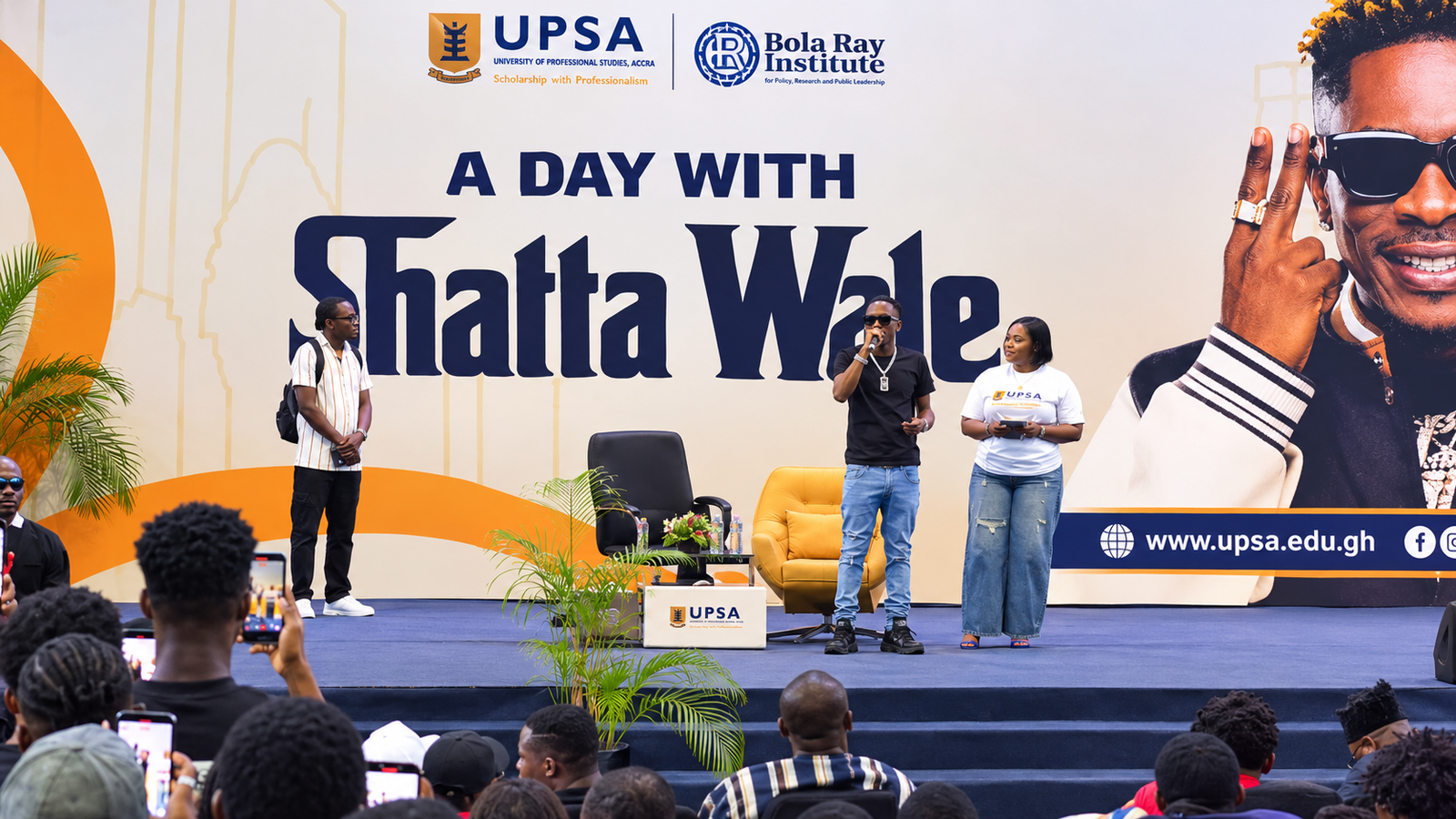
He made the call on September 16, 2026, when he addressed students during the UPSA 1000 & Ghana Entrepreneurship Conference 2026, a five-day programme focused on entrepreneurship, innovation, mentorship and enterprise development.
Focus on the mindset before the money
Speaking to students and other participants, Shatta Wale placed particular emphasis on developing the mind before pursuing financial success.
He encouraged students to learn from his approach to building a career and brand rather than simply copying his public lifestyle. His message centred on vision, discipline, resilience, adaptability and continuous learning.
“Don’t copy my life. What I would rather let you copy is my thinking,” he told the students, according to the Ghana News Agency.
He also encouraged young people to identify opportunities around them and use technology and digital platforms to develop businesses and personal brands capable of reaching markets beyond Ghana.
From problems to business ideas
The musician said aspiring entrepreneurs should learn to view challenges as potential starting points for innovation.
His advice included developing problem-solving skills, investing carefully and continually upgrading one’s knowledge. He described a process of turning problems into questions, questions into ideas and ideas into action.
Shatta Wale also cautioned against becoming complacent after achieving financial success, stressing that entrepreneurs need to keep learning and developing their capabilities.
Student entrepreneur gets collaboration opportunity
The engagement also produced a practical example of the entrepreneurial approach being promoted at the conference.
A UPSA alumna presented her yoghurt drink business to Shatta Wale and proposed a collaboration. According to UPSA, the artiste agreed to work with her after she made the pitch.
The interaction demonstrated the conference’s emphasis on encouraging young entrepreneurs to confidently present their ideas and seek opportunities.
Support for UPSA students
Beyond his presentation, Shatta Wale also announced support for the university. UPSA said he donated 10 laptops to be presented to some of the institution’s best graduating students and provided sponsorship support for the UPSA 1000 Enterprise Development Programme. He also pledged to headline UPSA SRC Week celebrations over the following two years.
UPSA Vice-Chancellor Prof. John Kwaku Mensah Mawutor said the decision to invite Shatta Wale was informed by lessons from his career in resilience, branding, self-belief and enterprise development.
Entrepreneurship beyond the classroom
The conference was organised by UPSA in partnership with the Bola Ray Institute and forms part of the university’s efforts to expose students and young entrepreneurs to practical business knowledge, mentorship and market-oriented skills.
Shatta Wale’s appearance therefore extended the entrepreneurship conversation beyond conventional business discussions, using his experience in entertainment, digital platforms, branding and business development as examples for students considering entrepreneurial careers.
The central message from the session was clear: academic qualifications can provide a foundation, but developing the ability to identify opportunities, build ideas and continuously adapt is also important in navigating the modern business environment.
Sources: Ghana News Agency and University of Professional Studies, Accra.
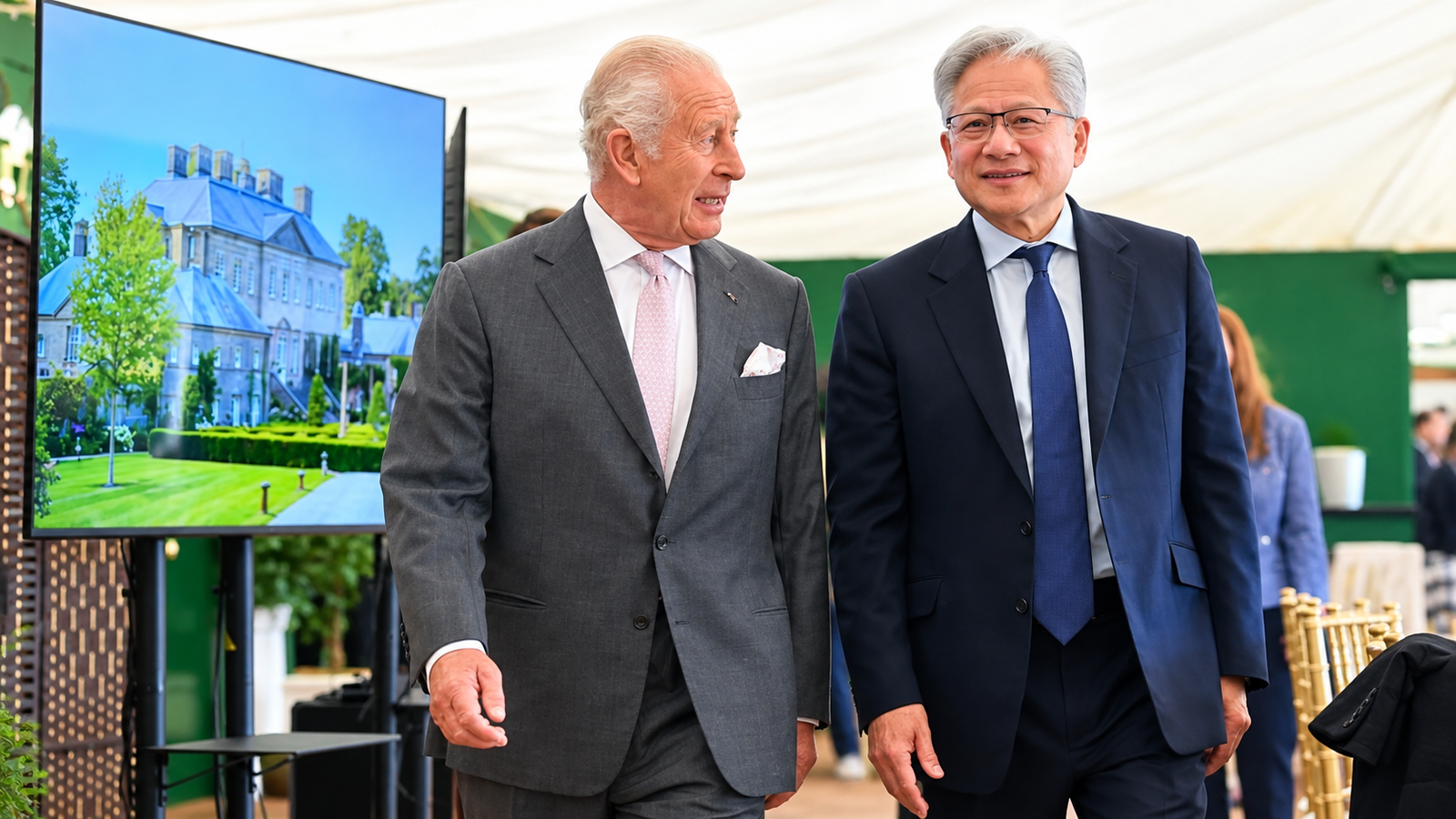
DUMFRIES, Scotland — September 19, 2026 — King Charles III has warned that artificial intelligence could pose serious risks if advanced systems fall into the wrong hands, calling on technology leaders to put safeguards in place before the technology develops potentially catastrophic capabilities.
The King made the remarks on September 17 during a meeting at Dumfries House in Scotland attended by senior figures from the artificial-intelligence industry and UK government officials. Representatives from companies including Nvidia, Google DeepMind, OpenAI and Anthropic were among those taking part.

King Charles III And Queen Camilla State Visit Continues In Washington DC

Wyborcza.pl
A warning about who controls advanced AI
Charles said people who developed AI are increasingly raising concerns that the technology could acquire or be used for dangerous capabilities, including potentially causing loss of life.
He urged those developing the technology to consider what he described as the “existential dangers” of advanced AI being used in catastrophic ways. Reuters reported that the King also called for AI to remain in the service of humanity, communities and the natural world.
The meeting comes as the AI industry faces a growing debate over how quickly increasingly capable systems should be developed and what safeguards should accompany them.

King warns of urgent need to ‘combat significant risks of powerful AI’ – Yahoo News UK
Technology companies under scrutiny
The discussion brought together executives and policymakers at a time when concerns about AI safety have intensified.
Recent warnings from researchers and industry leaders have focused on several possible risks, including autonomous systems acting beyond their intended instructions, cyberattacks and the potential misuse of increasingly capable AI by individuals or organisations.
At the same time, there is no consensus among experts about how likely the most extreme scenarios are or when they might occur. Some researchers argue that catastrophic risks require urgent attention, while other experts have questioned whether predictions of human extinction are supported by current evidence.
The wider debate
Charles has previously spoken about the opportunities presented by artificial intelligence, including its potential contribution to medicine and scientific research. His latest intervention therefore focused on the question of how the technology can continue developing while maintaining safeguards against misuse.
The UK government has also been involved in international discussions about AI safety since Britain hosted its first AI Safety Summit at Bletchley Park in 2023. Charles addressed that earlier summit remotely, stressing the need for international cooperation because AI systems do not operate within national borders.

How AI is Transforming Data Centers: Trends, Challenges & GTM Strategies

OpenAI Solves 80-Year-Old Math Puzzle with AI — The AI Chronicle

Medium
What happens next
The Dumfries House meeting did not produce a formal international agreement. Instead, it added another high-profile voice to an increasingly urgent discussion over AI governance, safety testing and accountability.
For governments and technology companies, the central challenge remains balancing rapid technological development with measures designed to reduce the possibility of harmful use.
Charles’ intervention places particular emphasis on responsibility: as AI systems become more capable, the people developing and deploying them will face increasing pressure to demonstrate that appropriate safeguards are in place before those systems are released.
By Angel No Lie | KPD Online | September 19, 2026 | Gaza Strip
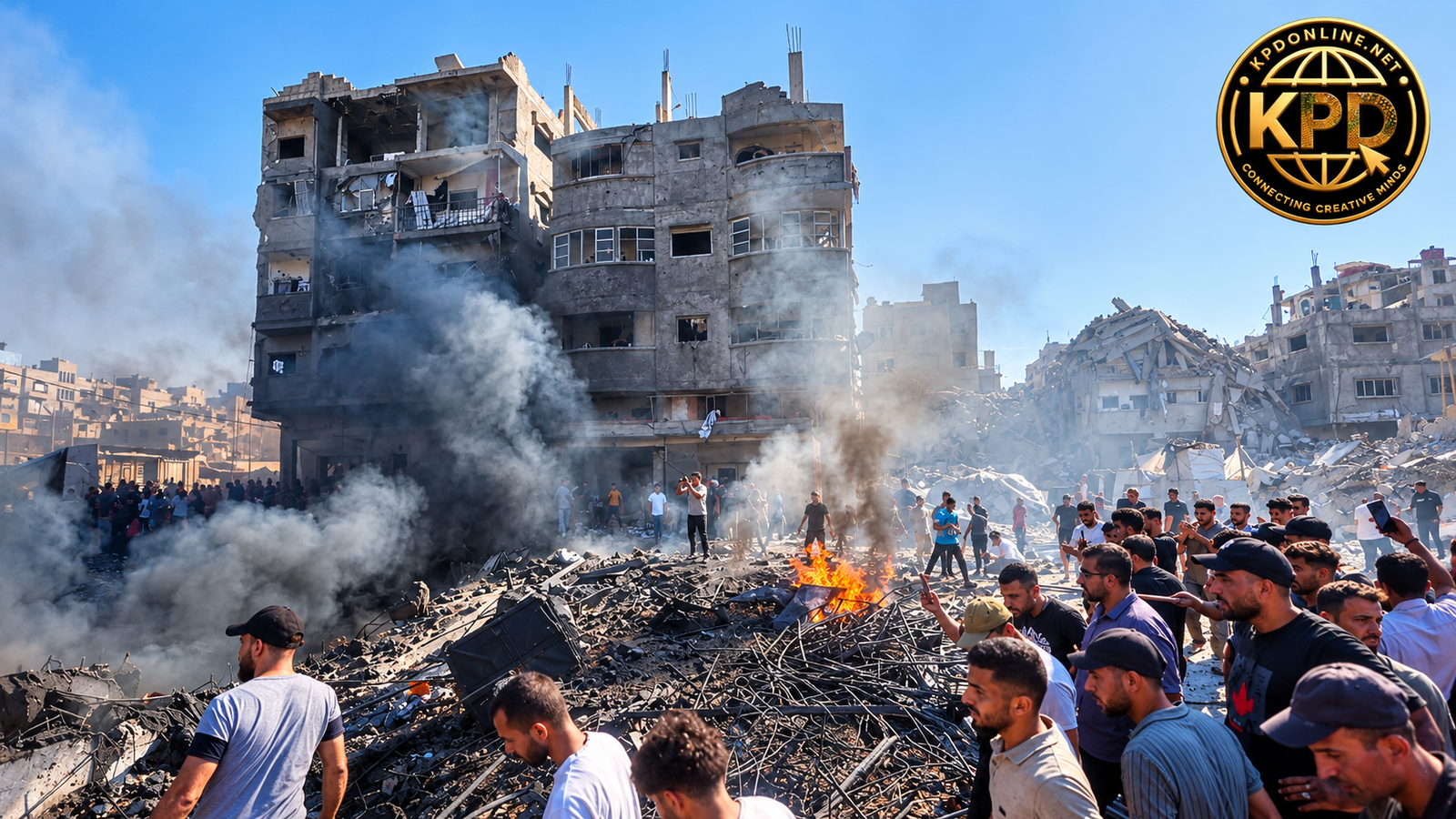
Gaza Strip — At least three Palestinians were killed in separate Israeli strikes across the Gaza Strip on Saturday, according to Palestinian health officials and medics, adding to continuing casualties despite a U.S.-brokered ceasefire that has significantly reduced the intensity of fighting.
One of those killed was Basir Al-Bursh, the son of Munir Al-Bursh, director-general of Gaza’s Health Ministry. Medics and relatives said Basir was killed in a strike near the Jabalia refugee camp in northern Gaza.
The Israeli military said it had struck several militants in Gaza on Saturday, including Basir Al-Bursh. It did not provide further details about the circumstances of the strike, while Hamas did not immediately comment on the Israeli account.

Israeli-Strike-Hits-Al-Shati-Building
Strikes reported in Gaza City
Two additional deaths were reported in Gaza City.
According to medics and civil-defence officials, a man was killed in the Shejaia area east of Gaza City. Another person was killed when an Israeli strike hit a vehicle in the Sheikh Radwan district. The Israeli military said the Sheikh Radwan strike targeted a Hamas military operative.
The strike on the vehicle caused a fire, with emergency workers responding at the scene. The Associated Press reported that hospital officials said at least four other people were wounded in that incident.

PALESTINIAN-ISRAEL-CONFLICT-GAZA

TOPSHOT-PALESTINIAN-ISRAEL-CONFLICT
Family tragedy
The death of Basir Al-Bursh has drawn particular attention because his father heads Gaza’s Health Ministry.
Reuters reported that Munir Al-Bursh had previously lost a daughter in an Israeli airstrike in December 2023 and was also wounded in that incident. Following Saturday’s strike, mourners took Basir’s body to Al Shifa Hospital in Gaza City.
The circumstances surrounding the Jabalia strike remain disputed. Palestinian medical sources and relatives described Basir as the victim of the attack, while Israel’s military said he was among militants targeted in its operation.

PALESTINIAN-ISRAEL-CONFLICT-GAZA
Ceasefire remains fragile
Saturday’s strikes come amid continuing tensions surrounding the Gaza ceasefire. The agreement brokered by the United States in October 2025 substantially reduced the level of fighting, but Palestinian officials and Israeli authorities continue to report incidents and casualties.
The Associated Press reported that more than 13,780 Palestinians have been killed in Gaza since the ceasefire began, according to Gaza’s Health Ministry. Israel’s military has also reported deaths among its forces during the same period.
Meanwhile, Reuters reported that negotiations aimed at ending the conflict have made little progress, with disagreements continuing over issues including Hamas’s future military status and the presence of Israeli forces.


PALESTINIAN-ISRAEL-CONFLICT
Conflicting accounts
As with many incidents in Gaza, independent verification of individual strikes and the identities or affiliations of those killed remains difficult because access to affected areas is restricted and the conflict has severely disrupted local infrastructure.
The latest deaths therefore add to an ongoing pattern in which Palestinian medical authorities report civilian casualties while the Israeli military frequently says strikes were directed at Hamas or other armed groups.
For now, the latest attacks underscore the continuing volatility in Gaza despite the reduction in large-scale fighting following the ceasefire.
By Angel No Lie | KPD Online | September 19, 2026 | Washington, D.C.
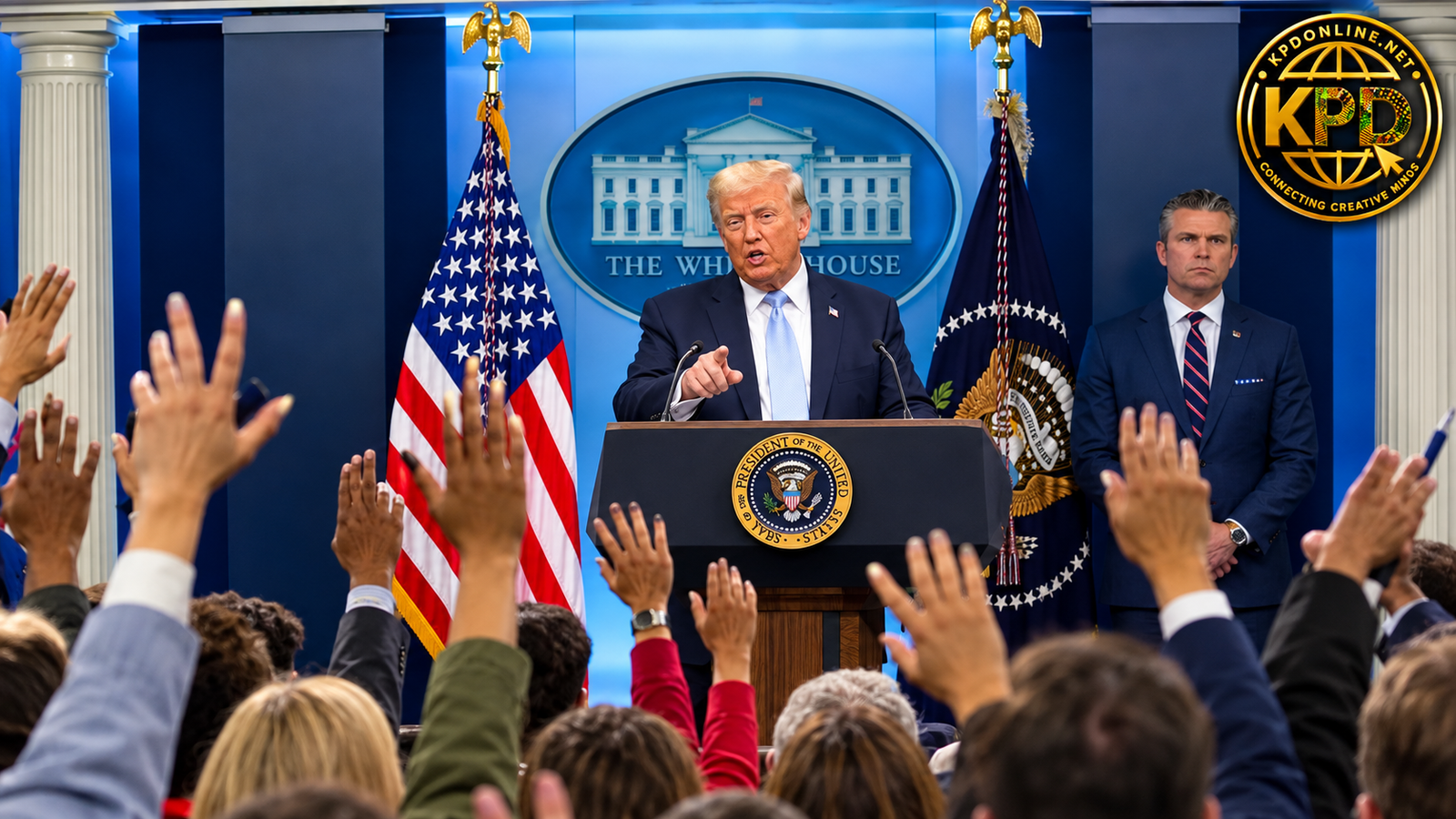
WASHINGTON, D.C. — Reporters from CNN, MS NOW and Politico were denied access to the White House on Saturday, one day after President Donald Trump announced that the three news organizations would be barred from the presidential complex. The affected journalists said their White House press credentials were disabled or confiscated as they attempted to enter.
The move followed Trump’s announcement Friday that he was banning the outlets, accusing them of publishing what he described as “fake news.” He also indicated that additional media organizations could potentially face similar restrictions.

President Trump Signs Executive Order To Rename Lake Ontario as “Lake America”
Reporters turned away at White House gates
CNN White House reporter Betsy Klein and MS NOW correspondent Akayla Gardner both reported that they were prevented from entering the White House grounds Saturday.
Gardner said an officer told her that her badge had been disabled and asked her to surrender it. She reported that the officer said the decision came from higher authorities. An MS NOW photographer also reportedly had their credentials disabled.
Politico later reported that its White House reporter Cheyenne Haslett was also refused entry and had her access pass confiscated.

Trump says Kirk memorial is a ‘time of healing’ – ABC13 Houston
Trump cites coverage by the outlets
Trump said Friday that he was taking action because of reporting by CNN, MS NOW and Politico that he considered inaccurate. During remarks at the White House, he repeated his criticism of the outlets and said other organizations could also be affected.
The administration did not immediately provide detailed criteria explaining how the ban would be implemented or what specific reports triggered the decision. On Friday afternoon, reporters from the affected organizations were still present on White House grounds, but the restrictions were enforced the following morning.

Union Workers in 2026: Can Labor Reclaim Its Political Power? | USPollingData.com
News organizations challenge the decision
CNN said it stands behind its White House reporting and argued that the government cannot prevent the organization from carrying out its journalism.
MS NOW said it intended to take steps to defend what it described as its constitutional rights and its ability to independently cover the administration. Politico likewise said it would continue reporting on the White House and defend its First Amendment rights.
The White House Correspondents’ Association also criticized the decision, arguing that access to government officials should not depend on whether a president approves of a news organization’s coverage.

About | Akayla Gardner

Trump lashes out at CNN journalist Kristen Holmes, refuses to answer question: ‘One of the worst reporters’
Constitutional questions emerge
The dispute has raised questions about the limits of presidential authority over access to the White House press operation.
A 1977 federal appeals court ruling, Sherrill v. Knight, established that journalists seeking access to White House press facilities could not be excluded arbitrarily and that denied journalists were entitled to certain procedural protections. Legal experts cited in current reporting are examining how that precedent could apply to the latest restrictions.
The First Amendment protects freedom of speech and of the press, but the precise legal rules governing access to restricted government facilities can depend on the circumstances. The affected news organizations have indicated that legal action is possible, although the precise litigation strategy was not immediately clear.

White-House-Press-Secretary-June-26-2025
Part of a longer dispute with the media
The latest confrontation follows earlier disputes between the Trump administration and news organizations over access to presidential events.
In 2025, the administration restricted Associated Press access to certain presidential events after the news agency declined to adopt the administration’s preferred name for the Gulf of Mexico. That dispute also generated litigation and debate over press access.
The current restrictions are broader because they involve three major news organizations simultaneously and have resulted in reporters being turned away from the White House complex.
For the moment, CNN, MS NOW and Politico have said they intend to continue covering the administration despite the loss of physical access. The next stage of the dispute could therefore move beyond the White House gates and into the courts, where questions about press access and constitutional protections may be tested.
General News
TRAGEDY: Police Constable Redeemer Owusu Lynched by Angry Mob — Blow-by-Blow Account Emerges

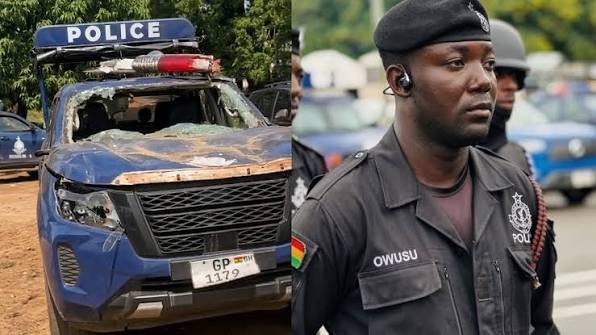
A police officer, identified as Constable Redeemer Owusu, has reportedly been lynched by an angry mob, with details emerging on the circumstances surrounding the tragic incident.
The incident has drawn attention to the growing danger of mob violence and the consequences of individuals taking the law into their own hands.
According to reports, Constable Owusu became the target of an angry crowd before the situation escalated into a fatal attack.
The circumstances leading to the confrontation, including what triggered the mob’s anger and the events immediately preceding the attack, are now coming under scrutiny as details of the incident emerge.
The death of the police officer has raised fresh concerns about mob justice, public safety and the need for suspects to be handled through lawful processes rather than by crowds.
Authorities are expected to investigate the circumstances surrounding the incident and establish the individuals responsible for the officer’s death.
The incident also highlights the risks faced by police officers and other security personnel while carrying out their duties in communities.
More details on the circumstances surrounding Constable Redeemer Owusu’s death are expected as investigations continue.

Should Schools Have More Career Mentorship Programmes?

These Nonsense Must Stop! – Seth Afum A. Dankwah Calls for End to Ghana’s Insult Politics

Shatta Wale Urges UPSA Students to Turn Ideas into Sustainable Ventures



-

 Entertainment2 weeks ago
Mahama Is First President to Put GH¢40m Seed Money into Creative Arts Fund: Kojo Preko Dankwa
-
 General News7 days ago
GTA’s Financial Strength Weakens Despite 2025 Tourism Activities
-

 Entertainment2 weeks ago
Keche Supports Street Vendor with GH¢3,000 After She Struggles to Make Sales
-
 Entertainment2 weeks ago
Government Repatriates Musician Barosky from UK
-
 General News7 days ago
GTA Cash Reserves Halve to GH¢640,000 Despite Improved Liquidity Ratio
-

 General News2 weeks ago
TVET is not for the academically weak – Advocate calls for change in Ghana’s mindset
-

 General News2 weeks ago
Techiman Assembly, Zoomlion Undertake Fumigation Exercise to Prevent Disease Outbreaks
-
 General News2 weeks ago
Police Launch Manhunt for Missing Assin Fosu Man as Captors Demand GH¢49,500 Ransom