
Entertainment
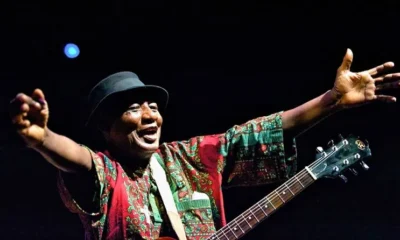
Time will Vindicate Obour – Enock Agyapong Writes


Time has a way of revealing truths that emotions often cloud. And in the case of Bice Osei Kuffour, popularly known as Obour, history may yet judge him far more kindly than sections of the industry once did.
Obour remains one of the finest minds Ghana’s music industry has produced, a rare blend of artistry, intellect, and administrative courage. As President of the Musicians Union of Ghana (MUSIGA) for two terms, the union witnessed one of its most visible and vibrant eras. Under his leadership, MUSIGA moved from being a largely symbolic body to an institution with national presence and influence.
One of his most impactful initiatives, the Ageing Musicians Welfare Fund (AMWEF), sought to restore dignity to veteran musicians who had given their prime years to building Ghana’s cultural identity. The annual Grand Ball became a powerful gathering that attracted corporate sponsors, policymakers, and even sitting Presidents, a testament to the credibility and visibility he brought to the union. The proceeds supported aged musicians, reinforcing the principle that the industry must care for its own.
In 2012, MUSIGA submitted a proposal to the government seeking funds to conduct in-depth research into the music industry. The union received GH¢2 million for this purpose and proceeded to implement the initiatives outlined in the proposal. However, controversy erupted when some industry players argued that the funds should have been shared directly among musicians and affiliated organisations instead.
An independent audit was conducted, and the government subvention was accounted for to the Ministry of Finance. No wrongdoing was established. Yet, accusations persisted. For many, the narrative had already been written, and Obour became the symbol of everything perceived to be wrong with the industry.
Rather than debate policy, the conversation turned personal. What should have been an intellectual discourse about governance became an emotional campaign of vilification. The infamous “Pull Him Down” (PhD) syndrome once again revealed itself as a troubling culture where excellence is met not with collaboration but resistance.
After serving his term, leadership transitioned to John Bessa Simons following a contested election that was eventually resolved in court. Obour exited MUSIGA having completed his constitutional mandate.
He later ventured into politics, and interestingly, elements within the same industry followed him there, campaigning against him. When he lost, some critics who were not even constituents openly celebrated. It became clear that the issue had transcended governance; it had become deeply personal.
Yet, while parts of the creative space distanced themselves from him, the political establishment recognised his administrative ability. He was appointed Managing Director of Ghana Post, an institution many had written off as outdated. Under his stewardship, Ghana Post underwent visible modernisation and repositioning, proving once again that leadership capacity does not disappear because critics demand it.

Ironically, MUSIGA’s constitution designates past Presidents as patrons. Figures like Sidiku Buari and Obour himself should naturally remain pillars within the union’s advisory structure. Yet, bitterness and bad blood have pushed influential former leaders far from the very institution they once served.
Today, conversations about industry struggles persist. The problems Obour was blamed for did not disappear with his departure. The structural challenges remain. The funding gaps remain. The fragmentation remains.
What has changed?
Perhaps time is slowly answering that question.
Obour was never perfect; no leader is. But it is worth asking whether his flaws were magnified to eclipse his contributions. Whether disagreement was weaponised into character assassination. Whether the industry sacrificed long-term unity for short-term emotions.
Now that he walks in corridors of power, his experience and influence could potentially benefit the industry. But reconciliation requires humility, and humility is often scarce in environments governed by ego.
The younger generation, Gen Z and Alpha, must learn from this chapter. Institutions grow when leaders are critiqued constructively, not crucified personally. When policies are debated intelligently, not distorted emotionally. When unity outweighs envy.
Time indeed vindicates.
And perhaps, in the quiet distance from industry noise, Obour has already found peace — while the industry continues to wrestle with the very issues it once placed squarely on his shoulders.
The PhD syndrome must end.
#IndustryFirst




Entertainment
[EDITORIAL] Just as Ghana Rises on the Global Map; Mediocrity Creeps In: The Ordeal of Vyacheslav Trahov the “Russian Alien”

Ghana’s growing recognition on the global stage is no accident. From democratic stability to cultural influence and creative innovation, the country has earned its place as one of Africa’s most respected nations. Yet, beneath this rising international profile lies a troubling contradiction: as Ghana progresses outwardly, mediocrity continues to thrive within key systems, quietly undermining national ambition.
The ordeal of the so-called “Russian Alien” exposes this uncomfortable reality.
This is not merely a story about one individual or an isolated controversy. It is a reflection of how difference, innovation, and nonconformity are often handled in environments that lack institutional confidence. Instead of measured engagement and professional scrutiny, responses frequently tilt toward suspicion, delay, and bureaucratic inertia. That is where mediocrity flourishes not in the absence of talent, but in the absence of leadership and vision.
Mediocrity is rarely dramatic. It hides behind procedures, vague regulations, and selective enforcement. It resists disruption because disruption demands competence. It fears excellence because excellence exposes weakness. And when confronted with ideas or individuals that challenge the status quo, it often chooses obstruction over adaptation.
For a nation positioning itself as a global hub for creatives, investors, and cultural diplomacy, this is dangerous.

Every encounter Ghana has with innovators, local or foreign, sends a signal to the world. That signal can either affirm Ghana as confident, fair, and forward-looking or portray it as insecure and resistant to progress. In a globalised economy, perception is not cosmetic; it is strategic.
The creative and cultural sectors are especially vulnerable to mediocrity. These sectors depend on openness, experimentation, and cross-cultural exchange. When systems fail to protect or fairly engage unconventional talent, innovation suffers. Creativity becomes constrained. And the nation loses opportunities it may never recover.
This is not a call for recklessness or the abandonment of national interest. It is a call for professionalism, consistency, and intellectual maturity. Strong nations regulate without prejudice, question without hostility, and manage complexity without fear.
Ghana’s historical identity has always been rooted in leadership, political, cultural, and moral. Preserving that identity requires confronting mediocrity wherever it resides, especially within institutions tasked with safeguarding progress. The “Russian Alien” ordeal should be treated not as gossip, but as a case study in systemic weakness.
If Ghana is truly rising on the world map, then excellence must no longer be treated as a threat, and difference must no longer be mistaken for danger. Progress demands courage, not comfort.
The world is watching. More importantly, history is being recorded.
Entertainment
We Should not Reduce the Culture and Creative Arts Industry to mere Entertainment – Richardson Commey Fio Laments
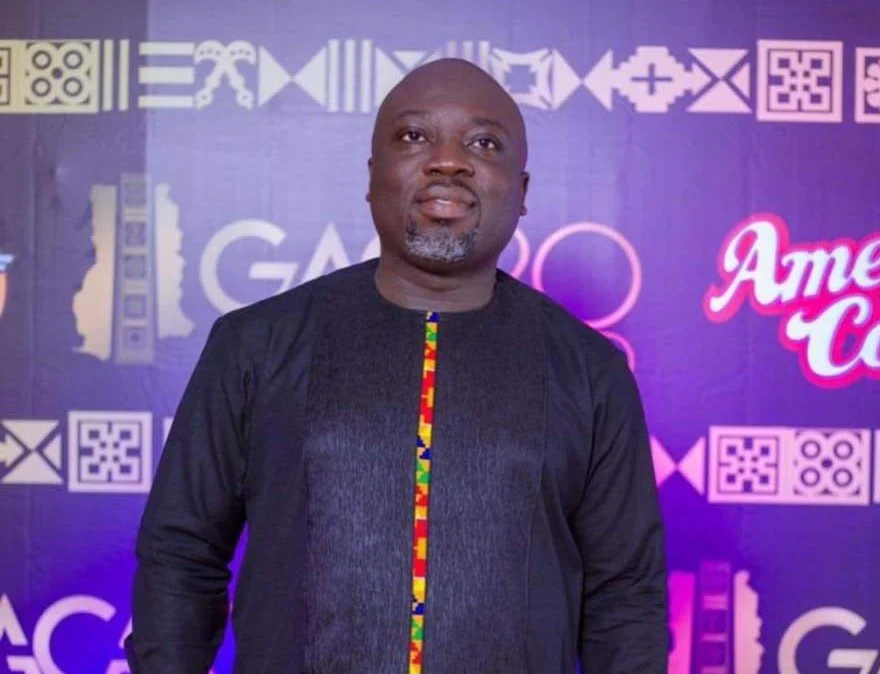
Mr. Richardson Commey Fio, Special Aide to the Minister of Tourism, Culture and Creative Arts, has cautioned against the growing tendency to reduce Ghana’s culture and creative arts industry to mere entertainment, describing the practice as harmful to national development and cultural identity.
Speaking during an appearance on Kessben Entertainment on Kessben 92.9 FM, Mr. Commey Fio stressed that the culture and creative arts sector extends far beyond music, film, and celebrity-driven entertainment, and must be treated as a strategic economic and cultural pillar.
According to him, culture and creative arts encompass heritage preservation, visual arts, fashion, design, crafts, literature, festivals, and indigenous knowledge systems,s areas that contribute significantly to tourism, job creation, and national branding.
“When we reduce culture and creative arts to entertainment alone, we undermine their full value and their potential contribution to Ghana’s socio-economic development,” he lamented.
Mr. Commey Fio noted that such reductionism affects policy direction, funding allocation, and public perception of the sector, often leaving key creative disciplines under-supported. He called on media practitioners, policymakers, and industry stakeholders to adopt a broader and more responsible approach when discussing and promoting creative arts.
He, however, commended Kessben Entertainment for positioning its programme beyond gossip and spectacle, describing it as one of the few platforms that consistently engages creatives on industry structure, welfare, and policy-related issues.
The Special Aide further encouraged creative practitioners to advocate for proper recognition of their work and to push for frameworks that protect intellectual property and ensure sustainable livelihoods.
As Ghana continues to explore the economic potential of its creative economy, Mr. Commey Fio’s remarks serve as a timely reminder that culture is not merely for amusement but a critical driver of identity, innovation, and national progress.

Pop superstar Britney Spears has sold the rights to her entire music catalogue, the BBC has learned.
Spears, 44, is said to have sold to independent music publisher Primary Wave on 30 December for around $200m (£146m).
The singer – whose protracted conservatorship long dictated her personal and professional life – is known for the hits …Baby One More Time, Oops!… I Did It Again, Toxic and Gimme More.
Primary Wave did not immediately respond to the BBC’s requests for comment. Representatives for Spears declined to comment.
In January 2024, the singer said she would “never return to the music industry”. Her last song was a duet released with Elton John in 2022.
Primary Wave has also acquired rights to the estates of Notorious BIG, Prince and Whitney Houston.
Details of the sale and the exact price of Spears’ catalogue have not been made public.
High-profile artists such as Bruce Springsteen, Justin Bieber, Justin Timberlake, and Shakira recently sold their catalogues too.
Springsteen sold his back catalogue to Sony in 2021 for $500m, and Bieber reportedly signed a $200m deal with Hipgnosis Songs Capital in 2023.
The publisher was founded 20 years ago by music executive Lawrence Mestel after purchasing 50% of Kurt Cobain’s portion of the Nirvana catalogue.
Spears is one of the best-selling female artists, with more than 150 million records sold worldwide. Her catalogue includes nine studio albums since her 1999 debut.
The sale comes after a tumultuous few years for the singer, who in 2021 ended a 13-year-long conservatorship – a legal guardianship that saw her finances and personal life controlled by her father.
The singer published her memoir, The Woman in Me, in 2023, which detailed her struggles under conservatorship.
Her ex-husband, Kevin Federline, released his own memoir, You Thought You Knew, at the end of 2025.

Time will Vindicate Obour – Enock Agyapong Writes

GFA Appoints Prosper Nartey on two-years deal as Head Coach of the Black Starlets

GFA introduces 24-hour IT Department Operation System



-
 Entertainment2 weeks ago
We Should not Reduce the Culture and Creative Arts Industry to mere Entertainment – Richardson Commey Fio Laments
-

 General News2 weeks ago
President Mahama Commissions New High Commissioners and Ambassadors
-

 Entertainment1 week ago
[EDITORIAL] Just as Ghana Rises on the Global Map; Mediocrity Creeps In: The Ordeal of Vyacheslav Trahov the “Russian Alien”
-

 Sports1 week ago
Aduana FC Coach Cioaba Aristica announces starting lineup ahead of Medeama Clash
-

 Sports2 weeks ago
Coach Karim Zito part ways with Asante Kotoko after FA Cup defeat against Aduana FC
-

 General News2 weeks ago
Alpha Hour Fire: Suspect Arrested
-
 General News3 days ago
Mahama: Mining Must Leave Communities Better Than It Found Them
-

 Business1 week ago
Cocoa Price Cut Sparks Fears Over Environmental Sustainability and Illegal Mining Surge