
Entertainment
Time will Vindicate Obour – Enock Agyapong Writes


Time has a way of revealing truths that emotions often cloud. And in the case of Bice Osei Kuffour, popularly known as Obour, history may yet judge him far more kindly than sections of the industry once did.
Obour remains one of the finest minds Ghana’s music industry has produced, a rare blend of artistry, intellect, and administrative courage. As President of the Musicians Union of Ghana (MUSIGA) for two terms, the union witnessed one of its most visible and vibrant eras. Under his leadership, MUSIGA moved from being a largely symbolic body to an institution with national presence and influence.
One of his most impactful initiatives, the Ageing Musicians Welfare Fund (AMWEF), sought to restore dignity to veteran musicians who had given their prime years to building Ghana’s cultural identity. The annual Grand Ball became a powerful gathering that attracted corporate sponsors, policymakers, and even sitting Presidents, a testament to the credibility and visibility he brought to the union. The proceeds supported aged musicians, reinforcing the principle that the industry must care for its own.
In 2012, MUSIGA submitted a proposal to the government seeking funds to conduct in-depth research into the music industry. The union received GH¢2 million for this purpose and proceeded to implement the initiatives outlined in the proposal. However, controversy erupted when some industry players argued that the funds should have been shared directly among musicians and affiliated organisations instead.
An independent audit was conducted, and the government subvention was accounted for to the Ministry of Finance. No wrongdoing was established. Yet, accusations persisted. For many, the narrative had already been written, and Obour became the symbol of everything perceived to be wrong with the industry.
Rather than debate policy, the conversation turned personal. What should have been an intellectual discourse about governance became an emotional campaign of vilification. The infamous “Pull Him Down” (PhD) syndrome once again revealed itself as a troubling culture where excellence is met not with collaboration but resistance.
After serving his term, leadership transitioned to John Bessa Simons following a contested election that was eventually resolved in court. Obour exited MUSIGA having completed his constitutional mandate.
He later ventured into politics, and interestingly, elements within the same industry followed him there, campaigning against him. When he lost, some critics who were not even constituents openly celebrated. It became clear that the issue had transcended governance; it had become deeply personal.
Yet, while parts of the creative space distanced themselves from him, the political establishment recognised his administrative ability. He was appointed Managing Director of Ghana Post, an institution many had written off as outdated. Under his stewardship, Ghana Post underwent visible modernisation and repositioning, proving once again that leadership capacity does not disappear because critics demand it.

Ironically, MUSIGA’s constitution designates past Presidents as patrons. Figures like Sidiku Buari and Obour himself should naturally remain pillars within the union’s advisory structure. Yet, bitterness and bad blood have pushed influential former leaders far from the very institution they once served.
Today, conversations about industry struggles persist. The problems Obour was blamed for did not disappear with his departure. The structural challenges remain. The funding gaps remain. The fragmentation remains.
What has changed?
Perhaps time is slowly answering that question.
Obour was never perfect; no leader is. But it is worth asking whether his flaws were magnified to eclipse his contributions. Whether disagreement was weaponised into character assassination. Whether the industry sacrificed long-term unity for short-term emotions.
Now that he walks in corridors of power, his experience and influence could potentially benefit the industry. But reconciliation requires humility, and humility is often scarce in environments governed by ego.
The younger generation, Gen Z and Alpha, must learn from this chapter. Institutions grow when leaders are critiqued constructively, not crucified personally. When policies are debated intelligently, not distorted emotionally. When unity outweighs envy.
Time indeed vindicates.
And perhaps, in the quiet distance from industry noise, Obour has already found peace — while the industry continues to wrestle with the very issues it once placed squarely on his shoulders.
The PhD syndrome must end.
#IndustryFirst




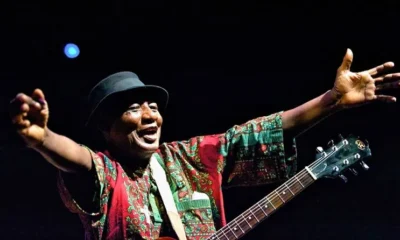

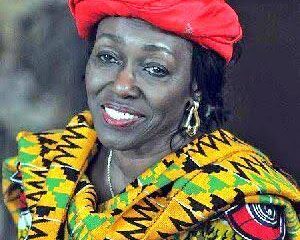



Entertainment analyst and artiste manager Lawrence Asiamah Hanson, widely known as Bulldog, has commended dancehall star Stonebwoy for his consistent efforts to promote Ghanaian music and culture beyond the country’s borders.
Bulldog believes Stonebwoy has made an exceptional contribution to the global growth of Ghana’s music industry, describing his international push as one of the strongest efforts by a Ghanaian artiste in recent years.
Speaking in an interview shared on social media, Bulldog compared Stonebwoy’s international influence to the pioneering work of the legendary Ghanaian music group Osibisa, which helped introduce Ghanaian music to audiences around the world.
He particularly pointed to Stonebwoy’s recent performance at the OVO Arena Wembley in London as an important achievement, not only for the artiste but also for Ghanaian music.
According to Bulldog, the importance of the concert should not be measured solely by the number of people who attended. He argued that simply having the ambition to secure a major international venue, assemble a professional team and successfully stage a large-scale production deserves recognition.
“Since the inception of Ghanaian music, no artist has worked harder than Stonebwoy in promoting and pushing the Ghanaian brand. You see what Stonebwoy did in the UK; very few artistes have done so. Stonebwoy had a show at OVO Wembley Arena. Even if no one came, I would salute him,” he stated.
Bulldog further praised Stonebwoy for taking the risk of booking such a prestigious venue and travelling with a full production team to deliver the concert.
He said the decision reflected the artiste’s ambition, confidence and leadership, qualities he considers essential for Ghanaian musicians seeking to establish the country’s music on new international platforms.
However, Bulldog stressed that his praise for Stonebwoy should not be interpreted as a dismissal of the achievements of other Ghanaian musicians.
Addressing comparisons between Stonebwoy and Shatta Wale, he said both artistes have made valuable contributions to Ghana’s music industry and should be judged based on their respective achievements.
“I will not diminish Shatta Wale’s impact; if I do, I would diminish my own impact… But this is not about Shatta. His mandate was to host a show at that arena to prove that he could do it,” he said.
Bulldog maintained that Stonebwoy’s OVO Arena Wembley concert represents a major milestone in the artiste’s career and further demonstrates his commitment to strengthening the global image of Ghanaian music.
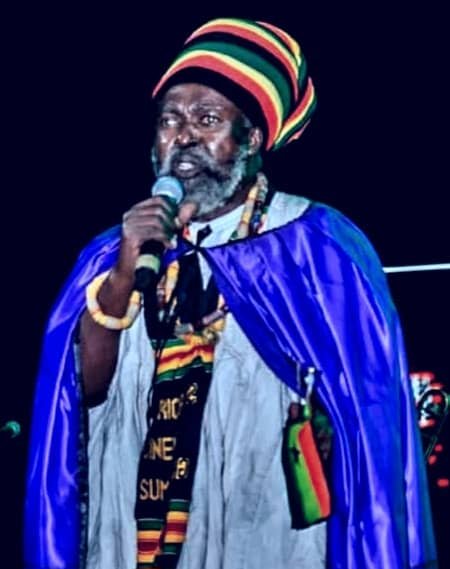
Ras Caleb Appiah-Levi has called on Ghanaians, particularly the youth, to pursue wisdom rather than focusing solely on money, fame, power and social connections.
In a thought-provoking reflection titled “Fools Die for Want of Wisdom,” Ras Caleb referenced the biblical teaching in Proverbs 10:21, arguing that the statement is not a curse but a principle that reflects the consequences of rejecting wisdom and good counsel.
According to him, the consequences of foolishness extend beyond physical death and can also result in the collapse of businesses, marriages, talents, visions and even nations.
“Every day in Ghana, in Africa, in the world — fools are dying. Not only the death of the body, but the death of vision, the death of business, the death of marriage, the death of talent, the death of a nation.”
Ras Caleb stressed that foolishness should not be equated with a lack of education or financial resources.
He noted that academic qualifications and wealth do not automatically make a person wise, arguing that some highly educated and wealthy individuals can still make destructive decisions because they fail to apply wisdom.
“A fool is not a man who lacks a certificate. I have seen PhD holders who are fools. A fool is not a man who lacks money. I have seen rich men who are fools,” he stated.
He described a fool as someone who despises wisdom, rejects correction, ignores counsel and knowingly chooses falsehood because it is more convenient or pleasurable.
Ras Caleb further distinguished intelligence from wisdom, saying:
“Wisdom is not intelligence. Wisdom is application.”
He explained that while an intelligent person may know how to make money, a wise person understands how to preserve, multiply and use money responsibly.
Similarly, he said an intelligent person may know how to speak, but a wise person understands when silence is more appropriate.
Why fools die
Ras Caleb identified several behaviours that, in his view, lead people toward failure and destruction.
They hate correction
He argued that wise people are willing to accept correction, while fools often become hostile when their mistakes are pointed out.
According to him, a wise person can be told that they are wrong and respond with gratitude, whereas a fool may respond with insults, blocking, confrontation or rejection.
He applied this observation to politics and the entertainment industry, arguing that political leaders who ignore the concerns of young people and musicians who refuse advice from their managers can eventually suffer the consequences of their decisions.
He warned that individuals who surround themselves exclusively with people who praise them deprive themselves of the opportunity to receive honest criticism.
They want everything quickly
Ras Caleb also criticised what he described as the desire for instant wealth, fame and gratification.
He said wisdom requires patience, while foolishness often manifests itself through impatience and the pursuit of shortcuts.
He cited fraud, the pursuit of fame at the expense of dignity and interference in other people’s relationships as examples of decisions people may make in their quest for quick rewards.
“What comes quick, goes quick,” he stated.
Using farming as an illustration, he said a wise person understands that crops require time to grow, while a foolish person expects to plant cassava and harvest it on the same day.
They talk too much
The third behaviour he highlighted was excessive talking.
Ras Caleb warned that some people destroy themselves by failing to control what they say, particularly when discussing confidential matters, personal relationships, plans and the people who have supported them.
He referenced the biblical teaching that even a fool can appear wise when he remains silent, arguing that an inability to control one’s speech can eventually become destructive.
Ras Caleb said the current generation has unprecedented access to information but continues to struggle with applying knowledge responsibly.
He observed that people now have access to data, Google, religious leaders and teachers, yet knowledge alone has not necessarily translated into wisdom.
“We have information but no wisdom. We have data but no depth. We have Google but no guidance.”
He argued that the major problem is not necessarily a lack of knowledge, but the failure to apply what people already know.
Ras Caleb outlined several qualities he believes demonstrate genuine wisdom.
According to him, wisdom means:
Fearing God and departing from evil.
Accepting that one does not know everything.
Listening more and speaking less.
Saving and planning instead of spending recklessly.
Forgiving rather than constantly seeking revenge.
Building for future generations rather than living only for oneself.
To illustrate the importance of thinking beyond one’s immediate circumstances, Ras Caleb cited Ghana’s first President, Kwame Nkrumah, and the construction of the Akosombo Dam.
He argued that Nkrumah’s decision to invest in infrastructure that would benefit generations demonstrates the importance of long-term thinking.
“Kwame Nkrumah had wisdom. That is why he built Akosombo for generations he would never see,” he said, contrasting this with what he described as the foolish tendency to consume everything for immediate gratification.
Ras Caleb concluded his reflection with a direct appeal to young Africans to make wisdom a priority.
He urged young people not to pursue only money, connections, followers, beauty or power, warning that these things can become destructive when they are not accompanied by wisdom.
He argued that money without wisdom can be lost, beauty without wisdom can be abused, power without wisdom can be misused, and religious anointing without wisdom can result in scandal.
According to him, wisdom, on the other hand, can preserve, promote and give direction to a person’s life.
He ended with a call for people to learn from the wisdom available around them rather than allowing pride, impatience and rejection of correction to destroy their potential.
“The fool dies. But the wise lives and his works follow him.”

Member of Parliament for Amenfi Central and entrepreneur Hon. Joana Gyan Cudjoe has officially ended her seven-year professional and contractual relationship with Ghanaian music duo Keche Global.
The announcement, issued by GEM Multimedia Ghana Ltd, stated that the relationship, which began in 2019, came to an end following the expiration of the agreement, with Joana Gyan Cudjoe deciding not to renew or continue the professional arrangement.
According to the statement, Keche Global is no longer under the management, representation, investment or business operations of Hon. Joana Gyan Cudjoe or GEM Multimedia Ghana Ltd.
The company stressed that the decision is strictly professional and should not be interpreted as the result of a dispute.
“There is no fight, hatred, bitterness or controversy. It is simply the closing of one professional chapter and the beginning of new chapters for everyone,” the statement said.
From 2019 to 2026, Joana Gyan Cudjoe served as Executive Producer and sole investor supporting Keche’s development and music career.
Her support reportedly covered music recording and production, music videos, marketing and promotion, artist development, branding, photography, creative content, travel, international activities, performances, media promotion, career development and management.
GEM Multimedia said her involvement went beyond financial investment and included vision, leadership, executive production, business relationships and personal commitment to the duo’s career.
The statement said she travelled with the group, supported its activities and invested in the duo because she believed in their talent and wanted to help take their music from Ghana to the wider African and international market.
During the seven years, Keche released several songs, collaborations, music videos and other creative projects.
Among the works listed in the statement are:
Odo — 2019
Today— 2019
Same Girl featuring Akwaboah — 2020
No Dulling featuring Kuami Eugene — 2020
Good Mood featuring Fameye — 2020
Faya featuring Epixode — 2021
Life — 2022
Something Must Happen — 2022
Party of the Year featuring Mr Drew — 2023
Kiss — 2024
Papapa featuring Lasmid — 2025
Maame — 2025
Enjoy Life — 2025
The company said these represent only some of the creative works associated with the group’s journey during the period.
Joana Gyan Cudjoe also expressed appreciation to the artists, producers, songwriters, musicians, directors, engineers, managers, media professionals and other creatives who contributed to Keche’s development.
The statement further disclosed that during Joana Gyan Cudjoe’s involvement with the group, she changed the group’s name from Keche to Keche Global as part of her vision to position the duo for a wider African and international audience.
The name Keche Global has since become the group’s identity.
Despite ending her professional association with the duo, Joana said she was happy to see the name continue and wished the group success in its future endeavours.
GEM Multimedia was particularly clear that the announcement does not signal the end of Joana Gyan Cudjoe’s personal or family relationship with Keche Andrew.
Keche Global comprises Andrew Kofi Cudjoe, known as Keche Andrew, and Joshua Kojo Ampah, known as Keche Joshua.
Andrew Kofi Cudjoe is also Joana Gyan Cudjoe’s husband.
The statement explained that the decision concerns only their professional and business relationship.
“This announcement is not about ending their marriage, family or personal relationship,” the statement said.
Joana said she remains proud of Andrew, Joshua and everything they have achieved together as Keche.
Going forward, Keche Global will operate independently and will no longer receive management, financing, investment, promotion or executive production support from Joana Gyan Cudjoe or GEM Multimedia Ghana Ltd.
The group will be free to select its own management team, investors, business partners, record companies, promoters, producers and other professional partners.
Similarly, Joana Gyan Cudjoe said she would now be free to concentrate on her own businesses, investments, music projects, artists and new opportunities.
She urged the public not to take sides or create controversy around the decision.
According to the statement, the separation is intended to allow both sides to pursue their respective paths peacefully.
Looking back on the seven-year partnership, Joana Gyan Cudjoe said the experience provided valuable lessons in music, entertainment, management, production, marketing, promotion, international business, creative industries and partnerships.
She expressed gratitude for the opportunity to work with the duo and said she preferred to remember the positive experiences from the partnership.
The statement emphasised three principles guiding her approach to the separation: gratitude, peace and respect.
Although Joana Gyan Cudjoe will no longer have a professional connection with Keche Global, she has encouraged fans in Ghana, Africa and around the world to continue supporting the duo.
Fans have been encouraged to stream Keche’s music, watch their music videos, follow their social media platforms, subscribe to their music channels, share their songs, attend their performances and support future projects.
GEM Multimedia stressed that the end of the business relationship should not be interpreted as a call for the public to withdraw its support from Keche Global.
The statement also addressed potential questions surrounding songs, recordings and other creative works produced during the partnership.
Joana said she did not want the announcement to trigger unnecessary disputes over music or creative rights.
Where rights, interests or ownership arrangements are affected, the company said they would be handled professionally in accordance with the applicable agreements and the law.
The statement added that Joana’s intention was not to create unnecessary obstacles for Keche Global but to allow the duo to continue making music and developing their careers.
With the professional partnership now concluded, Joana Gyan Cudjoe said she would redirect her energy, experience and resources toward new talent, new music, new stars, new businesses, investments and other opportunities.
Through GEM Multimedia Ghana Ltd, she said she intends to focus on discovering, developing, producing and promoting the next generation of African musical talent.
Her stated vision is to identify and develop talent capable of moving from Ghana to Africa and eventually the global market.
Hon. Joana Gyan Cudjoe is the Member of Parliament for Amenfi Central, as well as an entrepreneur, businesswoman, investor, founder and Executive Producer.
She is associated with:
GEM Multimedia Ghana Ltd — Music, entertainment and multimedia
Golden Empire Legacy Ltd — Mining, gold and investment
Joana Gyan Foundation — Community development, education, youth and social impact
Her activities span public service, business, investment, music, entertainment, community development and youth opportunities.
In its closing message, GEM Multimedia Ghana Ltd thanked Keche Andrew and Keche Joshua for the years of collaboration, music, experiences, memories and lessons.
Joana Gyan Cudjoe wished both members of Keche Global peace, happiness and greater success in their future endeavours.
The statement reiterated that while the business relationship and professional partnership have ended, the personal respect, love and family bond remain.
Joana also made clear that she does not want the development to become a source of anger, blame or controversy.
The message from GEM Multimedia is therefore that both parties should move forward independently while maintaining mutual respect.
The seven-year professional chapter has closed, with Joana Gyan Cudjoe now turning her attention to new talent, new music, new investments and new opportunities in Ghana’s creative industry.
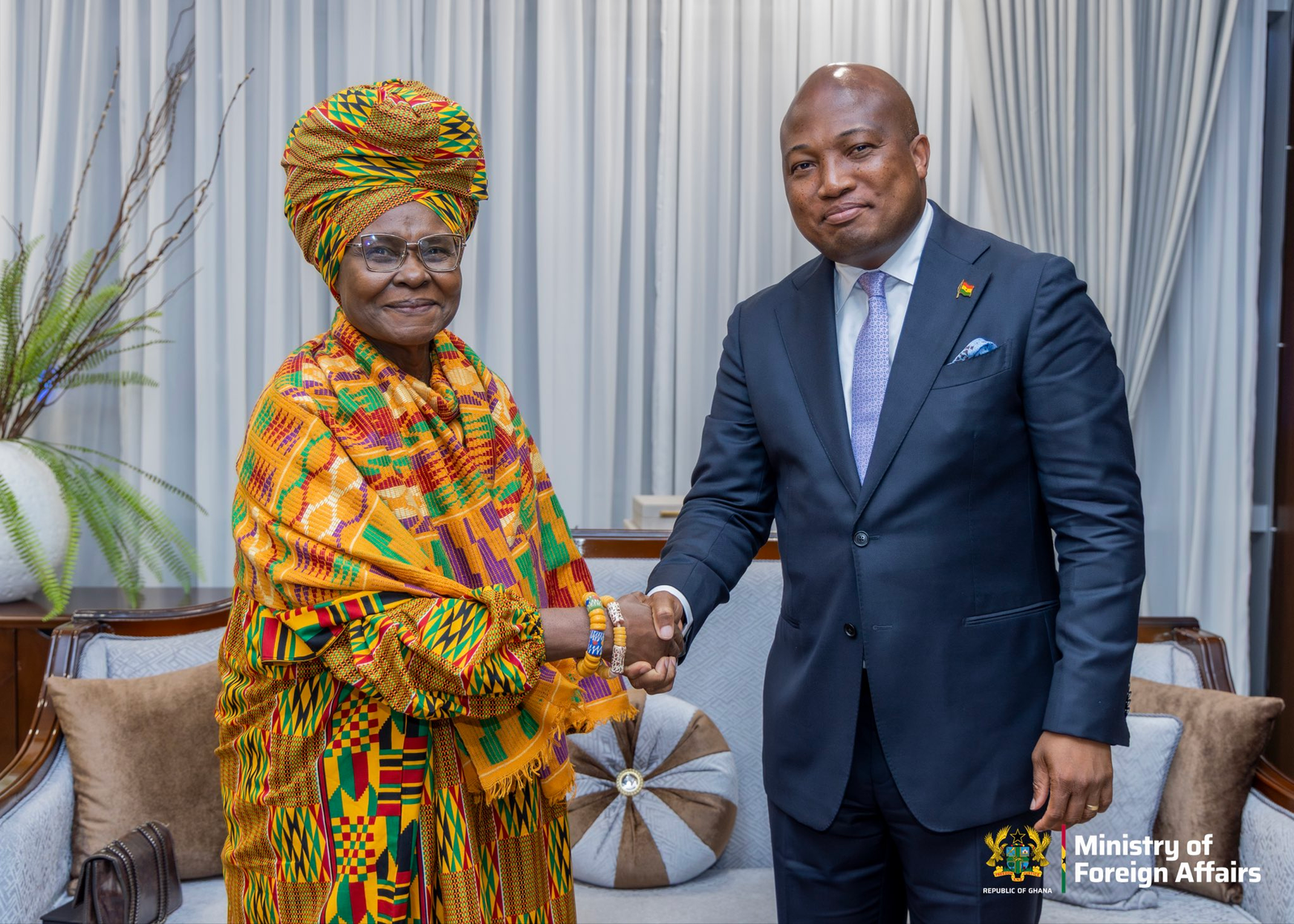
Foreign Affairs Minister Samuel Okudzeto Ablakwa has expressed his appreciation to Queen Asabia Kropa for what he described as a kind and memorable visit, while praising her decades of contribution to Ghanaian culture and cultural diplomacy.
In a post on his X page, Ablakwa commended Queen Asabia Kropa for her longstanding efforts to showcase vintage Ghanaian highlife music and kente to audiences around the world.
According to the Minister, her work over many decades has helped project Ghana’s rich cultural identity internationally and given “real meaning to cultural diplomacy.”
He also praised her influence on generations of Ghanaians, noting that her commitment to the country’s heritage has inspired many people to appreciate and preserve Ghanaian identity and traditions.
Ablakwa concluded his message by extending his blessings and reaffirming the country’s respect for Queen Asabia Kropa.
“God bless you for inspiring many generations to value our identity and heritage. Ghana holds you in high esteem,” he wrote.
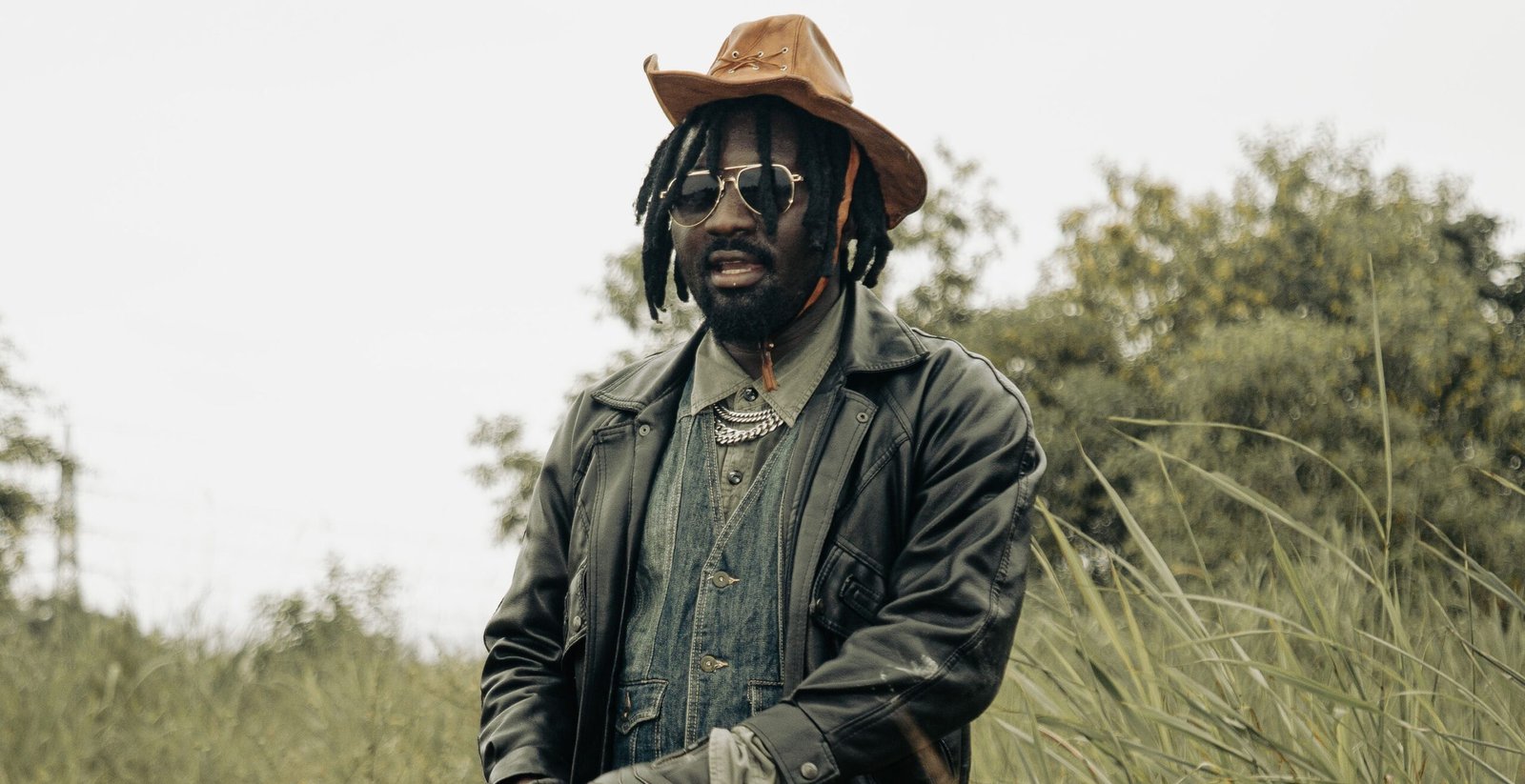
Ghanaian rapper and singer Amerado has officially unveiled his brand-new EP, The Price Of Becoming, an eight-track body of work that captures his growth, sacrifices and the realities behind becoming one of Ghana’s most respected music acts.
Known for constantly pushing boundaries with his music, Amerado uses this project to tell a story that many young Africans can relate to: the reality that success comes with a price. From humble beginnings in Kumasi to becoming a household name across Ghana and beyond, The Price Of Becoming reflects every chapter of that journey.

The project arrives at a time when Amerado continues to expand his influence across Africa through collaborations, international performances and a growing global fanbase. With millions of streams across digital streaming platforms and a growing fan base beyond Ghana, Amerado continues to establish himself as one of the country’s leading voices in contemporary African music.
DSPs – https://onerpm.link/thepob
YOUTUBE – https://www.youtube.com/playlist?list=PLUkhX9v6vWT8

Bulldog Hails Stonebwoy for Taking Ghanaian Music to the World

10 Security Recruits Dismissed Over Mobile Phone Ban

Ras Caleb Appiah-Levi Warns: Fools Die for Want of Wisdom



-

 General News2 weeks ago
KFC Ghana Faces Legal Scrutiny Over Customer Safety During GH¢15 Anniversary Promotion
-

 General News2 weeks ago
BOST Makes Over GH¢10 Million From Faulty Flow Meter Charges, Tanker Drivers Claim
-

 General News1 week ago
Nana Adwoa Tutuwaa Named Global Humanitarian of the Year 2026
-

 General News2 weeks ago
Sammy Gyamfi to Feature in Government Accountability Series
-

 Entertainment1 week ago
Interfaith Tourism World Club Calls for Faith-Based Tolerance to Strengthen National Peace
-

 General News1 week ago
Assemblies of God Ghana Clears Headquarters Loan, Slashes Overdraft by GH¢3.2m
-

 Education1 week ago
Cybersecurity Education in Schools: Should Students Learn Online Safety?
-

 General News1 week ago
LMI Holdings: The Ghanaian Company Chosen to Revive the Saglemi Housing Project