
Entertainment
Ed Sheeran Admits ‘Mistakes’ at First Show Since Macklemore Controversy

By Angel No Lie | KPD Online | September 22, 2026 | Entertainment News
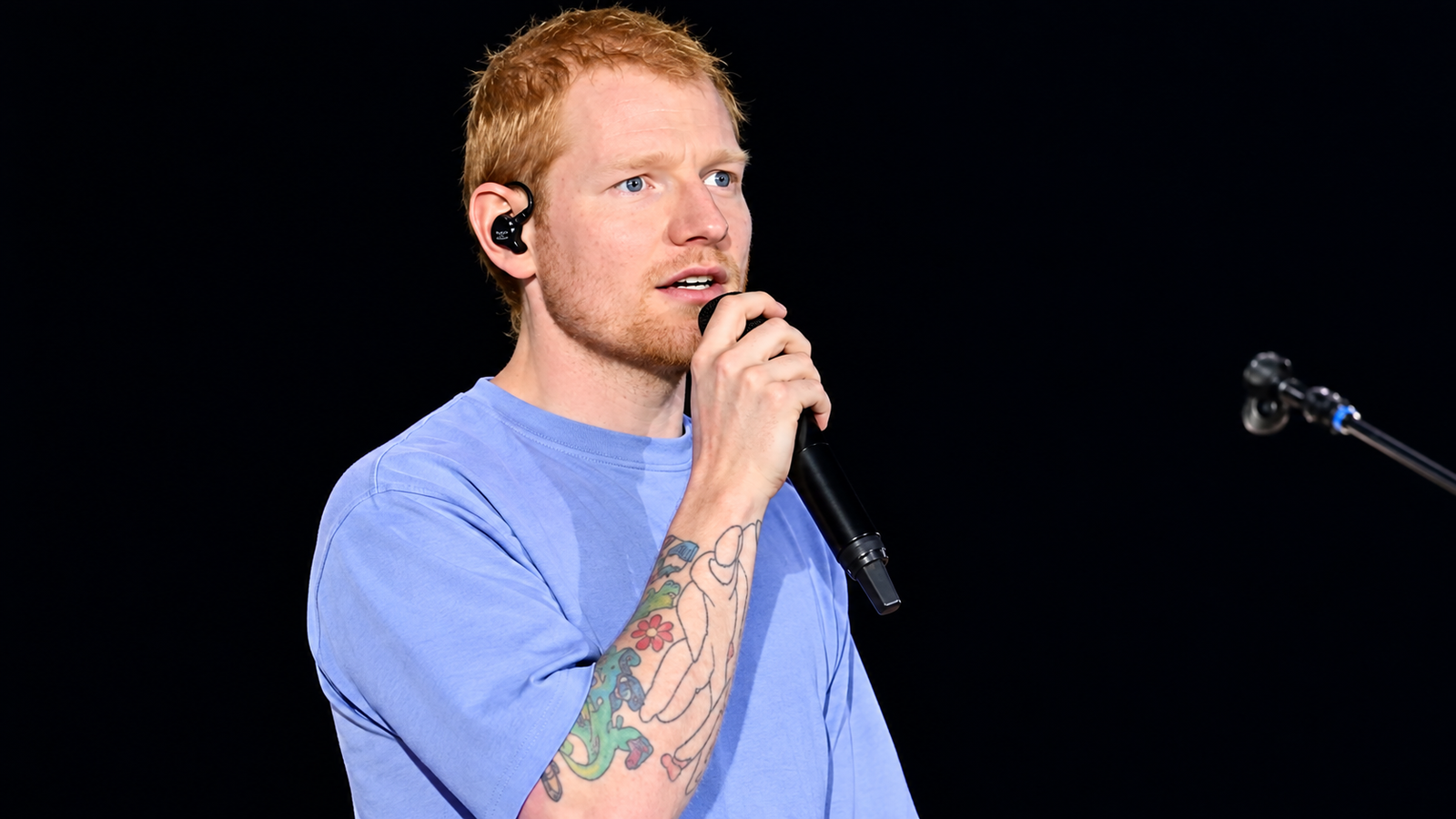
British singer-songwriter Ed Sheeran delivered an emotional apology to fans during his first concert since the controversy surrounding rapper Macklemore‘s removal from the Loop Tour, admitting he had made “mistakes” while navigating one of the most turbulent weeks of his career.
Performing solo at Lincoln Financial Field in Philadelphia, Sheeran opened the show with a heartfelt speech before launching into his set, acknowledging the difficult decisions made behind the scenes and expressing regret over disappointing fans.
“I’ve had to take and make difficult decisions, and I am making mistakes, and I’m so, so sorry,” Sheeran told the crowd.

Jun 03, 2023: Ed Sheeran / Khalid / DYLAN at Lincoln Financial Field Philadelphia, Pennsylvania, United States | Concert Archives
A Tour Thrown Into Turmoil
The controversy began earlier this month after Macklemore made pro-Palestinian remarks during his opening performance on Sheeran’s Loop Tour. According to Sheeran, several upcoming venues threatened to cancel scheduled concerts unless Macklemore was removed, leading promoter Messina Touring Group to make the decision to drop the rapper from the lineup.
Sheeran has maintained that the removal was not his personal decision, saying he attempted to mediate the situation while honoring commitments to fans and tour staff.
The fallout intensified when multiple supporting acts, including Finneas and Lukas Graham, withdrew from the tour in solidarity with Macklemore.

2010s Rocker Shares the Heartfelt Reason Behind His Old-School Lifestyle – Parade
Sheeran Speaks on Gaza

Ed Sheeran Tickets – Concert Tour Dates – AXS AU

Lincoln Financial Field Seating Chart Concert Ed Sheeran | Cabinets Matttroy

Ed Sheeran shouts out Eagles, delights crowd during sold-out show at the Linc

Ed Sheeran shouts out Eagles, delights crowd during sold-out show at the Linc
Fans Respond With Support
Despite widespread online criticism and calls for protests, more than 50,000 fans attended the Philadelphia concert, with many applauding Sheeran’s decision to continue performing.
During the show, Sheeran admitted he had been uncertain how audiences would react after days of intense public scrutiny but thanked concertgoers for showing up and keeping the concert a welcoming space for people with differing views.
Ed Sheeran Tickets – Concert Tour Dates – AXS AU

Ed Sheeran Past Tour Date Gallery Page

Ed Sheeran +–=÷x Tour — Matt Jones
The Loop Tour is continuing with revised production arrangements after the departure of its supporting acts and members of Sheeran’s backing band. New musicians have joined the tour as Sheeran moves forward with upcoming North and South American dates.
The episode has sparked broader debate within the music industry over artistic freedom, corporate influence on live performances, and the challenges artists face when political issues intersect with entertainment.
















:format(jpeg):mode_rgb():quality(40)/discogs-images/A-98707-1473955827-9001.jpeg.jpg)


Entertainment
Paramount Reaches Deal With 12 States, Removing Major Hurdle to Warner Bros. Acquisition
By Angel No Lie | KPD Online | September 22, 2026
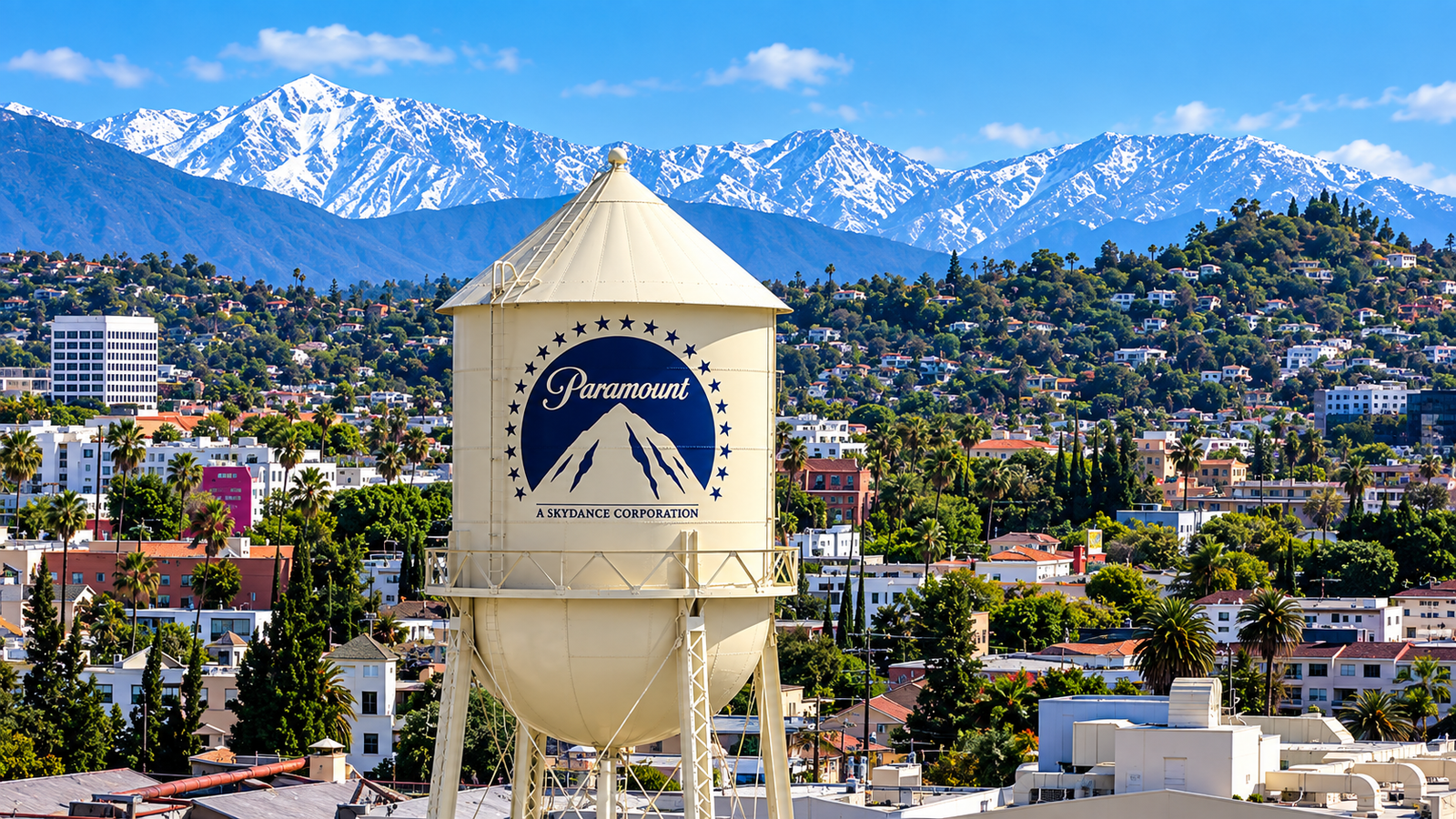
LOS ANGELES — September 22, 2026 — Paramount Skydance has reached a settlement with California and 11 other U.S. states, resolving a major legal challenge to its proposed acquisition of Warner Bros. Discovery and clearing a key obstacle to the roughly $110 billion transaction.
The agreement ends an antitrust lawsuit filed in July by a coalition of state attorneys general. The states had argued that combining Paramount and Warner Bros. Discovery could reduce competition across movie production, television, streaming and cable markets.
Conditions attached to the settlement
Under the agreement, the combined company will face several court-enforceable commitments over a period of up to five years.
Among the most significant provisions is a requirement to maintain a minimum level of theatrical movie production. The company must release at least 30 films annually during the first two years, rising to 32 films a year for the following three years. Financial penalties can apply if the commitments are not met.
Paramount has also committed to spending an additional $300 million annually on domestic film production, representing at least $1.5 billion in additional investment over five years. The settlement also establishes a $47.5 million fund for workers affected by the transaction.
The agreement includes provisions concerning cable negotiations and establishes measures intended to protect editorial independence at CBS News and CNN, two major news organizations that would come under the same corporate ownership following the transaction.
A major change for Hollywood
If completed, the acquisition would combine Paramount and Warner Bros. Discovery’s extensive entertainment operations, including the Paramount and Warner Bros. film studios, CBS and CNN, and streaming services Paramount+ and HBO Max.
The Justice Department had previously cleared the transaction, while the lawsuit by the 12 states became a significant remaining obstacle. The settlement is subject to court approval.
California Attorney General Rob Bonta, whose office led the states’ legal challenge, said the settlement should not be interpreted as an endorsement of the merger. The states had originally sought to prevent the transaction, arguing that it could affect competition and consumers.
Paramount CEO David Ellison has described the merger as beneficial to consumers and the entertainment industry. The company is now moving toward completion of the acquisition, although the settlement’s court approval remains an important procedural step.
The proposed transaction would mark one of the largest consolidations in the modern U.S. entertainment industry, bringing two major Hollywood studios and their television, streaming and news operations under a single corporate structure.
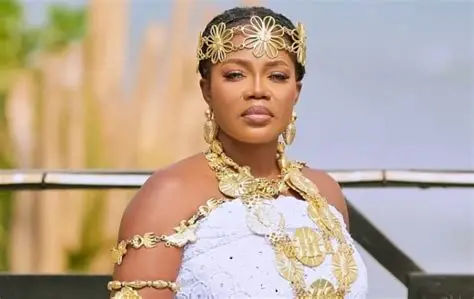
Ghanaian musician and entrepreneur MzBel has opened up about the personal and professional setbacks she says followed her decision to publicly identify with the National Democratic Congress (NDC).
According to the musician, her decision to openly campaign for and defend the NDC resulted in the loss of fans, performances and business opportunities, particularly from individuals associated with the New Patriotic Party (NPP).
Speaking in an interview with Kafui Dey, MzBel said she previously enjoyed support from people across the political divide before making her political affiliation public.
She explained that once she became more vocal about her support for the NDC, some of her NPP-affiliated followers stopped supporting her.
“Before I came out fully as an NDC member, showed my face as an NDC member, I had followers and fans from NPP. But then I boldly came out and started talking for my party. So automatically I’ll lose all those people,” she said.
MzBel further disclosed that she was excluded from some events she had regularly performed at because the organisers were connected to the NPP.
She said the situation became more difficult when the NPP returned to power, as she lost several business deals she had previously benefited from.
“I was blacklisted from some events that I used to get every year. They were organised by NPP people. And even when NPP came to power, I lost a lot of their deals,” she stated.
The musician also recounted an occasion when she was taken off the programme of an event just days before she was scheduled to perform.
According to her, organisers told her that the decision was linked to the political identity of the event’s guest of honour.
“I remember there was a show at Mervyn Peak I was supposed to perform. A few days before the show, they called me and said their guest of honour is one big NDC woman, an NPP woman. And because of her, they had to take me off the show,” she recounted.
MzBel said her political stance also affected some international performances, claiming that organisers sometimes cancelled her appearances after she had already helped publicise the events.
She said such experiences made her believe that she could have avoided many of the setbacks if she had chosen not to publicly declare her political allegiance.
“Not just that, even shows outside Ghana. They will cancel me later after I’ve posted the flyer. So if I didn’t come out to say that I am NDC, defending my party and all of that, I would have been doing well,” she said.
Beyond losing professional opportunities, MzBel said her political involvement also affected her relationship with sections of the public and even some members of the party she supported.
“I lost half of my fans. I lost half of my fan base. And the party I followed too, well, it didn’t do me any good,” she stated.
She also alleged that she faced hostility from some people within the NDC, including verbal abuse, social media attacks and threats of physical violence.
“People in the party physically and verbally attacked me, insulted me, called me out on social media, threatened to beat me and all of that,” she disclosed.
Explaining why she became passionate about the NDC in the first place, MzBel traced her political connection to her upbringing in Jamestown and her admiration for the late former President Jerry John Rawlings.
She said her environment and the influence of Rawlings played a major role in shaping her political identity.
“It was Rawlings and Jamestown. It’s all about Rawlings and NDC. It became like a religion for us,” she said.
However, MzBel now says she has moved away from partisan politics and does not intend to identify herself with either of Ghana’s two major political parties.
She described her experience as a lesson that has changed her perspective on political affiliation.
“It’s not even about the party, but it’s a lesson I was supposed to learn. And I have learned that lesson,” she stated.
MzBel ultimately declared that she now sees herself simply as a Ghanaian rather than as a supporter of either the NDC or NPP.
“I’m not NDC. I’m not NPP. I’m not. I’m nothing. I’m just a Ghanaian. And I decide whether I want to vote or not,” she said.
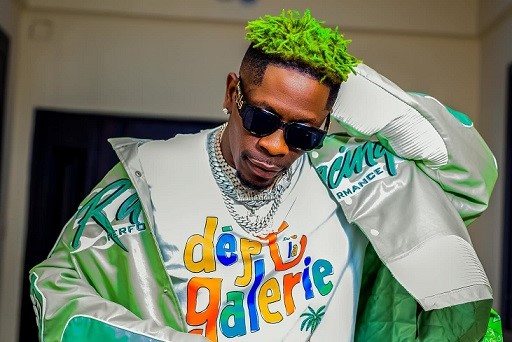
Dancehall star Shatta Wale has sparked an online debate after a tense moment with Jomoro MP Dorsca Affo-Toffey interrupted his performance at the 2026 NkrumahFest.
The incident, captured in a viral video, occurred when the lawmaker approached the musician on stage and attempted to speak with him while he was performing.
Shatta Wale, who appeared unhappy with the interruption, paused his performance to question why public officials should be disturbed while working in their offices, arguing that he also deserved the opportunity to carry out his duties without interference.
Addressing the MP, the musician stressed that performing on stage was his job and that he expected the same respect people extended to ministers and other government officials.
“I can’t disturb you ministers, especially when you are working in your various offices. I am f***ing working in my office. I am working,” he said.
The musician subsequently turned to Affo-Toffey and asked her to explain what she had wanted to tell him.
“So you were telling me something; what were you saying?” he asked after pausing his set.
In response, the MP explained that her intention was to express appreciation to the Member of Parliament for Ellembele, Armah-Kofi Buah, for organising the event.
“I just want to appreciate Hon. Armah-Kofi Buah for organising this massive programme for the Nzema land. Every year, it gets better, and we are praying that next year it will get better,” she said.
Shatta Wale was later seen apologising to Affo-Toffey before allowing her to speak.
The exchange has since divided social media users, with some defending the musician’s reaction and others criticising his approach towards the lawmaker, describing it as disrespectful.
The video continues to generate discussion about the interaction between performers and public officials during live events.
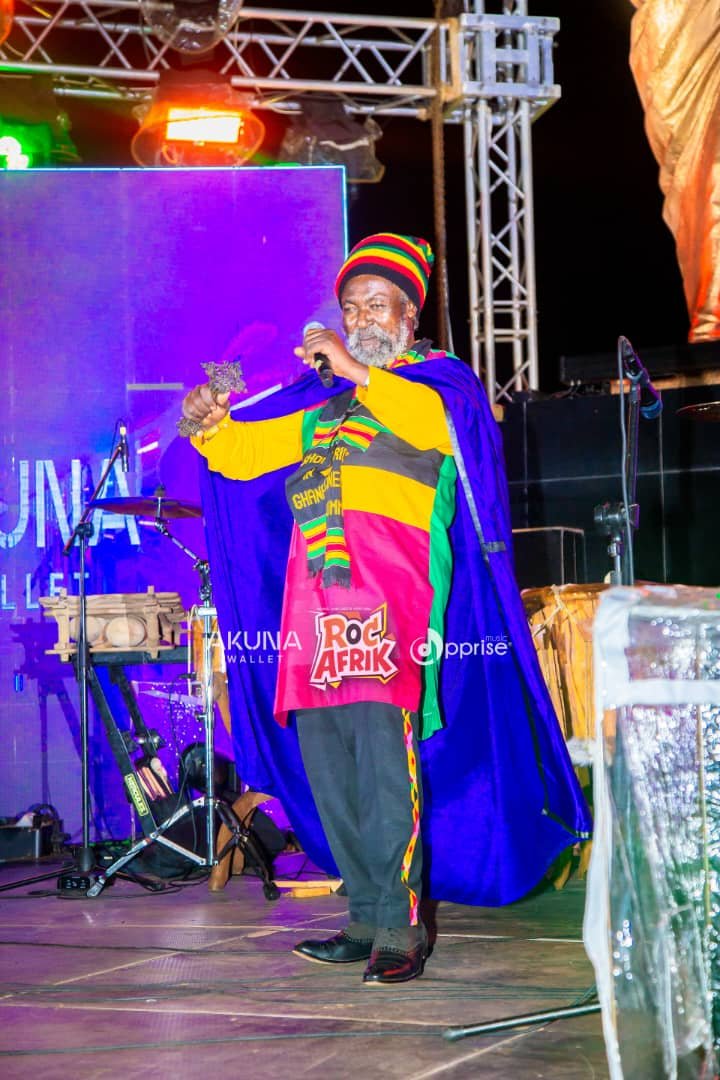
Ras Caleb Appiah-Levi has mounted a passionate defence of Ghana’s global contribution, arguing that the country has produced significant achievements in politics, peacekeeping, culture, spirituality and youth development despite persistent negative perceptions about the nation.
In a statement titled “Can’t Anything Good Come Out of Ghana?”, the Founder and Executive President of PanAfrica-Ghana and Ambassador for the Global Peace Ambassadors Awards (GPAA) drew on the biblical question asked by Nathanael about Nazareth to challenge what he described as an ignorant perception that little good comes from Ghana.
Appiah-Levi, who identifies himself as the son of Cofie Essah Appiah of Boso-Gua, said his response to the question was an emphatic yes. A thousand times yes!
According to Appiah-Levi, one of Ghana’s greatest contributions to the world was its attainment of independence on March 6, 1957.
He credited Osagyefo Dr Kwame Nkrumah’s leadership with giving practical expression to African independence and Pan-Africanism.
Nkrumah declared Ghana free from British colonial rule in his historic independence address, stating that “Ghana, your beloved country is free forever.” Historical records also document his broader argument that Ghana’s independence was tied to the liberation of the African continent.
Appiah-Levi argued that Ghana’s independence became an important symbol for other African countries pursuing freedom from colonial rule.
He cited countries including Nigeria, Kenya and Zambia as part of the wider African independence movement that followed Ghana’s breakthrough.
For him, Ghana’s historical importance extends beyond its own borders because the country demonstrated that Africans could take responsibility for managing their own affairs.
Ghana became independent on March 6, 1957, becoming the first sub-Saharan African country to achieve independence from colonial rule.
Appiah-Levi also highlighted Ghana’s role in international peacebuilding.
He mentioned former United Nations Secretary-General Kofi Annan, a Ghanaian who became one of the country’s most prominent figures on the international stage, as well as Ghanaian soldiers who have participated in peacekeeping operations in different parts of the world.
He referenced Ghanaian participation in peacekeeping efforts in countries including Lebanon, the Democratic Republic of Congo and Liberia.
Beyond military peacekeeping, Appiah-Levi said Ghana had established itself as a welcoming country through initiatives such as the Year of Return and Beyond the Return, which sought to strengthen connections between Ghana and people of African descent in the diaspora.
“While others build walls, Ghana builds doors,” he wrote, portraying the country as a place where Africans in the diaspora can reconnect with the continent.
Appiah-Levi further pointed to Ghana’s cultural heritage as another area in which he believes the country has made an important contribution to the world.
He referenced traditional dances including Adowa, Kete and Agbadza, alongside Ghanaian musical traditions such as highlife and hiplife.
He also mentioned Kente and Fugu, describing them as important expressions of Ghanaian identity and heritage.
The PanAfrica-Ghana founder said his pride in Ghanaian culture was reflected in his own appearance at an ambassadorial honour, where he wore traditional Ghanaian cloth.
He also highlighted Ghana’s natural resources and agricultural products, particularly cocoa and gold, linking them to the country’s historical identity as the Gold Coast.
In making his case for Ghana’s intellectual contribution, Appiah-Levi cited Ghanaian scholar and educator J.E. Kwegyir Aggrey, recalling his famous analogy about the need for both black and white keys to create harmony.
For Appiah-Levi, the quotation reflects the importance of diversity, cooperation and the complementary contributions of different peoples.
He also connected Ghana’s cultural heritage to traditional spirituality, herbal practices and reverence for ancestors.
Describing his own spiritual philosophy as “SUULIYAH — Peace beyond understanding,” he said Ghana’s spiritual traditions form part of the country’s contribution to humanity.
Appiah-Levi said Ghana’s achievements should not only be measured through its history.
He pointed to the country’s young people as evidence that positive developments continue to emerge from Ghana.
According to him, young Ghanaians are working as inventors, coders, farmers and musicians and are increasingly creating opportunities rather than waiting for handouts.
He said PanAfrica-Ghana believes in the potential of the youth because, in his view, Ghana’s contribution to the world belongs not only to the past but also to the future.
“I see the good every day at Chesterfield Close,” he stated, arguing that the creativity and determination of young Ghanaians should be recognised.
Responding directly to those who question whether anything good can come from Ghana, Appiah-Levi urged them to look beyond negative narratives and experience the country’s history, culture and people for themselves.
He adapted the biblical response to Nathanael by saying: “Come and see.”
He invited people to see the Volta River, experience the hospitality of Boso-Gua and witness international peace-related activities in Accra.
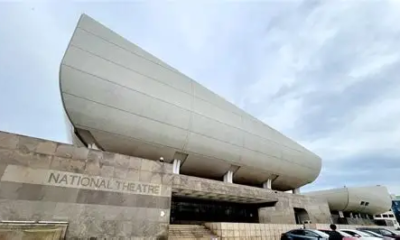
He also pointed to the National Theatre, saying the venue would host the Global Peace Ambassadors gathering on December 23, 2026.
According to him, the event’s choice of Accra rather than international cities such as Geneva or New York reinforces his belief that Ghana can serve as a home for global peace initiatives.
Appiah-Levi concluded his reflection with a strong affirmation of Ghanaian identity and the country’s place in Africa.
He described Ghana as the Black Star, the hope of Africa, and Zion, insisting that the country should not be viewed as a mistake but as a message to the world.
“Everything good can come out of Ghana, because Ghana is good,” he stated.
He ended with the message:
“SUULIYAH — ONE LOVE, ONE FAMILY, ONE GHANA, ONE AFRICA!”
The statement was signed by Ras Caleb Appiah-Levi, Founder and Executive President of PanAfrica-Ghana and Ambassador for the Global Peace Ambassadors Awards (GPAA), Accra, September 2026.
His reflection comes as Ghana continues to commemorate the legacy of Nkrumah and the country’s Pan-African role. On September 21, 2026, Ghanaians and Pan-Africanists also commemorated Nkrumah’s 117th birthday, with speakers stressing the need to study and apply his development ideas rather than treating his legacy merely as a subject of celebration.

Free Speech, False Publication and Presidential Criticism in Ghana: Where Does the Law Draw the Line?

Koobi: The Unsung Hero Behind the Distinctive Taste of Ghanaian Food

Abena Preko Dankwa, Wife of Broadcaster Kojo Preko Dankwa, Mourns Mother



-
 General News1 week ago
GTA’s Financial Strength Weakens Despite 2025 Tourism Activities
-
 General News1 week ago
GTA Cash Reserves Halve to GH¢640,000 Despite Improved Liquidity Ratio
-
 General News2 weeks ago
TVET is not for the academically weak – Advocate calls for change in Ghana’s mindset
-
 General News1 week ago
Creative Arts Agency Records GH¢2.01m Revenue in FY2025 Despite Financial Reporting Gaps
-
 Business2 weeks ago
Bank Profits Slide to GH¢7.1bn as Low Interest Rates Squeeze Earnings
-
 General News2 weeks ago
Police Launch Manhunt for Missing Assin Fosu Man as Captors Demand GH¢49,500 Ransom
-
 Culinary1 week ago
Oranges: More Than Just Juice — The Nutritious Fruit Adding Flavour to Ghanaian Life
-
 General News1 week ago
National Theatre balances cultural mandate with commercial survival