
General News
Fire Outbreak at Accra Recycling Plant Highlights the Critical Role of Strong Public Institutions

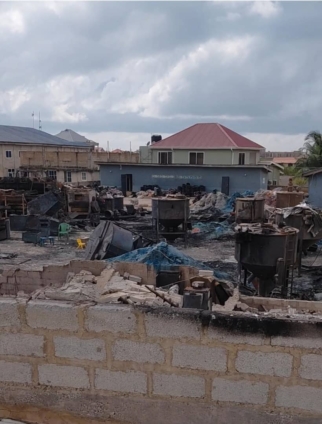
“I wish to begin with a line that remains as powerful today as the day it was spoken: Africa doesn’t need strongmen; it needs strong institutions.”
These were the words of former U.S. President Barack Obama when he addressed Ghana’s Parliament on July 11, 2009. More than a decade later, those words continue to speak truth across the continent, reminding us that a nation’s strength rests not in individuals, but in institutions that uphold safety, justice, and accountability.
One of those institutions is the Ghana National Fire Service, particularly the committed officers serving the Greater Accra Region. Their work often goes unnoticed until a crisis hits, yet they remain among the most essential protectors of life and property.
For many, fire outbreaks feel like distant stories, something that happens to other people. But when you find flames threatening your home and the lives of your family, the value of the firefighters who respond becomes undeniably clear. They are more than uniformed workers; they are frontline defenders.
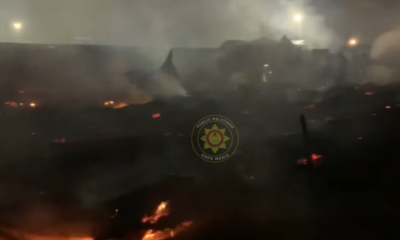
Yesterday, that reality became deeply personal for me. A newly established plastic recycling plant near my home went up in flames. Because plastic and rubber burn with extreme intensity, the fire grew quickly, creating a dangerous scene that could easily have consumed everything nearby. My home, with my wife and child inside, stood in harm’s way.
Only one group stood between disaster and safety: the Greater Accra Command of the Ghana National Fire Service.
Their response was rapid, coordinated, and exceptionally professional. Firefighters arrived ready to confront a blaze so fierce that it took nearly seven hours of continuous effort to bring it under control. The endurance required for such a battle cannot be overstated.
As they worked, these officers faced heavy smoke, intense heat, and challenging conditions. They handled equipment with precision and positioned themselves strategically to stop the flames from spreading to nearby homes. Without their bravery, the story today would have been one of destruction and grief. Instead, it is one of gratitude.
This experience reinforced a simple truth: institutions like the Ghana National Fire Service deserve our appreciation, cooperation, and support. Regardless of any broader challenges within the system, the men and women on the ground put their lives on the line for our safety.
It also highlighted another important point: fire safety is a shared responsibility. Factories, businesses, and households must follow proper safety procedures. When regulations are ignored, everyone is put at risk.
This is why regulatory bodies must remain active and vigilant. Institutions such as the Ministry of Environment, Science, Technology and Innovation; the Environmental Protection Authority; the various Metropolitan, Municipal, and District Assemblies; the Ghana Standards Authority; the Ministry of Sanitation and Water Resources; and of course, the Ghana National Fire Service, all play critical roles. Regular inspections, strict enforcement, and adherence to safety standards are essential if we want to prevent avoidable disasters.
To the heroic team of the Greater Accra Command of the Ghana National Fire Service, I offer my heartfelt appreciation. You turned what could have been a tragedy into a powerful reminder of why strong institutions matter. Your courage protected families, saved homes, and preserved hope.
May we continue to support the public institutions that safeguard our wellbeing, and may regulatory agencies remain committed to ensuring that industries operate safely and responsibly.
Thank you to the Greater Accra Fire Service. You are the quiet guardians standing between danger and safety, and we are grateful.
By Evans Mawunyo Tsikata, on behalf of all nearby residents.




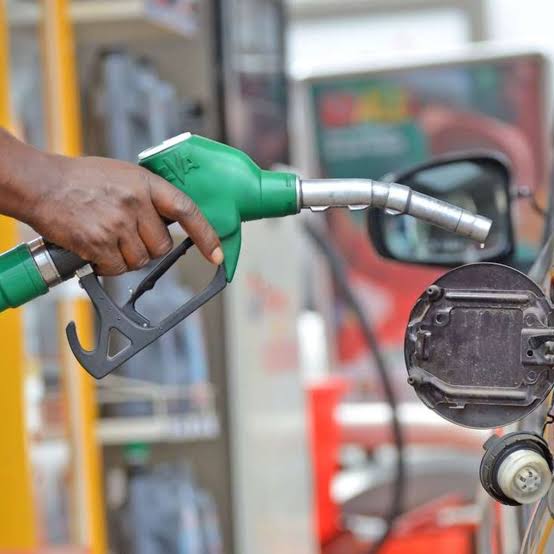
Fuel prices in Ghana are expected to rise sharply beginning March 16, 2026, according to the latest pricing outlook released by the Chamber of Oil Marketing Companies (COMAC).
The report, which guides pricing decisions for oil marketing companies and was sighted by JoyBusiness, projects significant increases across major petroleum products. Petrol is expected to rise by 16.93 percent, while diesel could increase by 17.21 percent. Liquefied Petroleum Gas (LPG) is also projected to go up by 11.26 percent.
If the projections hold, the price of petrol could reach about GH¢14.32 per litre, while diesel may sell at approximately GH¢16.10 per litre at the pump.
Fourth Increase Since January
This will mark the fourth projected fuel price increase since January 2026. However, it is expected to be the steepest increase recorded this year for petroleum products.
Global Factors Driving the Increase
COMAC attributes the anticipated price surge mainly to rising global crude oil prices. The increase has been influenced by escalating geopolitical tensions in the Middle East and disruptions along the strategic oil shipping corridor known as the Strait of Hormuz.
The supply disruptions have pushed international petroleum prices upward. According to the report, diesel prices on the international market rose by about 43 percent, LPG increased by 23.96 percent, and petrol climbed by 19.41 percent.
Crude oil prices also recorded a sharp jump in mid March, rising from 71.41 dollars per barrel to 86.55 dollars per barrel.
Oil Marketing Companies Yet to Announce Final Prices
Some Oil Marketing Companies (OMCs) have indicated to JoyBusiness that they are likely to adjust their pump prices within the projected margins once the new pricing window takes effect.
Market watchers are particularly waiting to see the pricing decisions of the country’s two largest players, Star Oil and GOIL, whose price adjustments often influence the rest of the market.
Ghana currently has more than 200 licensed Oil Marketing Companies.
New Minimum Price Floors Announced
Meanwhile, the National Petroleum Authority (NPA) has announced new minimum price floors for petroleum products for the second pricing window of March, covering March 16 to March 31.
Under the revised benchmarks:
Petrol price floor has increased from GH¢10.46 to GH¢11.57 per litre
Diesel price floor has risen from GH¢11.42 to GH¢14.35 per litre
LPG price floor has moved up from GH¢9.38 to GH¢10.67 per kilogram
The NPA has directed all Oil Marketing Companies and LPG Marketing Companies to comply strictly with the new price thresholds.
According to the regulator, the approved price floors exclude premiums charged by International Oil Trading Companies as well as margins for Bulk Import, Distribution and Export Companies, marketers, and dealers. These costs will be determined independently by the companies in line with the Petroleum Products Pricing Guidelines.
With the new benchmarks in place, no oil marketing company will be allowed to sell petrol or diesel below the approved price floors during the pricing window.
The revised figures also provide an indication of expected pump prices across the country when the new fuel pricing regime takes effect on March 16.
General News
Yonsei University Honors President Mahama with Honorary PhD for Leadership and Ghana–Korea Partnership

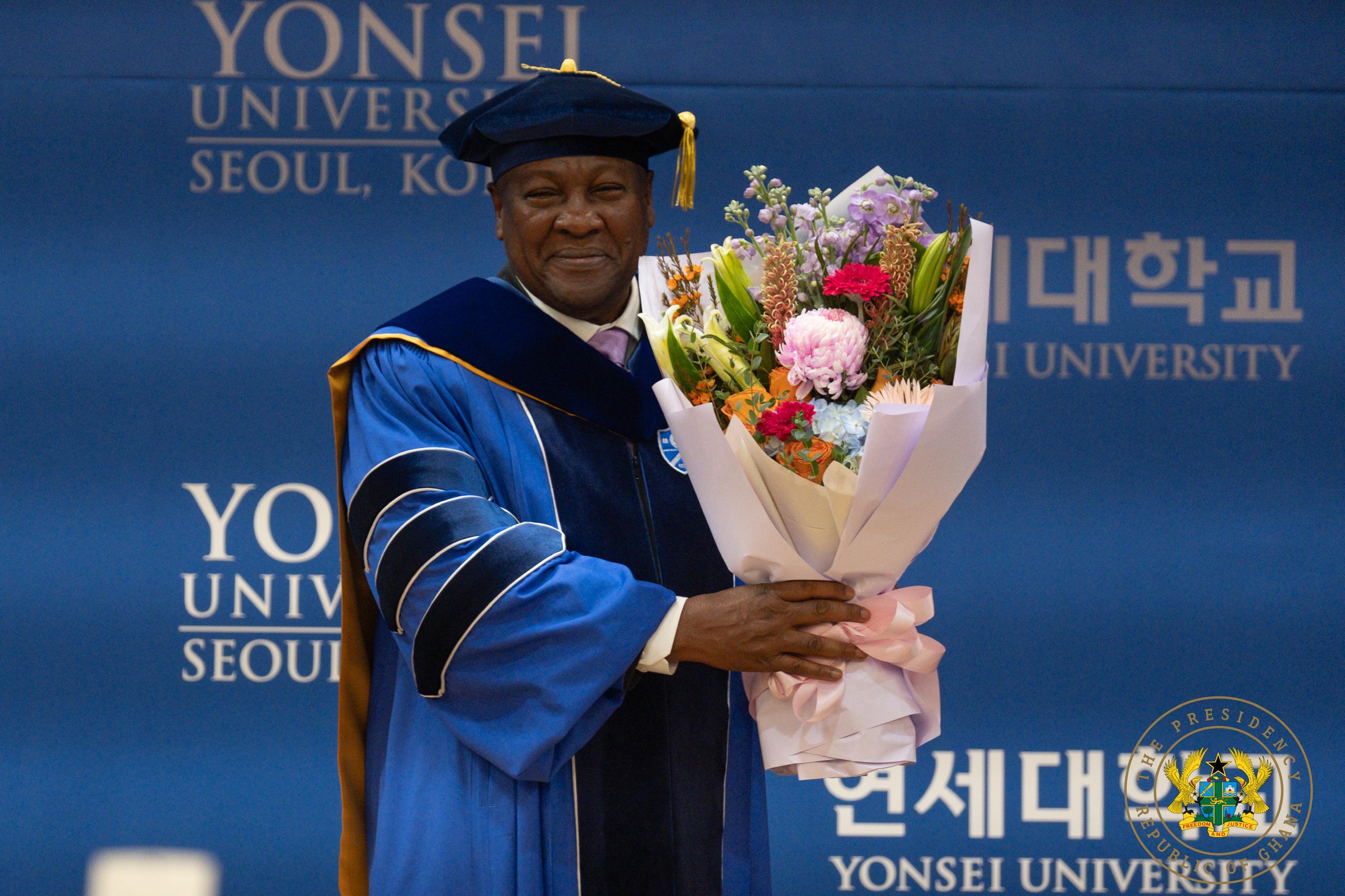
President John Dramani Mahama has been awarded an Honorary Doctor of Philosophy (PhD) in Public Administration by Yonsei University in South Korea, in recognition of his leadership and contributions to Ghana’s national development and global engagement.
The honorary degree was conferred during a ceremony at the prestigious Seoul-based institution, where Mahama delivered a keynote address highlighting the deepening ties between Ghana and the Republic of Korea.
In his remarks, President Mahama described the honour as a symbolic bridge connecting two nations, two continents and two peoples committed to building a better future.
He praised Yonsei University for its global reputation in education and innovation, noting that for more than 140 years the university has nurtured leaders and advanced knowledge in fields such as medicine, engineering, artificial intelligence, biotechnology and renewable energy.
Mahama said the university’s motto, “Truth Will Set You Free,” strongly resonated with his personal beliefs and Ghana’s educational philosophy.
The President reflected on his own formative years at the University of Ghana, recalling how the motto of Commonwealth Hall – “Truth Stands” – inspired him to pursue a life of public service.
Mahama also highlighted the shared historical journeys of Ghana and South Korea. Both nations, he noted, were shaping their national identities in 1957, when Ghana gained independence from colonial rule and Korea began promoting its culture internationally following the Korean War.
While acknowledging that the two countries have followed different development paths since then, he emphasized that commitments to excellence and truth have defined their progress.
Mahama praised South Korea’s transformation into a global economic powerhouse driven by education, technology and innovation, pointing to internationally recognized brands such as Samsung, Hyundai, Kia and LG.
He also celebrated Ghana’s global cultural influence through its kente cloth, cocoa, shea butter, music genres like highlife and Afrobeats, and the internationally loved Ghanaian jollof rice.
Looking ahead, the President underscored the importance of stronger Africa–Asia cooperation, particularly as Africa’s population and youth demographic continue to grow.
According to Mahama, by 2050 Africa will account for about a quarter of the world’s population, with one-third of the global youth population coming from the continent.
He said this young and dynamic population represents a major opportunity for innovation, entrepreneurship and economic growth.
Mahama encouraged greater collaboration between Korea and Africa in sectors such as education, agro-processing, pharmaceuticals, technology, renewable energy and advanced manufacturing.
He also welcomed Yonsei University’s involvement in supporting the transformation of Bonso Agricultural College into a campus of the University of Environment and Sustainable Development in Ghana.
Describing the Ghana–Korea relationship as one built on mutual respect and partnership, Mahama stressed that Africa and Asia must work together to shape a more equitable and multipolar global order.
“My vision for Ghana is to prove that democracy works and to build a prosperous, self-reliant nation where innovation drives economic growth and young people become job creators,” he said.
Mahama concluded by thanking the Korean government, Yonsei University and the Korean people for the warm hospitality extended to him and his delegation.
Accepting the honorary doctorate on behalf of the people of Ghana, he said the recognition reflects the deep friendship and growing cooperation between Ghana and South Korea.
General News
Mahama commissions Sahara LPG Vessel in South Korea to boost energy security in West Africa
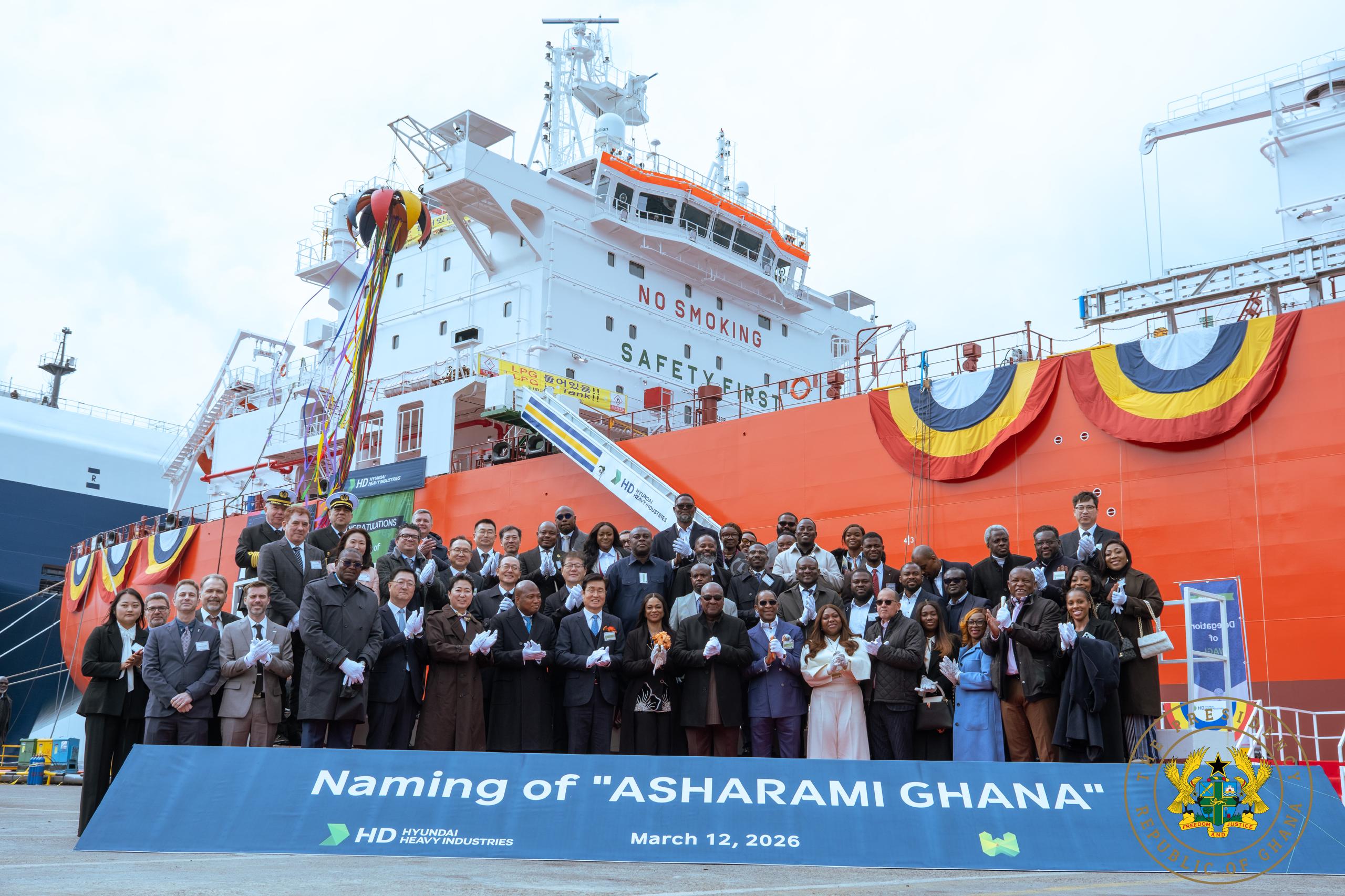
President John Dramani Mahama has commissioned the Sahara LPG Vessel, MT Asharami Ghana, in the Republic of Korea, describing the development as a significant step toward strengthening energy security and improving the Liquefied Petroleum Gas (LPG) supply chain in Ghana and across West Africa.
The commissioning ceremony, held on Thursday, March 12, 2026, brought together government officials, industry stakeholders, and international partners to witness the launch of the state-of-the-art vessel designed to enhance the transportation and distribution of LPG within the region.
Addressing the gathering, President Mahama said the occasion represented more than the launch of a vessel, noting that it symbolised progress in strengthening global LPG infrastructure and ensuring reliable energy supply for countries that rely partly on imports.
“It is a profound honour to join you here today in the Republic of Korea—a nation globally renowned for its excellence in shipbuilding, maritime engineering, and technological innovation—as we witness the commissioning of the Sahara LPG Vessel,” he said.
He explained that for countries such as Ghana and many others across Africa that depend partly on LPG imports to complement domestic production, expanding global shipping capacity is essential for ensuring supply security and improving energy logistics.
According to the President, the commissioning of the dual-fuel, fully refrigerated LPG carrier reflects strong collaboration among stakeholders committed to advancing safe, efficient, and responsible energy distribution.
“Today, we celebrate not only engineering excellence but also the power of partnership. The commissioning of this state-of-the-art LPG carrier reflects the collective vision and collaboration of stakeholders committed to advancing safe, efficient and responsible energy distribution,” he stated.
President Mahama indicated that the vessel, developed under the West Africa Gas Limited (WAGL) Energy initiative, represents a strategic addition to a growing fleet aimed at supporting the evolving energy needs of the region.
He noted that its deployment would significantly expand LPG transport capacity and strengthen access to reliable and cleaner energy across West Africa and the African continent.
Highlighting the importance of LPG in the global energy transition, the President said the fuel provides a cleaner alternative to traditional energy sources such as charcoal, firewood, and kerosene, which remain widely used across many African communities.
“Liquefied Petroleum Gas plays a vital role in this transition. For millions of households across Africa, LPG offers a cleaner alternative to traditional fuels such as charcoal, firewood and kerosene,” he said.
He added that the wider adoption of LPG would not only improve public health but also contribute to environmental sustainability by reducing deforestation and indoor air pollution.
President Mahama further noted that Ghana currently produces about 50 percent of its LPG requirements locally, while the remaining half is imported to meet national demand.
“Ghana, like many of our neighbouring countries, recognises the transformative potential of LPG in supporting socio-economic development. While Ghana produces locally about 50 percent of our LPG requirements, we still rely on imports for the other 50 percent of local consumption,” he explained.
He said the addition of MT Asharami Ghana would strengthen the region’s capacity to transport LPG safely and efficiently, ensuring that industries, businesses, and households have reliable access to modern energy services.
The President commended Sahara Group, WAGL Energy, and other partners involved in the project for their leadership, technical expertise, and commitment to expanding energy infrastructure across Africa.
He emphasised that the commissioning of the vessel also demonstrated the importance of international cooperation and the strong partnerships between Africa and global partners in advancing sustainable development.
President Mahama expressed optimism that the vessel would inspire further investment and collaboration across Africa’s energy value chain.

First Atlantic Bank to Hold First AGM as Listed Company on April 7

Fuel Prices Set for Sharp Increase From March 16 as Global Oil Prices Surge

Yonsei University Honors President Mahama with Honorary PhD for Leadership and Ghana–Korea Partnership



-

 Entertainment2 weeks ago
THE INSIDE STORY: Why President Mahama Revoked Gideon Nii Aryeequaye’s Appointment as Executive Secretary of the Creative Arts Agency
-

 Entertainment6 days ago
“Go to Lumba’s house and exhume his body” — Counsellor George Lutterodt incites Ga youth
-
 General News2 weeks ago
Christian Council Urges Prophets to Tackle Corruption, Avoid Fear-Inducing Political Prophecies
-
 General News1 week ago
Ghana Marks 69th Independence Day Under Theme ‘Building Prosperity, Inspiring Hope’
-

 Entertainment3 days ago
Legendary musician Sloppy Mike Gyamfi Accuses Kuami Eugene of Song Theft
-

 Entertainment3 days ago
Shatta Wale hints at contesting Ablekuma South seat as independent candidate in 2028
-

 General News2 weeks ago
President Mahama Appoints Baba Sadiq Abdulai Abu as Ghana’s High Commissioner-Designate to Nigeria
-
 General News2 weeks ago
COCOA FARMERS, MASSES and INVESTORS and Left Behind in Mahama’s February 2026 SONA