
General News
KFC Ghana Faces Legal Scrutiny Over Customer Safety During GH¢15 Anniversary Promotion

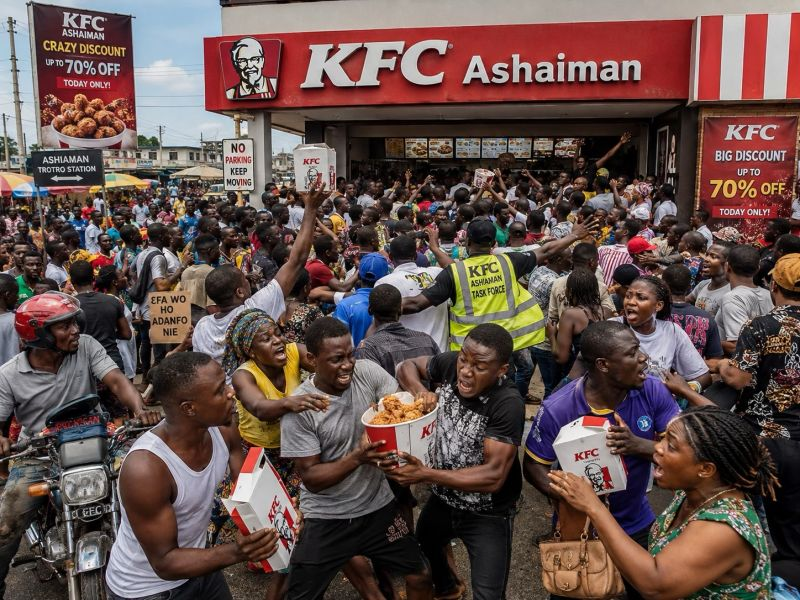
KFC Ghana is facing growing questions over its legal responsibility and customer-safety obligations following chaotic scenes recorded at some of its branches during a heavily advertised GH¢15 anniversary promotion on August 15, 2026.
The promotion was organised to mark KFC Ghana’s 15th anniversary, with customers offered a meal package for GH¢15 between 9 a.m. and 5 p.m. at branches across the country. The offer, which was promoted extensively ahead of the event, attracted large crowds, with some customers reportedly arriving as early as dawn to take advantage of the deal.
At some locations, the situation reportedly escalated, with large crowds struggling to gain access to the restaurants. Videos circulating on social media showed scenes of disorder at some branches, including reports of a glass entrance door being damaged at Ashaiman.
There were also allegations of physical confrontations between security personnel and customers, while police intervention was reportedly required at some locations.
One video also purportedly showed staff at the Sunyani branch spraying water towards customers amid the disorder.
Despite the widespread circulation of videos and public discussion surrounding the incidents, KFC Ghana had, at the time of the commentary, not issued a comprehensive public statement addressing the safety concerns. The company continued posting on social media about the anniversary campaign and its apparent success.
Foreseeable Crowd Risk
The central legal question is whether KFC Ghana took reasonable steps to anticipate and manage the risks created by the promotion.
The argument is that a nationwide GH¢15 food promotion, heavily advertised for a single day and running simultaneously across numerous branches, created a foreseeable risk of unusually large crowds.
Under common-law principles applicable in Ghana, foreseeability is an important consideration in determining whether a duty of care has been breached. Businesses that invite members of the public onto their premises are expected to take reasonable precautions against reasonably foreseeable risks of harm.
The issue, therefore, is not simply whether customers behaved appropriately. It is whether KFC, having designed and promoted an offer likely to attract exceptionally large crowds, adequately prepared for the resulting risks.
Questions could include whether sufficient security personnel were deployed, whether crowd-control barriers were installed, whether entry was staggered, whether queues were properly managed, whether branches had emergency plans and whether the number of customers expected was properly assessed.
Occupiers’ Liability and Duty of Care
KFC, as an occupier of commercial premises, owes duties to people who enter its establishments.
Common-law principles associated with cases such as Donoghue v Stevenson and Indermaur v Dames underpin the broader development of duties of care and occupiers’ responsibilities.
The general principle is that an occupier must take reasonable steps to ensure that people invited onto the premises are reasonably safe for the purposes for which they are there.
If a business creates or should reasonably anticipate a significant crowd and fails to take adequate precautions, the question of negligence can arise where someone suffers injury as a result.
This could potentially expose KFC to claims from customers who can establish that they suffered injury or loss because of an unsafe condition, inadequate crowd management or other negligent conduct connected to the promotion.
Factories, Offices and Shops Act
The legal questions could also extend to Ghana’s Factories, Offices and Shops Act, 1970 (Act 328), which contains provisions concerning safety at workplaces and responsibilities associated with commercial premises.
The legislation places safety obligations on occupiers and contains provisions concerning the responsibility of employers and occupiers for acts or defaults committed by employees or agents in the course of their duties.
This becomes particularly relevant if security personnel working at KFC branches are found to have used excessive or unlawful force against customers.
The fact that security personnel may have been attempting to control crowds would not automatically make every action lawful. The circumstances, degree of force used and whether that force was reasonably necessary would all be relevant.
Potential Battery Claims
Another potential area of legal exposure is the tort of battery.
Battery generally involves the intentional and unlawful application of physical force to another person without lawful justification or consent.
Consequently, if evidence establishes that a customer was intentionally assaulted by a security officer without lawful justification, the individual could potentially pursue a civil claim.
Whether KFC itself would be legally responsible for such conduct would depend on the relationship between the security personnel and KFC, including whether they were employees, agents or personnel supplied by an independent security company.
The circumstances in which the force was used would also be critical in determining liability.
Vicarious Liability
The doctrine of vicarious liability could become important if employees or agents of KFC are found to have committed wrongful acts while performing their assigned duties.
An employer can, in appropriate circumstances, be held responsible for wrongful conduct by an employee occurring in the course of employment.
However, liability is not automatic simply because an individual is wearing a company’s uniform or working at its premises. The precise employment relationship, the nature of the conduct and whether the conduct was sufficiently connected with the employee’s duties would have to be established.
If security personnel were deployed specifically to manage the crowds created by the promotion, their conduct during that assignment could become particularly relevant to any assessment of KFC’s potential liability.
Consumer Safety Concerns
The promotion also raises broader questions concerning consumer protection and safety.
Ghana’s consumer-protection framework imposes obligations relating to the safety of consumers in connection with goods and services. Regulatory bodies, including the Ghana Standards Authority and the Food and Drugs Authority, also have statutory responsibilities within their respective areas.
The key question would be whether the circumstances surrounding the promotion amounted to an unsafe manner of providing services and whether any applicable regulatory requirements were breached.
That assessment would ultimately depend on the evidence gathered from the affected branches and customers.
Could MMDAs Take Action?
The Metropolitan, Municipal and District Assemblies responsible for areas where affected branches operate may also have regulatory responsibilities concerning commercial premises and public safety.
Depending on the specific circumstances and applicable local regulations, authorities could investigate whether the premises complied with relevant safety, planning or operating requirements.
Such investigations could determine whether corrective measures, additional safety requirements or other regulatory action are necessary.
The Customer-Blaming Debate
The incidents have also triggered debate over whether customers themselves should bear responsibility for the disorder.
The economic circumstances surrounding the promotion cannot be ignored. A GH¢15 meal represents an unusually low price in today’s economic environment, and the decision to offer the deal nationwide was always likely to attract significant public interest.
However, economic hardship does not automatically remove a company’s responsibility to manage foreseeable risks.
Customers may have obligations to obey reasonable instructions and behave lawfully, but businesses also have responsibilities when they deliberately create an environment capable of attracting unusually large crowds.
The crucial question is therefore whether reasonable measures were put in place before the promotion began.
Ghana’s Broader Accountability Problem
The controversy has also reopened wider concerns about accountability for crowd-related incidents in Ghana.
One recent example was the military recruitment exercise at El-Wak Stadium in Accra, where six young people died, and 22 others were injured in a stampede.
The incident generated widespread public concern and international attention, raising questions about crowd management, institutional responsibility and accountability.
Against that background, critics argue that businesses should not assume that serious safety failures will simply disappear from public attention.
The KFC incident may therefore become another test of whether Ghana’s legal and regulatory institutions are prepared to respond when commercial activities create foreseeable public-safety risks.
What Could Happen Next?
Any legal action arising from the August 15 incidents would ultimately depend on evidence.
Potentially affected customers would need to establish matters such as the nature of their injury or loss, what caused it, the conduct of the relevant personnel and whether the business failed to take reasonable precautions.
Evidence could include videos, photographs, medical records, eyewitness accounts, receipts, security footage and statements from people who were present.
The identities and employment status of security personnel involved in any alleged assault would also be important.
Calls for Investigation and Compensation
Against the backdrop of the incidents, there are calls for KFC Ghana to publicly address what happened and explain what measures were taken before and during the promotion to protect customers.
One proposed response is for the company to issue a full public apology to customers who may have been injured or mistreated and establish an appropriate mechanism for receiving and resolving complaints.
There have also been calls for relevant MMDAs to conduct safety assessments of KFC branches and examine whether crowd-control and emergency measures were adequate.
Parliament could also choose to scrutinise the matter through the appropriate committee if lawmakers determine that the incident raises broader consumer-protection or public-safety concerns.
For now, however, any definitive conclusion about KFC Ghana’s civil or regulatory liability would require a proper investigation and consideration of the specific facts at each affected branch.
The August 15 promotion has nevertheless highlighted a fundamental legal principle: when a business creates a foreseeable risk, it cannot simply ignore that risk and expect customers to bear the consequences when something goes wrong.
The question now is whether the events of August 15 will result in meaningful investigation and accountability—or whether the controversy will fade without any substantive action.
Source: Gh Extractives

Lecturer at the University of Media, Arts and Communication-Institute of Journalism (UniMAC-IJ), Zakaria Tanko Musah, has cautioned against pressuring Ghana’s security agencies to disclose operational details of ongoing narcotics investigations.
Speaking on GTV Breakfast, Musah said excessive disclosure of investigative strategies could alert drug trafficking networks and allow them to change their methods.
He urged the public and commentators to exercise restraint, particularly as the recent investigations involve international cooperation between several countries.
“Let’s not, because we want to satisfy our human interest curiosity, be pushing the national security people to divulge almost all the strategy, because this is an ongoing exercise,” he said.
Musah noted that the investigations extend beyond Ghana, pointing to the involvement of France, the Netherlands and Belgium in the broader narcotics operation.
His comments come amid heightened scrutiny of drug shipments linked to Ghana and ongoing investigations into recent narcotics cases involving the country’s ports.
Following an urgent meeting with security chiefs on September 17, President John Dramani Mahama directed the formation of an inter-agency task force to develop a roadmap for preventing narcotics trafficking through Ghana’s borders. The task force was given two weeks to submit its recommendations.
Authorities have said 10 individuals, including four Customs Division officers of the Ghana Revenue Authority, were being held as investigations continued.
Musah also questioned the wisdom of allowing suspected drug shipments to proceed to their final destination simply to identify more members of a trafficking network, arguing that such operations involve significant risks given the quantity and value of narcotics involved.
He therefore urged stakeholders to allow security agencies to conduct their investigations without unnecessarily exposing sensitive operational information.
General News
Addicted to social media? ‘I struggle to put down my phone’ — 62-year-old woman cries out


A 62-year-old woman has opened up about her growing dependence on social media, admitting that she struggles to put down her phone even when she knows she should.
The woman described how spending long periods on her phone has become part of her daily routine, with social media constantly competing for her attention.
Her experience highlights concerns about the increasing amount of time people of all ages spend on social media platforms and the difficulty some users face in controlling their usage.
For the 62-year-old, what may have started as a simple way to stay connected and entertained has gradually become a habit she finds difficult to break.
“I struggle to put down my phone,” she reportedly said, expressing concern about how deeply social media has become embedded in her everyday life.
Experts have increasingly discussed problematic social-media use in terms of compulsive or difficult-to-control behaviour, although heavy use alone does not necessarily mean someone has a clinical addiction.
The woman’s candid admission has sparked conversation about the need for people to develop healthier relationships with their phones and social media, regardless of age.
General News
Kofi Amoabeng narrates how dancing in front of Akufo-Addo, Okyehene landed him in trouble


An SHS graduate has revealed how selling traditional kitchen items, particularly mortars and pestles, has become a lucrative source of income for him.
According to the young entrepreneur, he can make as much as GH¢1,000 in a single day from the business, challenging the perception that success after secondary school must necessarily come through formal employment.
The revelation highlights the growing number of young people turning to small-scale businesses and traditional trades as alternative sources of livelihood.
Mortars and pestles remain widely used in Ghanaian households, particularly for preparing traditional foods such as fufu, while sellers also supply the products to markets and individual buyers.
The graduate’s experience demonstrates how identifying demand for everyday products can create an income-generating opportunity, even without securing a conventional office job.
His claim of earning GH¢1,000 daily, however, represents his reported income and should not be taken as a typical or guaranteed return for everyone in the business.
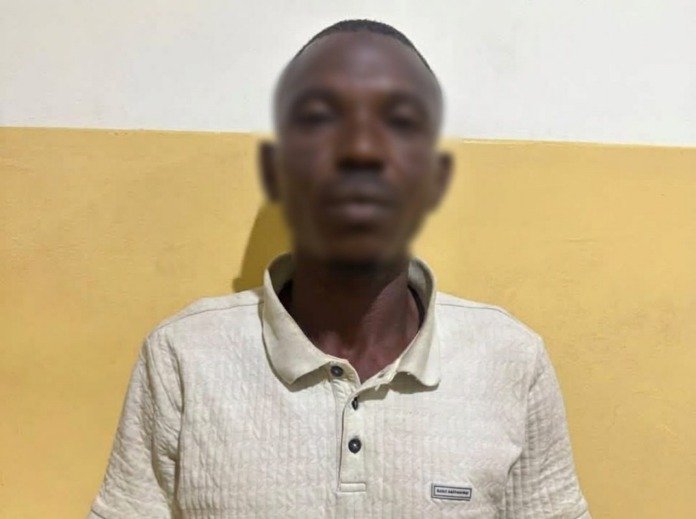
A 32-year-old Nigerien tricycle rider, Mustapha Usman, has been sentenced to seven months in prison for facilitating the unlawful entry of four Nigerien nationals into Ghana.
The Denu Circuit Court handed down the sentence after Usman pleaded guilty to charges of migrant smuggling and causing a false representation to be made. The sentences—three months for migrant smuggling and four months for false representation—will run concurrently.
According to the prosecution, Usman, who resides in Togo, was engaged by the four migrants to help them enter Ghana. They allegedly agreed to pay him GH¢200 each to transport them from the Lagos Lorry Park in Lomé to Kojoviakope, near the Aflao Beat Six area.
The prosecution told the court that after arriving at Kojoviakope, Usman contacted an accomplice identified as Remy, who is currently at large, to assist with getting the migrants across the border.
In an attempt to evade immigration checks, the four Nigeriens were allegedly hidden inside the bucket of Usman’s tricycle and covered, making the vehicle appear empty.
The prosecution said Remy later arranged for another tricycle rider to transport the loaded vehicle into Ghana while he and Usman monitored the operation from a distance.
The tricycle crossed into Ghana at about 6:30 p.m. but was intercepted by Ghana Immigration Service officers around Beat Seven.
The other rider reportedly fled the scene, while Usman later appeared and identified himself as the owner of the tricycle.
Investigators subsequently questioned the four migrants, who reportedly told authorities that they had each contributed towards the GH¢200 payment made to Usman.
Usman was arrested by officers of the Ghana Immigration Service, Aflao Sector Command, and was prosecuted under provisions of the Immigration Act, 2000 (Act 573), as amended.
The court ordered that he be returned to the custody of the Aflao Police Station pending his transfer to Ho Central Prison.
Meanwhile, the four Nigerien migrants have been repatriated.

Supporting NDC cost me fans, shows and business opportunities: MzBel

Tanko Musah cautions against revealing security strategies in ongoing drug cases

Addicted to social media? ‘I struggle to put down my phone’ — 62-year-old woman cries out



-

 General News1 week ago
GTA’s Financial Strength Weakens Despite 2025 Tourism Activities
-

 General News1 week ago
GTA Cash Reserves Halve to GH¢640,000 Despite Improved Liquidity Ratio
-

 Entertainment2 weeks ago
Keche Supports Street Vendor with GH¢3,000 After She Struggles to Make Sales
-

 Entertainment2 weeks ago
Government Repatriates Musician Barosky from UK
-

 General News2 weeks ago
TVET is not for the academically weak – Advocate calls for change in Ghana’s mindset
-
 General News2 weeks ago
Techiman Assembly, Zoomlion Undertake Fumigation Exercise to Prevent Disease Outbreaks
-

 General News2 weeks ago
Police Launch Manhunt for Missing Assin Fosu Man as Captors Demand GH¢49,500 Ransom
-

 General News1 week ago
Creative Arts Agency Records GH¢2.01m Revenue in FY2025 Despite Financial Reporting Gaps