
General News
Street Trading Crackdown: Pavement Traders in Accra to Face GH₵2,000 Fine – Regional Minister Warns


Traders conducting business on pavements and along streets in Accra’s Central Business District (CBD) could soon face fines of up to GH₵2,000, according to a stern warning issued by Greater Accra Regional Minister, Linda Ocloo.
The announcement comes in the wake of a city-wide decongestion operation carried out on Tuesday, May 20, by the Accra Metropolitan Assembly (AMA) in collaboration with the Korle Klottey Municipal Assembly. The exercise targeted unauthorised traders obstructing pedestrian walkways and public roads in a bid to improve traffic flow, sanitation, and urban order.
While touring the CBD during the enforcement exercise, Minister Ocloo made it clear that the days of leniency are over.
“We’re deploying a 24-hour task force to enforce the rules,” she said. “Red lines will be marked on the roads, and any trader who crosses them will be fined between GH₵1,500 and GH₵2,000. Market leaders will also be appointed to support monitoring and ensure compliance.”
The move is part of a broader strategy to enforce city bylaws and maintain order as Accra grapples with increasing congestion.
In a related development, the AMA’s Metropolitan Chief Executive, Michael Kpakpo Allotey, revealed that the city is considering plans to periodically close selected streets within the CBD to accommodate traders—under specific conditions.
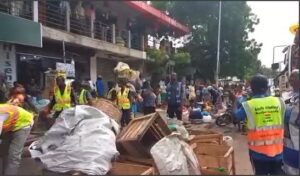
“Under the government’s 24-hour economy initiative, we are exploring designated days where some streets will be blocked off to allow market women to trade legally,” he explained. “During these times, drivers will be rerouted, and the AMA will issue trading permits to the vendors.”
Allotey emphasized that the aim is to balance economic activity with the need for urban order, allowing trading to continue in a structured and lawful way without compromising the city’s functionality.

September 21, 2026
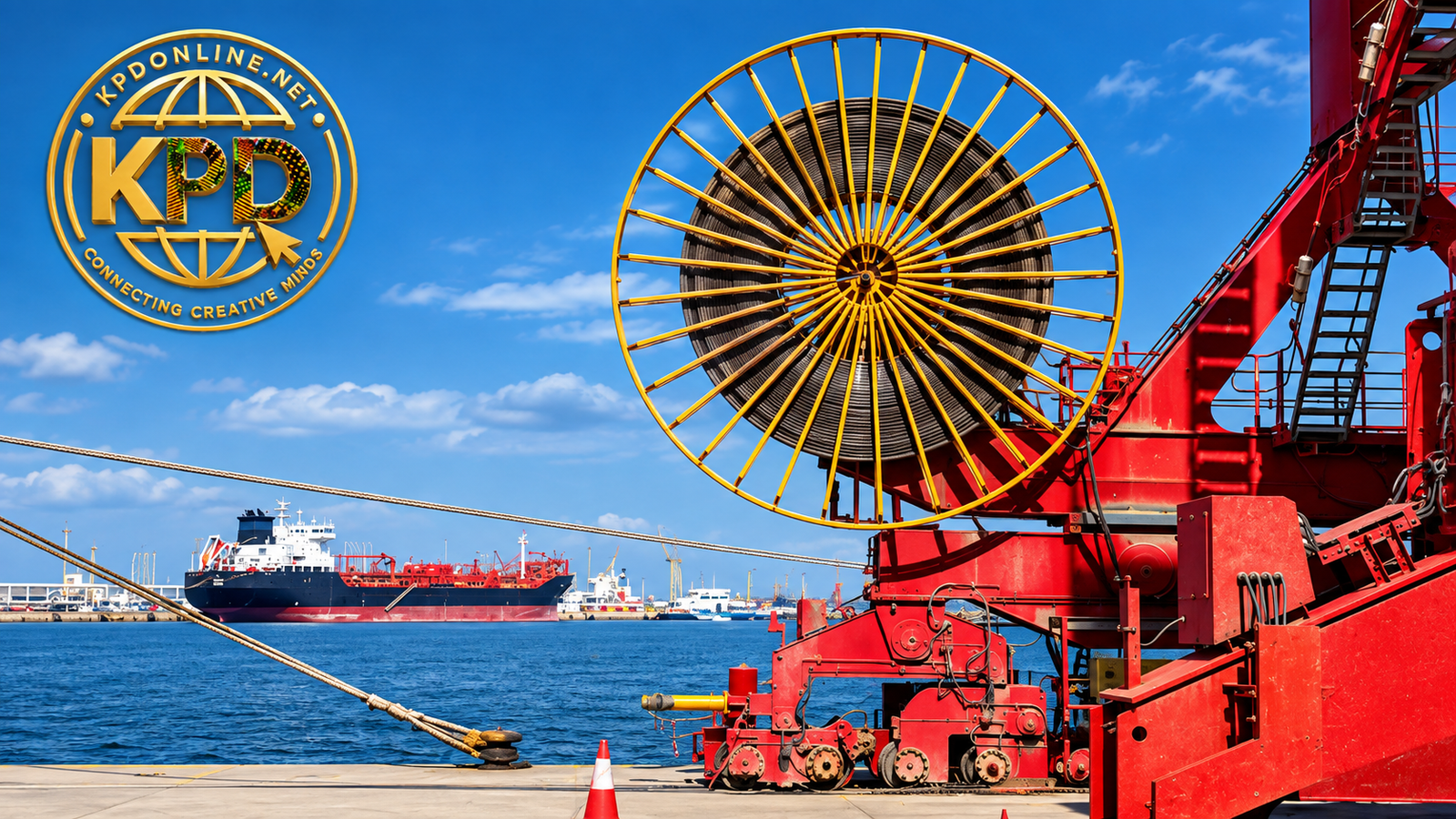
Oil prices fell to their lowest level in more than a week on Monday as investors assessed the possibility of renewed diplomatic efforts to end the conflict involving Iran. The decline came ahead of the United Nations General Assembly in New York, where attention is expected to focus on efforts to reduce tensions in the Middle East.

The Austrian Fix for the Manufactured Iranian Energy Crisis | Mises Institute
Crude prices retreat
Brent crude futures fell to around $101.71 a barrel, down about 2.1%, while U.S. West Texas Intermediate crude declined to approximately $98.15 a barrel. Both benchmarks earlier touched their lowest levels since September 10.
The market movement reflects a reduction in the additional price premium investors have attached to the possibility of further disruption to Middle Eastern oil supplies. Analysts cited by Reuters said expectations of a diplomatic route toward de-escalation were contributing to the decline.

Watch War in Iran: Market Underestimates Iran on Oil, Hormuz, Rapidan Energy’s McNally Says – Bloomberg
Diplomatic activity in focus
The upcoming UN General Assembly has increased expectations of diplomatic engagement. U.S. President Donald Trump has indicated that he would be open to meeting Iranian President Masoud Pezeshkian, who is expected in New York for the gathering.
Iran has also reportedly communicated conditions for returning to negotiations through mediators. However, there has been no confirmation that a direct meeting between the two leaders will take place.
The diplomatic uncertainty means markets remain sensitive to developments from Washington, Tehran and other regional governments.

News, Information and Reports Related to Strait of Hormuz
Saudi oil exports provide another factor
Oil prices have also been influenced by signs that Saudi Arabia is recovering some of its disrupted export capacity.
Attacks on Saudi Arabia’s East-West pipeline affected crude shipments and led Saudi Aramco to redirect more exports through the Strait of Hormuz. Provisional shipping data cited by Reuters showed Saudi oil flows through the strait averaging about 2.9 million barrels per day in recent days, compared with roughly 700,000 barrels per day in August.
Saudi exports had fallen sharply in August, but provisional data indicated that shipments had recovered to more than 4 million barrels per day so far in September.
Strait of Hormuz could be vulnerable to Iran retaliation. Here’s what …
Iran war will throttle oil flows even if Strait of Hormuz reopens soon …
Middle East risks remain
Despite the decline in crude prices, the underlying risks to energy supplies have not disappeared. Yemen’s Iran-backed Houthi movement has continued attacks in the region, including strikes reported around Riyadh and against infrastructure connected to Saudi Arabia’s oil industry.
The Strait of Hormuz also remains central to the global energy market because of its role in transporting oil and liquefied natural gas from the Gulf to international markets. Continued disruption around the region could therefore quickly change market expectations.
For now, traders appear to be balancing two competing developments: hopes that diplomatic engagement could reduce the conflict and continuing concerns about security and energy supplies.
The direction of oil prices in the coming sessions is likely to depend heavily on whether diplomatic contacts produce concrete progress and whether regional oil shipments continue to recover.
Technology
Inside the Italian Apple Store Walkout: Workers Challenge Conditions as iPhone 18 Pro Arrives

By Angel No Lie | KPD Online | Technology & Business Report
A launch day marked by a labor dispute
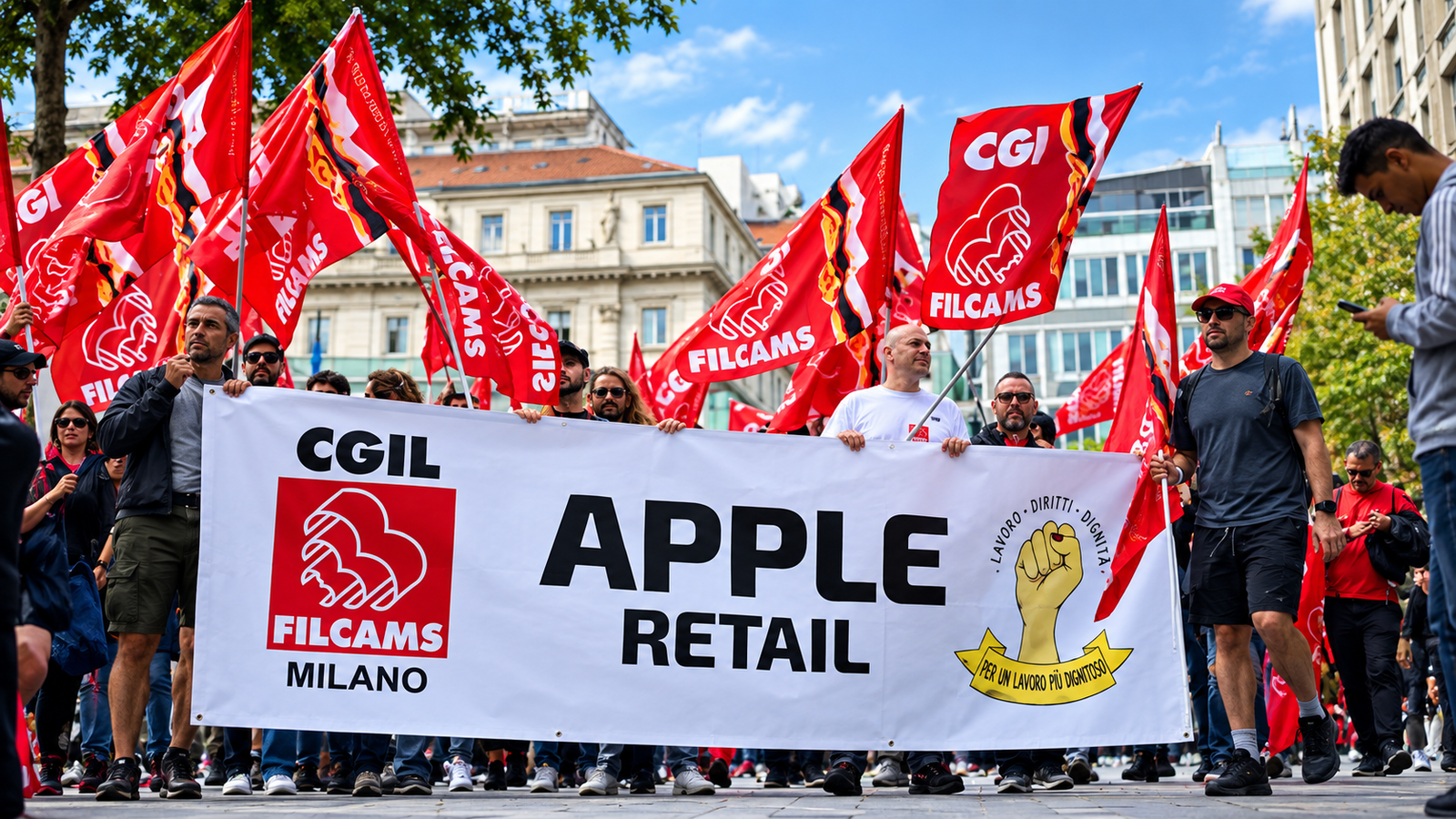
Apple’s latest iPhone launch in Italy coincided with a nationwide walkout by Apple retail employees, putting a labor dispute alongside one of the company’s biggest annual retail events.
On 18 September 2026, workers at Apple Retail Italia stores staged a full-shift strike over working conditions. The action was organized by Filcams CGIL, Fisascat CISL and Uiltucs and coincided with the Italian launch of the iPhone 18 Pro and iPhone 18 Pro Max. Reuters reported that the action concerned more than 1,600 employees across 17 Apple stores.
What workers are asking for
The unions say the dispute centers primarily on staffing, workloads and employment arrangements.
Among their demands are:
- Additional permanent hiring
- Conversion of some fixed-term contracts into permanent positions
- The opportunity for part-time employees to voluntarily increase their working hours
- Adequate staffing levels for individual stores
- Changes to working arrangements and job responsibilities
Union representatives have also complained about increasing workloads and what they describe as greater overlap between employees’ responsibilities. According to the unions, new procedures and productivity requirements have added pressure to store personnel.
Fisascat CISL reported an average strike participation rate of 70%, with some locations reaching higher levels. That figure is a union-reported estimate rather than an independently verified participation figure.

Aperto l’Apple Store a Milano, centinaia in fila – Corriere.it
Why launch day was significant
The timing was deliberate.
The iPhone 18 Pro went on sale worldwide on 18 September, generating queues at Apple stores in several countries. In Milan, however, customers arriving for the new device encountered demonstrations by Apple retail workers outside the company’s prominent glass-cube store.
Reuters footage showed employees using flags, whistles and rattlers during the demonstration while customers queued nearby. A union representative told Reuters that the iPhone launch was chosen because of its importance to Apple’s public image.
The result was an unusual contrast: customers arriving to celebrate a major technology launch while employees were using the same event to highlight an unresolved workplace dispute.

Neuer Apple-Flagship-Store in Mailand: Springbrunnen-Eingang und verändertes Innen-Layout | News | MacTechNews.de
Apple’s response
Apple said its Italian retail and online stores remained open during the strike and that it was prepared to welcome customers.
The company also defended its employee compensation and benefits, pointing to medical, dental and vision coverage as well as mental-health and wellness support.
This provides an important distinction in the dispute: the unions’ assessment of working conditions and Apple’s description of its employment package are different perspectives, and neither should be treated as an independently established conclusion about the overall quality of employment without further evidence.

El éxito supera a la producción: más de un mes de espera para conseguir el nuevo iPhone
What happened inside the stores?
Available reporting indicates that the stores continued operating despite the industrial action. Reuters reported that Apple said its outlets would operate normally. At the same time, pickets were organized outside selected stores, including Apple’s flagship location in central Milan.
The strike therefore did not amount to a nationwide closure of Apple’s Italian retail network. Rather, employees withheld their labor while Apple maintained retail operations.
The dispute goes beyond the iPhone
The disagreement is part of a broader negotiation between Apple Retail Italia and employee representatives.
According to Fisascat CISL, discussions have included staffing levels, contract arrangements, working hours and the organization of store duties. The union says an earlier meeting on 29 July 2026 did not produce agreement on its proposed structural staffing measures.
ANSA likewise reported union concerns about staffing shortages, heavier workloads and pressure surrounding hourly productivity.
The commercial backdrop
The labor dispute occurred as Apple launched its latest premium iPhone generation.
Reuters reported that the iPhone 18 Pro starts at €1,489 in Italy. The launch also comes ahead of Apple’s planned release of its Duo foldable smartphone, scheduled for 23 October, which unions say could create another period of heightened activity for retail employees.
The bigger picture
The Italian walkout illustrates how major product launches can become important moments in labor negotiations. For Apple, launch day is designed around customer attention, retail activity and global publicity. For the unions, the same visibility provided an opportunity to put employment concerns before the public.
The immediate effect appears to have been limited: Apple’s stores remained open, while demonstrations took place outside several locations. But the underlying negotiations remain unresolved, according to the unions, and further industrial action could follow.
Bottom line: The 18 September walkout was not a protest against the iPhone 18 Pro itself. It was a labor dispute involving Apple retail employees, centered on staffing, contracts, working hours and workload, and deliberately timed to coincide with one of Apple’s highest-profile retail days of the year.

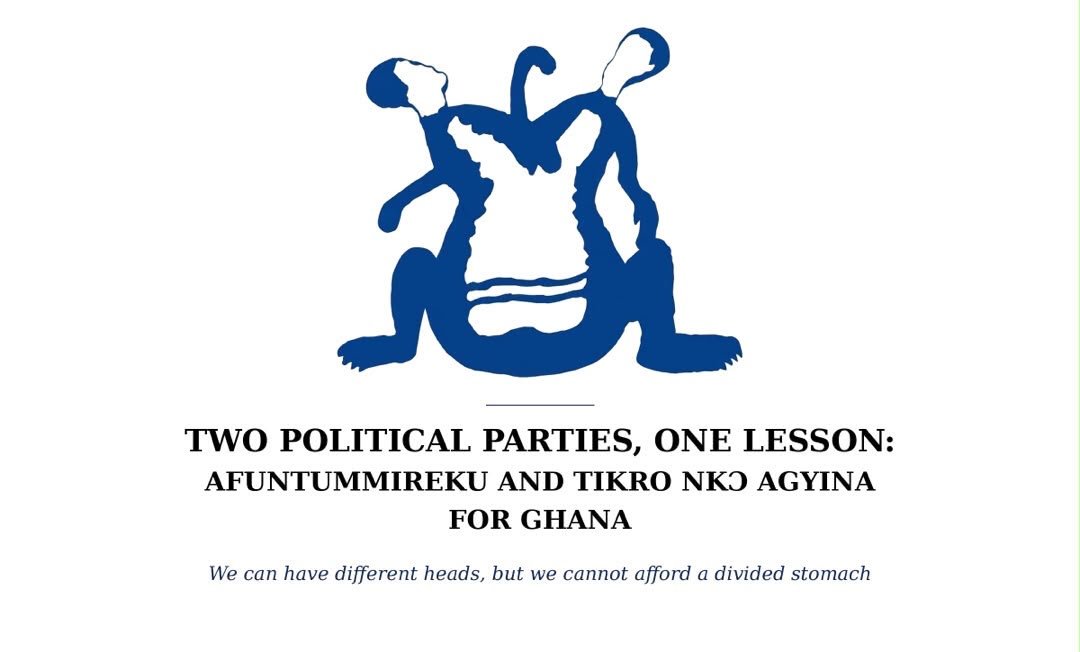
A reflection on Ghana’s Founders’ Day debate has drawn on two traditional symbols — Afuntummireku and Tikro Nkɔ Agyina — to call for political unity, consultation and a shared national purpose.
The writer, Seth Afum A. Dankwah of J. G. Knol Technical Institute at Adukrom-Akuapem in the Eastern Region, argues that although Ghana’s two major political parties, the New Patriotic Party (NPP) and the National Democratic Congress (NDC), may have different political identities, they ultimately share the same national interest.
In a statement dated Monday, September 21, 2026, Mr Dankwah said the lesson could be captured in the traditional concept of Afuntummireku, represented by the Funtunfunefu Denkyemfunefu symbol — two creatures with separate heads but sharing one stomach.
He said another symbol, Tikro Nkɔ Agyina, which conveys the idea that one head cannot go into council alone, equally offers an important lesson for Ghana’s political system.
According to him, the two symbols became particularly meaningful to him during a recent visit to the Presbyterian College of Education at Akropong-Akuapem.
Mr Dankwah said that while walking through the campus one morning, he noticed the two symbols displayed on the walls of separate halls.
He explained that he had used the route several times but had never stopped to pay attention to the inscriptions until that particular morning.
“On one wall was the Afuntummireku symbol — Funtunfunefu Denkyemfunefu — two creatures with two separate heads but sharing one stomach. On another wall, a few footsteps away, was Tikro Nkɔ Agyina — two heads joined together as one,” he wrote.
For him, the two walls carried one message for Ghana: political and ideological differences should not destroy the shared national interest.
Mr Dankwah linked the traditional symbolism to the long-running debate over Ghana’s Founders’ Day commemoration.
He noted that the political interpretation of Ghana’s founding history has differed depending on which political party is in government.
“When the NPP is in power, it is called Founders’ Day. When the NDC is in power, it is called Founder’s Day,” he said.
He added that one political side argues that Ghana’s independence cannot be attributed to only one individual, while another places particular emphasis on Dr Kwame Nkrumah as the founder.
“Same independence, same history. Different heads, different spellings, but same stomach called Ghana,” Mr Dankwah wrote.
He said the debate becomes particularly significant on September 21, a date associated with the commemoration of Dr Kwame Nkrumah.
According to him, Ghanaians often debate whether the appropriate emphasis should be on Founder or Founders, or whether the country’s independence story should focus on Nkrumah or include the wider group of personalities associated with the independence struggle.
He argued that the debate should not become an excuse for one side to diminish the contribution of another.
“We argue as if by diminishing the other head, our head becomes taller,” he said.
Mr Dankwah used the Afuntummireku symbol to describe the relationship between the NPP and NDC.
He said the two parties have spent decades competing against each other through elections, parliamentary debates, political campaigns and public commentary.
“For thirty-two years, our democracy has lived like those symbols. The NPP and the NDC represent the two heads of ‘AFUNTUMMIREKU’,” he wrote.
He accused both sides of engaging in political battles without always considering the wider consequences for Ghana.
According to him, the parties may be politically divided, but they are connected by the country’s economy, environment, institutions and overall wellbeing.
“They snap at each other every morning on radio, they argue in Parliament, they campaign as if the other must not eat. Each wants to eat first. Each wants to starve the other,” he said.
But he argued that, like the two creatures represented by Afuntummireku, both political sides ultimately share one “stomach” — Ghana.
“When the economy bleeds, it is that one stomach that bleeds,” he wrote.
He cited issues including illegal mining, popularly known as galamsey, economic difficulties, fuel prices, the depreciation of the cedi and investor confidence as matters that can affect Ghanaians regardless of their political affiliation.
He specifically referenced the impact of galamsey on water bodies in areas such as Obuasi and Tarkwa, arguing that environmental damage does not discriminate between supporters of different political parties.
“When galamsey poisons the rivers at Obuasi or Tarkwa, both creatures will drink the same poisoned water,” he stated.
He also criticised what he described as partisan reactions to economic difficulties, arguing that celebrating negative economic developments simply because one’s political opponent is in government ultimately harms the country.
“If that stomach gets an ulcer from winner-takes-all politics by the government, from propaganda, from debt and greed, both heads will die with it,” he wrote.
Mr Dankwah said the central lesson from Afuntummireku should not be interpreted as a call for the NPP and NDC to stop competing.
Instead, he said political competition is necessary in a democracy, but it should not become destructive.
“That is the first thing the wall taught me: We can have different heads, but we cannot afford a divided stomach. Competition is allowed. Destruction is not,” he said.
He further applied that principle to Ghana’s history, particularly the debate over the country’s founders.
He argued that presenting Ghana’s independence story exclusively through the contribution of Dr Kwame Nkrumah would leave out other personalities and groups, just as presenting the story only through the Big Six would overlook Nkrumah and the wider mass movement that supported the independence struggle.
“To tell Ghana’s story with only Nkrumah and without Danquah and the Big Six is incomplete history,” he said.
He added: “To tell it with only the Big Six and without Nkrumah and the thousands of market women, farmers, students and ex-servicemen who followed him is also incomplete history.”
Mr Dankwah therefore described Ghana’s independence as a collective national achievement involving different individuals and groups.
“Ghana’s independence had many heads, but one stomach — freedom,” he stated
The second symbol, Tikro Nkɔ Agyina, according to Mr Dankwah, carries a different but complementary message.
He interpreted it as a reminder that one person or one group should not assume that it has all the answers.
“Tikro Nkɔ Agyina. One head does not go into council,” he wrote.
He said the principle should guide political leadership regardless of which party controls government.
“Our greatest mistakes as a nation have come when one head thought it was singularly enough. And both sides have been guilty of this act,” he stated.
Mr Dankwah argued that successive governments have sometimes acted as though they possessed all the answers and did not need sufficient input from others.
He also extended the criticism to Parliament, saying majorities can sometimes behave as though they do not need minority voices.
According to him, the situation can reverse when political power changes hands, with a new majority potentially repeating the same pattern.
“One majority in Parliament sometimes decides it does not need the minority, and when the tables turn, the new majority repeats the same arrogance,” he wrote.
Mr Dankwah said Ghana’s governance would benefit from greater consultation, particularly on major national policies and historical issues.
He argued that political power should not become a one-head council, regardless of the political party in government.
“Ghana suffers when power becomes a one-head council, no matter which head wears the crown,” he said.
He claimed that the consequences can include policies being introduced without adequate consultation, historical narratives being changed without broad agreement and opposition parties being treated as enemies rather than alternative voices in a democratic system.
He also said ordinary citizens should have a place in the national conversation.
He mentioned teachers, farmers, students and traditional leaders as among the groups whose views should not be excluded from the national agyina or council.
Mr Dankwah ultimately urged supporters of both major political parties to see themselves as participants in the same national project.
He said the NPP and NDC should not be treated as enemies despite their political differences.
“The NPP and NDC are not enemies. They are Siamese twins,” he wrote.
He used the metaphor to emphasise that the two parties may have separate political identities but remain connected by Ghana’s national interest.
He argued that if the country were to adopt the lessons represented by Afuntummireku and Tikro Nkɔ Agyina, political parties could continue to compete strongly during elections while cooperating on matters affecting the long-term wellbeing of the country.
“If we lived by those two inscriptions, our politics would change. We would still compete fiercely at elections, but we would protect the stomach together after elections,” he said.
Mr Dankwah concluded his reflection by returning to the two symbols he encountered at the Presbyterian College of Education at Akropong-Akuapem.
He said Afuntummireku should remind both the NPP and NDC that their political differences do not change the fact that they are connected by Ghana.
“Afuntummireku tells both NPP and NDC: You are different, but you are joined. Stop fighting over food that will end up in the same stomach,” he wrote.
He said the debate over whether the country should commemorate “Founder’s” or “Founders’” Day should not overshadow the broader national interest.
“Whether you call it Founders’ or Founder’s, the stomach you are feeding is Ghana,” he stated.
He said Tikro Nkɔ Agyina, on the other hand, should serve as a reminder to whoever holds political power that no government or leader has all the answers.
“Your head alone is not enough. Come into council. You cannot decide Ghana’s history alone; you cannot govern Ghana alone. Listen to dissenting opinions,” he said.
He described the two inscriptions as a lesson extending from the walls of the Presbyterian College of Education at Akropong-Akuapem to Ghana’s political institutions in Accra.
“That is the lesson from the walls of the Presbyterian College of Education at Akropong-Akuapem to the walls of power in Accra,” he wrote.
Mr Dankwah ended the statement with a message marking the September 21 commemoration:
“Happy Founder’s Day. Happy Founders’ Day. Happy Birthday Ghana — our one stomach.”
Ghana’s official public discourse around national unity has also continued to emphasise the idea of a shared national identity. In a New Year message for 2026, President John Dramani Mahama said Ghana’s political differences should not undermine the country’s common purpose, stressing that there is only one Ghana.
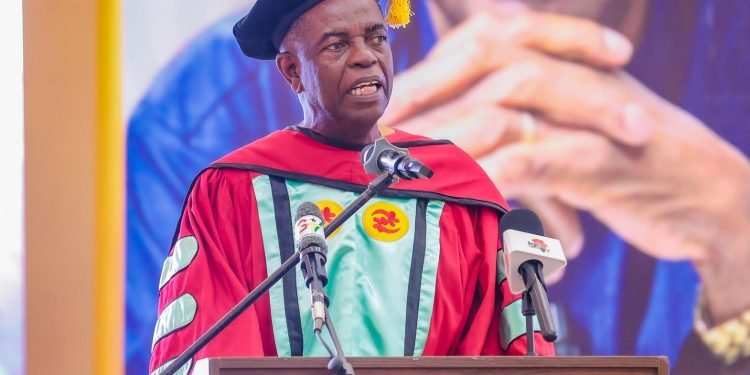
Veteran journalist and Pan-Africanist Kwesi Pratt Jnr has urged Ghana to revisit some of the development principles that guided Dr Kwame Nkrumah’s Seven-Year Development Plan as the country searches for lasting solutions to its economic difficulties.
According to Mr Pratt, the plan, which was designed to cover the period from 1963 to 1970, demonstrated the importance of long-term national planning and strategic investment in infrastructure, education, energy, industry and social development.
He said several of the projects undertaken during the period created national assets that continued to benefit subsequent generations, making the plan an important reference point for contemporary economic policy.
Mr Pratt made the remarks in Cape Coast while delivering the 15th Kwame Nkrumah Memorial Lecture organised by the University of Cape Coast (UCC).
The two-day event was held under the theme, “Kwame Nkrumah yesterday, today and tomorrow: Perspectives on constitutionalism, development and Pan-Africanism.”
Mr Pratt explained that the Seven-Year Development Plan was among the most ambitious efforts by a post-independence government to restructure Ghana’s colonial economic system and move the country towards greater economic independence.
He identified six major components of the plan: state-led industrialisation, economic diversification, agricultural modernisation, infrastructure development, investment in human capacity and the pursuit of an African economic agenda.
He said Dr Nkrumah understood that achieving political independence alone would not be enough if Ghana remained economically dependent on the export of raw materials and the importation of finished products.
Ghana’s economy at the time relied heavily on commodities such as cocoa, gold and timber, while many manufactured goods were imported into the country.
Mr Pratt argued that the pattern of exporting raw materials and importing finished products remains a challenge Ghana continues to confront.
He said Nkrumah therefore placed industrialisation at the centre of his development strategy, establishing state-owned enterprises across sectors including manufacturing, agriculture, transportation and hospitality.
Mr Pratt said another important element of the plan was the attempt to diversify Ghana’s economy and reduce its dependence on cocoa.
He explained that excessive reliance on cocoa left the country vulnerable to international commodity-price fluctuations, making economic diversification necessary to protect national revenues and create employment.
“Second was economic diversification. Ghana’s heavy dependence on cocoa exposed the country to fluctuations in world commodity prices. Industrialisation was intended to reduce this vulnerability, create employment and retain more value within the national economy,” he said.
He also stressed that Nkrumah did not regard agriculture and industrial development as competing priorities.
Instead, modern agriculture was expected to supply food, provide raw materials for factories, generate employment and contribute to export earnings.
On infrastructure, Mr Pratt pointed to some of the major projects undertaken under Nkrumah, including the Akosombo Dam and Volta River Project, Tema Harbour, road networks, electricity infrastructure, Tema Township and industrial estates.
He said these investments were intended to provide the basic infrastructure required for industrialisation and broader economic activity.
According to him, the projects reflected an understanding that sustainable economic development requires investments that can support productive activity over a long period.
Mr Pratt also highlighted education as a critical part of Nkrumah’s development agenda.
He said the government expanded access to primary, secondary, technical and university education in an effort to develop the skilled workforce required to manage and sustain Ghana’s emerging economy.
He said the history of the University of Cape Coast itself reflected this approach.
“This institution emerged from the determination to train the educators needed for Ghana’s expanding school system. It demonstrates that Nkrumah’s development strategy was not confined to factories and dams. It also invested in the human beings who would operate and sustain a modern society,” he stated.
Mr Pratt further linked the Seven-Year Plan to Nkrumah’s broader Pan-African vision.
He said Ghana’s economic transformation was not viewed in isolation but as part of a wider effort to promote economic cooperation and development across Africa.
“In furtherance of the Pan-African agenda, the Seven-Year Plan linked Ghana’s development to the wider economic advancement of Africa, seeking to reduce colonial dependency and build a productive continental economy,” Mr Pratt said.
While highlighting the achievements of the development programme, Mr Pratt acknowledged that it was also confronted by significant difficulties.
These included the decline in global cocoa prices, rising external debt, shortages, inflation and weaknesses within the state’s administrative and financial systems.
He argued, however, that these challenges should not be interpreted as evidence that national planning and industrialisation were fundamentally wrong.
“The correct lesson is not to abandon national planning or industrialisation, but to combine them with stronger management, accountability, technological competence, realistic sequencing and disciplined evaluation,” he said.
Mr Pratt also challenged claims that Dr Nkrumah inherited a strong, diversified economy but subsequently destroyed it during his time in office.
He argued that Ghana’s economy at independence was already largely dependent on the export of primary commodities and the importation of manufactured products.
“Nkrumah did not destroy a diversified, industrial and self-sufficient economy. He inherited a dependent commodity-export economy and attempted to transform it. That attempt produced major national assets,” he stressed.
For Mr Pratt, the experience of the Seven-Year Development Plan offers lessons for Ghana’s current economic challenges, particularly on the need for long-term planning, domestic production, human-capital development, industrialisation and investments capable of generating benefits beyond a single political
administration.
Source: CitiNewsroom


A 52-year-old South African man has been arrested at OR Tambo International Airport after allegedly arriving from Accra with suspected heroin valued at more than US$123,000.
The suspect was intercepted on Sunday, September 20, 2026, during an intelligence-led operation involving the South African Police Service (SAPS) and the Border Management Authority (BMA).
Suspect intercepted after landing from Accra
According to South African authorities, the man had just arrived at OR Tambo International Airport on a flight from Accra, Ghana, when law enforcement officers moved in to intercept him.
A search of his luggage allegedly uncovered bullet-shaped objects and blocks containing substances suspected to be heroin.
The seized drugs have been valued at more than R2 million, equivalent to approximately US$123,000.
Third suspected drug mule arrested in three weeks
The latest arrest has raised concerns over continued attempts to use the Johannesburg airport as a route for international drug trafficking.
SAPS said the arrest brings the number of suspected drug mules arrested at OR Tambo International Airport to three within the past three weeks.
Authorities said the operation formed part of ongoing intelligence-led efforts to identify and disrupt organised drug-trafficking networks operating through South Africa’s ports of entry.
Heroin allegedly concealed in luggage
The circumstances surrounding how the suspected narcotics were concealed and transported remain part of the ongoing investigation.
Police said the search of the suspect’s luggage led to the discovery of the bullet-like objects and blocks containing the suspected heroin.
The authorities have not publicly identified the suspect or provided further details about his alleged links to any drug-trafficking network.
Suspect faces drug trafficking charges
The 52-year-old man is expected to appear before the Kempton Park Magistrates’ Court later this week.
He is expected to face drug-trafficking-related charges, while investigations continue into the source of the suspected narcotics and whether other individuals or organised networks were involved.
The arrest does not amount to a conviction, and the allegations against the suspect will have to be tested through the South African judicial process.
Ghana-South Africa route under scrutiny
The arrest comes at a time of heightened attention on narcotics trafficking routes involving Ghana and other international transit points.
South African authorities have indicated that intelligence-led and targeted operations will continue as they seek to dismantle networks involved in the movement of illegal drugs through the country’s ports of entry.
For now, investigators are expected to focus on establishing where the suspected heroin originated, who may have arranged its transportation and whether the arrested man was acting alone or as part of a wider trafficking network.

Infantino Invited to African Summit as FIFA Leadership Faces Growing Challenge

Postponement Not an Option as Kenya Races to Be Ready for AFCON 2027

Oil Prices Slide as Investors Look for Diplomatic Opening in Iran Conflict



-

 General News1 week ago
GTA’s Financial Strength Weakens Despite 2025 Tourism Activities
-

 General News1 week ago
GTA Cash Reserves Halve to GH¢640,000 Despite Improved Liquidity Ratio
-

 Entertainment2 weeks ago
Keche Supports Street Vendor with GH¢3,000 After She Struggles to Make Sales
-

 Entertainment2 weeks ago
Government Repatriates Musician Barosky from UK
-
 General News2 weeks ago
TVET is not for the academically weak – Advocate calls for change in Ghana’s mindset
-
 General News2 weeks ago
Techiman Assembly, Zoomlion Undertake Fumigation Exercise to Prevent Disease Outbreaks
-
 General News2 weeks ago
Police Launch Manhunt for Missing Assin Fosu Man as Captors Demand GH¢49,500 Ransom
-
 Entertainment2 weeks ago
A.B. Crentsil: The Highlife Legend Many Ghanaians Are Slowly Forgetting