
Entertainment
The Exposé that Redefined the Creative Vote: Inside Kojo Preko Dankwa’s Deep Dive into the Creative Arts Agency

For years, Ghana’s creative sector occupied a paradoxical space celebrated rhetorically by politicians yet structurally neglected in practice. Despite campaign promises, policy declarations, and public endorsements, many creatives experienced weak institutional support, unclear funding pathways, poor stakeholder engagement, and limited accountability within the Creative Arts Agency (CAA).
By the later years of the NPP administration, dissatisfaction had quietly hardened into distrust. What was missing was a credible, organised, and persistent voice capable of articulating the sector’s grievances in a way that could not be ignored.
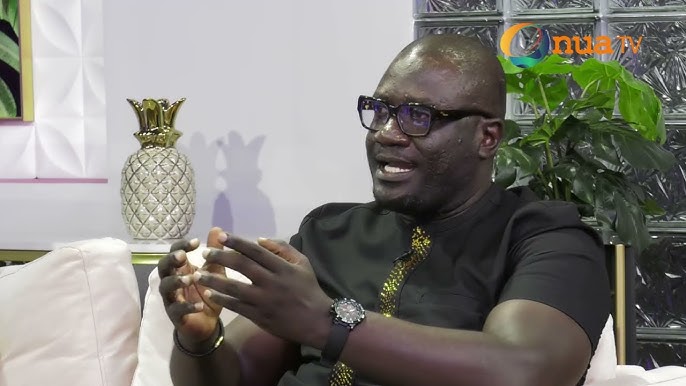
That voice emerged forcefully in Kojo Preko Dankwa, President of the Foundation of Concerned Arts Professionals (FOCAP).
The Exposé: From Complaint to Documentation.
Unlike routine criticism that often circulates on social media and quickly fades, Kojo Preko Dankwa’s intervention took a different route. It was methodical, public-facing, and sustained.
Through press conferences, policy statements, interviews, and sector briefings, he laid out a detailed critique of the Creative Arts Agency, focusing on:
- Institutional opacity in decision-making
- Exclusion of key creative stakeholders from policy formulation
- Lack of measurable impact despite budgetary allocations
- Failure to build sustainable industry frameworks for artists and practitioners
- Political symbolism without structural delivery
Crucially, these were not framed as partisan attacks but as industry-based assessments, backed by lived experiences from practitioners across music, film, visual arts, theatre, fashion, and events.
The power of Kojo Preko Dankwa’s exposé lay not only in its content but in its timing and credibility.
By the time the critique gained national attention, creatives were already frustrated. The exposé simply gave language, structure, and leadership to sentiments that had long existed beneath the surface.
FOCAP’s platform amplified voices that had previously been fragmented. What once sounded like individual complaints now emerged as a collective indictment of institutional failure.
This reframing was critical. The issue was no longer about personalities within the Agency it became a referendum on how the ruling party related to the creative economy as a whole.
While it would be simplistic to claim that one exposé alone “lost” the NPP power nationally, within the creative sector, the impact was unmistakable.
The ruling party gradually lost:
- Moral authority among creatives
- Narrative control over its creative-sector record
- Trust as a stakeholder-friendly government
Creative professionals who double as influencers, cultural opinion leaders, and community mobilisers began openly distancing themselves. Endorsements dried up. Public enthusiasm softened. Silence replaced solidarity.
In political terms, this amounted to a collapse of soft power within a sector that shapes youth culture, public discourse, and national image.
At the heart of the controversy was the perception that the Creative Arts Agency had become politically ornamental rather than functionally transformative.
Kojo Preko Dankwa’s critique consistently returned to one central question:
What measurable value has the Agency delivered to creatives since its establishment?
The inability of authorities to convincingly answer this question deepened suspicion and reinforced the exposé’s credibility.
Why This Moment Matters Beyond Party Politics
This episode marked a turning point in Ghana’s creative advocacy. It demonstrated that:
- The creative sector can organise beyond individual celebrity voices
- Policy critique can be evidence-driven and sustained
- Cultural workers can influence political outcomes without partisan alignment
In effect, the exposé elevated creatives from campaign accessories to policy stakeholders.
A Warning to Future Governments
The fallout from the Creative Arts Agency exposé sends a clear message to any administration:
The creative sector is no longer satisfied with symbolism, appointments, or occasional grants. It demands structure, accountability, inclusion, and results.
Any government that ignores this does so at its own risk.
Kojo Preko Dankwa’s deep dive into the Creative Arts Agency did more than expose institutional weaknesses; it redefined the political consciousness of Ghana’s creative sector. What emerged was not just criticism, but a shift in power: from political patronage to sector-led accountability.
And in that shift lies the real reason the NPP lost ground within the creative community, not because creatives turned political, but because politics failed to keep faith with creativity.











By Angel No Lie | KPD Online
Published: September 15, 2026
The ceremony was held on September 14, 2026, at the Peacock Theater in Los Angeles and hosted by actress Mariska Hargitay. The Television Academy says the 78th Emmys recognized television programming and individual achievements from the 2025–26 season.
Widow’s Bay dominated the comedy field, ultimately collecting 14 Emmy Awards, a record for a comedy series in a single year. The Pitt, meanwhile, won Outstanding Drama Series for a second consecutive year.


The biggest moments of the night
One of the evening’s most historic performances came from Matthew Rhys, who won Outstanding Lead Actor in a Comedy Series for Widow’s Bay and Outstanding Lead Actor in a Limited or Anthology Series or Movie for The Beast in Me.
The double victory makes Rhys the first male performer to win lead acting Emmys across comedy, drama and limited-series categories.
Jean Smart also made Emmy history. She won Outstanding Lead Actress in a Comedy Series for Hacks for the fifth consecutive time, becoming the first woman to win the acting award for every season of a series. Her career total reached eight acting Emmys, tying her with Julia Louis-Dreyfus and Cloris Leachman.
For drama, Noah Wyle won Lead Actor for The Pitt, while Rhea Seehorn collected her first Emmy for Lead Actress in a Drama Series for Pluribus.
Full Winners and Nominees
Outstanding Drama Series
Winner: The Pitt
Nominees:
- The Diplomat
- The Gilded Age
- A Knight of the Seven Kingdoms
- Paradise
- The Pitt — WINNER
- Pluribus
- Slow Horses
- Your Friends & Neighbors
Outstanding Comedy Series
Winner: Widow’s Bay
Nominees:
- Abbott Elementary
- The Bear
- Hacks
- Margo’s Got Money Troubles
- Nobody Wants This
- Only Murders in the Building
- Shrinking
- Widow’s Bay — WINNER
Outstanding Lead Actor in a Drama Series
Winner: Noah Wyle — The Pitt
Nominees:
- Sterling K. Brown — Paradise
- Gary Oldman — Slow Horses
- Mark Ruffalo — Task
- Rufus Sewell — The Diplomat
- Noah Wyle — The Pitt — WINNER
Outstanding Lead Actress in a Drama Series
Winner: Rhea Seehorn — Pluribus
Nominees:
- Carrie Coon — The Gilded Age
- Chase Infiniti — The Testaments
- Keri Russell — The Diplomat
- Rhea Seehorn — Pluribus — WINNER
- Zendaya — Euphoria
Outstanding Supporting Actor in a Drama Series
Winner: Tom Pelphrey — Task
Nominees:
- Patrick Ball — The Pitt
- Billy Crudup — The Morning Show
- Shawn Hatosy — The Pitt
- Gerran Howell — The Pitt
- Jack Lowden — Slow Horses
- Tom Pelphrey — Task — WINNER
- Carlos-Manuel Vesga — Pluribus
Outstanding Supporting Actress in a Drama Series
Winner: Allison Janney — The Diplomat
Nominees:
- Taylor Dearden — The Pitt
- Fiona Dourif — The Pitt
- Allison Janney — The Diplomat — WINNER
- Katherine LaNasa — The Pitt
- Sepideh Moafi — The Pitt
- Julianne Nicholson — Paradise
- Karolina Wydra — Pluribus
Comedy Categories


Outstanding Lead Actor in a Comedy Series
Winner: Matthew Rhys — Widow’s Bay
Nominees:
- Yahya Abdul-Mateen II — Wonder Man
- Steve Carell — Rooster
- Matthew Rhys — Widow’s Bay — WINNER
- Jason Segel — Shrinking
- Martin Short — Only Murders in the Building
Outstanding Lead Actress in a Comedy Series
Winner: Jean Smart — Hacks
Nominees:
- Quinta Brunson — Abbott Elementary
- Ayo Edebiri — The Bear
- Elle Fanning — Margo’s Got Money Troubles
- Lisa Kudrow — The Comeback
- Jean Smart — Hacks — WINNER
Outstanding Supporting Actor in a Comedy Series
Winner: Stephen Root — Widow’s Bay
Nominees:
- Colman Domingo — The Four Seasons
- Paul W. Downs — Hacks
- Harrison Ford — Shrinking
- Nick Offerman — Margo’s Got Money Troubles
- Stephen Root — Widow’s Bay — WINNER
- Michael Urie — Shrinking
- Tyler James Williams — Abbott Elementary
Outstanding Supporting Actress in a Comedy Series
Winner: Kate O’Flynn — Widow’s Bay
Nominees:
- Dale Dickey — Widow’s Bay
- Hannah Einbinder — Hacks
- Janelle James — Abbott Elementary
- Kate O’Flynn — Widow’s Bay — WINNER
- Michelle Pfeiffer — Margo’s Got Money Troubles
- Megan Stalter — Hacks
- Jessica Williams — Shrinking
Limited or Anthology Series
Outstanding Limited or Anthology Series
Winner: DTF St. Louis
Nominees:
- All Her Fault
- The Beast in Me
- Beef
- DTF St. Louis — WINNER
- Love Story: John F. Kennedy Jr. & Carolyn Bessette
Outstanding Lead Actor in a Limited or Anthology Series or Movie
Winner: Matthew Rhys — The Beast in Me
Nominees:
- Riz Ahmed — Bait
- Jason Bateman — Black Rabbit
- Charlie Hunnam — Monster: The Ed Gein Story
- Oscar Isaac — Beef
- Matthew Rhys — The Beast in Me — WINNER
Outstanding Lead Actress in a Limited or Anthology Series or Movie
Winner: Sally Field — Remarkably Bright Creatures
Nominees:
- Claire Danes — The Beast in Me
- Sally Field — Remarkably Bright Creatures — WINNER
- Carey Mulligan — Beef
- Sarah Pidgeon — Love Story: John F. Kennedy Jr. & Carolyn Bessette
- Sarah Snook — All Her Fault
Supporting Actor in a Limited or Anthology Series or Movie
Winner: David Harbour — DTF St. Louis
Nominees:
- Jason Bateman — DTF St. Louis
- Richard Gadd — Half Man
- David Harbour — DTF St. Louis — WINNER
- Richard Jenkins — DTF St. Louis
- Charles Melton — Beef
- Nick Offerman — Death by Lightning
Supporting Actress in a Limited or Anthology Series or Movie
Winner: Linda Cardellini — DTF St. Louis
Nominees:
- Linda Cardellini — DTF St. Louis — WINNER
- Dakota Fanning — All Her Fault
- Laurie Metcalf — Monster: The Ed Gein Story
- Joy Sunday — DTF St. Louis
- Youn Yuh-jung — Beef
- Constance Zimmer — Love Story: John F. Kennedy Jr. & Carolyn Bessette
Directing and Writing
Outstanding Directing for a Drama Series
Winner: Saul Metzstein — Slow Horses
Nominees:
- Salli Richardson Whitfield — The Gilded Age
- Hanelle M. Culpepper — Paradise
- Noah Wyle — The Pitt
- Vince Gilligan — Pluribus
- Saul Metzstein — Slow Horses — WINNER
- Salli Richardson-Whitfield — Task
Outstanding Directing for a Comedy Series
Winner: Hiro Murai — Widow’s Bay
Nominees:
- Randall Einhorn — Abbott Elementary
- Christopher Storer — The Bear
- Andrew DeYoung — The Chair Company
- Lucia Aniello — Hacks
- Mary Lou Belli — The Ms. Pat Show
- Hiro Murai — Widow’s Bay — WINNER
Outstanding Writing for a Drama Series
Winner: Vince Gilligan — Pluribus
Nominees:
- Peter Ackerman & Debora Cahn — The Diplomat
- Valerie Chu — The Pitt
- Kirsten Pierre-Geyfman & R. Scott Gemmill — The Pitt
- Vince Gilligan — Pluribus — WINNER
- Will Smith — Slow Horses
- Brad Ingelsby — Task
Outstanding Writing for a Comedy Series
Winner: Katie Dippold — Widow’s Bay
Nominees:
- Quinta Brunson — Abbott Elementary
- Tim Robinson & Zach Kanin — The Chair Company
- Michael Patrick King & Lisa Kudrow — The Comeback
- Lucia Aniello, Paul W. Downs & Jen Statsky — Hacks
- Anthony King — Jury Duty Presents: Company Retreat
- Katie Dippold — Widow’s Bay — WINNER
Reality, Variety and Other Major Awards
Outstanding Reality Competition Program
Winner: The Traitors
Nominees:
- Dancing with the Stars
- RuPaul’s Drag Race
- Survivor
- Top Chef
- The Traitors — WINNER
Outstanding Variety Series
Winner: The Late Show with Stephen Colbert
Nominees:
- The Daily Show
- Jimmy Kimmel Live!
- Last Week Tonight with John Oliver
- The Late Show with Stephen Colbert — WINNER
- Saturday Night Live
Outstanding Television Movie
Winner: Remarkably Bright Creatures
Nominees:
- Heads of State
- Miss You, Love You
- People We Meet on Vacation
- Remarkably Bright Creatures — WINNER
- Tom Clancy’s Jack Ryan: Ghost War
Outstanding Animated Program
Winner: South Park
Nominees:
- Bob’s Burgers
- Rick and Morty
- The Simpsons
- Smiling Friends
- South Park — WINNER
- Star Wars: Visions
Outstanding Live Variety Special
Winner: The Apple Music Super Bowl LX Halftime Show Starring Bad Bunny
Other nominees:
- 83rd Annual Golden Globes
- 68th Annual Grammy Awards
- 97th Academy Awards
- 78th Annual Tony Awards
Outstanding Pre-Recorded Variety Special
Winner: The Muppet Show
Nominees:
- Dave Chappelle: The Unstoppable …
- The Muppet Show — WINNER
- Nikki Glaser: Good Girl
- Taylor Swift | The Eras Tour | The Final Show
- Wicked: One Wonderful Night
Guest Acting Winners
Guest Actress, Drama: Shailene Woodley — Paradise
Guest Actor, Drama: Ernest Harden Jr. — The Pitt
Guest Actress, Comedy: Betty Gilpin — Widow’s Bay
Guest Actor, Comedy: Rob Reiner — The Bear
The Creative Arts Emmys also recognized numerous technical and behind-the-scenes achievements across television. The Television Academy held the Creative Arts ceremonies on September 5 and 6, ahead of the September 14 Primetime telecast.
The Night’s Biggest Winners

Widow’s Bay
The Apple TV+ series was the undisputed breakout winner, taking 14 awards, including Outstanding Comedy Series, Lead Actor for Matthew Rhys, Supporting Actor for Stephen Root, Supporting Actress for Kate O’Flynn, Writing for Katie Dippold and Directing for Hiro Murai.
The Pitt
The medical drama successfully defended its Outstanding Drama Series title. Noah Wyle also repeated his Lead Actor victory, giving the series another major Emmy night.
Jean Smart
Smart’s fifth consecutive comedy-actress Emmy for Hacks was among the ceremony’s most significant records. She became the first woman to win the acting award for every season of a series.
Matthew Rhys
Rhys had perhaps the most extraordinary individual night, taking home two lead acting awards for two different productions. His wins came for Widow’s Bay and The Beast in Me.
DTF St. Louis
The HBO limited series captured the top limited-series prize and several acting and creative awards, including wins for David Harbour and Linda Cardellini.
A changing television landscape
The 2026 Emmys reflected a television industry increasingly dominated by streaming platforms alongside traditional broadcasters. Established productions such as Hacks, The Pitt and The Late Show with Stephen Colbert shared the spotlight with newer titles such as Widow’s Bay and Pluribus.
The evening also provided recognition for television veterans while creating new milestones for performers including Rhys, Smart, Seehorn and Wyle. Michael J. Fox received the Bob Hope Humanitarian Award for his philanthropic work.
The complete official 2026 Emmy nominees-and-winners database is maintained by the Television Academy.
Editor’s note: This report is independently written and organized for news-portal publication. Award results have been cross-checked against the Television Academy and multiple contemporaneous reports, including AP and The Guardian.
Image note: Images shown above are sourced from current 2026 Emmy coverage/search results. Publication should use properly licensed editorial photographs before commercial reuse.
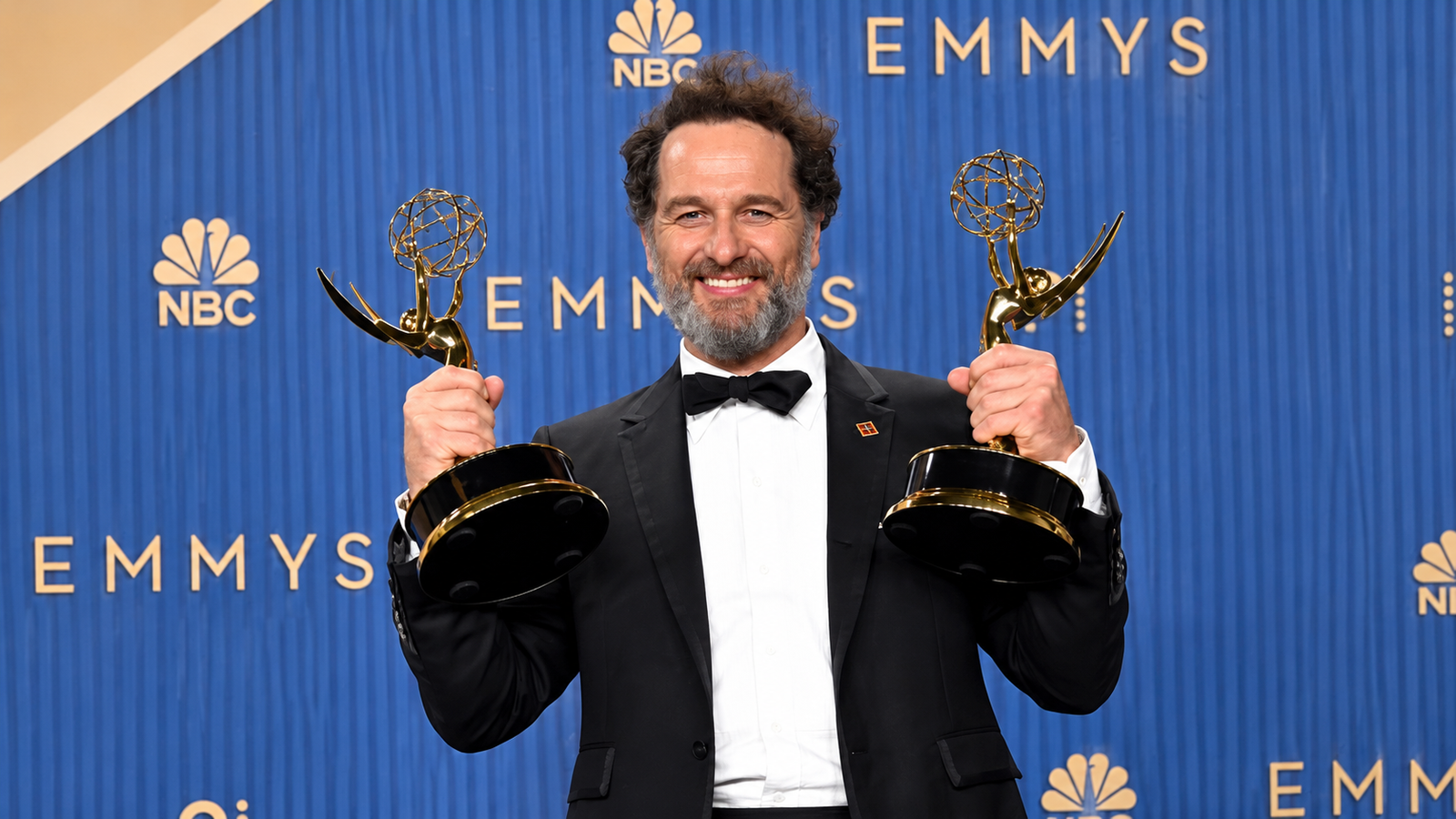
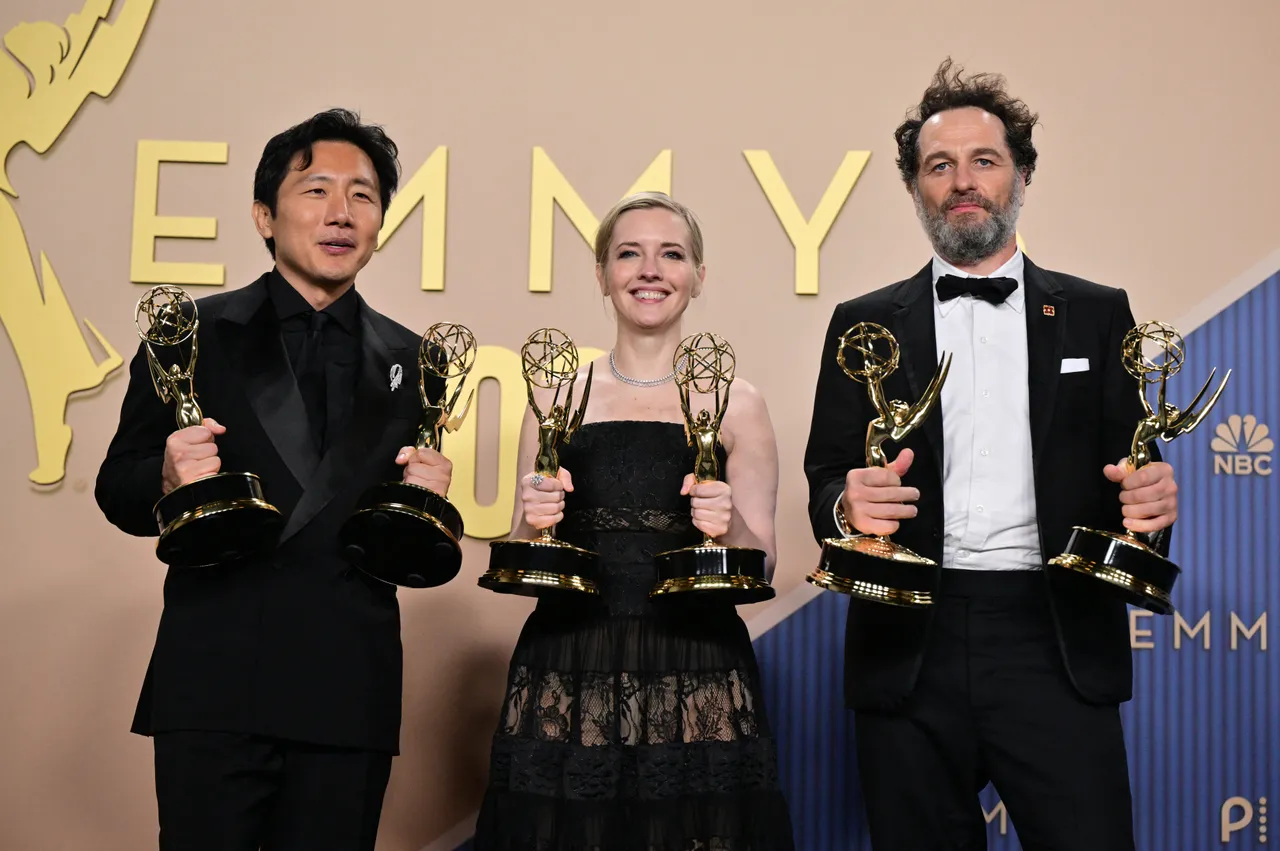
Welsh actor Matthew Rhys has made television history after becoming the first male performer to win two lead acting Emmy Awards in the same ceremony, capping a remarkable night at the 78th Primetime Emmy Awards in Los Angeles.
Rhys first took home the Outstanding Lead Actor in a Limited or Anthology Series or Movie award for his performance as Nile Jarvis in Netflix’s The Beast in Me. He later won Outstanding Lead Actor in a Comedy Series for playing Mayor Tom Loftis in Apple TV+’s Widow’s Bay.


A RECORD-BREAKING NIGHT
The achievement puts Rhys in an elite position in Emmy history. Following his earlier victory for The Americans in 2018, he has now won lead acting honours across drama, limited series and comedy categories.
His latest victories also brought his total number of Emmy wins to three, from eight career nominations.
EMOTIONAL ACCEPTANCE SPEECH
Rhys received a standing ovation during the ceremony and used his speeches to acknowledge the people who helped shape his career.
He thanked his family, his colleagues and, in particular, the people of Wales, describing his homeland as a powerful influence on his journey as an actor.
‘WIDOW’S BAY’ ENJOYS A BIG NIGHT
Rhys’s success was part of a broader triumph for Widow’s Bay. The Apple TV+ series dominated the ceremony, collecting multiple awards, including Outstanding Comedy Series, while also earning acting, writing and directing honours.
The series entered the awards with 19 nominations and ultimately emerged as one of the biggest winners of the night.
A CAREER MILESTONE
For Rhys, the double victory represents another major chapter in a career that has included acclaimed performances in Brothers & Sisters, The Americans and Perry Mason.
At 51, the Welsh actor has now established himself as one of the rare performers to win Emmy recognition across three major lead-acting categories—an achievement that could stand for years as one of the ceremony’s defining moments.


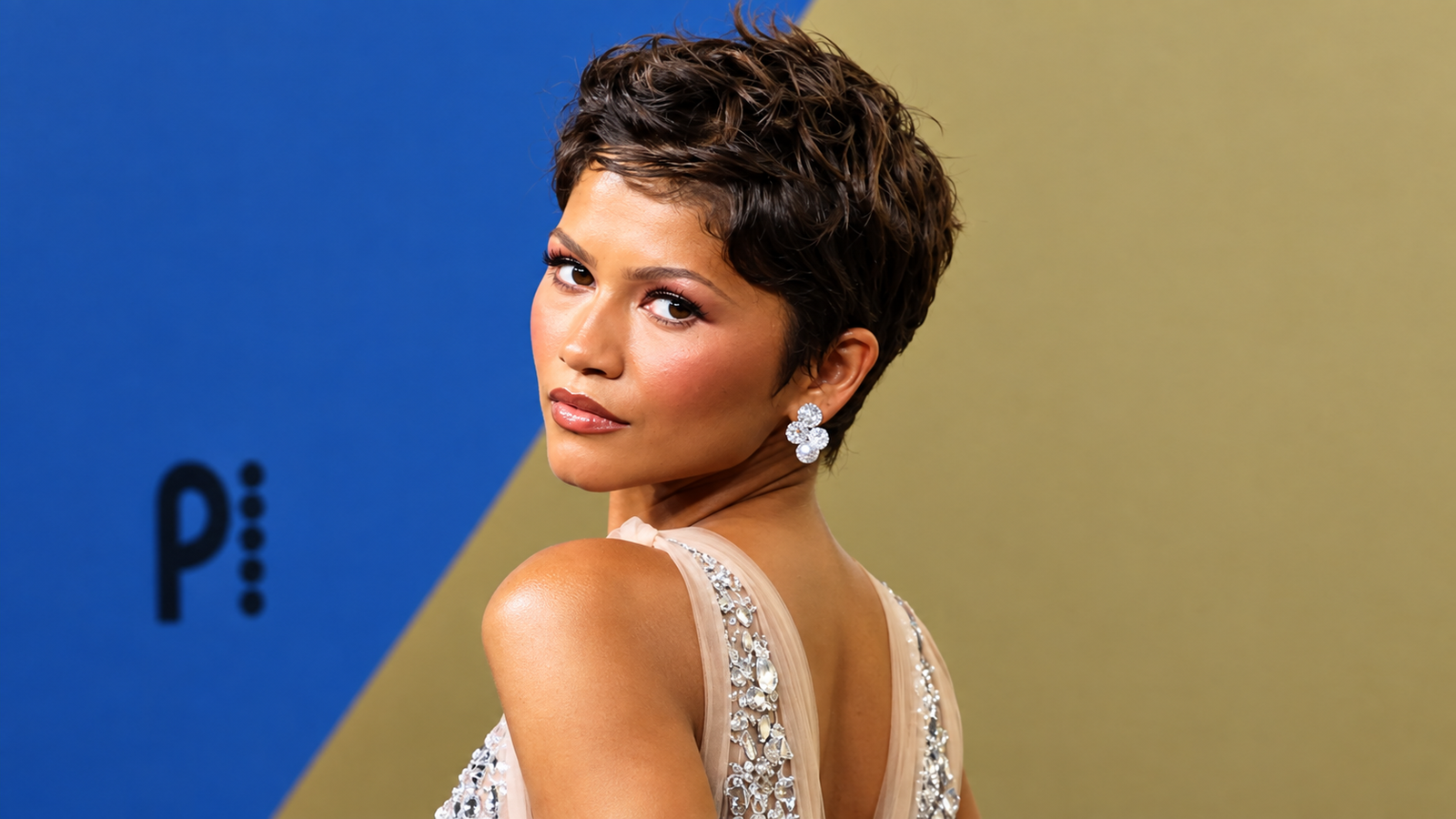
Hollywood’s biggest television stars brought glamour, bold fashion and plenty of star power to Los Angeles on Monday, September 14, as the 78th Primetime Emmy Awards got underway at the Peacock Theater.
Although traditionally known as the red carpet, this year’s arrivals area featured a peacock-blue carpet, part of NBC’s celebrations marking its 100th anniversary.
Among the most talked-about arrivals were Zendaya, Selena Gomez, Nicole Kidman, Mariska Hargitay, Florence Pugh, Riz Ahmed and Harrison Ford, with celebrities embracing everything from shimmering metallic gowns to classic tailoring.


ZENDAYA MAKES A STATEMENT
Zendaya was among the evening’s standout fashion moments, arriving in a crystal-embellished custom Prada gown. Her shimmering look immediately attracted attention as cameras followed the Emmy nominees along the carpet.
SELENA GOMEZ GOES FOR GOLD
Selena Gomez opted for a striking gold Louis Vuitton gown that echoed the colour of the Emmy statuette. The metallic design became one of the most memorable looks of the night.


A MIX OF COLOUR, GLAMOUR AND CLASSIC STYLE
The carpet also featured a wide range of colours and styles. Sarah Pidgeon appeared in Chanel, while Elle Fanning chose a pistachio-green Ralph Lauren gown. Rhea Seehorn stood out in red, while other stars embraced shades of pink, white, baby blue and metallic gold.
MARISKA HARGITAY MAKES IT A FAMILY AFFAIR
Host Mariska Hargitay made a memorable entrance in a red sequined gown and was joined on the carpet by her husband, Peter Hermann, and their three children. Hargitay and her daughter Amaya coordinated in matching red looks, creating one of the evening’s most photographed family appearances.


NICOLE KIDMAN AND MEGAN STALTER TURN HEADS
Nicole Kidman brought a glamorous touch to the carpet in a cream Chanel gown featuring floral detailing. Meanwhile, Megan Stalter delivered one of the most unconventional looks of the evening, covering herself in gold and styling the appearance to resemble the Emmy statuette.
HOLLYWOOD’S TELEVISION ELITE
The arrivals reflected the breadth of the television industry, with stars from major productions including The Pitt, Hacks, Widow’s Bay and Margo’s Got Money Troubles gathering for the ceremony.
Beyond the competition for television’s biggest honours, the red carpet once again provided a major fashion showcase, with celebrities using their appearances to combine traditional awards-season glamour with more adventurous personal styles.
The 78th Emmy Awards took place at the Peacock Theater in Los Angeles on September 14, 2026, with Mariska Hargitay serving as host.


Bernice Offei built a career that went beyond being a recording artist. She was a gospel musician, songwriter, guitarist and banker who spent more than three decades using music to communicate messages of faith, perseverance, gratitude and hope.
She was born in Accra and had her basic education at Royal Preparatory School at Osu before continuing to Achimota School, where her interest in gospel music began to take shape. During her secondary school years, she was called upon to sing at Scripture Union meetings and other Christian programmes.
Her involvement in Christian music deepened in the late 1970s when she joined the Calvary Road Singers in 1978. She performed with the group at various Christian programmes, gaining experience that later helped shape her career as a solo gospel artiste.
Offei was also a guitarist. She learned to play the instrument and would sometimes accompany herself during performances, a skill that distinguished her from many female gospel singers of her generation.
Offei’s transition into professional gospel music was gradual. She was encouraged to develop her songwriting abilities and eventually moved from performing mainly at Christian gatherings to recording her own material.
Her first album, We Are Victors, was released in 1991. The project marked the beginning of a recording career that would eventually produce several albums and more than 40 songs.
She followed it with projects including Hold On, Me Kosu, Grateful and Life. Some sources also list Victory among her later recorded works.
“Hold On” establishes her as a gospel voice
Among the songs that helped establish Bernice Offei’s name was “Hold On.”
The song carried a message of endurance, encouraging listeners not to give up in difficult circumstances. Its message of remaining steadfast in faith became closely associated with Offei and contributed to her popularity among Ghanaian gospel audiences.
Hold On also demonstrated an important feature of Offei’s music: she often used everyday struggles and experiences as a starting point for messages rooted in Christian faith.
“Life Is Short” becomes a defining song
Another major song in her catalogue was Life Is Short, from her 2007 album Life.
The song reflected on the temporary nature of human life and encouraged listeners to consider how they spend the time available to them. Its message of mortality, purpose and reflection became one of the defining themes associated with Offei’s musical legacy.
The song was particularly important to her career because Life earned her two major honours at the 2009 Ghana Music Awards. She won Best Female Vocal Performance for Life and Songwriter of the Year for the same work. The official Ghana Music Awards records confirm both awards.
A songwriter as well as a singer
Offei’s contribution to gospel music was not limited to her ability to sing.
She was also recognised as a songwriter, with her compositions often focusing on Christian faith, God’s grace, perseverance and the realities of human life.
Her catalogue includes songs such as Nyame Kokroko, Kaa She Gbeyei, N’adom Ara Kwa, It’s By Grace, No One Compares, Who Am I, Me Gyefo Te Ase, Suomo, Your Handiwork, Take Your Glory and Nyame Aye Bi Ama Yen.
The variety of titles reflects the recurring themes in her music: worship, gratitude, dependence on God, God’s faithfulness and encouragement during difficult periods.
Music alongside a banking career
Away from the stage, Bernice Offei pursued a professional career in banking.
She worked with Standard Chartered Bank while continuing her gospel ministry. For years, she maintained a balance between her professional responsibilities and her music.
Her academic background was equally notable. She studied at the University of Ghana, where she obtained an MPhil in Crop Science, and later pursued a master’s degree in Information Technology in the United Kingdom.
In 2016, she reportedly left banking to concentrate fully on gospel music and ministry. The decision marked a major transition from balancing two careers to dedicating herself entirely to the calling she had pursued for decades.
Her philosophy about gospel music
Offei also spoke publicly about what she believed gospel music should represent.
In a 2019 interview on Hitz FM’s This Is Gospel, she advised gospel musicians not to make awards their primary motivation.
She argued that gospel artistes should focus on their calling and on spreading the Christian message rather than pursuing recognition. For Offei, awards were secondary to the spiritual purpose of gospel music.
That position matched the themes that ran through her own career. Despite receiving major industry recognition, including two Ghana Music Awards in 2009, she continued to emphasise faith and ministry.
Awards and recognition
Bernice Offei’s contribution to Ghanaian gospel music earned her several awards during her career.
Her most prominent recognition came at the 2009 Ghana Music Awards, where she won:
- Best Female Vocal Performance – “Life”
- Songwriter of the Year – “Life”
The official Ghana Music Awards archive confirms both wins.
A University of Education, Winneba academic source also records other honours associated with her career, including recognition at the Ceval Gospel Music Awards and the Unity Awards.
A legacy that goes beyond awards
For many listeners, however, Bernice Offei’s importance was not simply measured by the number of awards she won.
Her music became associated with messages that were easy to understand and relevant to everyday life. “Hold On” spoke to perseverance, while “Life Is Short” encouraged reflection on mortality. Other songs focused on God’s grace, goodness and faithfulness.
Her ability to combine those messages with a distinctive vocal style helped her remain relevant across generations.
With six albums and more than 40 songs credited to her career, Offei became one of the veteran female voices whose work helped shape Ghana’s gospel music landscape.
Family and personal life
Away from music and banking, Offei was married to Prof. Samuel Kwame Offei, a former Pro-Vice Chancellor of the University of Ghana. The couple had two children.
Those close to her also remembered her for her Christian faith and disciplined lifestyle, qualities that were reflected in the messages she communicated through her music.
The meaning of her musical legacy
Bernice Offei’s catalogue provides a window into a particular era of Ghanaian gospel music—one in which songs were often built around testimony, Scripture, encouragement and reflection on life.
Her journey from a young singer at Scripture Union meetings, to a member of the Calvary Road Singers, to a recording artiste, award-winning songwriter and eventually a full-time gospel minister represents a career built steadily over several decades.
Her best-known songs, particularly “Hold On” and “Life Is Short,” ensured that her voice remained familiar to generations of Ghanaian gospel listeners.
Following her death at 63 on September 12, 2026, tributes have continued to focus on both her music and the values she represented. Ghana News Agency described her as an artiste whose work inspired faith, hope and resilience, while noting that her music continues to form part of Ghana’s gospel music heritage.

Petition filed for investigation into alleged impersonation of Adwoa Safo during parliamentary sittings

Emmys 2026: The Winners and Nominees in Full

Matthew Rhys makes Emmy history with two lead acting wins in one night



-

 Entertainment1 week ago
Mahama Is First President to Put GH¢40m Seed Money into Creative Arts Fund: Kojo Preko Dankwa
-

 Culinary1 week ago
The Green Heart of Ghanaian Cuisine: Celebrating Nkontomire and the Art of Abom
-
 General News2 weeks ago
Don’t Punish Them Retrospectively – Educationist Challenges New CSSPS Placement Rule
-

 Entertainment1 week ago
Government Repatriates Musician Barosky from UK
-
 General News2 weeks ago
OSP Opens Preliminary Investigation into Alleged GH¢70,000 Payment Linked to Parliament’s Vetting
-

 Culinary2 weeks ago
Pineapple: The Spiky Tropical Fruit Packed With Sweetness and Nutrients
-
 Business2 weeks ago
TOR & GOIL Explore Further Opportunities for Strategic Collaboration
-
 Entertainment2 weeks ago
Ras Caleb Appiah-Levi: Hate Me for the Truth That I Represent