
Entertainment
The Ghanaian Things We Are Losing Without Realising It


Ghana is changing. New buildings are rising, smartphones have become part of everyday life, young people are embracing new forms of entertainment, and social media has transformed the way Ghanaians communicate.
Change is not necessarily a bad thing.
Every generation brings something new.
But somewhere between modernisation and the rush to keep up with the world, some things that once made everyday Ghanaian life unique are quietly disappearing.
There is no official announcement when they disappear.
There is no farewell ceremony.
One day, children simply stop playing a particular game. A word stops being used. A food is no longer prepared. An old occupation disappears from the neighbourhood. A radio programme ends and is never replaced.
Eventually, people realise they can barely remember how things used to be.
These are some of the Ghanaian things we may be losing without even realising it.
1. Childhood games played in the streets
There was a time when children did not need a smartphone, tablet or expensive toy to entertain themselves.
The street was enough.
Games such as ampe, pilolo, chaskele, alikoto, skipping rope and police-and-thief provided hours of entertainment.
Children created their own rules, argued about them, formed teams and returned the following day to continue playing.
Today, many children spend more of their free time on phones, gaming consoles, television and social media.
The games have not completely disappeared, but they are no longer as visible in many communities as they once were.
The worrying part is that when the children who remember these games are gone, some of the knowledge surrounding them may disappear too.
2. Ghanaian languages among young people
Ghana has a remarkable linguistic heritage.
Twi, Fante, Ga, Ewe, Dagbani, Nzema, Gonja, Dagaare, Kasem and many other languages carry histories, jokes, proverbs, songs and ways of understanding the world.
Yet some young Ghanaians are becoming increasingly disconnected from the languages spoken by their grandparents.
In some homes, English has become the dominant language of communication.
For some parents, speaking English to their children is associated with education and opportunity.
But language is more than communication.
When a language becomes weaker, expressions, traditional knowledge, humour and cultural references can become harder to pass from one generation to another.
A grandparent may know a proverb that a grandchild understands only after it has been translated.
Something is lost in that translation.
3. The old Ghanaian foods
Ghanaian cuisine is often represented by popular meals such as jollof, waakye, banku, fufu, kenkey and soup.
But there are many less-known traditional foods that rarely appear on modern menus.
Some were strongly associated with particular communities, seasons or farming practices.
As lifestyles change and cooking becomes more time-conscious, certain ingredients and preparation methods are gradually becoming less common.
The danger is not simply losing a recipe.
Traditional food often carries information about agriculture, local plants, seasons and community history.
A dish prepared by a grandmother may contain knowledge that cannot easily be found in a cookbook.
4. The traditional ways of greeting
Ghanaian greetings used to involve much more than saying hello.
Depending on the culture and situation, greetings could involve questions about someone’s family, health, journey, work and wellbeing.
Children were taught to greet older people properly.
Failing to greet someone could be interpreted as disrespect.
Today, greetings still matter, but modern life is changing how people interact.
A quick Hi, a wave or a message on WhatsApp can replace the longer conversations that once accompanied everyday encounters.
But perhaps something else is disappearing—the small social interactions that helped communities remain connected.
5. The neighbourhood storyteller
Before everyone had access to YouTube, TikTok and Netflix, entertainment often came from people.
There was the uncle who could tell stories for hours.
There was the grandmother who knew traditional stories.
There was the elderly man who remembered events that happened decades earlier.
Children could sit around and listen to stories about tricksters, kings, spirits, family history and village experiences.
These stories were entertainment, but they also carried lessons.
Today, a child can access thousands of professionally produced stories with a few taps.
But an algorithm cannot replace the experience of sitting beside an older relative and hearing a story that has travelled through generations.
6. Old occupations
Some once common occupations have become rare.
The traditional repairer, craftsman, local basket maker, blacksmith, mat maker and other artisans once served communities using skills learned over many years.
Some of these skills remain alive, but younger people may be less interested in learning them.
The problem is that traditional skills are difficult to recover once the people who possess them stop practising.
A machine can replace a craftsman.
A factory can replace a local producer.
But the knowledge of how something was traditionally made may disappear with the person who knew it.
7. The old radio culture
Radio remains important in Ghana, but the radio experience has changed.
There was a period when people planned parts of their day around particular programmes.
Listeners knew the presenters, remembered their catchphrases and waited for specific segments.
Relationship programmes, music shows, storytelling programmes, sports discussions and community programmes created loyal audiences.
Today, many people consume radio through livestreams, social-media clips and recordings.
The programme may still exist, but the communal experience around it can be very different.
And some programmes have disappeared completely.
For listeners who grew up with them, their disappearance represents more than a change in broadcasting.
It is the disappearance of a piece of everyday Ghanaian life.
8. The art of visiting people without an appointment
There was a time when visiting someone’s home did not always require a phone call, text message or calendar invitation.
You could simply appear.
Neighbours visited neighbours.
Relatives could arrive unexpectedly.
Friends could sit outside and talk for hours.
Today, busy schedules, traffic, work and digital communication have changed those habits.
People can communicate constantly through WhatsApp while physically seeing each other less often.
We may have gained convenience while losing some of the spontaneity of human interaction.
9. The old provision shop
The traditional neighbourhood provision shop was once more than a place to buy something.
It could be the centre of local conversation.
The shopkeeper knew the children who came to buy sweets.
Adults stopped to discuss community matters.
Sometimes customers bought on credit because the shopkeeper knew them personally.
Modern supermarkets and convenience stores offer efficiency and variety, but they often do not provide the same personal relationship.
The old shop was part business, part social space.
10. Traditional clothing knowledge
Ghana is internationally recognised for textiles such as kente, but there is much more to traditional clothing than the finished fabric.
Different communities developed distinctive ways of weaving, designing, wearing and interpreting cloth.
Patterns could carry meanings.
Clothing could communicate identity, status, occasion and heritage.
As mass-produced fabrics and changing fashion trends become more dominant, some of the knowledge surrounding traditional clothing risks becoming something people admire without fully understanding.
11. The disappearing Ghanaian proverb
Ghanaian languages are rich in proverbs.
A single proverb can communicate an entire philosophy in a few words.
Older generations often used them during conversations, family meetings, storytelling and conflict resolution.
Younger people still use proverbs, but their frequency in everyday conversation appears different from what many older Ghanaians remember.
If the language weakens, the proverb can weaken with it.
And when a proverb disappears, an entire way of expressing wisdom may disappear alongside it.
12. Community work
There was a strong tradition of people coming together to solve community problems.
Neighbours could contribute labour to help build, clean or repair something that benefited everyone.
Community members could organise around a shared need without expecting payment.
Modern life has not completely erased this tradition, but individual responsibilities, urbanisation and changing lifestyles have altered how communities organise themselves.
The concept of we can easily become weaker when everyday life becomes increasingly individualised.
13. Traditional names and the stories behind them
A Ghanaian name can carry a story.
Some names reflect the circumstances surrounding a child’s birth.
Others express gratitude, hope, family history, religion or an experience that shaped the family.
But some traditional naming practices are becoming less prominent as parents increasingly choose names based on global trends, celebrities or personal preferences.
There is nothing wrong with giving children modern names.
But when traditional names disappear, some family histories become harder to trace.
14. The old way of listening to music
Before streaming services, music discovery was an event.
People waited for songs on the radio.
They bought cassettes and CDs.
They recorded songs from the radio onto tapes.
They exchanged music with friends.
A new album could become a major talking point.
Today, millions of songs are available instantly.
That is convenient, but it has also changed our relationship with music.
A song that once took weeks to find can now be discovered in seconds.
Music has become more accessible, but perhaps less of an event.
15. The patience to sit and talk
Perhaps the biggest thing Ghana risks losing is not a food, game, language or occupation.
It is time.
The time to sit with an elderly relative.
The time to listen to a neighbour.
The time to tell a child a story.
The time to learn how something is traditionally made.
The time to sit outside in the evening without constantly checking a phone.
Modern life rewards speed.
Everything is becoming faster.
But culture often survives through slow things—conversation, observation, repetition and storytelling.
We should not romanticise the past
None of this means Ghana should return to the past.
Some traditions disappeared because society improved.
Some old practices were inconvenient.
Some were unfair.
Some should not be revived.
Progress is necessary.
But progress does not require forgetting.
A country can embrace technology while preserving its languages.
Children can play video games while still learning traditional games.
Young people can enjoy international music while discovering Ghanaian classics.
Modern restaurants can exist alongside traditional food.
People can use WhatsApp while still visiting their grandparents.
The real challenge is not choosing between the past and the future.
It is deciding what deserves to travel with us into the future.
What are we willing to save?
Perhaps Ghana’s greatest cultural losses will not happen dramatically.
There may be no headline announcing them.
A grandmother will simply stop preparing a particular meal.
An old man will stop telling a story.
A radio presenter will retire.
A child will never learn the game their parents played.
A traditional craftsman will die without passing on his skill.
A word will disappear from everyday conversation.
And eventually, someone will ask:
Did Ghanaians really use to do this?
That is why preserving culture should not only mean protecting monuments and celebrating festivals.
Sometimes preservation means recording a grandmother explaining how to prepare an old dish.
It means documenting an elderly person’s stories.
It means teaching children traditional games.
It means recording old radio programmes.
It means asking grandparents about the meaning of family names.
It means writing down the words that younger generations rarely hear.
Because culture does not always disappear when people reject it.
Sometimes it disappears simply because nobody remembered to pass it on.












The Ghana Police Service has confirmed that Harold Norman, husband of fashion personality Rosemond Akua Adobea, popularly known as Nana Akua Addo, could not appear before court on Wednesday, October 7, after being admitted to hospital.
Norman was expected to be arraigned in connection with allegations of domestic abuse made against him by his wife. The Criminal Investigations Department (CID) said his lawyer notified investigators that he had been hospitalised and was therefore unable to attend the scheduled court proceedings.
The Police said officers from the Domestic Violence and Victim Support Unit (DOVVSU) subsequently visited the hospital to verify the claim. Investigators are also monitoring the situation and are expected to ensure that Norman appears before court immediately after his discharge.
The development follows a petition Nana Akua submitted to the Director-General of the CID on August 20, 2026. According to the Police, she alleged that her husband had subjected her to physical, emotional and economic abuse.
Police investigations also established that a case involving the couple had previously been handled by DOVVSU at the Lakeside and Ministries Police Stations in July.
Norman was arrested at his residence on August 27 to assist with investigations. After giving a caution statement, he was granted police enquiry bail with two sureties on August 29 while investigations continued.
The Police have also disclosed that they are working with the Ministry of Gender, Children and Social Protection to provide social welfare support for Nana Akua and her children.
The case has attracted significant public attention following the circulation of videos and images on social media. Norman’s lawyers have separately denied allegations against their client and urged the media to exercise caution in reporting matters that are before investigators and the courts.
The Police have maintained that the allegations remain subject to investigation and have reiterated their commitment to handling domestic violence complaints professionally and fairly.

Amazon Prime Video is set to become the exclusive global streaming home of the Emmy Awards under a new six-year agreement with the Television Academy, beginning with the 2027 ceremony.

Amazon Prime Video becomes the new global home of the Emmy Awards.
The deal marks a major change for one of television’s most prestigious awards shows, ending decades of reliance on traditional U.S. broadcast networks. The Emmys have historically rotated among ABC, CBS, Fox and NBC, a system commonly known as the “Wheel Deal.”
Under the new arrangement, the ceremony will stream live on Prime Video in more than 240 countries and territories. Importantly, viewers will not need an Amazon Prime subscription to watch the awards, as the event is expected to remain free worldwide.

The Emmy Awards stage as the ceremony prepares for a new streaming era.
The first Emmy ceremony under the agreement will take place in September 2027. The Television Academy said moving to a single long-term streaming partner will provide greater continuity and allow it to build the event from year to year rather than starting afresh with a different broadcaster.
The agreement also reflects the rapidly changing television industry. Streaming platforms have increasingly become central to the production, distribution and promotion of major television programmes, while traditional broadcast audiences have faced growing competition from digital services.
For Amazon, the Emmys deal expands Prime Video’s growing portfolio of major live events. The company already has significant experience streaming live sports and entertainment programming, and the awards ceremony gives it another high-profile global event capable of attracting viewers and advertisers.
The shift could also help the Emmys reach younger and international audiences. The ceremony has faced challenges with declining television viewership, making global streaming access an important part of the Academy’s effort to keep the event relevant in a changing media environment.

The iconic Emmy statuette ahead of the awards show’s move to Prime Video.
Television Academy chair Cris Abrego described the partnership as an opportunity to give the Emmys unprecedented global reach, while Prime Video chief Mike Hopkins said Amazon was honoured to become the awards show’s global home.
The move follows a wider migration of major entertainment events toward streaming. The Oscars, for example, are scheduled to move to YouTube for global streaming beginning in 2029, while Netflix has also expanded its live awards-show presence.
For the Emmys, however, the Amazon agreement represents a particularly significant break with tradition: after more than seven decades on broadcast television, the awards will enter a new era in which streaming becomes its primary global platform.

Veteran Nigerian actor Pete Edochie has become the first personality from outside Ghana to be honoured under the Legacy Project, an initiative by King-Dawie Publishing that celebrates individuals whose work has made a lasting contribution to Ghana’s creative arts and African culture.
Edochie received the honour on Sunday, October 4, 2026, at the Kempinski Hotel Gold Coast City in Accra, as the Ghana-based initiative began expanding into a broader Pan-African programme. Nigeria is the first country outside Ghana to feature in the project’s new phase.
The Legacy Project has previously recognised Ghanaian personalities including veteran actress Grace Omaboe, popularly known as Maame Dokono, football legend Asamoah Gyan, veteran actor Fred Amugi and actor Adjetey Anang.
According to the project’s management, Edochie was selected because of his decades-long contribution to African cinema and his influence on generations of viewers and performers across the continent. His career has included memorable roles that helped bring African traditions, social values and cultural experiences to a wide audience.
Ghanaian actress Jackie Appiah described Edochie as a father figure and praised his willingness to advise and mentor younger actors. Veteran actor Fred Amugi also spoke highly of the Nigerian star’s influence on African cinema.
The ceremony also recognised other African film veterans. Western Regional Representative on Ghana’s Council of State, Dr Maxwell Nana Yaw Palasco Boakye, presented awards to Grace Omaboe, Fred Amugi and Pete Edochie.
The celebration included financial and symbolic gestures in support of Edochie’s legacy initiative. Jackie Appiah and entrepreneur Maame Gold each donated GH¢20,000, while Ghanaian watch brand Caveman presented the actor with a customised timepiece bearing his image.
Edochie expressed appreciation for the recognition and for the reception he has received during his stay in Ghana.
A project aimed beyond entertainment
The recognition comes alongside Edochie’s wider African Legacy Project, which combines a book, documentary and youth mentorship programme. The mentorship initiative is expected to target approximately 500,000 young Africans, with an emphasis on inspiring and developing the next generation.
The Ghana Gold Board has also indicated its readiness to support the youth mentorship initiative following Edochie’s meeting with GoldBod Chief Executive Officer Sammy Gyamfi in Accra. GoldBod said the programme aligns with its own focus on mentorship, training and entrepreneurship.
Edochie’s new book also features Ghana Gold Board and discusses Ghana’s efforts to ensure that its mineral resources contribute more significantly to national development.
The Legacy Project is therefore moving beyond the traditional award ceremony model, positioning itself as a platform for documenting African achievements, preserving cultural stories and connecting established personalities with younger generations.
With Kenya reportedly being considered as the next destination, the initiative could develop into a wider continental celebration of African personalities and their contributions to culture, entertainment and society.
Entertainment
Paramount completes $110bn Warner Bros. Discovery takeover, creating new Hollywood giant

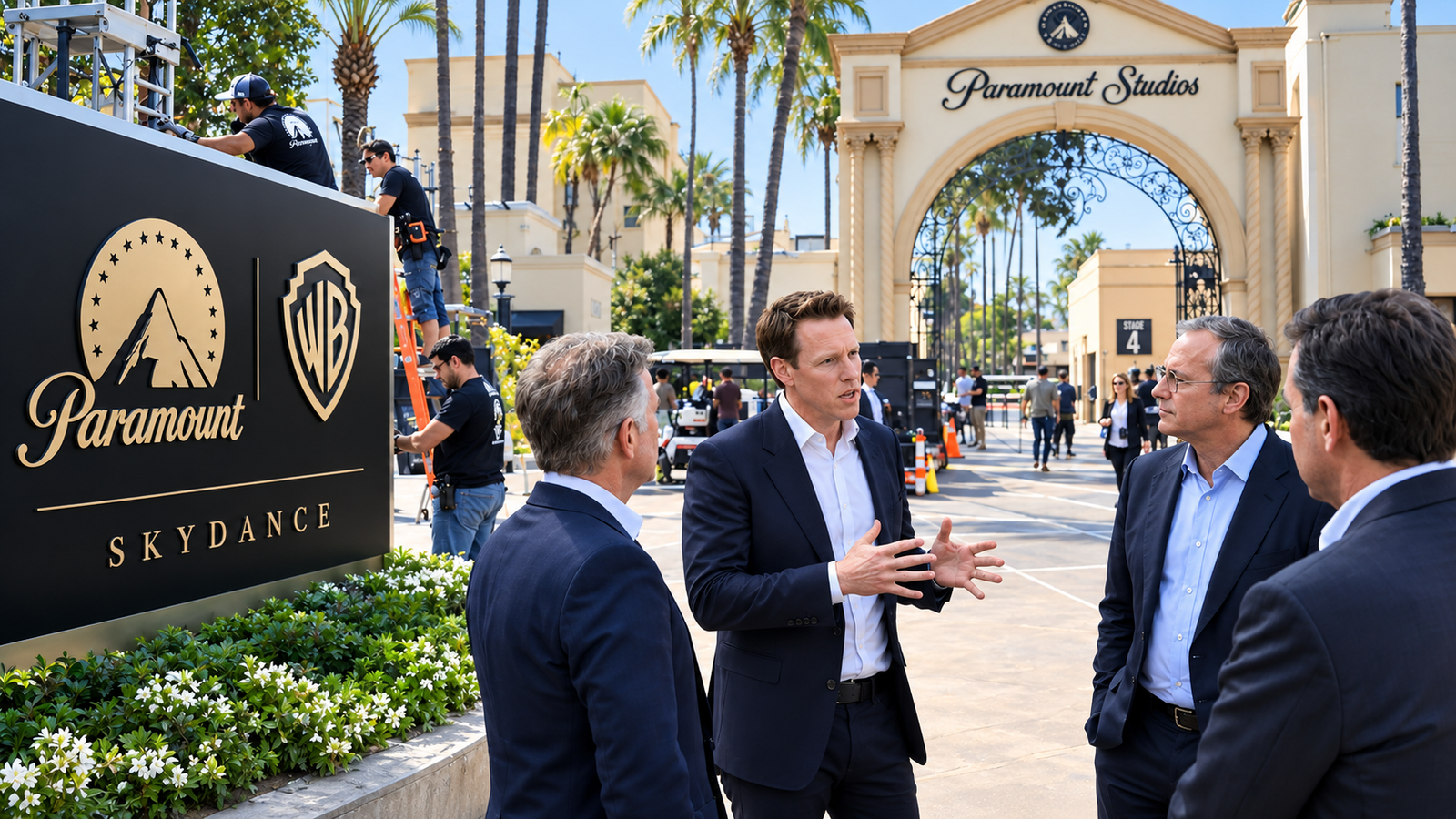
Paramount Skydance has completed its acquisition of Warner Bros. Discovery in a landmark deal valued at about $110 billion, bringing two of Hollywood’s biggest entertainment businesses under one corporate roof. The combined company will operate under the Skydance name.
The transaction, completed on 6 October 2026, creates a media group spanning film studios, television networks, streaming platforms, news organisations and major entertainment franchises. David Ellison remains chairman and chief executive, while former Mattel chief Ynon Kreiz serves as co-CEO with responsibility for day-to-day operations and integration.

“Hollywood’s New Powerhouse: Paramount and Warner Bros. Unite”
A new force in entertainment
The merger combines Paramount Pictures and Warner Bros., alongside streaming platforms including Paramount+ and HBO Max. The enlarged company also controls major television and news assets, including CBS, HBO and CNN, as well as an extensive library of films and television programmes.
The combined portfolio includes globally recognised franchises such as Harry Potter, Game of Thrones, Superman, Top Gun, Mission: Impossible, Star Trek and The Matrix. The scale of the catalogue gives Skydance a much larger collection of intellectual property to use across cinemas, television and streaming.

“David Ellison Leads New Skydance Entertainment Empire”
Battle for streaming audiences
One of the central motivations behind the transaction is the increasingly competitive streaming market. Skydance will be positioned to compete more directly with companies such as Netflix, Disney, Amazon and other technology-driven entertainment businesses.
The company has indicated that it intends to integrate its streaming operations over time while continuing to invest heavily in film and television production. It has also committed to producing at least 30 theatrical films a year, alongside more than 180 television shows and series.

“Paramount-Warner Bros. Merger Creates Global Media Giant”
Cost savings and job concerns
The enormous scale of the new company also brings financial pressure. Paramount has previously estimated that the merger could generate more than $6 billion in synergies, including savings from technology, corporate operations, procurement and real estate.
However, the planned efficiencies have raised concerns about potential job losses and the future of creative departments. Analysts and industry observers are watching closely to see whether the new company can reduce costs without weakening its film, television and news operations.

“$110bn Deal Reshapes the Hollywood Landscape”
CNN and CBS News under the new ownership
The deal also has implications beyond entertainment because Skydance now controls major news organisations including CNN and CBS News.
Concerns over editorial independence were among the issues surrounding the merger. As part of the agreements clearing the transaction, Skydance committed to measures intended to protect editorial independence at its news operations.

“Iconic Hollywood Franchises Enter New Era Under Skydance”
Hollywood enters a new era
The completed takeover represents one of the biggest consolidations in modern Hollywood. Skydance now has the resources, franchises and distribution networks to become a major competitor across cinema, television and streaming.
But the real test begins with integration. The company must combine thousands of employees, multiple streaming services, extensive film libraries and major television networks while managing substantial debt and maintaining audiences in a rapidly changing entertainment industry.
The merger therefore marks not simply the end of Warner Bros. Discovery as an independent company, but the beginning of a new phase for Hollywood under the Skydance banner.
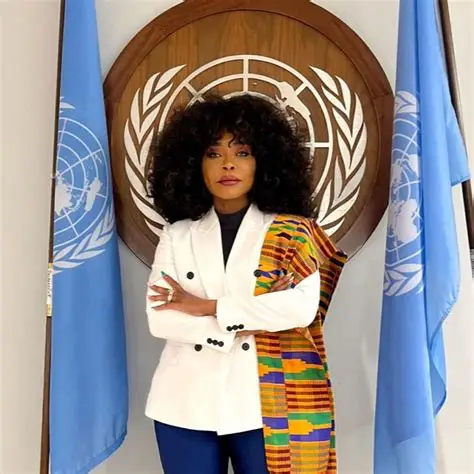
Ghanaian-British singer Stephanie Benson has cautioned women against relying on cosmetic procedures to achieve their desired body shapes, urging them to embrace exercise, discipline and healthy eating instead.
Speaking on Hitz FM’s Daybreak Hitz, Stephanie Benson said many people are too quick to seek what she described as “quick fixes” without considering the possible long-term consequences.
“Exercise is great. People take it for granted. Nowadays, people are too quick to do the quick fixes. They don’t think about the future and how it is going to be for them when they are a lot older, and they need to be mindful about that, because those quick fixes don’t work. It won’t help you,” she said.
She questioned how some women who undergo procedures to enhance certain parts of their bodies might feel about the results as they grow older.
“For your buttocks to be bigger, so when you turn 50, how are you going to walk? If the men didn’t like bigger buttocks, it wouldn’t trigger the ladies to go for quick fixes,” Stephanie said.
According to her, pressure to meet certain beauty standards and attract men can push some women into making decisions about their bodies that may not necessarily benefit them in the long run.
“Me, my buttocks are flat, so if you look, will you come close to me? I’m exercising now, so it looks like it is increasing in size nowadays,” she added.
The singer used herself as an example, explaining that her physique has been shaped largely by years of exercise, discipline and conscious lifestyle choices rather than cosmetic surgery.
She said people who admire her appearance and want to achieve a similar physique must understand that it is the result of years of commitment.
“When people say, ‘Stephanie, I want to be like you,’ I’m thinking it’s the hard work that I put into myself, right from a very young age, that is important. You have to start at some point. So somebody says, ‘I’m going to be like you when I’m 60 years old,’ you have to start now. It doesn’t happen that way,” she explained.
Stephanie Benson also dismissed claims that she has undergone cosmetic surgery because of her appearance at her age.
“So, I think people make a lot of assumptions that, at my age, looking and feeling the way I feel, I have done some kind of surgery. But I have never had liposuction or anything like that before. The only surgery I have had is when I had a mastectomy from cancer. Otherwise, everything is pure hard work and discipline,” she stated.
She maintained that discipline is key to maintaining a healthy body, particularly when it comes to food and exercise.
“Discipline is everything. What I eat is important to me. I eat everything, though, but only in moderation,” she said.
Stephanie Benson explained that she does not completely deprive herself of the foods she enjoys but focuses on moderation as part of her long-term approach to staying fit and healthy.

Coco Gauff Says Online Racist Abuse Left Her Drained After China Open Exit

Hezbollah Reportedly Receives $200 Million From Iran for Lebanon’s Displaced

AU Unveils Africa Credit Rating Agency to Challenge Global Ratings Giants



-

 General News1 week ago
Fidelity Bank Chairman Named Ghana’s Topmost Transformational Board Chair 2026
-

 Technology2 weeks ago
Rolls-Royce Expands Aviation Business with Major Philippine Airlines Engine Agreement
-

 Entertainment2 weeks ago
Ras Caleb assesses institutions under the Tourism Ministry, highlighting key roles.
-

 Entertainment2 weeks ago
Ras Caleb Appiah-Levi: The musician, Pan-Africanist and organiser whose career spans four decades
-

 Entertainment1 week ago
Ras Caleb Appiah-Levi Reflects on Death, Wealth and Equality: “Death Neither Knows Rich Nor Poor”
-
 Business1 week ago
Rev. Dr. Christian Kwetey Kweitsu Honoured for Excellence in Audiology Practice in Kigali
-

 General News2 weeks ago
Sudan Chemical Weapons Allegations: UN Signals Readiness for Possible Investigation
-

 Sports2 weeks ago
Red Card After Gun Gesture Overshadows Israel’s Nations League Goal