
Politics
Three men, nine elections: NDC’s presidential journey since 1992

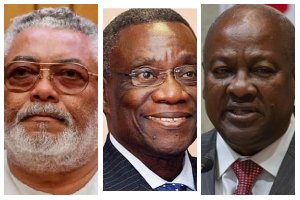
From Jerry John Rawlings to John Evans Atta Mills and John Dramani Mahama, the National Democratic Congress (NDC) has relied on just three presidential candidates across all nine presidential elections of Ghana’s Fourth Republic.
Since the return to constitutional rule in 1992, the NDC’s presidential story has been shaped by three names — Jerry John Rawlings, John Evans Atta Mills and John Dramani Mahama.
Together, they have carried the party’s presidential ticket through nine successive elections, producing victories, defeats, close contests and a political comeback in 2024.
1992 and 1996: Rawlings opens the NDC era
The NDC’s presidential journey began with Jerry John Rawlings in the 1992 presidential election, the first presidential election of the Fourth Republic.
Rawlings secured 58.40 per cent of the vote, according to an election archive covering the NDC’s electoral history. He returned four years later and again won the presidency, taking 57.40 per cent in the 1996 election.
Those two victories established Rawlings as the first presidential face of the NDC in the Fourth Republic.
But after two successful presidential elections, the party had to prepare for a new chapter.
2000: Mills takes over the mantle
That chapter came in 2000, when John Evans Atta Mills became the NDC’s presidential candidate.
Mills secured 44.54 per cent of the presidential vote, but the election went in favour of the New Patriotic Party’s John Agyekum Kufuor.
The 2000 election also produced Ghana’s first peaceful transfer of power from one political party to another under the Fourth Republic.
For the NDC, however, the presidential journey was far from over.
2004: Mills returns for another contest
Mills remained the NDC’s presidential candidate in 2004, giving him a second consecutive opportunity to lead the party into a general election.
He obtained 44.64 per cent of the presidential vote, while Kufuor secured another term.
The NDC consequently entered the 2008 election still searching for a return to the presidency.
2008: The razor-thin victory
The 2008 election became one of the most closely fought presidential contests in Ghana’s Fourth Republic.
Mills once again led the NDC ticket, with John Dramani Mahama as his running mate.
The election ultimately went to a second round, with Mills emerging victorious after the run-off. The NDC’s election archive records Mills with 50.23 per cent of the vote.
The victory returned the NDC to government after eight years in opposition.
But an unexpected transition would soon change the party’s presidential story.
2012: Mahama enters the presidential race
Following President Mills’ death in July 2012, then-Vice President John Dramani Mahama assumed the presidency and subsequently became the NDC’s presidential candidate for the December 2012 election.
Mahama won the election with 50.70 per cent of the vote, according to the NDC’s election archive.
It marked the beginning of Mahama’s long-running presidential chapter with the NDC.
2016 and 2020: Two difficult elections for Mahama
Mahama remained the NDC’s candidate in 2016, but lost the election to Nana Addo Dankwa Akufo-Addo of the NPP.
The NDC’s recorded presidential share fell to 44.53 per cent.
Four years later, Mahama returned as the NDC candidate for the 2020 presidential election.
He secured 47.36 per cent, while Akufo-Addo was declared the winner. The 2020 election was also notable for the unprecedented 137-137 parliamentary tie between the NDC and NPP.
Mahama had now contested three presidential elections — 2012, 2016 and 2020.
But his political journey with the NDC was not finished.
2024: Mahama’s return to Jubilee House
The NDC again selected Mahama as its presidential candidate for the 2024 election, making it his fourth presidential contest.
The Electoral Commission’s official election results provide the authoritative record of the 2024 poll.
Mahama won the election, returning to the presidency after eight years out of office.
His victory also meant that the NDC’s presidential history in the Fourth Republic had come full circle — from Rawlings’ victories in 1992 and 1996, through Mills’ leadership and Mahama’s successive contests, to Mahama’s return in 2024.
Three men, nine presidential contests
The numbers tell a remarkable story.
Jerry John Rawlings carried the NDC flag in two elections:
- 1992 — Victory
- 1996 — Victory
John Evans Atta Mills carried the party’s presidential ticket in three elections:
- 2000 — Defeat
- 2004 — Defeat
- 2008 — Victory
John Dramani Mahama has carried the NDC ticket in four elections:
- 2012 — Victory
- 2016 — Defeat
- 2020 — Defeat
- 2024 — Victory
That makes nine presidential elections and only three individuals who have represented the NDC at the top of the ticket since the beginning of the Fourth Republic.
A presidential tradition built around continuity
The NDC’s presidential history is therefore unusual for its continuity.
While Ghana’s Fourth Republic has seen several changes in presidential candidates across political parties, the NDC’s presidential ticket has remained concentrated around Rawlings, Mills and Mahama.
The sequence also reveals different phases of the party’s electoral fortunes — Rawlings’ dominance in the 1990s, Mills’ three-election journey, and Mahama’s four-contest presidential career culminating in his return to office in 2024.
Nine elections. Three men. Five presidential victories. And a political journey stretching from the birth of the Fourth Republic to the present day.
The story of the NDC’s presidential ticket since 1992 is, in many ways, a story of Rawlings, Mills and Mahama.
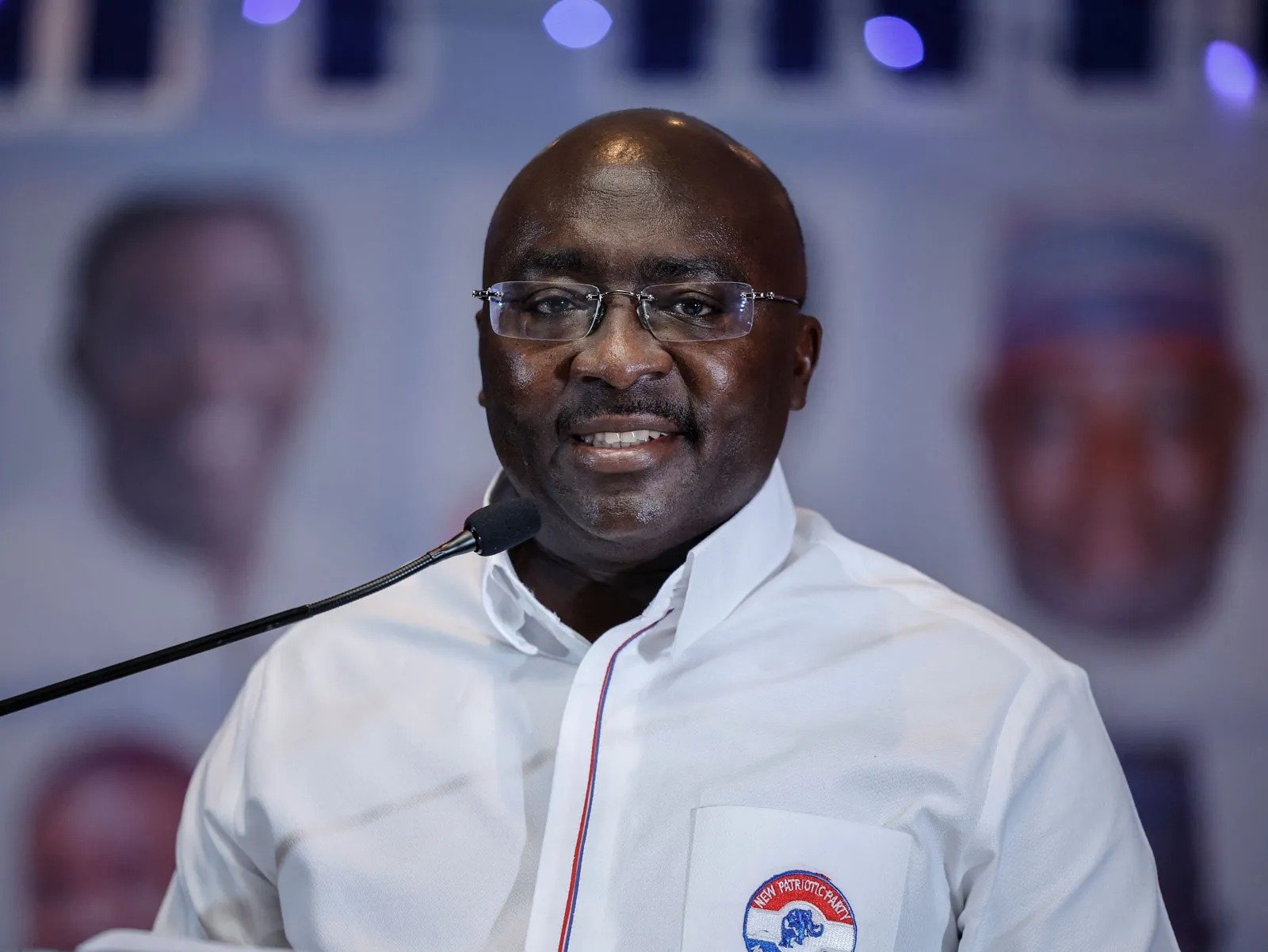
The Ashanti Regional branch of the New Patriotic Party (NPP) has cautioned party members against putting pressure on the party’s flagbearer, Dr Mahamudu Bawumia, over his choice of running mate for the 2028 presidential election.
The regional party leadership says the decision on who should partner Dr Bawumia should be left to him, urging members to refrain from turning the selection process into an internal contest.
The call comes as discussions intensify within the NPP over the potential qualities and background of the person who could eventually be selected to join Dr Bawumia on the party’s presidential ticket.
Ashanti NPP warns against pressure
The Ashanti Regional NPP leadership has appealed to members to allow Dr Bawumia the necessary space to make the decision without undue influence.
According to the regional branch, party members may have their own preferences, but such views should not translate into pressure on the flagbearer.
The leadership believes the running mate selection is an important decision that requires careful consideration and should be handled through the appropriate party processes.
Running mate debate gains momentum
The issue of who could partner Dr Bawumia has increasingly become a subject of discussion among NPP supporters and political observers.
Various names and considerations have emerged in public conversations, with supporters expressing different views about the characteristics they believe a potential running mate should possess.
However, the Ashanti Regional leadership is urging members not to allow those discussions to create unnecessary divisions within the party.
‘Let Bawumia decide’
The regional party’s position is that Dr Bawumia, as the NPP’s flagbearer, should be given the room to make the decision.
Rather than campaigning openly for particular individuals, party members have been encouraged to focus on strengthening the party and maintaining unity.
The call is also intended to discourage an early contest among party supporters over a position that has not yet been formally settled.
Unity takes centre stage
The intervention comes as the NPP prepares for the 2028 general election and seeks to consolidate its internal structures following its selection of Dr Bawumia as presidential candidate.
For the Ashanti Regional branch, maintaining cohesion within the party is important as preparations for the next election continue.
The leadership therefore wants members to avoid actions or statements that could create divisions around the running mate issue.
Focus shifts to 2028
With Dr Bawumia already leading the NPP’s presidential ticket, attention has naturally shifted towards the composition of the eventual campaign team and presidential ticket.
The choice of running mate will therefore remain a major subject of interest within the party as the 2028 election approaches.
For now, however, the Ashanti Regional NPP leadership wants party members to exercise restraint and allow the flagbearer to make the decision.
The message from the Ashanti NPP is clear: supporters can have their preferences, but the final choice of running mate should not become a source of pressure or internal division.
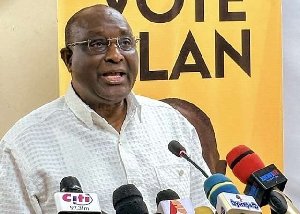
United Party (UP) founder Alan Kyerematen has made a fresh claim about some members of the New Patriotic Party (NPP), saying their continued interest in his political activities shows that his departure from the party remains significant to them.
According to Mr Kyerematen, some NPP members have continued to monitor his activities and mention his name even after his exit from the party.
He made the remarks in an interview on Adom FM, where he reflected on his decision to leave the NPP and his subsequent political journey outside the party.
‘They are ready to join me’
Mr Kyerematen claimed that some NPP members who continue to talk about him are doing so because they are interested in joining his political movement.
“Although I have left the NPP, they are monitoring my activities,” he said, arguing that the continued attention demonstrates that his political relevance remains.
He further claimed that some NPP members “can’t seem to forget” him because they are prepared to join his movement.
The former Trade Minister did not, however, provide a specific number of NPP members he believes are considering such a move.
Kyerematen links exit to NPP’s 2024 performance
Mr Kyerematen also revisited the NPP’s performance in the 2024 presidential election, arguing that his departure from the party contributed to the decline in its support.
He was careful to say he could not personally claim that he was responsible for the entire 2.1 million-vote decline he referenced.
Instead, he said some NPP stalwarts had told him that his exit contributed to the party’s electoral performance.
“I cannot say that I was the reason 2.1 million people didn’t vote for NPP. But from what some NPP stalwarts are saying, my exit contributed in a way,” he said.
‘Some members did not vote because I left’
In another interview, Mr Kyerematen said some NPP members had personally told him that they did not vote in the 2024 election because he had left the party.
He questioned how approximately 2.1 million NPP sympathisers could have stayed away from the polls, linking that figure to the political consequences of his departure.
His comments represent his own explanation of the NPP’s electoral performance and should not be treated as proof that his exit was the cause of the party’s decline in votes.
From NPP presidential race to independent candidate
Mr Kyerematen withdrew from the NPP’s presidential primary race in September 2023 before formally resigning from the party later that month.
He subsequently contested the 2024 presidential election as an independent candidate, using the Movement for Change as his political vehicle.
His departure marked a major change in his political career after several years of seeking the NPP’s presidential nomination.
His political journey continues outside NPP
Since leaving the NPP, Mr Kyerematen has continued to advocate for an alternative political force outside the traditional NPP-NDC contest.
He has repeatedly argued that Ghana needs to move beyond the political duopoly that has dominated the Fourth Republic.
In recent comments, he said he remains determined to break the dominance of the two parties, pointing to persistent challenges in infrastructure, electricity and development as reasons for his position.
Fresh attention on Kyerematen’s NPP relationship
The latest comments have once again brought Mr Kyerematen’s relationship with his former party into the political spotlight.
While he insists that some NPP members continue to identify with or monitor his political activities, there are also former allies who have publicly criticised his decision to leave the party.
For instance, former Kyerematen ally Vera Oye Bram-Larbi recently said she regretted considering leaving the NPP to follow him and criticised his political leadership.
The contrasting positions underline the differing views among former allies and NPP members about Kyerematen’s decision to leave.
For Alan Kyerematen, however, his message remains clear: despite leaving the NPP, he believes some members of his former political home are still watching his movement — and some, he claims, may eventually join him.
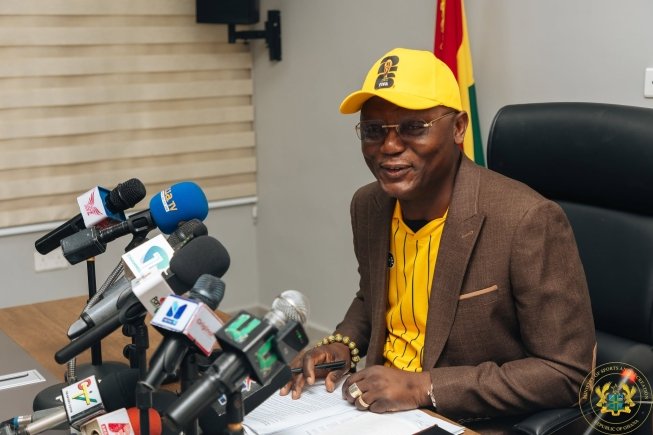
The Minority in Parliament has turned the spotlight on Ghana’s 2026 World Cup spending, demanding a detailed, line-by-line account of how the GH¢58 million advance released for the Black Stars’ campaign was utilised.
The demand follows a briefing by the Minister for Sports and Recreation, Kofi Adams, before Parliament’s Youth and Sports Committee on Thursday, September 17, 2026, on expenditure related to Ghana’s participation in the tournament.
The Minority says while some major payments have been explained, significant questions remain over operational expenses, including flights, accommodation, transportation, logistics, catering, security and tickets.
‘Where is the detailed breakdown?’
Ranking Member of Parliament’s Youth and Sports Committee, Vincent Ekow Assafuah, is leading the call for greater disclosure.
He wants the Ministry of Sports and Recreation, the Ghana Football Association (GFA) and other relevant institutions to publish a comprehensive breakdown showing exactly how the money was spent.
“Where is the detailed breakdown of the expenditure on flights, accommodation, internal transportation, laundry, training camps, logistics, catering, security, tickets and other operational expenses?” he asked.
According to the Minority, accounting for players’ appearance fees and officials’ allowances alone does not provide a complete picture of the entire World Cup expenditure.
$5m advance under scrutiny
The government released GH¢58.929 million, equivalent to US$5 million, as an advance to support preparations and Ghana’s participation in the group stages of the World Cup.
Assafuah said the Sports Minister had explained that Black Stars players received US$100,000 each as appearance fees, amounting to approximately US$2.6 million.
Payments to the technical team and other officials, including honoraria and per diems, reportedly brought expenditure to US$4,670,339 from the US$5 million advance.
But the Minority wants the remaining operational expenditure broken down in detail.
Laundry, transport and other costs questioned
The Minority has raised specific questions about figures contained in a reported GFA draft budget.
For instance, the draft reportedly allocated US$15,000 for laundry and US$38,000 for internal transportation.
Assafuah wants authorities to disclose what was actually spent, who provided the services, what contracts were signed, the applicable rates and the final amounts paid.
He stressed that the demand was not about questioning approved payments to players and technical staff.
Rather, the Minority wants the same level of transparency applied to every other expense incurred during the campaign.
3,000 World Cup tickets also under scrutiny
The Minority is also demanding a complete reconciliation of the World Cup tickets purchased for Ghana.
Assafuah called for details showing the number of tickets allocated, used, unused, transferred or resold, alongside an investigation into reported ticketing irregularities and allegations of resale.
The GFA reportedly purchased 2,922 tickets at a cost of about US$1.26 million, covering Ghana’s group-stage matches against Panama, England and Croatia.
According to reported details, 948 tickets were purchased for the Panama match, 1,000 for England and 974 for Croatia. The prices included a 10 per cent FIFA-approved administrative charge.
Minority demands account of millions in donations
The financial questions do not end with the government’s GH¢58 million advance.
The Minority is also demanding a complete reconciliation of financial contributions reportedly made by individuals and corporate organisations to support the Black Stars.
Among the contributions cited by Assafuah were US$2 million from Ibrahim Mahama of Engineers and Planners, US$100,000 from Shatta Wale, US$101,000 from Stonebwoy, GH¢5 million from Ghana Gas, GH¢5 million from GCB Bank, GH¢3 million from Ecobank Ghana and US$2 million from Gold Fields Ghana, among others.
Assafuah said the reported contributions and pledges amounted to US$7.516 million and GH¢33.08 million, with the reported corporate contributions in cedis amounting to GH¢115.756 million.
He is demanding details of when the funds were received, the accounts into which they were paid, who received them, how they were spent and whether any balances remain.
431 supporters and the cost of mobilisation
The Minority has also questioned the government’s facilitation of supporters travelling to the tournament.
Assafuah said the government had earlier indicated that it would not undertake mass transportation of supporters because a significant Ghanaian population was already living in the United States and Canada.
However, he said 431 supporters were eventually facilitated to travel, with expenses reportedly including some air tickets, match tickets, internal transportation, accommodation and stipends.
The Minority wants the Sports Ministry to publish the criteria used to select the supporters and the total amount spent on the exercise.
Minority calls for ‘accountability down to the last dollar’
The Minority’s central demand is for a comprehensive financial reconciliation rather than broad figures.
Assafuah said if government has been able to account for player appearance fees, honoraria and per diems, similar transparency should apply to every other expenditure.
The Minority also wants the Ministry of Sports and Recreation, the GFA and relevant institutions to account for funds received from FIFA in connection with the tournament, including money received for preparations and tournament-related activities.
The demand places Ghana’s World Cup finances under renewed public scrutiny, with the Minority insisting that every major payment should be traceable and properly documented.
For now, the political pressure is centred on one key question: how exactly was the GH¢58 million advance spent, and can every dollar and cedi be accounted for?
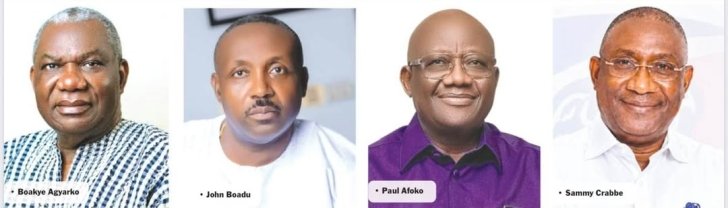
The race for the New Patriotic Party’s (NPP) National Chairmanship has entered a crucial phase, with John Boadu, Boakye Agyarko, Paul Afoko and Sammy Crabbe competing to lead the party through its next chapter and help rebuild its structures ahead of the 2028 general election.
The four contenders have now been confirmed for the October 3, 2026 national executive elections. Following the September 9 balloting, John Boadu occupies No. 1 on the ballot, Sammy Crabbe No. 2, Paul Afoko No. 3 and Boakye Agyarko No. 4.
With the NPP in opposition, the chairmanship contest has become a major internal battle over organisation, grassroots mobilisation, unity and the party’s strategy for 2028.
Four men, one powerful position
The chairmanship race brings together four figures with different political backgrounds and experiences.
John Boadu, a former General Secretary, is campaigning heavily on his extensive experience within the party’s structures. His political journey has taken him through grassroots, regional and national positions, and his campaign has placed considerable emphasis on rebuilding the party from the grassroots upward.
Boakye Agyarko, a former Energy Minister, brings ministerial and policy experience to the contest and has also positioned himself around the need for organisational renewal.
Paul Afoko, a former NPP National Chairman, is seeking a return to the position he previously occupied.
Sammy Crabbe, a former Second Vice Chairman of the party, completes the four-man contest.
The Boadu argument: experience and organisation
Boadu’s campaign has centred strongly on his long experience inside the NPP.
He has presented himself as someone who understands the party from the polling-station level through to the national headquarters, arguing that this experience can help repair and strengthen the organisation.
His supporters have highlighted his previous roles as National Organiser, Acting General Secretary and General Secretary, among others.
The campaign’s broader message is that the NPP needs a chairman who can reconnect national leadership with constituency executives and grassroots activists.
Agyarko pushes his own case
Boakye Agyarko enters the contest with his own record of national political and government experience.
The former Energy Minister has been engaging party members and presenting his vision for the NPP’s future, particularly at a time when the party is examining the reasons behind its recent electoral setbacks.
His campaign will have to persuade delegates that his experience and proposed reforms can help strengthen the party ahead of 2028.
Afoko seeks another chance at the top
Paul Afoko brings perhaps the clearest experience of the chairmanship itself.
The former National Chairman is returning to the contest with knowledge of the responsibilities and challenges that come with leading the party at the national level.
His candidacy adds another dimension to the race, particularly because delegates are being asked to choose between a former chairman, experienced former national officers and a former government minister.
Crabbe joins the four-way contest
Sammy Crabbe, a former Second Vice Chairman, is also seeking to convince delegates that he can provide the leadership required to rebuild the party.
His experience within the NPP’s national executive structure gives him familiarity with the party’s internal operations as he campaigns for the chairmanship.
With the race now narrowed to four candidates, the campaign period is expected to intensify as each aspirant attempts to distinguish his vision from the others.
Wontumi’s endorsement changes the conversation
One of the biggest developments in the race came on September 8, when former Ashanti Regional Chairman Bernard Antwi Boasiako, popularly known as Chairman Wontumi, endorsed John Boadu after withdrawing from the contest.
The Wontumi campaign said the decision followed consultations with grassroots supporters, constituency actors, party elders and other stakeholders.
It also called on members who previously organised for Wontumi to now support Boadu.
The endorsement has introduced another important factor into the contest: grassroots mobilisation.
Unity has become a major campaign theme
Regardless of who eventually takes the chairmanship, one issue has become unavoidable — the need for internal unity.
The NPP’s national elections committee has repeatedly urged aspirants and their supporters to conduct the campaign in a manner that protects the unity and integrity of the party.
The four candidates are therefore competing fiercely for the position while simultaneously needing to convince party members that the contest will not deepen existing divisions.
The chairmanship campaign is consequently about more than individual ambition. It is also about how the NPP intends to reorganise itself after its electoral setbacks and prepare for the next national contest.
The 2028 challenge
The new chairman will inherit a party facing the difficult task of rebuilding its electoral machinery.
Among the issues likely to dominate the next phase of the NPP’s internal work are:
- Reconnecting with grassroots members.
- Strengthening constituency and regional structures.
- Improving internal communication.
- Mobilising young people.
- Rebuilding public confidence.
- Preparing an effective campaign structure for 2028.
- Maintaining unity after the national executive elections.
The candidates may differ in their approaches, but the pressure on whoever emerges chairman will be immediate.
The ballot is set — the decision awaits
With the ballot order now established — Boadu 1, Crabbe 2, Afoko 3 and Agyarko 4 — the four campaigns have entered the final stretch toward October 3.
There is no established election result yet, so the question of who will win remains for the NPP’s delegates to decide.
What is already clear, however, is that the chairmanship election will determine more than the occupant of one national executive position.
Politics
Government Is Sleeping on the Job – Palgrave Boakye-Danquah Raises Alarm Over Cocaine Trafficking

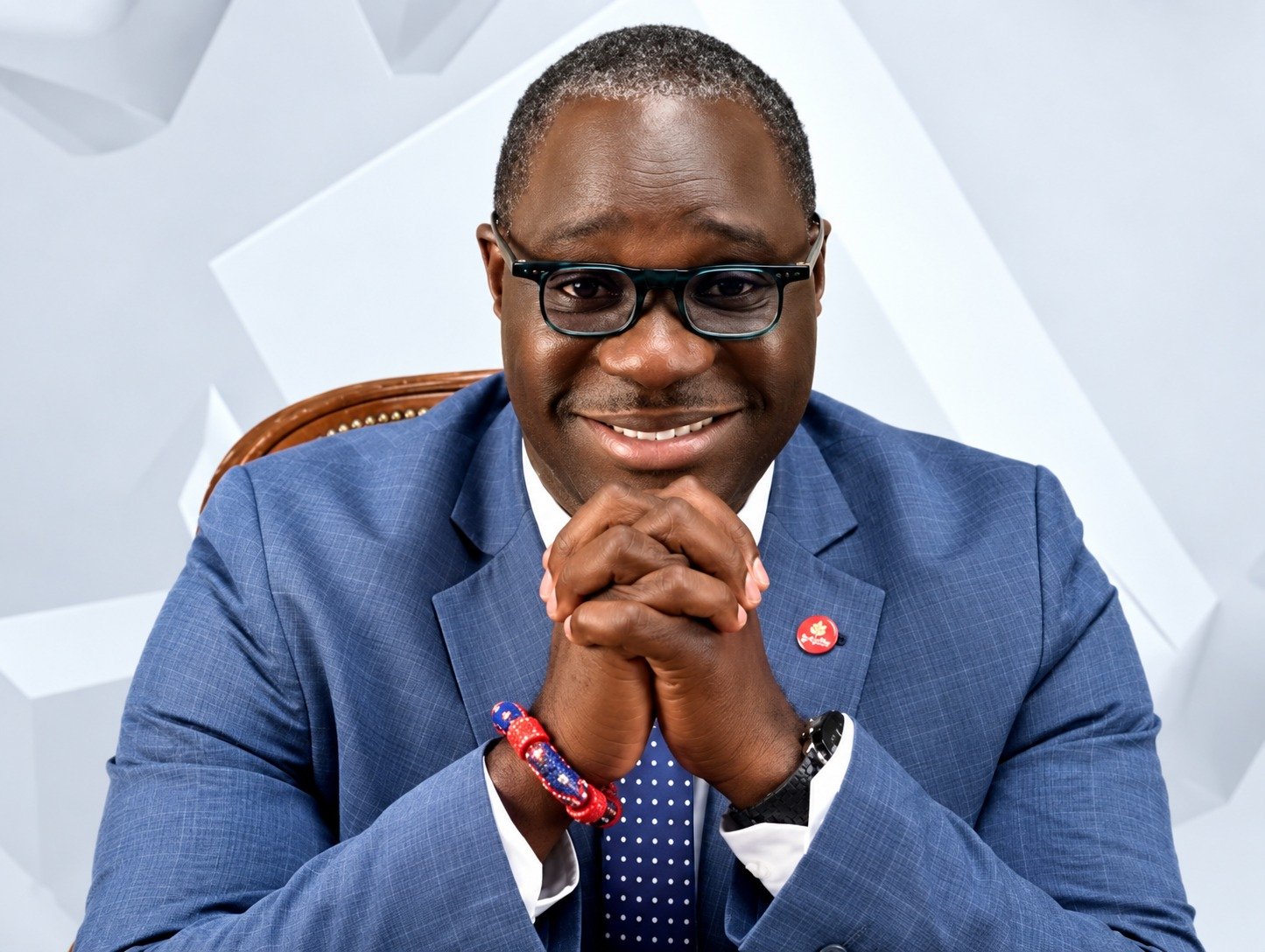
Former government spokesperson on security, Dr Palgrave Boakye-Danquah, has raised concerns over Ghana’s handling of the growing cocaine trafficking problem, accusing the government of failing to act decisively enough to protect the country’s security and international reputation.
In a zoom meeting with Kojo Preko Dankwa on Kessben Maakye show in Accra, Dr Boakye-Danquah asserted, he has lost confidence in the government, alleging that authorities are “sleeping on the job” while Ghana increasingly becomes a transit point for illicit drugs.
He criticised the government’s proposed meeting to address drug trafficking, arguing that the initiative came too late and should have been undertaken much earlier.
Dr Boakye-Danquah also questioned the effectiveness of Ghana’s security agencies in dealing with the situation.
His concerns come amid allegations that some government officials could be connected to cocaine-related activities. He cited comments attributed to the Interior Minister, Mohammed Muntaka Mubarak, in Parliament that government officials were allegedly involved in cocaine deals.
He further raised questions over the movement of containers from Ghana’s port to France before they were reportedly impounded, arguing that such developments raise serious concerns about the country’s security and border-control systems.
The former security spokesperson also questioned why the President would announce a proposed security meeting publicly without even involving the Interior Minister.
According to him, Ghana has recorded significant cocaine seizures in April, August and September 2026, with the value of the seized consignments estimated at about $800 million.
Dr Boakye-Danquah called on the government to provide clearer answers on the alleged involvement of public officials in the drug trade.
“The government must give us better answers,” he said, while questioning which government officials may be involved in the alleged cocaine dealings.
His comments add to growing public debate over Ghana’s fight against drug trafficking and the effectiveness of the country’s security and law-enforcement institutions.
By Maurice Otoo

Don’t pressure Dr Bawumia over running mate choice – Ashanti NPP to members

Alan Kyerematen makes fresh claim about some NPP members after his exit

Three men, nine elections: NDC’s presidential journey since 1992



-
 Entertainment2 weeks ago
Mahama Is First President to Put GH¢40m Seed Money into Creative Arts Fund: Kojo Preko Dankwa
-

 Culinary2 weeks ago
The Green Heart of Ghanaian Cuisine: Celebrating Nkontomire and the Art of Abom
-
 General News2 weeks ago
OSP Opens Preliminary Investigation into Alleged GH¢70,000 Payment Linked to Parliament’s Vetting
-
 Entertainment1 week ago
Government Repatriates Musician Barosky from UK
-
 General News4 days ago
GTA’s Financial Strength Weakens Despite 2025 Tourism Activities
-
 Entertainment1 week ago
Keche Supports Street Vendor with GH¢3,000 After She Struggles to Make Sales
-
 General News1 week ago
TVET is not for the academically weak – Advocate calls for change in Ghana’s mindset
-
 General News4 days ago
GTA Cash Reserves Halve to GH¢640,000 Despite Improved Liquidity Ratio