
General News
Christian Council Urges Prophets to Tackle Corruption, Avoid Fear-Inducing Political Prophecies

The Christian Council of Ghana (CCG) has called on prophets and religious leaders across the country to channel their prophetic influence toward addressing corruption, nepotism, intolerance, poor governance, and other social challenges affecting national development.
According to the Council, religious leaders have a responsibility not only to God but also to the nation and their personal conscience to help build a society grounded in strong moral and ethical values.
In a statement issued in Accra and signed by the General Secretary of the CCG, Rev. Dr. Cyril Fayose, the Council cautioned prophets against using church pulpits, traditional media, and social media platforms to circulate false or misleading prophecies capable of creating fear or public panic.
The Council referenced prophecies surrounding the recent New Patriotic Party (NPP) national primary held to elect its flagbearer, during which several individuals publicly predicted different outcomes of the election.
While some prophets accurately forecast the victory and re-election of former Vice President Dr. Mahamudu Bawumia, others made conflicting predictions. The Council described the situation as worrying and raised concerns about the theological implications of such contradictions.
“How can the same God reveal different outcomes of the same event to different prophets?” the statement questioned.
The CCG therefore called for a more responsible and disciplined religious environment from 2026 onwards, warning that unchecked political prophecies risk portraying God as inconsistent or indecisive.
It further questioned whether divine concern should be limited to election outcomes, asking if God was not equally concerned about governance, socio-economic justice, and the overall well-being of citizens.
The statement highlighted national issues such as the “no bed syndrome” in hospitals, which continues to contribute to preventable deaths, stressing that authentic prophecy should promote the common good, stand up against wrongdoing, and remain consistent with scriptural principles.
While affirming the constitutional right of all citizens, including prophets, to practise their faith freely, the Council emphasised that religious freedom must be exercised responsibly to prevent fear, panic, or social unrest.
It noted that Ghanaian law does not permit religion to be used as a tool for fear-mongering or incitement, citing Section 208 of the Criminal Offences Act, 1960 (Act 29), which criminalises the publication of false statements or rumours likely to disturb public peace.
The Council also encouraged national reflection as Christians observe Lent and Muslims mark Ramadan, urging religious leaders and citizens alike to focus on promoting socio-economic justice and national prosperity.
According to the statement, such reflection would better serve the country than the misuse of religious platforms to spread misleading messages that contribute little to societal progress.







General News
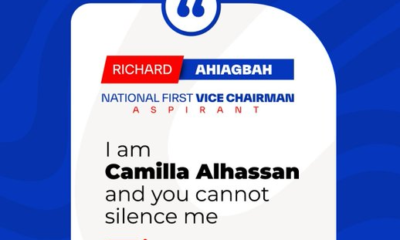
“If Kelvin Taylor Is Free, Camila Alhassan Should Not Be in Jail”:Richard Ahiagbah to Mahama

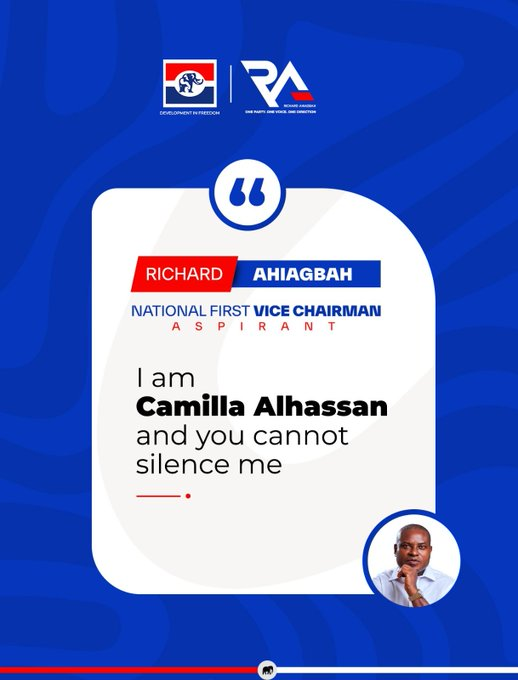
The Director of Communications of the New Patriotic Party (NPP), Richard Ahiagbah, has called on President John Dramani Mahama to ensure what he describes as fairness in the treatment of government critics, arguing that if controversial commentator Kelvin Taylor is able to operate freely, then Camila Alhassan should not remain in detention.
In a strongly worded statement shared on x (formerly Twitter), Ahiagbah questioned what he described as the selective treatment of critics and urged the President to uphold democratic principles by applying equal standards regardless of political affiliation.
“Good morning, Your Excellency, President John Dramani Mahama. If Kelvin Taylor is moving around free, then Camila Alhassan should not be in jail. Fair is fair, Mr. President,” Ahiagbah wrote.
The NPP communications director alleged that the actions taken against Camila Alhassan were carried out in the President’s name and warned that such measures could undermine Mahama’s democratic legacy.
“This repressive action against Camila Alhassan was carried out in your name. The heavy-handedness does no favors for your legacy because such efforts can’t silence citizens in a democracy; they never worked in the past, and they won’t work now,” he stated.
Ahiagbah argued that arresting or harassing individuals who criticize the government would only generate more opposition rather than silence dissent.
According to him, citizens in a democracy will continue to voice their frustrations regardless of the consequences.
“The only thing to be gained from these arrests and harassment of critics of your government is more dissenters and critics. Eventually, the people will prevail because this is a democracy, and citizens will speak out or vent their frustrations regardless of the cost.”
He further maintained that the best way to reduce public criticism is through effective governance and tangible results, not the suppression of opposing voices.
“The only thing that silences dissent is results, but so far, the results are lacking; you cannot silence Ghanaians when the government fails to deliver. We will dissent even louder because it is our right to speak up.”
Ahiagbah also cautioned that continued repression could strengthen, rather than weaken, public opposition to the government.
“Your government will be overwhelmed by dissent if repression and suppression are your responses. More Camila Alhassans will emerge to hold your government accountable,” he concluded.
His comments add to the growing public debate surrounding the arrest and detention of Camila Alhassan, with supporters and critics offering differing views on the government’s handling of dissent and freedom of expression.
General News
Okatakyie Afrifa Granted GH¢100,000 Bail Over Alleged Disruption of NPP Constituency Elections
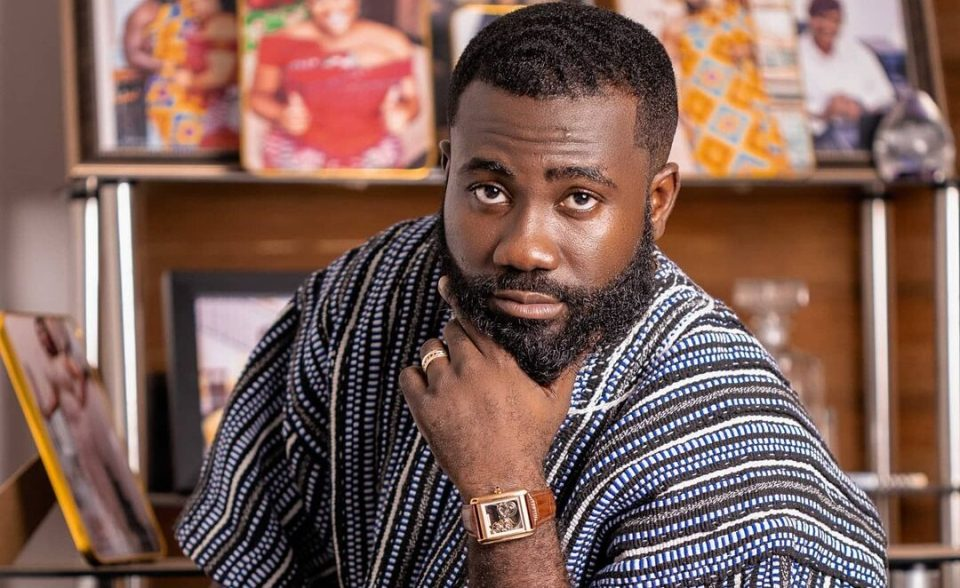
Media personality Kwame Afrifa Mensah, popularly known as Okatakyie Afrifa, has been granted bail by the Nsuta Circuit Court alongside six other accused persons over their alleged involvement in the disruption of the New Patriotic Party (NPP) Afigya Sekyere East Constituency Executive Elections in the Ashanti Region.
Okatakyie Afrifa, 43, arrived at the court premises in an ambulance wearing bandages around his head and a cervical neck collar. He was also seen limping and required assistance while entering and leaving the courtroom.
The court, presided over by His Lordship Simon Nkatiah Gagah, granted Afrifa bail in the sum of GH¢100,000 with three sureties, one of whom must be a government employee earning not less than GH¢4,000 per month.
The six other accused persons—Osman Awuni, 44, a driver; Kwabena Tsikata, 36, a private investigator; Bashiru Salifu, also known as Tinny, 39, an electrician; Kofi Antwi, 42, a driver; Paul Kofi Mensah, 41, a driver; and Simon Ndana, 27, also a driver—were each granted bail in the sum of GH¢50,000 with two sureties.
Prosecution’s Case
Presenting the facts before the court, Chief Inspector Owusu Kobi Moses, who led the prosecution, said security intelligence gathered during a regional security meeting chaired by the Ashanti North Regional Police Commander, DCOP Felix Apedo, on Thursday, July 9, 2026, indicated that a group of suspected vigilantes from Accra and Kumasi had allegedly been recruited to disrupt the NPP constituency executive elections scheduled for Sunday, July 12, 2026, at Wiamoase.
According to the prosecution, following the intelligence report, the Regional Operations Unit and the Police Intelligence Directorate (PID) were directed to verify the information and put in place preventive security measures to ensure the elections proceeded peacefully.
The prosecution told the court that at about 7:45 a.m. on the election day, Okatakyie Afrifa allegedly led approximately 30 suspected vigilante members to the Seventh-day Adventist (SDA) Church polling station at Wiamoase.
The group was said to have arrived in a Toyota Land Cruiser with registration number GN 7671-17, a Toyota Tundra pickup truck with an unknown registration number, and about five motorbikes.
Alleged Disruption and Arrests
Chief Inspector Moses stated that when police officers approached the group to determine why they were at the polling centre, the suspects allegedly became aggressive.
The prosecution alleged that members of the group assaulted some police officers and disrupted the electoral process by throwing election materials onto the ground, causing confusion at the polling station.
Following the incident, police officers arrested five of the accused persons at the scene, while several others reportedly fled.
The prosecution further told the court that Kwabena Tsikata later followed the police vehicle transporting the arrested suspects in the Toyota Land Cruiser and was subsequently arrested by the police.
Caution Statements
According to the prosecution, Paul Kofi Mensah, in his caution statement, allegedly admitted that the group had been engaged by Okatakyie Afrifa to disrupt the elections because some delegates believed to be loyal to him had allegedly been removed from the constituency electoral register.
The prosecution also alleged that in his own handwritten caution statement, Okatakyie Afrifa admitted engaging the other accused persons, together with others currently on the run, to assist in serving a court order.
Items Retrieved
The court also heard that police conducted searches during the arrests and allegedly recovered several items.
According to the prosecution, officers retrieved a spent BB cartridge from Kwabena Tsikata and Bashiru Salifu, as well as a NATO pepper spray and three toffees suspected to contain narcotic substances, commonly referred to as “wee toffees.”
Police also allegedly recovered another NATO pepper spray and one live BB cartridge from Paul Kofi Mensah.
Investigations Continue
The prosecution informed the court that investigations into the matter are still ongoing and that efforts are being intensified to arrest the remaining suspects who are currently at large.
Because investigations have not been concluded, the pleas of all seven accused persons were not taken.
The case has been adjourned to August 13, 2026, when the accused persons are expected to formally enter their pleas before the court.
source:Citinewsroom
General News
Freedom of Speech Has Limits – GJA Ashanti Boss Backs Jail Term for TikToker Over Alleged Defamation of President

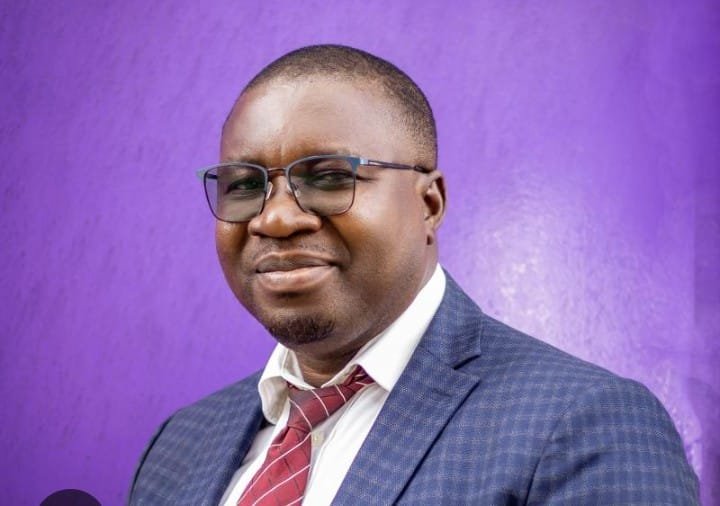
The Ashanti Regional President of the Ghana Journalists Association (GJA), Kofi Adu Domfe, has defended the jailing of a TikToker over alleged defamatory comments about the President, insisting that freedom of speech does not give anyone the right to spread falsehoods.
Speaking on the growing controversy surrounding the case via a zoom interview on Kessben TV’s Digest show, Mr. Domfe cautioned that social media platforms must not become safe havens for reckless and defamatory content.
“The social media must not be used recklessly,” he stated.
He stressed that bloggers, influencers, and journalists should not hide behind the principle of free speech to justify defamatory publications.
“Bloggers and journalists must not frown on defamation law in the name of free speech.”
Mr. Domfe also expressed concern over the increasing number of unregulated online content creators, saying many people now claim to be journalists simply because they own smartphones.
“Everybody picks a phone and begins to claim they are news publishers, denting the image of ethical journalism.”
According to him, the media landscape requires greater accountability to protect the integrity of journalism and ensure the public receives credible information.
He therefore called for stronger regulation of new media platforms and content creators.
“We need to pay critical attention to the new media and streamline their activities.”
Commenting on the jailed TikToker’s remarks about the President, Mr. Dimfe argued that the statements amounted to unsubstantiated falsehoods that fall within the scope of criminal offences.
“What the woman said on social media about the President borders on defamation and unsubstantiated falsehood.”
He concluded by reminding media practitioners and online commentators that the constitutional right to free expression comes with responsibility.
“Freedom of speech has its limitation, so whether you are a blogger or a journalist, you must be responsible and mindful of the kind of information you spread to the public.”
His remarks come amid an intensifying national debate over online misinformation, responsible digital communication, and the balance between free expression and accountability on social media

Davido Says Wife Chioma Manages His Money Because He’s a ‘Reckless Spender

“If Kelvin Taylor Is Free, Camila Alhassan Should Not Be in Jail”:Richard Ahiagbah to Mahama

Okatakyie Afrifa Granted GH¢100,000 Bail Over Alleged Disruption of NPP Constituency Elections



-
 Entertainment2 weeks ago
Creative Sector Under Review: Assessing 1 Year, 7 Months of Government Performance
-
 Entertainment2 weeks ago
Mahama: More Funding Coming for Creative Arts in 2027
-

 Entertainment6 days ago
Derrick Manny Calls for Better Support for Ghanaian Creatives Following Dede Padiki’s Death
-
 General News2 weeks ago
Government Settles US$700 Million Eurobond Obligation Ahead of Schedule
-
 Entertainment1 week ago
Apostle Kwadwo Safo Kantanka’s Reported Will: Companies, Beneficiaries and Final Wishes
-
 General News2 weeks ago
Ghana’s Creative Industry Grieves the Loss of Renowned Visual Artist Sharon Dede Padiki Padi
-

 General News2 weeks ago
Kwadwo Safo Kantanka’s Will Gave Akofena Control Over His Body and Funeral, Not Entire Empire – Lawyer Clarifies
-
 Entertainment1 week ago
Influencer Kwatemaa Andoh Says She Won’t Marry a Poor Man