
General News
Gov’t Upholds 1,539 Appointments, Revokes 541 After Post-Election Review — Felix Kwakye Ofosu

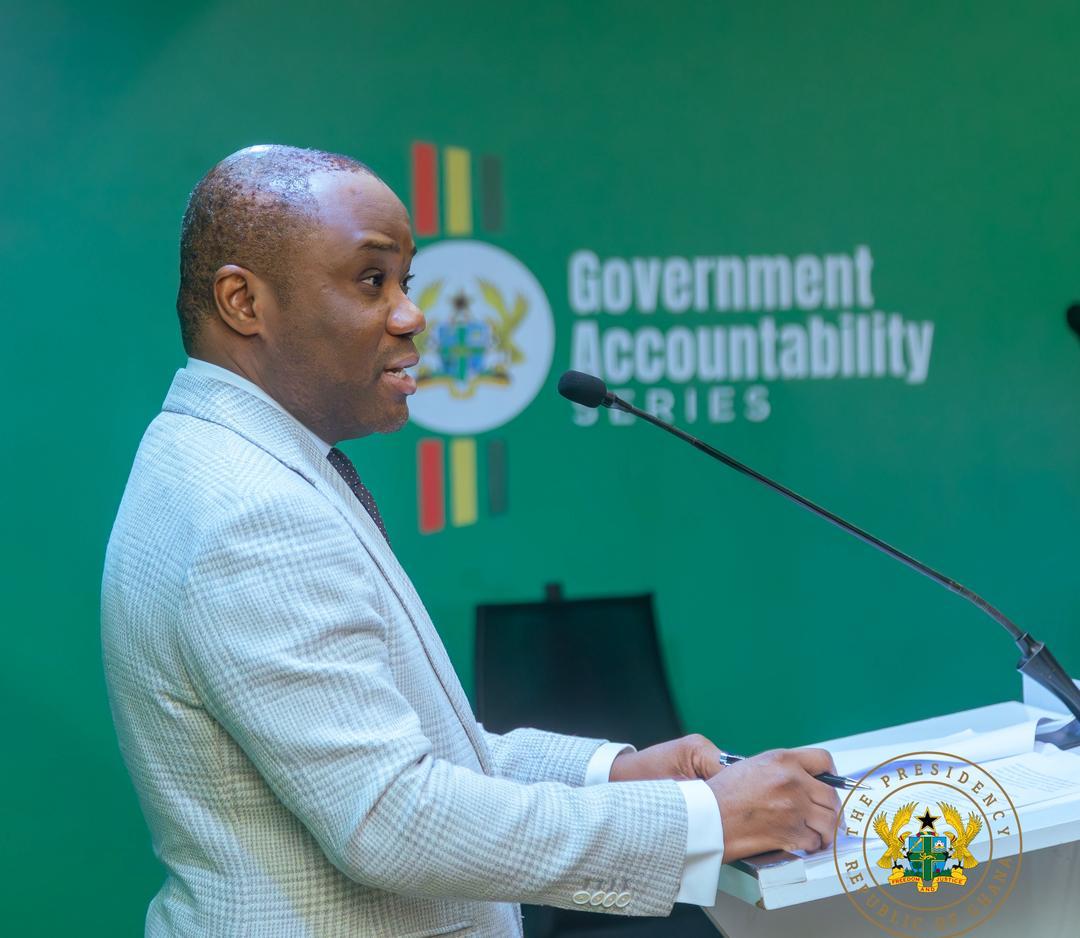
The Government has upheld 1,539 public sector recruitments, appointments and promotions made around the December 7, 2024 general elections, following a detailed review process, Minister for Government Communications, Felix Kwakye Ofosu (MP), has announced.
Addressing journalists at the Government Accountability Series in Accra, Hon. Kwakye Ofosu explained that the review was necessitated by concerns raised during the transition period after the 2024 elections.
“It will be recalled that at the very first meeting of the Joint Transition Team, the incoming government raised serious concerns about reports of rash and unlawful recruitments into public institutions, as well as substantial payments to contractors and other creditors in the immediate aftermath of the elections,” he stated.
According to him, both sides of the Transition Team had reached an understanding that ongoing recruitments, promotions and significant statutory payments would be submitted for joint review.
“We left that meeting under the clear impression that there was agreement for all such activities to be subjected to review. Unfortunately, that understanding was disregarded,” he said.
Chief of Staff’s Directive
Mr. Kwakye Ofosu recalled that on February 10, 2025, the Chief of Staff issued a directive revoking appointments and recruitments made unlawfully after December 7, 2024.
“Following that directive, reports filtered in that some persons who were lawfully employed before December 7, or whose recruitment processes had commenced but were not completed before the elections, had also been affected. To ensure fairness and prevent innocent persons from suffering unduly, a committee was established to investigate the matter,” he explained.
Committee Review and Findings
The committee, chaired by Deputy Chief of Staff Nana Oye Bampoe, was tasked with examining compliance with public sector recruitment procedures. It reviewed 2,080 recruitments, appointments and promotions across 36 institutions between March 21 and April 30, 2025.
Mr. Kwakye Ofosu disclosed that the committee adopted an 80 percent compliance threshold.
“In other words, if an applicant met at least 80 percent of the required procedural steps, they were deemed to have been lawfully engaged,” he noted.
Institutions were required to provide documentation including vacancy declarations, advertisements, technical and financial clearances, interview reports, appointment letters and acceptance letters.
At the end of the exercise, the committee recommended that 1,539 appointments be upheld.
“These individuals complied with the prescribed recruitment and promotion procedures and received their appointment letters before December 7, 2024,” he stated.
However, 541 appointments were recommended for revocation.
“The recruitment processes in these cases ended after December 7, 2024, and failed to meet the 80 percent compliance pass mark. In essence, they did not conform to the established regulatory framework,” he said.
Clemency for Vulnerable Groups
The Minister revealed that although 879 appointments had initially been revoked by institutions themselves, the committee’s final recommendations reduced that number to 541.
“The differential arose because the committee paid special attention to vulnerable groups, particularly persons with disabilities,” Mr. Kwakye Ofosu explained.
“In certain instances within the Ghana Education Service, although procedural requirements were not fully met, we considered the peculiar circumstances of affected individuals. Clemency was granted to allow them to regularise their processes and remain in employment.”
“No Witch-Hunt”
Mr. Kwakye Ofosu dismissed suggestions that the exercise was politically motivated.
“The decision to revoke these appointments was not based on a witch-hunt. There was no political motive beyond the desire to uphold due process and ensure compliance with the rules governing public sector recruitment,” he stressed.
“It was done without malice or ill feeling towards anyone. It was a necessary step to uphold the rule of law and ensure accountability.”
He further alleged that the previous administration was aware that some basic procedural requirements had not been met but proceeded regardless.
“They completely disregarded the incoming administration’s requests to be consulted, so that we could ensure compliance with laid-down rules,” he said.
The Minister reiterated government’s commitment to transparency and accountability, adding that the review process was aimed at protecting the integrity of public service recruitment.
General News
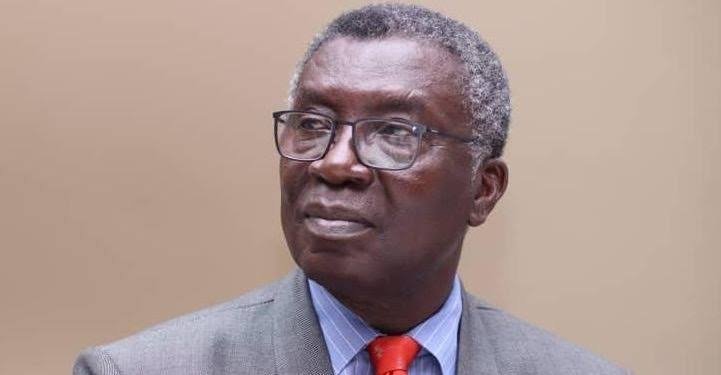
FRIMPONG-BOATENG SPEAKS ON GALAMSEY — ‘ENFORCING ENVIRONMENTAL LAWS CARRIES POLITICAL COST’

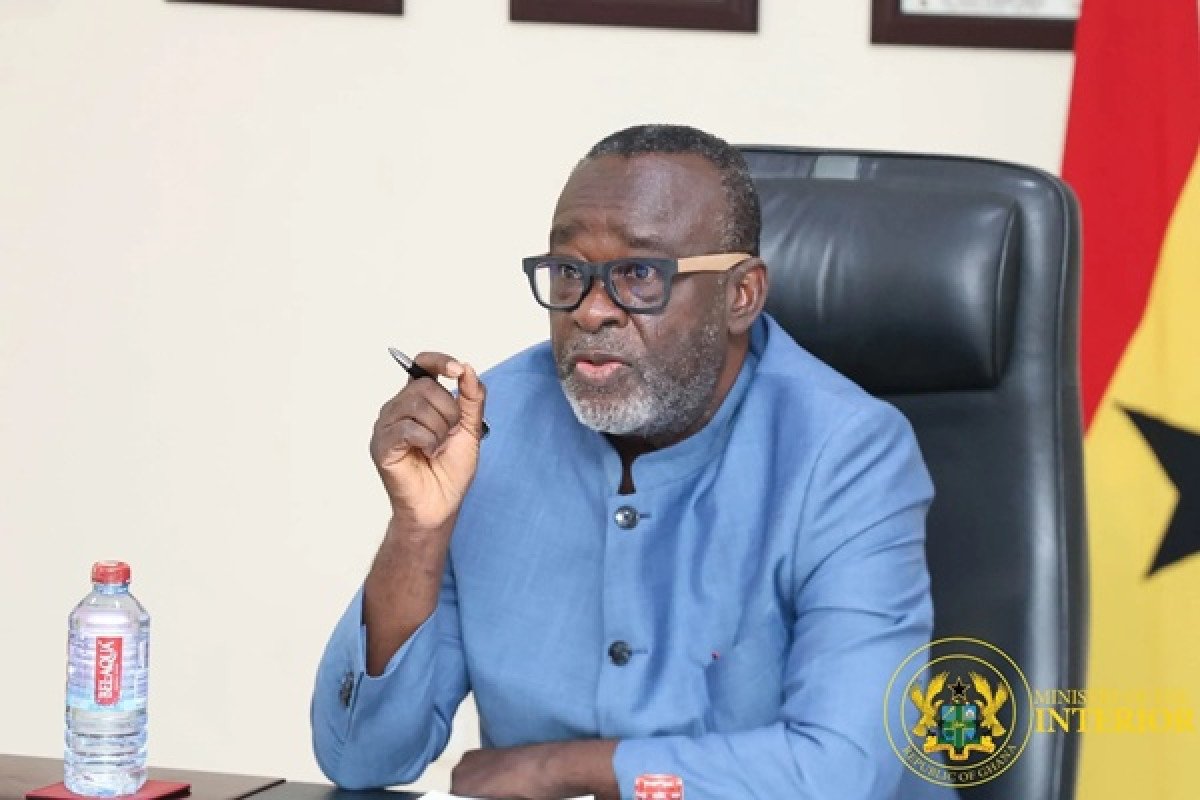
Chief Justice Paul Baffoe-Bonnie has come under intense public scrutiny after remarks about the performance of state institutions triggered concerns over the perceived political neutrality of Ghana’s Judiciary.


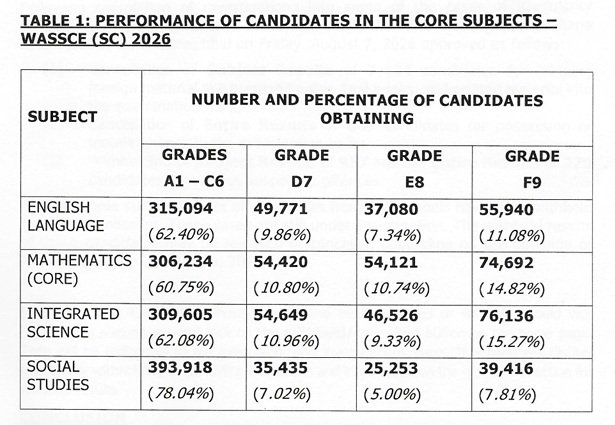
The West African Examinations Council (WAEC) has officially released the provisional results of the 2026 WASSCE for School Candidates, with Social Studies recording the strongest performance among the four core subjects.
WAEC announced the release on September 5, 2026, following the examination which saw 512,862 candidates from 1,022 schools registered to participate. The figure represents an 11.07% increase over the 461,736 candidates who entered for the 2025 examination.
SOCIAL STUDIES LEADS THE CORE SUBJECTS
Social Studies emerged as the best-performing core subject.
A total of 393,918 candidates, representing 78.04%, obtained grades between A1 and C6.
English Language followed with 62.40%, while Integrated Science recorded 62.08%. Core Mathematics saw 60.75% of candidates obtaining A1-C6.
ENGLISH PERFORMANCE CONTINUES TO DROP
One of the major talking points from the results is the continued decline in English Language performance.
WAEC’s four-year analysis shows the proportion of candidates obtaining A1-C6 in English falling from 73.11% in 2023 to 69.42% in 2024, 69.00% in 2025 and 62.30% in 2026.
Meanwhile, Mathematics and Social Studies recorded significant improvement compared with 2025, while Integrated Science also improved.
8,295 CANDIDATES FACE SANCTIONS
The release has also been accompanied by serious examination-malpractice concerns.
WAEC cancelled the entire results of 861 candidates after they were found with mobile phones in examination halls. The Council also cancelled the subject results of 7,434 candidates for bringing foreign materials, including prepared notes and textbooks, into examination halls.
In addition, the subject results of 957 candidates and the entire results of 270 candidates have been withheld over suspected offences.
Results involving candidates from 169 schools have also been withheld over alleged collusion, with investigations ongoing. WAEC says decisions on those cases may be made by October 30, 2026.
HOW CANDIDATES CAN CHECK
WAEC says the results have been hosted online, with school heads receiving login details to access their candidates’ results.
Candidates can also check their individual results through the Council’s official results-checking platform. WAEC has warned the public against fraudsters who claim they can upgrade examination results for money.

FRIMPONG-BOATENG SPEAKS ON GALAMSEY — ‘ENFORCING ENVIRONMENTAL LAWS CARRIES POLITICAL COST’

CHIEF JUSTICE COMMENTS STIR DEBATE — QUESTIONS RAISED OVER JUDICIAL IMPARTIALITY

ACCRA–KUMASI EXPRESSWAY HITS MAJOR MILESTONE — GAF COMPLETES 175.6KM CORRIDOR CLEARING



-

 General News2 weeks ago
Nana Adwoa Tutuwaa Named Global Humanitarian of the Year 2026
-

 General News2 weeks ago
Police Arrest Suspect in GH¢1.1m Fake Gold Scam at Berekum
-
 General News1 week ago
GES Urged to Review Student Sexual Misconduct Rule Over Alleged Discrimination Against Boys
-

 Entertainment6 days ago
Oswald Okaitei Explains the Real Vision Behind Ghana’s Black Star Experience
-
 General News2 weeks ago
OSP Assesses Extortion Allegations Against Afenyo-Markin
-

 Entertainment2 weeks ago
Stonebwoy Is Not My Rival — Shatta Wale Reveals They Live Minutes Apart
-
 Politics2 weeks ago
Stop The Personal Attacks!” — Vitus Azeem Demands Probe Into Sammy Gyamfi–Afenyo-Markin Feud
-

 Entertainment2 weeks ago
Mzbel Says Age Gap Is No Barrier as She Opens Up About 19-Year-Old Admirer