
Entertainment
From Pain to Purpose: Lydia Forson’s Emotional Homecoming Speech at University of Ghana Graduation

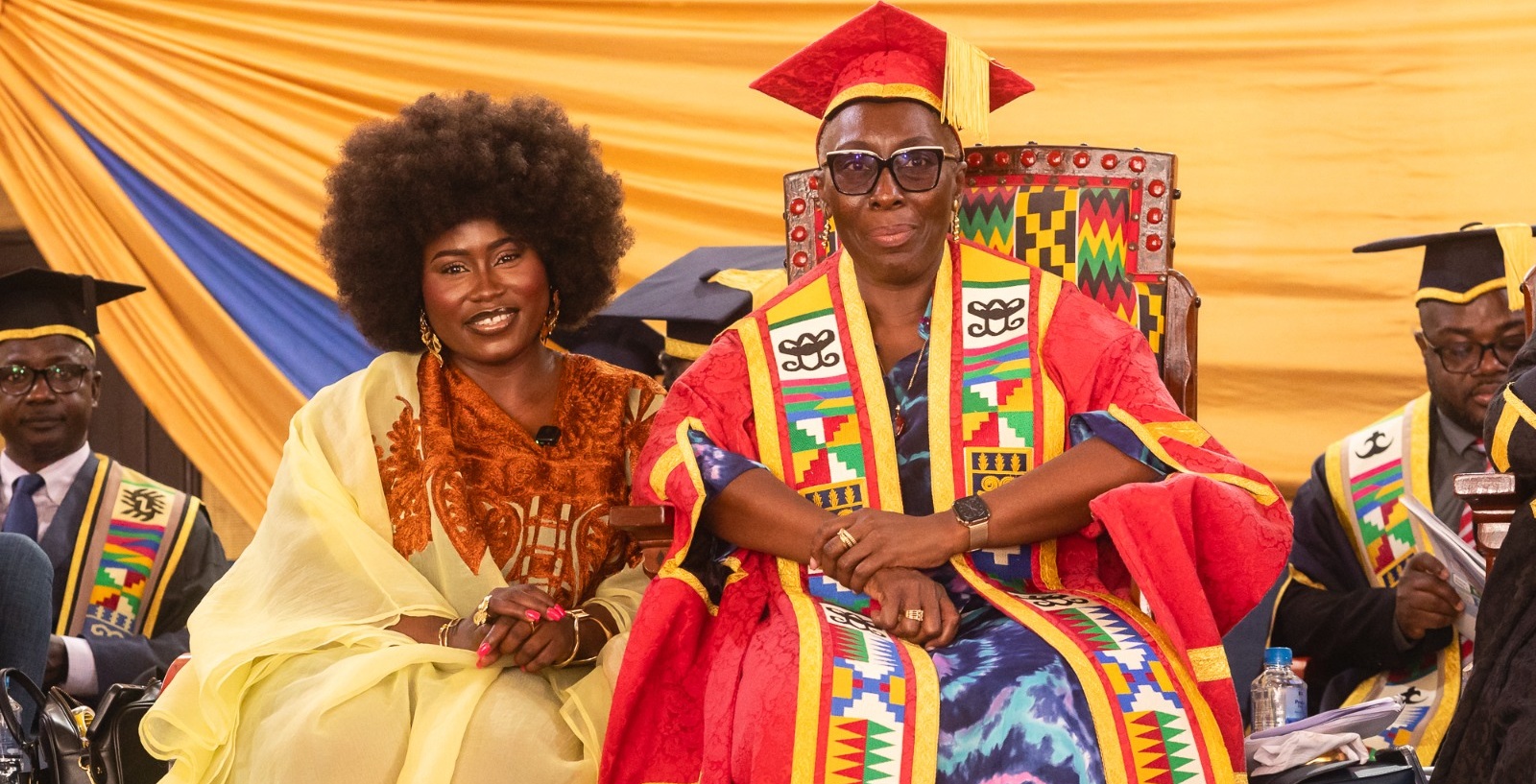
In a heartfelt and emotional speech delivered at her alma mater, the University of Ghana, renowned Ghanaian actress Lydia Forson shared a candid reflection on her personal journey, one marked by pain, growth, and ultimately, reconciliation with her past.
Standing before a sea of graduates, faculty, and family, Forson, who left the University of Ghana campus two decades ago, determined never to return, opened up about the complex feelings that shaped her early departure. “I left angry. I left hurt,” she said, speaking openly about the emotional scars she carried for years.

“My last year here wasn’t pleasant. In many ways, it marked the beginning of one of the hardest periods of my life,” Ms Forson told the gathering of graduates, university leadership, faculty members, and families. “When I left this university, I left angry. I left hurt. And I left carrying a lot of resentment.”
The actress, known for her trailblazing work in Ghana’s film industry, confessed that her academic journey was anything but smooth. “To be honest, I barely made it out of here. It was by the skin of my teeth. And when I did, I walked off this campus and swore never to look back.”


The February 2026 congregation ceremonies marked a significant milestone for the university, with 15,288 graduands receiving degrees across 17 sessions, including 153 PhD candidates, 4,197 master’s graduates, 10,543 undergraduates, and 395 diploma holders.
Saturday’s College of Humanities ceremony specifically celebrated graduates from the university’s largest college, with the Great Hall serving as the backdrop for what became an unexpectedly emotional homecoming.

Presiding over the ceremony was Professor Felix Ankomah Asante, Pro Vice-Chancellor of the Research and Innovation Directorate, who urged graduates to strive for excellence in their future endeavours.
“Graduating students, today we celebrate the completion of your academic programs as well as the boldness and confidence with which you step into the next stage of your lives. Congratulations and best wishes to you all,” Professor Asante said, while also highlighting the university’s strong performance in the 2026 Times Higher Education World University Rankings.
University Vice-Chancellor Professor Nana Aba Appiah Amfo, who spoke during the broader congregation ceremonies, congratulated all graduating students for their hard work and resilience, noting that they are now well-equipped to enter the world of work and contribute meaningfully to national and global development.
The ceremony, which had veteran actress Lydia Forson as the guest speaker, also provided a platform to celebrate exceptional academic achievement. Among those honoured was Ms Mofiyinfoluwa Motunrayo Samuel, a Nigerian scholar who was named the valedictorian for her graduating cohort within the College of Humanities during that very session. Ms Samuel graduated with an impressive Final Cumulative Grade Point Average (FCGPA) of 3.95 in her Bachelor of Arts degree in French and Linguistics. While Emmanuel Nana Yaw Appeagyei was named the overall Valedictorian for the entire College of Humanities with a near-perfect 3.99 FGPA, Ms Samuel’s remarkable feat stood as a shining example of the academic excellence on display at the event.

However, it was Lydia Forson’s raw, unfiltered address that became the talk of the ceremony. Standing before an audience that included the Chancellor’s Representative, University Council members, the Vice-Chancellor, Pro-Vice-Chancellors, the Registrar, Provost of the College of Humanities, and members of the College of Humanities Advisory Board, the actress admitted that preparing the speech forced her to confront years of unexamined pain.
“For years, I carried a story of frustration. Of feeling unseen and misunderstood,” she said. “But writing this speech forced me to confront something I hadn’t fully acknowledged: that for years, I held on to everything that went wrong, instead of recognising the many things that went right.”
Ms. Forson proceeded to dismantle her own narrative of victimhood, acknowledging that while her time at the university was marked by struggle, it was equally defined by growth and formation.
“This campus shaped me,” she declared. “It’s here I learned independence, got my first job and where I tested my entrepreneurial instincts. It’s here that I handed out my very first complimentary card as a marketing executive, with absolutely no experience, just passion and audacity.”
The actress credited the university with launching her media career, recalling that she got her first stint on television as a student, gained popularity, and opened doors to the career she has today.
“This is also where I built confidence, through struggle, resistance and through everything I had to fight for,” Ms Forson added. “So yes, there was a struggle. There was hurt. There were a lot of tears. There was disappointment. But there was also growth, pride and becoming.”

Her message to graduates was unequivocal: “As you step into the next chapter of your lives, do not discard parts of your journey just because they were difficult. Do not carry only the good and pretend the bad never happened. Carry all of it. The good. The bad. Even the ugly.”
In an unexpected turn, Ms Forson pivoted from addressing graduates to speaking directly to the university’s academic staff; a moment that drew visible attention from faculty members seated in the front rows.
“Beyond speaking to the graduating class, I want to gently speak to every lecturer, every academic, every member of staff who contributes to shaping young minds,” she said. “Universities do not merely confer degrees. They shape human beings.”

Quoting her father, Forson noted that “education is meant to make us fit to live and to believe with, not just to earn with.” She reminded faculty that learning extends beyond lecture halls into friendships, late-night conversations, hall weeks, parties, and even heartbreaks.”All of that is education,” she insisted.
The actress challenged the academic community to examine their role in students’ lives: “Who are you in someone’s story? Because there were lecturers who saw potential in us before we saw it in ourselves. Some people choose to build rather than break.”
“Will you be remembered as the person who made a student feel small? Or the one who made them feel seen? The voice that discouraged, or the voice that affirmed?” she asked. “Because sometimes it only takes one sentence to diminish someone. But it also only takes one sentence to change the trajectory of a life.”

In a revelation that drew applause from the audience, Ms Forson announced that her return to campus has prompted her to finally pursue a long-overdue master’s degree at the university.
“Now that all of this is off my chest, I can finally and proudly say congratulations to all of us,” she said. “Because in a way, this is my graduation too. I never came for mine. And standing here today feels like closing one chapter and opening another as I’m finally coming back to study again.”
As she concluded her speech, Forson left graduates with a final exhortation: “Hold on to it all. Hold on to the friendships. Hold on to the lessons. Hold on to the moments that tested you. Because one day, you will look back, not with bitterness, but with clarity. And you will realise that even the chapters you wanted to erase were shaping the person you needed to become.”
“To my fellow graduates,” she added with emphasis, “Go boldly. Go fearlessly. And carry your entire story with you.”
Zolla Nie/Mk Content






The anticipation across Ghana’s music space is electric as legendary artist Nana King prepares to release his highly-anticipated single “4EVR Champion” on March 6, 2026. More than just a comeback, this moment signals a cultural revival, a powerful fusion of heritage, resilience, and modern-day music strategy.
Backed by Ashanti International Record Label, the rollout for 4EVR Champion is already making waves nationwide. In a bold nod to traditional music marketing, the label has launched a sweeping radio promotional blitz across major stations, proving that even in the digital age, terrestrial radio still commands influence and loyalty.
A Renaissance of Sound and Strategy
‘4EVR Champion’ pays homage to Nana King’s original classic but arrives reimagined for a new era, delivered primarily in English with vibrant hints of Twi and Pidgin, the single bridges generations while maintaining the authentic Ghanaian spirit that first defined his legacy.
Adding even more firepower to the project is Nana Queen’s feature, widely regarded as the reigning rap queen. Her lyrical prowess complements Nana King’s commanding presence, creating a cross-generational anthem poised to dominate both airwaves and streaming platforms.
Industry watchers are already speculating about the visual masterpiece expected to accompany the single. If the energy surrounding the campaign is any indication, fans should brace themselves for a cinematic statement piece.
More Than Music – A Movement
In a recent interview, Marcelle Sirkus, COO of Ashanti International and manager of Nana King, emphasised the broader significance of the comeback:
“Nana King’s return is more than just a musical event, it’s a call to action for the industry.”
Indeed, this comeback represents more than nostalgia. It is a declaration that legacy artists can evolve, compete, and lead conversations in today’s fast-paced digital music ecosystem.

A Word of Caution to the Industry
Amidst the excitement, Ashanti International has issued a firm warning to artists and stakeholders about impersonators and fraudulent individuals attempting to exploit the buzz around the project. The label specifically called out Emmanuel Larbie, described as a fake presenter/DJ, allegedly making false promotional promises.
The incident serves as a reminder for industry players to verify partnerships and work strictly through official channels. In Nana King’s camp, vigilance and professionalism remain top priorities.
As March 6 approaches, one thing is clear: 4EVR Champion is not just a single release; it is the rebirth of a legend, the revival of authentic promotion, and perhaps the spark of a new revolution in Ghana’s music landscape.
Ghana, get ready. The champion is back.

Time has a way of revealing truths that emotions often cloud. And in the case of Bice Osei Kuffour, popularly known as Obour, history may yet judge him far more kindly than sections of the industry once did.
Obour remains one of the finest minds Ghana’s music industry has produced, a rare blend of artistry, intellect, and administrative courage. As President of the Musicians Union of Ghana (MUSIGA) for two terms, the union witnessed one of its most visible and vibrant eras. Under his leadership, MUSIGA moved from being a largely symbolic body to an institution with national presence and influence.
One of his most impactful initiatives, the Ageing Musicians Welfare Fund (AMWEF), sought to restore dignity to veteran musicians who had given their prime years to building Ghana’s cultural identity. The annual Grand Ball became a powerful gathering that attracted corporate sponsors, policymakers, and even sitting Presidents, a testament to the credibility and visibility he brought to the union. The proceeds supported aged musicians, reinforcing the principle that the industry must care for its own.
In 2012, MUSIGA submitted a proposal to the government seeking funds to conduct in-depth research into the music industry. The union received GH¢2 million for this purpose and proceeded to implement the initiatives outlined in the proposal. However, controversy erupted when some industry players argued that the funds should have been shared directly among musicians and affiliated organisations instead.
An independent audit was conducted, and the government subvention was accounted for to the Ministry of Finance. No wrongdoing was established. Yet, accusations persisted. For many, the narrative had already been written, and Obour became the symbol of everything perceived to be wrong with the industry.
Rather than debate policy, the conversation turned personal. What should have been an intellectual discourse about governance became an emotional campaign of vilification. The infamous “Pull Him Down” (PhD) syndrome once again revealed itself as a troubling culture where excellence is met not with collaboration but resistance.
After serving his term, leadership transitioned to John Bessa Simons following a contested election that was eventually resolved in court. Obour exited MUSIGA having completed his constitutional mandate.
He later ventured into politics, and interestingly, elements within the same industry followed him there, campaigning against him. When he lost, some critics who were not even constituents openly celebrated. It became clear that the issue had transcended governance; it had become deeply personal.
Yet, while parts of the creative space distanced themselves from him, the political establishment recognised his administrative ability. He was appointed Managing Director of Ghana Post, an institution many had written off as outdated. Under his stewardship, Ghana Post underwent visible modernisation and repositioning, proving once again that leadership capacity does not disappear because critics demand it.

Ironically, MUSIGA’s constitution designates past Presidents as patrons. Figures like Sidiku Buari and Obour himself should naturally remain pillars within the union’s advisory structure. Yet, bitterness and bad blood have pushed influential former leaders far from the very institution they once served.
Today, conversations about industry struggles persist. The problems Obour was blamed for did not disappear with his departure. The structural challenges remain. The funding gaps remain. The fragmentation remains.
What has changed?
Perhaps time is slowly answering that question.
Obour was never perfect; no leader is. But it is worth asking whether his flaws were magnified to eclipse his contributions. Whether disagreement was weaponised into character assassination. Whether the industry sacrificed long-term unity for short-term emotions.
Now that he walks in corridors of power, his experience and influence could potentially benefit the industry. But reconciliation requires humility, and humility is often scarce in environments governed by ego.
The younger generation, Gen Z and Alpha, must learn from this chapter. Institutions grow when leaders are critiqued constructively, not crucified personally. When policies are debated intelligently, not distorted emotionally. When unity outweighs envy.
Time indeed vindicates.
And perhaps, in the quiet distance from industry noise, Obour has already found peace — while the industry continues to wrestle with the very issues it once placed squarely on his shoulders.
The PhD syndrome must end.
#IndustryFirst
Entertainment
[EDITORIAL] Just as Ghana Rises on the Global Map; Mediocrity Creeps In: The Ordeal of Vyacheslav Trahov the “Russian Alien”

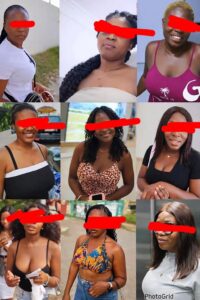
Ghana’s growing recognition on the global stage is no accident. From democratic stability to cultural influence and creative innovation, the country has earned its place as one of Africa’s most respected nations. Yet, beneath this rising international profile lies a troubling contradiction: as Ghana progresses outwardly, mediocrity continues to thrive within key systems, quietly undermining national ambition.
The ordeal of the so-called “Russian Alien” exposes this uncomfortable reality.
This is not merely a story about one individual or an isolated controversy. It is a reflection of how difference, innovation, and nonconformity are often handled in environments that lack institutional confidence. Instead of measured engagement and professional scrutiny, responses frequently tilt toward suspicion, delay, and bureaucratic inertia. That is where mediocrity flourishes not in the absence of talent, but in the absence of leadership and vision.
Mediocrity is rarely dramatic. It hides behind procedures, vague regulations, and selective enforcement. It resists disruption because disruption demands competence. It fears excellence because excellence exposes weakness. And when confronted with ideas or individuals that challenge the status quo, it often chooses obstruction over adaptation.
For a nation positioning itself as a global hub for creatives, investors, and cultural diplomacy, this is dangerous.
Every encounter Ghana has with innovators, local or foreign, sends a signal to the world. That signal can either affirm Ghana as confident, fair, and forward-looking or portray it as insecure and resistant to progress. In a globalised economy, perception is not cosmetic; it is strategic.
The creative and cultural sectors are especially vulnerable to mediocrity. These sectors depend on openness, experimentation, and cross-cultural exchange. When systems fail to protect or fairly engage unconventional talent, innovation suffers. Creativity becomes constrained. And the nation loses opportunities it may never recover.
This is not a call for recklessness or the abandonment of national interest. It is a call for professionalism, consistency, and intellectual maturity. Strong nations regulate without prejudice, question without hostility, and manage complexity without fear.
Ghana’s historical identity has always been rooted in leadership, political, cultural, and moral. Preserving that identity requires confronting mediocrity wherever it resides, especially within institutions tasked with safeguarding progress. The “Russian Alien” ordeal should be treated not as gossip, but as a case study in systemic weakness.
If Ghana is truly rising on the world map, then excellence must no longer be treated as a threat, and difference must no longer be mistaken for danger. Progress demands courage, not comfort.
The world is watching. More importantly, history is being recorded.

From Pain to Purpose: Lydia Forson’s Emotional Homecoming Speech at University of Ghana Graduation

Four Key Members of Carjacking Syndicate Arrested in Kumasi

Nana King’s ‘4ever Champion’ Fever takes over Ghana: A Legendary Comeback is Brewing



-
 Entertainment2 weeks ago
We Should not Reduce the Culture and Creative Arts Industry to mere Entertainment – Richardson Commey Fio Laments
-

 Entertainment2 weeks ago
[EDITORIAL] Just as Ghana Rises on the Global Map; Mediocrity Creeps In: The Ordeal of Vyacheslav Trahov the “Russian Alien”
-
 Business2 weeks ago
Cocoa Price Cut Sparks Fears Over Environmental Sustainability and Illegal Mining Surge
-
 General News4 days ago
Mahama: Mining Must Leave Communities Better Than It Found Them
-

 Sports2 weeks ago
Aduana FC Coach Cioaba Aristica announces starting lineup ahead of Medeama Clash
-
 General News2 weeks ago
Ghana to Ratify AU Convention on Ending Violence Against Women and Girls, Mahama Announces
-
General News4 days ago
Mahama: We’ll increase efforts to clean polluted water bodies and reclaim mined lands
-
 Politics2 weeks ago
THE BETRAYAL OF GHANA’S COCOA FARMERS: A MONUMENTAL BREACH OF TRUST