
General News
Mahama Calls for Responsible Leadership at August 6 Helicopter Crash Memorial Service

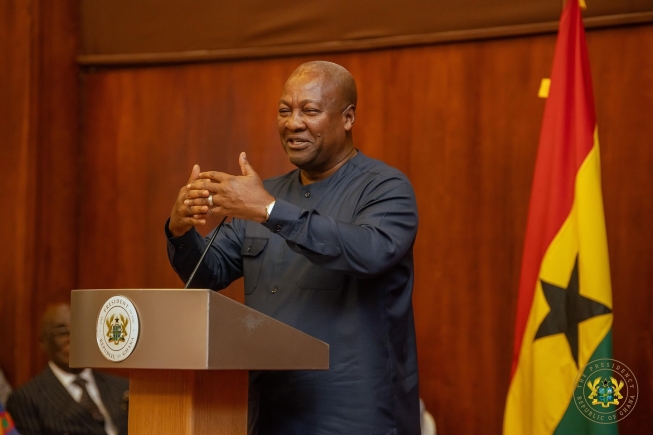
The President of Ghana, John Dramani Mahama, has called on leaders to embrace responsible leadership and ensure that lessons from the August 6 helicopter crash tragedy are never forgotten.
Speaking at the National Inter-Faith Memorial Service held at the University of Professional Studies, Accra (UPSA) to honour the eight individuals who lost their lives in the August 6, 2025 helicopter crash, President Mahama said the occasion should serve as a moment of reflection for all persons entrusted with leadership.
The President of Ghana stated that every decision taken by leaders has an impact on people’s lives, emphasising that public office represents a sacred trust.
“Today should also be a moment of reflection for all of us who are entrusted with leadership. Every decision we make affects lives. Every public office is ultimately a sacred trust,” President Mahama said.
He explained that true leadership is not measured only by the authority leaders possess, but by the responsibility they carry in protecting the lives and welfare of those who serve the nation.
“Leadership is not measured merely by the authority we exercise, but by the responsibility we bear for the lives and welfare of those who serve our nations,” he added.
President Mahama said the memory of the victims places a solemn obligation on leaders to build stronger institutions, strengthen safety standards, invest in the welfare of personnel, and ensure that no lessons from the tragedy are lost.
According to the President of Ghana, the greatest tribute to the victims would not be a physical monument, but a commitment to improving systems and protecting those who dedicate their lives to the country.
“The greatest memorial we can build is not one made of stone or bronze. It is one that is built through responsible leadership, improved systems, and a steadfast commitment to protecting those who dedicate their lives to Ghana,” he stated.
The National Inter-Faith Memorial Service brought together government officials, religious leaders, traditional authorities, members of the Ghana Armed Forces, families of the deceased, and other dignitaries to mark one year since the tragic helicopter crash.
The August 6, 2025 crash claimed the lives of eight people, including senior government officials and security personnel, while they were travelling to an official engagement connected to Ghana’s fight against illegal mining.
The ceremony provided an opportunity for national reflection, remembrance, and renewed commitment towards improving safety, accountability, and responsible governance.
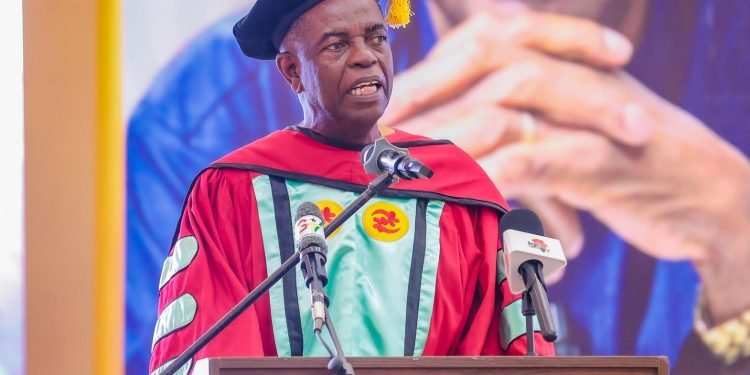
Veteran journalist and Pan-Africanist Kwesi Pratt Jnr has urged Ghana to revisit some of the development principles that guided Dr Kwame Nkrumah’s Seven-Year Development Plan as the country searches for lasting solutions to its economic difficulties.
According to Mr Pratt, the plan, which was designed to cover the period from 1963 to 1970, demonstrated the importance of long-term national planning and strategic investment in infrastructure, education, energy, industry and social development.
He said several of the projects undertaken during the period created national assets that continued to benefit subsequent generations, making the plan an important reference point for contemporary economic policy.
Mr Pratt made the remarks in Cape Coast while delivering the 15th Kwame Nkrumah Memorial Lecture organised by the University of Cape Coast (UCC).
The two-day event was held under the theme, “Kwame Nkrumah yesterday, today and tomorrow: Perspectives on constitutionalism, development and Pan-Africanism.”
Mr Pratt explained that the Seven-Year Development Plan was among the most ambitious efforts by a post-independence government to restructure Ghana’s colonial economic system and move the country towards greater economic independence.
He identified six major components of the plan: state-led industrialisation, economic diversification, agricultural modernisation, infrastructure development, investment in human capacity and the pursuit of an African economic agenda.
He said Dr Nkrumah understood that achieving political independence alone would not be enough if Ghana remained economically dependent on the export of raw materials and the importation of finished products.
Ghana’s economy at the time relied heavily on commodities such as cocoa, gold and timber, while many manufactured goods were imported into the country.
Mr Pratt argued that the pattern of exporting raw materials and importing finished products remains a challenge Ghana continues to confront.
He said Nkrumah therefore placed industrialisation at the centre of his development strategy, establishing state-owned enterprises across sectors including manufacturing, agriculture, transportation and hospitality.
Mr Pratt said another important element of the plan was the attempt to diversify Ghana’s economy and reduce its dependence on cocoa.
He explained that excessive reliance on cocoa left the country vulnerable to international commodity-price fluctuations, making economic diversification necessary to protect national revenues and create employment.
“Second was economic diversification. Ghana’s heavy dependence on cocoa exposed the country to fluctuations in world commodity prices. Industrialisation was intended to reduce this vulnerability, create employment and retain more value within the national economy,” he said.
He also stressed that Nkrumah did not regard agriculture and industrial development as competing priorities.
Instead, modern agriculture was expected to supply food, provide raw materials for factories, generate employment and contribute to export earnings.
On infrastructure, Mr Pratt pointed to some of the major projects undertaken under Nkrumah, including the Akosombo Dam and Volta River Project, Tema Harbour, road networks, electricity infrastructure, Tema Township and industrial estates.
He said these investments were intended to provide the basic infrastructure required for industrialisation and broader economic activity.
According to him, the projects reflected an understanding that sustainable economic development requires investments that can support productive activity over a long period.
Mr Pratt also highlighted education as a critical part of Nkrumah’s development agenda.
He said the government expanded access to primary, secondary, technical and university education in an effort to develop the skilled workforce required to manage and sustain Ghana’s emerging economy.
He said the history of the University of Cape Coast itself reflected this approach.
“This institution emerged from the determination to train the educators needed for Ghana’s expanding school system. It demonstrates that Nkrumah’s development strategy was not confined to factories and dams. It also invested in the human beings who would operate and sustain a modern society,” he stated.
Mr Pratt further linked the Seven-Year Plan to Nkrumah’s broader Pan-African vision.
He said Ghana’s economic transformation was not viewed in isolation but as part of a wider effort to promote economic cooperation and development across Africa.
“In furtherance of the Pan-African agenda, the Seven-Year Plan linked Ghana’s development to the wider economic advancement of Africa, seeking to reduce colonial dependency and build a productive continental economy,” Mr Pratt said.
While highlighting the achievements of the development programme, Mr Pratt acknowledged that it was also confronted by significant difficulties.
These included the decline in global cocoa prices, rising external debt, shortages, inflation and weaknesses within the state’s administrative and financial systems.
He argued, however, that these challenges should not be interpreted as evidence that national planning and industrialisation were fundamentally wrong.
“The correct lesson is not to abandon national planning or industrialisation, but to combine them with stronger management, accountability, technological competence, realistic sequencing and disciplined evaluation,” he said.
Mr Pratt also challenged claims that Dr Nkrumah inherited a strong, diversified economy but subsequently destroyed it during his time in office.
He argued that Ghana’s economy at independence was already largely dependent on the export of primary commodities and the importation of manufactured products.
“Nkrumah did not destroy a diversified, industrial and self-sufficient economy. He inherited a dependent commodity-export economy and attempted to transform it. That attempt produced major national assets,” he stressed.
For Mr Pratt, the experience of the Seven-Year Development Plan offers lessons for Ghana’s current economic challenges, particularly on the need for long-term planning, domestic production, human-capital development, industrialisation and investments capable of generating benefits beyond a single political
administration.
Source: CitiNewsroom

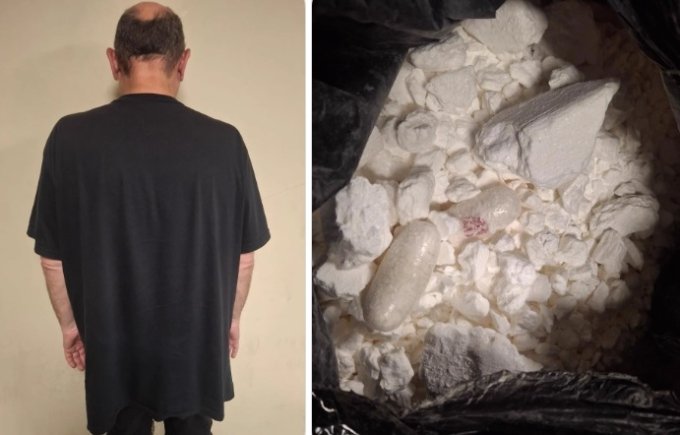
A 52-year-old South African man has been arrested at OR Tambo International Airport after allegedly arriving from Accra with suspected heroin valued at more than US$123,000.
The suspect was intercepted on Sunday, September 20, 2026, during an intelligence-led operation involving the South African Police Service (SAPS) and the Border Management Authority (BMA).
Suspect intercepted after landing from Accra
According to South African authorities, the man had just arrived at OR Tambo International Airport on a flight from Accra, Ghana, when law enforcement officers moved in to intercept him.
A search of his luggage allegedly uncovered bullet-shaped objects and blocks containing substances suspected to be heroin.
The seized drugs have been valued at more than R2 million, equivalent to approximately US$123,000.
Third suspected drug mule arrested in three weeks
The latest arrest has raised concerns over continued attempts to use the Johannesburg airport as a route for international drug trafficking.
SAPS said the arrest brings the number of suspected drug mules arrested at OR Tambo International Airport to three within the past three weeks.
Authorities said the operation formed part of ongoing intelligence-led efforts to identify and disrupt organised drug-trafficking networks operating through South Africa’s ports of entry.
Heroin allegedly concealed in luggage
The circumstances surrounding how the suspected narcotics were concealed and transported remain part of the ongoing investigation.
Police said the search of the suspect’s luggage led to the discovery of the bullet-like objects and blocks containing the suspected heroin.
The authorities have not publicly identified the suspect or provided further details about his alleged links to any drug-trafficking network.
Suspect faces drug trafficking charges
The 52-year-old man is expected to appear before the Kempton Park Magistrates’ Court later this week.
He is expected to face drug-trafficking-related charges, while investigations continue into the source of the suspected narcotics and whether other individuals or organised networks were involved.
The arrest does not amount to a conviction, and the allegations against the suspect will have to be tested through the South African judicial process.
Ghana-South Africa route under scrutiny
The arrest comes at a time of heightened attention on narcotics trafficking routes involving Ghana and other international transit points.
South African authorities have indicated that intelligence-led and targeted operations will continue as they seek to dismantle networks involved in the movement of illegal drugs through the country’s ports of entry.
For now, investigators are expected to focus on establishing where the suspected heroin originated, who may have arranged its transportation and whether the arrested man was acting alone or as part of a wider trafficking network.
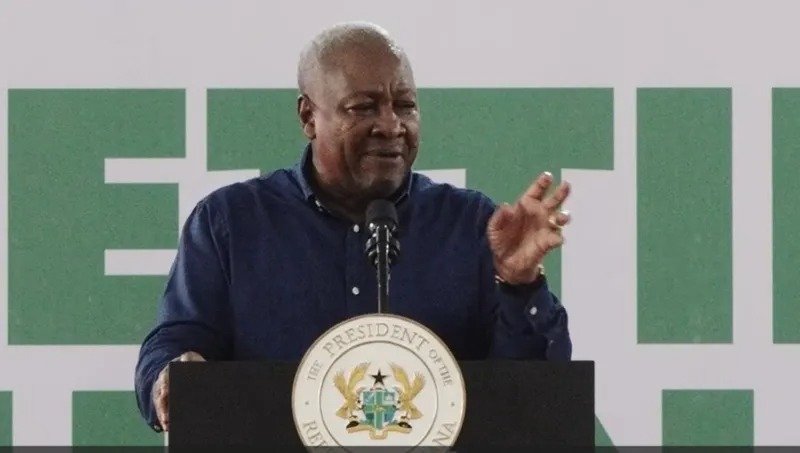
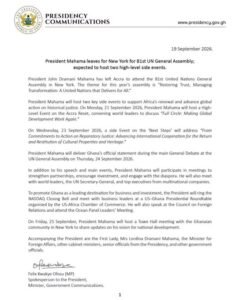
President John Dramani Mahama has left Accra for New York to represent Ghana at the 81st United Nations General Assembly, where he is scheduled to deliver Ghana’s official statement and lead a series of high-level diplomatic engagements.
The President departed Ghana on Saturday, September 19, 2026, ahead of the high-level General Debate, which runs from September 22 to 28 at the United Nations Headquarters in New York.
The 81st UN General Assembly is being held under the theme “Restoring Trust, Managing Transformation: A United Nations that Delivers for All.”
Mahama to address world leaders
One of the key moments of the President’s visit will come on Thursday, September 24, when he delivers Ghana’s official statement during the main General Debate.
The address will provide Ghana with an opportunity to outline its positions on issues of international cooperation, development and other matters before the global community.
Accra Reset takes centre stage
President Mahama is also scheduled to host a high-level event on the Accra Reset on Monday, September 21.
The event, themed “Full Circle: Making Global Development Work Again,” will bring together world leaders to discuss reforms to global development and international cooperation.
Reparatory justice event
On Wednesday, September 23, the President will host another high-level side event focused on reparatory justice.
The event, titled “From Commitments to Action on Reparatory Justice: Advancing International Cooperation for the Return and Restitution of Cultural Properties and Heritage,” will focus on international cooperation regarding the return and restitution of cultural properties and heritage.
Investment and diplomatic engagements
Beyond the formal UN programme, President Mahama is expected to hold meetings with world leaders, the UN Secretary-General and executives of multinational companies.
His programme also includes engagements aimed at strengthening international partnerships and promoting Ghana as a destination for business and investment.
As part of those activities, the President is scheduled to ring the NASDAQ Closing Bell and participate in a US-Ghana Presidential Roundtable organised by the US-Africa Chamber of Commerce.
He is also expected to speak at the Council on Foreign Relations and participate in the Ocean Panel Leaders’ Meeting.
Town Hall with Ghanaians
President Mahama will also engage members of the Ghanaian community in New York.
On Friday, September 25, he is scheduled to host a Town Hall meeting with Ghanaians in the United States, providing an opportunity to discuss his administration’s vision for national development.
Who is travelling with Mahama?
The President is accompanied by First Lady Lordina Dramani Mahama, Foreign Affairs Minister Samuel Okudzeto Ablakwa, other Cabinet ministers, senior officials from the Presidency and other government officials.
With a packed diplomatic programme ahead, President Mahama’s participation at the 81st UN General Assembly is expected to combine Ghana’s official presentation at the world body with engagements on development, investment, international cooperation and historical justice.
General News
These Nonsense Must Stop! – Seth Afum A. Dankwah Calls for End to Ghana’s Insult Politics
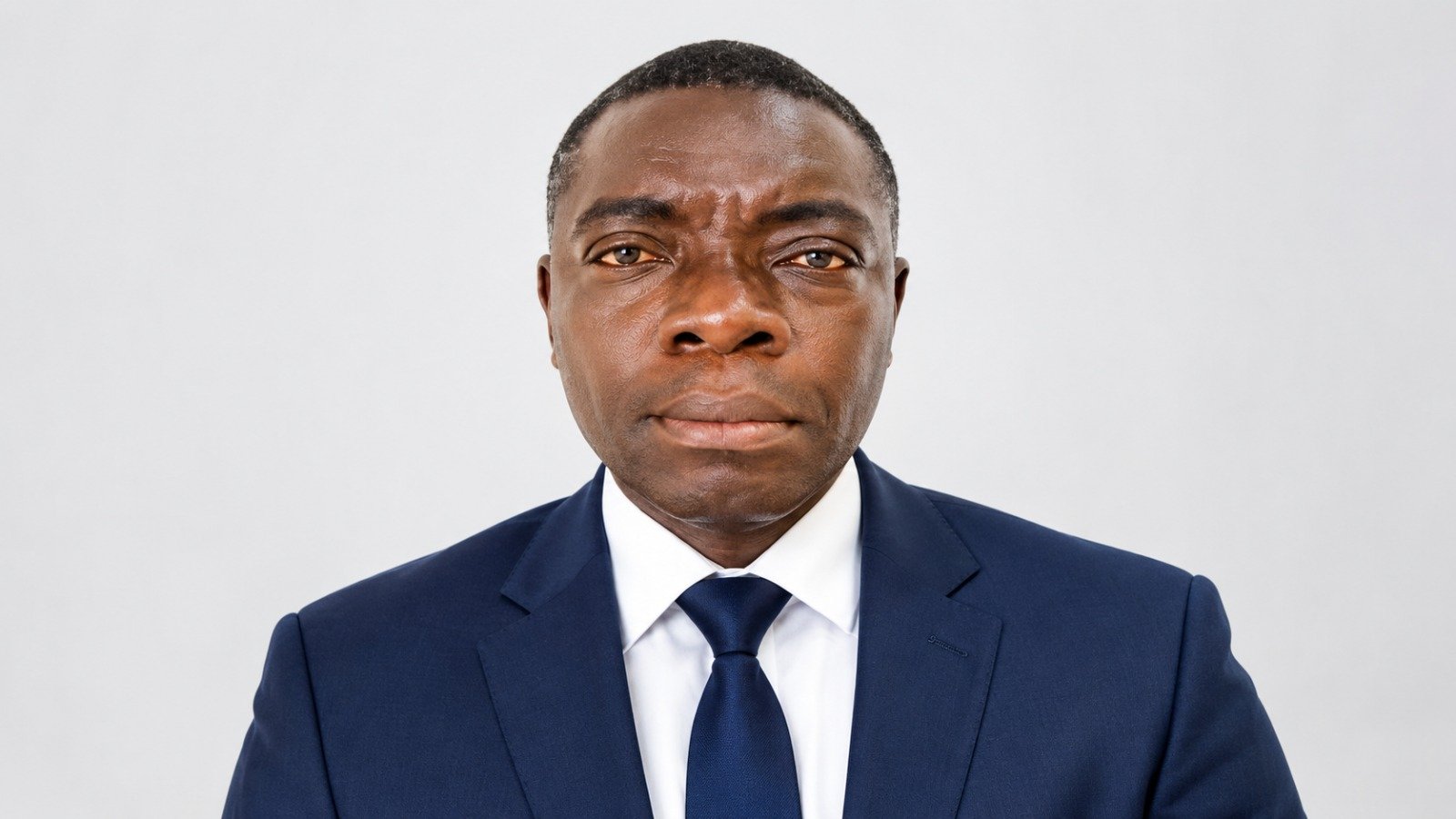
Seth Afum A. Dankwah calls for a national truce involving political parties, traditional authorities, religious leaders, security agencies and social media influencers to address political insults and concerns over selective justice.
President John Dramani Mahama has been urged to convene a national dialogue to address what has been described as Ghana’s growing culture of political insults, following the arrest and prosecution of individuals accused of making offensive comments about political leaders.
In an opinion article titled “These Nonsense Must Stop: Ghana’s Cycle of Insult Politics, and Why President Mahama Must Now Lead a National Truce,” Seth Afum A. Dankwah of J. G. Knol Technical Institute in Adukrom, Akuapem, Eastern Region, argues that the country needs a coordinated approach to political communication rather than relying primarily on arrests and prosecutions.
He believes the current situation raises questions about consistency in the application of the law, freedom of expression and the treatment of individuals accused of insulting public officials.
Dankwah maintains that criticism of government policies should remain permissible, even when strongly expressed, but argues that personal attacks against families, traditional leaders and religious figures should be addressed.
Ghana Jollof controversy
The author begins by highlighting the controversy surrounding a TikTok account known as Ghana Jollof, which he says has attracted more than 151,000 followers through videos and commentary targeting the President, his wife and members of his government.
According to Dankwah, the account has become a prominent feature of Ghana’s online political discussions, with security agencies reportedly searching for its operator.
He alleges that the content is motivated by political vengeance on behalf of the New Patriotic Party (NPP), although he does not provide evidence establishing that claim.
The article then recounts the arrest of Salomey Awity Baffoe, a 40-year-old Senior Nursing Officer and mother of three, in Hansua, Techiman.
Dankwah states that at approximately 11:30 p.m. on September 13, 2026, three men who identified themselves as National Security personnel arrived at a residence and took her away.
He claims that when her family attempted to locate her, the Bono East Police and the regional National Security office initially said they had no records of her arrest.
Two days later, according to the account, Baffoe appeared before the Adenta Circuit Court in Accra, where she was remanded for two weeks over a charge relating to the publication of false news.
The author says the police identified her as the person behind Ghana Jollof. However, he argues that the account’s subsequent activity raised questions about that identification.
On September 17, 2026, the police reportedly declared another woman, Barbara Asantewaa Kodua, wanted in connection with the Ghana Jollof account.
The 40-year-old was said to have last been seen at Kotoka International Airport on August 4, 2022, and was believed to be in the United Kingdom.
According to the article, she was wanted for allegedly inciting violence.
Dankwah questions the circumstances surrounding Baffoe’s arrest and argues that the case has intensified public debate about the manner in which authorities investigate alleged online offences.
The author argues that political insults have become part of Ghana’s partisan culture, with supporters often defending offensive commentary when their parties are in opposition but condemning similar conduct when they assume power.
He observes that governments, traditional authorities and religious leaders frequently become targets of such commentary.
The article references former presidents Jerry John Rawlings, John Agyekum Kufuor, John Evans Atta Mills, John Dramani Mahama and Nana Addo Dankwa Akufo-Addo, arguing that each experienced political insults during their respective periods in public office.
Dankwah recalls that Mills once described himself as a father to all, presenting the statement as an example of a response that sought to rise above partisan hostility.
He also argues that Mahama experienced sustained insults during his first presidency, between 2012 and 2016, while Akufo-Addo faced similar criticism throughout his eight-year administration.
The author says the controversy surrounding Ghana Jollof cannot be fully understood without considering previous cases involving public figures and political commentary.
Kevin Taylor and the Asantehene
Dankwah points to the case of US-based Ghanaian broadcaster Kevin Ekow Taylor, host of With All Due Respect, as an example of what he considers inconsistent treatment of individuals accused of making offensive remarks.
According to the article, Taylor repeatedly criticised the Asantehene, Otumfuo Osei Tutu II, between 2021 and 2025.
The author also references a comment Taylor allegedly made in June 2025 concerning a decision involving the Despite Museum, claiming that the broadcaster described the Asantehene as having been reduced to a messenger.
Dankwah questions why the alleged remarks did not result in comparable police action.
He further recounts that in 2020, during Akufo-Addo’s administration, Justice Eric Kyei Baffour issued a bench warrant for Taylor over contempt-related proceedings concerning allegations of scandalising the court.
The article says Taylor did not appear before the court at the time and returned to Ghana after the NDC assumed power.
Dankwah states that on July 22, 2025, Taylor appeared at the Supreme Court, which, by a 4-1 majority led by Justice Imoro Amadu Tanko, quashed the warrant.
The author contrasts that outcome with the circumstances surrounding the Ghana Jollof investigation, arguing that the difference in treatment has contributed to concerns about selective justice.
Traditional leaders also affected.
The article also references alleged insults directed at other traditional authorities, including the Okyenhene, Osagyefuo Amoatia Ofori Panin, and Togbe Afede XIV, Agbogbomefia of the Asogli State and former President of the National House of Chiefs.
Dankwah says Togbe Afede has previously warned about the growing level of insults in Ghanaian public discourse, including attacks directed at the presidency.
He also recalls the traditional leader’s reference to the 1994 genocide in Rwanda as a warning about the potential consequences of escalating inflammatory rhetoric.
The author argues that traditional authorities should not be excluded from discussions about how to address the problem.
Dankwah also revisits the 2016 Montie 3 case, involving radio host Salifu Maase, popularly known as Mugabe, and panellists Alistair Nelson and Godwin Ako Gunn.
He states that on June 29, 2016, during the Pampaso programme on Montie 3, the three made threats against Supreme Court judges who had sat on the Abu Ramadan case and threatened to rape then-Chief Justice Georgina Theodora Wood.
The Supreme Court subsequently sentenced the three men to four months’ imprisonment for contempt on July 27, 2016.
According to Dankwah, the NDC later opened a petition book through its Research and Advocacy Platform, seeking a presidential pardon under Article 72 of the 1992 Constitution.
Among those he identifies as signatories were then-Foreign Affairs Minister Hanna Tetteh, Gender Minister Nana Oye Bampoe Addo, Education Minister Jane Naana Opoku-Agyemang and Deputy Education Minister Samuel Okudzeto Ablakwa.
The author says Mahama granted the three men a pardon on compassionate grounds on August 22, 2016, after they had spent 27 days in prison.
He adds that the Supreme Court subsequently upheld the pardon by a 5-2 majority.
Dankwah uses the case to question why individuals accused of making offensive political comments should face significantly different treatment depending on the circumstances and political context.
He asks whether the decision to pardon the Montie 3 can be reconciled with the current approach to alleged online insults.
The article also refers to an incident during Akufo-Addo’s presidency in which NPP supporters allegedly forced their way into a court sitting in Kumasi to remove a colleague.
Dankwah argues that the incident did not attract what he considers corresponding justice from the government at the time.
He maintains that concerns about selective enforcement of the law therefore predate the current administration.
The author further cites several arrests he says occurred in July 2026.
These include Camilla Alhassan, who was allegedly arrested over a claim that Mahama buried 32 cows to win the election; Rita Konadu, popularly known as Mamaone, who was reportedly arrested in Juaben; and Aminat, known as Bawumia Ba, who was allegedly rearrested.
He also references the arrest of Prince Aboagye, an NDC organiser in Agona West, over alleged insults against former Vice-President Dr Mahamudu Bawumia.
According to Dankwah, Aboagye was granted bail of GH¢200,000.
The author notes that Bawumia reportedly said he had not authorised the action and called for the case to be discontinued.
He also recalls a similar gesture by former President Mills, who, according to the article, allowed an NPP supporter accused of insulting him in Kumasi to go free.
Dankwah further references comments attributed to NPP’s Abronye and an alleged slur by an NDC activist suggesting that Bawumia eats pork.
He argues that such incidents demonstrate the need for a consistent response to offensive political commentary regardless of party affiliation.
The author cites concerns attributed to gender advocate Akosua Manu, who reportedly warned that the arrest of women from their homes around midnight could create the impression of abduction.
According to Dankwah, Manu cautioned that continued harassment of women over online commentary could lead to the emergence of more accounts similar to Ghana Jollof, describing the potential unintended consequences as a “cobra effect.”
He also references lawyer Martin Kpebu, who reportedly warned that Mahama could end up arresting a large number of TikTok users if the current approach continues.
The author argues that such concerns should prompt the government to reconsider how it handles allegations involving online speech.
Dankwah believes Mahama is particularly positioned to initiate a national dialogue because he has experienced political insults, benefited from political commentary directed at opponents and granted the Montie 3 a presidential pardon during his previous administration.
He argues that the President could use those experiences to bring political actors together and establish a framework for addressing the issue.
The author proposes that Mahama invite representatives of the NPP, Dr Bawumia, Akufo-Addo, the National House of Chiefs, the Christian Council, the Chief Imam, the Ghana Journalists Association, security agencies, the Judiciary, heads of state-owned enterprises, social media influencers and NDC leadership to the Jubilee House.
The proposed meeting, he says, should focus on dialogue and the development of a national agreement rather than arrests.
He recommends that participants sign a Charter Against Insult Politics, which would establish a moratorium period before the introduction or application of a clear and fair legal framework.
Three proposals to address political insults
The author outlines three key proposals he believes should guide the process.
1. Protect criticism while discouraging personal attacks
Dankwah argues that criticism of government policies should be permitted, regardless of how strongly it is expressed.
However, he says personal attacks and insults directed at people’s families, wives, mothers, chiefs, and pastors should be discouraged, irrespective of their political affiliations.
2. Ensure equal treatment under the law
He calls for the same legal standards to apply to everyone accused of offensive political commentary.
The author proposes that authorities avoid midnight raids over speech-related allegations and instead use daytime invitations, ensure access to lawyers and provide same-day bail.
He specifically references Ghana Jollof, Kevin Taylor, Bawumia Ba and Ako Gunn as individuals whose cases, in his view, illustrate the need for consistent treatment.
3. Suspend arrests and pursue a moral campaign
Dankwah urges the government to suspend the current arrest approach and lead a national campaign promoting responsible political communication before relying on law enforcement.
He also calls on Mahama to halt the CID search for Ghana Jollof and allow courts to handle proven cases of false publication through transparent legal proceedings.
These insults must stop.
In his concluding appeal, Dankwah says Ghana needs leadership that can acknowledge the country’s history of political insults while taking steps to prevent further escalation.
He argues that a national truce would provide an opportunity for political parties and other influential institutions to agree on standards that apply equally to all sides.
The author maintains that the proposed initiative should not prevent legitimate criticism of public officials but should help establish boundaries around personal attacks and the treatment of individuals accused of online offences.
He concludes by urging Mahama to seize the current controversy surrounding Ghana Jollof as an opportunity to initiate the dialogue.
“President Mahama must call off the CID search and let courts handle proven falsehoods transparently,” Dankwah states in his recommendations.
He adds that the President should acknowledge his own experiences with political insults and use them to lead efforts towards a national agreement.
“These insults nonsense must indeed stop,” the author concludes.

Accra, Ghana — September 20, 2026
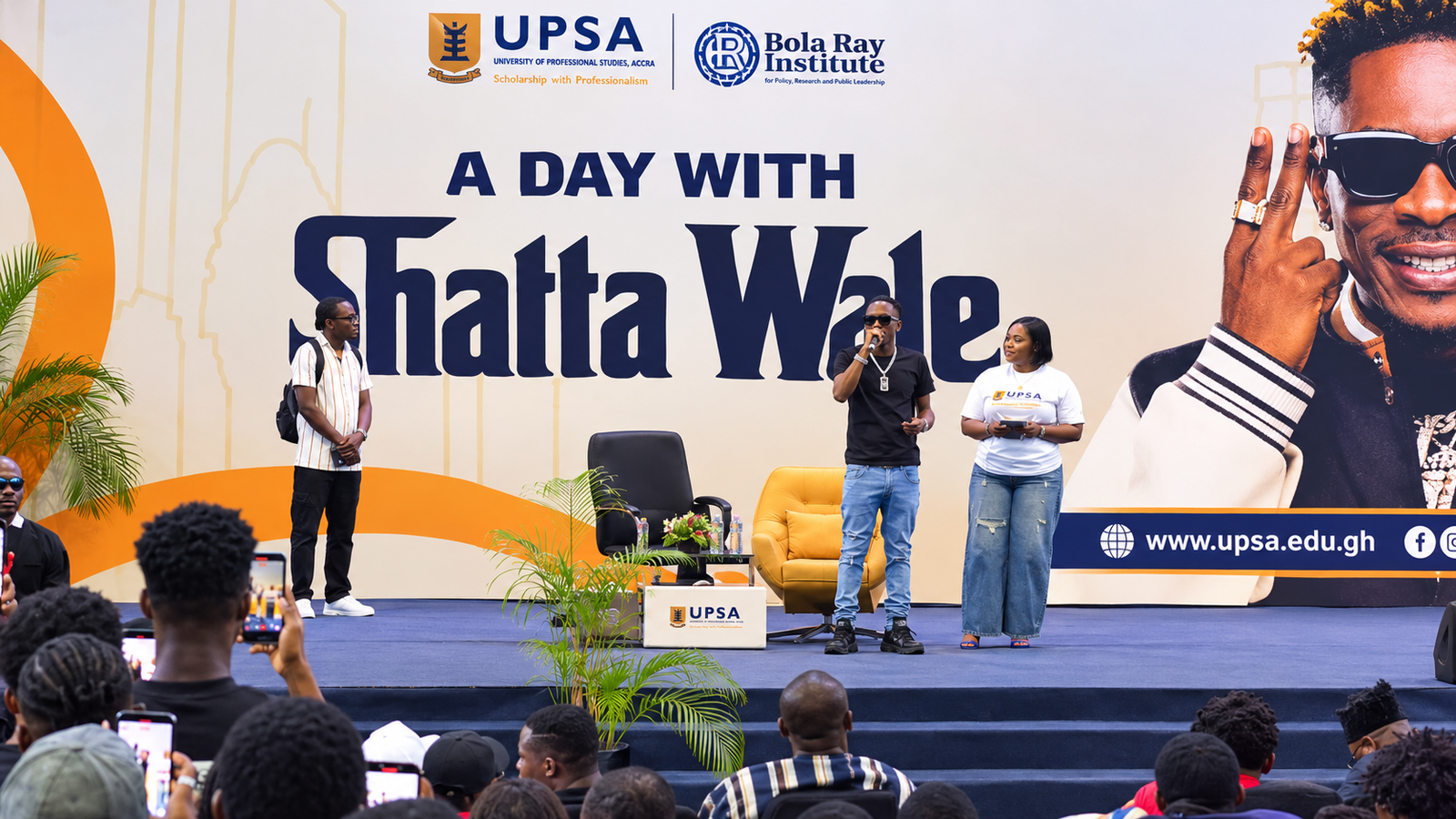
Ghanaian musician and entrepreneur Charles Nii Armah Mensah Jr., popularly known as Shatta Wale, has urged students of the University of Professional Studies, Accra (UPSA) to develop entrepreneurial mindsets and turn their skills and ideas into sustainable businesses.
He made the call on September 16, 2026, when he addressed students during the UPSA 1000 & Ghana Entrepreneurship Conference 2026, a five-day programme focused on entrepreneurship, innovation, mentorship and enterprise development.
Focus on the mindset before the money
Speaking to students and other participants, Shatta Wale placed particular emphasis on developing the mind before pursuing financial success.
He encouraged students to learn from his approach to building a career and brand rather than simply copying his public lifestyle. His message centred on vision, discipline, resilience, adaptability and continuous learning.
“Don’t copy my life. What I would rather let you copy is my thinking,” he told the students, according to the Ghana News Agency.
He also encouraged young people to identify opportunities around them and use technology and digital platforms to develop businesses and personal brands capable of reaching markets beyond Ghana.
From problems to business ideas
The musician said aspiring entrepreneurs should learn to view challenges as potential starting points for innovation.
His advice included developing problem-solving skills, investing carefully and continually upgrading one’s knowledge. He described a process of turning problems into questions, questions into ideas and ideas into action.
Shatta Wale also cautioned against becoming complacent after achieving financial success, stressing that entrepreneurs need to keep learning and developing their capabilities.
Student entrepreneur gets collaboration opportunity
The engagement also produced a practical example of the entrepreneurial approach being promoted at the conference.
A UPSA alumna presented her yoghurt drink business to Shatta Wale and proposed a collaboration. According to UPSA, the artiste agreed to work with her after she made the pitch.
The interaction demonstrated the conference’s emphasis on encouraging young entrepreneurs to confidently present their ideas and seek opportunities.
Support for UPSA students
Beyond his presentation, Shatta Wale also announced support for the university. UPSA said he donated 10 laptops to be presented to some of the institution’s best graduating students and provided sponsorship support for the UPSA 1000 Enterprise Development Programme. He also pledged to headline UPSA SRC Week celebrations over the following two years.
UPSA Vice-Chancellor Prof. John Kwaku Mensah Mawutor said the decision to invite Shatta Wale was informed by lessons from his career in resilience, branding, self-belief and enterprise development.
Entrepreneurship beyond the classroom
The conference was organised by UPSA in partnership with the Bola Ray Institute and forms part of the university’s efforts to expose students and young entrepreneurs to practical business knowledge, mentorship and market-oriented skills.
Shatta Wale’s appearance therefore extended the entrepreneurship conversation beyond conventional business discussions, using his experience in entertainment, digital platforms, branding and business development as examples for students considering entrepreneurial careers.
The central message from the session was clear: academic qualifications can provide a foundation, but developing the ability to identify opportunities, build ideas and continuously adapt is also important in navigating the modern business environment.
Sources: Ghana News Agency and University of Professional Studies, Accra.

Kwesi Pratt urges Ghana to revisit Nkrumah’s development strategy

Rashid Isah Pledges Youth Empowerment as He Eyes NDC Greater Accra Deputy Youth Organiser Post

Odwira Festival: History, Meaning, Traditions and the Full Celebration in Akuapem



-
 Entertainment2 weeks ago
Mahama Is First President to Put GH¢40m Seed Money into Creative Arts Fund: Kojo Preko Dankwa
-
 General News1 week ago
GTA’s Financial Strength Weakens Despite 2025 Tourism Activities
-

 Entertainment2 weeks ago
Keche Supports Street Vendor with GH¢3,000 After She Struggles to Make Sales
-
 Entertainment2 weeks ago
Government Repatriates Musician Barosky from UK
-
 General News7 days ago
GTA Cash Reserves Halve to GH¢640,000 Despite Improved Liquidity Ratio
-
 General News2 weeks ago
TVET is not for the academically weak – Advocate calls for change in Ghana’s mindset
-
 General News2 weeks ago
Techiman Assembly, Zoomlion Undertake Fumigation Exercise to Prevent Disease Outbreaks
-
 General News2 weeks ago
Police Launch Manhunt for Missing Assin Fosu Man as Captors Demand GH¢49,500 Ransom