
General News
PURC Announces New Utility Tariffs as Electricity and Water Prices Rise from July 1


Consumers across Ghana will pay more for electricity and water beginning July 1, 2026, following the Public Utilities Regulatory Commission’s (PURC) latest tariff review.
The Commission has approved a 3.49 percent increase in electricity tariffs and a 0.85 percent increase in water tariffs under its third-quarter tariff adjustment framework.
In a statement issued on Monday, June 22, PURC explained that the tariff review was conducted in line with its quarterly mandate to reflect changes in key economic and operational indicators affecting utility service providers.
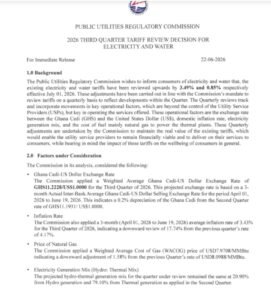
According to the Commission, the review considered factors such as movements in the Ghana cedi against the US dollar, inflation trends, electricity generation costs, and the price of natural gas used for power production.
PURC stated that the periodic adjustments are necessary to preserve the real value of tariffs, ensure the financial sustainability of utility companies, and support the continued delivery of reliable services to consumers.
For the third quarter of 2026, the Commission applied a weighted average exchange rate of GHS11.2228 to one US dollar, representing a 0.2 percent depreciation of the cedi compared to the previous quarter.
The review also took into account a three-month average inflation rate of 3.43 percent, down from 4.17 percent in the second quarter, while the weighted average cost of natural gas decreased by 1.58 percent to USD7.9708 per MMBtu.
The country’s hydro-thermal generation mix remained unchanged at 20.9 percent hydro generation and 79.1 percent thermal generation.
Based on these indicators, PURC approved a 3.49 percent increase in electricity tariffs across all customer categories, including residential, non-residential, and special load tariff users.
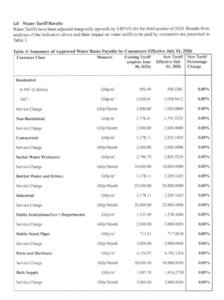
Under the new rates, the lifeline electricity tariff for residential consumers using up to 30 kilowatt-hours per month has increased from 86.9Gp per kilowatt-hour to 89.93Gp per kilowatt-hour.
Water tariffs have also been adjusted upward by 0.85 percent for all customer groups, including residential, commercial, industrial, public institutions, and bulk consumers.
The residential lifeline water tariff for consumption of up to five cubic metres has risen from 593.49Gp per cubic metre to 598.54Gp per cubic metre.
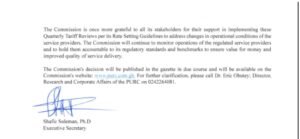
PURC reaffirmed its commitment to monitoring utility providers to ensure compliance with regulatory standards, improved service delivery, and value for money for consumers.
The Commission further thanked stakeholders for their continued support of the quarterly tariff review process and indicated that the revised rates will be published in the Gazette and on its official platform in due course.
Alternative Headlines:
Electricity and Water Tariffs Go Up Again as PURC Announces July 1 Price Adjustment
Ghanaians to Pay More for Utilities as PURC Increases Electricity and Water Tariffs
PURC Raises Electricity and Water Charges in Third-Quarter Tariff Review
Utility Bills Set to Rise from July as PURC Adjusts Electricity and Water Tariffs
PURC Approves New Tariffs, Electricity Up 3.49% and Water Up 0.85%




By Angel No Lie | KPD Online | September 22, 2026
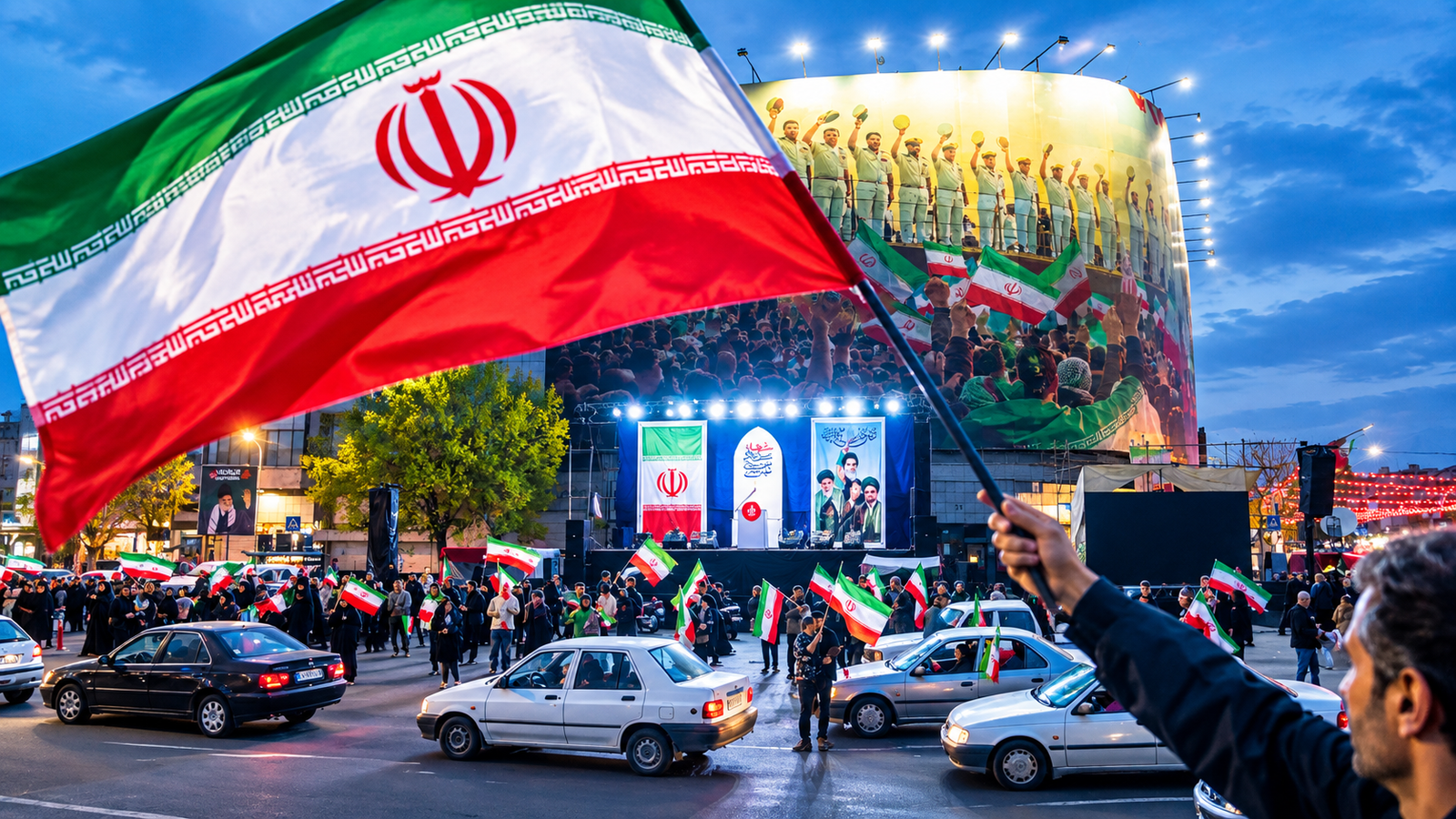
NEW YORK — Tensions across the Middle East are casting a long shadow over the opening of the United Nations General Assembly, as world leaders gather in New York against the backdrop of continuing conflict involving Iran, Israel, Gaza, Lebanon and Yemen.
The high-level general debate of the 81st UN General Assembly opened on Tuesday, September 22, with heads of state and government arriving for a week of speeches, diplomatic meetings and negotiations. The UN says the high-level week runs from September 22 to 29, with the general debate scheduled for September 22–26 and September 28.

El mundo vive un caos, la prioridad debe ser defender el multilateralismo | Naciones Unidas en Colombia
Iran war dominates diplomatic agenda
The continuing conflict between the United States and Iran is among the most pressing issues confronting delegates.
U.S. President Donald Trump and Iranian President Masoud Pezeshkian are both attending the General Assembly, creating an opportunity for indirect diplomatic contacts even though the two leaders are not currently scheduled for a direct meeting. Reuters reports that Iranian officials have indicated that Tehran’s delegation has authority to revive negotiations, while Washington has also signaled openness to diplomacy.
The possibility of renewed negotiations comes as the dispute over the Strait of Hormuz remains a major regional concern. Iranian officials have linked reopening the strategic waterway to demands for reduced U.S. military pressure and the lifting of blockades on Iranian ports, according to Reuters.

Photo highlights from the 80th UN General Assembly in New York
Gaza and Israel-Palestinian conflict remain central
The war and humanitarian crisis in Gaza are also expected to feature prominently during the General Assembly.
The UN’s latest humanitarian reporting says civilians in Gaza continue to face widespread destruction, displacement, shortages of essential supplies and significant humanitarian needs. The organization has called for greater humanitarian access and continued implementation of a Gaza peace plan.
The Palestinian issue is also generating diplomatic controversy around this year’s gathering. Al-Monitor reported that the United States denied visas to Palestinian officials seeking to attend the summit, while Palestinian President Mahmoud Abbas is expected to address the General Assembly virtually.
Meanwhile, France, Britain and Canada are hosting a high-level meeting focused on advancing a two-state solution between Israel and the Palestinians.

Critical Military Strike Consequences Shape Security 2026

Нефть по $215. Новый кризис будет страшнее всех предыдущих: Иран изменит жизнь всей планеты – RuNews24.ru – 18.03.2026

IRAN-US-ISRAEL-WAR
Yemen and Gulf security add to concerns
The situation in Yemen is another major source of regional tension. Renewed fighting involving Houthi forces and Saudi-supported forces has added pressure to an already fragile security environment, while attacks and threats involving important maritime routes have raised concerns about regional trade and energy supplies.
Gulf Arab states are also seeking discussions with Washington over regional security. According to Reuters, Saudi Arabia is looking for renewed U.S. military support amid the conflict involving Iran and Houthi forces in Yemen.

ازدحام في مضيق هرمز.. مئات السفن تنتظر وواشنطن تطلب دعماً أوروبياً لتأمين الملاحة – [İLKHA] وكالة إيلكا للأنباء
Lebanon and wider regional instability
Israel’s conflict with Hezbollah in Lebanon is also among the regional issues expected to receive attention during the UN meetings. The Associated Press reported that the wars involving Iran, Yemen, Gaza and Lebanon are dominating discussions as leaders gather in New York.
The overlapping conflicts have created a diplomatic environment in which developments in one part of the region can quickly affect neighboring countries, maritime routes and international energy markets.

Destruction, displacement … The war in Lebanon in photos – L’Orient Today

Tensión en el mar Rojo: el buque mercante atacado por los hutíes frente a las costas de Yemen se está hundiendo – Infobae

UN-Hilfsgüter in Gaza: Plünderungen von Lastwagen und Lagerräumen
A critical moment for diplomacy
The gathering is taking place at a particularly difficult moment for the international system. Nearly 130 heads of state and government are expected in New York, according to Reuters, while the United Nations itself faces questions about its ability to manage major international crises.
UN Secretary-General António Guterres has repeatedly called for de-escalation in the Middle East and emphasized the need to protect civilians and maintain humanitarian access. In a September 16 briefing, he said de-escalation must be the priority and called for humanitarian operations to proceed safely.
The General Assembly therefore provides a major diplomatic platform for governments to present their positions while creating opportunities for private negotiations on the conflicts.
What to watch
Several developments will be closely watched during the UN meetings:
- U.S.-Iran diplomacy: Whether indirect contacts develop into renewed negotiations.
- Strait of Hormuz: Whether diplomatic efforts can reduce tensions surrounding the strategic shipping route.
- Gaza: Whether discussions produce progress on humanitarian access and the wider peace process.
- Israel-Palestinian diplomacy: Whether international efforts to advance a two-state framework gain momentum.
- Yemen and Gulf security: Whether regional governments can prevent further escalation and protect key maritime routes.
With the region facing several interconnected conflicts, this year’s General Assembly is becoming an important forum for both public confrontation and behind-the-scenes diplomacy. Whether those diplomatic efforts can translate into concrete steps toward de-escalation remains uncertain, but the presence of so many regional and global leaders provides an opportunity for negotiations at a time of heightened tensions.
Entertainment
Paramount Reaches Deal With 12 States, Removing Major Hurdle to Warner Bros. Acquisition

By Angel No Lie | KPD Online | September 22, 2026
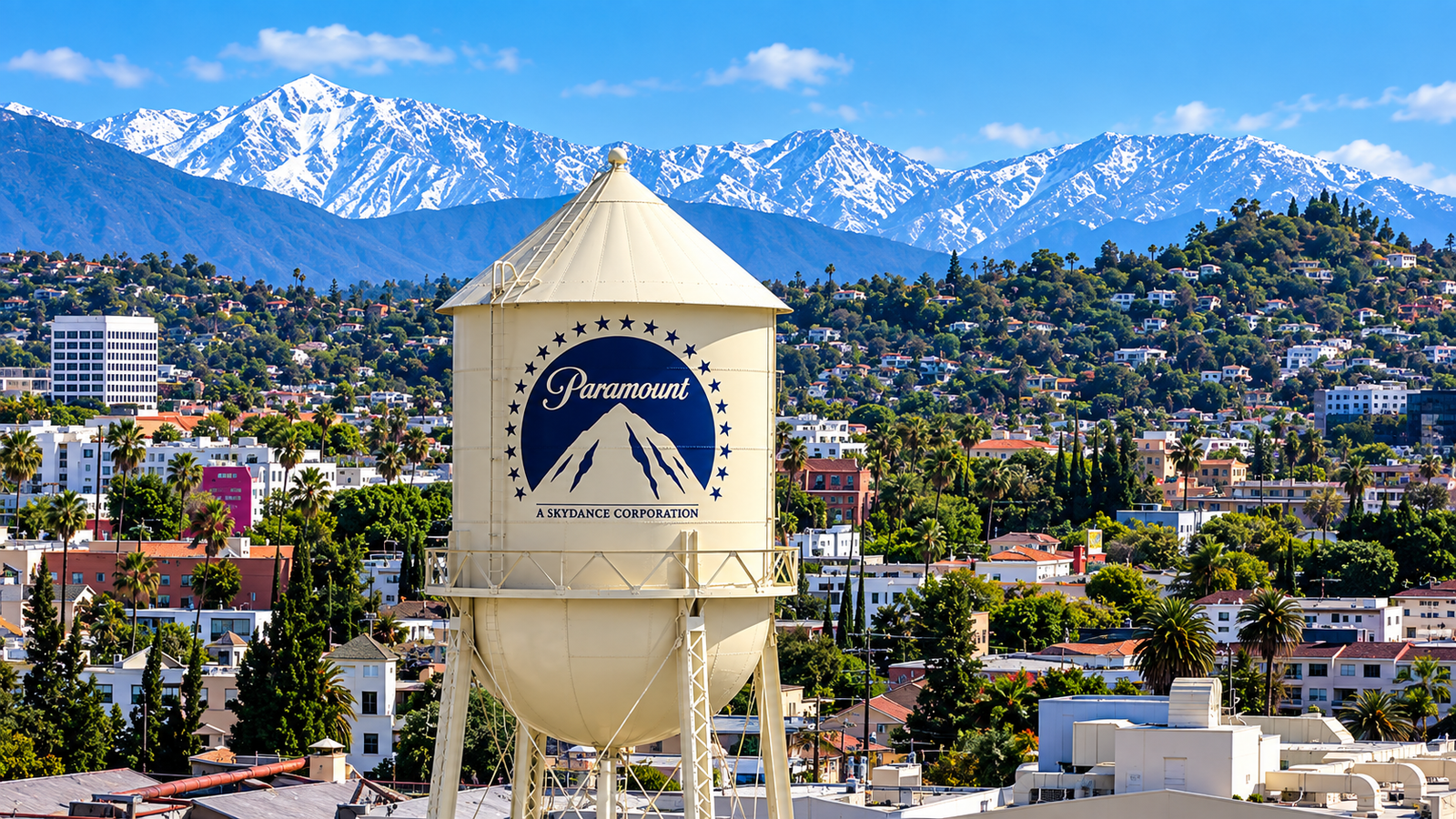
LOS ANGELES — September 22, 2026 — Paramount Skydance has reached a settlement with California and 11 other U.S. states, resolving a major legal challenge to its proposed acquisition of Warner Bros. Discovery and clearing a key obstacle to the roughly $110 billion transaction.
The agreement ends an antitrust lawsuit filed in July by a coalition of state attorneys general. The states had argued that combining Paramount and Warner Bros. Discovery could reduce competition across movie production, television, streaming and cable markets.
Conditions attached to the settlement
Under the agreement, the combined company will face several court-enforceable commitments over a period of up to five years.
Among the most significant provisions is a requirement to maintain a minimum level of theatrical movie production. The company must release at least 30 films annually during the first two years, rising to 32 films a year for the following three years. Financial penalties can apply if the commitments are not met.
Paramount has also committed to spending an additional $300 million annually on domestic film production, representing at least $1.5 billion in additional investment over five years. The settlement also establishes a $47.5 million fund for workers affected by the transaction.
The agreement includes provisions concerning cable negotiations and establishes measures intended to protect editorial independence at CBS News and CNN, two major news organizations that would come under the same corporate ownership following the transaction.
A major change for Hollywood
If completed, the acquisition would combine Paramount and Warner Bros. Discovery’s extensive entertainment operations, including the Paramount and Warner Bros. film studios, CBS and CNN, and streaming services Paramount+ and HBO Max.
The Justice Department had previously cleared the transaction, while the lawsuit by the 12 states became a significant remaining obstacle. The settlement is subject to court approval.
California Attorney General Rob Bonta, whose office led the states’ legal challenge, said the settlement should not be interpreted as an endorsement of the merger. The states had originally sought to prevent the transaction, arguing that it could affect competition and consumers.
Paramount CEO David Ellison has described the merger as beneficial to consumers and the entertainment industry. The company is now moving toward completion of the acquisition, although the settlement’s court approval remains an important procedural step.
The proposed transaction would mark one of the largest consolidations in the modern U.S. entertainment industry, bringing two major Hollywood studios and their television, streaming and news operations under a single corporate structure.
By Angel No Lie | KPD Online | September 22, 2026
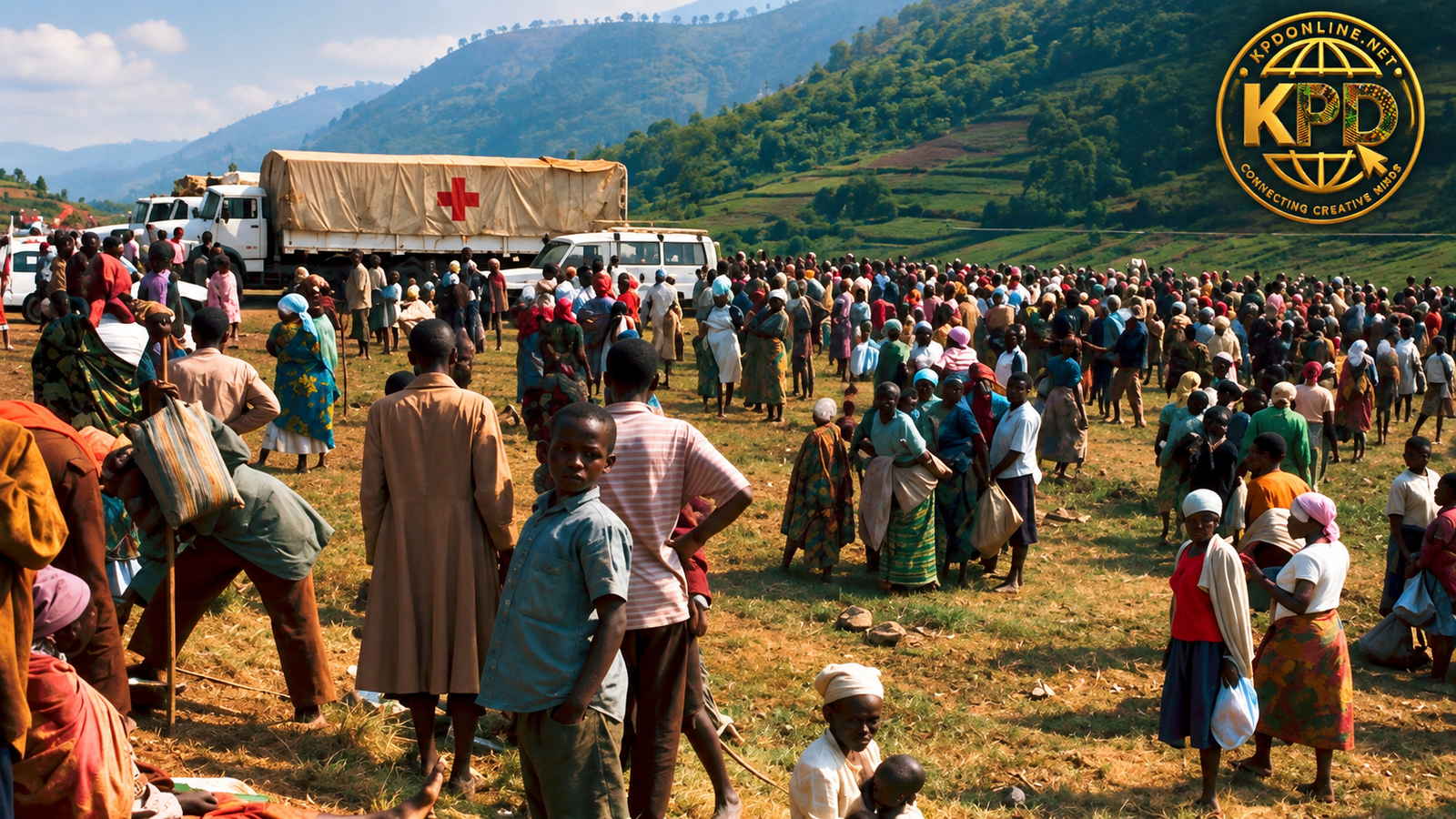
LONDON — British prosecutors have brought the first criminal case in the United Kingdom linked to the 1994 genocide against the Tutsi in Rwanda, a landmark development in efforts to hold suspected perpetrators accountable decades after the atrocities occurred.
The accused, Vincent Brown, a 65-year-old man originally from Rwanda, faces one count related to genocide and six counts related to murder as crimes against humanity. Prosecutors allege that he directed and encouraged acts of violence in Kigali during the opening days of the genocide in April 1994. Brown denies the allegations.

British man Jermaine Grant charged with directing activities of Somali terror group Al-Shabaab | The Independent
According to British authorities, the investigation began in 2019 following cooperation between UK investigators and Rwandan officials. The case was led by the Counter Terrorism Policing War Crimes Team, which examines allegations of genocide, crimes against humanity, and war crimes connected to suspects living in the United Kingdom.
The 1994 genocide remains one of the darkest episodes in modern history. More than 800,000 people, primarily Tutsis and moderate Hutus, were killed during approximately 100 days of violence that followed the assassination of Rwandan President Juvénal Habyarimana.

Remembrance and reconciliation – Rwanda’s rebirth | Singita

RWANDA-GENOCIDE-ANNIVERSARY
British officials described the prosecution as a significant milestone, noting that the UK has long investigated allegations connected to the genocide but had never previously brought charges in a domestic court. Authorities also confirmed that investigations involving several other individuals remain ongoing.
The case is expected to attract international attention as survivors, legal experts, and human rights organizations continue to monitor global efforts to prosecute genocide-related crimes regardless of where suspects are located.
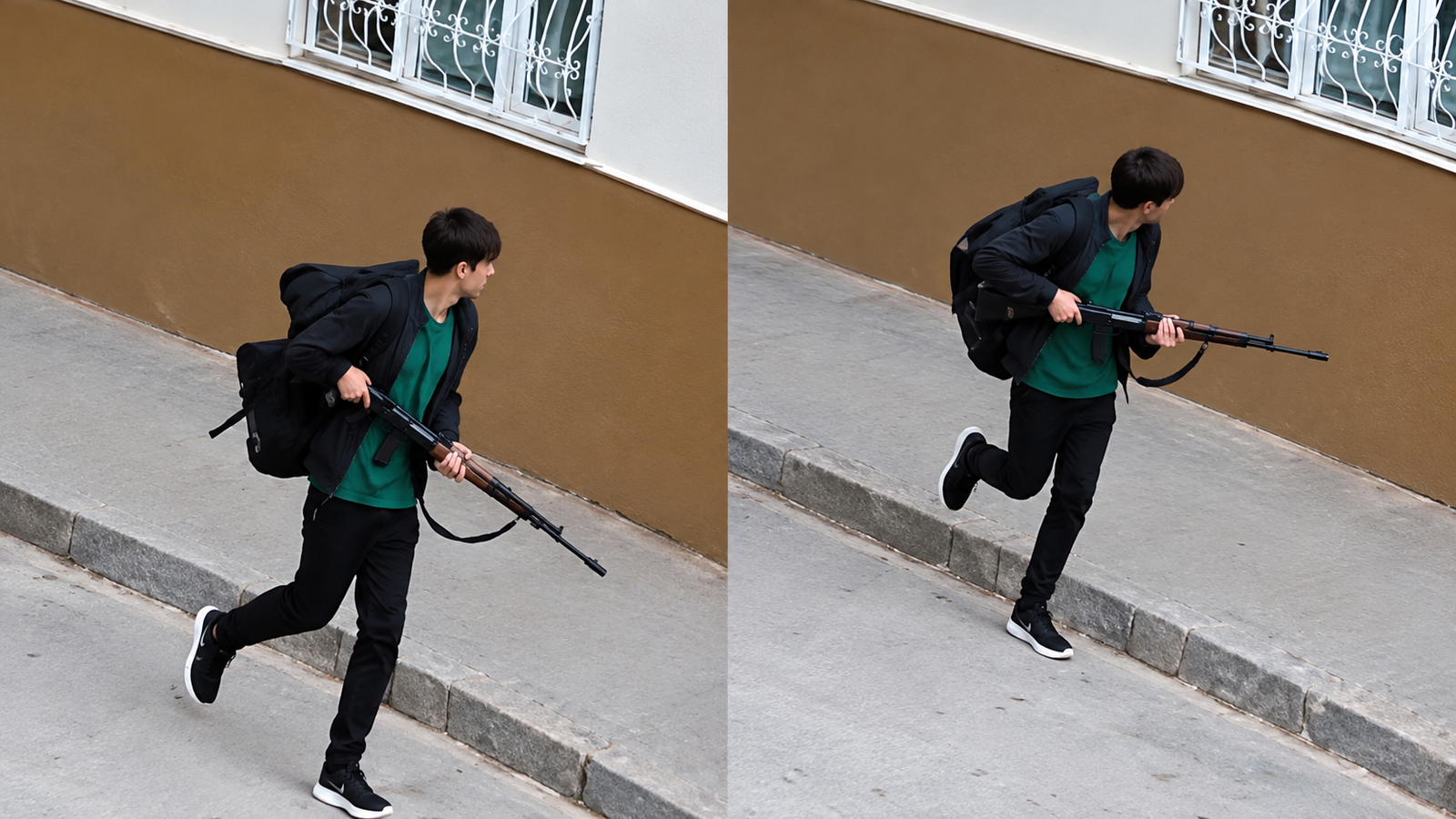
TURGUTLU, Türkiye — September 22, 2026: At least 11 students were injured, two of them seriously, after a student opened fire near a high school in western Türkiye on Tuesday morning, authorities said.
The shooting occurred at about 7:59 a.m. local time near the İnci Üzmez Vocational and Technical Anatolian High School in Turgutlu, in Manisa province. Police and emergency medical teams were quickly dispatched to the area.
According to Turkish Justice Minister Akın Gürlek, the suspected shooter was apprehended shortly after the incident. The suspect’s parents and grandfather were also taken into custody as part of the investigation, with authorities examining how the weapon was obtained.
Reports indicate that the weapon was a shotgun taken from the family home. The suspect allegedly fired toward students outside the school before attempting to leave the area on foot. The motive has not been established, although authorities are investigating reports concerning possible bullying.

Videos zu aktuellen Nachrichten | FAZ

Doğrulama

VIDEO/ Tjetër sulm në një shkollë në Turqi, një person i armatosur kryen masakër, vriten 3 nxënës dhe 1 mësues. Të paktën 20 të plagosur – Bota
Investigation launched
The Turgutlu Chief Public Prosecutor’s Office has opened a comprehensive investigation, with two prosecutors assigned to the case. Officials are examining the circumstances surrounding the shooting and the weapon’s possession.
The Turkish Education Ministry suspended classes at the affected school for the remainder of the day and sent inspectors to Manisa. Psychosocial support teams were also deployed to assist students, teachers and parents affected by the incident.
The shooting comes months after two separate school attacks in Türkiye in April that resulted in multiple deaths and injuries. Those incidents prompted authorities to announce additional security measures at schools as the 2026–27 academic year began.
Authorities have not yet released further details about the identities of the injured students. The investigation remains ongoing.


Madrid Derby Fallout Deepens as Atlético Responds to Mourinho’s Referee Claims

Infantino Says He Is Open to Talks Over FIFA Reform

Middle East Tensions Escalate as World Leaders Gather for Crucial UN General Assembly



-

 General News1 week ago
GTA’s Financial Strength Weakens Despite 2025 Tourism Activities
-

 General News1 week ago
GTA Cash Reserves Halve to GH¢640,000 Despite Improved Liquidity Ratio
-

 Entertainment2 weeks ago
Keche Supports Street Vendor with GH¢3,000 After She Struggles to Make Sales
-

 General News2 weeks ago
TVET is not for the academically weak – Advocate calls for change in Ghana’s mindset
-

 General News1 week ago
Creative Arts Agency Records GH¢2.01m Revenue in FY2025 Despite Financial Reporting Gaps
-
 Business2 weeks ago
Bank Profits Slide to GH¢7.1bn as Low Interest Rates Squeeze Earnings
-
 General News2 weeks ago
Police Launch Manhunt for Missing Assin Fosu Man as Captors Demand GH¢49,500 Ransom
-
 General News2 weeks ago
3 cheques, 4 witnesses, GH¢49.1 million: How the Republic closed its case against Adu-Boahene