
Technology
Rising Mobile Phone Scams Put Ghanaian Businesses at Risk: Why Cybersecurity Must Start in Every Pocket


Have you noticed a rise in suspicious messages lately? Maybe it’s a strange SMS claiming to be from Ghana Post asking you to rebook a delivery, or a supposed “bank” requesting your card details—even though you’ve never opened an account with them.
These aren’t isolated incidents. They’re signs of a broader and growing threat: mobile device hacking.
Today, smartphones are more than just communication tools. They are powerful mini-computers—holding our emails, banking apps, social media, company data, and sensitive files. In Ghana, mobile usage is soaring, with smartphones becoming the go-to device for both work and personal use. That’s exactly why cybercriminals are shifting focus—from traditional computer attacks to mobile phone scams.
Why it matters for business leader
Whether your employees use company-issued phones or personal devices for work (BYOD), each smartphone connected to your organisation presents a potential gateway for cyberattacks. One wrong click, one missed update, one weak PIN—and hackers could gain access to emails, corporate data, financial records, or worse. For business leaders, the stakes are even higher. Your organisation’s cybersecurity is only as strong as its most vulnerable device. That’s why protecting mobile phones is no longer optional—it’s essential.
Start with awareness – Educate your entire team
In Ghana, where many small and mid-sized businesses rely on mobile-first operations, education must be the first line of defence. Your staff doesn’t need to be cybersecurity experts, but they must know how to spot red flags like suspicious links, fake app updates, and social engineering scams. The solution? Regular, easy-to-understand mobile security training for everyone—from interns to executives. Talk about current threats, like recent iOS vulnerabilities or Android malware campaigns, in plain language. Use WhatsApp groups, internal newsletters, or even short video explainers to make it digestible.
Tech giants like Apple have already responded to global threats by introducing advanced features like “Lockdown Mode,” which restricts access to high-risk features on iPhones. While this may be designed for public figures and journalists, it’s still worth educating your team on such options and encouraging quick adoption of security updates when released.
Pair education with strong mobile security tools
Education is critical, but it’s not enough on its own. Businesses must also invest in the right tools and policies to secure mobile devices across the organisation.
Mobile Device Management (MDM) platforms allow businesses to control how devices access corporate data, regardless of whether it’s an Android or iPhone. You can:
• Enforce stronger password or PIN policies (e.g., requiring a 6- or 8-digit code).
• Restrict access to sensitive apps.
• Push system updates remotely.
• Control which apps employees can install.
Add Multi-Factor Authentication (MFA) to key systems like email, CRM, and cloud platforms, and you create another layer of verification that’s difficult for hackers to bypass.
In the event a phone is lost or stolen—common in busy places like Circle, Kejetia, or even office car parks—remote wiping capabilities can prevent data from falling into the wrong hands.
Small team? Big risks still apply
Whether you’re a global logistics firm with teams across Accra and Tema, or a startup with ten staff operating from a shared space in East Legon, the risks are the same. One compromised phone can expose sensitive company documents, financial information, or client data. That’s why mobile security should never be considered an “IT-only” issue. It should be part of company culture—just like punctuality or professionalism.
Final word – Security starts in every pocket
In today’s digital landscape, your employees’ smartphones are as critical to protect as your company servers. And in Ghana, where mobile penetration is among the highest in Africa, this challenge is urgent and real. So, don’t wait for a data breach to take action. Build awareness, invest in smart technology, and treat mobile security as a team-wide responsibility. Because in the end, cybersecurity isn’t just about firewalls or antivirus software—it’s about people, habits, and the devices we carry every day.









Technology
Sam George Blames Past Information Leaks for Weak Cybercrime Enforcement, Vows Crackdown to Restore Ghana’s Digital Image
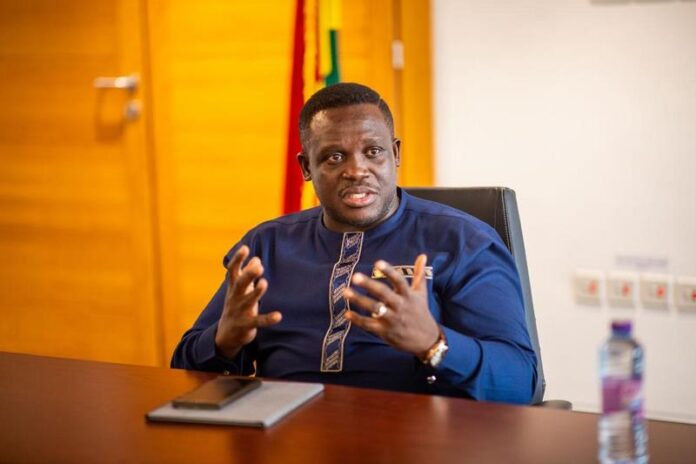
The Minister for Communication, Digital Technology and Innovations, Sam George, has expressed concern that individuals in the previous administration allegedly leaked sensitive information to suspected cybercrime targets, a situation he says repeatedly weakened efforts to sanitise Ghana’s digital space and rebuild international confidence.
In an interview that has circulated widely on social media, the Ningo Prampram MP explained that enforcement actions against cyber fraud often failed in the past because operational details were allegedly disclosed to suspects before arrests could be carried out.
He clarified that requests from international partners such as the FBI did not originate under the current administration, noting that investigations into cybercrime were already underway before he assumed office.
“The FBI did not make the requests today, those requests were pending before I became minister,” he said.
According to the Minister, the challenge was not a lack of intelligence or cooperation from international partners, but the deliberate leaking of information from within, which enabled suspects to evade law enforcement.
“But in the past, people were leaking the information to the targets and helping them evade arrest,” he stated.
Sam George said he took a firm stance upon becoming minister to put an end to what he described as internal sabotage of security operations, stressing that restoring Ghana’s international reputation requires decisive action and strict confidentiality.
“I made a commitment when I became minister. That anything that we would do to clean up the image of Ghana internationally, we will,” he said.
He linked the issue of information leaks directly to Ghana’s wider challenges with digital credibility, pointing out that cyber fraud has negatively affected the country’s standing with global technology and payment platforms.
“They will blacklist Ghana as long as there’s fraud happening in Ghana,” he said, referencing platforms such as PayPal, TikTok and Meta.
The Minister explained that when arrests are frustrated through leaked information, cybercrime continues, making it difficult for the government to assure international platforms that Ghana is a safe and reliable digital environment.
“As we clamp down on cyber crime, it makes our case stronger as we talk to the platforms to monetise and say that Ghana is a peaceful destination, a safe haven, and that illicit flows will not come through here,” he said.
Sam George also noted that the actions of a few individuals who leak information for personal or criminal gain have far reaching consequences for law abiding citizens, particularly content creators and young people who depend on online platforms for income.
“If you have a few people depriving the majority who are doing legitimate work on social media, content creators, the reason you can’t monetise and get value for your craft is because a few people have chosen to give Ghana a bad name,” he said.
He dismissed claims that economic hardship should be used to justify criminal activity or interference with law enforcement operations.
“The excuse and argument that there are no jobs. Then should we say that we shouldn’t arrest armed robbers as well because everybody will have a reason for crime,” he added.
The Minister’s remarks come at a time when the government is intensifying efforts to strengthen internal controls, deepen collaboration with international partners, and prevent leaks that could undermine investigations into cyber fraud and other digital crimes.

The Chief Operating Officer of Fintech Solutions, Cristina J. S. Swan Awagah, has expressed concern over the increasing cases of online fraud and called for stronger cybersecurity habits particularly among young people.
Speaking at the Africa Digital Dialogue on Friday, November 7, 2025, under the theme “Beyond Mobile Money: Fintech’s Next Frontiers,” she emphasized that oversharing personal information online has become one of the easiest ways for cybercriminals to exploit individuals.
The dialogue, hosted by MG Digital in partnership with the Africa Digital Foundation, formed part of the annual Africa Digital Festival (ADF)—a major event celebrating innovation and digital transformation across the continent. This year’s edition brought together policymakers, investors, creators, and startups from over 20 African countries to promote collaboration in FinTech, AgriTech, e-Health, and Artificial Intelligence.
Cristina Awagah highlighted that as fintech adoption expands, the importance of digital literacy and online safety cannot be overstated. With many young Africans active on social media, she cautioned that weak passwords and the habit of sharing personal milestones online make users vulnerable to cyberattacks.
“A lot of fraud cases now involve the youth. We give away so much information on social media—birthdays, personal details—and even use those same details as passwords for our important accounts,” she said. “We must learn how to create strong passwords and understand what information to share and what to keep private.”
Eunice A. Ankomah, a Strategic Communications and DFS Professional, also called on financial service providers to move beyond flashy marketing campaigns and focus on building trust through customer education.
“Adoption is not driven by beautiful campaigns but by trust,” she noted. “Financial service providers must ensure that customers truly understand the services being offered. When customers are educated, they’re less likely to fall victim to fraud caused by negligence.”
She further stressed the need for inclusive communication strategies, explaining that not all customers can read or access SMS notifications.
“In customer education, it’s important to know who you’re addressing and how best they receive information. What about the elderly woman in a rural area with no formal education? How can we ensure she understands how to protect her PIN? We shouldn’t generalize—every customer needs a communication approach that works for them,” she added.
Technology and innovation expert Emmanuel Kpiki also shared how fintech institutions are tightening internal systems to protect clients’ data.
“We regularly audit our systems and ensure that when staff leave an organization, their access rights are immediately revoked,” Kpiki explained. “We’ve implemented cybersecurity directives to strengthen institutional frameworks, prevent transaction fraud, and enhance data encryption and decryption processes.”
The Africa Digital Dialogue concluded that as fintech continues to evolve, the next phase of Africa’s digital economy will depend heavily on cybersecurity, consumer trust, and financial literacy. Beyond mobile money, participants agreed that true innovation must be built on a foundation of safety, education, and ethical digital practices.
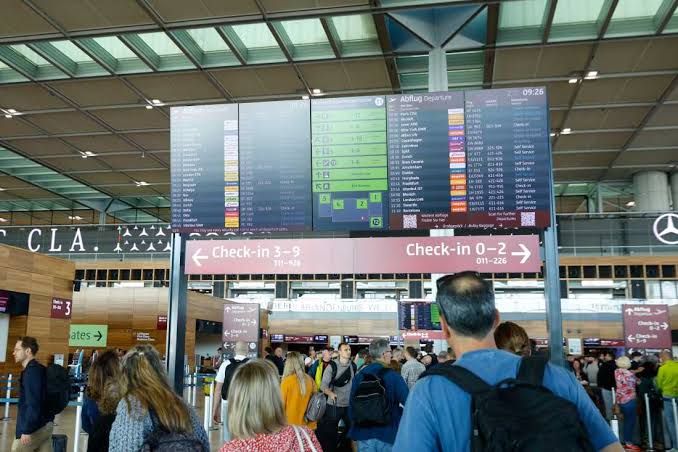
A cyberattack targeting Collins Aerospace, a global provider of check-in and boarding systems, has disrupted operations at several major European airports, including London’s Heathrow, Brussels, and Berlin, leading to widespread delays and cancellations on Saturday.
Heathrow Airport confirmed that departing passengers faced delays due to a technical fault in Collins Aerospace’s systems, which provide key services for airlines worldwide. Brussels and Berlin airports issued similar statements, noting that automated check-in and baggage systems had been rendered inoperable since Friday night, forcing a switch to manual operations.
RTX, the parent company of Collins Aerospace, acknowledged the incident as a “cyber-related disruption” but did not specify which airports were affected. The company added that the problem was limited to electronic check-in and baggage handling and assured that teams were working to restore full service.
Brussels Airport described the impact as “large,” warning of ongoing delays and cancellations. Passengers with Saturday flights were urged to confirm arrangements with their airlines before heading to the airport.
Berlin Airport also posted an alert on its website, citing longer waiting times at check-in and promising a swift resolution.
Meanwhile, Frankfurt Airport and Zurich Airport confirmed they were not affected by the disruption.

First Atlantic Bank to Hold First AGM as Listed Company on April 7

Fuel Prices Set for Sharp Increase From March 16 as Global Oil Prices Surge

Yonsei University Honors President Mahama with Honorary PhD for Leadership and Ghana–Korea Partnership



-

 Entertainment2 weeks ago
THE INSIDE STORY: Why President Mahama Revoked Gideon Nii Aryeequaye’s Appointment as Executive Secretary of the Creative Arts Agency
-

 Entertainment5 days ago
“Go to Lumba’s house and exhume his body” — Counsellor George Lutterodt incites Ga youth
-

 General News2 weeks ago
Christian Council Urges Prophets to Tackle Corruption, Avoid Fear-Inducing Political Prophecies
-

 General News1 week ago
Ghana Marks 69th Independence Day Under Theme ‘Building Prosperity, Inspiring Hope’
-

 Entertainment3 days ago
Legendary musician Sloppy Mike Gyamfi Accuses Kuami Eugene of Song Theft
-

 Entertainment2 days ago
Shatta Wale hints at contesting Ablekuma South seat as independent candidate in 2028
-

 General News2 weeks ago
President Mahama Appoints Baba Sadiq Abdulai Abu as Ghana’s High Commissioner-Designate to Nigeria
-

 General News2 weeks ago
COCOA FARMERS, MASSES and INVESTORS and Left Behind in Mahama’s February 2026 SONA