
Technology
Cybercrime Syndicates Busted: Foreign Nationals, Ghanaians Implicated in Sophisticated Scam Networks

The Cyber Security Authority (CSA), in collaboration with the Ghana Police Service, has uncovered a growing trend of foreign-led cybercrime operations in Ghana—many of which are being facilitated by local accomplices.
During a press briefing in Accra, Acting Director-General of the CSA, Divine Selase Agbeti, revealed that a series of coordinated operations have led to the arrest of dozens of suspects and the seizure of high-tech equipment used in online scams.
One major operation took place on July 4 at Ubuntu Estate in Dodowa Sassabi, where 25 foreign nationals were arrested. Authorities recovered 40 laptops, 30 mobile phones, and Starlink satellite internet devices, indicating a well-resourced cybercrime setup. However, investigations later revealed that 23 of the arrested individuals were victims of human trafficking who had been forced into cybercrime activities. These victims have since been repatriated.
A second raid on July 17 in the Bortianor-Ngleshie Amanfro area led to the arrest of 16 foreign nationals, 13 of whom are currently awaiting repatriation. Police confiscated 22 laptops and 11 mobile phones, further exposing the scale and coordination of these criminal networks.
Perhaps most concerning was the involvement of some Ghanaians in these operations. In Sogakope, ten individuals—including local suspects—were apprehended for impersonating senior public officials, including Members of Parliament. Their elaborate schemes involved tricking unsuspecting victims into paying for non-existent job placements within national institutions such as the Ghana Armed Forces, Immigration Service, and Cocobod.
Agbeti confirmed that the suspected ringleader, who initially escaped arrest, was later apprehended in Sege on June 1, 2025.
Addressing the media, COP Lydia Yaako Donkor, Director-General of the Criminal Investigations Department (CID), called for greater public vigilance, stressing that cybercrime operations are becoming increasingly sophisticated and difficult to detect.
The CSA is urging all citizens to report suspicious cyber activities via its 24-hour hotline (292) or email (Report@csa.gov.gh).



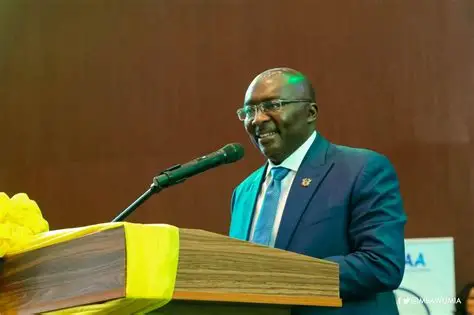
Former Ghanaian Vice President Dr. Mahamudu Bawumia has sounded the alarm over Africa’s sluggish embrace of artificial intelligence, warning that the continent could be left behind in one of the most consequential technological shifts in modern history.
Speaking as the keynote speaker at the London School of Economics and Political Science’s annual Africa Summit, Dr. Bawumia told delegates that AI is no longer a distant frontier it is already reshaping economies, governance, and global power, and Africa is not keeping pace.
“We are in the midst of a digital revolution,” he said. “AI, data, cloud computing, and automation are reshaping productivity, security, and the very architecture of global competition.”
The Stakes: More Than Just Technology
Dr. Bawumia framed Africa’s AI challenge not as a technical problem, but as a question of sovereignty and self-determination. He drew a stark distinction between two paths the continent could take.
“If we treat AI as a set of imported tools, we will remain price-takers in the Knowledge Economy,” he warned. “But if we treat AI as a national and continental capability stack, we can become co-authors of the rules, the markets, and the benefits.”
The theme of the summit Artificial Intelligence and Uniting Borders gave Dr. Bawumia the platform to argue that AI could be a powerful force for continental integration, but only if African nations build and share their own capabilities, rather than depending on technology developed elsewhere.
The Infrastructure Gap: A Hard Look at the Numbers
Dr. Bawumia did not shy away from the data, presenting a sobering picture of the foundational gaps standing between Africa and meaningful AI adoption.
On internet connectivity, he cited World Bank figures showing that only 43% of people across Africa use the internet and even that number tells an incomplete story. Within the continent, access varies sharply: Ghana sits at 70%, South Africa at 76%, while Rwanda trails at around 34%. More critically, he noted that being counted as an “internet user” only requires having gone online once in three months a low bar that masks the reality of how many people have affordable, reliable, and fast connectivity.
Electricity access which he called “non-negotiable” for any digital infrastructure presents a similar picture. Across Africa, only 60% of people have access to electricity. Country-level figures reveal wide disparities: Ghana leads at 89.5%, South Africa at 87.7%, Kenya at 76.2%, and Rwanda at 63.9%. But access alone is not enough. AI systems demand consistent uptime, and unreliable power transforms what could be national digital services into fragile, short-lived experiments.
“Africa’s AI agenda is also an infrastructure agenda,” Dr. Bawumia said bluntly. “No electricity, no compute, no broadband, no scaling. No trusted data systems, no safe deployment.”
Reasons for Cautious Optimism
Despite the challenges, Dr. Bawumia struck a note of measured hope, pointing to promising trends that suggest Africa does not need perfect infrastructure before it can begin benefiting from AI.
He highlighted the World Bank’s Digital Progress and Trends Report 2025, which points to the growing rise of lightweight, affordable AI tools designed to run on ordinary mobile phones already being used in agriculture, healthcare, and education across the continent.
On government readiness, the Oxford Insights Government AI Readiness Index 2024 places several African countries in a position of growing momentum: Rwanda scores 51.25, South Africa 52.91, Kenya 43.56, and Ghana 43.30 out of 100. These are not top-tier scores, but they are not starting from zero either.
Dr. Bawumia noted that the details behind those scores matter. Ghana, for example, performs relatively well in government readiness but lags in its technology sector. South Africa, meanwhile, shows stronger data and digital infrastructure foundations. “Progress is real,” he said, urging that it must now move from isolated pilots to full national systems.
Build the Foundation First
Tying his address together, Dr. Bawumia urged African policymakers to resist the temptation of chasing AI applications before laying the groundwork that makes them viable.
“History teaches us something important: technological revolutions reward those who build foundations institutions, infrastructure, skills, and rules before they chase the latest applications,” he said. “Africa’s task is to do the same boldly, but methodically.”
He closed by invoking Estonia’s e-Governance Academy, which has predicted that the coming decade will be defined by the integration of AI into both governance and everyday life a future, Dr. Bawumia made clear, that Africa must prepare for now, not later.
Technology
Sam George Blames Past Information Leaks for Weak Cybercrime Enforcement, Vows Crackdown to Restore Ghana’s Digital Image
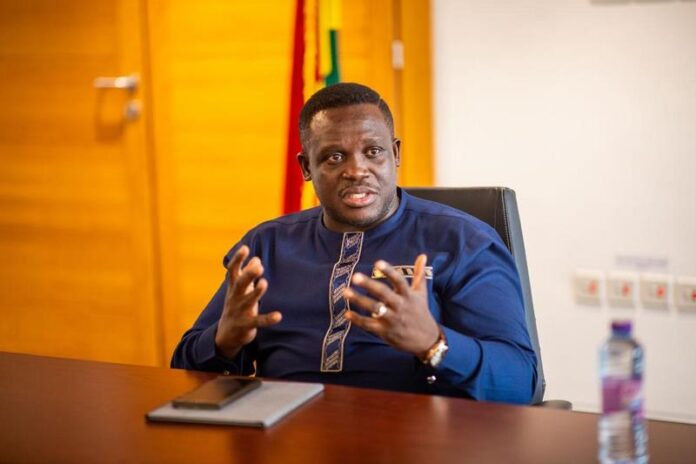
The Minister for Communication, Digital Technology and Innovations, Sam George, has expressed concern that individuals in the previous administration allegedly leaked sensitive information to suspected cybercrime targets, a situation he says repeatedly weakened efforts to sanitise Ghana’s digital space and rebuild international confidence.
In an interview that has circulated widely on social media, the Ningo Prampram MP explained that enforcement actions against cyber fraud often failed in the past because operational details were allegedly disclosed to suspects before arrests could be carried out.
He clarified that requests from international partners such as the FBI did not originate under the current administration, noting that investigations into cybercrime were already underway before he assumed office.
“The FBI did not make the requests today, those requests were pending before I became minister,” he said.
According to the Minister, the challenge was not a lack of intelligence or cooperation from international partners, but the deliberate leaking of information from within, which enabled suspects to evade law enforcement.
“But in the past, people were leaking the information to the targets and helping them evade arrest,” he stated.
Sam George said he took a firm stance upon becoming minister to put an end to what he described as internal sabotage of security operations, stressing that restoring Ghana’s international reputation requires decisive action and strict confidentiality.
“I made a commitment when I became minister. That anything that we would do to clean up the image of Ghana internationally, we will,” he said.
He linked the issue of information leaks directly to Ghana’s wider challenges with digital credibility, pointing out that cyber fraud has negatively affected the country’s standing with global technology and payment platforms.
“They will blacklist Ghana as long as there’s fraud happening in Ghana,” he said, referencing platforms such as PayPal, TikTok and Meta.
The Minister explained that when arrests are frustrated through leaked information, cybercrime continues, making it difficult for the government to assure international platforms that Ghana is a safe and reliable digital environment.
“As we clamp down on cyber crime, it makes our case stronger as we talk to the platforms to monetise and say that Ghana is a peaceful destination, a safe haven, and that illicit flows will not come through here,” he said.
Sam George also noted that the actions of a few individuals who leak information for personal or criminal gain have far reaching consequences for law abiding citizens, particularly content creators and young people who depend on online platforms for income.
“If you have a few people depriving the majority who are doing legitimate work on social media, content creators, the reason you can’t monetise and get value for your craft is because a few people have chosen to give Ghana a bad name,” he said.
He dismissed claims that economic hardship should be used to justify criminal activity or interference with law enforcement operations.
“The excuse and argument that there are no jobs. Then should we say that we shouldn’t arrest armed robbers as well because everybody will have a reason for crime,” he added.
The Minister’s remarks come at a time when the government is intensifying efforts to strengthen internal controls, deepen collaboration with international partners, and prevent leaks that could undermine investigations into cyber fraud and other digital crimes.

The Chief Operating Officer of Fintech Solutions, Cristina J. S. Swan Awagah, has expressed concern over the increasing cases of online fraud and called for stronger cybersecurity habits particularly among young people.
Speaking at the Africa Digital Dialogue on Friday, November 7, 2025, under the theme “Beyond Mobile Money: Fintech’s Next Frontiers,” she emphasized that oversharing personal information online has become one of the easiest ways for cybercriminals to exploit individuals.
The dialogue, hosted by MG Digital in partnership with the Africa Digital Foundation, formed part of the annual Africa Digital Festival (ADF)—a major event celebrating innovation and digital transformation across the continent. This year’s edition brought together policymakers, investors, creators, and startups from over 20 African countries to promote collaboration in FinTech, AgriTech, e-Health, and Artificial Intelligence.
Cristina Awagah highlighted that as fintech adoption expands, the importance of digital literacy and online safety cannot be overstated. With many young Africans active on social media, she cautioned that weak passwords and the habit of sharing personal milestones online make users vulnerable to cyberattacks.
“A lot of fraud cases now involve the youth. We give away so much information on social media—birthdays, personal details—and even use those same details as passwords for our important accounts,” she said. “We must learn how to create strong passwords and understand what information to share and what to keep private.”
Eunice A. Ankomah, a Strategic Communications and DFS Professional, also called on financial service providers to move beyond flashy marketing campaigns and focus on building trust through customer education.
“Adoption is not driven by beautiful campaigns but by trust,” she noted. “Financial service providers must ensure that customers truly understand the services being offered. When customers are educated, they’re less likely to fall victim to fraud caused by negligence.”
She further stressed the need for inclusive communication strategies, explaining that not all customers can read or access SMS notifications.
“In customer education, it’s important to know who you’re addressing and how best they receive information. What about the elderly woman in a rural area with no formal education? How can we ensure she understands how to protect her PIN? We shouldn’t generalize—every customer needs a communication approach that works for them,” she added.
Technology and innovation expert Emmanuel Kpiki also shared how fintech institutions are tightening internal systems to protect clients’ data.
“We regularly audit our systems and ensure that when staff leave an organization, their access rights are immediately revoked,” Kpiki explained. “We’ve implemented cybersecurity directives to strengthen institutional frameworks, prevent transaction fraud, and enhance data encryption and decryption processes.”
The Africa Digital Dialogue concluded that as fintech continues to evolve, the next phase of Africa’s digital economy will depend heavily on cybersecurity, consumer trust, and financial literacy. Beyond mobile money, participants agreed that true innovation must be built on a foundation of safety, education, and ethical digital practices.

A cyberattack targeting Collins Aerospace, a global provider of check-in and boarding systems, has disrupted operations at several major European airports, including London’s Heathrow, Brussels, and Berlin, leading to widespread delays and cancellations on Saturday.
Heathrow Airport confirmed that departing passengers faced delays due to a technical fault in Collins Aerospace’s systems, which provide key services for airlines worldwide. Brussels and Berlin airports issued similar statements, noting that automated check-in and baggage systems had been rendered inoperable since Friday night, forcing a switch to manual operations.
RTX, the parent company of Collins Aerospace, acknowledged the incident as a “cyber-related disruption” but did not specify which airports were affected. The company added that the problem was limited to electronic check-in and baggage handling and assured that teams were working to restore full service.
Brussels Airport described the impact as “large,” warning of ongoing delays and cancellations. Passengers with Saturday flights were urged to confirm arrangements with their airlines before heading to the airport.
Berlin Airport also posted an alert on its website, citing longer waiting times at check-in and promising a swift resolution.
Meanwhile, Frankfurt Airport and Zurich Airport confirmed they were not affected by the disruption.
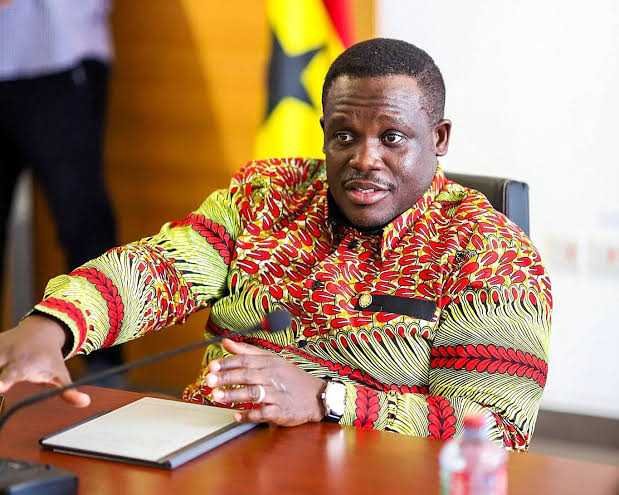
The government has appointed global audit and advisory firm KPMG as a transaction advisor to guide the restructuring and future direction of AT Ghana, the state-owned telecommunications company struggling with debts exceeding $150 million.
The intervention comes in the wake of escalating tensions between AT Ghana and its tower operator, ATC Ghana, over unpaid charges, which recently led to the nationwide disconnection of AT’s radio access networks. The action, triggered by long-standing indebtedness, nearly left over three million subscribers without service.
Crisis Management
To avert a total blackout, the Minister of Communication, Digital Technology and Innovations, Samuel Nartey George, announced last Friday that government had directed AT and Telecel Ghana to establish a national roaming agreement. This measure, implemented through the National Communications Authority (NCA), has ensured uninterrupted access to voice, SMS, data, and AT Money services.
Mr. George praised the swift technical collaboration between the two operators, describing their work under difficult conditions as proof of Ghana’s strong telecom expertise.
KPMG has been given 60 days to provide recommendations on restructuring AT Ghana and reviewing government’s shareholding in Telecel Ghana. The ultimate goal, the Minister explained, is to create a strong second operator to balance the country’s telecom market, currently dominated by MTN.
No Merger or Acquisition
Responding to speculation, Mr. George clarified that the current process is neither a merger nor an acquisition.
“What we are witnessing is not a merger and neither is it an acquisition. This is a faux-merger situation, pending the outcome of KPMG’s advisory report,” he stressed.
The final decision on AT Ghana’s future will depend on KPMG’s findings and subsequent government action.
Protecting Jobs
Addressing concerns about staff, Mr. George assured that none of AT’s 300 permanent employees would lose their jobs. He also revealed that the transaction advisor would assess the situation of over 200 contract staff.
“The government is committed to protecting AT workers and their dependents from any adverse effects of the restructuring,” he affirmed.
Stakeholders, including subscribers, creditors, suppliers, and tower operators, have been urged to await KPMG’s report for clarity on the company’s long-term direction.

11 Lower Primary Pupils Involved in Sprinter Bus Crash with Tipper Truck on Dzorwulu–Accra Mall Road

President to Pay Taxes on Salary and Allowances, Retirement Benefits Remain Tax-Free

Police reportedly stop funeral vehicle carrying Apostle Kwadwo Safo Kantanka’s body



-

 General News1 week ago
Dr. Charles Dwamena Sues Hubtel for GH¢5 Million Over Alleged Campaign USSD Sabotage
-

 Entertainment1 week ago
DJ K.A Apologises Over Viral Video, Says It Was Recorded Four Years Ago
-

 General News2 weeks ago
Okatakyie Afrifa Granted GH¢100,000 Bail Over Alleged Disruption of NPP Constituency Elections
-
 Entertainment4 days ago
Ghana Secures $3.5 Million UNESCO Heritage Support During Tourism Minister’s South Korea Visit
-

 General News1 week ago
Chairman Wontumi Sentenced to 20 Years in Prison Over Illegal Mining
-

 Entertainment1 week ago
“Hits Rule Everything Now” — Perez Musik Says Legends Like Bob Marley Would Face Challenges Today
-

 General News1 day ago
CLOSSAG Elections in Dambai: Tension Mounts Over Candidate Disqualifications
-

 General News3 days ago
EOCO Declares Emmanuel Ababio Wanted Over Alleged Fraud