
Politics
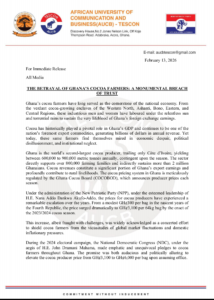
THE BETRAYAL OF GHANA’S COCOA FARMERS: A MONUMENTAL BREACH OF TRUST

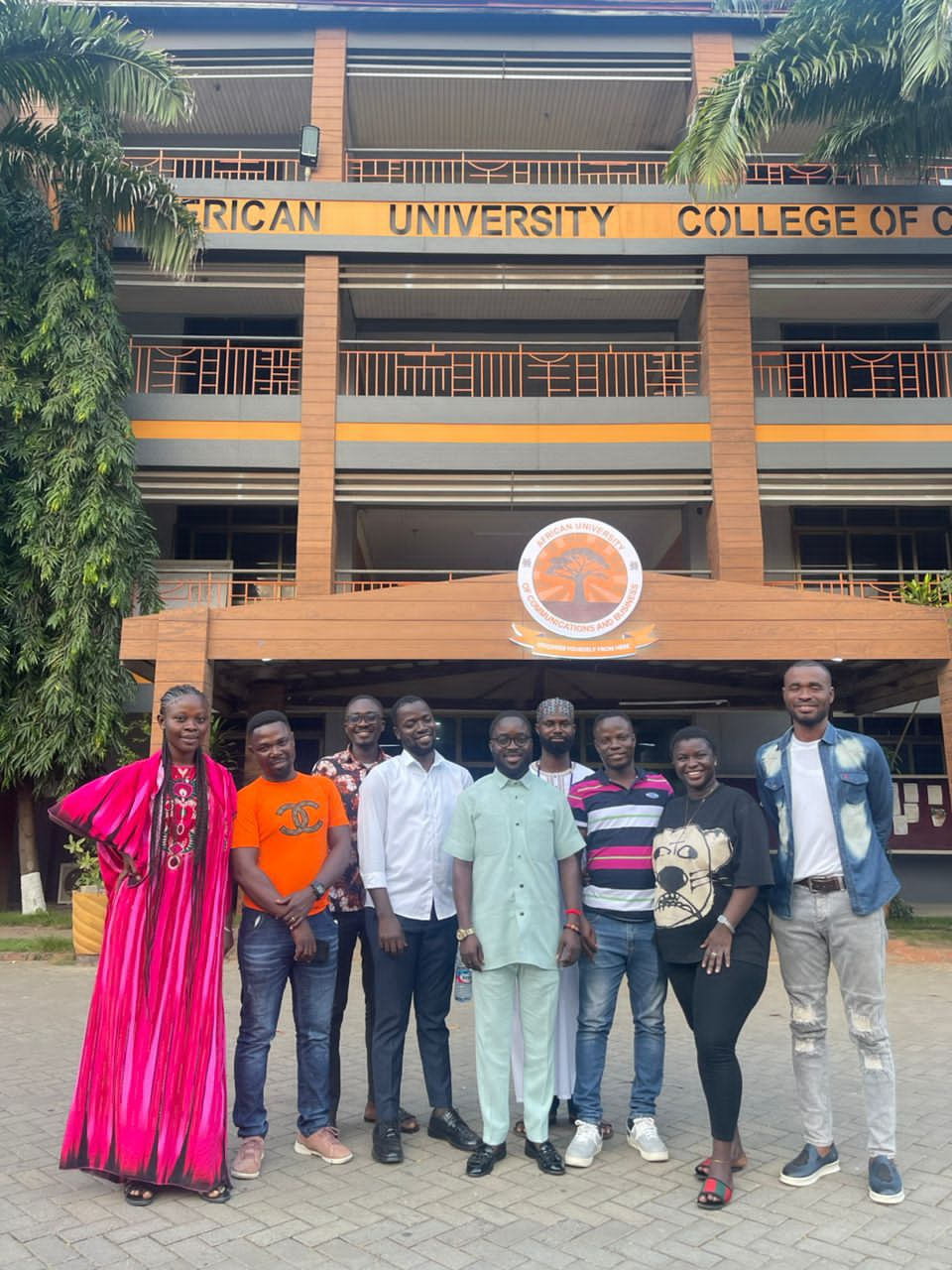
Ghana’s cocoa farmers have long served as the cornerstone of the national economy. From the verdant cocoa-growing enclaves of the Western North, Ashanti, Bono, Eastern, and Central Regions, these industrious men and women have laboured under the relentless sun and torrential rains to sustain the very lifeblood of Ghana’s foreign exchange earnings.
Cocoa has historically played a pivotal role in Ghana’s GDP and continues to be one of the nation’s foremost export commodities, generating billions of dollars in annual revenue. Yet today, these same farmers find themselves mired in economic despair, political disillusionment, and institutional neglect.
Ghana is the world’s second-largest cocoa producer, trailing only Côte d’Ivoire, yielding between 600,000 to 900,000 metric tonnes annually, contingent upon the season. The sector directly supports over 800,000 farming families and indirectly sustains more than 2 million Ghanaians. Cocoa revenues constitute a significant portion of Ghana’s export earnings and profoundly contribute to rural livelihoods. The cocoa pricing system in Ghana is meticulously regulated by the Ghana Cocoa Board (COCOBOD), which announces producer prices each season.
Under the administration of the New Patriotic Party (NPP), under the esteemed leadership of H.E. Nana Addo Dankwa Akufo-Addo, the prices for cocoa producers have experienced a remarkable escalation over the years. From a modest GH¢300 per bag in the nascent years of the Fourth Republic, the price surged dramatically to GH¢3,100 per 64kg bag by the onset of the 2023/2024 cocoa season.
This increase, albeit fraught with challenges, was widely acknowledged as a concerted effort to shield cocoa farmers from the vicissitudes of global market fluctuations and domestic inflationary pressures.
During the 2024 electoral campaign, the National Democratic Congress (NDC), under the aegis of H.E. John Dramani Mahama, made emphatic and unequivocal pledges to cocoa farmers throughout Ghana. The promise was both audacious and politically alluring to elevate the cocoa producer price from GH¢3,100 to GH¢6,000 per bag upon assuming office.
AFRICAN UNIVERSITY OF COMMUNICATION AND BUSINESS (AUCB) – TESCON
E-mail: aucbtescon@gmail.com
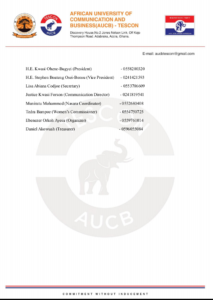
H.E. Kwasi Ohene-Bugyei (President) – 0558200320
H.E. Stephen Boateng Osei-Bonsu (Vice President) – 0241421593
Lisa Abiana Codjoe (Secretary) – 0553706609
Justice Kwasi Forson (Communication Director) – 0241819541
Muniratu Mohammed (Nasara Coordinator) – 0552680408
Tedra Bampoe (Women’s Commissioner) – 0554750725
Ebenezer Orkoh Ayesu (Organizer) – 0559761014
Daniel Akowuah (Treasurer) – 0596055084
AFRICAN UNIVERSITY OF COMMUNICATION AND BUSINESS (AUCB) – TESCON
E-mail: aucbtescon@gmail.com
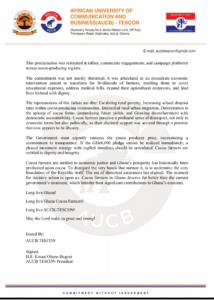
This proclamation was reiterated at rallies, community engagements, and campaign platforms across cocoa-producing regions.
The commitment was not merely rhetorical; it was articulated as an immediate economic intervention poised to transform the livelihoods of farmers, enabling them to cover educational expenses, address medical bills, expand their agricultural endeavors, and lead lives imbued with dignity..
The repercussions of this failure are dire: Escalating rural poverty, Increasing school dropout rates within cocoa-producing communities, Intensified rural-urban migration, Deterioration in the upkeep of cocoa farms, jeopardizing future yields, and Growing disenchantment with democratic accountability. Cocoa farmers perceive a profound sense of disrespect, not only in economic terms but also politically, as their electoral support was secured through a promise that now appears to be illusory.
The Government must urgently reassess the cocoa producer price, necessitating a commitment to transparency. If the GH¢6,000 pledge cannot be realized immediately, a phased increment strategy with explicit timelines should be articulated. Cocoa farmers are entitled to dignity and integrity.
Cocoa farmers are entitled to economic justice and Ghana’s prosperity has historically been predicated upon cocoa. To disregard the very hands that nurture it, is to undermine the very foundation of the Republic itself. The era of rhetorical assurances has elapsed. The moment for decisive action is upon us. Cocoa farmers in Ghana deserve far better than the current government’s treatment, which belittles their significant contributions to Ghana’s economy.
Long live Ghana!
Long live Ghana Cocoa Farmers!
Long live AUCB-TESCON!
May the Lord make us great and strong!
Issued By:
AUCB TESCON
Signed:
H.E. Kwasi Ohene-Bugyei
AUCB TESCON President
COMMITMENT WITHOUT INDUCEMENT










Politics
Minority Demands Immediate Scrapping of GH₵1 Fuel Levy Amid Surging Prices and Economic Pressure
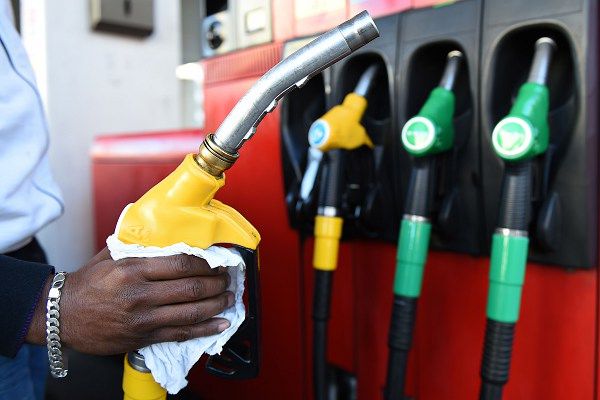
The Minority in Parliament has intensified calls for the immediate removal of the GH₵1 fuel levy, warning that the policy is exacerbating the financial strain on Ghanaians already battling rising living costs.
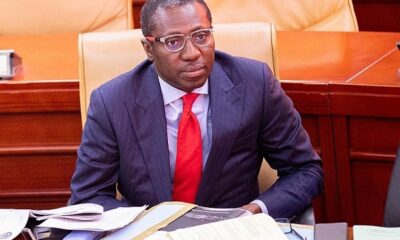
Speaking to journalists in Parliament, the Deputy Ranking Member of the Energy Committee, Collins Adomako Mensah, described the continued imposition of the levy as unjustifiable and punitive.
“The justification for this levy no longer exists. Keeping it is not policy—it is punishment,” he stated, urging government to urgently repeal the Energy Sector Levy Amendment Act, 2025 under a certificate of urgency.
The renewed pressure from the Minority comes against the backdrop of escalating global tensions involving the United States, Israel, and Iran, as well as disruptions to oil supply routes following the closure of the Strait of Hormuz—developments that have triggered a sharp increase in fuel prices.
Energy analysts warn that crude oil prices could surge to between $110 and $120 per barrel if the conflict persists. This could drive petrol prices in Ghana to as high as GH₵15 to GH₵17 per litre.
As of the second pricing window in March 2026, diesel was retailing at GH₵15.60 per litre, while petrol prices had already crossed GH₵12.40 per litre.
Mr. Mensah noted that the GH₵1 levy was originally introduced to support liquid fuel procurement and address longstanding debts within the energy sector. However, he argued that the government has already met these obligations.
According to him, between January and December 2025, approximately $1.47 billion was spent to stabilise the sector, including the full repayment of the GH₵597 million World Bank partial risk guarantee and the settlement of outstanding gas supply invoices.
“With the debt addressed and guarantees restored, the so-called One Ghana Cedi Levy serves no purpose and should be repealed immediately,” he stressed.
He further revealed that the Minority will push for a broader review of taxes and levies embedded in fuel pricing, with the aim of identifying opportunities to ease the burden on consumers.
The caucus had earlier staged a walkout in protest against the levy, citing weak fiscal justification and poor timing. They now maintain that urgent government intervention is needed to shield households from worsening economic hardship driven by global oil market volatility.
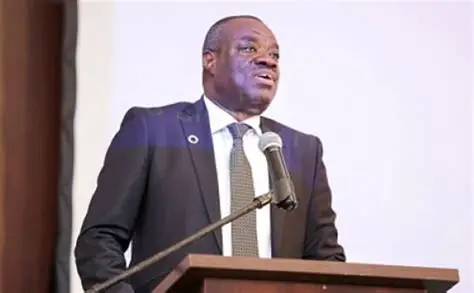
Awal Mohammed, a member of the New Patriotic Party, has challenged the government’s portrayal of Ghana’s economic strength, questioning whether recent global events have exposed underlying vulnerabilities.
Speaking on the AM Show on JoyNews, Mohammed described it as contradictory for an economy deemed stable to be heavily affected by events occurring thousands of kilometres away. “An economy they say is doing so well has been hit hard by just two weeks of bombing 6,200 kilometres away,” he remarked.
He further alleged that gold reserves amassed under former Vice President Mahamudu Bawumia have been largely depleted by the current administration, claiming the country now holds around 18 tonnes of gold, with some reserves reportedly converted into dollar holdings. This comes as the government continues to emphasize a 5.7-month import cover.
Mohammed argued that the administration is benefiting from reserves built by its predecessors, especially at a time when gold prices are performing strongly on the global market. “They are enjoying because someone left something behind, and today gold is doing well so they are benefiting from it,” he said.
He also pointed to perceived inconsistencies in political messaging. During the Russia–Ukraine conflict, he noted, the current government—then in opposition—minimized the potential impact of distant global conflicts on Ghana. Yet now, it attributes domestic economic challenges to tensions in the Middle East, including Israel–Iran developments.
“This shift raises questions about how economic difficulties are being communicated to the public,” Mohammed concluded.
Politics
Afenyo-Markin Retracts Fraud Allegations Against Interior Minister Over Security Recruitment
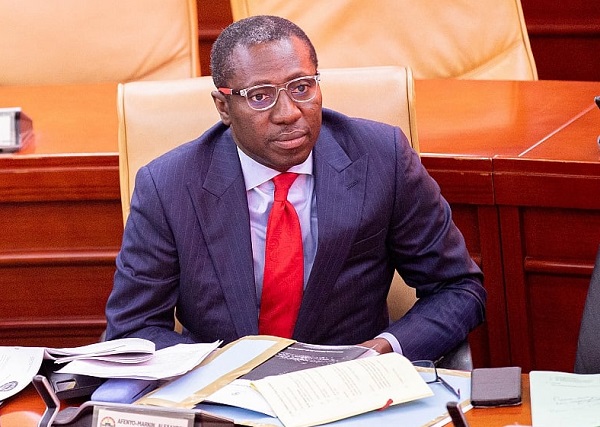
The Minority Leader, Alexander Afenyo-Markin, has formally withdrawn allegations of fraud he levelled against the Minister for the Interior, Mohammed Mubarak Muntaka, regarding the ongoing security services recruitment exercise.
The retraction and apology were delivered on the floor of Parliament on Wednesday, 4 March, following a directive by the First Deputy Speaker, Bernard Ahiafor, who had referred the Minority Leader to the Privileges Committee over claims deemed potentially contemptuous.
The referral was prompted by a complaint from the Interior Minister, who described the allegations as unfounded and harmful to his reputation.
Mr Afenyo-Markin had earlier alleged that the involvement of a third-party IT firm in the recruitment process amounted to a scam and imposed an unfair financial burden on applicants.
Addressing the House, the Minority Leader clarified his position and withdrew the claims.
“Mr Speaker, I will not do that to hurt him or tarnish his reputation, and if the text of my concern reflected so, it is hereby accordingly withdrawn. I assure you that concerns that will arise out of any matter shall be properly brought to his attention,” he stated.
In response, Mr Muntaka said the accusations had been distressing, particularly given their seriousness.
“It is painful to be wrongly accused and be labelled differently from the intention that you have, especially when it is connected with heavy wrongdoing. I am heavily hurt and heavily worried, but who am I to say that I will not accept when my colleague comes to apologise? I accept it wholeheartedly,” he said.
The Interior Minister further appealed to the Speaker to have the matter expunged from the official parliamentary record, expressing the hope that it would be treated as though it had not occurred.
The development brings a temporary close to the dispute, as both sides signal a willingness to move forward.

Architects Demand Urgent Reforms as Building Collapses Expose Regulatory Failures in Ghana

Ghana Navy Busts Major Coastal Drug Haul; 37 Sacks of Suspected Cannabis Seized at Sea

EMERGE Us Humanity International Conference 2026 and WAHANGELA KINGDOM Unveiled in Accra



-

 Business2 weeks ago
Ghana’s Mobile Money Surge Hits GH¢447.4bn in February, Cementing Digital Payments Dominance
-

 Entertainment2 weeks ago
“I Slept with Someone in Church and Had a Child,” Gospel Singer Broda Sammy Confesses
-

 Entertainment1 week ago
Breaking News: Legendary Actor Chuck Norris Dies at 86
-
 Business2 weeks ago
Burkina Faso Bans Fresh Tomato Exports to Shield Domestic Processing Industry
-
 General News2 weeks ago
Mahama Inspects Jinijini–Sampa Road, Pledges Completion by 2027
-
 Politics2 weeks ago
Minority Demands Immediate Scrapping of GH₵1 Fuel Levy Amid Surging Prices and Economic Pressure
-

 General News6 days ago
AKUAPEM NIFAHENE CALLS ON DIASPORANS TO FOSTER DEVELOPMENT IN OKERE
-

 Sports2 weeks ago
Morocco Crowned Champions of 2025 AFCON after CAF Overturn final result