
General News
BOST Makes Over GH¢10 Million From Faulty Flow Meter Charges, Tanker Drivers Claim

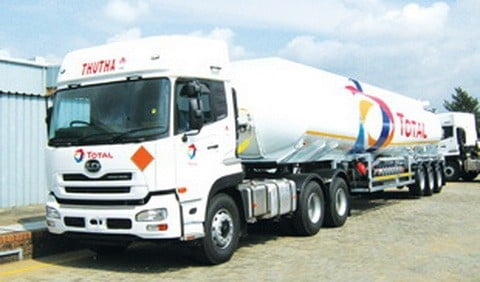
Tanker drivers in Kumasi have accused the Bulk Oil Storage and Transportation Company Limited (BOST) of making more than GH¢10 million from charges arising from alleged inaccurate readings by an automated flow-meter system at its Terminal 3 depot.
The allegation forms part of a broader dispute that has led tanker drivers in Kumasi to begin a three-day sit-down strike over persistent product shortages recorded during the discharge of petroleum products.
According to a statement issued by the affected stakeholders, the shortage problem has existed since 2022 and has created serious financial and operational difficulties for tanker owners and drivers.
The stakeholders insist that the reported shortages are not the result of theft or actual loss of petroleum products but are allegedly caused by inaccuracies in the automated flow-meter system used at the BOST depot.
They claim the machine records shortages of between 200 and 400 litres per tanker discharge, with tanker owners subsequently being billed for the differences.
The stakeholders allege that the current BOST management is aware of the problem but continues to pass the cost of the alleged artificial shortages on to tanker owners.
They claim that the resulting deductions have generated more than GH¢10 million for BOST.
The allegation has not been independently verified, and BOST has not, in the information provided, publicly confirmed the claimed amount or the basis of the charges.
The stakeholders say the problem began after a previous BOST management replaced the traditional manual T-bar measurement system with an automated flow meter.
They allege that the automated technology has consistently produced inaccurate readings and is therefore unsuitable for accurately measuring petroleum products discharged into storage facilities.
According to them, previous management acknowledged the alleged inaccuracies and decided not to transfer the cost of the discrepancies to tanker owners.
They contend that the current policy represents a departure from that approach.
Tanker owners face financial losses
The stakeholders argue that tanker owners are being forced to absorb losses arising from the alleged meter inaccuracies.
They say the deductions are particularly burdensome because owners already incur high costs to secure petroleum-product loads.
They allege that tanker owners can pay as much as GH¢10,000 to secure BOST loads from the Accra Plane Depot before transporting the products to Kumasi.
When deductions are subsequently made at the Kumasi depot because of shortages recorded by the meter, the owners’ earnings are allegedly reduced further.
Drivers complain about unpaid salaries
The financial pressure on tanker owners is also said to be affecting drivers.
The stakeholders claim that some owners are struggling to pay drivers’ salaries because of the accumulated deductions.
They say the situation has caused psychological distress among some drivers.
One driver has reportedly argued that the stress associated with unpaid salaries could be contributing to recent tanker accidents on Ghanaian roads.
That claim has not been independently established, and the causes of specific road crashes would require investigation by the appropriate authorities.
Strike threatens fuel distribution
The dispute has now resulted in a three-day sit-down strike by tanker drivers in Kumasi.
The drivers say some operators are also refusing to transport petroleum products to the depot because of the recurring shortage deductions.
They warn that if the situation persists, fuel distribution in Kumasi and other parts of the Ashanti Region could be severely affected.
A prolonged disruption could put pressure on the downstream petroleum supply chain because tanker operators are responsible for transporting fuel from storage facilities to various destinations and filling stations.
Parking problems add to grievances
The drivers are also demanding improved parking arrangements at the Kumasi depot.
They say inadequate parking space forces tanker operators to park their vehicles along roadsides while waiting to load or discharge petroleum products.
According to the drivers, the situation creates safety risks and inconvenience for other road users, particularly on busy routes.
They are therefore calling for a suitable, secure and designated parking facility for tanker operators.
The stakeholders say the National Petroleum Authority (NPA) has intervened several times in an attempt to resolve the shortage dispute.
However, they allege that the shortages continue to recur after NPA officials leave the depot.
They are consequently calling for a permanent technical solution rather than temporary interventions.
The statement further alleges that BOST has asked two senior staff members, identified as Josiah and Sam Yalley, to step aside.
However, the stakeholders say the action has failed to resolve the alleged underlying technical problem, as shortage incidents reportedly continue.
They are therefore demanding an investigation into the flow-meter system, its calibration and the procedures used to determine shortages.
Calls for government intervention
The stakeholders are calling on the government to intervene urgently and have proposed three key measures.
They want authorities to:
Immediately replace or recalibrate the disputed flow meters.
Order an independent audit of all shortage billings dating back to 2022
Compel BOST to return to the previous policy of not passing alleged artificial shortage costs on to tanker owners.
The stakeholders warn that failure to resolve the dispute could lead to a wider breakdown of fuel logistics in the Ashanti Region.
The tanker drivers say they are ready to return to work once concrete measures are taken to address the metering concerns, review the disputed deductions and provide adequate parking facilities.
For now, the three-day sit-down strike remains in force as the drivers push for what they describe as a fair and lasting resolution.


















Lecturer at the University of Media, Arts and Communication-Institute of Journalism (UniMAC-IJ), Zakaria Tanko Musah, has cautioned against pressuring Ghana’s security agencies to disclose operational details of ongoing narcotics investigations.
Speaking on GTV Breakfast, Musah said excessive disclosure of investigative strategies could alert drug trafficking networks and allow them to change their methods.
He urged the public and commentators to exercise restraint, particularly as the recent investigations involve international cooperation between several countries.
“Let’s not, because we want to satisfy our human interest curiosity, be pushing the national security people to divulge almost all the strategy, because this is an ongoing exercise,” he said.
Musah noted that the investigations extend beyond Ghana, pointing to the involvement of France, the Netherlands and Belgium in the broader narcotics operation.
His comments come amid heightened scrutiny of drug shipments linked to Ghana and ongoing investigations into recent narcotics cases involving the country’s ports.
Following an urgent meeting with security chiefs on September 17, President John Dramani Mahama directed the formation of an inter-agency task force to develop a roadmap for preventing narcotics trafficking through Ghana’s borders. The task force was given two weeks to submit its recommendations.
Authorities have said 10 individuals, including four Customs Division officers of the Ghana Revenue Authority, were being held as investigations continued.
Musah also questioned the wisdom of allowing suspected drug shipments to proceed to their final destination simply to identify more members of a trafficking network, arguing that such operations involve significant risks given the quantity and value of narcotics involved.
He therefore urged stakeholders to allow security agencies to conduct their investigations without unnecessarily exposing sensitive operational information.
General News
Addicted to social media? ‘I struggle to put down my phone’ — 62-year-old woman cries out


A 62-year-old woman has opened up about her growing dependence on social media, admitting that she struggles to put down her phone even when she knows she should.
The woman described how spending long periods on her phone has become part of her daily routine, with social media constantly competing for her attention.
Her experience highlights concerns about the increasing amount of time people of all ages spend on social media platforms and the difficulty some users face in controlling their usage.
For the 62-year-old, what may have started as a simple way to stay connected and entertained has gradually become a habit she finds difficult to break.
“I struggle to put down my phone,” she reportedly said, expressing concern about how deeply social media has become embedded in her everyday life.
Experts have increasingly discussed problematic social-media use in terms of compulsive or difficult-to-control behaviour, although heavy use alone does not necessarily mean someone has a clinical addiction.
The woman’s candid admission has sparked conversation about the need for people to develop healthier relationships with their phones and social media, regardless of age.
General News
Kofi Amoabeng narrates how dancing in front of Akufo-Addo, Okyehene landed him in trouble


An SHS graduate has revealed how selling traditional kitchen items, particularly mortars and pestles, has become a lucrative source of income for him.
According to the young entrepreneur, he can make as much as GH¢1,000 in a single day from the business, challenging the perception that success after secondary school must necessarily come through formal employment.
The revelation highlights the growing number of young people turning to small-scale businesses and traditional trades as alternative sources of livelihood.
Mortars and pestles remain widely used in Ghanaian households, particularly for preparing traditional foods such as fufu, while sellers also supply the products to markets and individual buyers.
The graduate’s experience demonstrates how identifying demand for everyday products can create an income-generating opportunity, even without securing a conventional office job.
His claim of earning GH¢1,000 daily, however, represents his reported income and should not be taken as a typical or guaranteed return for everyone in the business.
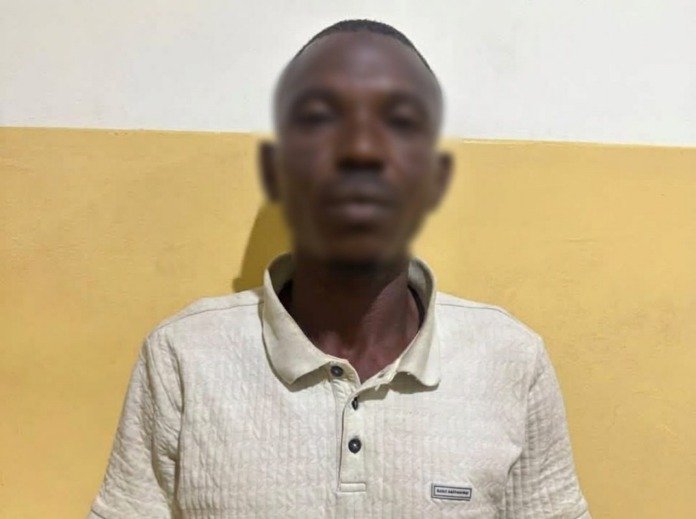
A 32-year-old Nigerien tricycle rider, Mustapha Usman, has been sentenced to seven months in prison for facilitating the unlawful entry of four Nigerien nationals into Ghana.
The Denu Circuit Court handed down the sentence after Usman pleaded guilty to charges of migrant smuggling and causing a false representation to be made. The sentences—three months for migrant smuggling and four months for false representation—will run concurrently.
According to the prosecution, Usman, who resides in Togo, was engaged by the four migrants to help them enter Ghana. They allegedly agreed to pay him GH¢200 each to transport them from the Lagos Lorry Park in Lomé to Kojoviakope, near the Aflao Beat Six area.
The prosecution told the court that after arriving at Kojoviakope, Usman contacted an accomplice identified as Remy, who is currently at large, to assist with getting the migrants across the border.
In an attempt to evade immigration checks, the four Nigeriens were allegedly hidden inside the bucket of Usman’s tricycle and covered, making the vehicle appear empty.
The prosecution said Remy later arranged for another tricycle rider to transport the loaded vehicle into Ghana while he and Usman monitored the operation from a distance.
The tricycle crossed into Ghana at about 6:30 p.m. but was intercepted by Ghana Immigration Service officers around Beat Seven.
The other rider reportedly fled the scene, while Usman later appeared and identified himself as the owner of the tricycle.
Investigators subsequently questioned the four migrants, who reportedly told authorities that they had each contributed towards the GH¢200 payment made to Usman.
Usman was arrested by officers of the Ghana Immigration Service, Aflao Sector Command, and was prosecuted under provisions of the Immigration Act, 2000 (Act 573), as amended.
The court ordered that he be returned to the custody of the Aflao Police Station pending his transfer to Ho Central Prison.
Meanwhile, the four Nigerien migrants have been repatriated.

Supporting NDC cost me fans, shows and business opportunities: MzBel

Tanko Musah cautions against revealing security strategies in ongoing drug cases

Addicted to social media? ‘I struggle to put down my phone’ — 62-year-old woman cries out



-

 General News1 week ago
GTA’s Financial Strength Weakens Despite 2025 Tourism Activities
-

 General News1 week ago
GTA Cash Reserves Halve to GH¢640,000 Despite Improved Liquidity Ratio
-

 Entertainment2 weeks ago
Keche Supports Street Vendor with GH¢3,000 After She Struggles to Make Sales
-

 Entertainment2 weeks ago
Government Repatriates Musician Barosky from UK
-

 General News2 weeks ago
TVET is not for the academically weak – Advocate calls for change in Ghana’s mindset
-
 General News2 weeks ago
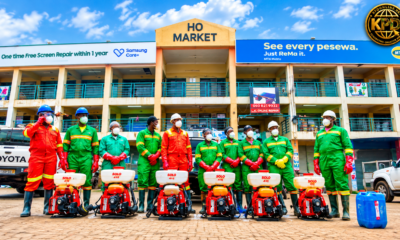
Techiman Assembly, Zoomlion Undertake Fumigation Exercise to Prevent Disease Outbreaks
-

 General News2 weeks ago
Police Launch Manhunt for Missing Assin Fosu Man as Captors Demand GH¢49,500 Ransom
-

 General News1 week ago
Creative Arts Agency Records GH¢2.01m Revenue in FY2025 Despite Financial Reporting Gaps