
Entertainment
Creative Arts Federation of Ghana Inaugurates Board Members and Domain Heads: A New Era for Ghana’s Creative Industry

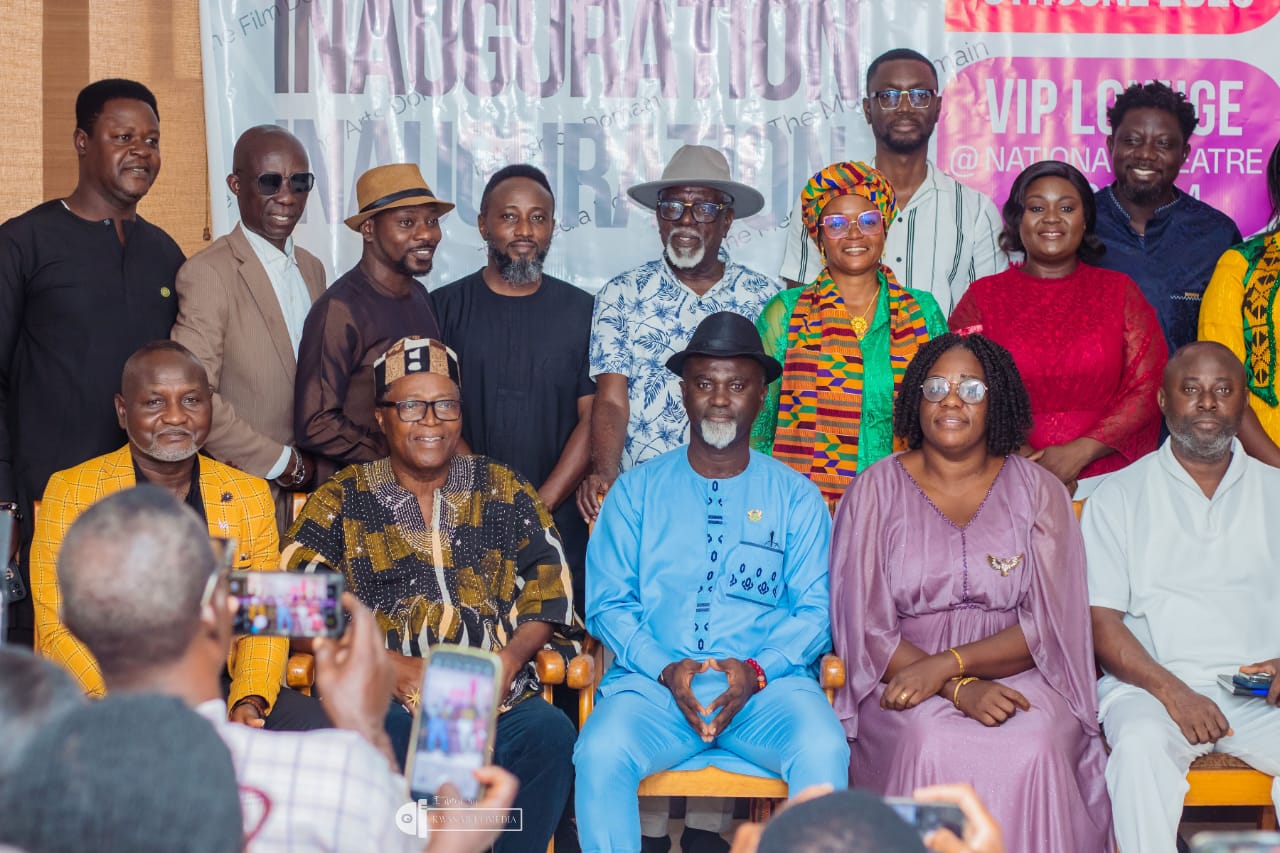
In a bold and promising move towards strengthening Ghana’s creative sector, the Creative Arts Federation of Ghana has officially inaugurated its Board Members and Domain Heads. This landmark event marks a new chapter for the Federation as it sets out to unify the various creative disciplines under one strategic umbrella.
For years, Ghana’s creative industry has been brimming with raw talent and potential, but it has also faced fragmentation, a lack of policy support, and limited infrastructure. The Federation’s renewed leadership structure is a direct response to these challenges, signalling a commitment to collaboration, professional development, and advocacy.
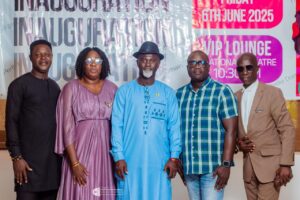
The newly inaugurated leaders include experts and practitioners from diverse domains such as music, film, fashion, design, visual arts, media and performance. Together, they represent a cross-section of Ghana’s vibrant creative ecosystem, one that deserves to be organised, empowered, and heard on both national and global stages.
Speaking at the event, Mr. Richard Yaw Boateng, the president of the federation, emphasised the importance of collective action: “Our goal is to create a unified front that will champion the interests of creatives across Ghana. We believe that by working together, we can shape policies, attract investments, and build a future where creativity is not just appreciated, but sustainably supported.” He stated.
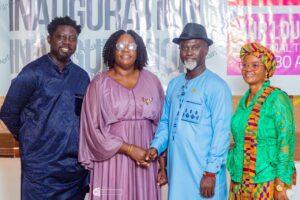
Mr. Yaw Boateng further stressed that the inauguration signals a renewed commitment to building a vibrant and cohesive creative economy in Ghana that empowers artists and creatives, celebrates cultural heritage, and contributes meaningfully to national development.
By establishing a structured governance framework, the Federation aims to serve as a strong, collective voice for Ghanaian creatives, addressing longstanding challenges while unlocking new opportunities for growth, visibility, and global competitiveness.
The Board and Domain Heads are expected to spearhead initiatives that will enhance industry standards, facilitate training and capacity building, and engage both public and private partners to invest in the arts.
BOARD MEMBERS
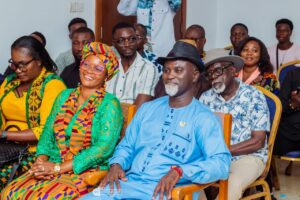
The Vibrant board members consist of veteran actor David Dontoh, Bill Asamoah, Mr. Richard Boateng, H.E. Rev.Lilian Sally Addo and Evg. Deborah Freeman.
DOMAIN HEADS.
Ms. Joana Eshun, Ameyaw Deborah, Kojo Hilton, Mr. Fred Amugi, Kafui Dzivenu, Mr. George Quaye, Evg. Deborah Freeman and Joshua Sena Fianu.
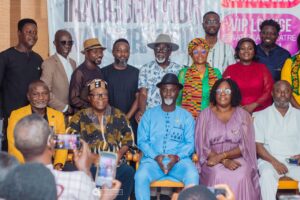
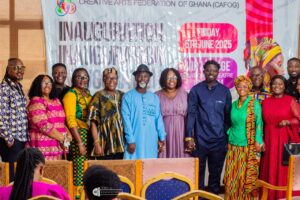
The inauguration ceremony was held on Friday, June 6, 2025, at the VIP Lounge at the National Theatre of Ghana in Accra.
What This Means for Ghana’s Creatives
The inauguration of the Board and Domain Heads is more than just a ceremonial event—it’s a strategic step toward long-term impact. With clear leadership in place, the Federation plans to:
- Advocate for industry-friendly policies and legislation
- Promote training, mentorship, and professional development
- Foster partnerships between creatives and both the public and private sectors
- Create platforms for showcasing talent locally and internationally
- Encourage innovation and cross-disciplinary collaboration
This move is a hopeful sign for artists, creators, and cultural entrepreneurs who have long called for structural reforms and institutional backing. It is also an invitation for the public, investors, and policymakers to take the creative arts seriously, not just as entertainment, but as a driver of economic growth and cultural identity.
As Ghana positions itself as a cultural powerhouse in Africa, the Creative Arts Federation’s leadership is stepping up at a crucial time. The future of Ghana’s creative economy looks brighter with this unified front, and the journey ahead promises to be both exciting and transformative.








Entertainment
WHEN THE STREET CROWN IS ON YOUR HEAD, THE BURDEN OF Charles Nii Armah Mensah – Socrates Safo

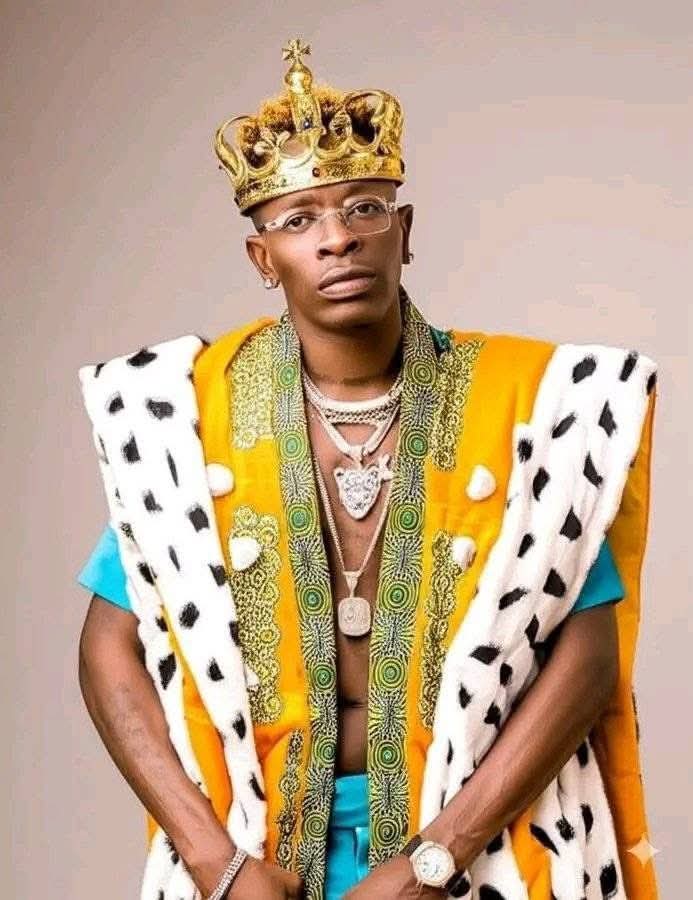
Quiet Generosity Behind the Fame, Socrates Safo Shares Insights on Shatta Wale’s Leadership
By Socrates Safo
Ghanaian entertainment figure Shatta Wale, born Charles Nii Armah Mensah, is often described as a man who carries the “street crown.” With fame, influence, and controversy constantly surrounding his brand, new revelations suggest there is a quieter dimension to his leadership that rarely makes headlines.
In a recent late night conversation described by filmmaker and creative personality Socrates Safo, the focus was not publicity or media attention, but responsibility, strategy, and what he calls silent generosity.
A Private Conversation, Not a Public Interview
According to Safo, the discussion was a family style exchange held behind closed doors. It followed his earlier public suggestion that the artiste should consider establishing structured, long term support systems for loyal fans who have stood by the Shatta Movement brand over the years.
What emerged from the conversation was an assertion that many of the musician’s contributions have intentionally been kept out of the public eye. The reason, Safo explains, is rooted in personal conviction rather than showmanship.
Across religious traditions, including biblical teachings such as Matthew 6 verses 3 to 4, acts of charity are encouraged to be done without seeking applause. Safo suggests this philosophy resonates strongly with the artiste’s approach to giving.
Support Systems Beyond the Spotlight
Safo disclosed that behind the scenes, the artiste has reportedly sponsored university education for some supporters, assisted in establishing pubs, supported the creation of hairdressing salons and eateries, and opened pathways for self employment.
These interventions, he claims, were not accompanied by press conferences or media campaigns. Instead, they were handled privately, with what he describes as screenshot evidence shared with him for personal viewing.
Business Empowerment Through HOTWAV and Shaxi
The conversation also touched on business expansion. With the HOTWAV phone brand, plans are reportedly underway to build a distribution network that allows loyal supporters to become agents and retailers, earning income through direct sales and digital promotion.
In addition, Safo highlighted the Shaxi transport platform. Drivers on the platform reportedly pay twenty cedis daily to activate the app, a structure the artiste considers fair within an industry often criticized for high commission deductions. Some drivers operate under a “Work and Pay” system, eventually owning the vehicles they drive, a model described as practical empowerment.
Addressing the Cash Throwing Controversy
One of the most debated aspects of the artiste’s public appearances is the act of spraying or throwing cash into crowds. Critics have frequently questioned the practice.
Safo recounts that the defence offered during their discussion was pragmatic. In his view, small sums of money can provide immediate relief to individuals in desperate situations. In certain chaotic environments, what appears theatrical to critics may be seen by supporters as urgent assistance or even a security strategy to disperse crowds and allow safe movement.
Industry Relations and Forward Plans
Safo also referenced comments directed toward industry colleagues such as Bullgod and Arnold Asamoah-Baidoo, along with a special mention of Ansah Addo Halifax. The overarching message, he noted, centered on promoting constructive causes and building rather than destroying within the creative industry.
Plans to host media personalities for direct engagement were also hinted at, though Safo emphasized that certain aspects of the conversation remain undisclosed as some initiatives are still in development.
The Weight of the Street Crown
Safo concludes that leadership in entertainment, especially one rooted in street credibility, carries expectations that can become both responsibility and burden. In a culture driven by visibility and constant media scrutiny, he argues that some of the most significant actions occur quietly.
For members of the Shatta Movement and supporters such as Samuel Atuobi Baah, the message is clear. The crown may be visible, but the weight it carries is often unseen.
Entertainment
Patricia Asiedua Asiamah Speaks After Release, Describes Prison Term as Spiritual Test of Faith
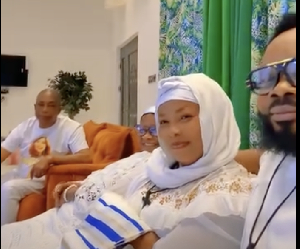
Patricia Asiedua Asiamah, widely known as Nana Agradaa, has spoken publicly for the first time following her release from prison, describing her time in custody as a profound spiritual journey anchored in prayer, scripture, and steadfast faith in God.
Addressing the media after regaining her freedom on March 3, the controversial evangelist recounted the anxiety and uncertainty she experienced upon being taken into custody. According to her, the initial moments were filled with fear and a sense of the unknown.
She revealed that on her way to prison, she felt as though she was heading toward death. Standing at the prison gate, she said she surrendered herself completely to God, admitting she had no idea what awaited her inside. Clutching her Bible, she prayed for mercy before walking through the gates.
Nana Agradaa said the announcement of a 15 year sentence was difficult to process. She described the moment as overwhelming, questioning how she could face such a lengthy term behind bars. The reality of the sentence, she noted, forced her to reflect deeply on her circumstances.
With what seemed like a daunting future ahead, she said she turned entirely to prayer and the Word of God for strength. According to her, faith became her only source of hope during that period.
While in custody, she immersed herself in biblical accounts of imprisonment and divine intervention. She cited stories from the Book of Acts, including the imprisonment and subsequent release of Peter, as well as Paul and Silas, who were freed after praying while in chains. She said these accounts strengthened her belief that prayer and faith could bring deliverance even in the most difficult situations.
She also reflected on the opening verses of the Gospel of John, emphasizing the power of the Word through which she believes God created the heavens and the earth. In her view, if divine power could shape creation, then a 15 year sentence was insignificant before God.
Nana Agradaa further referenced the story of Jonah, who repented after disobedience and received mercy, and King Nebuchadnezzar, who, according to the Bible, regained his kingship after humbling himself before God. She explained that these examples reinforced her conviction that repentance and humility could lead to restoration.
According to her, she made a personal vow during her incarceration, promising to dedicate herself fully to God’s service if granted mercy and freedom. She said she reminded God of His unchanging nature and asked for the same intervention shown to biblical figures in the past.
Her release comes under Ghana’s remission policy, which allows eligible inmates to benefit from a reduction of up to one third of their sentence for good behaviour while serving their term.
Entertainment
THE INSIDE STORY: Why President Mahama Revoked Gideon Nii Aryeequaye’s Appointment as Executive Secretary of the Creative Arts Agency
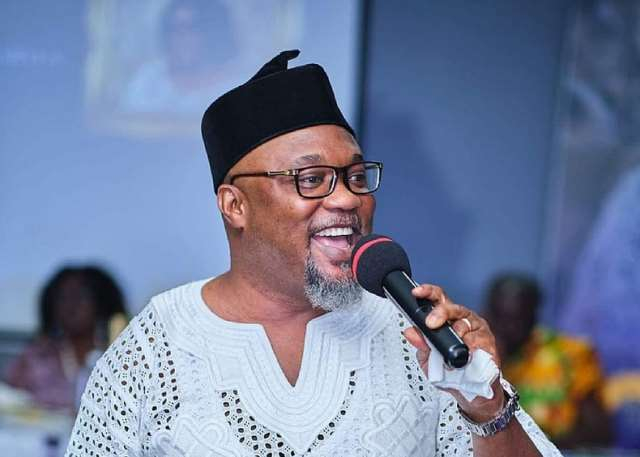
A quiet but significant power struggle within Ghana’s creative arts administration has reportedly culminated in President John Dramani Mahama revoking the appointment of Gideon Nii Aryeequaye as Acting Executive Secretary of the Creative Arts Agency.
Multiple sources close to developments within the sector have disclosed to Ghana’s reliable creative arts tourism and culture website KPDONLINE.NET that the decision did not come suddenly but followed weeks of internal disagreements over leadership direction, institutional authority, and control of the creative arts space.
Mr. Aryeequaye has since been reassigned to the Ministry of Tourism, Culture and Creative Arts, reportedly without a defined portfolio, a move insiders describe as a clear indication of an ongoing restructuring exercise within the sector.
According to highly placed industry sources, tensions had been mounting between the leadership of the Creative Arts Agency and the sector ministry led by Abla Dzifa Gomashie.
Sources claim disagreements centred on the operational independence of the Agency, policy control, and the broader direction of Ghana’s creative arts governance framework.
Insiders further suggest that the Ministry is pursuing a consolidation agenda aimed at bringing creative arts administration directly under ministerial supervision, a move some stakeholders interpret as a possible downsizing or restructuring of the Agency’s authority.
The sudden leadership change has sent shockwaves across Ghana’s creative industry, with practitioners questioning what the future holds for institutional representation and policy advocacy within the arts ecosystem.
Industry observers believe the President’s intervention signals the government’s determination to restore alignment within the sector while redefining how creative arts institutions function under national development priorities.
While official details surrounding the revocation remain limited, sources indicate that additional administrative changes could follow as the government reassesses structures within tourism, culture, and creative arts governance.
For now, stakeholders remain watchful as one of Ghana’s most critical cultural institutions faces what many describe as a defining moment.
Stay with KPDONLINE.NETfor exclusive updates as this developing story unfolds.

Accra Court Grants Bail to Woman Accused of Abducting Newborn in Mamprobi

Afenyo-Markin Retracts Fraud Allegations Against Interior Minister Over Security Recruitment

Baba Jamal Wins Ayawaso East By-Election With Decisive Margin



-

 Entertainment1 week ago
[EDITORIAL] Praised in Victory, Crucified in Defeat: The Ghanaian Fanbase Paradox
-
 Sports5 days ago
2026 FIFA World Cup: President Mahama tasks supporters to return immediately after the tournament
-

 Business6 days ago
ThirdWell launches Inclusive Business Centre to support Accredited Inclusive Businesses in Ghana
-
 Entertainment5 days ago
SONA: GH¢20m for Film Sector, GH¢20m for Creative Industries — Mahama Announces Major Investment
-
 Entertainment2 days ago
THE INSIDE STORY: Why President Mahama Revoked Gideon Nii Aryeequaye’s Appointment as Executive Secretary of the Creative Arts Agency
-
 Sports1 week ago
BREAKING: Salary Crisis hits Tension at Eleven Wonders Camp for the second time
-

 General News1 week ago
Police Arrest Two in Agona Swedru With 209 Slabs of Suspected Narcotics, Reject GH₵100,000 Bribe
-
 General News2 weeks ago
Mahama: We’ll increase efforts to clean polluted water bodies and reclaim mined lands