
Politics
Dr. Razak Kojo Opoku (Financial Economist) REPLIES LOVE LETTER from Dr. George Domfe (Development Economist)

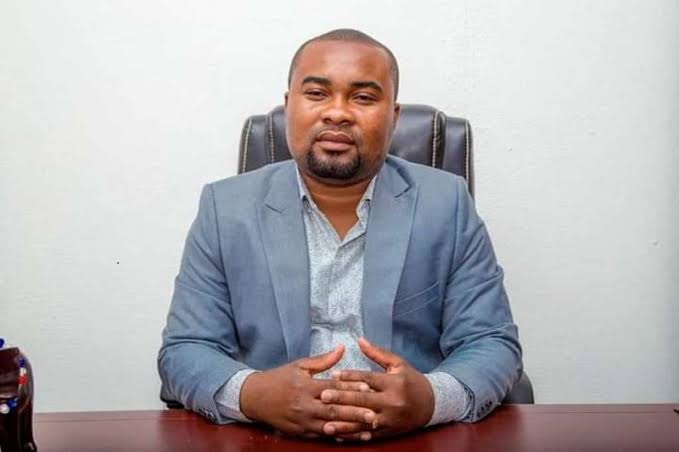
It is important to point out to Dr. George Domfe that his suggested contextual factors which underpinned the depreciation of the Ghanaian Cedi to GHS 17 per US Dollar (at the forex market) in October 2022 are FALSE, and these are the REAL FACTS:
First and foremost, It is NEVER TRUE that the depreciation of the Ghanaian Cedi was GHS 17 per US Dollar (at the forex market) in October 2022, it was rather in October 2024. Paying attention to details is one of requirements for holders of PhD, and I hope you are not going to edit your GHS 17 per US dollar in October 2022?
Now, respectfully, these are the CORRECTIONS to the DATA ABNORMALITIES in your love letter addressed to me:
1. At the beginning of 2022, the Ghanaian cedi was trading at approximately GHS 6.05 to the US dollar, not GHS 6.20 as you indicated. For the purposes of education, below is the yearly trends of the performance of the Ghanaian Cedi against the US dollar in 2022 from January to December:
GHS 6.05 per $1 on 1st January but ended at GHS 6.12 per $1 on 31st January 2022.
GHS 6.12 per $1 on 1st February but ended at GHS 6.65 per $1 on 28th February 2022.
GHS 6.59 per $1 on 1st March but ended as GHS 7.30 on 31st March 2022.
GHS 7.30 per $1 on 1st April but ended as GHS 7.30 per $1 on 30th April 2022.
Note: Nana Akufo-Addo’s government did extremely well to achieve the stability of GHS 7.30 against the US dollar predominantly throughout the month of April 2022 with the highest being GHS 7.45 to $ 1 on April 18, 17, 16, 15, and 12.
GHS 7.30 per $1 on 1st May but ended as GHS 7.59 per $1 on 31st May 2022.
GHS 7.65 per $1 on 1st June but ended as GHS 7.88 per $1 on 30th June 2022.
GHS 7.95 per $1 on 1st July but ended as GHS 8.30 per $1 on 31st July 2022.
GHS 8.36 per $1 on 1st August but ended as GHS 9.88 per $1 on 31st August 2022.
GHS 9.94 per $1 on 1st September but ended as GHS 10.14 per $1 on 30th September 2022.
GHS 10.14 per $1 on 1st October but ended as GHS 13.51 per $1 on 31st October 2022.
GHS 13.46 per $1 on 1st November but ended as GHS 14 per $1 on 30th November 2022.
GHS 13.66 per $1 on 1st December but ended as GHS 9.75 per $1 on 31st December 2022.
It is NEVER TRUE that the Bank of Ghana (BoG) held gross international reserves of over US$ 9 billion in 2022, it was rather around US$ 4.7-5.2 billion in 2022.
Again, it is NEVER TRUE that the gross international reserves at the end of 2016 was US$ 6.1 billion, it was rather around $6.8 billion.
For further correction, it was rather in 2021 that Ghana achieved a gross international reserves of a record peak of US$ 9.92 billion (source: Bank of Ghana, and TheGlobalEconomy. Com).
2. Historically, it is NEVER TRUE that the Russian invasion of Ukraine started in February 2022. The Russo-Ukrainian War is a conflict that began with Russia’s invasion of Ukraine in February 2014, and escalated into a full-scale war starting on February 2022.
It is NEVER TRUE that, Germany experienced its highest inflation rate in about 70 years in 2022. Germany’s annual inflation rate for 2022 was 7.9%, driven by sharp increases in food prices, supply chain issues, and energy prices. The highest inflation ever recorded in Germany was averagely 41% per day in October 1923, and the highest recent peak was around 10.4% in October 2022, which is the highest since World War II (September 1, 1939), that is 83years ago in 2022, not 70years as quoted by Dr. George Domfe.
Typically, the inflation rates in Germany has always been between 1.8 – 3.5%.
It is very essential to let you know that at the time Ghana, a far away West African Country was recording 54% Inflation rate, countries closely bordering Russia and Ukraine such as Poland, Romania, Moldova, Slovakia, Hungary, and Belarus were showing better economic recovery with the following respective inflation rates:
Poland – 14.4% in 2022, and 11.6% in 2023.
Romania – 13.8% in 2022, and 6.6% in 2023.
Moldova – 30.2% in 2022, and 4.2% in 2023.
Slovakia – 12.8% in 2022, and 10.5% in 2023.
Hungary – 14.6% in 2022, and 17.6% in 2023.
Belarus – 15.2% in 2022, and 5.8% in 2023.
3. Your narratives under point 3 are correct except the following:
The exchange rate in July 2022 were within the range of GHS 7.95 – 8.30 per US dollar.
In your love letter, you stated that, the international reserves were declining and that was true but these are the Facts surrounding the declination:
A decline from US$ 4.7-5.2 billion in 2022 to US$ 3.66-3.98 billion in 2023, and even before a declination in between 2022-2023, there was a sharp declined of US$ 9.92 billion in 2021 to US$ 4.7-5.2 billion in 2022.
So the question I am asking you is this, how come the Domestic Gold Purchase Programme (DGPP) by Dr.Ernest Addison started in June 2021, and Gold for Oil (G4O) Policy by Dr. Mahamudu Bawumia started in March 2022 but could NOT PREVENT a DECLINE of the:
(a). International reserves in 2022?
(b). Inflation of 54% in 2022?
4. Against this backdrop, I would like to let you know categorically that the Vice-President, Dr. Mahamudu Bawumia and members of the Economic Management Team woefully failed to manage the economy within that period just as the governments of Poland, Romania, Moldova, Slovakia, Hungary, Belarus, and Ukraine itself diligently managed the macroeconomic indicators of their respective countries.
Again, based on facts and data available from 2022-2024, it is intellectually incoherent and dishonest to exonerate as well as justify the failures of Dr. Mahamudu Bawumia and his Economic Management Team from 2022-2024, and rather put all the blame on global economic turmoil triggered by developments which were exogenous in nature because those conditions were NOT beyond the control of domestic policymakers in Ukraine itself, Poland, Romania, Moldova, Slovakia, Hungary and Belarus who share direct borders with Ukraine and Russia.
My question for you here is, can you explain the GHS 2.14 billion losses incurred under the Gold for Oil (G4O) Policy of Dr. Bawumia, as well as the 60.8 billion loss and the negative equity position of GHS 55.1 billion incurred by the Bank of Ghana in 2022 with Dr. Mahamudu Bawumia as the Head of the Economic Management Team?
5. It was a very lazy economic strategy at the time to search for more dollars, and start pumping more dollars to the Secondary Forex Market in November 2022. However, let me once again correct you that by December 2022, $1 WAS EXCHANGED FOR GHS 9.75, not GHS 8.
We went to the IMF in May 2023 for Extended Credit Facility Programme, wow, sad indeed, so what happened to the promise of not going back to the IMF again?
What happened to Restoring the Value of Cedi Economic Lectures and providing Solutions to the 170 Economic Questions?
So, are you saying that the $1 to GHS 14.7 that Dr. Mahamudu Bawumia left behind on 7th January 2025 is far excellent and better than the current exchange rate of $1 to GHS 10.63 as at today, 7th January 2026?
6. Your narratives under point 6 are just pure grammar with no strong economic arguments. A lot of Countries did extremely well in 2022 despite the Russo-Ukrainian War and post COVID-19.
I sincerely respect your background as a Development Economist but I would like to urge you to focus on researching into areas of development economics such as poverty, inequality, human capital, health, education, and governance, and allow the Experts in Financial Economics, Public Sector Economics, Accounting & Finance, and International Economics to write me a LOVE LETTER next time.
Thank you, and have a great day.






Politics
Afenyo-Markin Retracts Fraud Allegations Against Interior Minister Over Security Recruitment
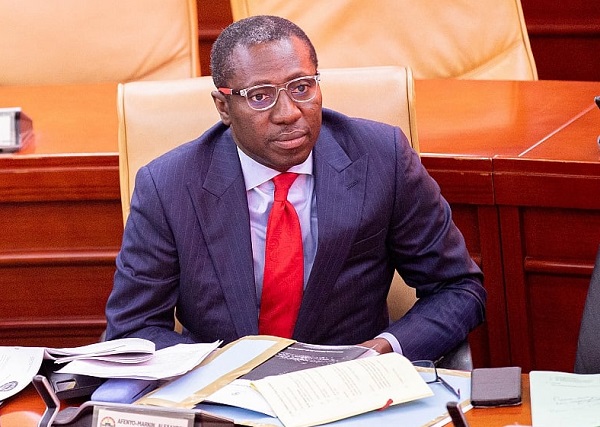
The Minority Leader, Alexander Afenyo-Markin, has formally withdrawn allegations of fraud he levelled against the Minister for the Interior, Mohammed Mubarak Muntaka, regarding the ongoing security services recruitment exercise.
The retraction and apology were delivered on the floor of Parliament on Wednesday, 4 March, following a directive by the First Deputy Speaker, Bernard Ahiafor, who had referred the Minority Leader to the Privileges Committee over claims deemed potentially contemptuous.
The referral was prompted by a complaint from the Interior Minister, who described the allegations as unfounded and harmful to his reputation.
Mr Afenyo-Markin had earlier alleged that the involvement of a third-party IT firm in the recruitment process amounted to a scam and imposed an unfair financial burden on applicants.
Addressing the House, the Minority Leader clarified his position and withdrew the claims.
“Mr Speaker, I will not do that to hurt him or tarnish his reputation, and if the text of my concern reflected so, it is hereby accordingly withdrawn. I assure you that concerns that will arise out of any matter shall be properly brought to his attention,” he stated.
In response, Mr Muntaka said the accusations had been distressing, particularly given their seriousness.
“It is painful to be wrongly accused and be labelled differently from the intention that you have, especially when it is connected with heavy wrongdoing. I am heavily hurt and heavily worried, but who am I to say that I will not accept when my colleague comes to apologise? I accept it wholeheartedly,” he said.
The Interior Minister further appealed to the Speaker to have the matter expunged from the official parliamentary record, expressing the hope that it would be treated as though it had not occurred.
The development brings a temporary close to the dispute, as both sides signal a willingness to move forward.
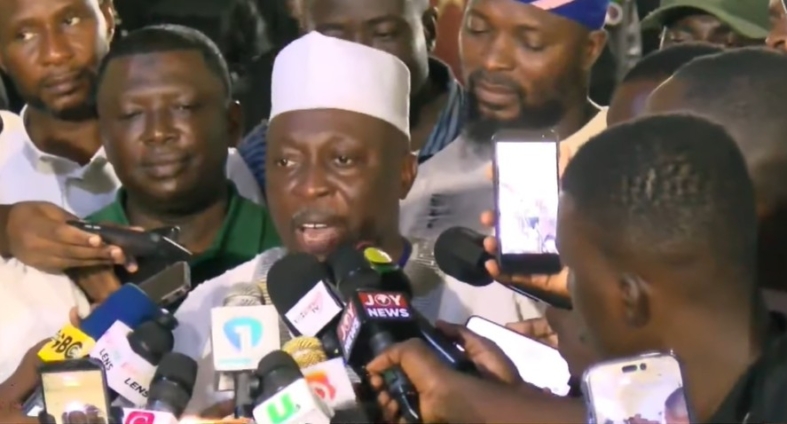
The Electoral Commission on Tuesday declared Baba Jamal of the National Democratic Congress, NDC, as the winner of the Ayawaso East by-election held on March 3.
According to official results announced Tuesday evening, the MP-elect secured 10,884 votes, comfortably ahead of his closest contender, Baba Ali Yussif of the New Patriotic Party, NPP, who obtained 4,009 votes.
Independent candidate Mohammed Umar Sanda garnered 1,885 votes, while David Kanor received 104 votes. Ibrahim Iddrisu, representing the Liberal Party of Ghana, recorded 43 votes.
Out of 17,048 ballots cast, 16,928 were deemed valid, with 120 rejected.
The by-election was conducted to fill the parliamentary vacancy following the passing of the late Member of Parliament, Naser Toure Mahama, in January.
Voting took place across multiple polling stations in the constituency. Although early turnout appeared modest, some observers suggested that the Ramadan fasting period may have influenced the pace of participation during the initial hours.
Security arrangements featured prominently throughout the exercise. Ahead of polling, the Ghana Police Service assured residents of adequate measures to maintain law and order before, during, and after the vote. Officers were deployed to designated polling stations and other strategic points within the constituency.
Police officials described the process as calm and orderly, indicating that security presence was sufficient as counting and collation proceeded. The Inspector General of Police also toured selected polling centres as voting concluded.
Following the official declaration, supporters of Baba Jamal gathered in parts of the constituency to celebrate the outcome.
Pre-election projections had pointed to a strong showing for the NDC candidate, a trend that was reflected in the final results announced by the Electoral Commission.
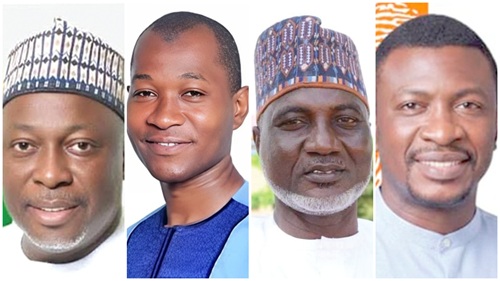
A total of 49,966 registered voters are expected to cast their ballots today in the Ayawaso East parliamentary by-election to choose a new representative in Parliament.
The poll follows the death of the sitting Member of Parliament, Naser Toure Mahama, who passed away in January at the Korle Bu Teaching Hospital.
Candidates and Ballot Positions
At the close of nominations and balloting on February 12, 2026, the National Democratic Congress candidate, Baba Jamal, secured the first position on the ballot.
Ibrahim Iddrisu, representing the Liberal Party of Ghana, drew the second slot, while Yussif Baba Ali of the New Patriotic Party placed third.
Two independent candidates, Alhaji Mohammed Umaru Sanda and David Kannor, occupy the fourth and fifth positions respectively.
The outcome of today’s vote will determine who takes over the Ayawaso East seat in Parliament.
Electoral Commission Assures Readiness
The Electoral Commission of Ghana has expressed confidence in its preparedness for the exercise.
A Director of the Commission, Sam Dottoh Kwaah, indicated that all categories of election officials had been recruited and trained. He disclosed that two Biometric Verification Devices had been deployed to each of the 113 polling stations in the constituency.
According to him, ballot papers as well as Statement of Poll and Declaration of Results forms were printed and delivered to the constituency ahead of the polls.
Heavy Security Deployment
The Ghana Police Service has announced the deployment of about 80 officers to each polling station as part of measures to ensure a peaceful and orderly process.
Assistant Superintendent of Police Asong Ayrakwa, Deputy Nima District Police Commander, assured residents that adequate personnel would be on standby to respond to any emergency.
In the lead-up to the election, the police conducted a show of force and route march through the principal streets of the constituency. The exercise was aimed at reassuring residents, deterring potential disturbances, and demonstrating the Service’s readiness to maintain law and order before, during and after the vote.
Intense Campaigns Ahead of Poll
Political parties and candidates intensified their campaigns in the final days before the by-election. Campaign vans blaring music moved through inner communities, while supporters embarked on door-to-door engagements to canvass votes.
The NDC held a final rally last Sunday to energise its base and boost voter turnout, describing the contest as crucial. Party leaders acknowledged that turnout in by-elections is often low and urged supporters to come out in large numbers.
During the rally, the party’s National Chairman, Johnson Asiedu Nketiah, announced the expulsion of Umaru Sanda Mohammed from the NDC after he chose to contest as an independent candidate. He stated that the former member would be barred from contesting any party position for several years should he seek to return.
On the other side, senior figures of the NPP, including General Secretary Justin Frimpong Kodua and former General Secretary John Boadu, were spotted campaigning in parts of the constituency, including a neighbourhood popularly known as Gutter.
Historical Voting Pattern
Ayawaso East has traditionally been a stronghold of the NDC in recent elections.
In the 2024 parliamentary election, the late Alhaji Mahama secured 22,139 votes, representing 70.85 percent, while the NPP candidate polled 9,110 votes, or 29.15 percent.
In 2020, he garnered 23,583 votes, equivalent to 61.18 percent, defeating the NPP’s Peter Kwame Antwi Mireku, who obtained 14,966 votes.
Similarly, in the 2016 polls, he won with 23,407 votes, representing 62.10 percent, ahead of the NPP candidate and other minor party contenders.
As voting gets underway today, attention is firmly fixed on whether the constituency will maintain its voting trend or chart a new political direction.

First Atlantic Bank to Hold First AGM as Listed Company on April 7

Fuel Prices Set for Sharp Increase From March 16 as Global Oil Prices Surge

Yonsei University Honors President Mahama with Honorary PhD for Leadership and Ghana–Korea Partnership



-

 Entertainment2 weeks ago
THE INSIDE STORY: Why President Mahama Revoked Gideon Nii Aryeequaye’s Appointment as Executive Secretary of the Creative Arts Agency
-

 Entertainment6 days ago
“Go to Lumba’s house and exhume his body” — Counsellor George Lutterodt incites Ga youth
-
 General News1 week ago
Ghana Marks 69th Independence Day Under Theme ‘Building Prosperity, Inspiring Hope’
-

 General News2 weeks ago
Christian Council Urges Prophets to Tackle Corruption, Avoid Fear-Inducing Political Prophecies
-

 Entertainment4 days ago
Legendary musician Sloppy Mike Gyamfi Accuses Kuami Eugene of Song Theft
-

 Entertainment4 days ago
Shatta Wale hints at contesting Ablekuma South seat as independent candidate in 2028
-

 General News2 weeks ago
President Mahama Appoints Baba Sadiq Abdulai Abu as Ghana’s High Commissioner-Designate to Nigeria
-
 General News2 weeks ago
COCOA FARMERS, MASSES and INVESTORS and Left Behind in Mahama’s February 2026 SONA