
General News
John Dramani Mahama Warns of Oil Shock Fallout as Middle East Tensions Escalate; Calls for African Economic Preparedness







General News
Gov’t Upholds 1,539 Appointments, Revokes 541 After Post-Election Review — Felix Kwakye Ofosu

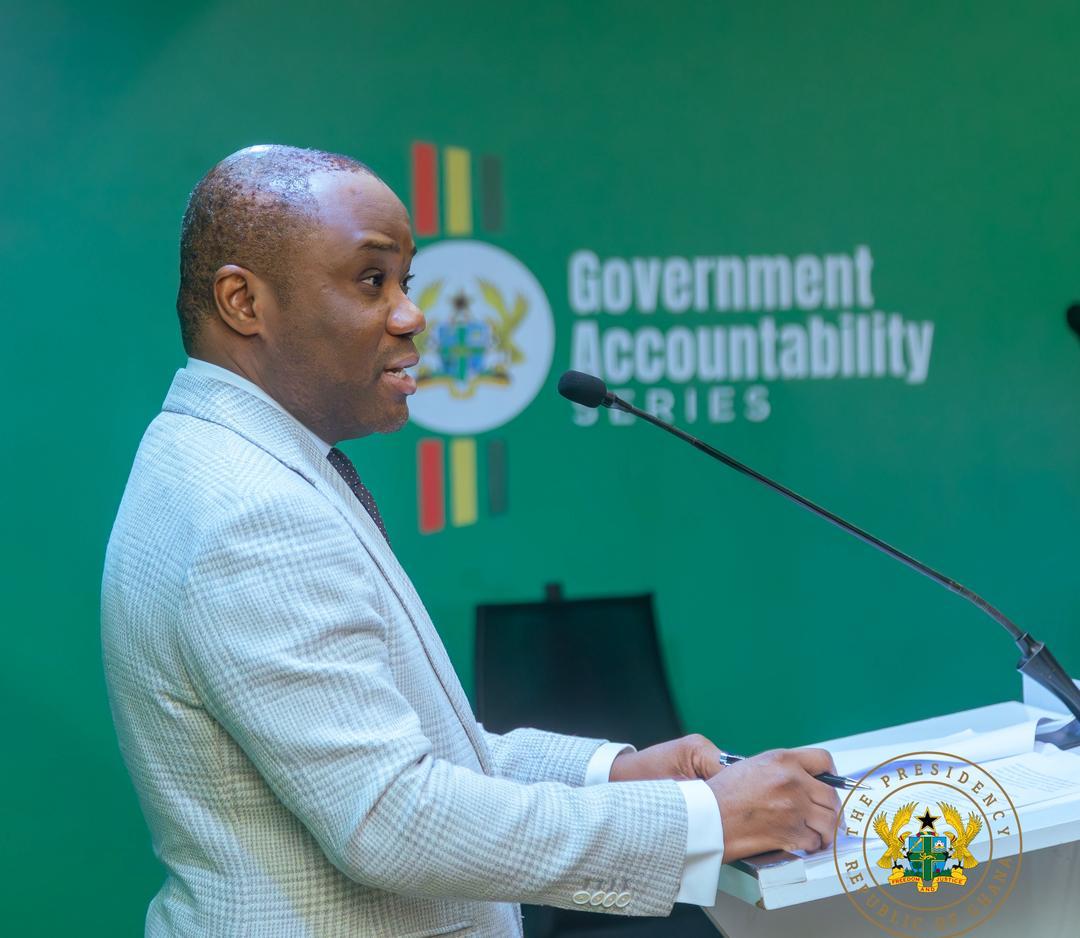
The Government has upheld 1,539 public sector recruitments, appointments and promotions made around the December 7, 2024 general elections, following a detailed review process, Minister for Government Communications, Felix Kwakye Ofosu (MP), has announced.
Addressing journalists at the Government Accountability Series in Accra, Hon. Kwakye Ofosu explained that the review was necessitated by concerns raised during the transition period after the 2024 elections.
“It will be recalled that at the very first meeting of the Joint Transition Team, the incoming government raised serious concerns about reports of rash and unlawful recruitments into public institutions, as well as substantial payments to contractors and other creditors in the immediate aftermath of the elections,” he stated.
According to him, both sides of the Transition Team had reached an understanding that ongoing recruitments, promotions and significant statutory payments would be submitted for joint review.
“We left that meeting under the clear impression that there was agreement for all such activities to be subjected to review. Unfortunately, that understanding was disregarded,” he said.
Chief of Staff’s Directive
Mr. Kwakye Ofosu recalled that on February 10, 2025, the Chief of Staff issued a directive revoking appointments and recruitments made unlawfully after December 7, 2024.
“Following that directive, reports filtered in that some persons who were lawfully employed before December 7, or whose recruitment processes had commenced but were not completed before the elections, had also been affected. To ensure fairness and prevent innocent persons from suffering unduly, a committee was established to investigate the matter,” he explained.
Committee Review and Findings
The committee, chaired by Deputy Chief of Staff Nana Oye Bampoe, was tasked with examining compliance with public sector recruitment procedures. It reviewed 2,080 recruitments, appointments and promotions across 36 institutions between March 21 and April 30, 2025.
Mr. Kwakye Ofosu disclosed that the committee adopted an 80 percent compliance threshold.
“In other words, if an applicant met at least 80 percent of the required procedural steps, they were deemed to have been lawfully engaged,” he noted.
Institutions were required to provide documentation including vacancy declarations, advertisements, technical and financial clearances, interview reports, appointment letters and acceptance letters.
At the end of the exercise, the committee recommended that 1,539 appointments be upheld.
“These individuals complied with the prescribed recruitment and promotion procedures and received their appointment letters before December 7, 2024,” he stated.
However, 541 appointments were recommended for revocation.
“The recruitment processes in these cases ended after December 7, 2024, and failed to meet the 80 percent compliance pass mark. In essence, they did not conform to the established regulatory framework,” he said.
Clemency for Vulnerable Groups
The Minister revealed that although 879 appointments had initially been revoked by institutions themselves, the committee’s final recommendations reduced that number to 541.
“The differential arose because the committee paid special attention to vulnerable groups, particularly persons with disabilities,” Mr. Kwakye Ofosu explained.
“In certain instances within the Ghana Education Service, although procedural requirements were not fully met, we considered the peculiar circumstances of affected individuals. Clemency was granted to allow them to regularise their processes and remain in employment.”
“No Witch-Hunt”
Mr. Kwakye Ofosu dismissed suggestions that the exercise was politically motivated.
“The decision to revoke these appointments was not based on a witch-hunt. There was no political motive beyond the desire to uphold due process and ensure compliance with the rules governing public sector recruitment,” he stressed.
“It was done without malice or ill feeling towards anyone. It was a necessary step to uphold the rule of law and ensure accountability.”
He further alleged that the previous administration was aware that some basic procedural requirements had not been met but proceeded regardless.
“They completely disregarded the incoming administration’s requests to be consulted, so that we could ensure compliance with laid-down rules,” he said.
The Minister reiterated government’s commitment to transparency and accountability, adding that the review process was aimed at protecting the integrity of public service recruitment.
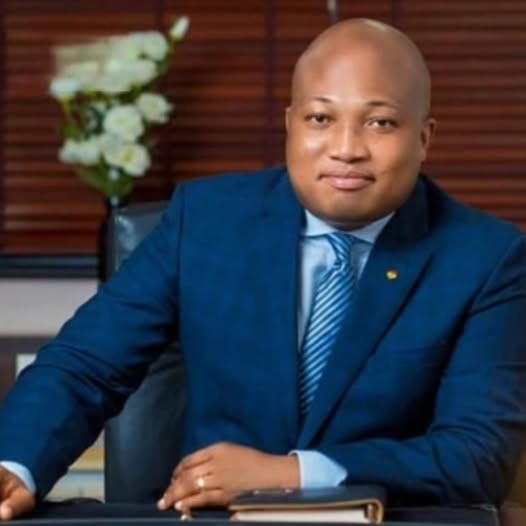
Ghana has successfully evacuated all its diplomatic staff from Iran following rising tensions in the Middle East, the Minister for Foreign Affairs, Samuel Okudzeto Ablakwa, has announced.
In a Facebook post on Monday, March 2, 2026, the minister confirmed that the operation was completed without incident and that all personnel are safe.
“I am delighted to announce that we have conducted a successful evacuation of all our embassy staff in Iran,” he stated, assuring the public that the diplomats are unharmed and in good spirits.
Mr Ablakwa further revealed that Ghana’s diplomatic mission in Tehran has been closed indefinitely. “Ghana’s embassy in Iran is now closed sine die,” he noted, explaining that the decision was taken in the interest of national safety.
He emphasized that the protection of Ghanaian citizens remains paramount. “The safety, welfare and protection of Ghanaians remains our utmost priority in these tempestuous times,” he said.
The evacuation comes in the wake of heightened regional tensions after coordinated military strikes reportedly carried out by the United States and Israel against targets in Iran on February 28, 2026. International reports indicate that the strikes focused on military infrastructure and strategic installations, raising concerns about a possible broader regional conflict.
The developments have led to airspace closures, flight disruptions, and increased security alerts across parts of the region. In response, several countries are reviewing their diplomatic presence in Iran and neighboring states.
Although Ghana’s Foreign Affairs Ministry has not disclosed specific operational details surrounding the evacuation, the move reflects Accra’s cautious approach to the evolving security situation. The temporary closure of the embassy means consular services in Iran will be suspended until further notice.
Mr Ablakwa concluded his announcement with a patriotic message, “For God and Country.”
Diplomatic analysts suggest Ghana will continue to monitor the situation closely before determining when normal diplomatic operations in Iran can resume, as uncertainty remains over the direction and implications of the unfolding crisis.
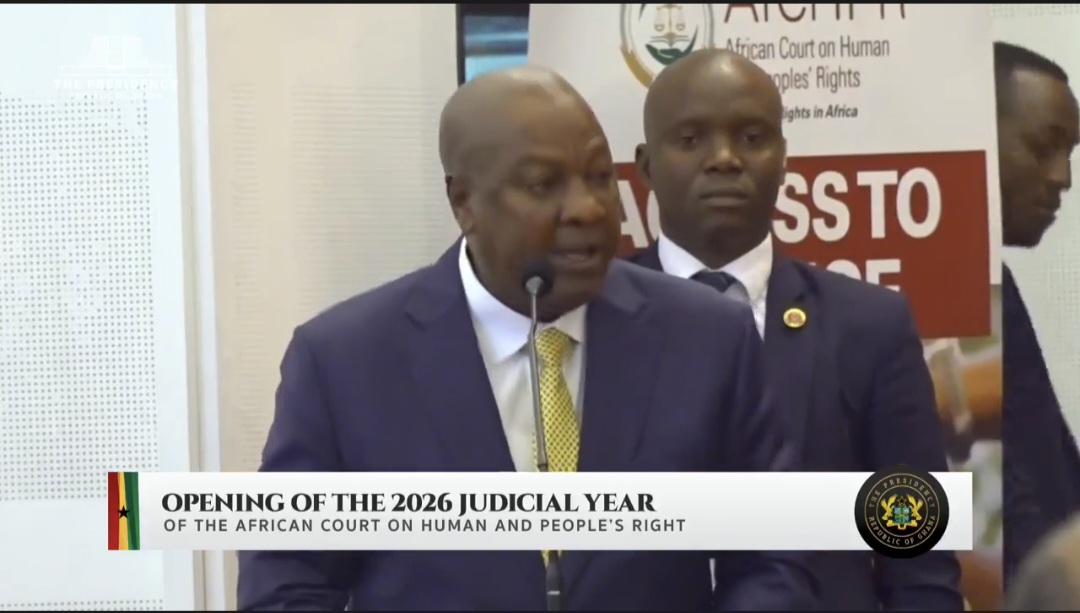
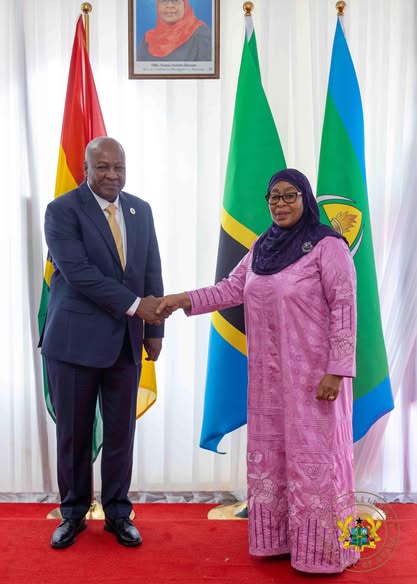
President John Dramani Mahama has called on African nations to prioritize the strengthening of democratic institutions as a fundamental strategy for protecting human rights, maintaining constitutional order, and ensuring sustainable political stability across the continent.
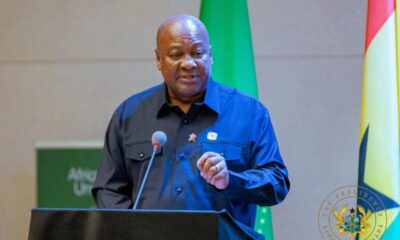
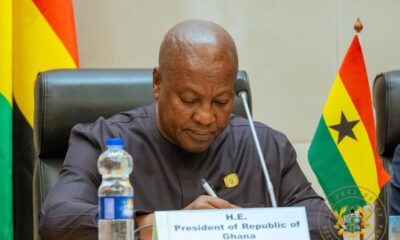
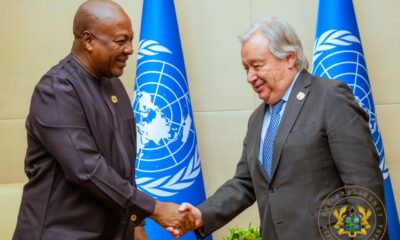
Speaking at the opening of the 2026 Judicial Year and the 20th Anniversary celebrations of the African Court on Human and Peoples’ Rights in Arusha, Tanzania, President Mahama emphasized that Africa’s historical experiences with political instability, coups, and constitutional disruptions underscore the urgent need for resilient institutions capable of safeguarding citizens’ freedoms.
According to him, the protection of human rights cannot be guaranteed through political rhetoric alone but must be anchored in strong, independent, and impartial institutions that operate above partisan influence.
“Our continent’s history teaches us that justice cannot be left to chance,” President Mahama stated. “Justice must be deliberately constructed, carefully protected, and firmly rooted in institutions that are independent, impartial, and resilient to political interference.”
The Ghanaian leader used his keynote address to draw a connection between personal history and broader continental governance challenges. He recounted how the detention of his father following Ghana’s 1966 military coup shaped his lifelong commitment to justice, due process, and democratic accountability.
“I remain the child whose father was detained for serving his country and advising its leader,” he said, describing how early exposure to political instability deepened his appreciation for the fragility of fundamental rights in environments where institutional safeguards are weak.
He further noted that violations of justice against individuals have far-reaching social consequences.
“When injustice is visited upon one person, it does not end with that individual,” Mahama said. “It reverberates through families, communities, and sometimes across generations.”
President Mahama stressed that Africa’s future development is intrinsically linked to the strength of its democratic governance architecture. He urged African governments to invest in judicial independence, strengthen constitutional courts, and empower continental institutions tasked with monitoring human rights compliance.
He particularly praised the African Court on Human and Peoples’ Rights, describing it as a critical continental mechanism for protecting citizens from abuses of power and ensuring that states remain accountable to the principles of the Banjul Charter.
“For me, this is not an abstract legal discussion,” he said. “It is about ensuring that no African child grows up witnessing injustice without access to remedy or protection under the law.”
Civil society observers and legal scholars present at the event described the address as a strong reaffirmation of Africa’s commitment to democratic governance and human rights protection. Analysts noted that Mahama’s remarks reflected a broader continental debate about balancing sovereignty with supranational judicial accountability.
The event brought together African heads of state, senior judges, international diplomats, and human rights advocates who gathered to commemorate two decades of the African Court’s contribution to the advancement of justice on the continent.

Gov’t Upholds 1,539 Appointments, Revokes 541 After Post-Election Review — Felix Kwakye Ofosu

49,966 Voters Head to the Polls in Ayawaso East By-Election Amid Tight Security

John Dramani Mahama Warns of Oil Shock Fallout as Middle East Tensions Escalate; Calls for African Economic Preparedness



-
 Sports4 days ago
2026 FIFA World Cup: President Mahama tasks supporters to return immediately after the tournament
-

 Entertainment6 days ago
[EDITORIAL] Praised in Victory, Crucified in Defeat: The Ghanaian Fanbase Paradox
-
 Entertainment4 days ago
SONA: GH¢20m for Film Sector, GH¢20m for Creative Industries — Mahama Announces Major Investment
-

 Business5 days ago
ThirdWell launches Inclusive Business Centre to support Accredited Inclusive Businesses in Ghana
-

 Sports1 week ago
BREAKING: Salary Crisis hits Tension at Eleven Wonders Camp for the second time
-
 General News2 weeks ago
Mahama: We’ll increase efforts to clean polluted water bodies and reclaim mined lands
-
General News2 weeks ago
Mahama: Mining Must Leave Communities Better Than It Found Them
-
 Entertainment1 day ago
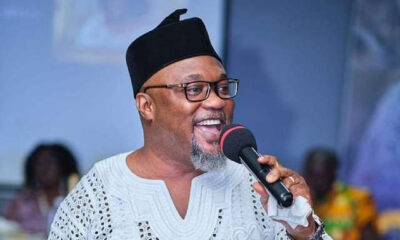
THE INSIDE STORY: Why President Mahama Revoked Gideon Nii Aryeequaye’s Appointment as Executive Secretary of the Creative Arts Agency