
General News
Mahama Reflects on Father’s Detention, Reaffirms Lifelong Dedication to Justice and Human Rights

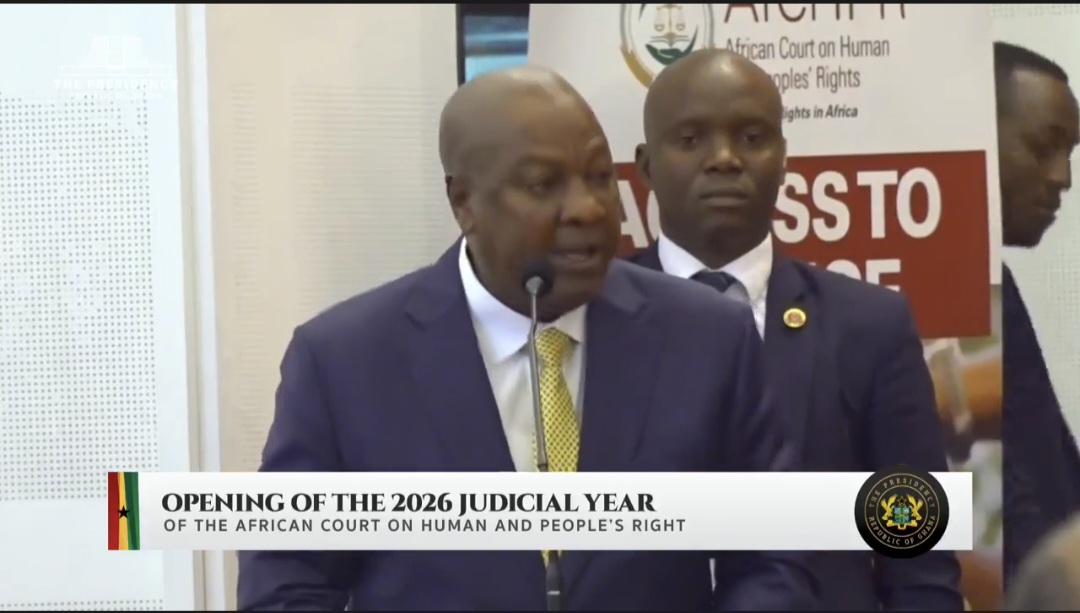
President John Dramani Mahama delivered a profoundly introspective and emotionally resonant keynote address during the opening ceremony of the 2026 Judicial Year and the 20th Anniversary celebrations of the African Court on Human and Peoples’ Rights in Arusha, Tanzania, where he recounted how the detention of his father in the aftermath of Ghana’s 1966 military coup indelibly shaped his philosophical commitment to justice, constitutionalism, and the sanctity of human dignity.
Addressing an august gathering of African Heads of State, eminent jurists, diplomatic envoys, and representatives of civil society, President Mahama situated his remarks within both personal history and continental political experience, arguing that Africa’s democratic trajectory must be fortified by resilient institutions capable of safeguarding civil liberties against arbitrary exercises of power.
“I remain the child whose father was detained for serving his country and advising its leader,” he remarked, invoking his family’s experience as a symbolic representation of the human consequences of political instability and constitutional ruptures that characterized many post-independence African states.
The President observed that early exposure to the ramifications of political upheaval profoundly influenced his appreciation of institutional accountability and the fragility of fundamental rights in environments where judicial safeguards are weakened. He emphasized that the denial of justice to any individual inevitably produces cascading social consequences that extend beyond the immediate victim.
“When injustice is visited upon one person, it does not terminate with that individual,” he stated solemnly. “Rather, it reverberates through families, communities, and sometimes across successive generations.”
Mahama underscored that his political and humanitarian convictions were largely forged by these formative experiences, which reinforced his steadfast advocacy for judicial independence, procedural fairness, and the protection of constitutionally guaranteed freedoms. He stressed that governance systems must be designed to guarantee the right to fair hearing and equitable treatment under the law.
“It is precisely because of such lived experiences that I hold such strong conviction in due process, in the inviolability of the right to be heard, and in the protection of fundamental human rights,” he affirmed. “No citizen should be compelled to endure injustice simply because the institutions entrusted with safeguarding them have failed in their duty.”
Turning his attention to the broader African political landscape, President Mahama argued that the continent’s historical encounters with coups d’état, unlawful detentions, and abrupt constitutional interruptions should serve as enduring reminders of the imperative to strengthen democratic governance structures. He warned that sustainable development on the continent remains intrinsically linked to the consolidation of rule-based governance and judicial autonomy.
“Our continent’s historical experience teaches us that justice cannot be relegated to chance or political convenience,” he said. “Justice must be deliberately constructed, carefully protected, and firmly anchored in institutions that are impartial, independent, and resilient to political interference.”
He further praised the African Court on Human and Peoples’ Rights as a vital continental institution dedicated to protecting fundamental freedoms and ensuring state accountability under the provisions of the Banjul Charter. According to him, the Court represents not only a legal mechanism but also a moral symbol of Africa’s collective determination to uphold human rights standards.
“For me, this is not an abstract legal discourse,” President Mahama concluded. “This is deeply personal. It is about ensuring that no child in Africa must grow up witnessing a parent suffer injustice without the possibility of legal redress.”
General News
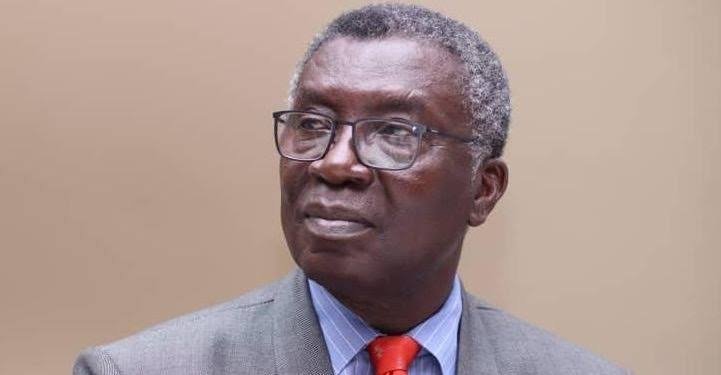
FRIMPONG-BOATENG SPEAKS ON GALAMSEY — ‘ENFORCING ENVIRONMENTAL LAWS CARRIES POLITICAL COST’

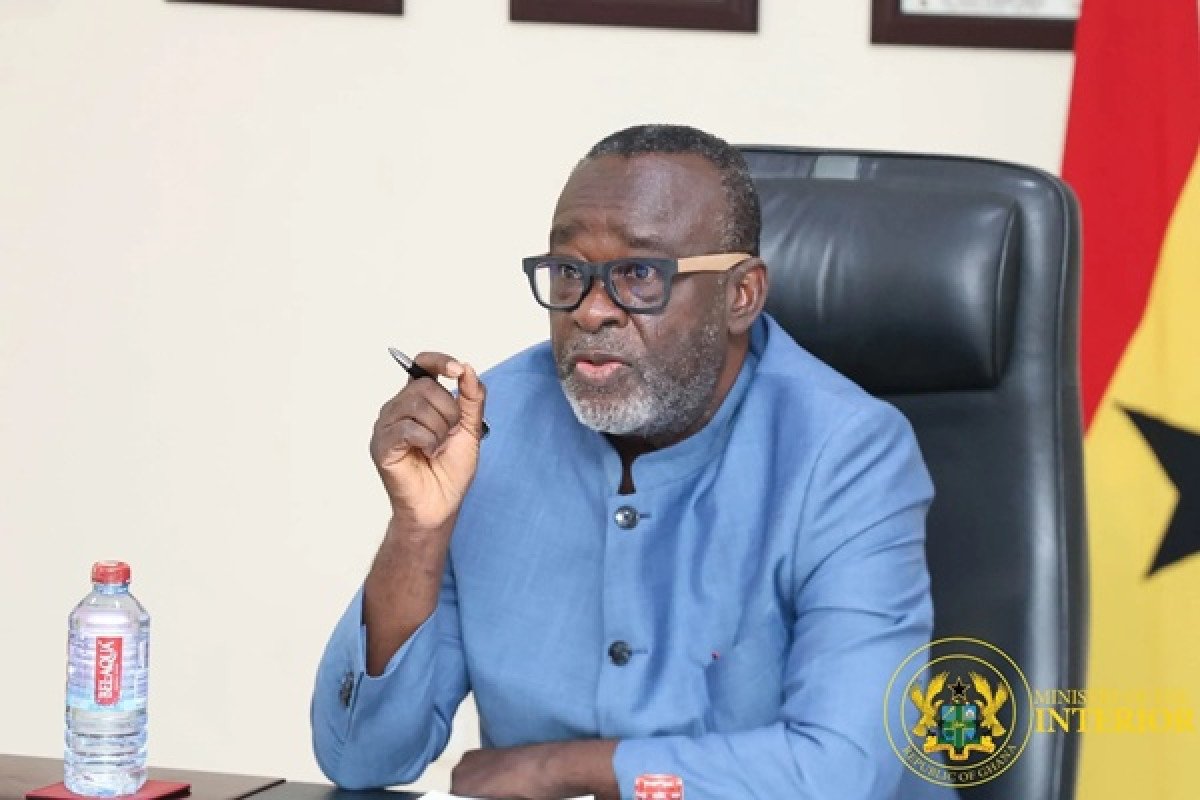
Chief Justice Paul Baffoe-Bonnie has come under intense public scrutiny after remarks about the performance of state institutions triggered concerns over the perceived political neutrality of Ghana’s Judiciary.
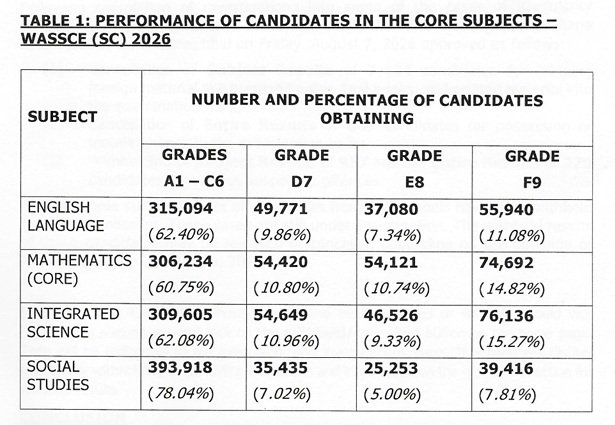
The West African Examinations Council (WAEC) has officially released the provisional results of the 2026 WASSCE for School Candidates, with Social Studies recording the strongest performance among the four core subjects.
WAEC announced the release on September 5, 2026, following the examination which saw 512,862 candidates from 1,022 schools registered to participate. The figure represents an 11.07% increase over the 461,736 candidates who entered for the 2025 examination.
SOCIAL STUDIES LEADS THE CORE SUBJECTS
Social Studies emerged as the best-performing core subject.
A total of 393,918 candidates, representing 78.04%, obtained grades between A1 and C6.
English Language followed with 62.40%, while Integrated Science recorded 62.08%. Core Mathematics saw 60.75% of candidates obtaining A1-C6.
ENGLISH PERFORMANCE CONTINUES TO DROP
One of the major talking points from the results is the continued decline in English Language performance.
WAEC’s four-year analysis shows the proportion of candidates obtaining A1-C6 in English falling from 73.11% in 2023 to 69.42% in 2024, 69.00% in 2025 and 62.30% in 2026.
Meanwhile, Mathematics and Social Studies recorded significant improvement compared with 2025, while Integrated Science also improved.
8,295 CANDIDATES FACE SANCTIONS
The release has also been accompanied by serious examination-malpractice concerns.
WAEC cancelled the entire results of 861 candidates after they were found with mobile phones in examination halls. The Council also cancelled the subject results of 7,434 candidates for bringing foreign materials, including prepared notes and textbooks, into examination halls.
In addition, the subject results of 957 candidates and the entire results of 270 candidates have been withheld over suspected offences.
Results involving candidates from 169 schools have also been withheld over alleged collusion, with investigations ongoing. WAEC says decisions on those cases may be made by October 30, 2026.
HOW CANDIDATES CAN CHECK
WAEC says the results have been hosted online, with school heads receiving login details to access their candidates’ results.
Candidates can also check their individual results through the Council’s official results-checking platform. WAEC has warned the public against fraudsters who claim they can upgrade examination results for money.

Abankwah-Yeboah tells NPP to reorganise as he urges Ghanaians to judge NDC over time

FRIMPONG-BOATENG SPEAKS ON GALAMSEY — ‘ENFORCING ENVIRONMENTAL LAWS CARRIES POLITICAL COST’

CHIEF JUSTICE COMMENTS STIR DEBATE — QUESTIONS RAISED OVER JUDICIAL IMPARTIALITY



-

 General News2 weeks ago
Nana Adwoa Tutuwaa Named Global Humanitarian of the Year 2026
-
 General News2 weeks ago
Police Arrest Suspect in GH¢1.1m Fake Gold Scam at Berekum
-
 General News1 week ago
GES Urged to Review Student Sexual Misconduct Rule Over Alleged Discrimination Against Boys
-

 Entertainment7 days ago
Oswald Okaitei Explains the Real Vision Behind Ghana’s Black Star Experience
-
 General News2 weeks ago
OSP Assesses Extortion Allegations Against Afenyo-Markin
-

 Entertainment2 weeks ago
Stonebwoy Is Not My Rival — Shatta Wale Reveals They Live Minutes Apart
-
 Politics2 weeks ago
Stop The Personal Attacks!” — Vitus Azeem Demands Probe Into Sammy Gyamfi–Afenyo-Markin Feud
-

 Entertainment2 weeks ago
Mzbel Says Age Gap Is No Barrier as She Opens Up About 19-Year-Old Admirer