
Politics
RESETTING GHANA – ONE YEAR IN RETROSPECT

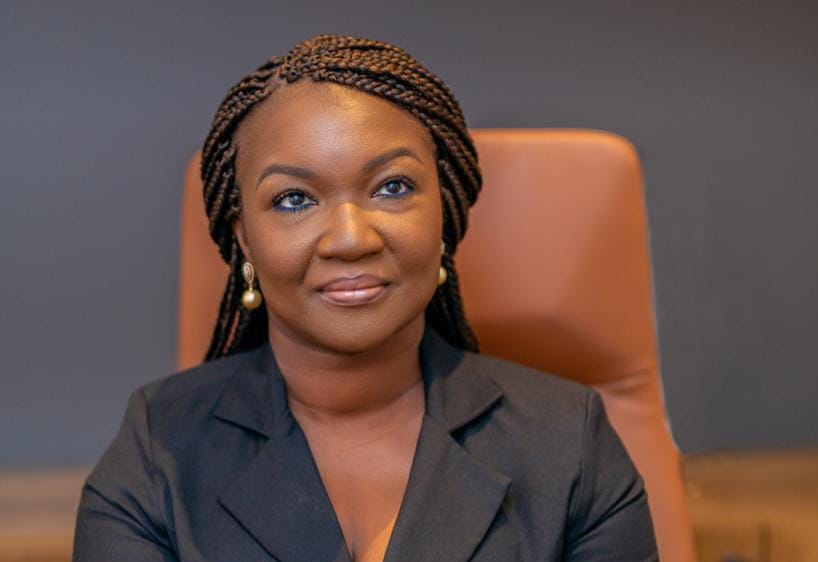
By Joyce Bawa Mogtari, Presidential Adviser and Special Aide
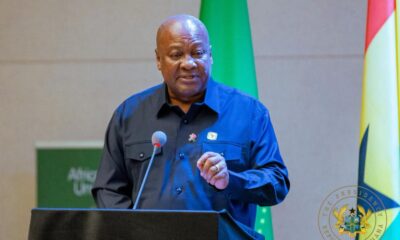
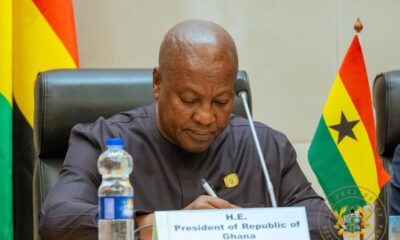
‘A comparatively peaceful year in retrospect’, is how a 70-year-old retired academic described President Mahama’s first year in office.
From the observers’ seat, let me say without any fear of contradiction that as citizens we are pleased with the progress made so far by the ruling National Democratic Congress (NDC) led by President John Dramani Mahama.
A year after, the overwhelming mandate that returned the NDC to government under the leadership of President John Dramani Mahama was more than an electoral outcome. It was a national call for a #Reset in leadership, governance and public trust. However, it was in the days that followed, during the complex transition from one administration to another, that this mandate found its first and most enduring expression.
First, the transition itself set the tone. It unfolded with calm, cooperation and adherence to Ghana’s constitution, without the usual fallouts. In his inaugural address on January 07/2025 President Mahama declared that Ghana was open for business.
Unlike nations grappling with uncertainty, Ghana chose continuity and dialogue over conflict and disruption. State institutions held firm, security agencies remained professional and the transfer of responsibility took place with dignity and restraint. More than a procedural success, this peaceful handover reassured citizens, investors and partners alike that, change in leadership does not mean instability in the state. In fact, it laid the foundation upon which renewal and the #Reset Ghana, could take root.
From that foundation, government moved quickly into action. Within weeks, the John Mahama–led NDC Government signaled discipline and purpose:
• Institutional discipline: Cabinet Ministers were nominated within 14 days and approved by Parliament, the leanest government under the Fourth Republic was constituted within 90 days, a Code of Conduct for public officials operationalised, and a National Economic Dialogue convened to ground policy in consultation.
• Relief for households: The E-Levy, Betting Tax, and Emissions Levy were scrapped, while COVID levy was absorbed into VAT reforms.
• Human-centred reforms: The “No-Academic-Fee” policy for first-year tertiary students, free tertiary education for Persons with Disabilities was launched; free sanitary pads were rolled out for schoolgirls; and MahamaCares (The Ghana Medical Trust Fund became operational. These affirmed that the #Reset in governance, needed to begin with dignity.
• Strategic economic renewal: Job-creation programmes such as Adwumawura, the National Apprenticeship Programme and One Million Coders were launched, and Goldbod was established as a cornerstone of forex mobilization.
Meanwhile, the economy began to stabilise. Where uncertainty once prevailed, confidence gradually returned:
• Inflation declined and interest rates eased, dropping from January’s 23.5% rate to single digits, 6.3% in November and even lower in December.
• The debt burden reduced, the cedi regained strength and import cover lengthened from weeks to months.
• Fiscal discipline improved, signaling not merely technical recovery but the careful rebuilding of the social contract between state and citizen—restoring predictability for households and credibility for businesses.
Across key sectors, our reforms were visible.
• Education: Funding for the future of Free SHS was secured, national research fund was launched; and 154,000 students benefited from “No Fees Stress”.
• Health: The NHIS was uncapped; revenue rose to GHS 9.76bn; 13,000 nurses received financial clearance; a 2-year backlog of Pharmacy doctors paid, and the Ghana Medical Care Trust Fund was established.
• Energy & Digital Economy: Solar investments commenced; data value more than doubled while consumer costs fell; and household media prices were reduced.
• Agriculture: Feed Ghana, boreholes, irrigation dam rehabilitation, and targeted food inflation control restored agriculture’s strategic role in food security.
• Infrastructure & Local Government: The Big Push policy was launched with a plan, and the sod cutting for various road construction to begin, cleared huge contraction debts and laid foundations for growth, while affordable housing and timely payment of District Assembly Common Fund releases have been duly implemented.
Equally important, accountability was pursued deliberately. Thanks to Operation Recover all Loot(ORAL) Investigations into corruption, prosecutions for acts of malfeasance, legacy challenges from the banking sector to major procurement and infrastructure projects have sent a clear message: a #Reset is not only about new programmes, but about restoring integrity to public life. Where reforms remain unfinished, they have been acknowledged openly, which clearly demonstrates the government’s commitment to good governance and transparency.
In retrospect, this year marks a period of unprecedented progress. The confidence placed in President Mahama and the NDC did not merely endorse a government; it entrusted a vision of a Ghana renewed in governance,fairness, steadiness and shared purpose.
Looking ahead, the task is clear.
• To consolidate our economic recovery into lasting stability;
• To accelerate industrial growth, job creation and digital transformation; and
• To enhance institutional reform so that accountability becomes the enduring culture of governance.
If the first year essentially restored trust, President Mahama and his government aim to translate that trust into even more tangible transformation for our people.
Guided by the calm leadership and anchored in the mandate for renewal, Ghana now stands poised not merely to recover but to forge forward with confidence and collective purpose.
President Mahama says, that his comeback must count.
Article by Joyce Bawa Mogtari, Presidential Adviser and Special Aide







Politics
Afenyo-Markin Retracts Fraud Allegations Against Interior Minister Over Security Recruitment
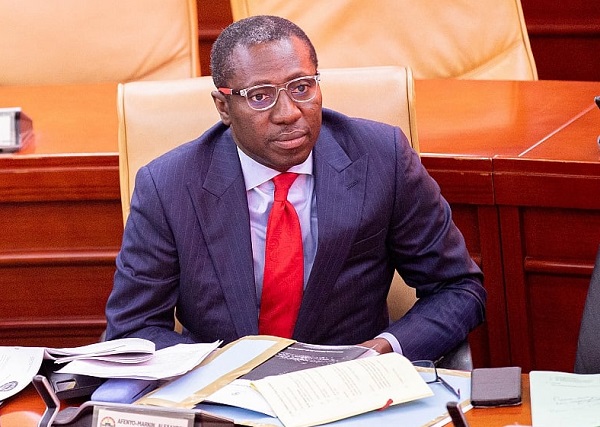
The Minority Leader, Alexander Afenyo-Markin, has formally withdrawn allegations of fraud he levelled against the Minister for the Interior, Mohammed Mubarak Muntaka, regarding the ongoing security services recruitment exercise.
The retraction and apology were delivered on the floor of Parliament on Wednesday, 4 March, following a directive by the First Deputy Speaker, Bernard Ahiafor, who had referred the Minority Leader to the Privileges Committee over claims deemed potentially contemptuous.
The referral was prompted by a complaint from the Interior Minister, who described the allegations as unfounded and harmful to his reputation.
Mr Afenyo-Markin had earlier alleged that the involvement of a third-party IT firm in the recruitment process amounted to a scam and imposed an unfair financial burden on applicants.
Addressing the House, the Minority Leader clarified his position and withdrew the claims.
“Mr Speaker, I will not do that to hurt him or tarnish his reputation, and if the text of my concern reflected so, it is hereby accordingly withdrawn. I assure you that concerns that will arise out of any matter shall be properly brought to his attention,” he stated.
In response, Mr Muntaka said the accusations had been distressing, particularly given their seriousness.
“It is painful to be wrongly accused and be labelled differently from the intention that you have, especially when it is connected with heavy wrongdoing. I am heavily hurt and heavily worried, but who am I to say that I will not accept when my colleague comes to apologise? I accept it wholeheartedly,” he said.
The Interior Minister further appealed to the Speaker to have the matter expunged from the official parliamentary record, expressing the hope that it would be treated as though it had not occurred.
The development brings a temporary close to the dispute, as both sides signal a willingness to move forward.
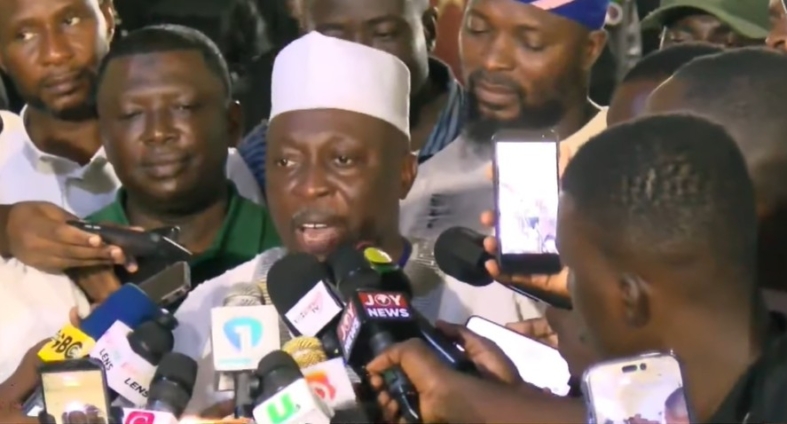
The Electoral Commission on Tuesday declared Baba Jamal of the National Democratic Congress, NDC, as the winner of the Ayawaso East by-election held on March 3.
According to official results announced Tuesday evening, the MP-elect secured 10,884 votes, comfortably ahead of his closest contender, Baba Ali Yussif of the New Patriotic Party, NPP, who obtained 4,009 votes.
Independent candidate Mohammed Umar Sanda garnered 1,885 votes, while David Kanor received 104 votes. Ibrahim Iddrisu, representing the Liberal Party of Ghana, recorded 43 votes.
Out of 17,048 ballots cast, 16,928 were deemed valid, with 120 rejected.
The by-election was conducted to fill the parliamentary vacancy following the passing of the late Member of Parliament, Naser Toure Mahama, in January.
Voting took place across multiple polling stations in the constituency. Although early turnout appeared modest, some observers suggested that the Ramadan fasting period may have influenced the pace of participation during the initial hours.
Security arrangements featured prominently throughout the exercise. Ahead of polling, the Ghana Police Service assured residents of adequate measures to maintain law and order before, during, and after the vote. Officers were deployed to designated polling stations and other strategic points within the constituency.
Police officials described the process as calm and orderly, indicating that security presence was sufficient as counting and collation proceeded. The Inspector General of Police also toured selected polling centres as voting concluded.
Following the official declaration, supporters of Baba Jamal gathered in parts of the constituency to celebrate the outcome.
Pre-election projections had pointed to a strong showing for the NDC candidate, a trend that was reflected in the final results announced by the Electoral Commission.
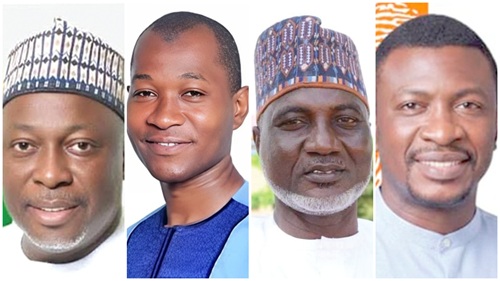
A total of 49,966 registered voters are expected to cast their ballots today in the Ayawaso East parliamentary by-election to choose a new representative in Parliament.
The poll follows the death of the sitting Member of Parliament, Naser Toure Mahama, who passed away in January at the Korle Bu Teaching Hospital.
Candidates and Ballot Positions
At the close of nominations and balloting on February 12, 2026, the National Democratic Congress candidate, Baba Jamal, secured the first position on the ballot.
Ibrahim Iddrisu, representing the Liberal Party of Ghana, drew the second slot, while Yussif Baba Ali of the New Patriotic Party placed third.
Two independent candidates, Alhaji Mohammed Umaru Sanda and David Kannor, occupy the fourth and fifth positions respectively.
The outcome of today’s vote will determine who takes over the Ayawaso East seat in Parliament.
Electoral Commission Assures Readiness
The Electoral Commission of Ghana has expressed confidence in its preparedness for the exercise.
A Director of the Commission, Sam Dottoh Kwaah, indicated that all categories of election officials had been recruited and trained. He disclosed that two Biometric Verification Devices had been deployed to each of the 113 polling stations in the constituency.
According to him, ballot papers as well as Statement of Poll and Declaration of Results forms were printed and delivered to the constituency ahead of the polls.
Heavy Security Deployment
The Ghana Police Service has announced the deployment of about 80 officers to each polling station as part of measures to ensure a peaceful and orderly process.
Assistant Superintendent of Police Asong Ayrakwa, Deputy Nima District Police Commander, assured residents that adequate personnel would be on standby to respond to any emergency.
In the lead-up to the election, the police conducted a show of force and route march through the principal streets of the constituency. The exercise was aimed at reassuring residents, deterring potential disturbances, and demonstrating the Service’s readiness to maintain law and order before, during and after the vote.
Intense Campaigns Ahead of Poll
Political parties and candidates intensified their campaigns in the final days before the by-election. Campaign vans blaring music moved through inner communities, while supporters embarked on door-to-door engagements to canvass votes.
The NDC held a final rally last Sunday to energise its base and boost voter turnout, describing the contest as crucial. Party leaders acknowledged that turnout in by-elections is often low and urged supporters to come out in large numbers.
During the rally, the party’s National Chairman, Johnson Asiedu Nketiah, announced the expulsion of Umaru Sanda Mohammed from the NDC after he chose to contest as an independent candidate. He stated that the former member would be barred from contesting any party position for several years should he seek to return.
On the other side, senior figures of the NPP, including General Secretary Justin Frimpong Kodua and former General Secretary John Boadu, were spotted campaigning in parts of the constituency, including a neighbourhood popularly known as Gutter.
Historical Voting Pattern
Ayawaso East has traditionally been a stronghold of the NDC in recent elections.
In the 2024 parliamentary election, the late Alhaji Mahama secured 22,139 votes, representing 70.85 percent, while the NPP candidate polled 9,110 votes, or 29.15 percent.
In 2020, he garnered 23,583 votes, equivalent to 61.18 percent, defeating the NPP’s Peter Kwame Antwi Mireku, who obtained 14,966 votes.
Similarly, in the 2016 polls, he won with 23,407 votes, representing 62.10 percent, ahead of the NPP candidate and other minor party contenders.
As voting gets underway today, attention is firmly fixed on whether the constituency will maintain its voting trend or chart a new political direction.

First Atlantic Bank to Hold First AGM as Listed Company on April 7

Fuel Prices Set for Sharp Increase From March 16 as Global Oil Prices Surge

Yonsei University Honors President Mahama with Honorary PhD for Leadership and Ghana–Korea Partnership



-
 Entertainment2 weeks ago
THE INSIDE STORY: Why President Mahama Revoked Gideon Nii Aryeequaye’s Appointment as Executive Secretary of the Creative Arts Agency
-
 Entertainment6 days ago
“Go to Lumba’s house and exhume his body” — Counsellor George Lutterodt incites Ga youth
-
 General News2 weeks ago
Christian Council Urges Prophets to Tackle Corruption, Avoid Fear-Inducing Political Prophecies
-
 General News1 week ago
Ghana Marks 69th Independence Day Under Theme ‘Building Prosperity, Inspiring Hope’
-
 Entertainment3 days ago
Legendary musician Sloppy Mike Gyamfi Accuses Kuami Eugene of Song Theft
-

 Entertainment3 days ago
Shatta Wale hints at contesting Ablekuma South seat as independent candidate in 2028
-
 General News2 weeks ago
President Mahama Appoints Baba Sadiq Abdulai Abu as Ghana’s High Commissioner-Designate to Nigeria
-
 General News2 weeks ago
COCOA FARMERS, MASSES and INVESTORS and Left Behind in Mahama’s February 2026 SONA