General News
Government to Complete 35 Agenda 111 Hospitals as EOCO Targets Defaulting Contractors
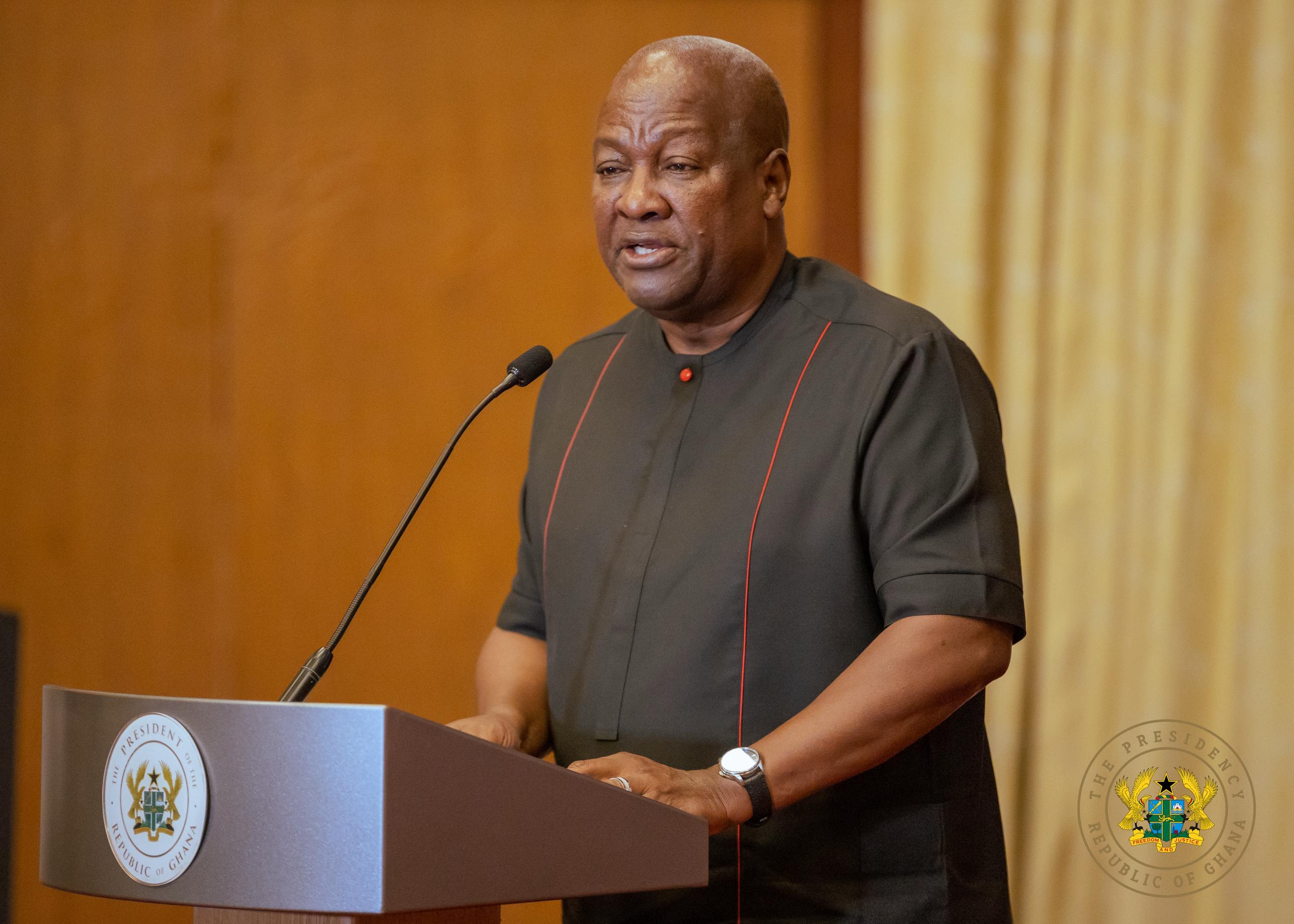
President John Dramani Mahama has revealed that the Economic and Organised Crime Office (EOCO) is actively pursuing contractors who allegedly received mobilisation funds for the Agenda 111 hospital projects but failed to execute the works.
He disclosed that several of the facilities under the nationwide hospital initiative remain incomplete, with some stalled at foundation level despite funds being disbursed.
“Some of them are at foundation level, even some of them people took the mobilization and never went to site. EOCO is going after them,” President Mahama stated.
The President made the remarks during a courtesy call by the Northern Regional House of Chiefs at the Presidency, where discussions also focused on stalled infrastructure projects and government’s plans to revive them.
The Agenda 111 hospital programme, launched to expand healthcare infrastructure across Ghana, has faced criticism over delays and a growing number of uncompleted facilities. President Mahama acknowledged the challenges, noting that government has now adopted a more targeted, phased approach to ensure progress and accountability.
He explained that priority will be given to completing 35 hospitals that are already near completion, with funding directed toward finishing those facilities before additional phases are considered.
“What government has decided is the 35 that were almost near completion. Government this year is going to put money in and continue them and complete them,” he said.
President Mahama further indicated that government is also exploring partnerships with faith-based organisations to support the completion and operationalisation of some of the stalled hospitals, as part of broader efforts to improve healthcare delivery nationwide.
General News
Mahama Directs Local Government Ministry to Involve Chiefs in Monitoring Projects
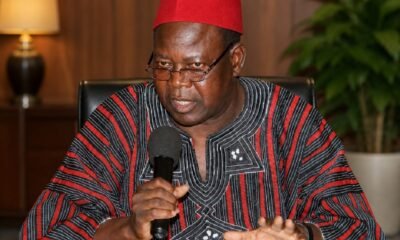
President John Dramani Mahama has directed the Ministry of Local Government to establish a framework that will enable traditional rulers and district assemblies to jointly monitor government development projects across the country.
According to the President, the initiative is aimed at strengthening transparency, accountability and effective delivery of critical infrastructure projects in various communities.
Speaking at an engagement with Northern Regional House of Chiefs, President Mahama said chiefs and local assemblies must work closely together through regular coordination meetings and project monitoring mechanisms to track the progress of government interventions.
“I’m therefore directing the Minister for Local Government — and the Minister is here — to create a framework where traditional rulers and district assemblies can meet occasionally to review the progress of work on critical infrastructure that government is undertaking in your various traditional areas and districts,” he stated.
The President stressed that district chief executives, assembly officials and traditional authorities should undertake joint visits to project sites to assess the quality of work and monitor implementation.
“There should be regular coordination meetings and project monitoring mechanisms where the district assemblies, district chief executives and the traditional rulers physically go to the sites of development projects to review the state of work and monitor the progress,” he added.
Mr. Mahama noted that involving traditional leaders in project supervision would help bridge the gap between projects announced and those successfully completed, while ensuring that communities derive full value from public investments.
General News
Mahama Announces Post-IMF Economic Reset, Targets 1% of GDP for Key Investments
President John Dramani Mahama has announced that Ghana has officially transitioned out of its International Monetary Fund (IMF) programme and is now entering a new phase of economic policy focused on domestic-led growth, fiscal discipline, and targeted strategic investments.
Speaking during a meeting with the Northern Regional House of Chiefs at the Presidency, President Mahama described the development as a “policy reset moment” aimed at strengthening Ghana’s long-term economic resilience and reducing dependence on external support frameworks.
“We’ve concluded the IMF programme, and we are now moving into a policy coordinating instrument that creates space for strategic national investments,” President Mahama said.
He explained that under the new framework, government will commit approximately 1% of Gross Domestic Product (GDP) to priority sectors designed to stimulate productivity, create jobs, and expand infrastructure. Key among these areas, he noted, is commercial agriculture and agro-processing.
According to him, the agriculture sector remains central to the government’s post-IMF strategy, particularly in regions with vast arable land and strong production potential.
“One of the areas that has been identified is commercial agriculture. We have vast arable lands, especially in the northern parts of the country, and this will be a major focus for large-scale investment and agro-industrial development,” he said.
President Mahama added that the policy shift is intended to ensure more efficient use of public resources, stronger coordination of development programmes, and improved accountability in project implementation.
He also emphasised that the new approach would prioritise value for money and measurable outcomes, particularly in infrastructure and productive sectors of the economy.
General News
Bnoskka Marks 8th World IP Day Public Lecture: A Milestone in Ghana’s IP Dialogue
Accra, Ghana – 27th April, 2026 – For the eighth consecutive year, Bnoskka, a leading voice in intellectual property advocacy and creative industry development, successfully hosted its annual World IP Day Public Lecture. Since its inaugural edition in 2019, the lecture has grown into a premier platform for shaping Ghana’s IP discourse, and the 2026 edition proved to be the most impactful yet.
The event took place at Marshall University College, Accra, drawing a diverse audience of students, legal practitioners, creative industry professionals, policymakers, and the general public. It was live broadcast on Max TV and Max FM, extending the reach far beyond the lecture hall.
Chairmanship & Opening Remarks
The lecture was chaired by Mr. Carl Ampah, UNESCO Representative, who delivered both the opening and closing remarks. In his address, Mr. Ampah commended Dr. Benjamin Oduro Arhin (aka Bnoskka) for his unwavering commitment to IP awareness, particularly noting Dr. Oduro Arhin’s weekly media engagements on IP subjects.
“What Dr. Oduro Arhin is doing—week after week, year after year—is a true reflection of how passion can transform intellectual property discourse in Ghana. His initiative is not just timely; it is essential,” Mr. Ampah stated.
Mr. Ampah also spoke extensively on UNESCO’s role in the intersection of IP and sports, emphasizing the need for Ghana to align with global standards in protecting creative and athletic expressions.
A Landmark Eighth Edition
Since 2019, Bnoskka’s annual IP lecture has evolved from a niche legal gathering into a national movement. The 8th edition examined critical issues including athlete image rights, broadcasting and media rights, content ownership, merchandising, and digital opportunities within Ghana’s evolving sports and creative ecosystem.
Keynote Speakers & Their Contributions
Lawyer Bernard Bosumprah, former Administrator of the Copyright Office, delivered a masterclass on the legislative history of copyright in Ghana. He traced the journey from the UK Copyright Ordinance Act (colonial era), through the 1960 Kwame Nkrumah Copyright Act, to the PNDC Law 110 of 1985, and finally to the current Act 690 of 2005 – which was passed just before he left office. He candidly shared the challenges associated with copyright enactment in Ghana, including political interference, lack of stakeholder consensus, and enforcement gaps that persist today.
Mr. Samuel Awuku, representing the current Acting Administrator of the Copyright Office, outlined recent steps taken by the office, notably the establishment of a police station within the Copyright Office to aid enforcement. However, he also revealed the severe financial constraints hampering the office’s effective operation, calling for increased government funding and private sector support.
The Tragedy of Unsolicited Ideas: The ‘Golden Goal’ That Brought No Gold
In a poignant segment of his keynote, Dr. Arhin addressed the peril of unsolicited idea submissions—a legal grey area where creators share concepts with large organisations without protection, often leading to exploitation.
He cited the painful case of a Ghanaian, Mr. John Amoah, who conceived and submitted the “Golden Goal” rule idea to FIFA years ago. The rule where a match ends immediately when a goal is scored in extra time was later adopted by FIFA without any acknowledgment or compensation to Mr. Amoah.
“John Amoah lost his patent idea simply because he submitted it without a non-disclosure agreement or a registered patent. FIFA used his brainchild, changed the complexion of World Cup finals, and Mr. Amoah saw nothing. No credit. No royalty,” Dr. Arhin lamented.
Although the Golden Goal rule has since been abolished by FIFA, Dr. Arhin argued that the moral and economic debt remains unpaid. He made a direct appeal: “I call on the Ghana Football Association (GFA) and the Ministry of Youth and Sports. Even if FIFA will not honour him, let Ghana honour its own. Let us give Mr. John Amoah a national recognition for an idea that once changed the very fabric of football.”
The audience responded with sustained applause, recognising a rare moment where an IP lecture turned into a plea for national restitution.
Every Sport Rests on IP: A Comprehensive Breakdown
Dr. Arhin then systematically dismantled the notion that intellectual property is only for musicians or authors. He explained the five major types of IP — patents, copyright, trademarks, industrial designs, and trade secrets — and demonstrated how each one is woven into the business and practice of sports.
Using a broad sweep of disciplines, he declared: “There is no modern sport without IP. It is the foundation upon which the game is built.”
Industry Representation & Notable Absentees
The event saw strong representation from key creative industry bodies:
- MUSIGA (Musicians Union of Ghana) – represented by Rev. Eddie Eyison, National Treasurer
- Actors Guild of Ghana – represented by James Clerk (popularly known as Alafia)
- GHAMRO (Ghana Music Rights Organization)
- ARSOG (Artistes and Repertoire Society of Ghana)
- CopyGhana
However, despite extended invitations, the following organizations were unable to send representatives:
- Ministry of Sports
- Ghana Football Association (GFA)
- Creative Arts Agency
Their absence was noted by attendees as a gap in the national dialogue, especially given the lecture’s focus on sports and IP.
Two Heartbreaking Stories of Unprotected IP
Two personal testimonies moved the audience deeply:
Kobby Spikey recounted a painful ordeal: the Confederation of African Football (CAF) used his song without permission. Although he won the case at the High Court, he has still not received the awarded compensation years later. His story highlighted the gap between legal victory and actual enforcement.
John Amoah shared his invention of the “Golden Goal Rule” – a concept he unsolicitedly submitted to FIFA. FIFA later implemented the rule without any recognition, credit, or award to him. His story underscored the vulnerability of unsolicited ideas and the need for formal protection mechanisms even for informal inventors.
Student Engagement
Students of Marshall University College posed insightful questions, particularly on fashion design and trademark protection – an area of growing interest among young creatives in Ghana. The interactive session demonstrated that the next generation is eager to understand how IP applies to their commercial ambitions.
UNESCO’s Stance: Protecting the Athlete and the Fan
The event was chaired by Mr. Carl Ampah, representing the UNESCO Accra Office. In his address, Mr. Ampah unveiled UNESCO’s growing focus on the “non-physical assets” of sports. “When we speak of sport, we speak of passion, identity, and massive economies. But UNESCO recognises that behind every iconic match is an iconic logo; behind every tournament is a broadcasting right; behind every athlete is a brand,” Mr. Ampah stated.
He detailed how UNESCO supports the game through three specific pillars:
- Legal framework assistance – Helping member states like Ghana develop laws that protect sports broadcasting rights from piracy.
- Educational programmes – Funding initiatives that help athletes understand NIL rights (Name, Image, and Likeness).
- International Fund for Cultural Diversity – Supporting projects that map out traditional sports and games, ensuring their IP is not exploited without community consent.
Mr. Ampah also responded to student concerns (see below) by suggesting that fashion designers document their creations via digital ledgers timestamped on UNESCO’s partner platforms.
Copyright Office: A Hand to the Independent Creator
Mr. Samuel Awuku, representative of the Copyright Office Administrator (who served as Co-Chair of the event), used the platform to address the bureaucratic fears surrounding IP registration.
“Many creators believe the Copyright Office is merely a punitive body. That is false,” Mr. Awuku said. He revealed that the office has established a “Creators Support Desk” that operates on a pro-bono advisory basis for individuals who approach them.
“If you walk into our office with a script, a musical score, or a fashion sketch, we do not just register it. We connect you with legal aid for cease-and-desist letters. We mediate disputes before they go to court. We are trying to build a safety net,” he added, acknowledging that budget constraints still limit their public outreach.
He encouraged creators—especially students and upcoming musicians—to visit the Copyright Office at the initial stage of their work, rather than waiting for infringement to occur.
High Court Victory, Zero Enforcement: Kobby Spikey’s Ordeal
The lecture took a dramatic turn when veteran sports broadcaster and creative Mr. Darkwa Nkrumah (popularly known as Kobby Spikey) took the microphone. He detailed a harrowing experience with the Confederation of African Football (CAF).
Mr. Nkrumah alleged that CAF used his original musical composition as a backing track for a major continental tournament without a licence. Despite securing a judgment in his favour at the High Court, he lamented that CAF has refused to pay the awarded damages.
“I have the judgment. The court said they infringed. Yet, CAF an organisation that generates millions in broadcasting rights, refuses to pay me a dime for my intellectual sweat. The legal hassle has drained me. Winning the case means nothing if you cannot enforce the payment,” he fumed, drawing murmurs of solidarity from the audience.
His testimony exposed a critical gap in Ghana’s IP enforcement machinery regarding international corporate bodies, and several attendees called for the government to use diplomatic or continental legal channels to compel compliance.
A Gathering of Titans and Traditional Wisdom
The event saw a rare convergence of industry leadership:
- Rev. Eddie Eyison (National Treasurer) represented the Musicians Union of Ghana (MUSIGA).
- Mr. James Clerk (aka Alafia) stood for the Actors Guild.
- Collective management organisations CopyGhana, GHAMRO, and ARSOG were all present, signalling a united front.
In a symbolic gesture bridging modernity and tradition, the Paramount Chief of Tsiame Traditional Area, His Majesty Torbgega Doe Dallah III, graced the occasion. The Chief urged the government to treat IP theft as economic sabotage, drawing traditional applause.
Former Copyright Administrator Lawyer Bernard T. Bosumprah, the architect behind the current Copyright Act 2005 (Act 690), was honoured for his legacy. His work, attendees noted, remains the bedrock of Ghana’s IP legal framework.
Mr. Michael Bamfo (CEO, Apprise Music) and Mr. Kofi Obuobi (Programs Manager, Max TV/Max FM) reaffirmed the media’s role in amplifying the IP conversation. Mr. Obuobi pledged that Max TV and Max FM would continue to provide platforms for such educational content free of charge.
Overall Impression & Future Outlook
Numerous questions and remarks from the floor gave a very positive impression of the effectiveness of the annual IP Public Lecture. Attendees praised the balance of historical legal education, current policy challenges, and real-life horror stories of IP theft. The partnership with Max TV, Apprise Music, and the Creative Arts Agency (among others) helped amplify the message.
Mr. Carl Ampah, in his closing remarks, reiterated UNESCO’s commitment to supporting such initiatives and encouraged Dr. Oduro Arhin to expand the lecture to other regions of Ghana. He also praised the live broadcast partnership, noting that media collaboration is key to democratizing IP knowledge.
The successful completion of Bnoskka’s 8th World IP Day Public Lecture since 2019 is a testament to the power of sustained advocacy. From the chairmanship of Mr. Carl Ampah to the historical insights of Lawyer Bernard Bosumprah, the enforcement realities shared by Mr. Samuel Awuku, and the painful but necessary testimonies of Kobby Spikey and John Amoah – the 8th edition left no stone unturned.
As Dr. Benjamin Oduro Arhin and the Bnoskka team look toward the 9th edition, one thing is certain: the IP conversation in Ghana is no longer a whisper. It is a loud, growing, and transformative national dialogue.

-
Entertainment2 weeks agoTGMA 2026: Venue Changed to Grand Arena at Accra International Conference Centre
-
Entertainment1 week agoOnly Shallow Thinkers Criticizes ‘Osoro Ne Me Fie”‘ – Florence Obinim fires back
-
Education2 weeks agoBECE Question Papers Arrive Late: Education Minister Orders Urgent Overhaul of Exam Delivery System
-
General News4 days agoMahama, Naana Jane Celebrate Mothers; Reaffirm Commitment to Women’s Empowerment
-
Entertainment3 days agoSad News: Media Personality Londona Niee Involved in Fatal Accident
-
General News1 week agoPolice Arrest 11 Over AI Deepfake Videos Impersonating President Mahama
-
General News2 weeks agoGhana Restores National Grid After Akosombo Fire Cripples Up to 1,000MW of Transmission Capacity
-
Health & Fitness2 weeks agoKorle Bu Doctors Call Off Strike After Management Gives Assurances Over Lab Standoff