Connect with us

Business

Naomi Wolali Kwetey appointed Ag MD of CBG

Published

on

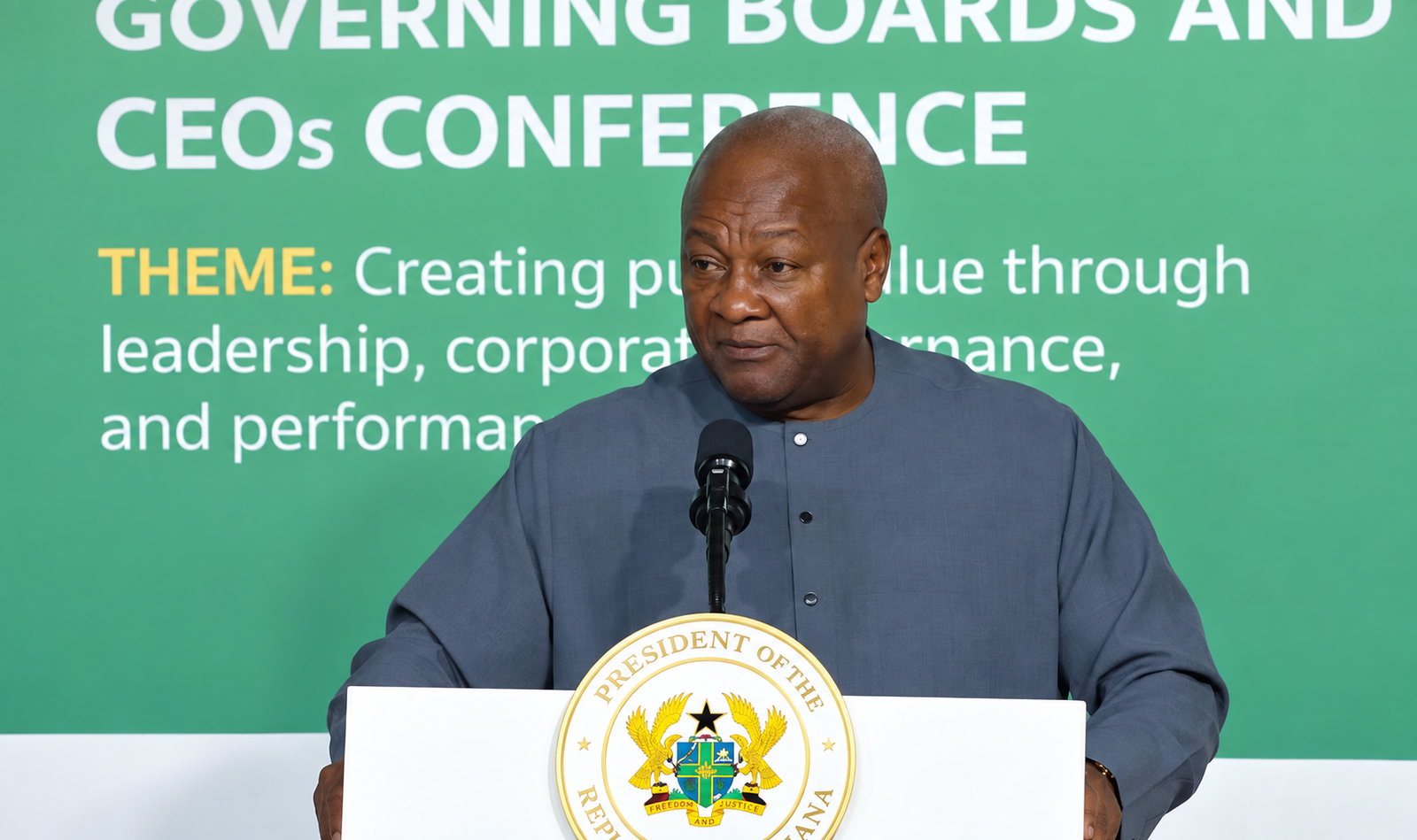
Dr Naomi Wolali Kwetey has been nominated as the Acting Managing Director of the Consolidated Bank Ghana Ltd (CBG).

Her appointment, made by President John Mahama, was communicated in a letter dated March 26, 2025.

The letter, signed by the Minister of Finance, Dr. Cassiel Ato Forson, was addressed to the Board Chairman of CBG.

Alongside Dr Kwetey, Ms. Shiela Azuntaba has been nominated as Deputy Managing Director, with both appointments taking effect from March 26, 2025.

A copy of the letter directed the Board to formalise the appointments in accordance with the Companies Act, 2019 (Act 992) and the bank’s constitution.

Profile of Dr Naomi Wolali Kwetey

Dr. Mrs. Naomi Wolali Kwetey, wife of NDC General Secretary Fifi Fiavi Kwetey, is a seasoned banking professional with over 20 years of experience in corporate banking, treasury management, credit, and strategic management.

She has built a distinguished career at Ecobank Ghana and the former Trust Bank, which was acquired by Ecobank in 2011.

A financial expert, she is a Fellow of the Chartered Institute of Bankers (FCIB) and a Chartered Dealer (ACI).

Dr. Kwetey is recognized as a turnaround leader with expertise in supervisory controls and sustainable growth within Ghana’s banking sector.

She has held key leadership positions, including Deputy Head of Credit Administration, Treasurer, Head of Financial Institutions and Markets, Business Manager for Financial Institutions and International Organisations, and Head of Customer Experience at Ecobank Ghana.

She also served as Head of Customer Experience for Ecobank’s operations in five West African countries.

Academically, Dr. Kwetey holds a Doctorate in Business Administration (DBA), a Master of Arts in Business and International Banking and Finance, and a Bachelor of Arts in Economics.

Source: Joy Business

Continue Reading
Click to comment

Leave a Reply

Your email address will not be published. Required fields are marked *

Business

Ghana Reference Rate Falls to 14.58% in February on Improved Market Indicators

Published

on

The Ghana Reference Rate (GRR), the benchmark used by commercial banks to price loans, declined marginally to 14.58 percent in February 2026, down from 15.68 percent in January.

The reduction reflects improvements in key variables used to compute the rate, including the Monetary Policy Rate, Treasury bill yields, and interbank market rates.

According to market data, the 91-day Treasury bill rate stood at 11.19 percent at the end of January, while the interbank rate averaged 14.91 percent over the same period. The Bank of Ghana’s recent cut in the Monetary Policy Rate to 15.5 percent was a major contributor to the February decline in the GRR.

The GRR was last reviewed downward on January 7, 2026, when it fell from 15.9 percent in December 2025 to 15.68 percent. In December, the rate had declined following a 350-basis-point cut in the Monetary Policy Rate to 18 percent, alongside a modest drop in Treasury bill rates.

Earlier, in November 2025, the GRR edged up slightly to 17.96 percent from 17.86 percent, driven by rising Treasury bill and interbank rates.

Overall, the benchmark rate trended downward through much of 2025, falling sharply from 29.72 percent in January to 19.67 percent by August.

Background to the GRR

The Ghana Reference Rate was introduced in 2017 by the Bank of Ghana in collaboration with the Ghana Association of Banks to serve as a transparent and consistent benchmark for loan pricing.

It replaced the previous base-rate system following extensive consultations, with the aim of promoting fairness and clarity in lending. The maiden GRR, announced in April 2017, stood at 16.82 percent.

Implications for Borrowers

The latest decline in the GRR could ease borrowing costs marginally in the coming month, particularly for customers on variable-rate loans contracted in February 2026.

While borrowers on fixed-rate loans will not benefit from the adjustment, those on variable rates may see slight reductions depending on individual bank pricing models.

Commercial bank lending rates, which averaged around 22 percent in January 2026, could be adjusted downward in line with the new benchmark.

However, the relief comes amid continued tight credit conditions, as liquidity constraints persist due to measures aimed at controlling inflation and stabilising the economy.

President of the Ghana National Chamber of Commerce and Industry, Stephane Miezan, noted that businesses are grappling not only with high borrowing costs but also limited access to credit from commercial banks, a situation he warned has contributed to the collapse of some firms.

Continue Reading

Business

BoG rolls out fintech and digital payment reforms to boost intra-African trade

Published

on

The Bank of Ghana (BoG) has announced a series of regulatory and digital infrastructure reforms aimed at strengthening cross-border payments and promoting inclusive economic growth across Africa.

The Second Deputy Governor of the BoG, Matilda Asante Asiedu, disclosed this at the 2026 Africa Prosperity Dialogue held at the Accra International Conference Centre on Wednesday, February 4.

She said the initiatives are designed to address persistent challenges such as payment interoperability gaps, limited regulatory trust, and consumer protection concerns, which continue to hinder intra-African trade and financial integration.

A key intervention, she noted, is the FinTech Passport, a joint framework between the Bank of Ghana and the Bank of Rwanda that allows for cross-border licensing of fintech companies.

The arrangement, she explained, promotes regulatory cooperation and trust among participating countries and could be expanded across the continent to support seamless cross-border payments and trade.

Mrs Asiedu also highlighted the Bank’s Next Generation Digital Public Infrastructure initiative, which is currently piloting multilateral interoperability frameworks, settlement systems, and potential cross-border currency arrangements.

She said these efforts are intended to build a more integrated, efficient, and resilient payment ecosystem for Africa.

In addition, she pointed to the recently enacted Virtual Asset Service Providers Act as a major regulatory milestone that supports emerging digital payment channels while ensuring robust consumer protection and effective risk oversight.

Mrs Asiedu stressed that payment systems are critical national and continental infrastructure, requiring strong cybersecurity safeguards, coordinated regulation, and trusted governance structures.

She added that the broader goal of the reforms is to advance inclusive growth and ensure that Africa’s digital and financial transformation delivers benefits across all sectors of society.

Continue Reading

Business

Bank of Ghana Cuts Gold Holdings by Half to Boost Reserves and Liquidity

Published

on

The Bank of Ghana has reduced its gold holdings by approximately 51 percent, shifting its focus toward foreign-currency assets to improve liquidity and generate higher investment returns.

Governor Dr. Johnson P. Asiama said the move came after gold made up more than 40 percent of the country’s total reserves, a concentration the central bank deemed too high.

“At the time, we were holding a little over 40 percent, so the decision was made to diversify, and that is what you see today,” Dr. Asiama explained during the 128th Monetary Policy Committee press briefing in Accra.

As part of the strategy, the Bank sold a portion of its gold holdings and reinvested the proceeds into income-generating foreign assets. Dr. Asiama noted that the approach has strengthened, rather than weakened, Ghana’s reserve accumulation.

“The effects we aimed for are already visible. The assets are earning dividends and contributing to reserve growth,” he said.

The reduction in gold exposure comes amid a global rally, with spot gold prices rising above US$5,200 an ounce in late January. However, Dr. Asiama cautioned that the surge may be temporary.

“It is true gold prices have reached record levels, but what you see now may be transitory and may not be permanent,” he said.

Despite the lower share of bullion, Ghana’s gross international reserves grew to US$13.8 billion at the end of December 2025, covering 5.7 months of imports, up from US$9.1 billion a year earlier.

Dr. Asiama emphasized that the adjustment reflects portfolio management rather than a retreat from gold. Future decisions will continue to focus on what is structurally optimal for Ghana’s reserves.

Continue Reading

Trending

Copyright © 2026 KPDOnline. Powered by AfricaBusinessFile