
General News
Ghana gov’t rejects Gold Fields Damang lease renewal for another 30 years


An application by Gold Fields Limited to renew the Damang Mining Lease held by its subsidiary, Abosso Goldfields Limited, for another 30 years has been rejected, a top government source has revealed.
This was corroborated in a statement released by Gold Fields Ghana Limited that the application to the Minerals Commission to extend the mining lease for the Damang Mine had been declined.
The decision not to renew the mining lease comes at a time when the existing 30-year lease granted on April 18, 1995, expires on April 18, 2025, marking a significant milestone in the government’s mission to reset the nation’s economic landscape.
Gold Fields Limited is the seventh biggest producer of gold in the world, and has two operational mines in Ghana, namely the Tarkwa Mine, which is operated by Gold Fields Ghana, and the Damang Mine, which is run by Abosso Goldfields Limited.
Renowned for its rich gold deposits, the Damang Mine is poised to play a pivotal role in strengthening Ghana’s economy.
The Government of Ghana held a 10 per cent share in both mines.
According to the 2024 Annual Report of the Gold Fields Group, which has mines in Canada, Australia, Peru, Chile and South Africa, the two mines in Ghana accounted for 32 per cent of the group’s gold production in 2024, meaning about a third of the entire gold produced by Gold Fields worldwide comes from Ghana.
Earlier reports indicated that before mining stopped at Damang, the Ghana mines of the company contributed about 40 per cent to the group.
Abosso Mine
The Abosso Mine initially operated from 1882 until 1956.
From 1989, Ranger Exploration, initially with other partners, first examined the feasibility of re-treating tailings from the Abosso Mine, and then the northeast extension of the Banket Conglomerates towards Damang village.
Further works carried out by Ranger between 1990 and 1992 demonstrated near-surface mineralisation.
By early 1996, three million ounces of mineral resources had been estimated in the area, and a feasibility study demonstrated that open pit mining would be viable.
Although the mining lease was granted on April 18, 1995, mining at the concession commenced in August 1997, with the first gold pour in November after the construction of the Damang Mine was completed earlier that year.
Gold Fields Limited and Repadre Capital Corp., a Toronto-listed mining royalty company, signed an agreement in 2001 to buy Ranger Exploration’s 90 per cent interest in Damang.
IAMGold and Repadre merged to give IAMGold an 18.9 per cent interest in Damang, and Gold Fields a 71.1 per cent interest.
In 2011, Gold Fields bought out IAMGold’s remaining interest in Damang, and the company now owns a 90 per cent stake, with the Government of Ghana holding the remaining 10 per cent.
According to the 2024 annual report of Gold Fields, no mineral reserves were declared at Damang, which meant there were no defined gold reserves to be mined there.
Actual mining at the mine is said to have stopped in 2023 as the company resorted to processing stockpiles.
In fact, it is stated in the Mineral Resources and Reserves Supplement to the Integrated Annual Report of 2023 that no exploration was proposed for the Damang Mine in 2024.
No reserves
The lack of reserves and the lack of funds for exploration spending for the Damang Mine appeared to suggest that the company was not interested in expanding mine life for the mine at Damang.
Additionally, the company this year intended to continue the processing of stockpiles in line with the life of the mine for at least one year.
The mine has since been considered as one that has not met the requirements and justification for an extension of lease.
Source: Graphic Online


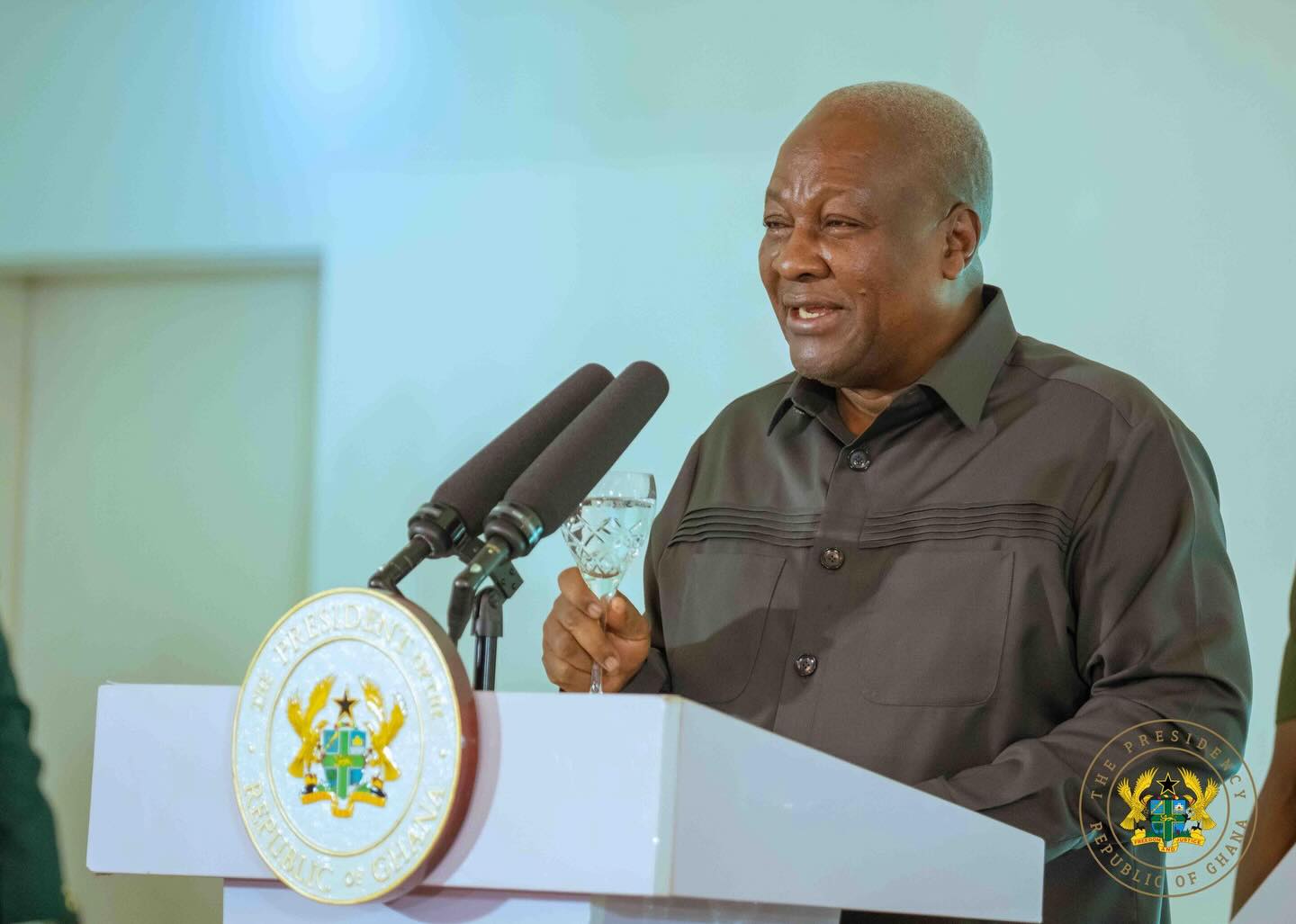
Mahama Jamaica Visit will take centre stage from August 2 to August 5, 2026, as President John Dramani Mahama embarks on a four-day official visit to Jamaica to strengthen diplomatic, economic, and cultural relations between Ghana and the Caribbean nation, while advancing the global reparations agenda.
According to a statement issued on Thursday, July 30, President Mahama will hold a series of high-level engagements in Kingston designed to deepen cooperation between Ghana and Jamaica and reinforce ties between Ghana and the Caribbean Community (CARICOM).
A major highlight of the Mahama Jamaica Visit will be the President’s participation in a high-level Reparations Dialogue at the University of the West Indies (UWI), Mona Campus. During the event, President Mahama will join Chairman of the CARICOM Reparations Commission, Sir Hilary Beckles, to advocate for greater international support for reparations over the transatlantic slave trade and its lasting impact on African descendants.
President Mahama is also expected to hold bilateral discussions with Jamaican Prime Minister Andrew Holness. Their talks will focus on expanding cooperation in trade, investment, culture, and South-South collaboration, while exploring new opportunities to strengthen economic partnerships and boost commercial exchanges between the two countries.
As part of the visit, the Ghanaian leader will address a joint sitting of Jamaica’s Houses of Parliament at the George William Gordon House. He is expected to present Ghana’s vision for stronger Africa-Caribbean relations and enhanced collaboration with the African diaspora.
The itinerary also includes a Trade and Investment Dialogue and a tour of the Kingston Freeport, where discussions will centre on positioning Ghana as a strategic gateway for CARICOM’s economic engagement with Africa.
To honour the long-standing historical and cultural ties between Ghana and Jamaica, President Mahama will lay a wreath at the shrine of Jamaica’s National Hero, Marcus Mosiah Garvey, at the National Heroes Park. He will also visit the Ghanaian Village Houses at Seville Heritage Park in St. Ann, a heritage site that preserves the shared ancestral connections between the two nations.
The President is further scheduled to pay a courtesy call on Opposition Leader Mark Golding and attend the “Mello-Go-Roun” cultural celebration at the National Arena as Jamaica marks its 64th Independence Anniversary.
Governor-General Sir Patrick Allen and Lady Allen will later host a State Dinner in honour of President Mahama.
The Presidency says the Mahama Jamaica Visit is expected to usher in a new chapter in Ghana-Jamaica relations by strengthening economic cooperation, promoting Ghana as CARICOM’s gateway to Africa, supporting the global reparations campaign, and advancing South-South partnerships for shared development.
General News
Court of Appeal Acquits Former MASLOC CEO Sedina Tamakloe-Attionu, Quashes 10-Year Conviction


Court of Appeal acquits Sedina Tamakloe-Attionu after overturning the conviction and 10-year prison sentence imposed on the former Microfinance and Small Loans Centre (MASLOC) Chief Executive Officer. The Court of Appeal ruled that the prosecution failed to prove its case beyond reasonable doubt, leading to the acquittal and discharge of the former MASLOC CEO and bringing the long-running criminal case to an end.
In a judgment delivered on Thursday, the three-member appellate court ruled that the prosecution failed to prove the charges against the former MASLOC boss beyond reasonable doubt. As a result, the court set aside the convictions and sentence previously imposed by the High Court.
The decision followed an appeal filed by Tamakloe-Attionu, who challenged both her conviction and the legality of being tried and sentenced in absentia. Her lawyers argued that the charges were legally flawed and that the evidence presented by the prosecution was insufficient to secure a criminal conviction.
The former MASLOC CEO was extradited from the United States to Ghana on June 9, 2026, after failing to return to the country while standing trial. She began serving her 10-year prison sentence at the Nsawam Medium Security Female Prison on June 24, 2026.
Tamakloe-Attionu had travelled to the United States in 2021 after obtaining permission from the High Court to seek medical treatment during the trial. However, she remained abroad and did not return to continue proceedings.
In 2024, an Accra High Court convicted her on several counts, including causing financial loss to the state and stealing. The charges stemmed from allegations that she misappropriated and diverted state resources during her tenure as Chief Executive of MASLOC.
However, the Court of Appeal has now overturned that judgment, concluding that the prosecution failed to establish the offences to the required criminal standard. The ruling effectively clears Tamakloe-Attionu of all convictions and nullifies her 10-year custodial sentence.
General News
C/R:Apostle Kojo Safo Kantanka Funeral: Church Members Deny Knowledge of Court Injunction
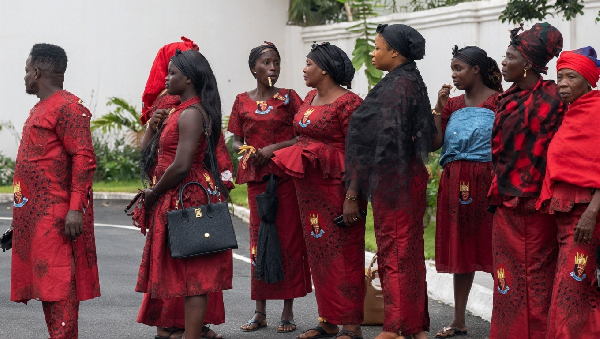
Some members of the Kristo Asafo Mission have dismissed reports that a High Court injunction has halted the final funeral rites of the church’s founder and leader, the late Apostle Emeritus Dr Kojo Safo Kantanka.
The funeral, which is taking place at Gomoa Mpota in the Gomoa Central District of the Central Region, is proceeding as planned despite widespread reports that the High Court in Accra granted an interim injunction on Wednesday to stop the funeral and burial arrangements.
Scores of mourners, family members, church leaders, and Kristo Asafo Mission members from various branches across Ghana have gathered at the funeral grounds to pay their final respects to the late Apostle, with activities continuing uninterrupted.
Speaking to Mireku Nyampong, some church members and funeral attendees said they were unaware of any court order preventing the funeral from taking place.
According to them, no official communication has been served on the church or the organisers directing them to suspend the funeral activities.
The members maintained that they would continue with the funeral programme as scheduled and appealed to the public to join them in celebrating the life, achievements, and legacy of Apostle Kojo Safo Kantanka.
They also urged the public to disregard reports suggesting that the funeral had been halted, insisting that they have not received any official notice of an injunction.
The comments come amid an ongoing legal dispute over the funeral arrangements following reports that the High Court issued a temporary injunction restraining the planned burial and funeral rites pending the determination of a legal case.
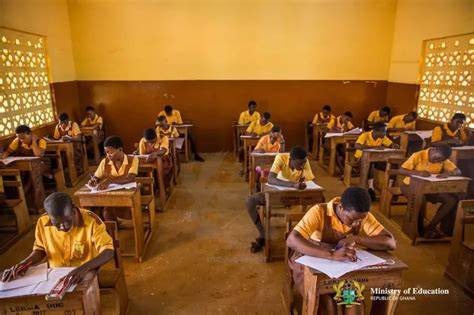
The West African Examinations Council (WAEC) has officially released the provisional 2026 Basic Education Certificate Examination (BECE) Results for school candidates.
In a statement issued on Wednesday, July 29, 2026, WAEC announced that candidates who sat for the examination can check their provisional results through their respective schools. The Council also stated that candidates who wish to access their results online may do so through its official website.
According to WAEC, the release of the 2026 BECE Results follows the completion of the marking process and the consideration of examination irregularities by the appropriate committee.
The Council noted that investigations into examination malpractice led to the cancellation and withholding of a number of candidates’ results.
WAEC disclosed that 105 candidates had their entire results cancelled, while the subject results of 496 candidates were also cancelled.
In addition, the Council announced that the subject results of 119 candidates have been withheld, while the entire results of 48 candidates have also been withheld pending further investigations.
According to the Council, these sanctions were approved following investigations into cases of irregularity detected during the conduct of the examination and the marking of scripts.
WAEC explained that the decisions were taken by the 37th Meeting of the Final Awards and Examiners’ Appointment Committee for the BECE, 2026, held on Tuesday, July 21, 2026.
The approved sanctions are as follows:
- Cancellation of Subject Results of 496 candidates;
- Cancellation of Entire Results of 105 candidates;
- Withholding of Subject Results of 119 candidates; and
- Withholding of Entire Results of 48 candidates.
The Council further revealed that the subject results of 2,722 candidates from 229 schools have been withheld for further scrutiny.
It explained that the withheld results may either be released or cancelled depending on the outcome of the ongoing investigations, which are expected to be completed by August 31, 2026.
WAEC stated:
“Meanwhile, the subject results of 2,722 candidates from 229 schools have been withheld for further scrutiny. The withheld results may be cancelled or released based on the outcome of investigations by August 31, 2026.”
The Council urged candidates, parents, guardians and other stakeholders to use only official channels to access the 2026 BECE Results, adding that candidates can obtain their results either through their respective schools or via WAEC’s official online results portal.
The release of the 2026 BECE Results marks the end of this year’s examination process, although investigations into examination malpractice involving affected candidates will continue until the Council reaches a final determination on the withheld results.


A fresh dispute has erupted within the Kantanka family ahead of the funeral and burial of the late Apostle Prof. Emeritus Kwadwo Safo, as lawyer and former MP Sarah Adwoa Safo has issued a strong warning to her younger brother, Israel Kwadwo Safo Kantanka, popularly known as Akofena.
The disagreement centers on the scheduled funeral and burial rites, which are expected to take place on Thursday, July 30, and Friday, July 31. While Akofena, who describes himself as the leader of the Kristo Asafo Church, insists that no funeral activities will be held on those dates, Adwoa Safo has maintained that the ceremony will proceed as planned.
The latest disagreement follows an earlier confrontation between the siblings during Akofena’s installation ceremony as head of the Kristo Asafo family. The incident reportedly turned violent, with Adwoa Safo alleging that gunshots were fired at her vehicle. She was subsequently taken to the hospital for medical attention.
Speaking at a recent press conference, Akofena urged members of the Kristo Asafo Mission and the public to disregard the announced funeral dates.
“I stand by my authority as the head of the Kantanka family and leader of Kristo Asafo to say that any date circulating should be ignored. There is no truth in it,” he stated.
However, during an interview on Okay FM’s morning show, Adwoa Safo dismissed Akofena’s claims, insisting that the funeral arrangements remain unchanged.
“He did not set the funeral date, neither is he the leader. The funeral will go ahead exactly as scheduled,” she said.
Adwoa Safo further revealed that the family has formally requested police protection and informed state authorities about the event to ensure adequate security.
According to her, several high-profile dignitaries, including the Chief of Staff, Speaker of Parliament Alban Bagbin, and the New Patriotic Party’s flagbearer, Dr. Mahamudu Bawumia, are expected to attend the funeral.
She also cautioned Akofena against attempting to disrupt the event, reminding him that he and others involved in the earlier confrontation are reportedly on bail and are required to maintain good behavior.
“He should not dare come to the funeral to create chaos. By the grace of God, he failed in his alleged attempt to kill me. We have notified all the security agencies, and anyone who tries to cause violence will face the full force of the law,” Adwoa Safo said.
The public disagreement has intensified tensions within the Kantanka family as preparations continue for the late Apostle Kwadwo Safo’s final funeral rites.

Mahama Jamaica Visit: President Heads to Jamaica to Deepen Ghana-CARICOM Relations

Osebo Cautions Mourners Over Bottled Water at Apostle Kwadwo Safo Kantanka’s Funeral

Court of Appeal Acquits Former MASLOC CEO Sedina Tamakloe-Attionu, Quashes 10-Year Conviction



-
 General News1 week ago
Dr. Charles Dwamena Sues Hubtel for GH¢5 Million Over Alleged Campaign USSD Sabotage
-
 Entertainment1 week ago
DJ K.A Apologises Over Viral Video, Says It Was Recorded Four Years Ago
-

 General News2 weeks ago
Okatakyie Afrifa Granted GH¢100,000 Bail Over Alleged Disruption of NPP Constituency Elections
-
 Entertainment4 days ago
Ghana Secures $3.5 Million UNESCO Heritage Support During Tourism Minister’s South Korea Visit
-
 General News1 week ago
Chairman Wontumi Sentenced to 20 Years in Prison Over Illegal Mining
-

 Entertainment2 weeks ago
Ghanaians Question Akwaboah’s Advice to Save GH¢8,000 Monthly Before Marriage
-

 Entertainment1 week ago
“Hits Rule Everything Now” — Perez Musik Says Legends Like Bob Marley Would Face Challenges Today
-
 General News3 days ago
EOCO Declares Emmanuel Ababio Wanted Over Alleged Fraud