
Entertainment
Medikal’s “Beyond Kontrol” Concert at Accra Sports Stadium Earns IRAWMA Nomination

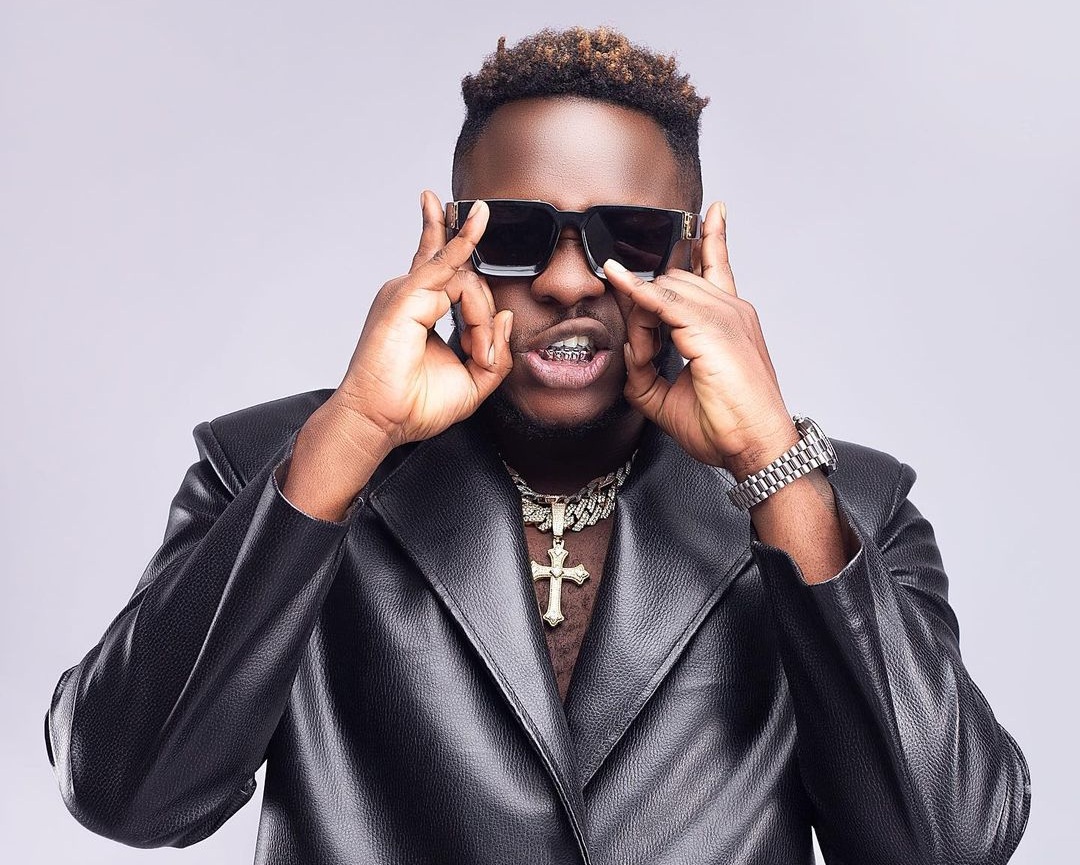
Multiple-award-winning Ghanaian rapper Medikal has secured an international nomination, as
His headline concert, “Beyond Kontrol,” gets nominated in the Concert of the Year category at the 43rd edition of the International Reggae and World Music Awards, popularly known as IRAWMA.
Founded in 1982, IRAWMA is one of the longest-running award schemes dedicated to celebrating reggae and world music talents across the globe. Over the years, the platform has recognised influential artists from the Caribbean, Africa, Europe, and North America, positioning itself as a respected international institution within the global music community. A nomination from the scheme signals cross-border impact and cultural relevance beyond an artist’s home market.

Medikal’s nomination comes on the back of his “Beyond Kontrol” concert, which was staged at
the Accra Sports Stadium. Hosting a full-scale concert at one of Ghana’s largest venues marked
a significant moment in his live performance career. The show was characterised by high production value, strong stage design, energetic delivery, and a setlist packed with fan favourites. The Concert of the Year category typically recognises not only attendance numbers but overall execution, audience engagement, and cultural impact.
Industry observers say the nomination reflects the scale and ambition behind the Accra Sports Stadium event. Beyond the concert, Medikal’s strong positioning this year has also been fueled by the success
of his hit single “Shoulder,” widely regarded as the biggest song of 2025. The track dominated airwaves, streaming platforms, and social conversations, reinforcing his commercial strength and relevance within Ghana’s music landscape.
Although he has not yet secured multiple awards this year, there is growing anticipation that he
will attract more nominations and potentially convert them into wins as award season unfolds.
The combination of a globally recognised nomination and a record-breaking single has
strengthened expectations around his prospects. For Medikal, the IRAWMA recognition is both a personal achievement and a broader spotlight on Ghanaian hip hop’s expanding international reach.










In Ghana, admiration is loud. Celebration is passionate. Support is intense. But so is condemnation.
One moment, you are the nation’s pride. Next, you are trending for all the wrong reasons. The same voices that once defended you become your harshest critics. This is the irony of fan culture in Ghana, a love that can quickly turn into public prosecution.
Ghanaian fanbases are among the most passionate in Africa. Whether in music, football, film, or politics, supporters show up with unmatched energy. They stream relentlessly, defend fiercely on social media, and mobilise campaigns that push their Favourites to the top. But the loyalty often feels conditional.
When an artist drops a hit, they are crowned king. When a footballer scores, he is a national hero. When a public figure achieves international recognition, we all claim ownership of the success. “Our own,” we proudly say.
Yet, the moment there is a misstep, a poor performance, a controversial statement, a failed project, the narrative shifts. Suddenly, the same person is labelled overrated, arrogant, finished, or undeserving. The applause fades. The attacks begin.
In the digital era, social media has intensified this culture. Platforms like X (formerly Twitter), Facebook, Instagram, and TikTok have created a space where opinions travel faster than facts.
Fan loyalty now comes with hashtags, trends, and digital warfare. Rival fanbases clash daily. Success is weaponised. Failure is magnified. A delayed album becomes a sign of incompetence. A missed penalty becomes a career-defining flaw. A single interview quote becomes grounds for cancellation.
There is rarely room for nuance.
What makes this irony even more troubling is the unrealistic expectation of perfection. Ghanaian fans demand fair excellence. But they often forget that excellence is a process, not a permanent state. Creative work evolves. Athletes have off days. Human beings make mistakes.
Yet, in our culture of instant judgment, grace is scarce.
We demand consistency but offer little patience. We expect growth but punish experimentation. We celebrate risk-taking when it succeeds, but mock it when it fails.
Perhaps the deepest irony lies in the sense of ownership. When a Ghanaian creative breaks international barriers, the entire nation claims the victory. “We did it.” “Ghana to the world.” “Our star.” But when the same person faces backlash, legal issues, or creative decline, the collective “we” disappears. It becomes “he messed up” or “she’s finished.” We claim the glory, but we rarely share the burden.
Criticism is necessary. No industry grows without accountability. Constructive feedback strengthens talent. Honest analysis improves performance. But there is a difference between critique and crucifixion. Constructive criticism addresses the work. Crucifixion attacks the person. In Ghana’s fan culture, that line is often blurred.
A bad song becomes proof that an artist was never talented. A single poor tournament becomes evidence that a footballer is useless. One controversial moment becomes a permanent label. This reactionary culture does not build industries; it destabilises them.
For creatives especially, this pattern has consequences. It discourages experimentation. It breeds fear. It creates a defensive environment where artists feel they must constantly prove themselves to avoid public humiliation. Instead of nurturing talent through highs and lows, we swing between extreme praise and extreme condemnation.
And in the long run, that instability affects the growth of Ghana’s creative economy.
Passion is not the problem. Ghana’s passion is a strength. It drives streams, fills stadiums, and pushes our stars onto global platforms. What we need is balance.
Celebrate success loudly — but criticise fairly.
Demand excellence — but allow humanity.
Support consistently — not selectively.
True loyalty is not tested during victory; it is revealed during difficulty. If Ghanaian fanbases can learn to replace reactionary outrage with responsible engagement, we will not only protect our talents but also strengthen the industries we claim to love. Because at the end of the day, if we are quick to praise when it is good, we must be mature enough not to crucify when it is bad. That is the real growth Ghana needs.
Entertainment
From Pain to Purpose: Lydia Forson’s Emotional Homecoming Speech at University of Ghana Graduation
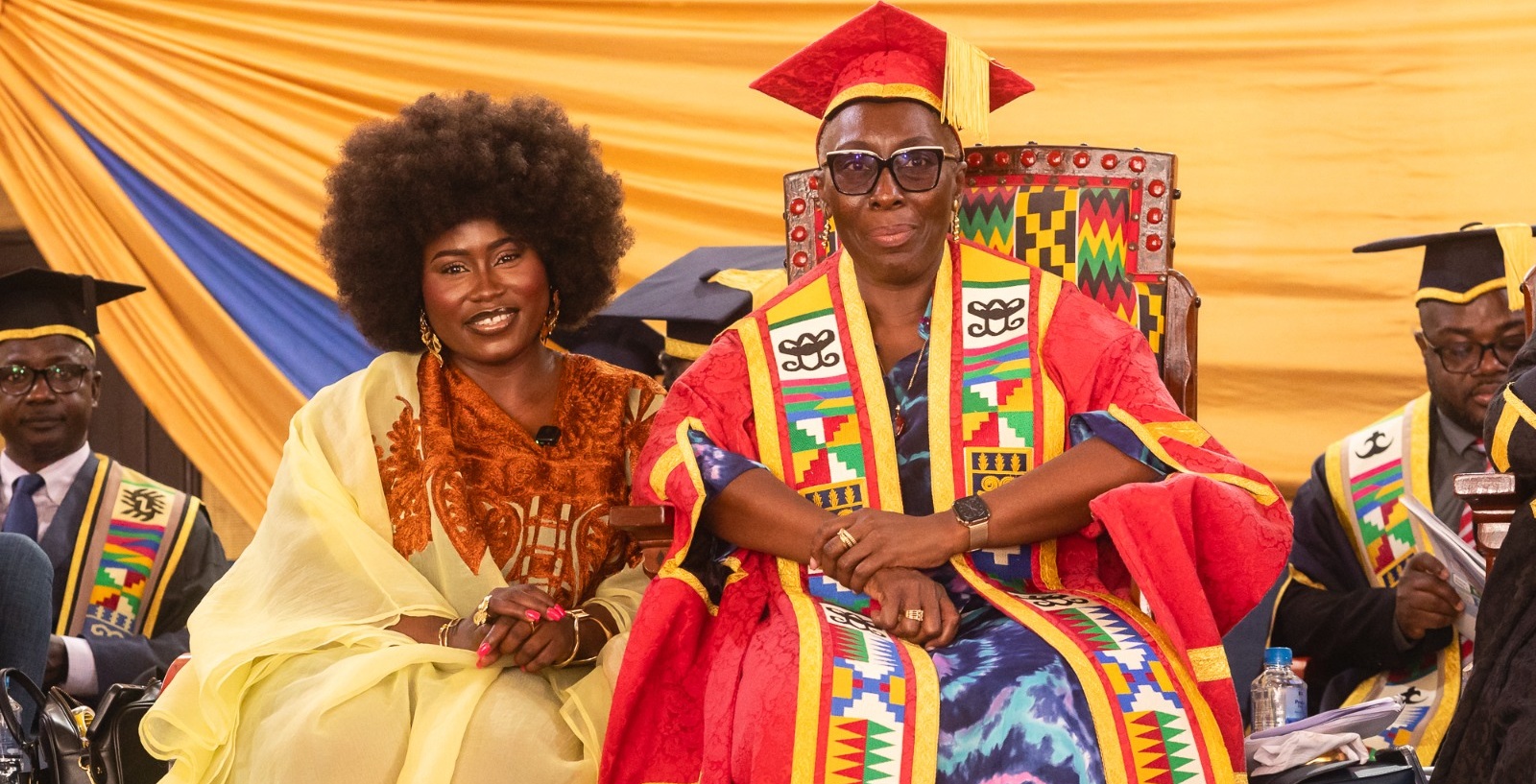
In a heartfelt and emotional speech delivered at her alma mater, the University of Ghana, renowned Ghanaian actress Lydia Forson shared a candid reflection on her personal journey, one marked by pain, growth, and ultimately, reconciliation with her past.
Standing before a sea of graduates, faculty, and family, Forson, who left the University of Ghana campus two decades ago, determined never to return, opened up about the complex feelings that shaped her early departure. “I left angry. I left hurt,” she said, speaking openly about the emotional scars she carried for years.

“My last year here wasn’t pleasant. In many ways, it marked the beginning of one of the hardest periods of my life,” Ms Forson told the gathering of graduates, university leadership, faculty members, and families. “When I left this university, I left angry. I left hurt. And I left carrying a lot of resentment.”
The actress, known for her trailblazing work in Ghana’s film industry, confessed that her academic journey was anything but smooth. “To be honest, I barely made it out of here. It was by the skin of my teeth. And when I did, I walked off this campus and swore never to look back.”


The February 2026 congregation ceremonies marked a significant milestone for the university, with 15,288 graduands receiving degrees across 17 sessions, including 153 PhD candidates, 4,197 master’s graduates, 10,543 undergraduates, and 395 diploma holders.
Saturday’s College of Humanities ceremony specifically celebrated graduates from the university’s largest college, with the Great Hall serving as the backdrop for what became an unexpectedly emotional homecoming.

Presiding over the ceremony was Professor Felix Ankomah Asante, Pro Vice-Chancellor of the Research and Innovation Directorate, who urged graduates to strive for excellence in their future endeavours.
“Graduating students, today we celebrate the completion of your academic programs as well as the boldness and confidence with which you step into the next stage of your lives. Congratulations and best wishes to you all,” Professor Asante said, while also highlighting the university’s strong performance in the 2026 Times Higher Education World University Rankings.
University Vice-Chancellor Professor Nana Aba Appiah Amfo, who spoke during the broader congregation ceremonies, congratulated all graduating students for their hard work and resilience, noting that they are now well-equipped to enter the world of work and contribute meaningfully to national and global development.
The ceremony, which had veteran actress Lydia Forson as the guest speaker, also provided a platform to celebrate exceptional academic achievement. Among those honoured was Ms Mofiyinfoluwa Motunrayo Samuel, a Nigerian scholar who was named the valedictorian for her graduating cohort within the College of Humanities during that very session. Ms Samuel graduated with an impressive Final Cumulative Grade Point Average (FCGPA) of 3.95 in her Bachelor of Arts degree in French and Linguistics. While Emmanuel Nana Yaw Appeagyei was named the overall Valedictorian for the entire College of Humanities with a near-perfect 3.99 FGPA, Ms Samuel’s remarkable feat stood as a shining example of the academic excellence on display at the event.

However, it was Lydia Forson’s raw, unfiltered address that became the talk of the ceremony. Standing before an audience that included the Chancellor’s Representative, University Council members, the Vice-Chancellor, Pro-Vice-Chancellors, the Registrar, Provost of the College of Humanities, and members of the College of Humanities Advisory Board, the actress admitted that preparing the speech forced her to confront years of unexamined pain.
“For years, I carried a story of frustration. Of feeling unseen and misunderstood,” she said. “But writing this speech forced me to confront something I hadn’t fully acknowledged: that for years, I held on to everything that went wrong, instead of recognising the many things that went right.”
Ms. Forson proceeded to dismantle her own narrative of victimhood, acknowledging that while her time at the university was marked by struggle, it was equally defined by growth and formation.
“This campus shaped me,” she declared. “It’s here I learned independence, got my first job and where I tested my entrepreneurial instincts. It’s here that I handed out my very first complimentary card as a marketing executive, with absolutely no experience, just passion and audacity.”
The actress credited the university with launching her media career, recalling that she got her first stint on television as a student, gained popularity, and opened doors to the career she has today.
“This is also where I built confidence, through struggle, resistance and through everything I had to fight for,” Ms Forson added. “So yes, there was a struggle. There was hurt. There were a lot of tears. There was disappointment. But there was also growth, pride and becoming.”

Her message to graduates was unequivocal: “As you step into the next chapter of your lives, do not discard parts of your journey just because they were difficult. Do not carry only the good and pretend the bad never happened. Carry all of it. The good. The bad. Even the ugly.”
In an unexpected turn, Ms Forson pivoted from addressing graduates to speaking directly to the university’s academic staff; a moment that drew visible attention from faculty members seated in the front rows.
“Beyond speaking to the graduating class, I want to gently speak to every lecturer, every academic, every member of staff who contributes to shaping young minds,” she said. “Universities do not merely confer degrees. They shape human beings.”

Quoting her father, Forson noted that “education is meant to make us fit to live and to believe with, not just to earn with.” She reminded faculty that learning extends beyond lecture halls into friendships, late-night conversations, hall weeks, parties, and even heartbreaks.”All of that is education,” she insisted.
The actress challenged the academic community to examine their role in students’ lives: “Who are you in someone’s story? Because there were lecturers who saw potential in us before we saw it in ourselves. Some people choose to build rather than break.”
“Will you be remembered as the person who made a student feel small? Or the one who made them feel seen? The voice that discouraged, or the voice that affirmed?” she asked. “Because sometimes it only takes one sentence to diminish someone. But it also only takes one sentence to change the trajectory of a life.”

In a revelation that drew applause from the audience, Ms Forson announced that her return to campus has prompted her to finally pursue a long-overdue master’s degree at the university.
“Now that all of this is off my chest, I can finally and proudly say congratulations to all of us,” she said. “Because in a way, this is my graduation too. I never came for mine. And standing here today feels like closing one chapter and opening another as I’m finally coming back to study again.”
As she concluded her speech, Forson left graduates with a final exhortation: “Hold on to it all. Hold on to the friendships. Hold on to the lessons. Hold on to the moments that tested you. Because one day, you will look back, not with bitterness, but with clarity. And you will realise that even the chapters you wanted to erase were shaping the person you needed to become.”
“To my fellow graduates,” she added with emphasis, “Go boldly. Go fearlessly. And carry your entire story with you.”
Zolla Nie/Mk Content

The anticipation across Ghana’s music space is electric as legendary artist Nana King prepares to release his highly-anticipated single “4EVR Champion” on March 6, 2026. More than just a comeback, this moment signals a cultural revival, a powerful fusion of heritage, resilience, and modern-day music strategy.
Backed by Ashanti International Record Label, the rollout for 4EVR Champion is already making waves nationwide. In a bold nod to traditional music marketing, the label has launched a sweeping radio promotional blitz across major stations, proving that even in the digital age, terrestrial radio still commands influence and loyalty.
A Renaissance of Sound and Strategy
‘4EVR Champion’ pays homage to Nana King’s original classic but arrives reimagined for a new era, delivered primarily in English with vibrant hints of Twi and Pidgin, the single bridges generations while maintaining the authentic Ghanaian spirit that first defined his legacy.
Adding even more firepower to the project is Nana Queen’s feature, widely regarded as the reigning rap queen. Her lyrical prowess complements Nana King’s commanding presence, creating a cross-generational anthem poised to dominate both airwaves and streaming platforms.
Industry watchers are already speculating about the visual masterpiece expected to accompany the single. If the energy surrounding the campaign is any indication, fans should brace themselves for a cinematic statement piece.
More Than Music – A Movement
In a recent interview, Marcelle Sirkus, COO of Ashanti International and manager of Nana King, emphasised the broader significance of the comeback:
“Nana King’s return is more than just a musical event, it’s a call to action for the industry.”
Indeed, this comeback represents more than nostalgia. It is a declaration that legacy artists can evolve, compete, and lead conversations in today’s fast-paced digital music ecosystem.

A Word of Caution to the Industry
Amidst the excitement, Ashanti International has issued a firm warning to artists and stakeholders about impersonators and fraudulent individuals attempting to exploit the buzz around the project. The label specifically called out Emmanuel Larbie, described as a fake presenter/DJ, allegedly making false promotional promises.
The incident serves as a reminder for industry players to verify partnerships and work strictly through official channels. In Nana King’s camp, vigilance and professionalism remain top priorities.
As March 6 approaches, one thing is clear: 4EVR Champion is not just a single release; it is the rebirth of a legend, the revival of authentic promotion, and perhaps the spark of a new revolution in Ghana’s music landscape.
Ghana, get ready. The champion is back.

Ghana to Mark 69th Independence Anniversary at Jubilee House on March 6

Ghana Targets 15-Month Import Cover by 2028 with Gold-Backed Reserve Plan

[EDITORIAL] Praised in Victory, Crucified in Defeat: The Ghanaian Fanbase Paradox



-
 Entertainment2 weeks ago
We Should not Reduce the Culture and Creative Arts Industry to mere Entertainment – Richardson Commey Fio Laments
-

 Entertainment2 weeks ago
[EDITORIAL] Just as Ghana Rises on the Global Map; Mediocrity Creeps In: The Ordeal of Vyacheslav Trahov the “Russian Alien”
-
 General News2 weeks ago
Ghana to Ratify AU Convention on Ending Violence Against Women and Girls, Mahama Announces
-
 Business2 weeks ago
Cocoa Price Cut Sparks Fears Over Environmental Sustainability and Illegal Mining Surge
-
 General News5 days ago
Mahama: We’ll increase efforts to clean polluted water bodies and reclaim mined lands
-
General News5 days ago
Mahama: Mining Must Leave Communities Better Than It Found Them
-

 Sports2 weeks ago
Aduana FC Coach Cioaba Aristica announces starting lineup ahead of Medeama Clash
-
 General News2 weeks ago
Government Transfers GH¢4.35bn Cocoa Road Debt from COCOBOD to Roads and Finance Ministries