
General News
SONA: Ghana Targets Lower Electricity Costs as Mahama Renegotiates Power Contracts — Mahama

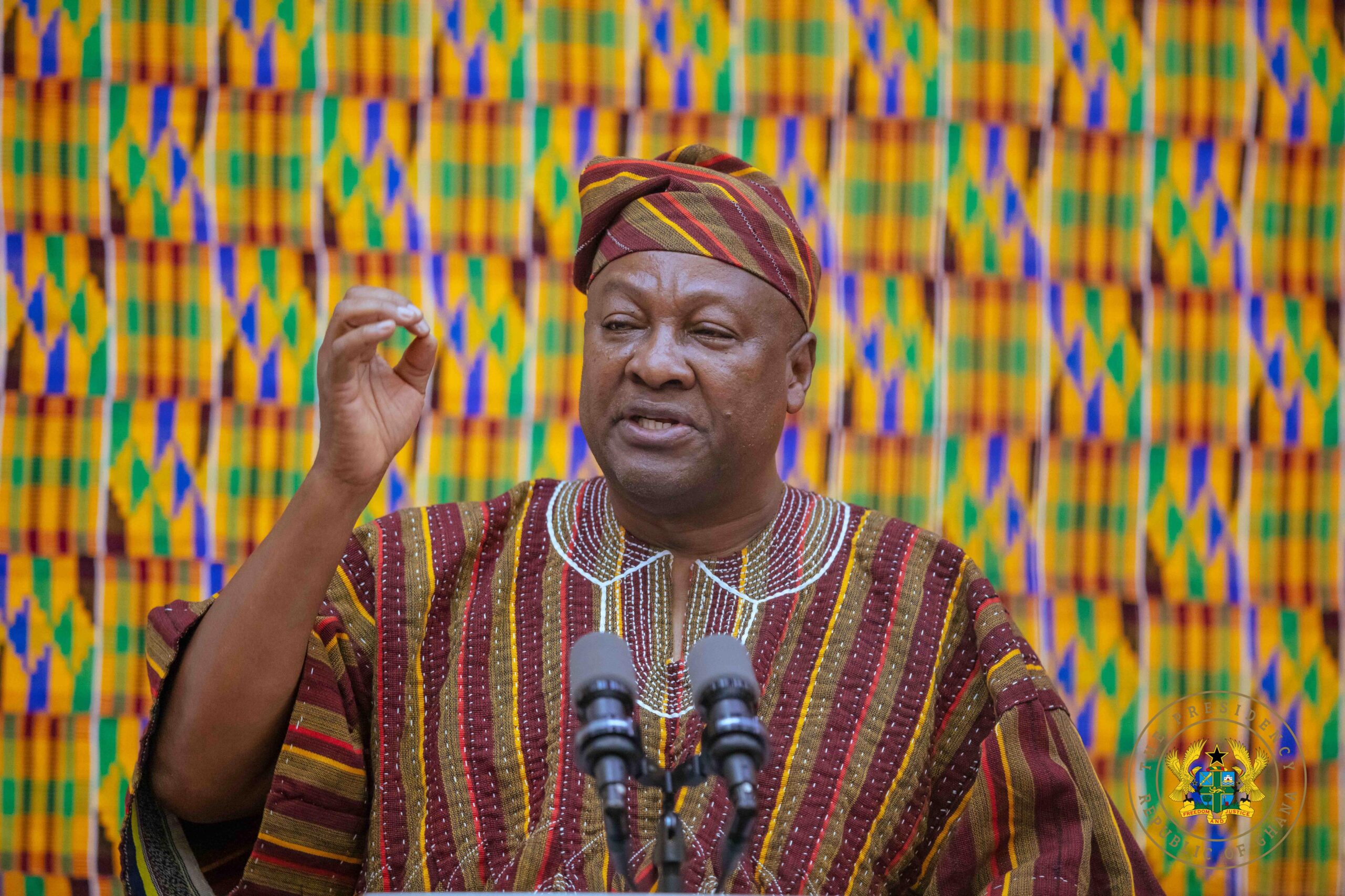
President John Dramani Mahama says government is aggressively pursuing reforms in the energy sector aimed at reducing electricity tariffs, eliminating legacy debts, and ensuring reliable power supply to support economic and industrial growth.
Addressing Parliament, President Mahama announced that government has successfully renegotiated several Power Purchase Agreements (PPAs) with nine Independent Power Producers (IPPs), resulting in significant fiscal savings for the country.
“We are determined to address the high cost of power and ensure that Ghanaian households and industries benefit from affordable electricity,” President Mahama stated.
He disclosed that the renegotiations have already generated immediate financial relief for the state, with about $250 million saved through revised contract arrangements.
“Engagements with the nine independent power producers have resulted in $250 million in immediate savings for the country,” he said.
President Mahama further revealed that the government has also restructured $1.1 billion in legacy energy sector debt, allowing for manageable repayment schedules between 2026 and 2028.
“This administration has successfully restructured $1.1 billion of legacy debt to be paid within a sustainable period from 2026 to 2028,” he explained.
He said the energy sector reforms are guided by a long-term vision to stabilize electricity pricing and remove financial bottlenecks that have historically constrained the sector.
According to the President, the revised agreements will undergo further review before being submitted to Cabinet and subsequently presented to Parliament for ratification.
“These revised agreements will be submitted to Cabinet and will be brought to Parliament for ratification,” he said.
President Mahama added that strengthening domestic gas supply remains central to government’s strategy to lower power generation costs and reduce reliance on expensive liquid fuels.
“By scaling up domestic gas production, we are ensuring reliable nationwide electricity generation while accelerating industrial expansion,” he added.

General News
SONA: Government Takes Steps to End No-Bed Syndrome — Mahama Assures Emergency Care for All Patients
President John Dramani Mahama has announced decisive measures to eliminate the long-standing “no-bed syndrome” in Ghana’s health facilities, emphasizing that no patient in need of emergency medical care should be turned away from any health facility.
Speaking during the State of the Nation Address, President Mahama stressed that the Ministry of Health will soon issue new operational guidelines to ensure that patients in emergency situations receive immediate care, even under makeshift or temporary conditions.
“You don’t need to have a comfortable bed to save a patient. No patient must be turned away from any health facility they report to,” President Mahama stated, underscoring the government’s commitment to saving lives while health infrastructure capacity is being expanded.
To address the challenge sustainably, the government outlined several ongoing infrastructure projects aimed at increasing hospital bed capacity across the country. President Mahama announced the implementation of Phase 2 of the Ridge Hospital project to expand bed capacity at the Greater Accra Regional Hospital.
“We are investing heavily in expanding healthcare infrastructure to ensure that our hospitals can meet the growing demand for quality healthcare services,” he added.
The President also confirmed that several major hospital projects will be completed to improve healthcare delivery nationwide. These include the completion of the Police Hospital project and the La General Hospital project in the Greater Accra Region.
In the Ashanti Region, President Mahama said the government remains committed to strengthening tertiary and regional healthcare delivery. “We will complete the Sewa Regional Hospital. We will complete the Afari Military Hospital. And we will complete the Komfo Anokye Teaching Hospital Maternity and Children’s Block,” he assured.
According to the President, the infrastructure expansion is part of a broader health reform agenda aimed at improving access to quality healthcare while reducing the pressure on major referral hospitals.
Health policy analysts have often identified the no-bed syndrome as a critical challenge contributing to preventable deaths in the country’s health system. The new policy guidelines are expected to improve emergency response protocols and ensure better coordination between health facilities.
President Mahama reaffirmed that improving healthcare access remains a top priority of his administration, adding that the government will continue to invest in both human resources and health infrastructure to strengthen Ghana’s health system.
President John Dramani Mahama has announced significant progress in strengthening Ghana’s health workforce, revealing that over the past year, 13,500 nurses and midwives, along with hundreds of doctors and other health professionals, have been absorbed into the public payroll.
Addressing the nation, President Mahama described the development as part of government’s commitment to improving healthcare delivery and resolving unemployment challenges among trained health professionals.
“Over the past year, 13,500 nurses and midwives, together with hundreds of doctors and other health professionals, have been successfully absorbed into the public payroll,” President Mahama stated.
He further announced that nursing trainee allowances, which had been a major concern for trainees, have now been fully regularized and restored as part of efforts to support health education and training.
“We are determined to support our health trainees and professionals. That is why nursing trainee allowances have been regularized and restored to ease the financial burden on students pursuing health training,” he added.
According to the President, the government’s health sector reforms are aimed at improving service delivery, boosting morale among health workers, and ensuring better access to quality healthcare across the country.
He reiterated government’s commitment to expanding recruitment opportunities for health professionals while improving working conditions within the public health sector.
Analysts have described the move as a major step toward addressing workforce shortages in public health facilities and strengthening Ghana’s healthcare system.
President John Dramani Mahama has defended the government’s decision to revise the producer price of cocoa, describing the move as a necessary economic reform aimed at stabilizing the sector and protecting Ghana’s long-term financial future, despite the short-term challenges it may create for farmers.
Addressing Parliament during the State of the Nation Address (SONA), President Mahama acknowledged the concerns of cocoa farmers following the price adjustment but stressed that the decision was unavoidable due to liquidity pressures in the sector.
“In the last week, we have had to take the painful but necessary decision to revise the producer price of cocoa to achieve competitive pricing and resolve the acute liquidity challenges in the sector,” President Mahama stated.
He explained that the government faced a difficult economic choice, noting that failure to implement the reforms would have forced the country into additional borrowing, potentially worsening Ghana’s debt situation.
“Failure to do this would have meant borrowing billions in borrowed funds. This unplanned expenditure would have taken us right back to the very devastating economic problem we have only recently begun to escape,” he said.
President Mahama further revealed that previous economic challenges had placed significant financial strain on the national budget, making prudent fiscal management essential to sustain economic recovery.
He assured cocoa farmers that the reforms are not intended to disadvantage them but rather to ensure sustainable and fair returns for their labour.
“While fully understanding the concerns and protests of our farmers, I can firmly assure them that the reforms announced by government will see a total transformation of the cocoa sector,” he said.
According to the President, the restructured pricing system will provide greater transparency and help farmers maintain decent profit margins while covering the cost of production.
“It will guarantee them a fair and transparent price that enables them to meet the cost of producing the commodity and making decent margins,” he added.
President Mahama emphasized that economic leadership requires making tough decisions to protect the broader population from future hardship.
“The difference between economic hardship and avoiding the same is the exercise of sound economic judgment. And I’m determined to take decisions that ensure our collective well-being and avoid the suffering of all our citizens,” he stated.
He acknowledged that the reforms may be unpopular in the short term but insisted they were necessary to secure Ghana’s economic transformation and ensure the sustainability of the cocoa sector, which remains a key contributor to foreign exchange earnings and rural livelihoods.
“These are difficult decisions to take, but I had to take them,” he concluded.

SONA: GH¢20m for Film Sector, GH¢20m for Creative Industries — Mahama Announces Major Investment

SONA: Government Takes Steps to End No-Bed Syndrome — Mahama Assures Emergency Care for All Patients
2026 FIFA World Cup: President Mahama tasks supporters to return immediately after the tournament



-

 Entertainment2 days ago
[EDITORIAL] Praised in Victory, Crucified in Defeat: The Ghanaian Fanbase Paradox
-

 Sports4 days ago
BREAKING: Salary Crisis hits Tension at Eleven Wonders Camp for the second time
-
 General News1 week ago
Mahama: Mining Must Leave Communities Better Than It Found Them
-
General News1 week ago
Mahama: We’ll increase efforts to clean polluted water bodies and reclaim mined lands
-

 Politics2 weeks ago
George Kofi Arthur Declares Readiness for Western NDC Chairmanship, Citing Experience and Track Record
-
 General News3 days ago
Police Arrest Two in Agona Swedru With 209 Slabs of Suspected Narcotics, Reject GH₵100,000 Bribe
-
 General News2 weeks ago
Mahama Pushes UN Resolution to Recognize Transatlantic Slave Trade as Gravest Crime Against Humanity
-
 General News1 week ago
Mahama Unveils Five-Pillar Plan to Boost Mining Local Content