
General News
Gold Board Initiative Boosts Ghana’s Economy by Over GH¢3 Billion in Four Months – Kwakye Ofosu


The Minister of State in charge of Government Communications, Felix Kwakye Ofosu, has revealed that over GH¢3 billion has been injected into Ghana’s economy in just four months through a new government policy mandating small-scale miners to sell their gold exclusively to the Gold Board.
Speaking on GTV’s Breakfast Show, Mr. Kwakye Ofosu credited this initiative for the recent stabilization of the cedi. “In the last four months, more than $3 billion has come into the country in addition to what would have otherwise come,” he explained.
Under the arrangement, the Gold Board buys gold in cedis, exports it, and returns the foreign exchange earnings into the local economy. This inflow of dollars is then allocated across critical economic sectors, with a portion also held by the Bank of Ghana to bolster reserves. Some of the dollars are subsequently injected into the foreign exchange market or used to settle international obligations.
Before this policy was introduced, small-scale miners exported gold informally, and the resulting foreign exchange rarely reached the formal economy. “Small-scale miners were taking gold out of this country in a manner that was not accounted for. The proceeds did not come to a central point for equitable distribution,” Mr. Kwakye Ofosu noted.
He criticized the previous administration for its failure to stabilize the cedi despite having eight years in office. “In 2022 alone, the cedi lost about 54% of its value. It was the worst-performing currency at the time,” he pointed out.
Mr. Kwakye Ofosu assured that the Gold Board policy is not a short-term measure, but a lasting strategy. “The President has indicated that at some point, the cedi will hover within a certain band — a stable range that will shield Ghanaians from untold hardships,” he said.
Responding to claims that similar solutions were implemented under the previous administration, Mr. Kwakye Ofosu concluded, “If they indeed had effective measures, they would have produced results during their eight-year tenure.”







General News
Police Arrest Akofena, Two Others Over Shooting Incident Involving Former MP Adwoa Safo
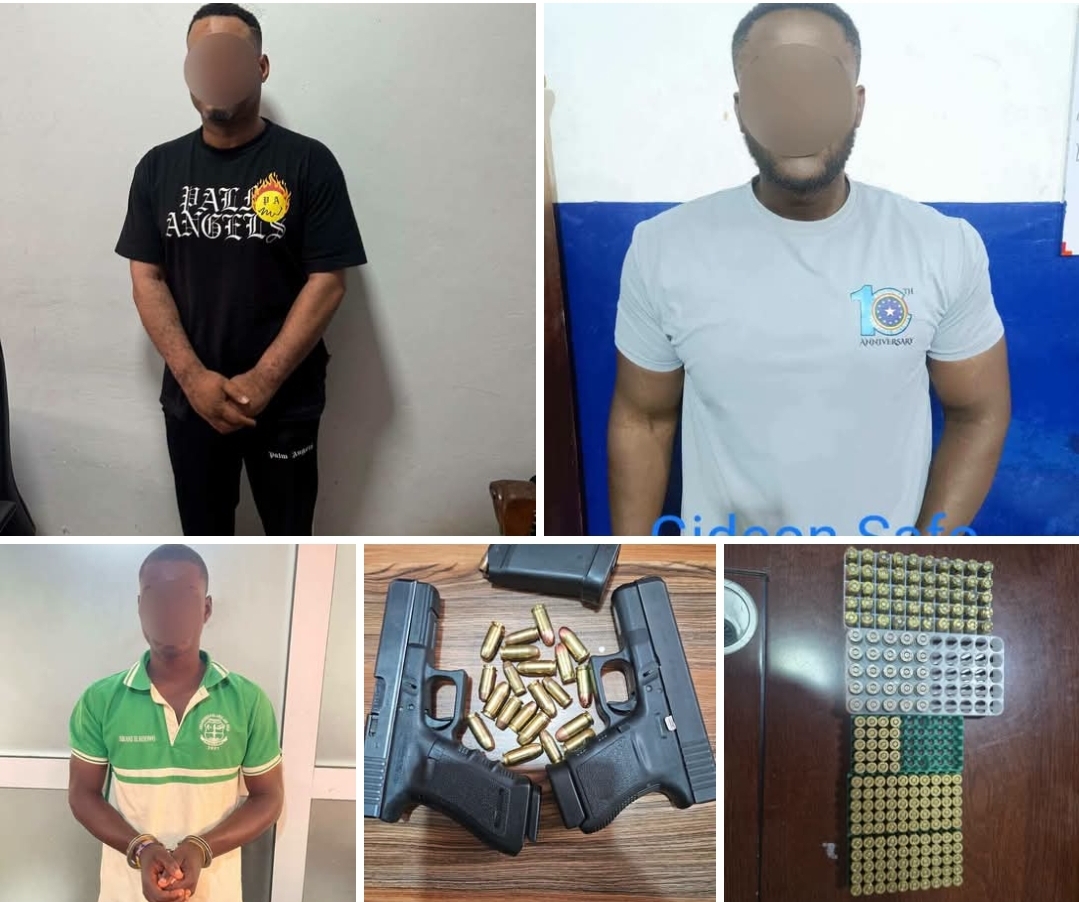
The Ghana Police Service has arrested Israel Kwadwo Safo, popularly known as Akofena, in connection with a shooting incident involving former Dome-Kwabenya Member of Parliament, Sarah Adwoa Safo.
According to the Police, the suspect voluntarily reported to the Regional Police Headquarters on June 22, 2026, a day after the incident occurred. He was subsequently transferred to the Criminal Investigations Department (CID) Headquarters to assist with ongoing investigations.
Police say a search conducted on his vehicle and residence at Kwabenya led to the recovery of a significant quantity of ammunition and firearms. The items retrieved included 120 rounds of 9mm ammunition, 50 rounds of .45 calibre ammunition, 25 rounds of .40 calibre ammunition, several loaded magazines, and two Glock pistols, one of which is registered in the suspect’s name.
Further investigations resulted in the arrest of two additional suspects identified as Nana Kwaku Afriyie and Kwadwo Safo Koomson.
The three suspects remain in Police custody and are assisting with investigations. They are expected to be arraigned before court on June 23, 2026, as authorities continue to probe the circumstances surrounding the shooting incident.
General News
Family of Late Diplomat James Victor Gbeho Officially Notifies President Mahama of His Passing

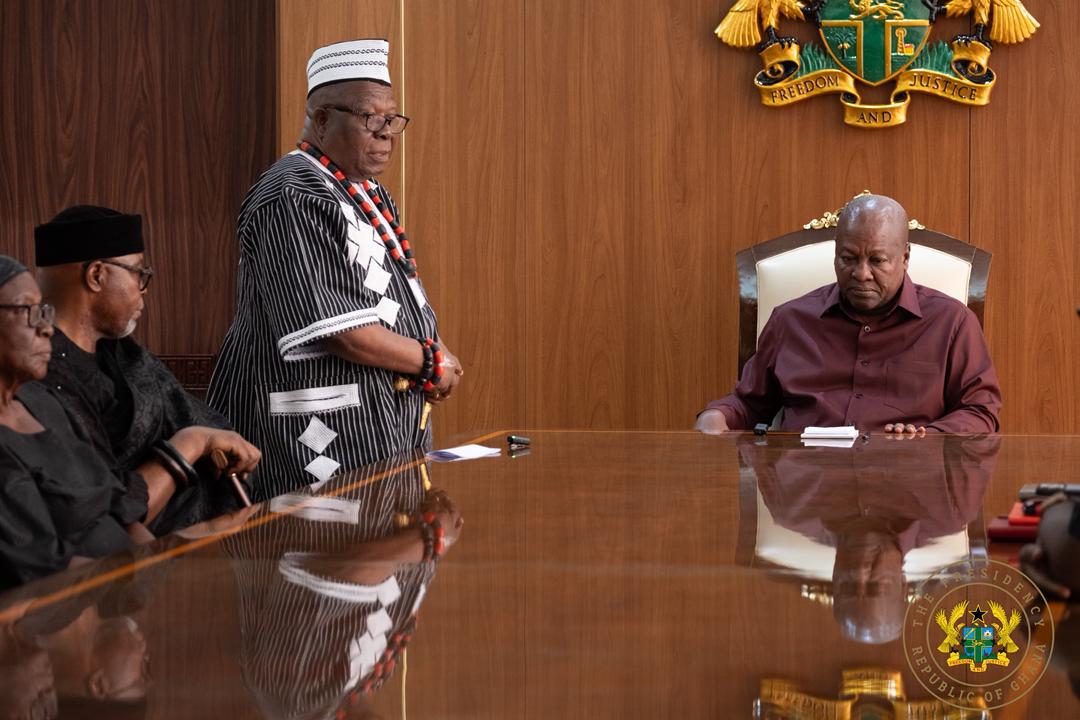
The family of the late Ambassador James Victor Gbeho, one of Ghana’s most distinguished diplomats and statesmen, has officially notified President John Dramani Mahama of his passing.
During a courtesy call at the Presidency, the Gbeho family said it was both culturally and diplomatically appropriate to formally inform the President of the loss before making any public announcement.
Ambassador Gbeho had a distinguished career in public service, serving Ghana in several diplomatic capacities, including at the country’s Permanent Mission to the United Nations in New York. He also served as Minister for Foreign Affairs, Member of Parliament for Anlo, and President of the ECOWAS Commission, then known as the Executive Secretary.
He earned widespread respect for his commitment to regional integration, diplomacy, and international cooperation, making significant contributions to Ghana, West Africa, and the global community.
President Mahama extended his heartfelt condolences to the bereaved family and paid tribute to Ambassador Gbeho’s outstanding service, describing his contributions as invaluable to Ghana, the ECOWAS sub-region, and the international community.
The family said details of the funeral arrangements will be announced at a later date.

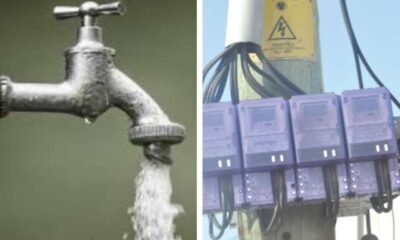
Consumers across Ghana will pay more for electricity and water beginning July 1, 2026, following the Public Utilities Regulatory Commission’s (PURC) latest tariff review.
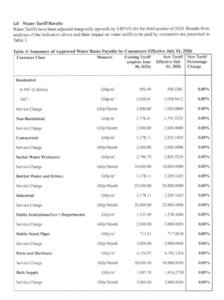
The Commission has approved a 3.49 percent increase in electricity tariffs and a 0.85 percent increase in water tariffs under its third-quarter tariff adjustment framework.
In a statement issued on Monday, June 22, PURC explained that the tariff review was conducted in line with its quarterly mandate to reflect changes in key economic and operational indicators affecting utility service providers.
According to the Commission, the review considered factors such as movements in the Ghana cedi against the US dollar, inflation trends, electricity generation costs, and the price of natural gas used for power production.
PURC stated that the periodic adjustments are necessary to preserve the real value of tariffs, ensure the financial sustainability of utility companies, and support the continued delivery of reliable services to consumers.
For the third quarter of 2026, the Commission applied a weighted average exchange rate of GHS11.2228 to one US dollar, representing a 0.2 percent depreciation of the cedi compared to the previous quarter.
The review also took into account a three-month average inflation rate of 3.43 percent, down from 4.17 percent in the second quarter, while the weighted average cost of natural gas decreased by 1.58 percent to USD7.9708 per MMBtu.
The country’s hydro-thermal generation mix remained unchanged at 20.9 percent hydro generation and 79.1 percent thermal generation.
Based on these indicators, PURC approved a 3.49 percent increase in electricity tariffs across all customer categories, including residential, non-residential, and special load tariff users.
Under the new rates, the lifeline electricity tariff for residential consumers using up to 30 kilowatt-hours per month has increased from 86.9Gp per kilowatt-hour to 89.93Gp per kilowatt-hour.
Water tariffs have also been adjusted upward by 0.85 percent for all customer groups, including residential, commercial, industrial, public institutions, and bulk consumers.
The residential lifeline water tariff for consumption of up to five cubic metres has risen from 593.49Gp per cubic metre to 598.54Gp per cubic metre.
PURC reaffirmed its commitment to monitoring utility providers to ensure compliance with regulatory standards, improved service delivery, and value for money for consumers.
The Commission further thanked stakeholders for their continued support of the quarterly tariff review process and indicated that the revised rates will be published in the Gazette and on its official platform in due course.
Alternative Headlines:
Electricity and Water Tariffs Go Up Again as PURC Announces July 1 Price Adjustment
Ghanaians to Pay More for Utilities as PURC Increases Electricity and Water Tariffs
PURC Raises Electricity and Water Charges in Third-Quarter Tariff Review
Utility Bills Set to Rise from July as PURC Adjusts Electricity and Water Tariffs
PURC Approves New Tariffs, Electricity Up 3.49% and Water Up 0.85%



2026 FIFA World Cup: Ghana holds Colonial Masters to a draw in Boston

Police Arrest Akofena, Two Others Over Shooting Incident Involving Former MP Adwoa Safo

Family of Late Diplomat James Victor Gbeho Officially Notifies President Mahama of His Passing



-

 Culture2 weeks ago
Vice President Launches Revised National Cultural Policy to Drive Heritage Preservation and Creative Economy Growth
-

 Business2 weeks ago
24-Hour Economy Authority Secures Over $8 Billion in Investment Agreements in 90 Days
-
 Sports2 weeks ago
Government reveals 76.4 Million Ghana cedis to back Black Stars World Cup campaign
-
 General News2 weeks ago
Mahama Calls for Stronger Ghana-EU Trade and Investment Partnership to Drive Economic Growth
-
 General News1 day ago
PURC Announces New Utility Tariffs as Electricity and Water Prices Rise from July 1
-

 Sports2 weeks ago
Breaking: Aduana FC comfirms the departure of Head Coach Cioba Aristica
-

 General News2 weeks ago
Two Citizens Petition Mahama Over Alleged Misogynistic Remarks by Ashanti Regional Minister
-

 Entertainment2 weeks ago
The Energy Man Londona Nie Set for Comeback After Successful Recovery Journey