
Entertainment
Makra Mo Under the Stars: Candlelight Vigil Held for Daddy Lumba

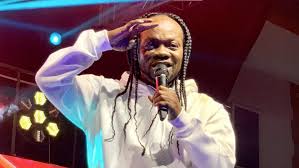
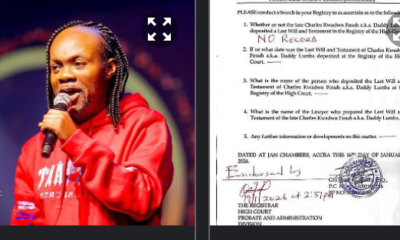
🕯️ “Makra Mo, But The Legend Lives On” – Ghana Bids Farewell to Daddy Lumba
Highlife icon’s death unites a nation in sorrow, memories, and song
His music still dances through our speakers—on the streets, in trotro radios, and market stalls—but the man behind the voice now rests in silence.
Aben Wo Aha, but now, Lumba wɔ aseɛ hɔ.
Ghana is mourning the loss of a true musical titan, Charles Kwadwo Fosu, affectionately known as Daddy Lumba. A man whose voice defined generations, stitched memories into melodies, and captured hearts through every lyric, has taken his final bow after over 35 years of shaping the country’s soundscape.
Though the flames of his artistry burned bright, today the stage is quiet. Yet, the spotlight he earned refuses to dim.
A Candle for the King
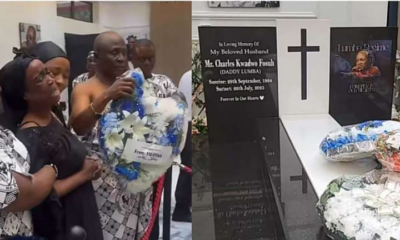
Tonight, thousands will gather at Independence Square for a national candlelight vigil in his memory. Since last Tuesday, his family has opened a book of condolence at both his residence and DLFM, the radio station he founded (106.9 MHz), where his voice once ruled the airwaves.
Just last September, Lumba turned 60—celebrating with rare public appearances and laughter. In hindsight, many now see that glow as his final farewell.
A Life of Mystery and Melody
Daddy Lumba was a star who never chased the spotlight, choosing to let his music speak louder than interviews or headlines. His reclusive nature only heightened the anticipation whenever he emerged.
In 1998, Gaddy Laryea’s Media Majique and Research Systems pulled off a milestone: Lumba’s first-ever live performance at Miss Ghana. It shattered myths about his stage presence and proved his magic wasn’t limited to the studio.
His manager at the time, the late Kwasi Brenyah of Peace FM, helped pull the strings behind the scenes—true to Lumba’s quiet but powerful style.
Tributes: From Icons, Friends & the Nation
The news of his passing has sparked a wave of tributes from musicians, politicians, and fans alike.
The legendary gospel trio Daughters of Glorious Jesus remembered him as “a big brother” and a man whose gospel songs carried depth and divine sincerity.
“He wasn’t just a singer—he was a storyteller,” said Edna Sarpong. “Slow to anger, deep in soul. His silence spoke volumes.”
Monica Owusu Ansah added, “I wish he had left a protégé… The man had a heart for God. He could sing about anything—and make you feel everything.”
Gospel artist Diana Asamoah called him “a brother in the spirit,” saying, “His gospel songs were born from truth, not showbiz.”
Music executive Bullet called Lumba “a pillar of authenticity,” while NPP flagbearer hopeful Kwabena Agyapong described the loss as personal: “He was a friend. His voice walked us through both private pain and public joy.”
Former President John Mahama posted:
“Lumba’s unmatched musical genius carried us through the phases of life… His legacy will echo through the ages.”
Other stars including Sarkodie, M.anifest, Wendy Shay, Guru, Pat Thomas, and Sista Afia have also paid glowing homage.
His Music Lives On
In the wake of his passing, Daddy Lumba has re-entered the charts with a vengeance. On Apple Music Ghana, 30 of his songs hit the Top 100—Makra Mo surging straight to No. 1.
His 2008 political anthem Nana Ye Winner showed that Lumba could wade into politics without fracturing his appeal. His music transcended politics, class, and even religion.
From heartbreak to humor, sensuality to spirituality, Lumba was a lyrical genius. His use of Asante Twi—rich in proverbs, wit, and wordplay—gave his songs a rare, enduring texture.
Songs like Sika Asem, Tokuro Mu, Se Sumye Kasa, Yentie Obiaa, and Mesom Jesus tackled everything from love and lust to faith and truth.
Most hauntingly, he never feared death—he sang about it. Tracks like Adaka Teaa, Makra Mo, and Yemfa Odo were his own elegies, composed long before his final breath.
The Legacy of Charles Kwadwo Fosu
Born on September 29, 1964, in Nsuta, Ashanti Region, Daddy Lumba’s journey was as remarkable as his music. From humble beginnings to national treasure, he redefined highlife, fusing it with modern flair while keeping its soul intact.
His music wasn’t just entertainment—it was an emotional archive of Ghana’s soul.










By Angel No Lie | KPD Online | September 14, 2026
Few television medical dramas have received the kind of endorsement that The Pitt has earned from the people who actually work in emergency rooms.
Noah Wyle poses in the press room during night two of the Creative Arts Emmy Awards on Sunday, Sept. 6, 2026, in Los Angeles. (AP Photo/Chris Pizzello)
But beyond Hollywood’s awards race, The Pitt has developed an unusually enthusiastic audience among emergency physicians and other healthcare professionals — largely because many of them say the fictional hospital looks remarkably close to the reality of their working lives.
A medical drama that feels different

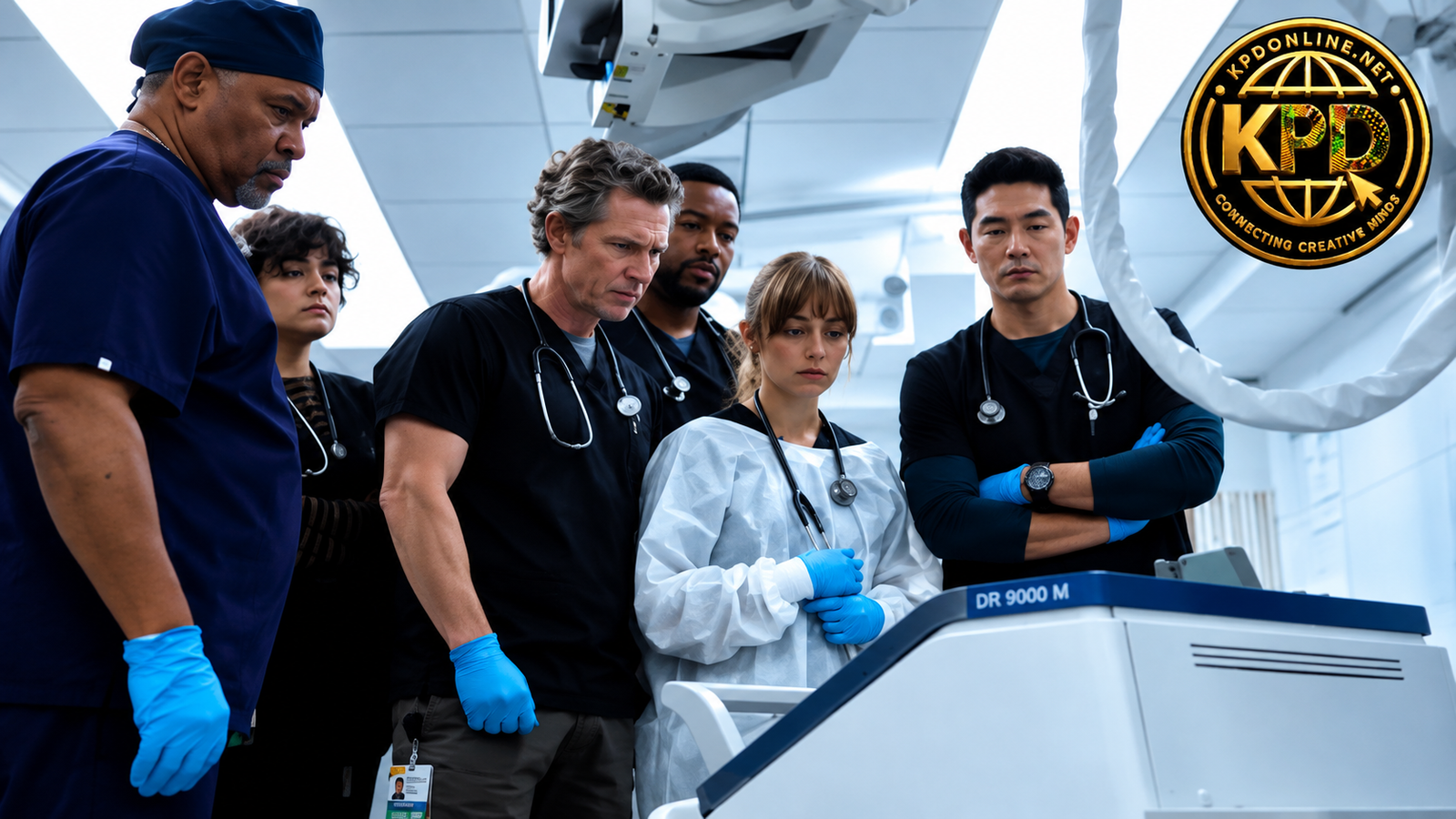
Focused Medical Team in Protective Gear. Gerran Howell, left, Amielynn Abellera, Noah Wyle, Sepideh Moafi and Supriyah Ganesh in a scene from Season 2 of “The Pitt.” (Warrick Page/HBO Max)
Set in the emergency department of the fictional Pittsburgh Trauma Medical Center, The Pitt follows doctors, nurses and patients through the pressure of a busy hospital.
Each episode covers part of a working shift, allowing the series to focus not only on dramatic medical emergencies but also on the less glamorous realities of emergency medicine: overcrowding, long waits, difficult patients, exhausted staff, limited resources and the emotional consequences of making rapid decisions.
That attention to detail has caught the attention of doctors.

Show host Mariska Hargitay poses for photographs during a press preview for the 78th Primetime Emmy Awards on Thursday, Sept. 10, 2026, in Los Angeles. (Photo by Caroline Brehman/Invision/AP)
Dr. Steven A. Valassis, an emergency physician at Hartford HealthCare St. Vincent Medical Center, described the series as a “strikingly authentic portrayal of emergency medicine”, particularly its depiction of what happens inside a busy emergency department.
Other emergency physicians have made similar observations. Harvard’s review of the programme spoke with four doctors about its accuracy, examining everything from patient volume and emergency-room culture to the notorious waiting room.
Why doctors see themselves in the show

This combination of images shows, from left to right on the top row: Macaulay Culkin, Alan Cumming, Jon Hamm, Marcello Hernández, and Dan Levy. On the bottom row, from left to right: Niecy Nash-Betts, Keke Palmer, Amy Poehler, Florence Pugh, and Zendaya. (AP Photo)
For many healthcare workers, the attraction isn’t simply the medical procedures.
It is the environment.
Real emergency departments frequently involve simultaneous emergencies, overcrowding and difficult decisions about which patient needs attention first. Doctors and nurses must balance speed with safety while dealing with patients and families who may be frightened, angry or confused.
Those pressures are central to The Pitt.
A 2026 analysis by emergency-medicine expert Jesse M. Pines noted that the series captures issues such as staffing shortages, emergency-department crowding and the practice of keeping admitted patients in emergency departments because hospital beds are unavailable.
That realism can be reassuring for medical professionals — but it can also be uncomfortable.
Some emergency workers have said the programme is so close to their professional experience that watching it after work can feel like returning for another shift. Others have recommended it to relatives as a way of helping them understand what working in emergency medicine is actually like.
The realism starts behind the cameras
The authenticity is not accidental.

The team from “Widow’s Bay” poses in the press room with the award for outstanding sound mixing for a comedy or drama series (half-hour) and animation during night two of the Creative Arts Emmy Awards on Sunday, Sept. 6, 2026, in Los Angeles. (AP Photo/Chris Pizzello)
The production has relied on practicing medical professionals to help actors understand how emergency departments operate and how medical procedures are performed.
UCLA Health emergency physician Dr. Jacob Lentz, for example, has served as a medical consultant on the series. He and other real emergency doctors helped train members of the cast in skills including suturing, using stethoscopes, putting on sterile gloves and applying other clinical techniques.
The series also has medical expertise within its production team. Executive producer Joe Sachs is himself a practicing emergency physician, bringing first-hand knowledge of the profession into the show’s development.
The result is a production where small details matter — from how doctors move around a patient to the way staff communicate during a crisis.
Not everything is completely real
Doctors are not claiming that The Pitt is a documentary.
Television still has to tell stories, and that means compressing events, increasing drama and occasionally taking creative liberties.
But the distinction is important: medical professionals appear to value the show precisely because its departures from reality occur within a setting that otherwise feels familiar.
As Dr. Pines observed, The Pitt is still television, but many of its emergency cases and the operational pressures surrounding them resemble real-life emergency medicine far more closely than many earlier medical dramas.
From critical success to Emmy favourite
The show’s realism has been accompanied by major awards recognition.
The Pitt won Outstanding Drama Series at the 2025 Emmys, while Noah Wyle won Outstanding Lead Actor for his portrayal of Dr. Michael “Robby” Robinavitch. The series subsequently returned with an even larger Emmy presence in 2026.
This year, the series leads all Emmy nominees with 25 nominations. Wyle is again nominated for lead actor, while Katherine LaNasa, Taylor Dearden, Fiona Dourif and Sepideh Moafi are among the performers recognised in supporting actress categories. Patrick Ball, Gerran Howell and Shawn Hatosy are among the supporting-actor nominees.
The Television Academy’s records show that The Pitt has accumulated 38 nominations and nine Emmy wins across its two seasons.
The ultimate compliment may come from the hospital floor
For a television drama, Emmy nominations are an important measure of success.
But for The Pitt, perhaps an even more meaningful achievement is that people who actually work in emergency departments are watching it and recognising their profession.
The series does not portray emergency medicine as a succession of miraculous diagnoses and heroic saves. Instead, it shows a demanding workplace where exhaustion, uncertainty, overcrowding, teamwork and difficult human decisions are part of the job.
That may explain why the programme has connected so strongly with doctors.
Hollywood may be handing out the trophies, but some of The Pitt‘s most important critics are the doctors watching from the emergency room.

Ghanaian musician Choirmaster, real name Eugene Baah and a member of the Praye music group, has opened up about the pain of losing his late wife, actress Beverly Afaglo.
In a heartfelt Instagram post shared on September 10, 2026, Choirmaster said life has felt as though it came to a standstill since Beverly’s passing.
He said he deeply misses her voice, smile, presence and the everyday moments they shared.
Reflecting on their life together, Choirmaster admitted that he regrets not appreciating some of those moments enough while she was alive.
“It’s been a month already since you left us, and somehow the world has continued moving even though mine feels like it stopped,” he wrote.
Choirmaster also reflected on the difficult nature of grief, describing it as “love with nowhere to go.” He said the love he has for Beverly would remain with him.
He expressed gratitude for the life they shared, the memories they created and the love she gave him, adding that Beverly would continue to remain part of who he is.
He further said he would honour her memory by carrying her in his heart every day.

Nigerian singer Adekunle Gold has revealed that he resorted to legal action after a man circulated false information online claiming that his family had lost their daughter, Adejare Kosoko.
The singer made the revelation during an appearance on the One 54 Podcast, where he spoke about the growing challenge of misinformation on social media.
Adekunle Gold said he has accepted that public scrutiny comes with being a celebrity and does not usually concern himself with comments or stories directed at him. However, he said his daughter is not part of that bargain and would not be dragged into false narratives.
According to him, rather than confronting the individual or taking matters into his own hands, he reported the incident to the appropriate authorities.
The matter was subsequently taken to court, where the man was sentenced to two years in prison or given the option of paying a fine, the singer said.
“Somebody had put out fake news about my family losing our daughter. I can take anything. Talking about me all day, I’m cool. I signed up for this, not my daughter,” Adekunle Gold said.
He explained that he deliberately followed the legal process instead of seeking personal revenge.
“I did the right thing, reported it to the authorities, and then they took it to court. The court sentenced him to, I think, two years’ imprisonment or he should pay a fine,” he added.
Adekunle Gold said the incident generated significant reactions online, with many people discussing the court action and the false report.
He stressed that he could have chosen to personally confront the man but decided against such an approach.
“I followed the right channels. I didn’t even do what other people would do, you know, find the boy, beat him up and all of that. I didn’t do all of that. I just went to the right channels, and it was dealt with,” he said.
The musician also expressed concern about the volume of unverified information circulating online, saying social media users can sometimes encounter stories about themselves that leave them questioning whether the events actually happened.
He called for some form of regulation to address the spread of false information on social media.
“It’s crazy what’s happening on social media now. Sometimes you see news about yourself, and even you will be wondering, like, ‘Oh, did this happen?’” he said.
Adekunle Gold added that the amount of misleading information being circulated online makes some form of regulation necessary.
Source:NiajaNews.com
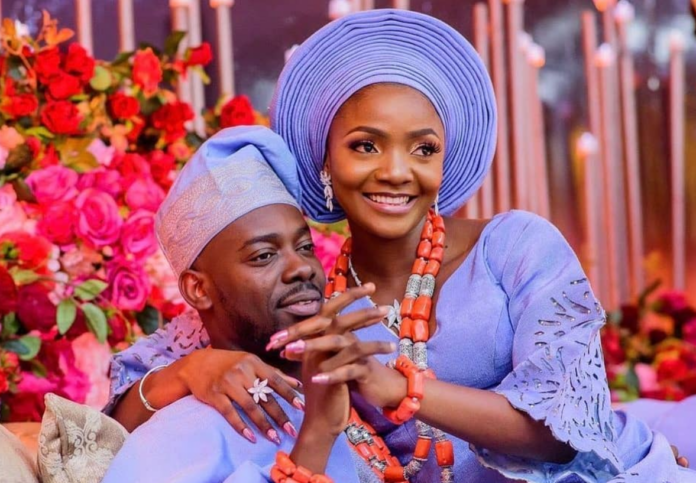
Nigerian singer Adekunle Gold has disclosed that genotype compatibility was one of the major considerations before he married his wife, singer Simi.
Speaking on the One 54 podcast, Adekunle Gold stressed the importance of knowing one’s genotype before entering a serious relationship or making decisions about having children.
The singer, who has spoken openly about his personal experiences with sickle cell disease, said he and Simi took genotype tests when they first met to establish whether they were medically compatible.
According to him, the test showed that Simi is AA, a result he said gave them confidence about their compatibility as they pursued their relationship.
“There is so much awareness to be done, and that is what we do. People need to understand that if you have sickle cell, forget about love; you can’t be with someone with sickle cell too. It makes no sense to bring a child into the world who will be sickly,” he said.
When asked what he would have done if Simi had been SS, Adekunle Gold said he would not have proceeded with the marriage.
“There’s no way I would have married my wife Simi if she was sickle cell. The first thing we did when we met was a genotype test to know if we matched. If we didn’t, I wouldn’t have married her. She is AA,” he stated.
The singer further disclosed that he would also not have married Simi if she had been AS, citing his concerns about the possibility of their children inheriting sickle cell disease.
“I wouldn’t have married my wife Simi if she were SS or AS. She’s AA. I don’t think it makes sense to bring a child into this world and make them go through all that,” he added.
Adekunle Gold has previously shared details about the sickle cell crises he experienced while growing up, including periods when his condition was severe enough to make him uncertain about living into adulthood.
His personal experiences, he explained, have shaped the way he views genotype compatibility, relationships and decisions about starting a family.
He also emphasised the need for greater public education on genotype testing, particularly among young people who are entering relationships and considering marriage.
Source:NaijaNews.com
Entertainment
“State Facts, Don’t Lie” – Angel Town Fires Back at Stonebwoy with WhatsApp Screenshots


The ongoing public dispute between Ghanaian rapper Sarkodie and dancehall musician Stonebwoy has taken another turn after Sarkodie’s manager, Angel Town, released screenshots of a private WhatsApp conversation involving Stonebwoy’s manager, Chief Stylzz.
Angel Town released the screenshots after Stonebwoy mentioned his name in a series of social media posts addressing Sarkodie and the issues surrounding their long-running disagreement.
The latest development has sparked further discussion about the relationship between the two artistes and, in particular, who initiated discussions about a possible joint appearance involving Sarkodie and Stonebwoy.
Stonebwoy, in his response to Sarkodie, sought to clarify his position on the issue of collaborations and joint performances.
The dancehall musician maintained that he was not the one pursuing a collaboration with Sarkodie and argued that Sarkodie’s camp had previously been the side reaching out to his team.
Stonebwoy questioned why he would be expected to owe Sarkodie anything when, according to his account, Sarkodie had been the one making contact.
“What could you possibly owe me? When you’re the one who calls me as you have clearly indicated,” Stonebwoy wrote.
Stonebwoy also brought up his 2025 BHIMFest concert at the Accra Sports Stadium, explaining that there had previously been communication between the two camps about Sarkodie and his team appearing at the event.
The 2025 edition of BHIMFest was held at the Accra Sports Stadium on December 24, with Stonebwoy headlining the 10th edition of the festival. His team described the event as a major milestone after the concert drew a large crowd to the stadium.
According to Stonebwoy, Angel Town had contacted his manager, Chief Stylzz, about Sarkodie’s team coming to the event.
Stonebwoy said he did not object to the idea because, in his view, performing on the same stage had never been a problem between them.
“Doing shows together has never been a problem irrespective of who called. My last BHIMFEST at the stadium, Angel called chief that y’all wanted to come through I didn’t disagree,” Stonebwoy said.
His comments were intended to emphasise that he had no objection to performing alongside Sarkodie and that the issue was not about whether the two artistes could share a stage.
Following Stonebwoy’s comments, Angel Town publicly responded after his name was directly mentioned.
Angel Town said he had no problem contacting Stonebwoy or members of his team whenever there was a genuine need to do so.
However, he insisted that the particular situation being discussed should be presented accurately.
He accused Stonebwoy of misrepresenting his involvement and called for the facts to be stated as they happened.
“Only because my name has actually been mentioned now let me just do the needful and set the record straight… I’ll reach out any day regardless if need be, I don’t mind that at all but in this context just state facts… don’t lie on my name.”
Angel Town then shared screenshots of a private WhatsApp conversation between himself and Stonebwoy’s manager, Chief Stylzz, apparently to support his version of events. Reports on the exchange indicate that the screenshots showed the Stonebwoy camp initiating a conversation about possible dates for the artistes to appear together.
The WhatsApp exchange shared by Angel Town appears to show Chief Stylzz contacting him about possible dates and arrangements involving Stonebwoy and Sarkodie.
One of the messages from Chief Stylzz reads:
“Anyways… 24th be good for you? Make u pass thru, and we do same 25th as well,”
The message appears to suggest a discussion around the artistes making appearances on two consecutive dates.
Angel Town responded to the proposal, indicating that he was willing to have a conversation about the arrangement but also raised concerns about the timing.
He wrote:
“Ok mk I have the conversation quick. My only concern be how e only be the next day nu cos Edo aaa pressure de come inside, but I de come.”
The exchange has become significant because Angel Town is relying on it to challenge Stonebwoy’s account of who initiated discussions about the proposed appearance.
According to reports on the screenshots, the conversation was dated December 22, 2025, and involved discussions about dates around the period of the BHIMFest event.
Angel Town’s response was not that he was unwilling to communicate with Stonebwoy’s camp.
Instead, he appeared to take issue with how his involvement had been described.
He made it clear that reaching out to Stonebwoy’s team was not something he considered problematic if the situation required it.
His objection, he suggested, was to the particular account being presented publicly.
By releasing the WhatsApp conversation, Angel Town appeared to be offering the exchange as evidence of his position and challenging the suggestion that he was solely responsible for initiating discussions about Sarkodie’s involvement.
At the centre of the latest exchange is the question of what exactly happened between the two camps around the 2025 BHIMFest.
Stonebwoy’s account is that Angel Town contacted Chief Stylzz because Sarkodie’s team wanted to come to the stadium event.
He said he did not reject the proposal because performing together had never been a problem.
Angel Town’s response, however, is that the particular circumstances should not be presented in a way that gives a different impression of what happened.
The screenshots he released appear to show Chief Stylzz discussing dates and arrangements with him, which Angel Town is using to dispute Stonebwoy’s characterisation of the interaction.
The latest disagreement comes against the backdrop of a once-public friendship between Sarkodie and Stonebwoy that has increasingly come under scrutiny as their recent exchanges have become more intense.
The two artistes have previously collaborated and appeared together on different platforms, making the current tension particularly significant within Ghana’s music industry.
Their recent disagreement has generated extensive discussion among fans, industry figures and social media users, with past interactions between the two musicians being revisited.
The latest developments have also seen both artistes publicly explain their respective positions rather than allowing the disagreement to remain solely between their management teams.
The release of the WhatsApp screenshots has now introduced a new dimension to the dispute because the argument is no longer based solely on statements made by the two artistes.
Angel Town has brought a private conversation involving the two management teams into the public domain in an attempt to support his account.
The screenshots do not, by themselves, establish every detail surrounding the discussions or the intentions of everyone involved. However, they have intensified the debate over who initiated contact and what the purpose of the proposed arrangement was.
The messages show that there was communication between the two camps about possible dates and appearances, while the two sides now disagree over how that communication should be interpreted.
Stonebwoy’s position remains that Sarkodie’s camp had reached out to his side and that he had no problem with Sarkodie appearing at his event.
Angel Town, meanwhile, has rejected what he considers an inaccurate portrayal of his role and has released the WhatsApp screenshots to support his response.
The latest development therefore leaves the dispute focused on more than the relationship between Sarkodie and Stonebwoy.

Stan Dogbe Orders Immediate Restoration of Reclaimed Kpeshie Lagoon Lands After Demolition Exercise

The Pitt Is Up for 25 Emmys — But Its Biggest Fans Are Real-Life Doctors

Trump Downplays Warnings of AI Risks, Citing Rivalry With China



-

 Entertainment7 days ago
Mahama Is First President to Put GH¢40m Seed Money into Creative Arts Fund: Kojo Preko Dankwa
-

 Entertainment2 weeks ago
Oswald Okaitei Explains the Real Vision Behind Ghana’s Black Star Experience
-

 General News2 weeks ago
COCOBOD Settles GH¢2.3 Billion DDEP Bond Obligations for 2026
-

 Entertainment2 weeks ago
Joana Gyan Cudjoe Ends Seven-Year Professional Ties with Keche Global
-

 General News1 week ago
Don’t Punish Them Retrospectively – Educationist Challenges New CSSPS Placement Rule
-
 Entertainment6 days ago
Government Repatriates Musician Barosky from UK
-

 Culinary2 weeks ago
Pineapple: The Spiky Tropical Fruit Packed With Sweetness and Nutrients
-

 Culinary7 days ago
The Green Heart of Ghanaian Cuisine: Celebrating Nkontomire and the Art of Abom