Connect with us

Business

Ghana Targets 15-Month Import Cover by 2028 with Gold-Backed Reserve Plan

Published

on

The government has announced an ambitious strategy to increase Ghana’s import cover to 15 months by 2028, placing gold at the heart of a new national reserve accumulation drive designed to protect the economy from future global shocks.

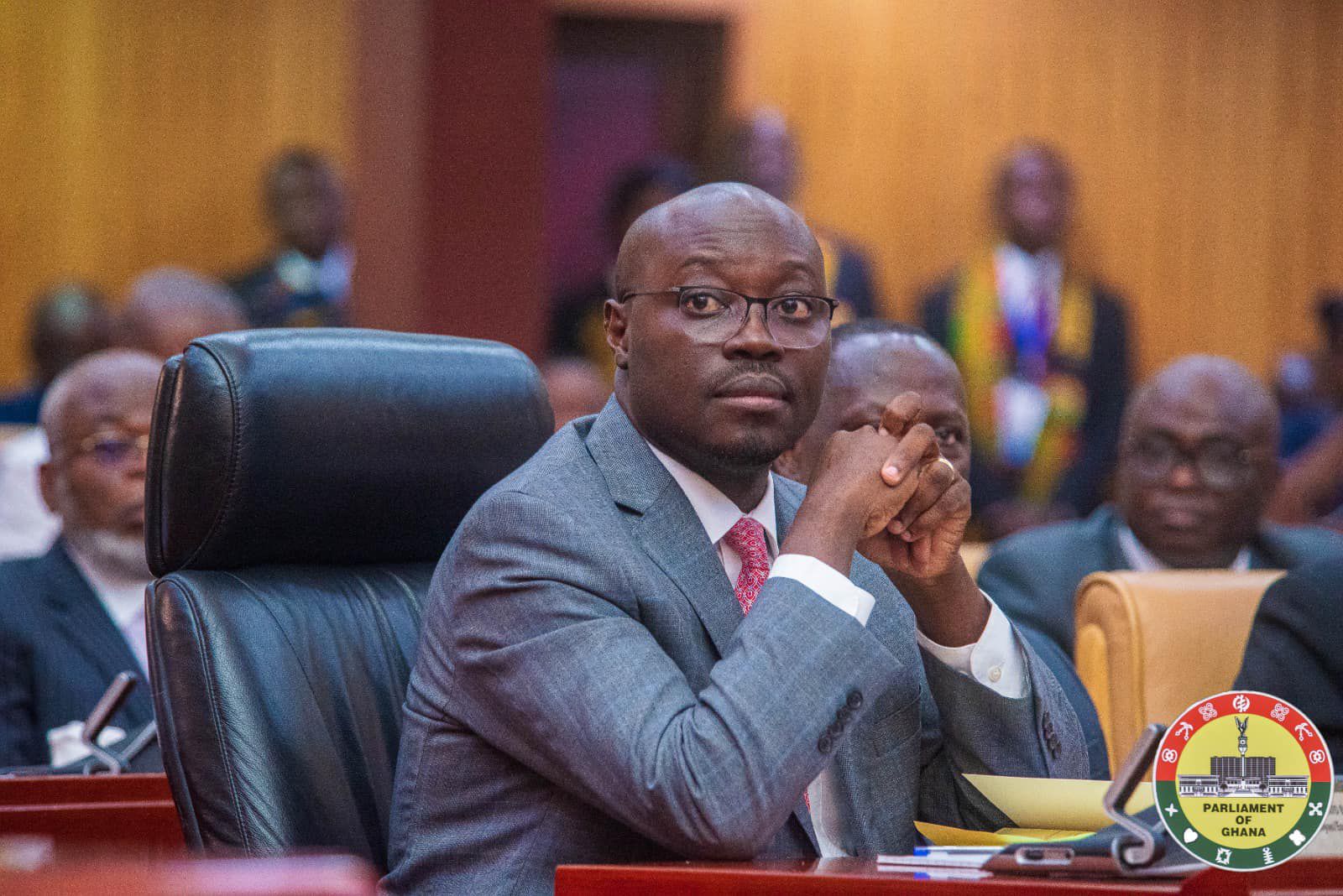
Presenting the Ghana Accelerated National Reserve Accumulation Policy, GANRAP 2026 to 2028, to Parliament on Wednesday, February 25, Finance Minister, Dr Cassiel Ato Forson, described the initiative as the country’s first comprehensive framework focused on building sustainable external reserves and ensuring long-term macroeconomic stability.

According to the minister, the policy signals a major shift from short-term, debt-driven reserve accumulation to a more structured, gold-backed and reform-led model. He said the plan builds on what he called a strong macroeconomic recovery in 2025 following the economic crisis of 2022 to 2023.

Stronger Economic Indicators

Dr Forson told lawmakers that real GDP growth averaged 6.1 percent in the first three quarters of 2025. Inflation declined sharply from 23.8 percent in 2024 to 5.4 percent, and further to 3.8 percent in January 2026.

The 91-day Treasury bill rate also dropped significantly from 27.7 percent at the end of 2024 to 6.4 percent in February 2026. Public debt reduced from 61.8 percent of GDP to 45.3 percent, while gross international reserves rose to 13.8 billion US dollars, representing 5.7 months of import cover, up from 4.0 months in 2024.

Despite these improvements, the minister cautioned that the traditional benchmark of three months of import cover is no longer sufficient in a volatile global environment shaped by commodity price swings, geopolitical tensions and climate-related disruptions.

Building an “Economic War Chest”

Under GANRAP, the government aims to increase reserves to 8.6 months of import cover by the end of 2026, 11.8 months by the end of 2027, and ultimately 15 months by 2028.

Dr Forson described the target as the creation of an “economic war chest” that would shield Ghana from commodity price shocks, global financing instability and external uncertainties.

At the centre of the strategy is a gold-backed reserve accumulation framework anchored on the Ghana Gold Board Act, 2025, Act 1140. The law mandates the Ghana Gold Board to generate foreign exchange and support gold reserve accumulation by the Bank of Ghana.

Government has set a weekly gold purchase target of about 3.02 tonnes. This includes acquiring at least 2.45 tonnes per week from the Artisanal Small-Scale Mining sector and invoking pre-emption rights to secure a minimum of 0.57 tonnes weekly from large-scale mining companies.

The gold purchased will be refined and added to Ghana’s physical reserves. Any sale of accumulated gold will require prior approval from both Cabinet and Parliament.

Moving Away from Costly Borrowing

The Finance Minister contrasted the new model with what he described as an expensive and unsustainable approach used between 2017 and 2024, when Ghana relied heavily on Eurobonds, swaps, sale-and-buy-back transactions and commercial bank borrowing to boost reserves.

Between 2022 and 2024 alone, the Bank of Ghana reportedly accumulated 5.65 billion US dollars in reserves through swaps and related transactions at a cost of 1.16 billion US dollars in interest. Additionally, Eurobond borrowings between 2018 and 2021 used to support reserve build-up cost taxpayers about 2.5 billion US dollars in interest payments, with the debts still being serviced.

Dr Forson stressed that borrowing to build reserves contributed to the country’s debt distress in 2022 and was not sustainable.

In contrast, he revealed that in 2025 the Ghana Gold Board generated approximately 10 billion US dollars in foreign exchange at a cost of 214 million US dollars, significantly lower than the cost associated with borrowing.

Stronger Oversight

The policy also strengthens parliamentary oversight. Sales of accumulated gold reserves will require approval from Parliament, a measure government says is designed to prevent politically motivated withdrawals and protect long-term economic stability.

With GANRAP, government is betting on gold as a strategic buffer to reinforce Ghana’s financial resilience and reduce reliance on costly external borrowing in the years ahead.

Business

Cedi Edges Higher as Dollar Weakness, Central Bank Support Lift Sentiment

Published

on

The Ghanaian cedi has posted modest gains over the past two weeks, buoyed by improved external conditions and renewed investor sentiment.

The local currency faced mild demand-driven pressure at the start of the period, in line with market expectations. However, it rebounded in the second week, supported by a broad-based “sell America” sentiment that weakened the US dollar and provided relief to emerging and frontier market currencies.

On the interbank market, the cedi appreciated by 0.09% against the US dollar, 0.86% against the pound sterling, and 1.16% against the euro. It closed at mid-rates of GH¢10.97 to the dollar, GH¢14.81 to the pound and GH¢12.93 to the euro.

The gains were also reflected in the retail market. The cedi strengthened by 0.6% against the dollar, 1.29% against the pound, and 1.11% against the euro, settling at mid-rates of GH¢11.63 to the dollar, GH¢15.55 to the pound and GH¢13.50 to the euro.

According to Databank Research, the cedi’s recent appreciation aligns with gains recorded across other major Sub-Saharan African currencies, underscoring the impact of sustained US dollar weakness.

The research firm expects the current tailwinds to support further strengthening of the cedi in the near term, as expectations of continued softness in the US dollar temper demand for the greenback. Market sentiment is also being shaped by heightened geopolitical risks, including concerns over a potential confrontation involving Iran.

Additional support is expected from targeted foreign exchange interventions by the Bank of Ghana. The central bank is gradually deploying a US$1 billion facility to meet market demand and stabilise the currency.

Analysts project the cedi could extend its gains to an interbank mid-rate range of GH¢10.85 to GH¢10.95 per dollar over the next fortnight. Retail rates are forecast to hover between GH¢11.55 and GH¢11.60 per dollar, with the possibility of tighter spreads should foreign inflows accelerate.

Despite the recent rally, the cedi opened this week trading around GH¢11.70 to the dollar in the retail market.

So far this year, the currency has gained 4.95% against the US dollar, reflecting a gradual but steady recovery.
Continue Reading

Business

Cocoa Price Cut Sparks Fears Over Environmental Sustainability and Illegal Mining Surge

Published

on

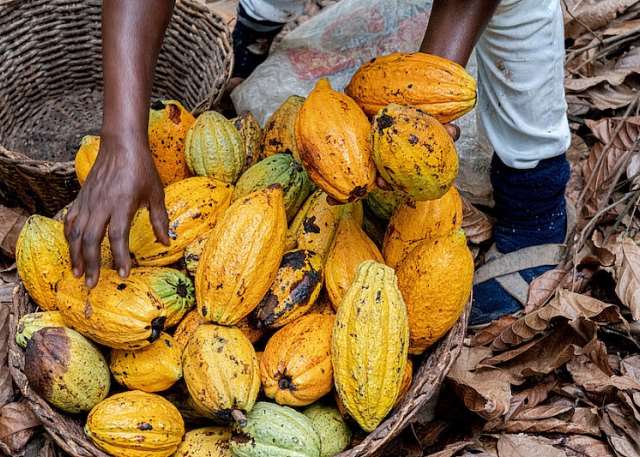
Ghana’s cocoa sector has returned to the spotlight following reports that the Ghana Cocoa Board, COCOBOD, is struggling to settle payments owed to some farmers. The situation has intensified public debate, particularly after the announcement of a reduction in farm gate prices.

Although the Minister for Finance, Dr Casiel Ato Forson, outlined a series of interventions aimed at stabilising the cocoa industry amid looming challenges, the proposed price cut has dominated discussions across farming communities and in the media.

Supporters of the measure argue that the government’s decision is driven by prevailing global market realities. International cocoa prices have declined, making Ghana’s produce relatively expensive compared to other major producers. Adjusting domestic prices, they contend, is necessary to maintain competitiveness, avoid stock accumulation, and sustain export volumes.

There is also the argument that aligning local prices with global benchmarks will help secure the long-term viability of the sector. By responding to market forces rather than sustaining high subsidies, the government aims to protect jobs, stabilise the economy, and prevent potential financial losses.

However, while these economic justifications may appear sound, critics warn that the reduction in farm gate prices could have far-reaching implications beyond the immediate income losses to farmers.

One major concern is environmental sustainability. Lower earnings may push serious and production-oriented farmers to intensify cultivation in order to maintain their livelihoods. This could lead to increased use of agrochemicals, expansion into forest reserves and protected lands, and heightened bush burning activities. Though gradual, such practices could significantly undermine environmental protection efforts.

Even more troubling is the possible impact on Ghana’s mining landscape. Illegal and unsustainable mining, widely driven by the search for more lucrative alternatives, continues to pose a serious environmental threat. Cocoa farming has traditionally been regarded as one of the most rewarding agricultural ventures in many rural communities, including those that overlap with mining zones.

There is already intense competition for land between farming and mining activities. In recent years, this competition has increasingly favoured mining. Agricultural lands are being converted into mining sites at a faster pace than reclaimed mining lands are restored to farming use.

In some cases, farmers voluntarily sell fertile lands to miners, attracted by immediate financial returns. In others, land is relinquished under pressure or financial inducement. The result has been a steady loss of arable land, with miners often emerging as the dominant beneficiaries in the struggle over land resources.

Against this backdrop, the timing of the cocoa price reduction raises fresh concerns. As farmers grapple with declining incomes, the gold sector is experiencing strong global demand and rising prices. The renewed focus on gold production, including the establishment of GOLDBod, underscores the growing centrality of mining to Ghana’s economic strategy.

Government officials have repeatedly highlighted gold production and management as key pillars supporting currency stability, inflation control, and broader macroeconomic resilience. This heightened prominence of the gold sector could inadvertently make mining, including small-scale and illegal operations, even more attractive.

Given the government’s ongoing battle against illegal mining and its devastating environmental consequences, any policy shift that weakens alternative livelihoods such as cocoa farming may complicate enforcement efforts.

Observers are therefore calling for stronger coordination between COCOBOD and GOLDBod to ensure that policies in the cocoa and gold sectors are aligned. Without such synergy, there is a risk that gains made in sustainable mining practices and environmental protection could be reversed.

To mitigate potential fallout, stakeholders are urging the government to introduce targeted subsidies, special support packages, and extensive sensitisation campaigns to sustain farmers’ interest in cocoa production. Clear communication and livelihood enhancement measures, they argue, will be essential in preventing a shift toward illegal mining and safeguarding environmental sustainability.

As Ghana navigates economic pressures in both agriculture and mining, the balance between fiscal prudence and environmental responsibility will remain critical. The cocoa price decision may be economically defensible, but its broader implications demand careful and strategic management.

Continue Reading

Business

ECOWAS Bank for Investment and Development Backs Women of Valour as London 2026 Headline Sponsor

Published

on

Women of Valour (WoV), the globally recognised women’s leadership and storytelling platform founded by award-winning journalist Nana Aba Anamoah, has announced the ECOWAS Bank for Investment and Development (EBID) as the Headline Sponsor for Women of Valour London 2026. The event is scheduled for 7 March 2026.

This partnership brings together two organisations dedicated to advancing women’s leadership, economic inclusion, and social transformation across Africa and the global diaspora. As Headline Sponsor, EBID will be instrumental in supporting the platform and amplifying conversations centredon courage, development, and the pursuit of fearlessness, which is the official theme of Women of Valour London 2026.

Women of Valour is an annual flagship event held in celebration of International Women’s Day, spotlighting women whose stories of courage, resilience, and leadership inspire change across generations. Since its inception, the platform has grown from its origins in Accra to international stages, convening influential voices from media, business, public service, and civil society.

Speaking on the partnership, founder Nana Aba Anamoah noted that EBID’s headline sponsorship reflects a shared commitment to long-term impact. “Women of Valour was created to honour courage and amplify the voices that shape our societies. EBID’s support goes beyond sponsorship. Itrepresents a belief in women as drivers of development and progress, both on the continent and throughout the diaspora.”

Dr. George Agyekum Donkor, President and Chairman of the Board of Directors of EBID, reaffirmed the Bank’s dedication to gender inclusion and development-focused partnerships. “At EBID, we believe that empowering women is fundamental to sustainable development. Our partnership with Women of Valour is especially key in the current context as we prepare to obtain certification for the Gender Equality Seal for Public Institutions,” stated Dr. Donkor.

The announcement comes ahead of the official launch of Women of Valour London 2026, which will be held on February 17, 2026, at the residence of the British High Commissioner to Ghana in Accra. This event will mark the beginning of the global campaign leading up to the London gathering.

About Women of Valour

Women of Valour (WoV) is a leadership and storytelling platform that celebrates women with powerful stories of courage in recognition of International Women’s Day. Founded by Nana Aba Anamoah, WoV brings together influential women from diverse sectors to inspire dialogue, mentorship, and action across borders.


About EBID

The ECOWAS Bank for Investment and Development (EBID) is the Development Finance Institution of the Economic Community of West African States (ECOWAS), mandated to finance projects and programmes that foster regional integration, sustainable development and inclusive economic growth.

Continue Reading

Trending

Copyright © 2026 KPDOnline. Powered by AfricaBusinessFile