
General News
Gov’t Targets Garment Factories, Agro-Processing Expansion and 24-Hour Business Reforms in 2026 – Trade Minister

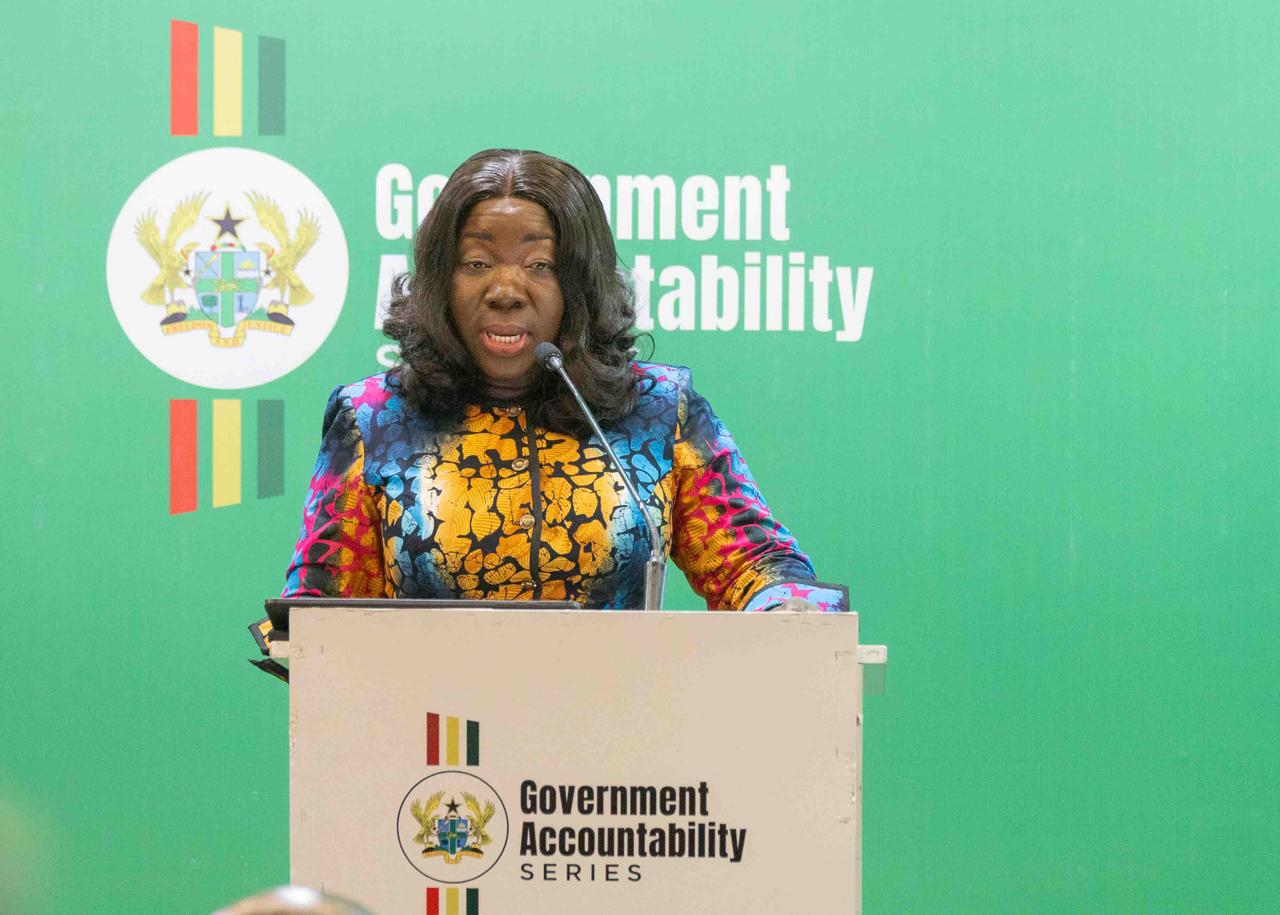
Government has outlined an ambitious 2026 outlook for trade, agribusiness and industry, with a strong focus on job creation, value addition, export growth and private sector expansion under the 24-Hour Economy policy.
Speaking at the Government Accountability Series on Wednesday, January 21, 2026, the Minister for Trade, Agribusiness and Industry, Hon. Elizabeth Ofosu-Adjare, said 2026 will be a “decisive year” for industrial transformation and inclusive economic growth.
“I can say for a fact that 2026 looks even better for trade, agribusiness and industry. Government is deliberately positioning the private sector to lead job creation, industrial expansion and export growth,” she stated.
27,000 Jobs Through Garment Factories
A major highlight of the 2026 outlook is government’s plan to support the establishment of three large-scale garment factories, expected to employ about 27,000 people in the long term.
According to the Minister, the garment industry offers quick employment opportunities, especially for the youth.
“The garment industry is one of the fastest job-creating sectors. You don’t need five months of training. In four weeks, you can already be working. Whether you have a certificate or not, you can earn a decent living,” she explained.
Full Operation of Agro-Processing Plants
Hon. Ofosu-Adjare announced that government will fully operationalize agro-processing facilities across several regions, targeting key value chains such as yam, rice, fish, poultry, cashew, shea butter and palm kernel oil.
“Ghana can no longer remain a net exporter of raw materials. In 2026, we are scaling up value addition to stabilize the cedi, create jobs and reduce imports,” she said.
She also disclosed that the Ghana EXIM Bank will support the establishment of two cashew processing factories in cashew-producing regions to reduce transportation costs and improve efficiency.
Commercial Contract Farming to Secure Raw Materials
To address persistent raw material shortages faced by industries, the Minister said government will intensify commercial contract farming arrangements between farmers and processors.
“Industry should not be competing with chop bar operators for raw materials. Contract commercial farming ensures steady supply and protects industries from seasonal shortages,” she noted.
24-Hour Business Registration and Digital Helplines
As part of the 24-Hour Economy rollout, the Ministry plans to establish 24/7 business registration centres and digital helplines in 2026.
“If we are running a 24-hour economy, then government services must also be available 24 hours. Entrepreneurs must be able to register businesses and get support at any time,” Hon. Ofosu-Adjare said.
Boosting Exports Under AfCFTA
The Minister reaffirmed Ghana’s commitment to leveraging its position as host of the African Continental Free Trade Area (AfCFTA) Secretariat to boost exports.
“We keep telling investors: don’t look at Ghana’s 33 million people. Look at the 1.5 billion-person African market. From Ghana, you can export duty-free and quota-free,” she emphasized.
She added that government is strengthening standardization, packaging and export readiness, working closely with the Ghana Standards Authority to harmonize standards with trading partners.
New Trade and Consumer Protection Reforms
Hon. Ofosu-Adjare revealed that consumer protection, competition and business regulatory reform bills will be advanced in 2026 to strengthen market fairness and protect consumers.
“Our goal is to make Ghana the most business-friendly country in Africa while ensuring consumers are protected and competition is fair,” she said.
Optimism for 2026
The Minister expressed confidence that the policies lined up for 2026 will translate into tangible benefits for Ghanaians.
“2026 will be a busy year, but it will also be a successful year. The benefits of our trade, agribusiness and industrial policies will be felt by ordinary Ghanaians,” she concluded.
















Minority Leader and Effutu Member of Parliament Alexander Afenyo-Markin has commenced legal action against the Chief Executive Officer of the Ghana Gold Board (GoldBod), Sammy Gyamfi, and Multimedia Group Limited over comments he says have damaged his reputation.
Mr Afenyo-Markin is demanding GH¢15 million in damages in a defamation suit arising from remarks allegedly made by Mr Gyamfi during the August 22, 2026 edition of Newsfile, a current affairs programme hosted by journalist Samson Lardy Anyenini.
According to the writ of summons and statement of claim, Mr Gyamfi referred to the Minority Leader as an “extortionist” during the broadcast.
Mr Afenyo-Markin argues that the description was false, defamatory and capable of causing serious harm to his standing as a lawyer, politician and serving Member of Parliament.
He maintains that the alleged statement conveyed several damaging meanings, including that he was someone who habitually engaged in extortion, exploited his political position to exert undue pressure on public institutions and improperly used the influence associated with his office.
The plaintiff further contends that the alleged remarks were published maliciously and subjected him to hatred, ridicule, contempt and public disapproval.
In addition to the GH¢15 million claim, Mr Afenyo-Markin is asking the court to award general damages for libel, aggravated damages and exemplary damages against the defendants.
He is also seeking an order compelling Mr Gyamfi and Multimedia Group to issue a full, unconditional and unequivocal retraction of the alleged defamatory comments.
The Minority Leader wants the defendants to accompany the retraction with a public apology, with both the apology and correction receiving substantially the same level of prominence and reach as the original broadcast.
Mr Afenyo-Markin is further asking the court to grant a perpetual injunction preventing the defendants from repeating or republishing the statements he considers defamatory.
The suit also includes a claim for costs and legal expenses incurred in pursuing the case.
The legal action comes after a public disagreement between Mr Afenyo-Markin and Mr Gyamfi linked to allegations surrounding Ghana’s domestic gold purchasing programme.
The case now places the disputed comments before the courts, with Mr Afenyo-Markin seeking financial compensation, a formal retraction and restrictions against any further publication of the alleged statements.
Source: NEWS ALERT GH
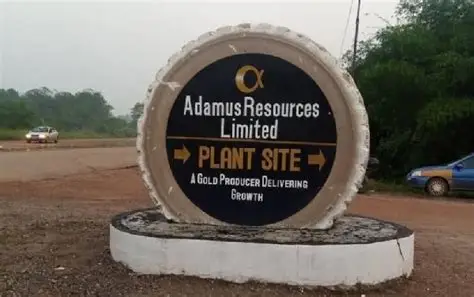
President John Dramani Mahama’s intervention in the Adamus Resources Limited mining lease dispute has been described as a test case for Ghana’s ability to enforce mining regulations while protecting indigenous participation in large-scale mining.
An analysis by the Radiant Media and Intelligence Hub says the President’s decision represents an attempt to reset Ghana’s mining governance by ensuring that regulatory breaches are addressed without destroying one of the country’s few Ghanaian-owned large-scale mining companies.
The dispute began on April 26, 2026, when the Ministry of Lands and Natural Resources, acting on a recommendation from the Minerals Commission, revoked three mining leases held by Adamus Resources Limited at Akango, Salman and Nkroful in the Ellembelle District.
The revocation was based on several alleged breaches of Ghana’s mining laws and regulatory requirements.
According to the Minerals Commission, the breaches included the alleged illegal sub-contracting of mineral rights without ministerial approval, contrary to Section 14(1) of the Minerals and Mining Act, 2006 (Act 703).
Adamus was also accused of mining outside approved areas without an Operating Permit from the Chief Inspector of Mines, as well as operating without the required permits from the Environmental Protection Agency and the Forestry Commission.
Other concerns included the alleged use of foreign nationals in illegal small-scale mining activities on the company’s large-scale concession.
Financial obligations were also cited in the revocation. The company was reported to owe about US$2.56 million in unpaid mineral rights fees, GH¢86.8 million in royalties and GH¢290.5 million in tax arrears to the Ghana Revenue Authority.
The analysis further cited the transfer of about US$224 million to related offshore entities between 2020 and 2024 as part of the financial concerns surrounding the company.
The revocation was subsequently upheld by the Minister for Lands and Natural Resources, Emmanuel Armah-Kofi Buah, on August 7, 2026.
The decision received support from the Eastern Nzema Traditional Council, led by Awulae Blay IX, which reportedly cited years of environmental degradation and inadequate local development linked to mining activities in the area.
Residents of Akango, Salman and Nkroful, however, appealed to President Mahama, warning that the closure of the company could lead to significant job losses and economic difficulties in the affected communities.
On August 21, 2026, President Mahama met stakeholders at the Presidency and granted Adamus a conditional reprieve.
Under the arrangement, the Ministry of Lands and Natural Resources, the Minerals Commission and Adamus Resources are expected to jointly develop and submit a 12-month turnaround plan within two weeks.
The plan is expected to provide a roadmap for addressing the regulatory, financial and operational challenges facing the company.
A six-member joint management team will also be established, comprising three representatives from Adamus and three representatives from the government.
The team will supervise the implementation of the turnaround programme and monitor the company’s progress.
The President has also directed that the company address its outstanding financial obligations through a comprehensive debt settlement programme covering arrears owed to the Ghana Revenue Authority, the Minerals Income Investment Fund, banks and suppliers.
In addition, Adamus is expected to attract fresh capital through new equity partners to restore its financial position and support the long-term sustainability of its operations.
The Presidency described Adamus as one of Ghana’s few operating indigenous large-scale mines.
The Ghana Chamber of Mines has welcomed the intervention, arguing that it could help protect investor confidence and safeguard jobs associated with the company.
The Radiant Media and Intelligence Hub argues that the Adamus case reflects what it describes as a possible “enforce but don’t destroy” approach to mining regulation under President Mahama’s administration.
According to the organisation, the intervention signals that the government intends to uphold mining laws and its anti-galamsey agenda while using corrective regulatory measures where possible instead of automatically resorting to closure.
It says the case could therefore become an important test of whether the state can combine strict enforcement with support for Ghanaian participation in the ownership and operation of large-scale mines.
The intelligence brief also raises concerns about the level of Ghanaian ownership in Ghana’s large-scale mining industry.
It notes that although Ghana produces gold worth more than US$7 billion annually, less than 10 per cent of large-scale production is controlled by Ghanaian-owned companies.
Adamus Resources, owned by Ghanaian businesswoman Angela List, is identified as one of the few indigenous companies operating in the large-scale mining space.
Radiant argues that allowing Adamus to collapse could reinforce concerns that Ghana’s local content policy benefits mainly small-scale miners and service providers rather than Ghanaian companies seeking to own and operate large-scale mines.
The organisation therefore raises several questions about the circumstances surrounding the dispute.
These include why the alleged regulatory and financial breaches accumulated between 2020 and 2024 without earlier intervention, why a Ghanaian-owned mining company has struggled to secure capital despite the Minerals Income Investment Fund holding significant royalty revenues, and whether prospective new equity partners will be genuine Ghanaian investors or entities acting as fronts for foreign interests.
Radiant Media and Intelligence Hub says the Adamus intervention should not be treated as an isolated case but should form the basis of a wider policy for increasing Ghanaian ownership in the minerals sector.
The organisation is calling on the Minerals Income Investment Fund to move beyond royalty collection towards strategic co-ownership by taking equity stakes of between 20 and 30 percent in viable indigenous mining companies facing financial difficulties.
It cites models in countries such as Botswana and Zambia as examples Ghana could study.
It is also proposing that at least 30 percent of new large-scale mining concessions and expired leases be reserved for Ghanaian-owned consortia working with proven technical partners.
Another recommendation is the establishment of an Indigenous Mining Turnaround Facility involving the Minerals Commission, Ghana Chamber of Mines and Development Bank Ghana.
The proposed facility would provide technical assistance and financial restructuring support to distressed Ghanaian-owned mining companies.
Radiant is further calling for a binding community compact under the six-member joint management arrangement.
Such a compact, it says, should include measurable targets for local employment, including a minimum of 60 percent recruitment from mining-affected communities, as well as commitments to scholarships and environmental restoration.
The organisation also wants the Presidency to disclose the identities and beneficial owners of any new equity investors brought into Adamus to prevent what it describes as “galamsey financiers” from returning through indirect ownership structures.
Radiant Media and Intelligence Hub says the outcome of the 12-month turnaround programme will have implications beyond Adamus Resources.
If the intervention succeeds, it could provide a blueprint for restructuring other struggling indigenous mining companies while keeping them under Ghanaian ownership.
However, if the programme fails, the organisation believes it could strengthen the perception that Ghanaian-owned companies are unable to successfully manage large-scale mineral extraction.
The organisation argues that the broader objective should be to build a strong indigenous mining industry made up of companies that operate legally, pay taxes, protect the environment and contribute meaningfully to communities.
It says the central question facing the Ministry of Lands and Natural Resources should therefore move beyond whether Adamus should be punished to how Ghana can create more successful indigenous large-scale mining companies.
Radiant Media and Intelligence Hub concludes that the Adamus case is therefore not only about the survival of one mining company but also about the future of Ghanaian ownership, accountability and participation in the country’s multi-billion-dollar mining industry.

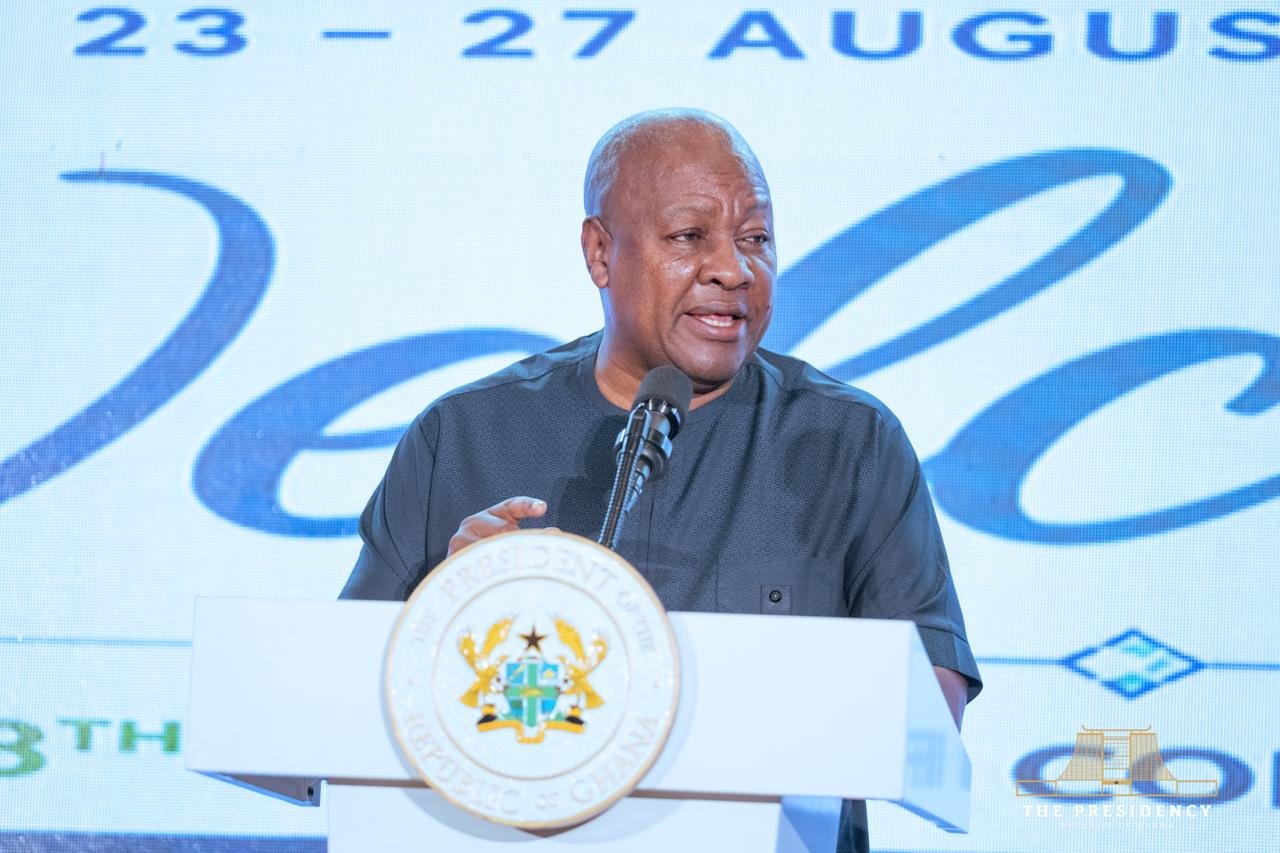
President John Dramani Mahama has announced that Ghana is targeting at least 70 percent local production of medicines consumed in the country under a new five-year plan aimed at strengthening the nation’s health sovereignty.
The President said the initiative is intended to reverse Ghana’s current dependence on imported medicines, with about 70 percent of medicines consumed within the country’s health system currently sourced from abroad.
President Mahama made the disclosure at the 28th Annual Conference of the Association of Medical Councils of Africa (AMCOA) in Accra.
He said Ghana’s drive for health sovereignty would not mean isolation but would focus on building the capacity to meet the healthcare needs of the population through local expertise, production and mutually beneficial international partnerships.
“Health sovereignty does not mean isolation; it is the capacity to meet our people’s needs confidently, competently, and through mutually respectful partnerships,” he said.
President Mahama said the country must invest in its health workforce, mobilise sustainable financing, expand local production of medicines, vaccines and health technologies, and build reliable health data systems.
“We’ve come up with a five-year plan to make sure that we reverse that, and that at least 70% of the medicines we consume must be produced locally in Ghana,” he stated.
The President also underscored the importance of strong governance, ethics and effective regulation in achieving the objective.
He said strong, independent and adequately resourced regulatory institutions would be essential to ensuring that locally produced medicines and health technologies meet required standards and safeguard public health.
President Mahama further called on African countries to strengthen domestic health systems and production capacity while maintaining partnerships that support knowledge, technology and resource sharing.
He said greater investment in local pharmaceutical production would help Africa build more resilient health systems and improve the continent’s ability to respond to future health emergencies.
President John Dramani Mahama has disclosed that Ghana’s national health insurance coverage currently stands at 76 percent, with government targeting an increase to 90 percent as part of efforts to achieve universal health coverage.
According to President Mahama, while reaching 90 percent coverage would represent significant progress, it would still leave a portion of the population without access to the National Health Insurance Scheme (NHIS).
Speaking at the opening ceremony of the 28th Annual Conference of the Association of Medical Councils of Africa in Accra, he said government was therefore implementing additional healthcare interventions to complement the NHIS.
“Ghana’s health agenda is anchored on equity, equality, and sustainability. We are strengthening the National Health Insurance Scheme, and we currently have a national coverage of 76 percent. We are hoping to push up to 90 percent,” President Mahama said.
He said government’s Free Primary Healthcare programme was one of the key interventions aimed at closing the remaining gaps in access to healthcare.
The President explained that the programme was partly modelled on Kenya’s free primary healthcare system and has so far been introduced in about 160 of Ghana’s 260 districts.
He said government intends to extend the programme to the remaining 100 districts to ensure more Ghanaians, particularly those in underserved rural communities, can access essential healthcare services.
President Mahama said the programme would also strengthen preventive healthcare and provide free treatment at CHPS compounds and mobile health kiosks for people who may otherwise struggle to access healthcare facilities.
“They can go to any of the CHPS compounds, the mobile health kiosk, and receive treatment free of charge without showing any identification,” he said.
He expressed appreciation to the World Health Organization, development partners and the government of Kenya for their support and contribution to Ghana’s efforts to expand primary healthcare.
Beyond primary healthcare, President Mahama said government was also using the Ghana Medical Trust Fund to protect people living with chronic and high-cost medical conditions from financial hardship.
He said the combined interventions were designed to ensure that the cost of healthcare does not prevent citizens from seeking treatment when they need it.
“We’re pursuing free primary healthcare so that cost does not prevent people from receiving essential care at the point of need. Through the Ghana Medical Trust Fund too, we are seeking to protect persons living with chronic and high-cost conditions from financial hardship,” he said.
President Mahama said the initiatives formed part of government’s broader strategy to move Ghana closer to universal health coverage by improving access, reducing financial barriers and strengthening both preventive and primary healthcare delivery.
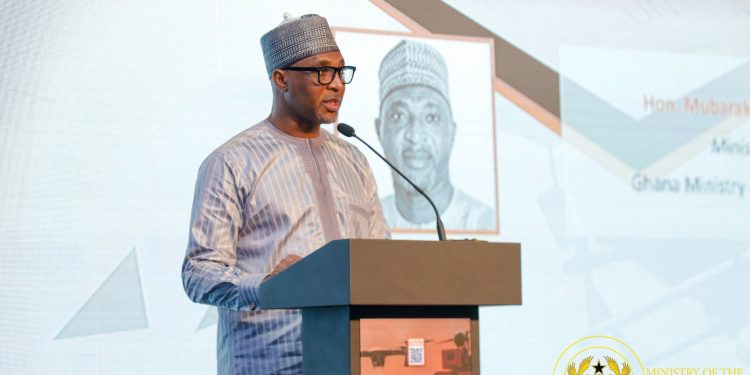
More than 8,500 kilograms of narcotic drugs have been seized, while approximately 45.4 million tramadol tablets have been intercepted over the past 20 months as authorities step up efforts to combat drug trafficking and substance abuse.
Interior Minister Mohammed Mubarak Muntaka disclosed the figures on Monday, August 24, 2026, during the Government Accountability Series, highlighting what he described as increased efforts by the Narcotics Control Commission (NACOC) to tackle the illicit drug trade.
According to the Minister, the enforcement campaign has also resulted in 217 arrests, with 165 cases prosecuted within the period.
He said the large quantity of tramadol intercepted was particularly concerning given the increasing use of synthetic and pharmaceutical drugs among young people.
“Narcotics Control has intensified its efforts, and imagine that in less than two years, over 45 million tablets of tramadol were seized and intercepted,” Mr Muntaka said.
Beyond the seizure of narcotics, the government is also targeting the financial networks and assets allegedly linked to drug trafficking.
Mr Muntaka revealed that 73 assets had been recovered as part of investigations into suspected drug-related activities.
Authorities have also seized about 19 kilograms of gold in cases involving suspected drug-related money laundering.
In addition, approximately GH¢6.9 million and US$440,000 in cash believed to be connected to suspected narcotics activities have been seized.
The measures form part of efforts to prevent suspected traffickers from benefiting financially from the illegal drug trade.
The Interior Minister said enforcement alone would not be enough to address the country’s drug problem, stressing the importance of prevention and public education.
He disclosed that NACOC had conducted more than 2,000 educational sessions across the country to raise awareness about the dangers of substance abuse.
The programmes have targeted a wide range of groups and institutions, including schools, tertiary institutions, religious organisations, communities and workplaces.
The breakdown includes 1,153 sessions at the basic school level, 185 at secondary schools and 41 at tertiary institutions.
NACOC also organised 187 sessions in faith-based institutions, 147 in communities and 235 in workplaces.
Despite the progress in enforcement and education, Mr Muntaka identified rehabilitation as a significant weakness in Ghana’s response to substance abuse.
He noted that Ghana currently does not have a state-owned rehabilitation centre, creating a major gap in efforts to support people struggling with drug dependency.
The Minister’s disclosure underscores the growing scale of Ghana’s narcotics challenge, with authorities combining arrests and seizures with financial investigations, public education and calls for stronger rehabilitation support.

Afenyo-Markin Sues Sammy Gyamfi, Multimedia Over Alleged ‘Extortionist’ Remark

Mahama’s Adamus Intervention Tests Ghanaian Ownership in Large-Scale Mining

Ghana targets 70% local medicine production under five-year plan – Mahama



-
 Education2 weeks ago
Online Classes and Education: Are They the Future of Learning?
-
 Entertainment2 weeks ago
Let Them Come Home: Ras Caleb Urges Africa to Embrace Diaspora Returnees
-
 General News1 week ago
KFC Ghana Faces Legal Scrutiny Over Customer Safety During GH¢15 Anniversary Promotion
-

 Entertainment2 weeks ago
Say a Prayer and Make a Move – Sarkodie to Fans
-

 Entertainment2 weeks ago
Tima Kumkum Confirms Marriage Has Ended After One Year, Nine Months
-
 General News2 weeks ago
IGP Promotes 25 Police Personnel for Exceptional Performance in the Fight Against Crime
-
 General News1 week ago
BOST Makes Over GH¢10 Million From Faulty Flow Meter Charges, Tanker Drivers Claim
-

 Entertainment2 weeks ago
Tourism Minister responds to concerns over support for comedians, says Creative Arts Agency will engage industry